-
-
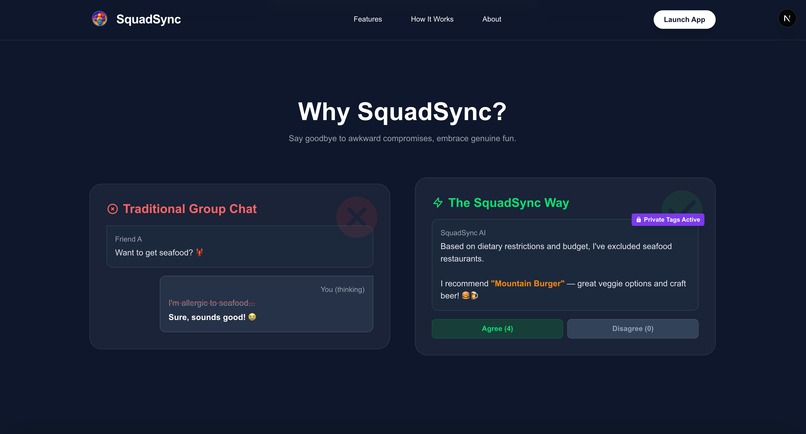
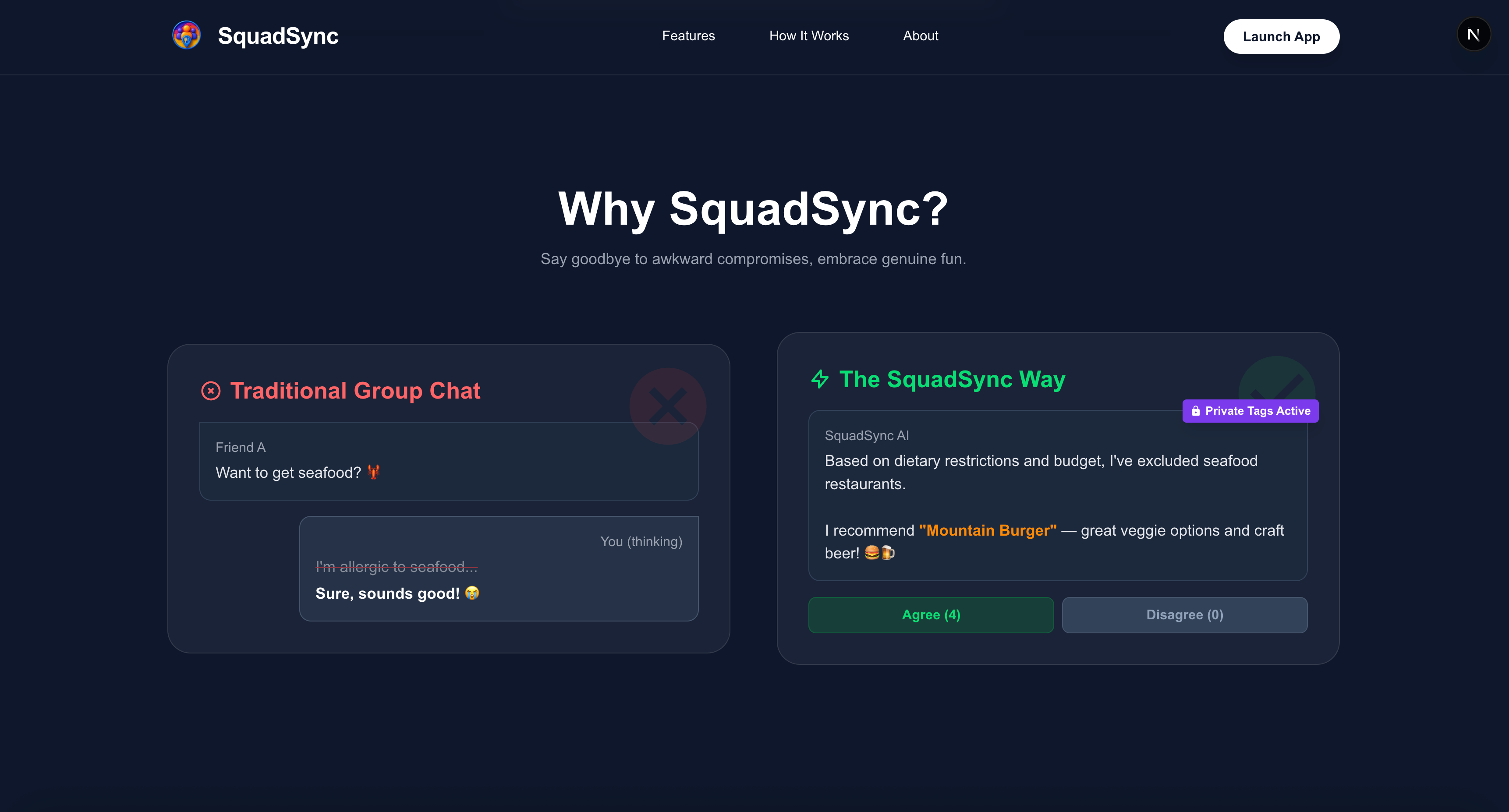
Landing Page 2
-
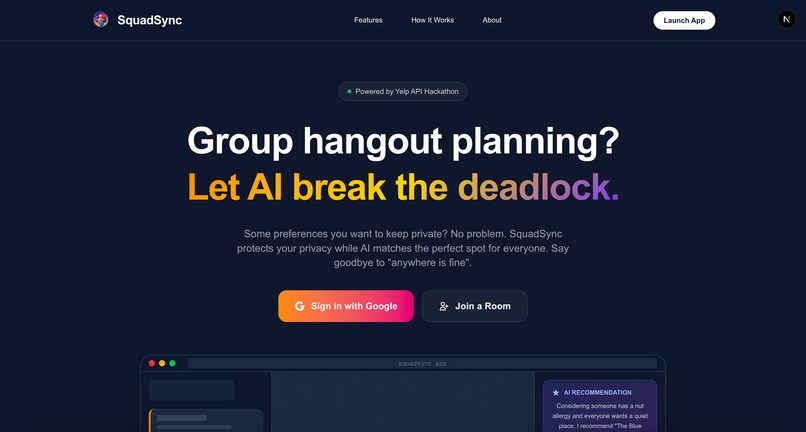
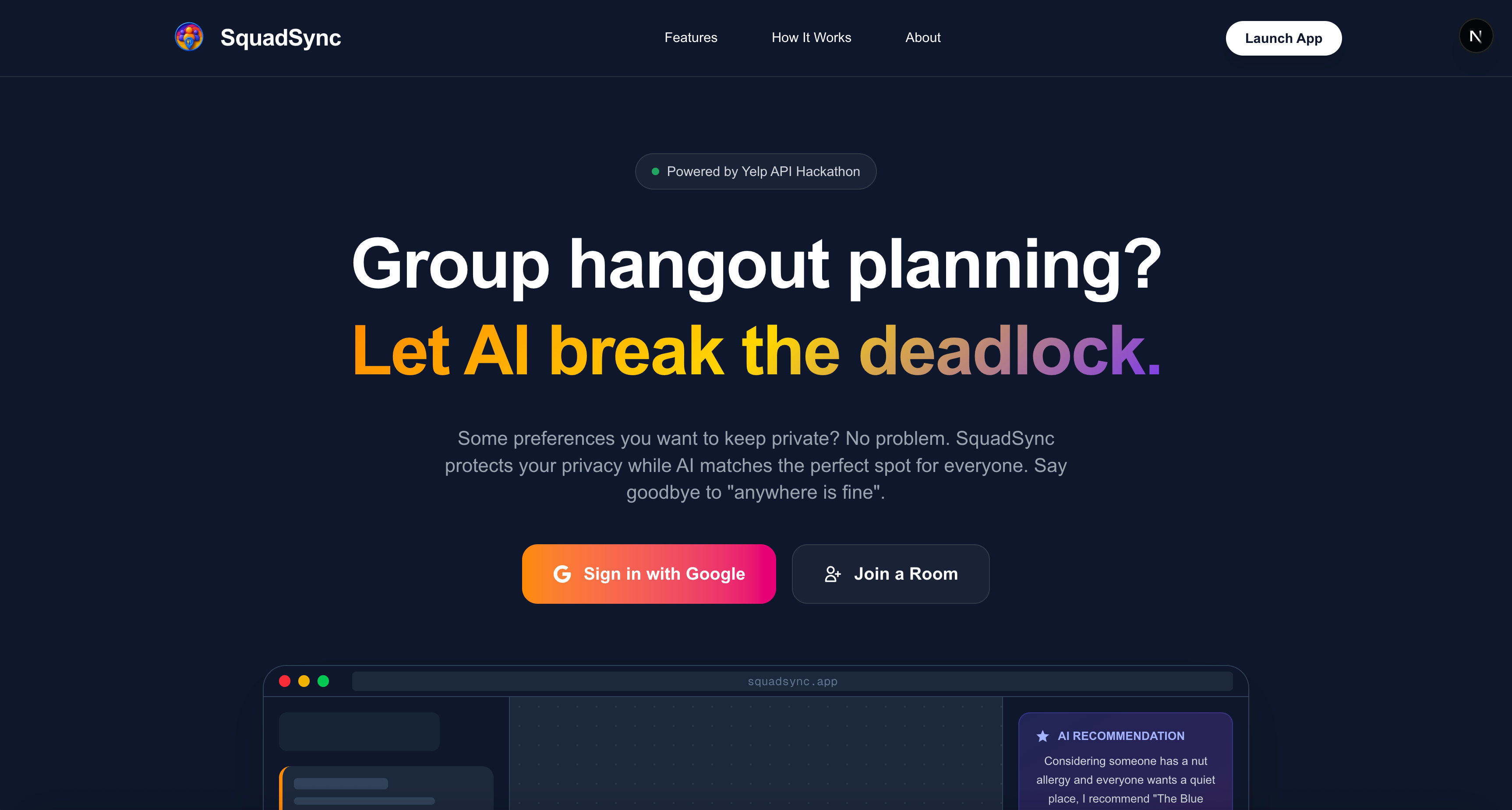
Landing Page 1
-
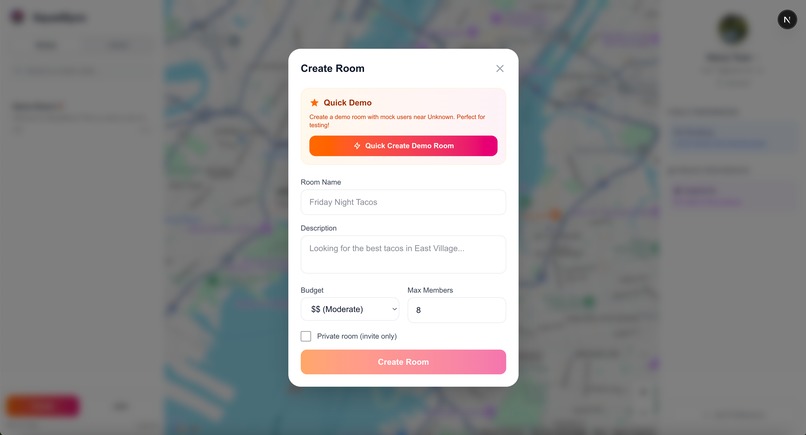
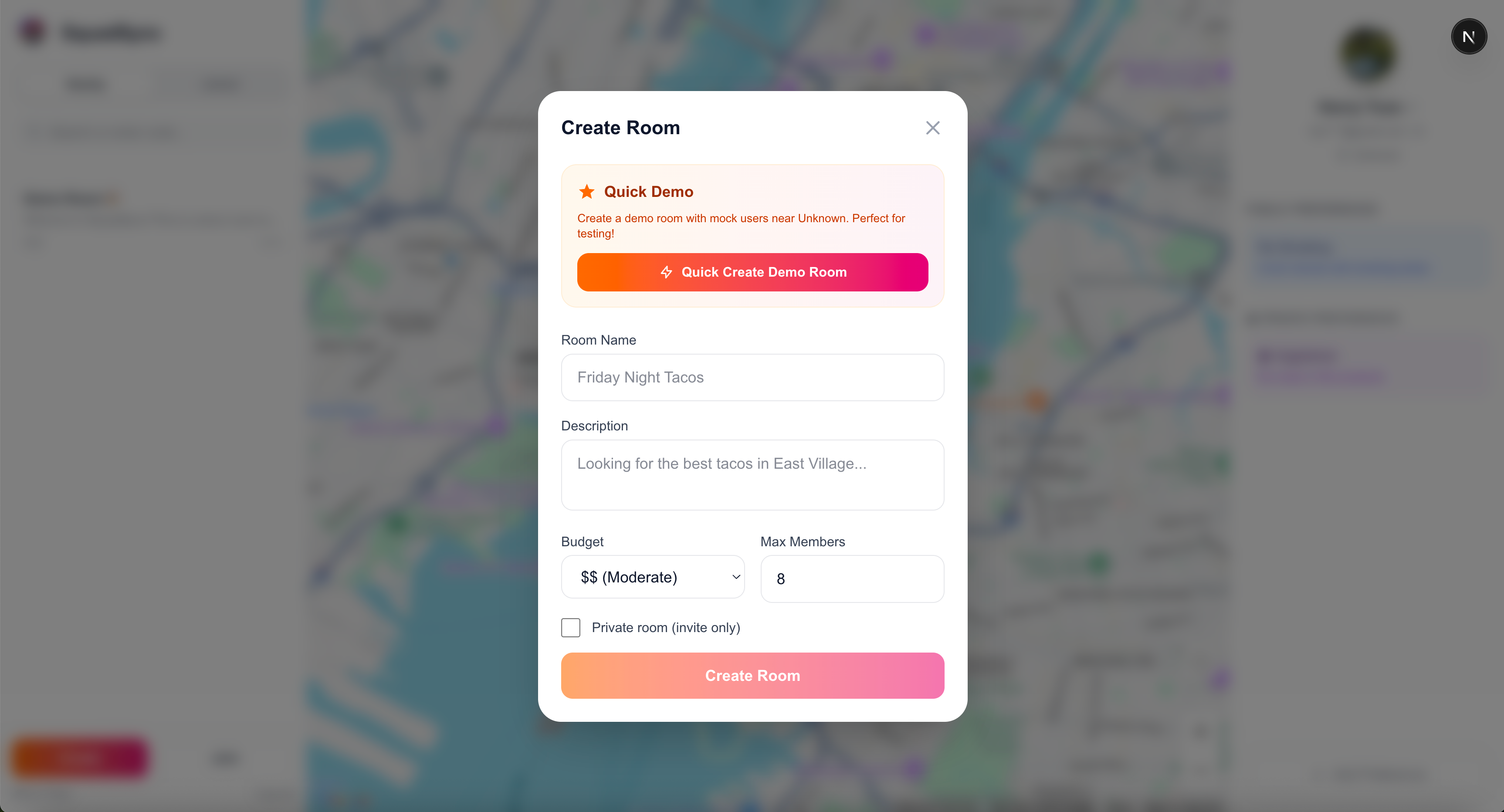
Web App Page - Create a Chat Room
-
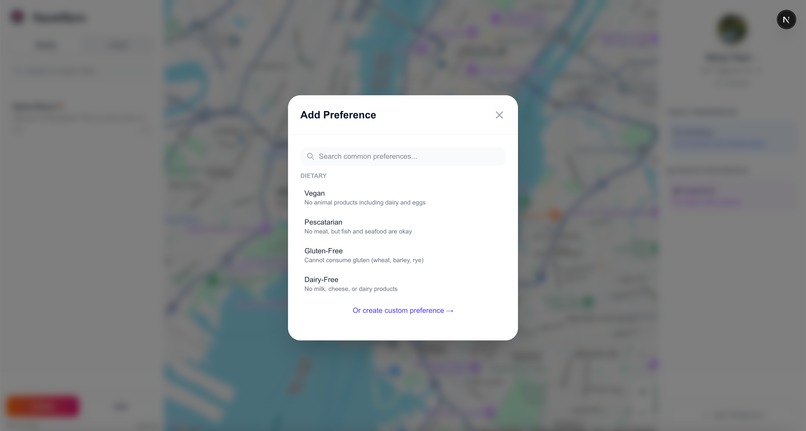
Web App Page - Add Preference
-
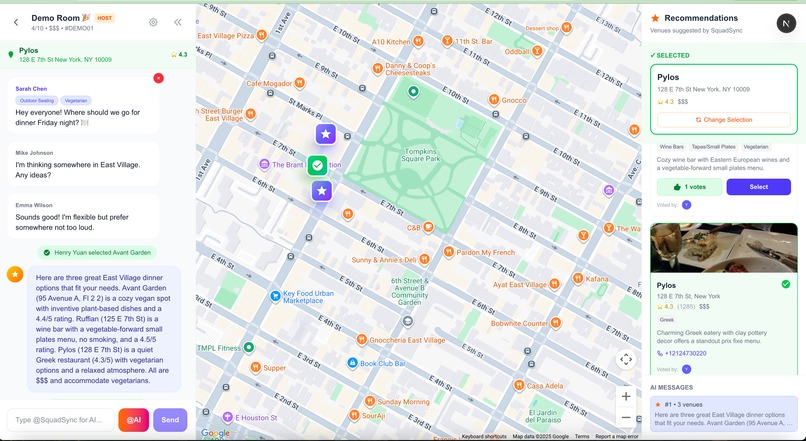
Web App Page - Groups chat with AI recommendation 2
-
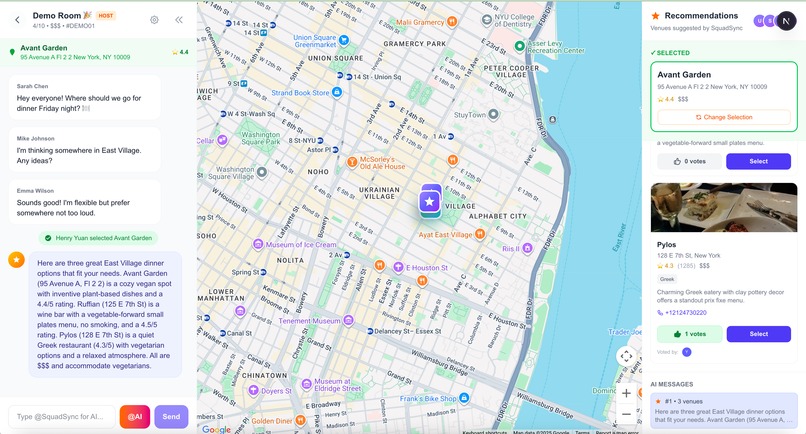
Web App Page - Groups chat with AI recommendation
-
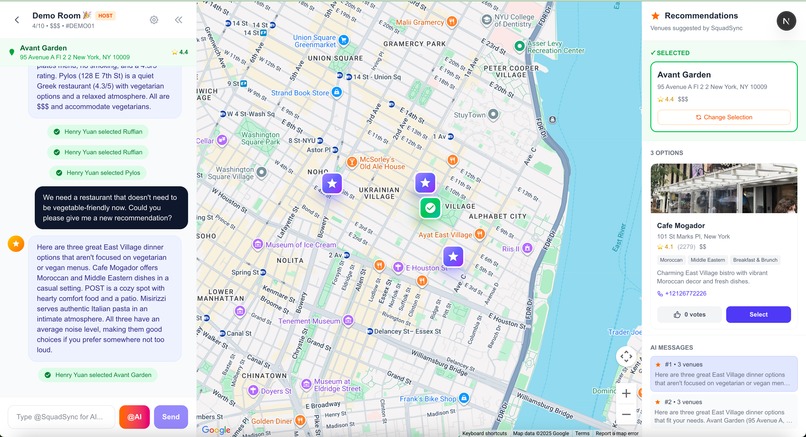
Web App Page - Groups chat with AI recommendation updated with chat history
-
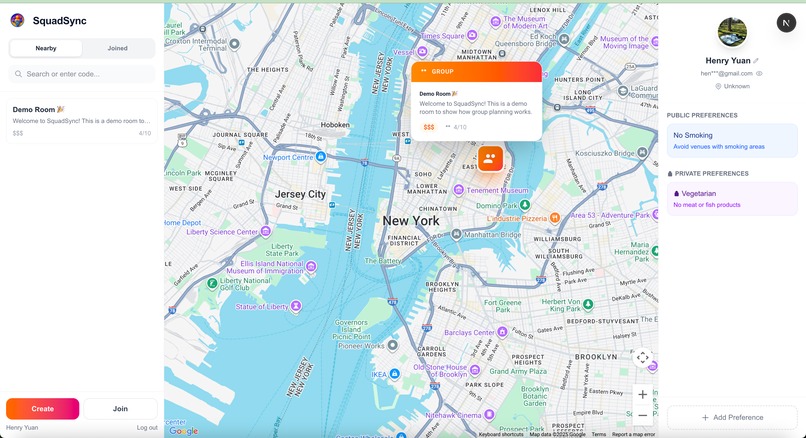
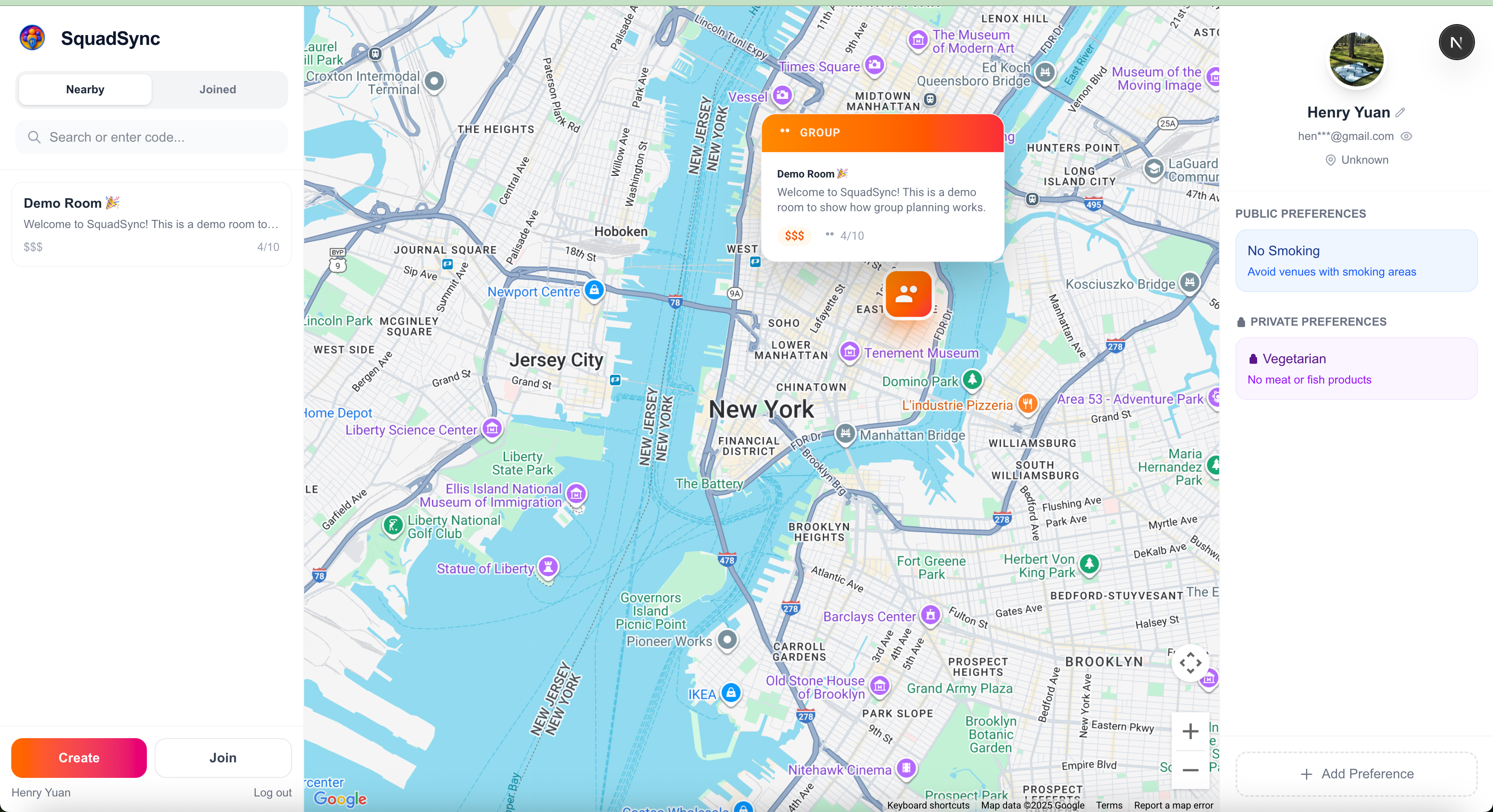
Web App Page - Groups nearby on the map to join (public only)
-
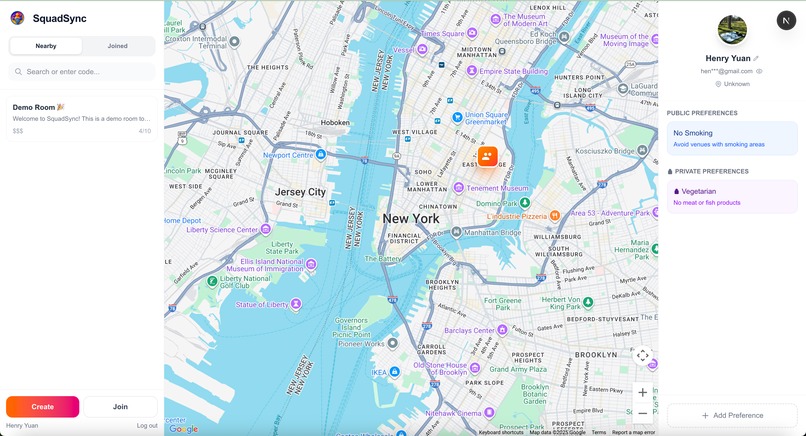
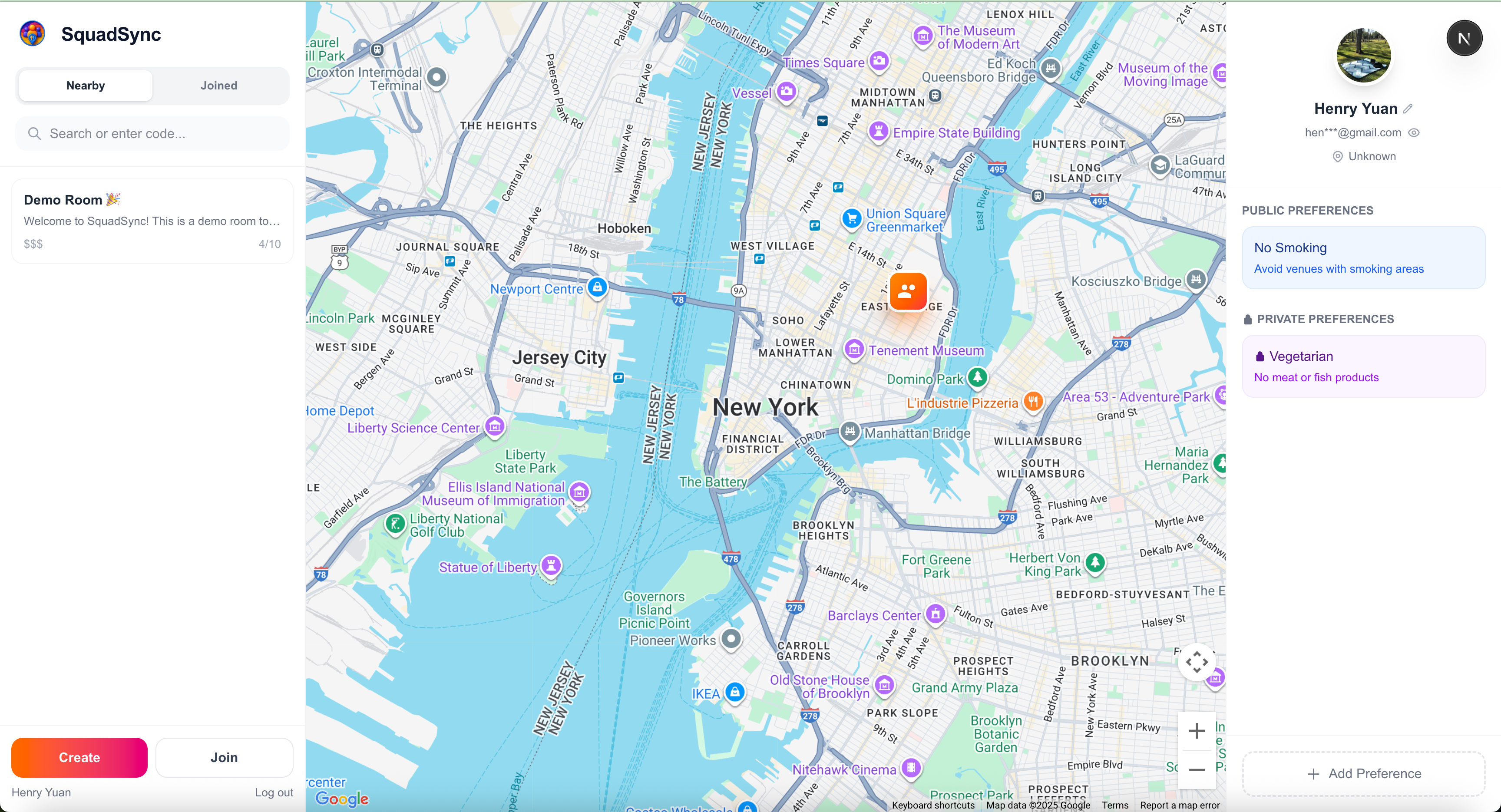
Web App Page
Inspiration
The spark for SquadSync came from a real problem I faced while organizing meetups in New York. A friend once asked me: "Where can we host a dinner event near 2nd Avenue?" — followed by a long list of requirements and constraints. Neither Google Maps nor Yelp's native search could handle this kind of nuanced, multi-criteria query effectively.
But the deeper insight came when I realized: group planning is fundamentally broken.
Consider the statistics:
- Americans spend an average of 40+ minutes just deciding where to eat as a group (OpenTable, 2023)
- 67% of Gen Z prefer making plans spontaneously through group chats rather than formal invitations (Eventbrite)
- The "where should we go?" conversation is the #1 source of friction in group hangouts
Current solutions treat venue discovery as a single-player experience. Yelp, Google Maps, TripAdvisor — they all optimize for one user with one set of preferences. But real life is messier:
- Your friend is vegetarian (and okay sharing that)
- Another friend has a nut allergy (also public)
- Someone just went through a breakup and doesn't want to go anywhere they might run into their ex (definitely private)
- One person has a strict budget but doesn't want to seem cheap
- Someone is under 21 and can't enter certain venues
These preferences exist on a spectrum of privacy. Some are easy to share; others are deeply personal. No existing app respects this nuance.
SquadSync was born from a simple question: What if we could match venues to groups, not just individuals — while preserving everyone's privacy?
This isn't just a feature improvement. It's a paradigm shift from solo discovery to collaborative, privacy-aware group matching — the next evolution in social coordination.
What it does
SquadSync is a group hangout planning app that uses AI to find venues everyone in your group will love — even when some preferences are kept private.
Core Flow:
Create or Join a Room — Host creates a room with a name, budget range ($-$$$$), member limit, and optional location. Members join via invite code or shareable link.
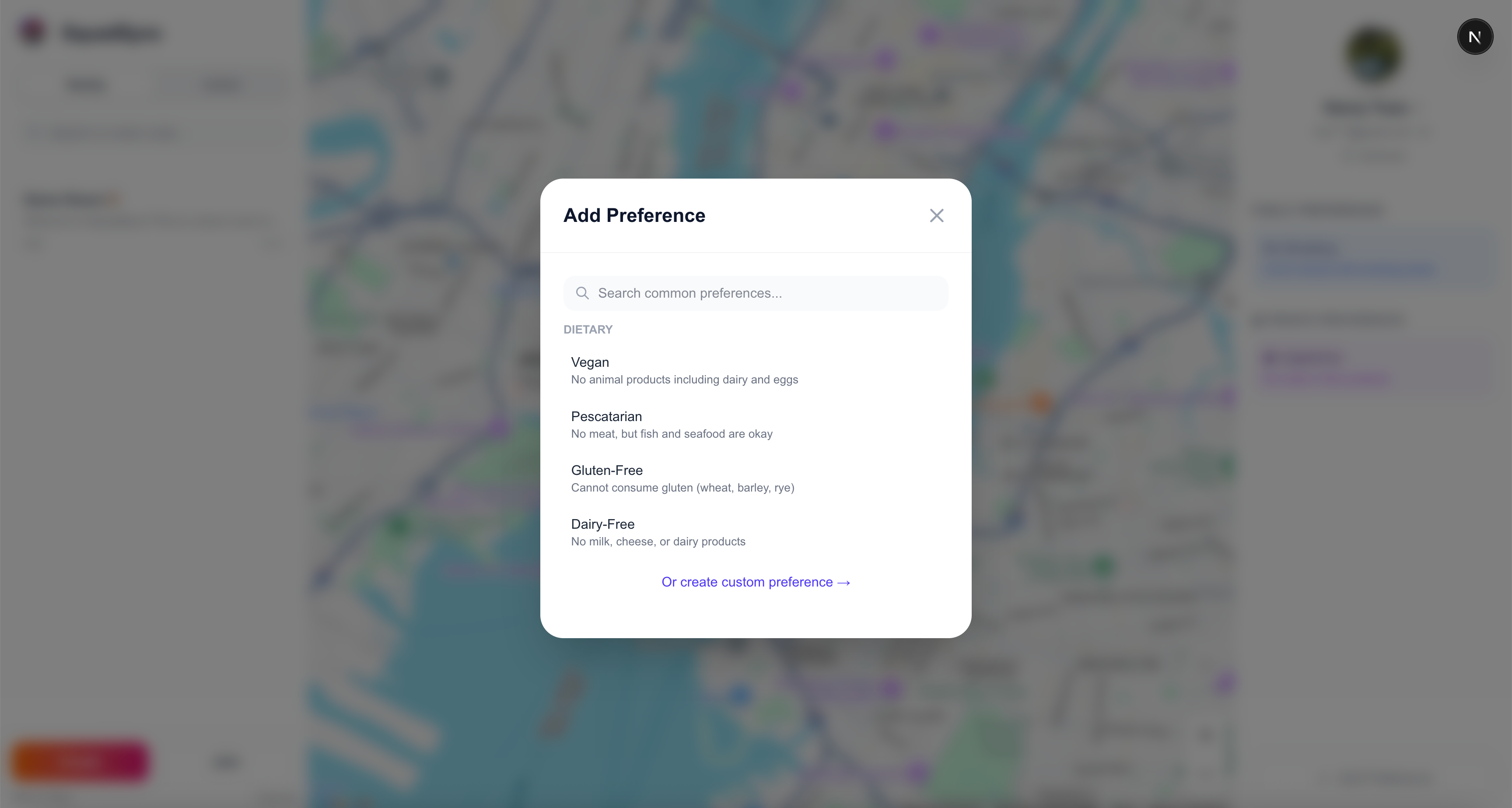
Set Your Preferences — Each user adds personal tags with descriptions:
- Public Tags: Visible to the group (e.g., "Vegetarian - I don't eat meat")
- Private Tags: Only visible to AI (e.g., "Avoiding bars where my ex works" or "On a tight budget this month")
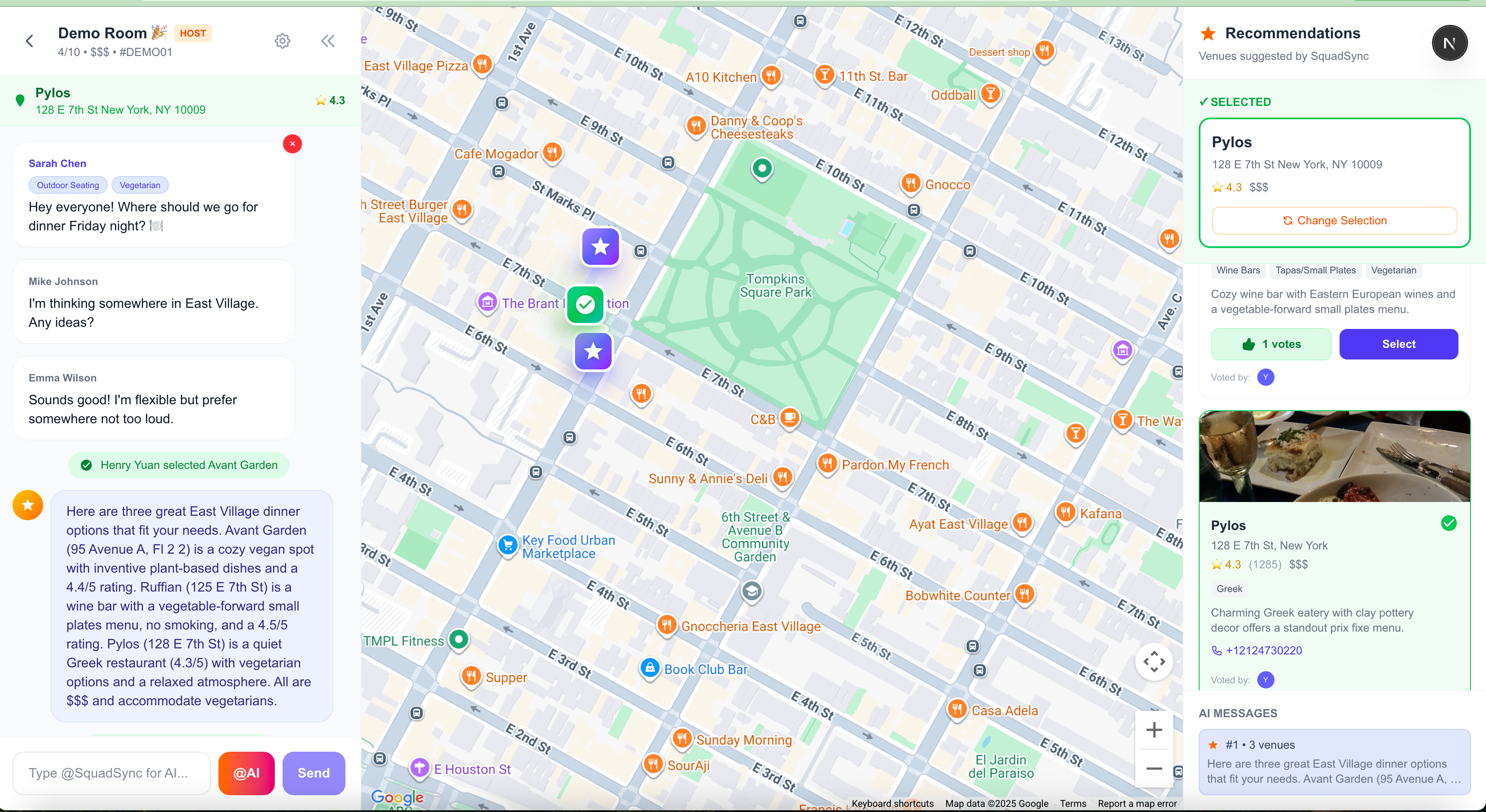
Chat & Discuss — Real-time group messaging powered by Firebase. Discuss what you're in the mood for, throw out ideas, and vibe-check with your squad.
Summon the AI — Type
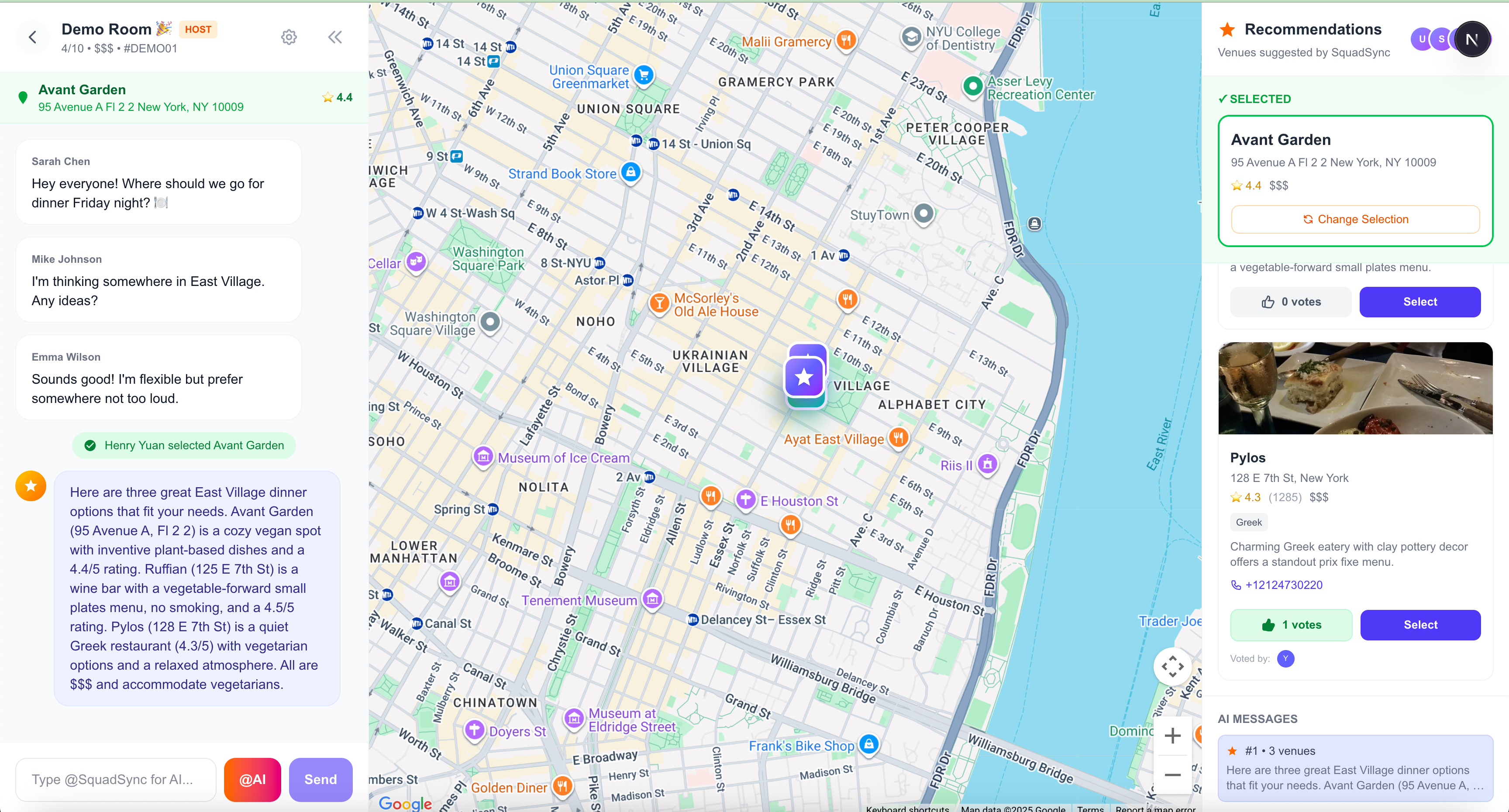
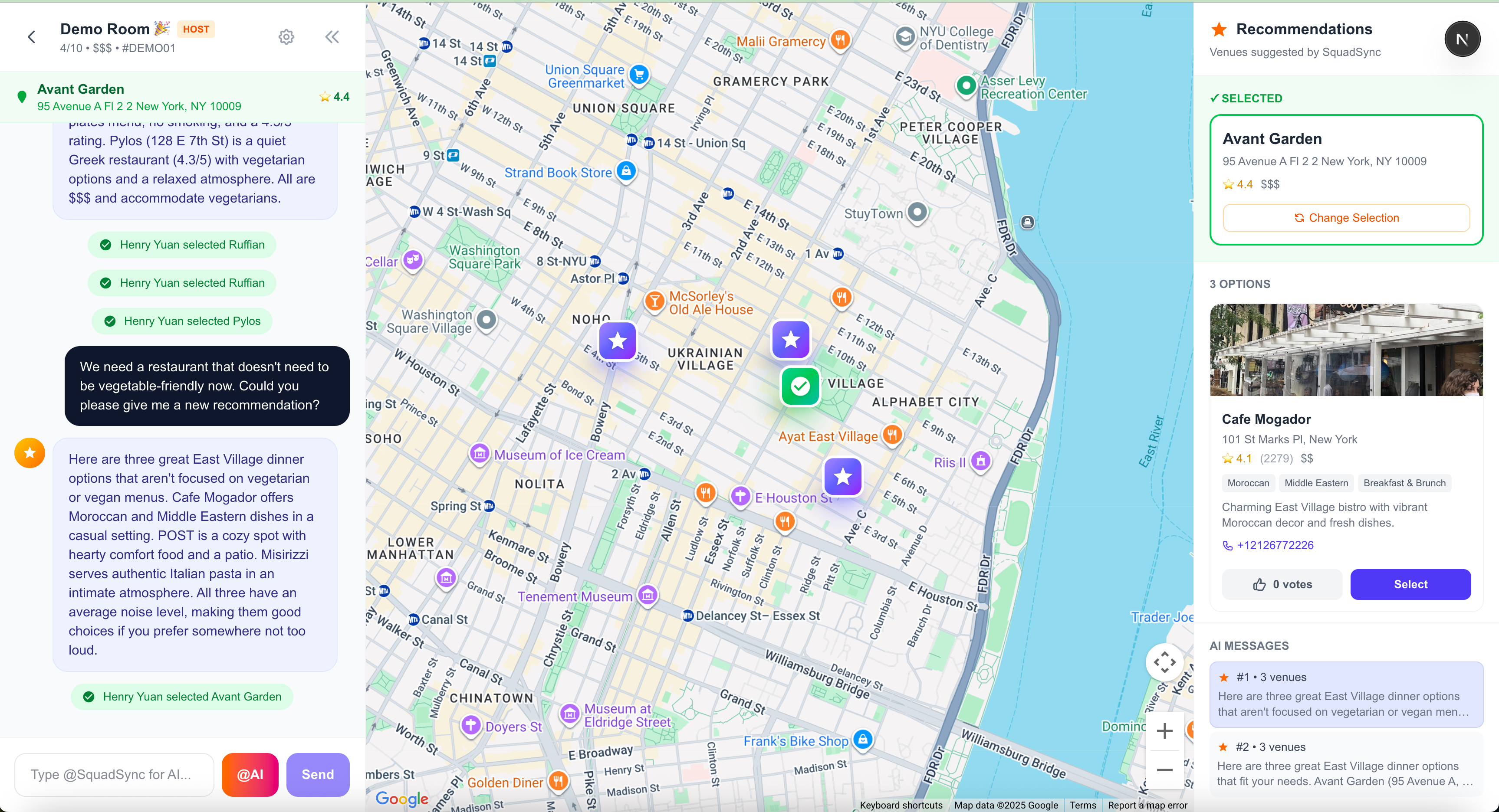
@SquadSyncin the chat to invoke our AI assistant. It reads the conversation context, considers everyone's public AND private preferences, and queries the Yelp API to recommend venues that satisfy the entire group.Vote & Decide — The AI presents options with ratings, prices, and addresses. The group can vote, and the host finalizes the choice. The selected venue appears on the map for everyone.
Key Features:
- 🗺️ Live Map View — Google Maps integration showing room locations and selected venues
- 🔒 Privacy-First Design — Private preferences are processed by AI only, never exposed to other members
- 💬 Real-Time Chat — Firestore-powered messaging with instant sync
- 🎯 Smart Matching — AI considers dietary restrictions, age limits, budget, and hidden preferences
- 👥 Room Management — Public/private rooms, member limits, budget settings
How we built it
Frontend & Backend:
- Next.js 14 (App Router) — Full-stack React framework with API routes
- TypeScript — Type safety across the entire codebase
Real-Time Infrastructure:
- Firebase Auth — Google Sign-In for frictionless onboarding
- Cloud Firestore — Real-time database for rooms, messages, and user preferences
- Firebase Hosting — Global CDN deployment
APIs & AI:
- Yelp AI Chat API v2 — Natural language venue recommendations
- Google Maps JavaScript API — Interactive map with custom markers
Architecture Highlights:
- Server-side API routes protect Yelp credentials from client exposure
- Firestore security rules ensure users can only access rooms they belong to
- Private tags are stored in a user subcollection and only read server-side during AI inference
Challenges we ran into
1. Designing the Privacy Mechanism The core challenge wasn't technical — it was philosophical. How do we balance transparency (so the group trusts the recommendations) with privacy (so individuals feel safe sharing sensitive preferences)? We settled on a clear mental model: public tags are visible to everyone, private tags are visible only to AI. The AI explains why it recommended something without revealing whose preference drove that choice.
2. Webapp vs. Native App We deliberately chose a web app for the hackathon to prioritize iteration speed and accessibility. While a native app would offer better UX (push notifications, background location), the webapp approach let us validate the core concept faster. It's a trade-off we're comfortable with for now.
3. Context-Aware AI Responses Getting the AI to understand conversational context while respecting Yelp API constraints required careful prompt engineering. We had to balance between giving the AI enough context (chat history, all user preferences) without overwhelming token limits.
Accomplishments that we're proud of
Execution matched vision — The final product closely aligns with our original concept. Group matching with privacy-aware preferences works exactly as intended.
Seamless Yelp Integration — We built a natural language interface on top of Yelp's structured API, transforming traditional search into conversational discovery.
Compelling Narrative — Beyond the tech, we crafted a story: SquadSync represents the next generation of social apps — where AI mediates group decisions while respecting individual boundaries. It's a vision for how Gen Z coordinates in the real world.
What we learned
1. Group UX is Underexplored Most consumer apps are designed for individuals. Building for groups introduces fascinating challenges: conflict resolution, consensus building, information asymmetry. There's a huge design space here.
2. Privacy is a Feature, Not a Constraint We initially thought of private preferences as a "nice to have." In user testing, it became the killer feature. People were excited to share things they'd never say out loud — precisely because they knew it would stay between them and the AI.
3. AI as Mediator, Not Oracle The AI isn't there to make decisions for the group. It's there to synthesize conflicting preferences and present options that everyone can agree on. This subtle distinction shaped our entire UX.
4. Firebase is Incredible for Real-Time Apps Going from zero to real-time sync in hours was empowering. The combination of Auth + Firestore + Security Rules provides a complete real-time backend with minimal code.
What's next for SquadSync
Short-term:
- Native mobile app (React Native or Flutter) with push notifications
- Calendar integration for scheduling
- Voting system for venue selection
- History of past hangouts and favorite spots
Long-term Vision: We're an AI startup based in US, focused on helping agents serve SMBs — including restaurants and retailers on Yelp.
SquadSync represents a potential consumer super-app that drives traffic to local businesses. Imagine:
- A restaurant offers 10% off for groups of 5+ booking through SquadSync
- A bar promotes its "under 21" events to appropriate users
- An event space gets discovered by groups planning team offsites
We're creating a two-sided marketplace: helping consumers find perfect venues, while helping SMBs acquire groups of customers — not just individuals.
We're genuinely excited about this project. If we receive support, we're committed to continuing development and turning SquadSync into a real product.
Built With
- firebase
- google-maps
- nextjs
- yelp


Log in or sign up for Devpost to join the conversation.