-
-

Banner
-
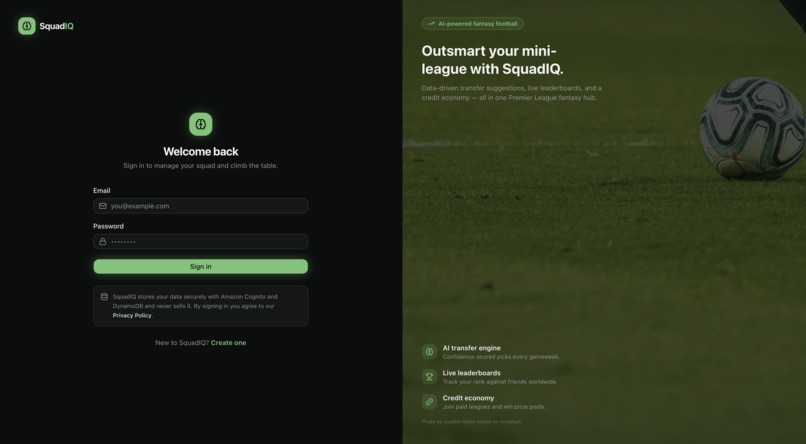
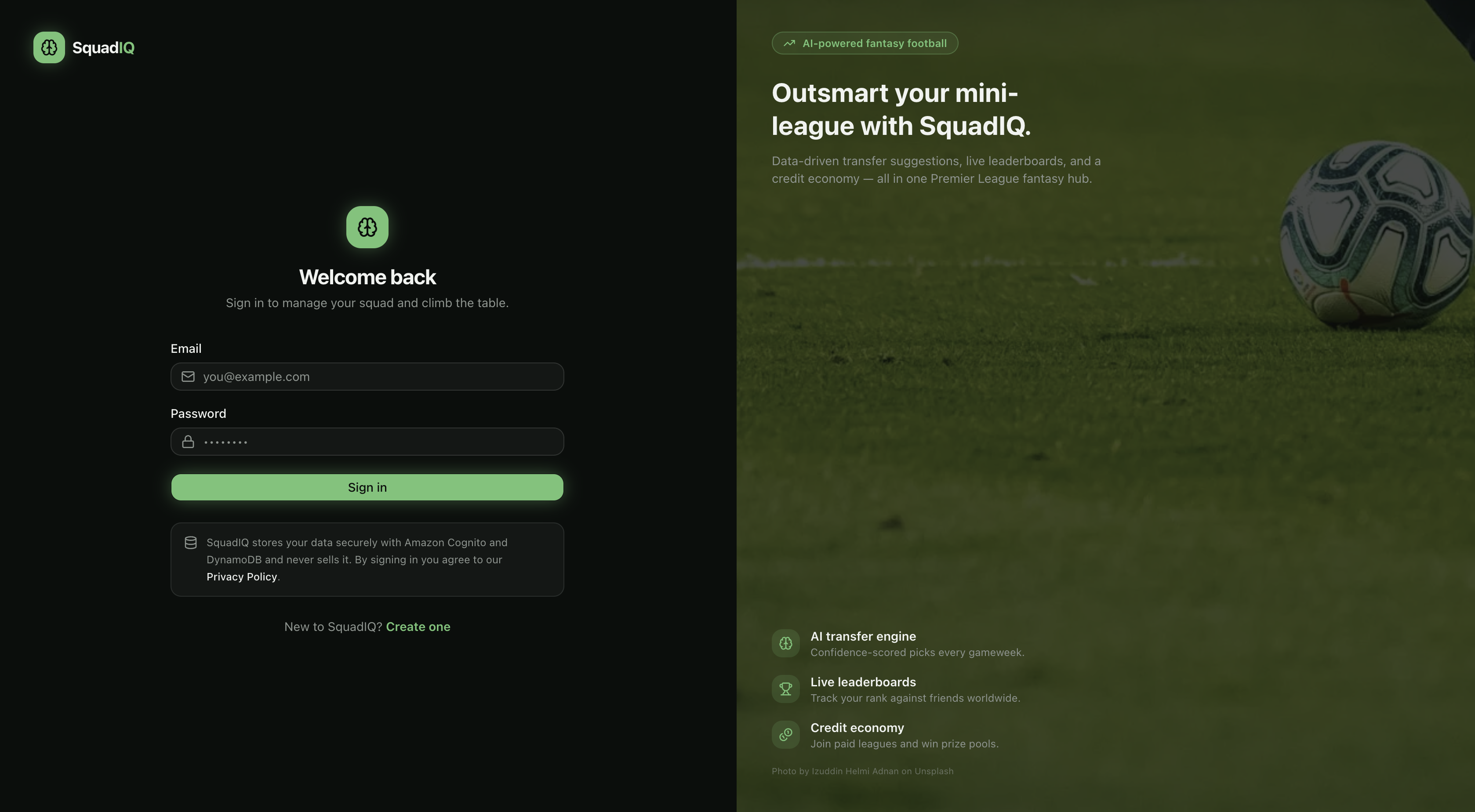
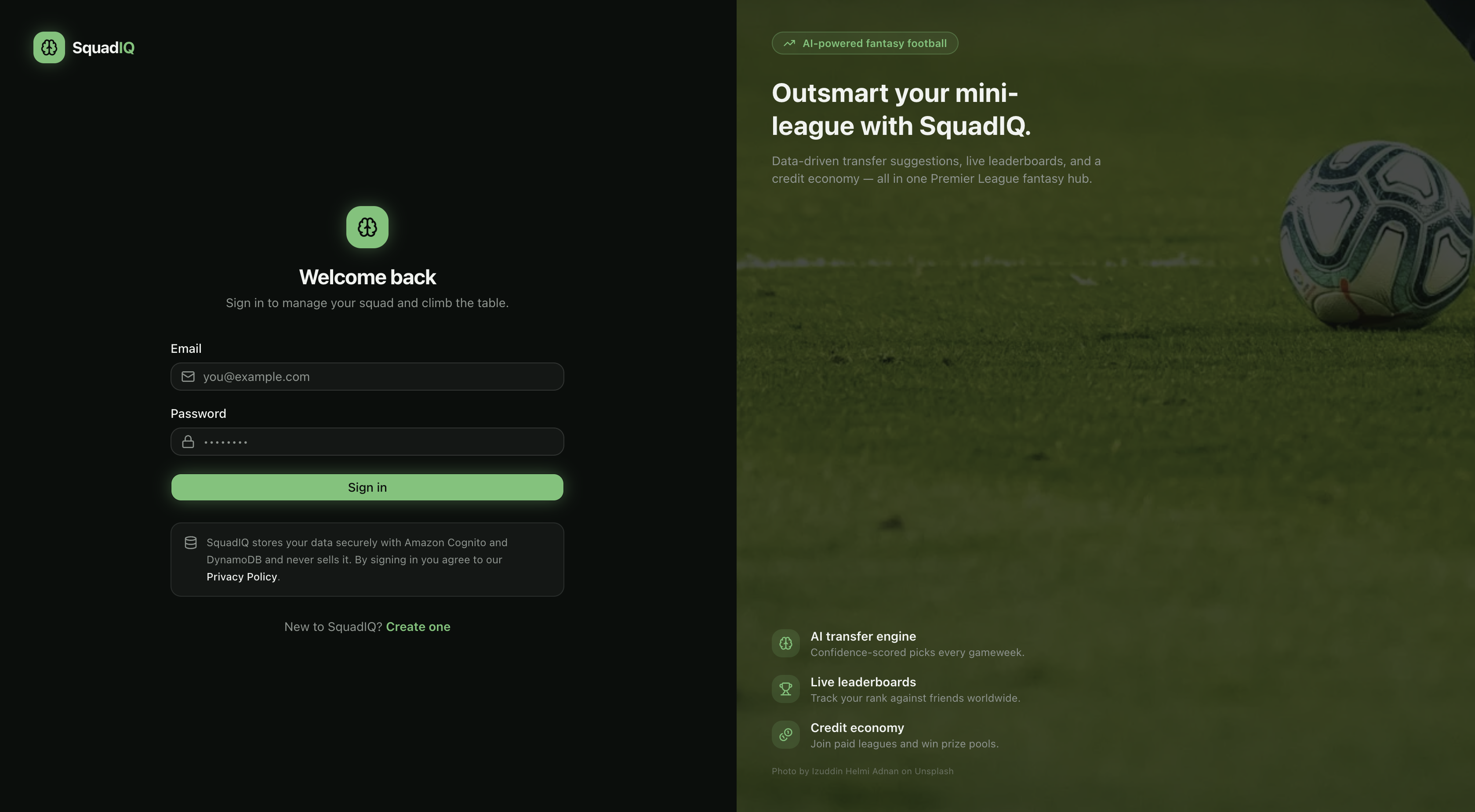
Login Screen
-
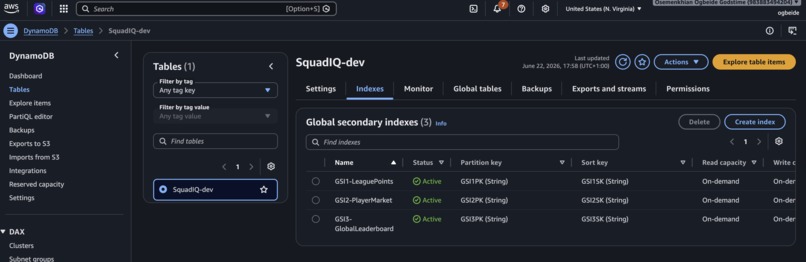
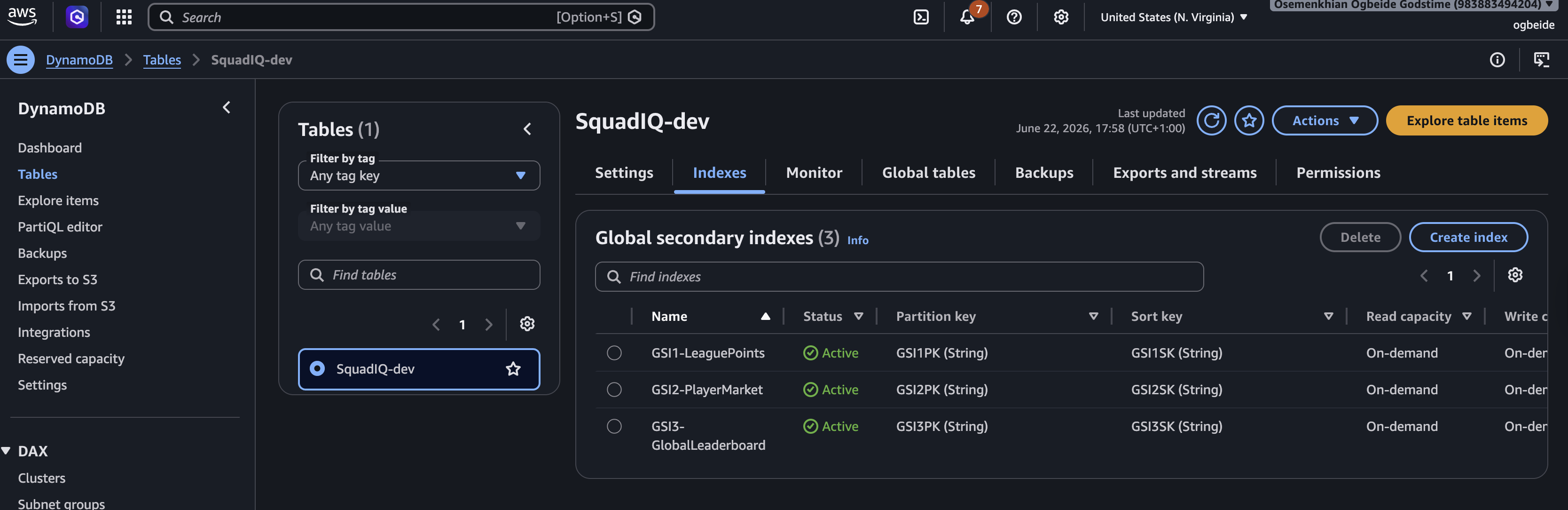
DynamoDB Table
-
v0-chat interface

Inspiration
Every year, young, old, and middle-aged fans alike wait excitedly for the next match and their favourite teams to play. Yet, beneath the excitement, millions of football fans face the same frustration. We stare at the official Fantasy Premier League app, drowning in raw statistics, trying to guess which player will break a hamstring or hit a hat-trick. The data is all there, but the intelligence is missing. The official app leaves you isolated in a spreadsheet wasteland, guessing your next move.
Worse, the official platform notoriously suffers from deadline-day lag and high-concurrency crashes. I built SquadIQ alone during this hackathon to prove that modern cloud-native architecture can deliver real-time predictive squad intelligence, automated transfer validation, and a bulletproof, mobile-first UX that never blinks at a Friday deadline.
What it does
SquadIQ is an AI-powered fantasy football platform built for mobile-first squad management.
Squad & Transfer Engine: Allows managers to build 15-player rosters, buy/sell players, and track remaining credits within tight constraints.
Predictive Intelligence: Merges squad management with real statistical intelligence rather than raw, uncontextualized data points.
Live Performance & Leaderboards: Delivers instant leaderboard updates and roster validations without deadline-day performance degradation.
How we built it
I utilized a highly efficient two-tool AI workflow to accelerate development while working solo:
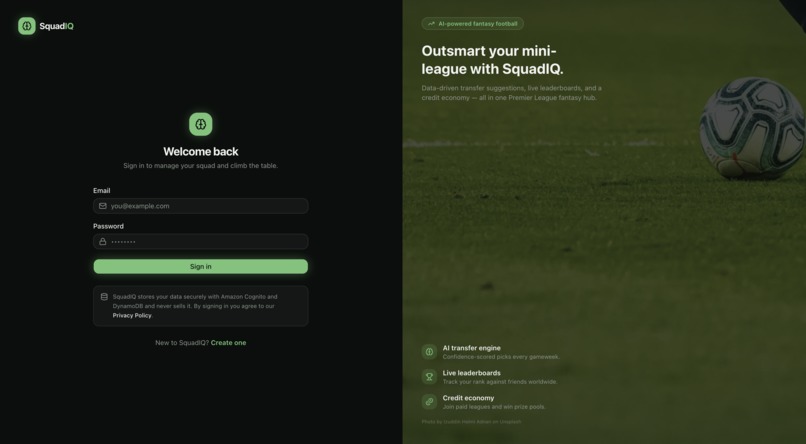
Frontend Generation: v0 by Vercel orchestrated the user interface scaffolding. It generated a mobile-first Next.js 16 (React 19, Tailwind CSS, shadcn/ui) setup, outputting production-ready layouts for the interactive pitch visualization, responsive navigation, and dashboard grids.
Backend & Spec-Driven Execution: Kiro handled the backend architecture. Operating on a strict spec-driven workflow (Requirements - Design - Tasks), Kiro autonomously generated the data models, API routes, middleware, and core credit/transfer validation logic across 32 individual implementation tasks.
The Architecture: The stack is engineered for maximum speed and minimal moving parts. Next.js API routes deployed on Vercel interact directly with Amazon DynamoDB using the AWS SDK and IAM credentials, eliminating API Gateway or Lambda cold starts from the critical user path. AWS Cognito handles secure session management via JWTs stored in HTTP-only cookies, while lightweight AWS Lambda functions are decoupled entirely, running only asynchronous background tasks like player synchronization and scoring feeds.
Challenges we ran into
Time Constraints vs. AI Integration: Balancing full-stack delivery solo within a tight hackathon timeline meant I had to prioritize core platform stability and data structures, limiting the depth of the predictive AI layer I originally envisioned.
Data Layout & Contracts: Syncing v0's fast-paced frontend UI output with Kiro's strict backend API design specifications required meticulous contract coordination to prevent payload mismatches.
DynamoDB Single-Table Design: Modeling multiple distinct entity types (users, squads, leagues, live player gameweeks) in a single DynamoDB table using composite partition and sort keys to maintain single-digit millisecond latency.
Frictionless Authentication: Implementing secure cookie-based auth using raw Cognito JWTs directly inside Next.js middleware, bypassing traditional API Gateway or Lambda proxy configurations.
Responsive UI Mechanics: Eliminating mobile overflow bugs on the dense pitch layout while placing the tactical squad pitch and live statistics side-by-side on larger screens.
Accomplishments that we're proud of
Direct Database Execution: Bypassing unnecessary middleware layers to query DynamoDB directly from Next.js, achieving blazing-fast response times under simulation.
Rigid Roster Validation: Implementing bulletproof transaction logic to perfectly enforce knapsack constraints at scale
Solo Development Velocity: Delivering a functional, production-ready, full-stack application end-to-end within the hackathon window.
What we learned
I discovered the immense power of a spec-driven workflow. By using Kiro to define the full API surface, authentication boundaries, and data schema before writing code, I eliminated engineering ambiguity. I also validated that Next.js API routes function perfectly as direct, low-latency DynamoDB clients, proving you don't always need complex compute abstractions in the request path if your database access patterns are clean.
What's next for SquadIQ
The immediate next step is expanding the AI engine. I plan to build custom, LLM-powered "AI Assistant Managers" that users can interact with directly to receive tailored squad recommendations, alongside integrating live webhooks for real-time Opta sports data consumption.
Built With
- amazon-dynamodb
- aws-cognito
- aws-iam
- aws-lambda
- kiro
- next.js-16
- react-19
- shadcn/ui
- tailwind-css
- typescript
- v0-by-vercel
- vercel

Log in or sign up for Devpost to join the conversation.