-
-
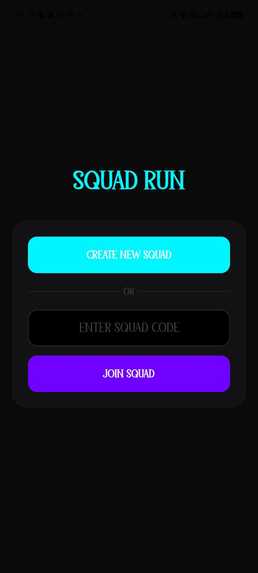
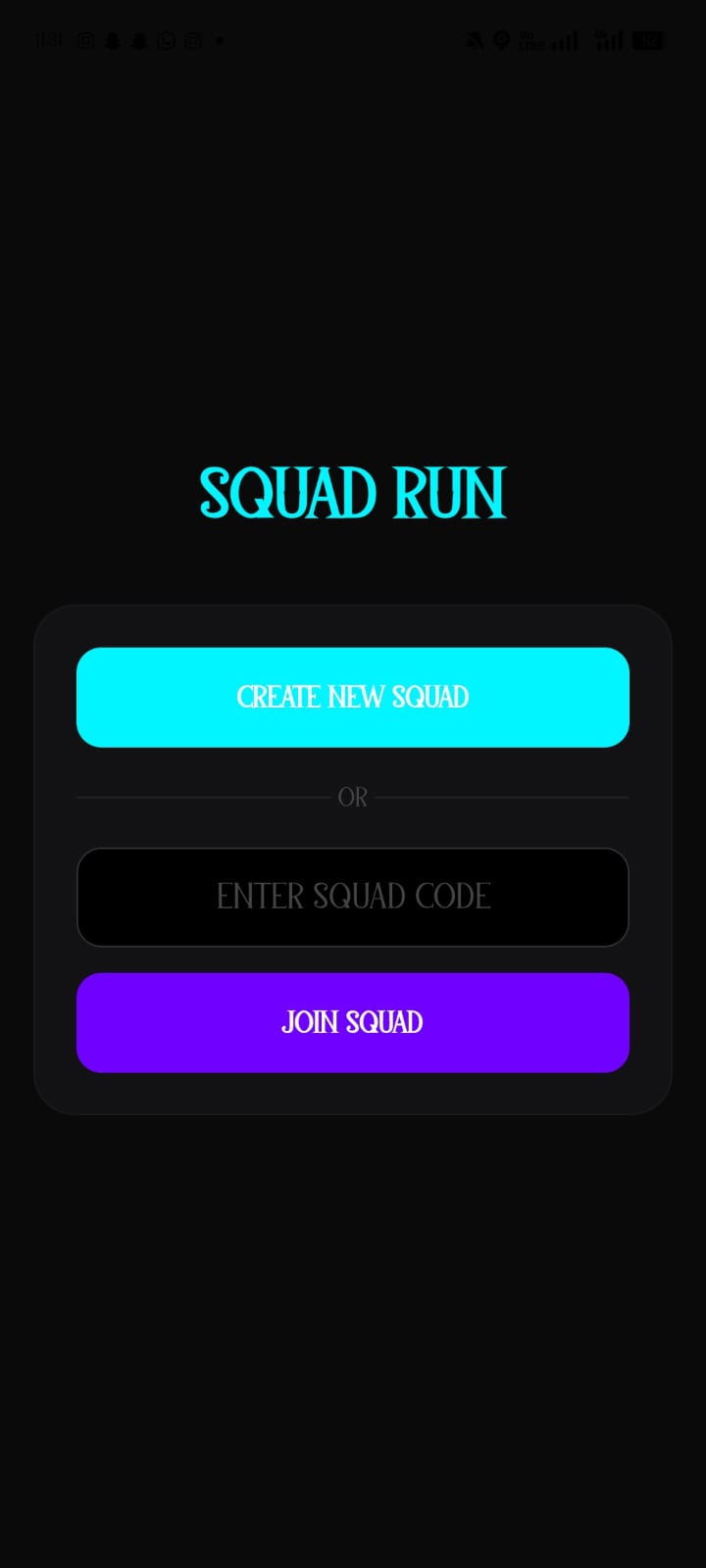
Squad Run Main Dashboard
-
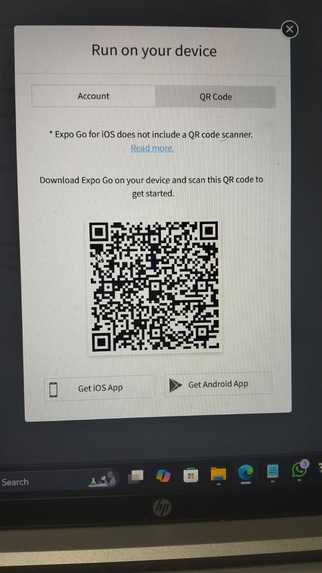
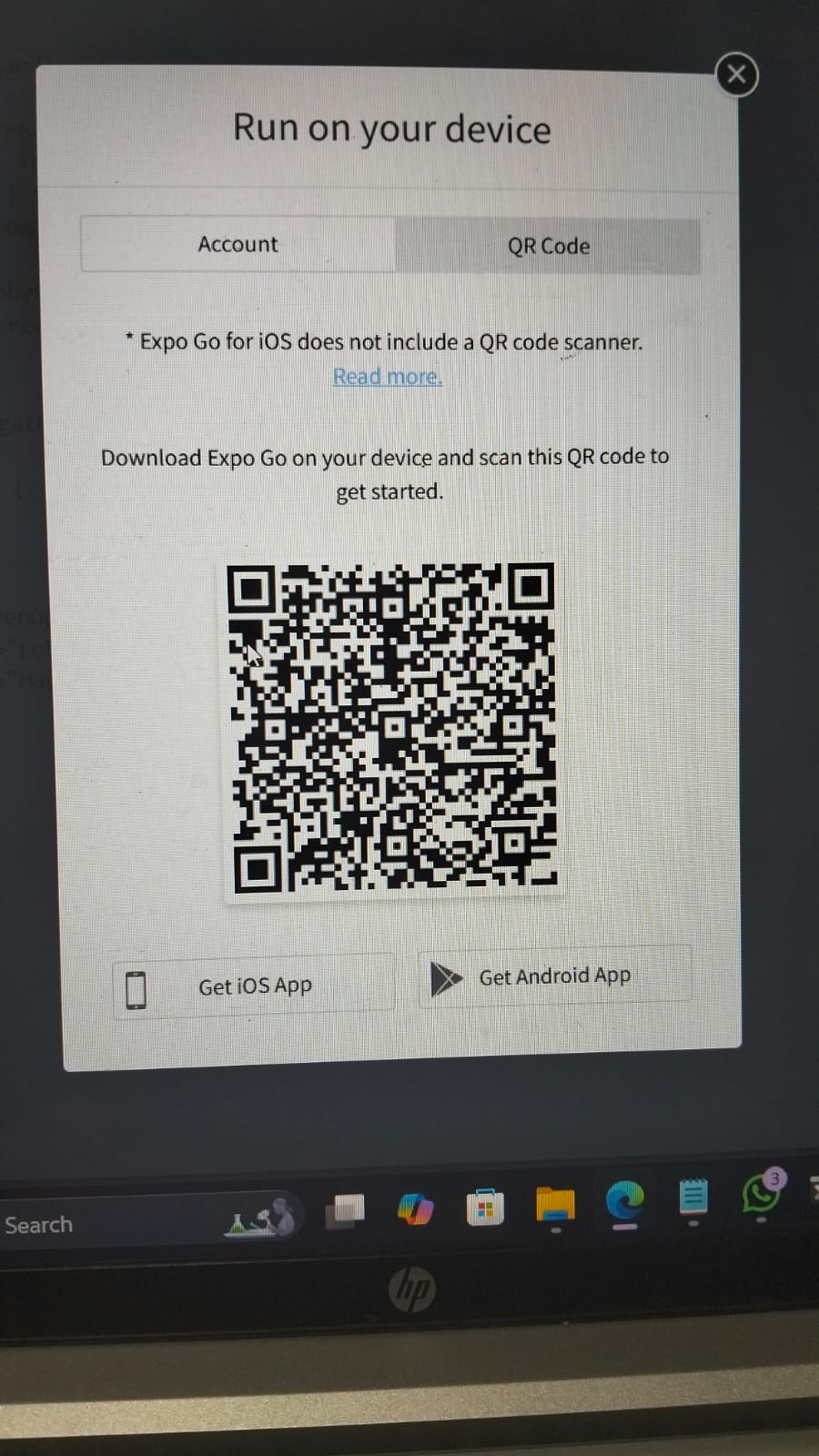
Qr Code to Access the Squad Run
Inspiration
In an era where social connectivity is at its peak digitally, physical interaction is at an all-time low. We noticed that friends often "hang out" in group chats but rarely meet in the real world. We wanted to bridge this gap. Inspired by tactical stealth games and the need for physical movement, we envisioned SquadRun—a platform that turns the urban landscape into a massive multiplayer game, incentivizing people to step outside and complete objectives together.
What it does
SQUAD RUN is an urban adventure platform that gamifies physical socializing. It transforms your city into a massive multiplayer lobby where the only way to win is to move. Users create or join a "Squad," receive a tactical mission briefing, and must physically travel to a specific "Data Terminal" (GPS coordinate) to decrypt files.The app features a tactical Head-Up Display (HUD) with:Live Radar: A rotating scanner that visualizes squad activity.Proximity-Gated Hacking: A decryption bar that only progresses when the user is within a $\approx 200m$ radius of the target.Squad Intel: A real-time feed showing the distance of other squad members and a tactical chat for coordination.
How we built it
We developed SQUAD RUN using a robust mobile stack centered on real-time geospatial data:
React Native & Expo: Used for the core framework to ensure cross-platform compatibility.
React Navigation 7: Implemented for seamless state transitions between the mission lobby and the live map.
Expo Location: Leveraged for high-precision GPS tracking and proximity logic.
Animation Engine: Created the radar and glitch effects using the Animated API with Easing functions to give it a "Cyber-Noir" gaming feel
Challenges we ran into
The primary hurdle was Version Hell. Aligning SDK 54 dependencies with the latest navigation libraries required surgical precision in the package.json to prevent build failures. We also faced a "Fatal Asset Error" in the final hour, which forced us to pivot from external assets to a purely code-driven UI—a challenge that ultimately led to a cleaner, faster-loading application. Lastly, optimizing the GPS watchPositionAsync to be responsive without causing "marker jitter" was a lesson in fine-tuning sensor sensitivity.
Accomplishments that we're proud of
We are incredibly proud of the UI/UX Immersion. We managed to take a standard map interface and turn it into a high-stakes "Mission Control" center. Seeing the Decryption Bar hit 100% and trigger the Victory Reward Screen after a physical walk was a "Eureka" moment. We also successfully built a functional squad-sharing system that allows users to generate and distribute mission codes instantly.
What we learned
This project was a masterclass in Geospatial Gamification. We learned that the most engaging apps bridge the gap between the digital and physical worlds. Technically, we deepened our understanding of React Hooks (useEffect, useRef) for handling persistent animations and live data streams. We also learned how to build a "resilient UI"—designing an app that looks premium even when limited to native code and no external graphical assets.
What's next for SQUAD RUN
The current build is just the "Extraction Phase." Our roadmap includes:
Augmented Reality (AR): Visualizing the "Data Terminals" through the phone's camera.
Competitive Leaderboards: Global rankings for the fastest squads and most territories secured.
Fitness Integration: Syncing with health data to reward users for calories burned during missions.
Persistent Backend: Migrating from mock data to a full Firebase/Socket.io backend for thousands of concurrent squads.
Built With
- expo-location
- expo.io
- javascript
- native
- react
- react-native
- react-navigation

Log in or sign up for Devpost to join the conversation.