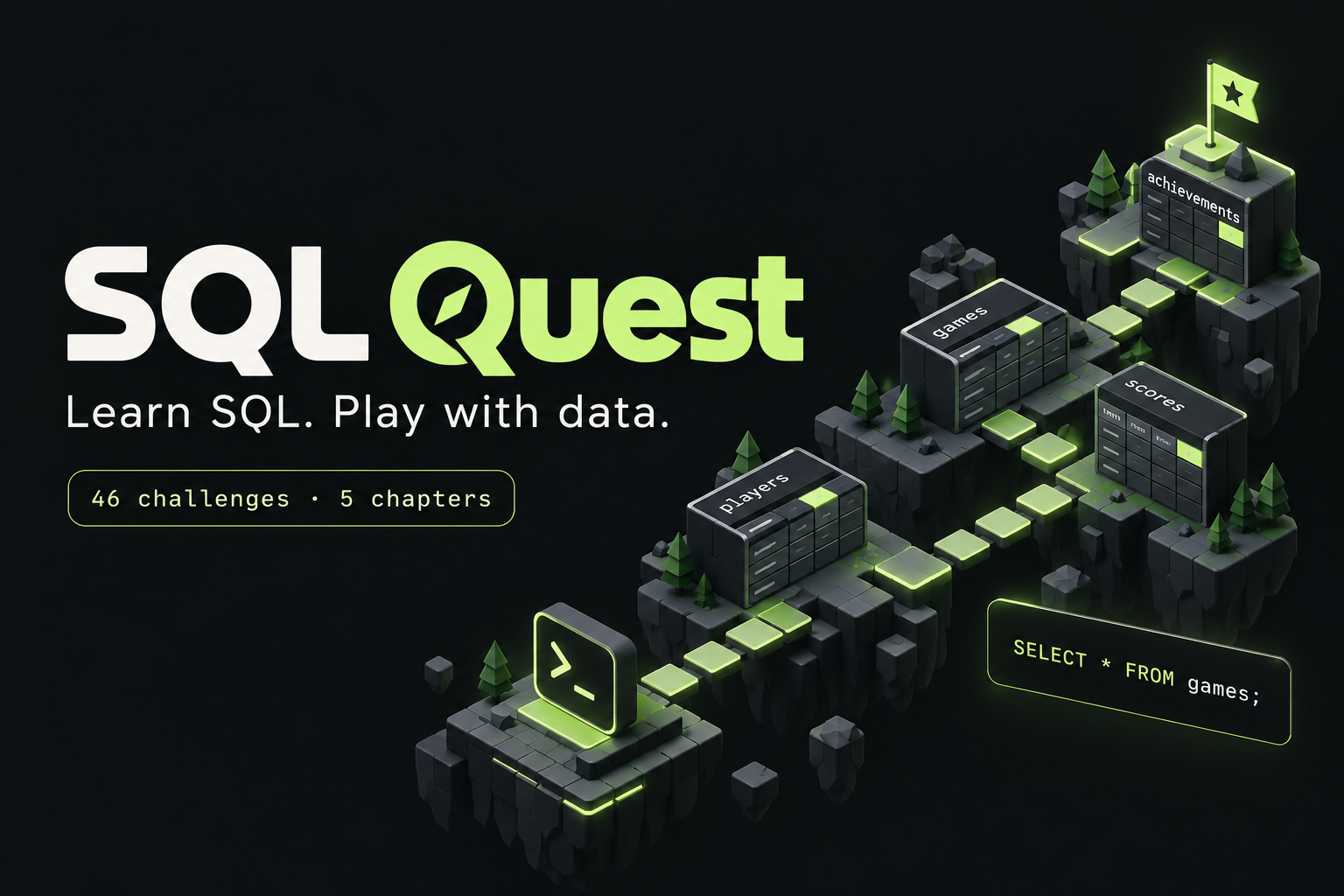
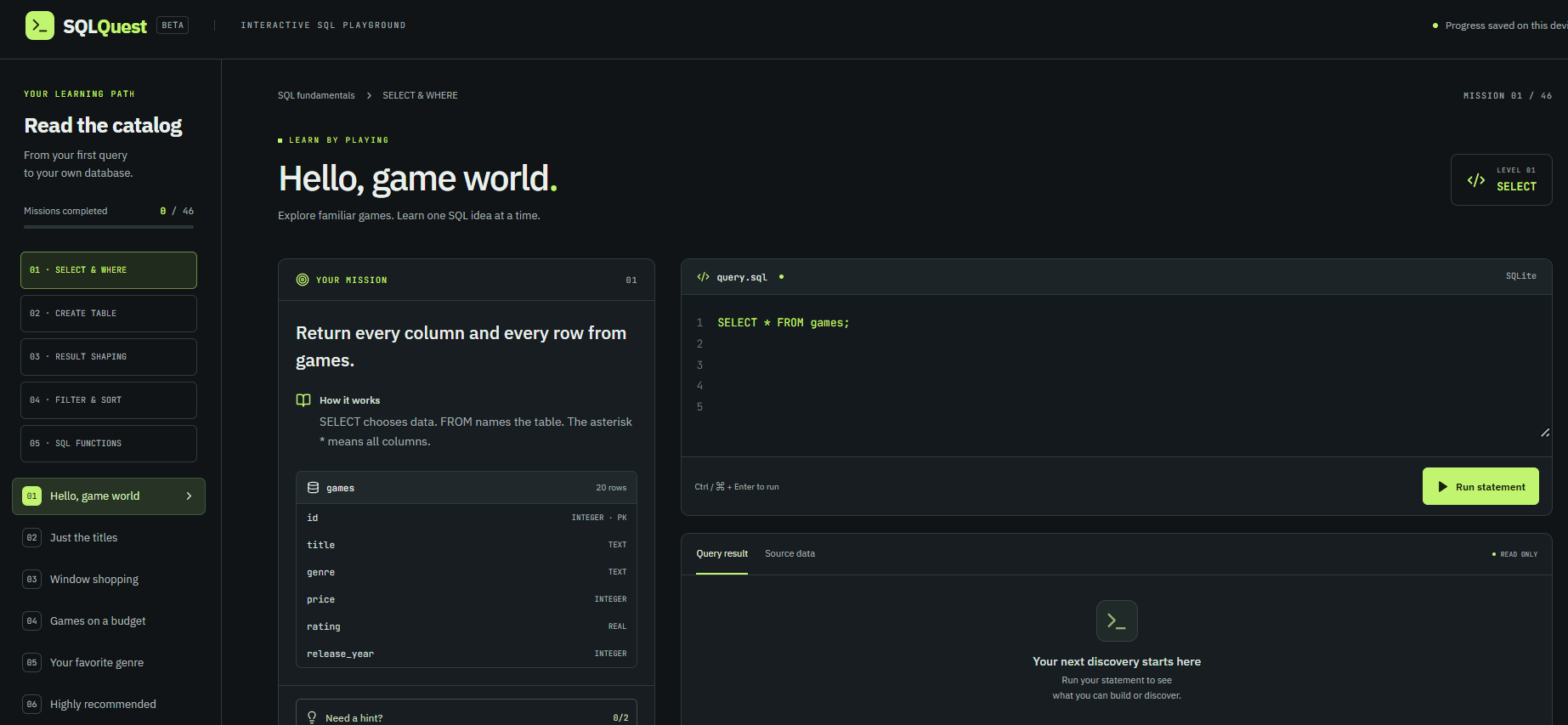
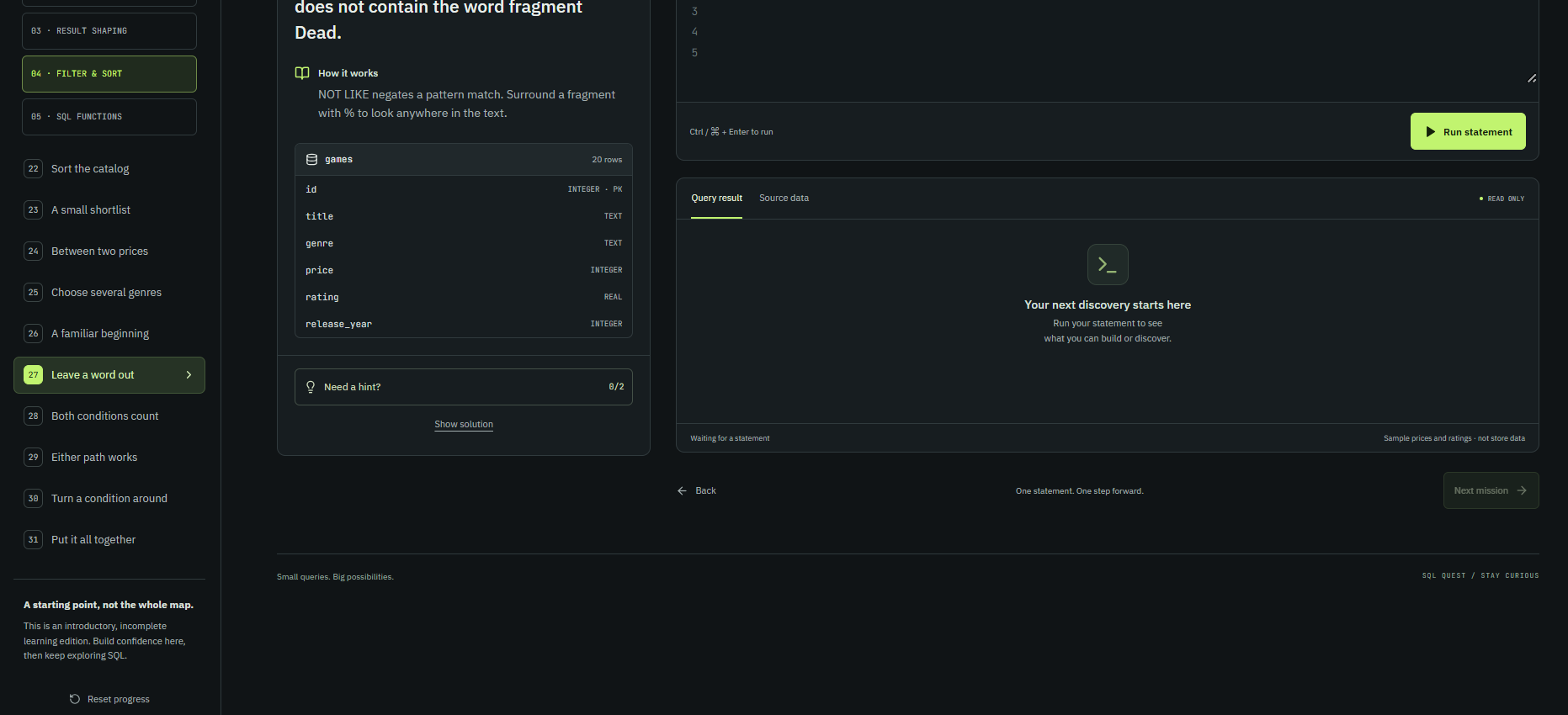
Inspiration As a second-year university student starting to learn SQL, I wanted to build something useful while creating my first portfolio project. SQL can feel abstract when you only read explanations, so I chose a familiar subject: video games. That became SQL Quest—a place where beginners can learn by querying a catalog of real games. What it does SQL Quest contains 46 interactive challenges across five chapters:
- SELECT and WHERE
- CREATE TABLE and constraints
- DISTINCT, aliases, concatenation, and COALESCE
- Filtering, sorting, and limiting results
- String and numeric functions Each challenge includes a short explanation, progressive hints, and an optional complete solution. Learners execute real SQL, inspect the output, and receive immediate feedback. Progress and query drafts are saved locally without an account. How I built it I developed the project in collaboration with an AI coding assistant, using the Devpost Learn Skill Pack to structure planning and development. The application uses React, TypeScript, Vite, and SQLite through sql.js. SQL runs in a browser worker. Query exercises compare actual results with reference results, while CREATE TABLE exercises inspect the resulting schema and constraints. What I learned The project showed me how important it is to define expected behavior before building. “Check a SQL answer” sounds simple, but it requires decisions about column names, duplicate rows, sorting, and alternative correct queries. Testing the interface also highlighted how much feedback placement matters: an error message is only useful if the learner can immediately see it. Challenges The main challenges were validating different correct solutions, checking table constraints, and handling functions whose syntax differs between SQL dialects. Selected functions use a compatibility layer, with those differences explained in the lessons. Another challenge was keeping the learning experience approachable as the course expanded. What’s next SQL Quest is an introductory, incomplete learning edition—a starting point rather than a complete SQL course. Future improvements could include JOINs, aggregation, additional datasets, and more independent practice.
Built With
- codex
- css
- devpost
- git
- github
- html
- javascript
- learn
- lucide
- react
- skill
- sql.js
- sqlite
- typescript
- vite
- web-workers
- webassembly

Log in or sign up for Devpost to join the conversation.