-
-
SPYRO App
-
SPYRO App
-

SPYRO logo

Inspiration
The inspiration for Spyro came from observing how invisible environmental factors—like pollen, pollution, and smoke—drastically limit the freedom of people with respiratory sensitivities. While weather apps give general data, there is a lack of real-time, personal feedback that connects a person’s physical symptoms to their immediate surroundings. We wanted to build a bridge between wearable technology and environmental data to give people their "airborne freedom" back.
What it does
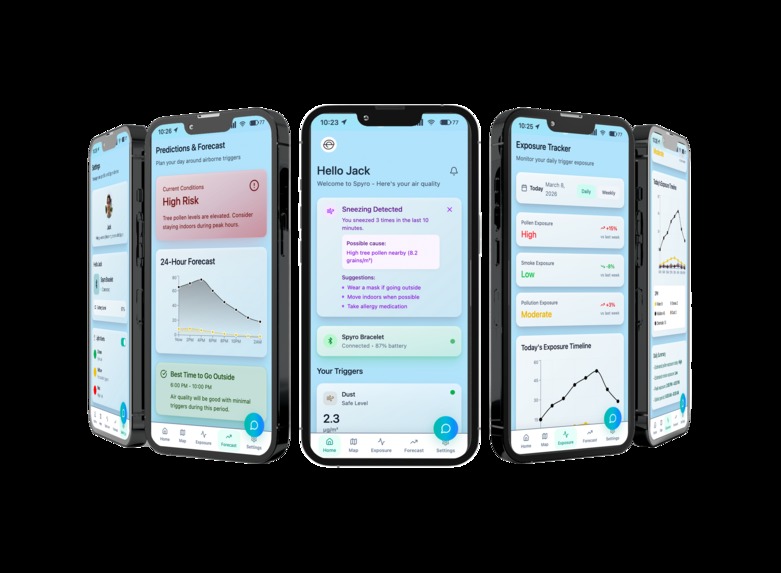
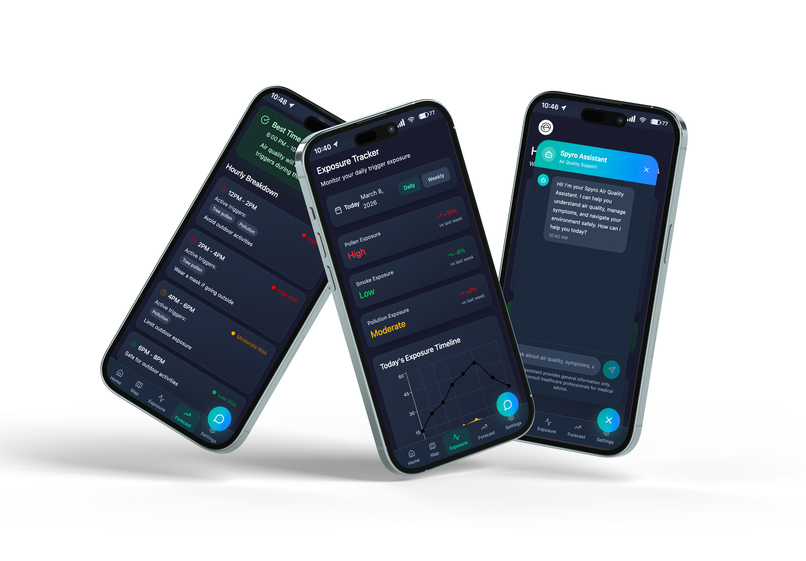
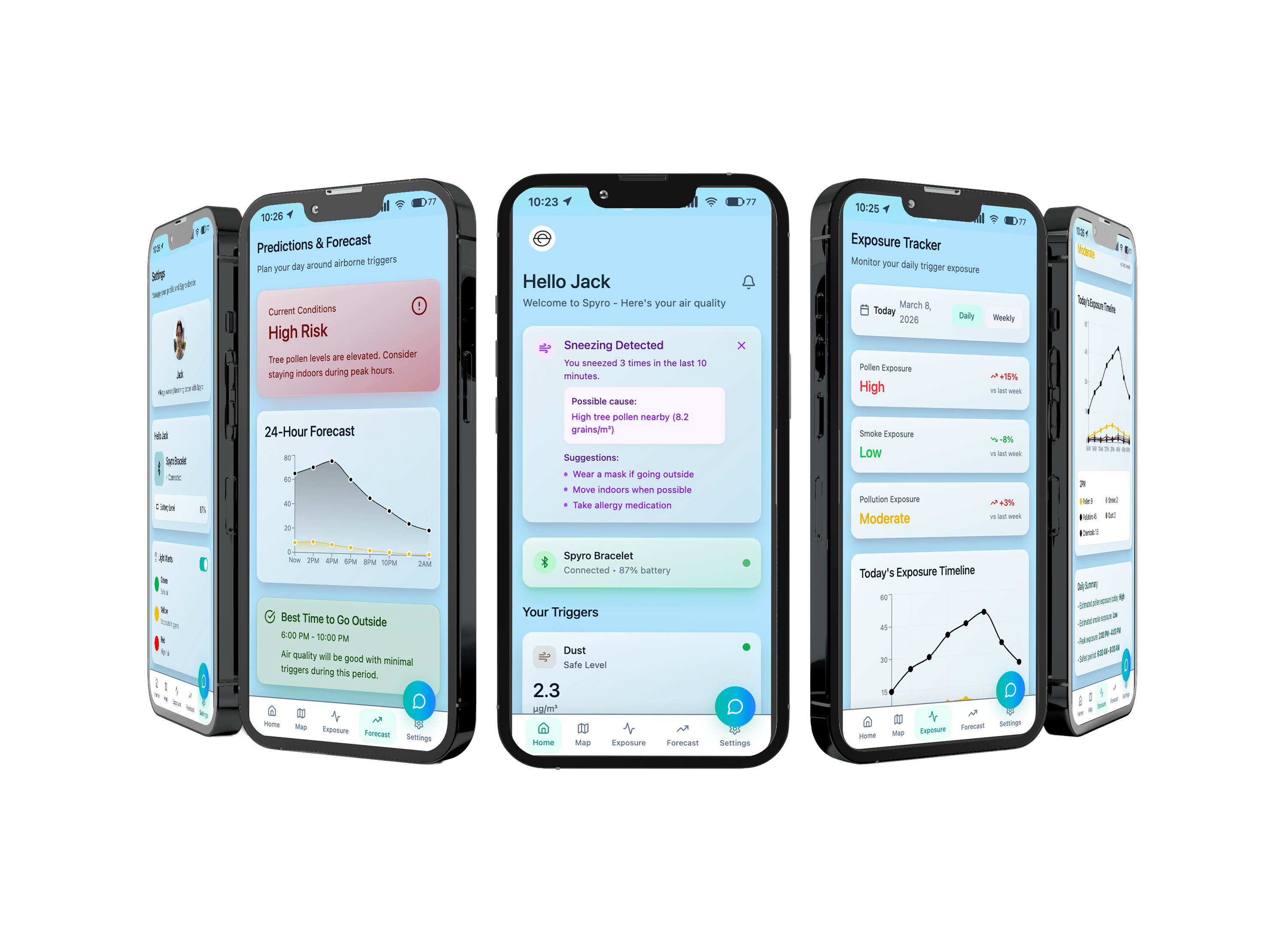
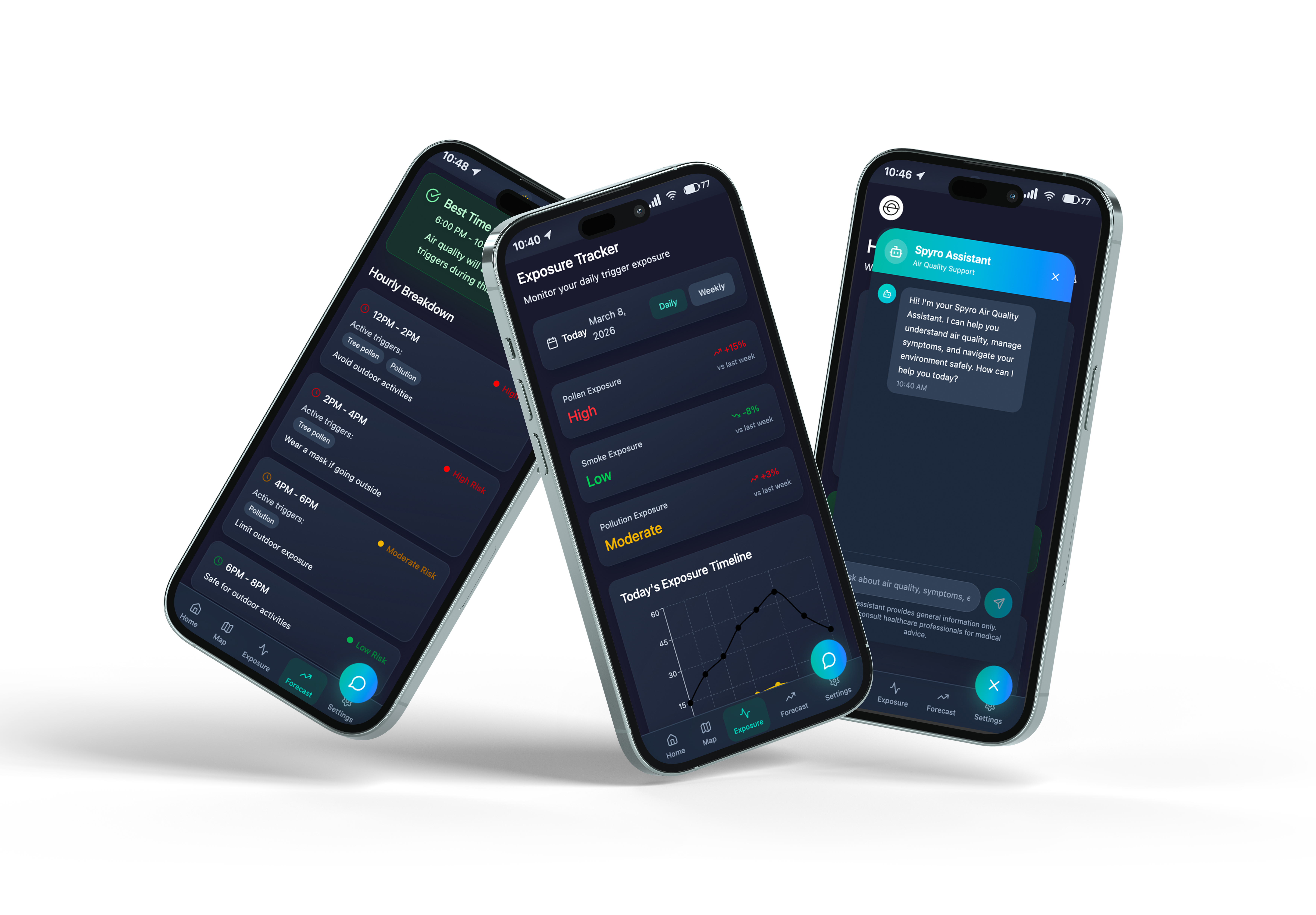
Spyro is a comprehensive health ecosystem consisting of a wearable bracelet, necklace, keychain, etc and a mobile application. It tracks a user’s physiological responses (such as sneezing or coughing) and cross-references them with hyper-local air quality data. The app provides real-time alerts, an "Exposure Tracker" to identify long-term trends, a predictive forecast for planning outdoor activities, and a live map that routes users through areas with the cleanest air.
How we built it
The project began with intensive UX research into accessibility and environmental triggers. We designed the interface in Figma, focusing on high-contrast visuals and intuitive navigation to ensure data remained readable even in bright outdoor conditions. The 3D components and product visualizations for Spyro were modeled in Rhino to create a sleek, industrial design. For the data visualization, we implemented matrix transformations to create fluid, clear graphs that make complex environmental metrics easy to digest.
Challenges we ran into
One of the primary challenges was finding a balance between providing detailed data and avoiding "information overload." Environmental data can be dense and intimidating, so we had to iterate on the UI multiple times to ensure the most critical information—the "Current Risk"—was the first thing the user saw. Another technical hurdle was designing the routing logic for the Live Map, ensuring it could accurately filter for specific triggers while providing a seamless navigation experience.
Accomplishments that we're proud of
We are particularly proud of the "Sneezing Detected" feedback loop. Creating a system that doesn't just show the air quality, but actually learns the user's personal triggers through their body's reactions, was a major breakthrough. Additionally, achieving a high-contrast, accessible design that feels modern and medical-grade rather than just another "utility app" was a significant win for the design team.
What we learned
This project taught us the importance of empathetic design. We learned that for health-tech to be effective, it must be proactive rather than reactive. Through the development process, we gained deeper technical skills in 3D rendering and complex data visualization, but more importantly, we learned how to synthesize hardware and software into a single, cohesive user experience that addresses a real-world pain point.
What's next for Spyro
Moving forward, we want to expand the Spyro ecosystem to include indoor air quality monitoring for homes and offices. We also plan to integrate a community reporting feature where users can "crowdsource" air quality alerts (like a localized smoke or chemical smell) in real-time. Our ultimate goal is to evolve Spyro into a global platform that advocates for cleaner air and better environmental transparency for everyone.
Built With
- figma


Log in or sign up for Devpost to join the conversation.