-
-
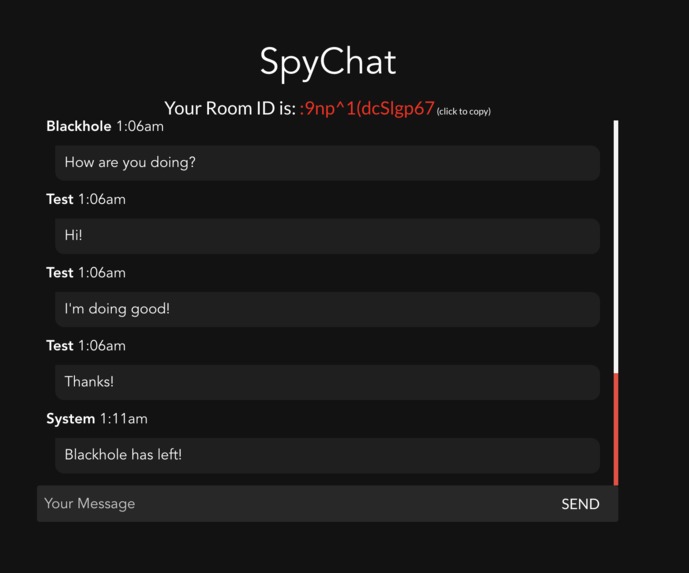
SpyChat in action :)
-
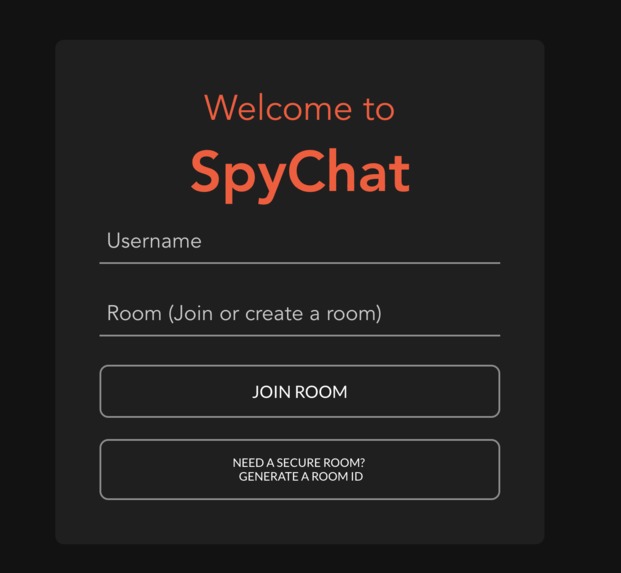
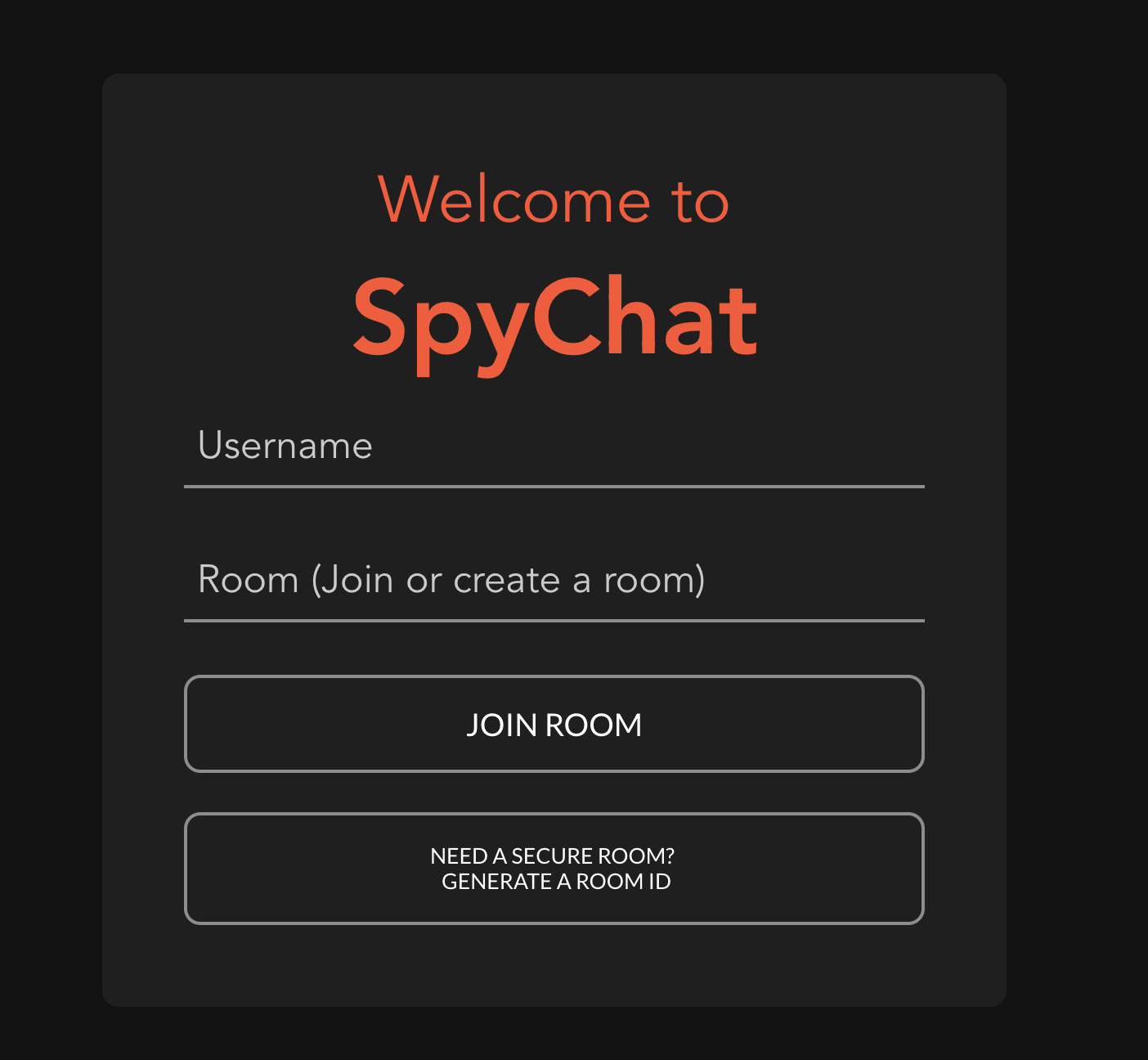
SpyChat Join Screen
-
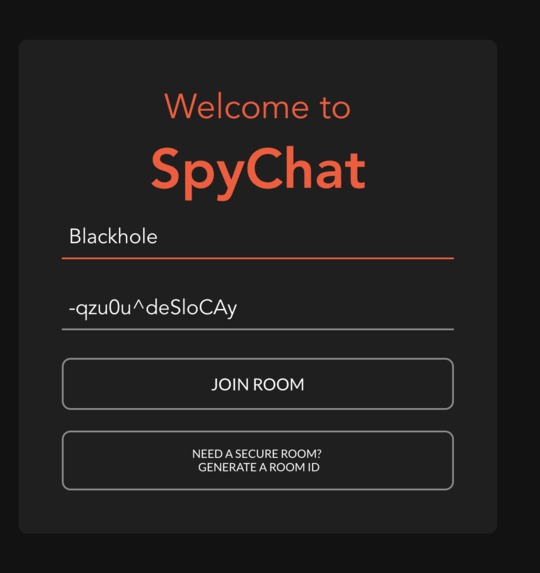
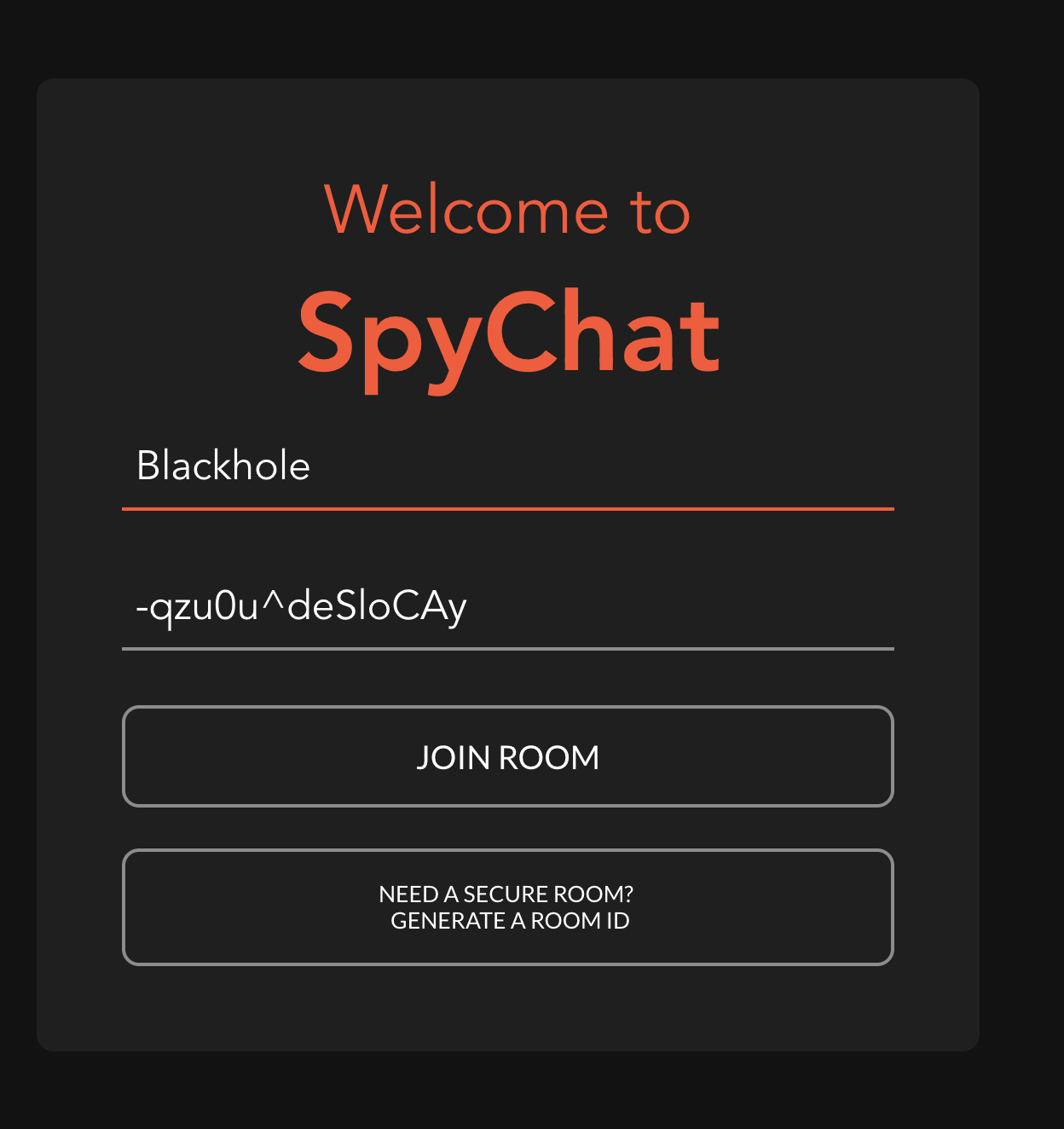
SpyChat Join Screen with ID Generation and username filled out
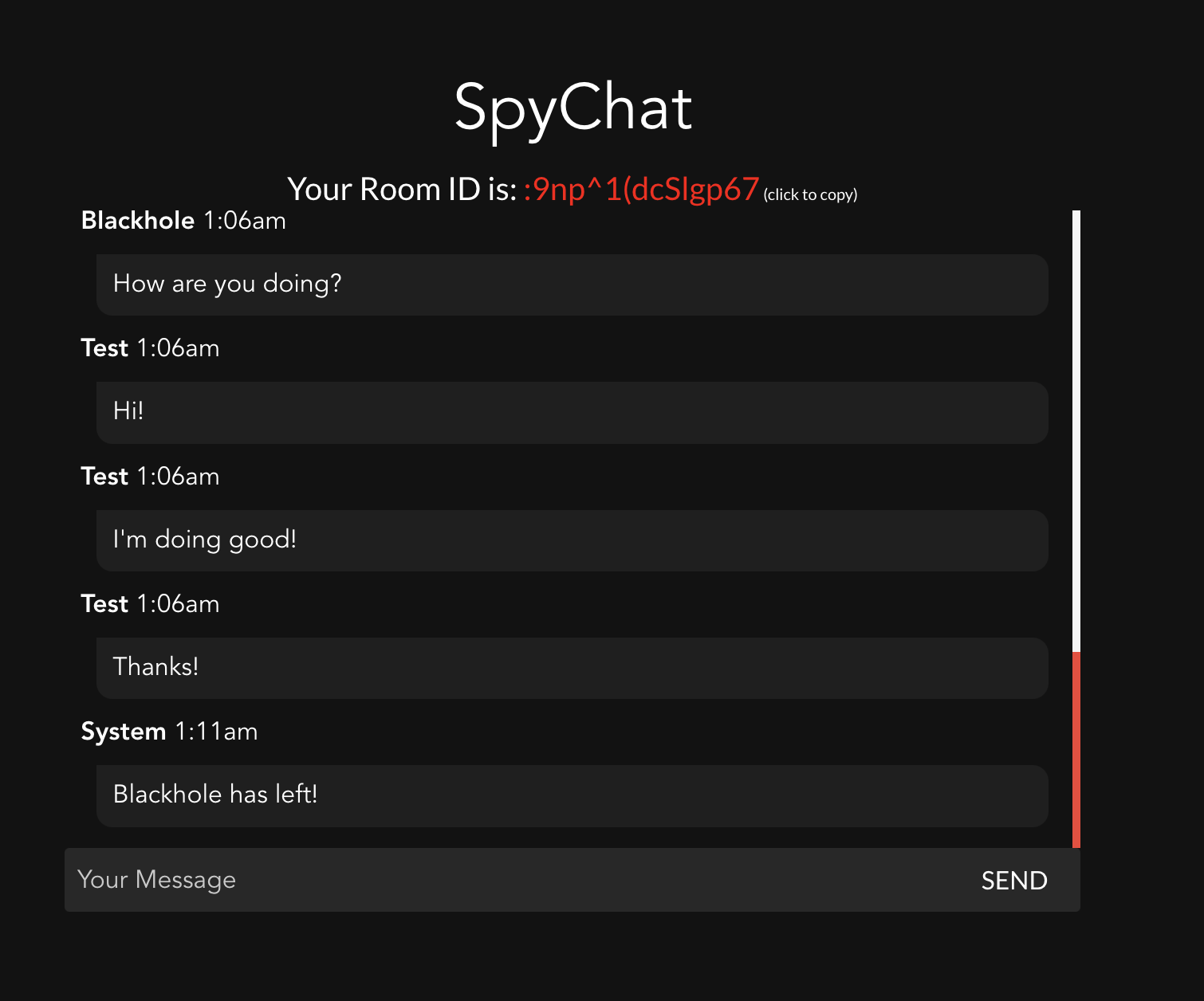
What it does
SpyChat aims to offer a secure, easy-to-use platform to exchange confidential data.
How I built it
I built SpyChat's frontend using HTML, CSS, and JQUERY. I build it's backend using Express.JS for the server, and Socket.IO for data transmission.
Challenges we ran into
I kept getting unfamiliar JS syntax errors that I had a hard time fixing. I also had trouble
Accomplishments that we're proud of
I fixed all of the JavaScript and UI bugs, and I learned multiple new technologies.
What we learned
I learned Socket.IO, JQUERY, and Express.JS. I also learned how to debug my code more efficiently.
What's next for SpyChat
- When a user leaves the chat, it only closes on one end, and other users can still see past messages. I would like to implement a “end-chat” function, that automatically runs as soon as a user leaves.
- Similar to what some other chat apps have, I would like to integrate a message expiry feature, where messages disappear after a fixed set of time if inactivity is detected, so all potentially important messages are not compromised.
- Add a better chat system based on Markdown, that supports links, images, emoji (using Twemoji), and more. As of now, SpyChat only supports plain text.


Log in or sign up for Devpost to join the conversation.