-
-
SproutVision V1
-
SproutVision V1
Inspiration
I spent four years in commercial hydroponics — Head Grower at Miss Microgreens, where we ran ~900 microgreen trays at a time. I saw expert growers walk a rack and read a tray in about five seconds: germination, stress, mold, harvest readiness. I built SproutVision so a beginner can do the same thing — a mixed-reality coach that grades a tray, logs every scan, and turns four years of grower instinct into an assistant for the home grower.
What it does
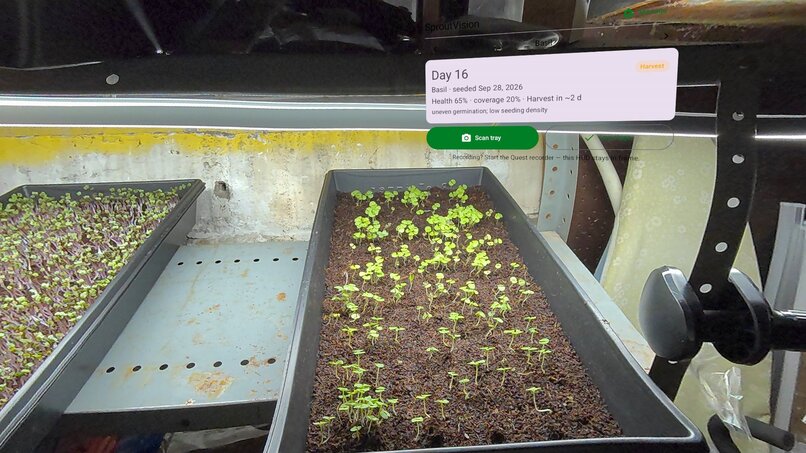
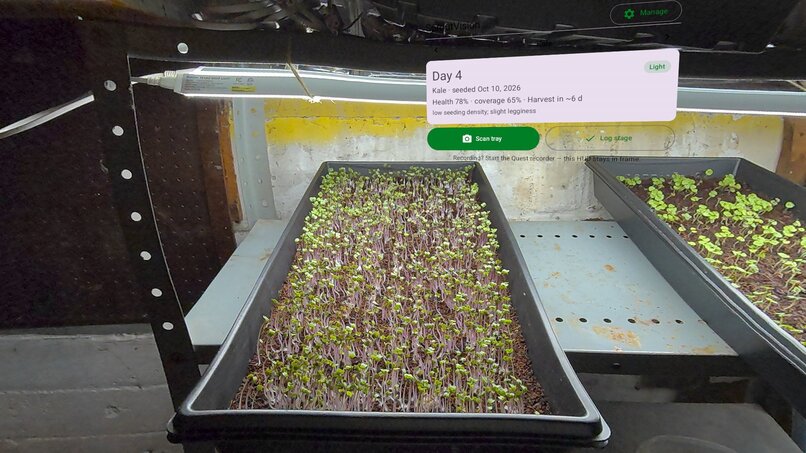
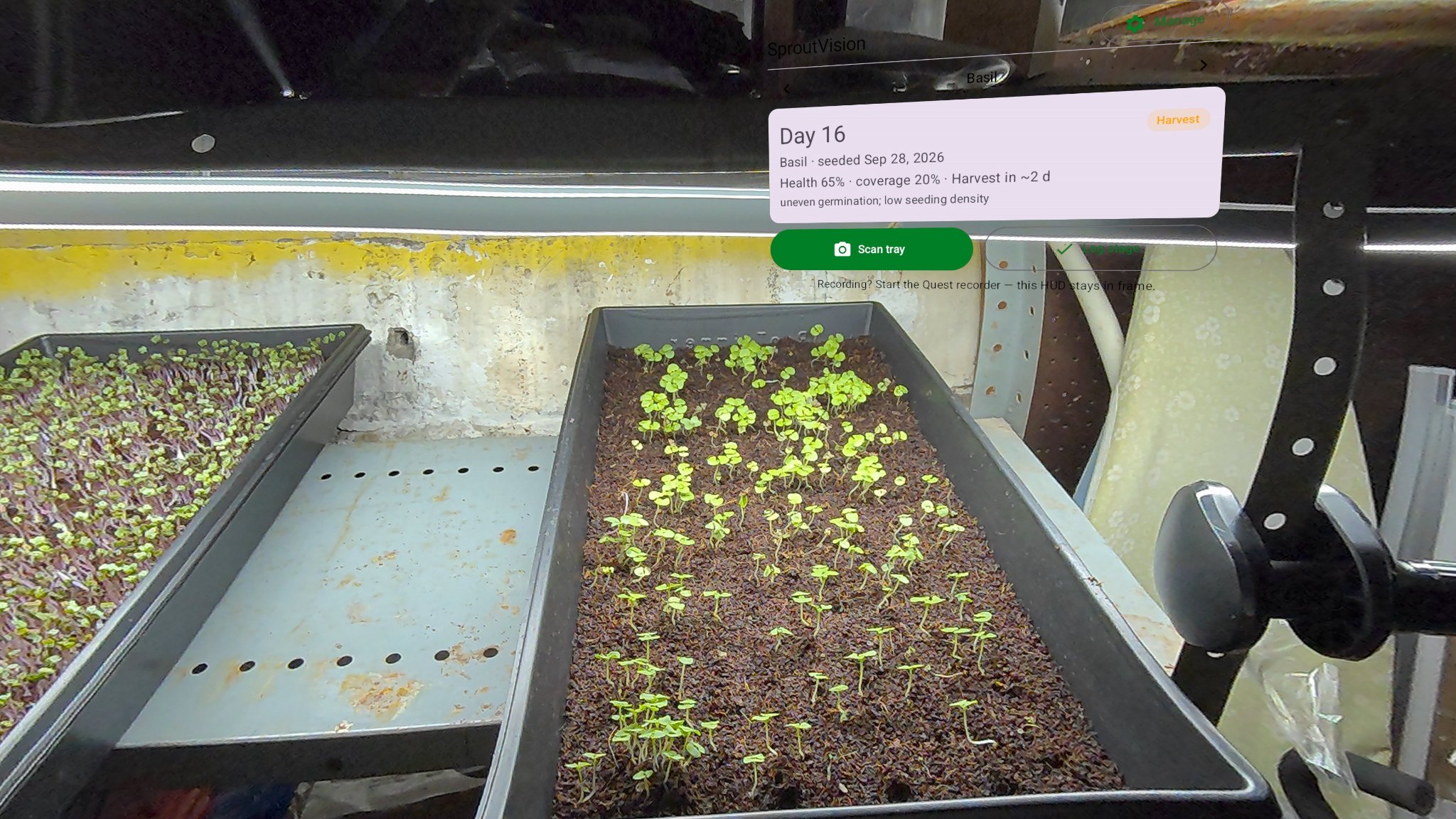
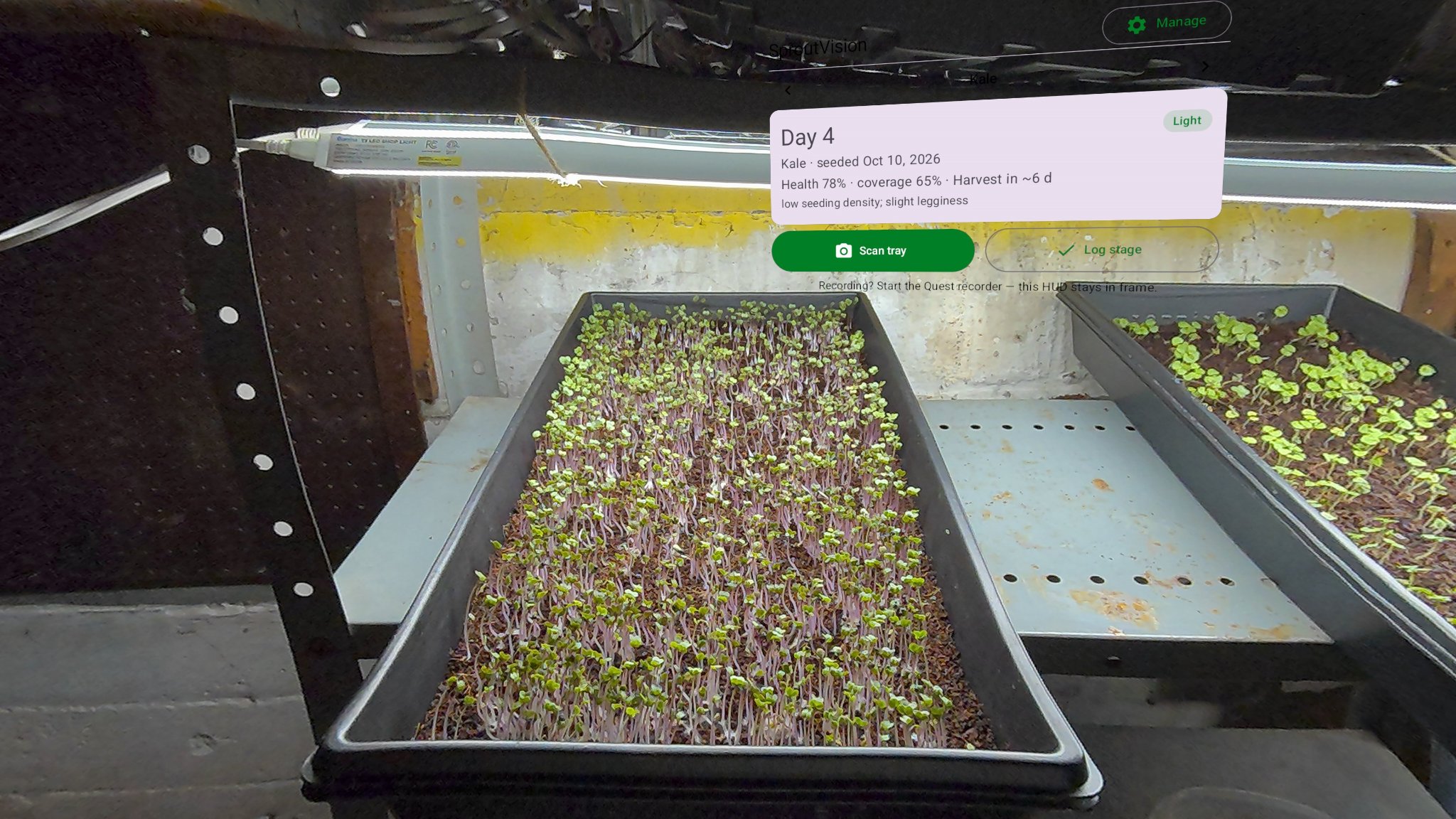
SproutVision is a mixed-reality crop assistant for Quest 3. Look at a microgreen tray and pinch to scan it: the app captures a frame, sends it to Gemini vision, and returns a health verdict — germination quality, canopy coverage, stress and mold signs, harvest readiness. A cinematic scan sequence plays over the tray, a verdict card appears beside it, and the result is read aloud, because a grower's hands are rarely free. Every scan is logged with history, CSV export, before/after comparisons, and a crop-trial scorecard, so a tray's story accumulates instead of evaporating.
Since October the app has a second analyzer, and a Settings toggle chooses between them. On the Meta setting, SAM 3.1 measures the tray from the photo itself — actual plant pixels inside the tray box, not an estimate — and Muse Spark writes the verdict from that measurement. On my basil's Day 50 scan, SAM measured 41% coverage while the by-eye estimate said 85%, and the card shows both numbers, labelled with which method produced them. If a measurement fails, the scan still returns a verdict, but the card says the coverage is an estimate — a measured number is never swapped in quietly.
How I built it
SproutVision is a native Android app built in Kotlin with the Meta Spatial SDK — not a game engine project. Spatial panels built with Jetpack Compose float over Quest 3 color passthrough, and everything is driven by hand tracking: look at a tray, pinch "Scan tray," and the app captures a frame and sends it to the Gemini multimodal API, which returns a structured verdict — health score, canopy coverage, growth stage, issues flagged, and estimated days to harvest.
The verdict appears on a high-contrast card designed to stay legible under grow lights and at a glance. Every scan is logged in a tray's history, with CSV export, before/after image comparison, and a crop-trial scorecard that tracks germination across trays. A cinematic scan sequence, read-aloud results, and crop trials are part of the experience.
Version 2, shipped October 18 during the competition window, added the cinematic scan sequence, the read-aloud verdict, the crop-trial scorecard, and the before/after comparison. It's built solo by a commercial grower, developed with Muse Code on a MacBook Air, and verified in-headset on live trays on my own grow rack.
The Meta analyzer runs on Meta's Model API: the frame is uploaded, SAM 3.1 segments the tray and the plants in two passes, and coverage is the plant pixels clipped to the tray box. Spark receives that summary — coverage, largest gap, unevenness — and returns the verdict. Every stored scan records which analyzer produced it, and the Meta path is capped at 25 measured scans a day to keep API costs sane.
Challenges I ran into
Legibility in a real grow room. My first scan results were white text floating over passthrough — completely unreadable under grow lights. I built a high-contrast verdict card with heavy use of opacity and layered panels, and tested it under my own purple LEDs.
Designing for wet hands. A grower's hands are wet, full, or both, so nothing in the flow could require fine control. Everything is pinch-and-look, with read-aloud results and one-button actions.
The AI doesn't know the grow plan. SproutVision once graded my basil "harvest overdue" as a microgreen — but as a pesto plant it was exactly on schedule. I added a per-tray grow plan (crop type, days since sowing) that goes in every scan, so the verdict is judged against the grower's intent, not a generic ideal.
Shipping to Quest. Getting the build into a Meta release channel meant fixing four AndroidManifest restrictions and two Meta VRC failures on v81, plus a crash in the scan sequence that only reproduced on real hardware.
Accomplishments that I'm proud of
It works end to end on real hardware, on real crops — my red kale tray's harvest was its first filmed grade, and it's tracked my basil for 50 days. I built something a commercial grower would actually use — not a demo, but a tool that lives on my grow rack and teaches new growers the five-second tray read.
What I learned
Domain knowledge is a design superpower. Knowing which five seconds of a tray check actually matter shaped every UI decision, from the scan sequence to the verdict card. I also learned that accessibility isn't a feature — it's the product, when your users' hands are wet and full and they're standing under purple lights.
What's next for SproutVision
Porting to Android XR for the XREAL Aura glasses, tray-anchored persistent data, and in-app recording that composites the camera feed and HUD — so viewers can finally see what the grower sees. The Quest version launches on the Meta store in February 2027.
Remove the AI call and the tray management, history, and scorecard still stand — the AI is the scout, not the app.
Built With
- gemini-api
- hand-tracking
- kotlin
- meta-quest
- meta-spatial-sdk
- mixed-reality
- passthrough


