-
-
-
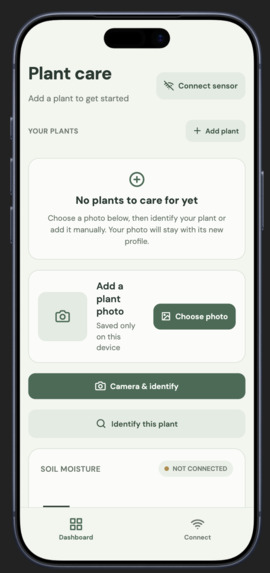
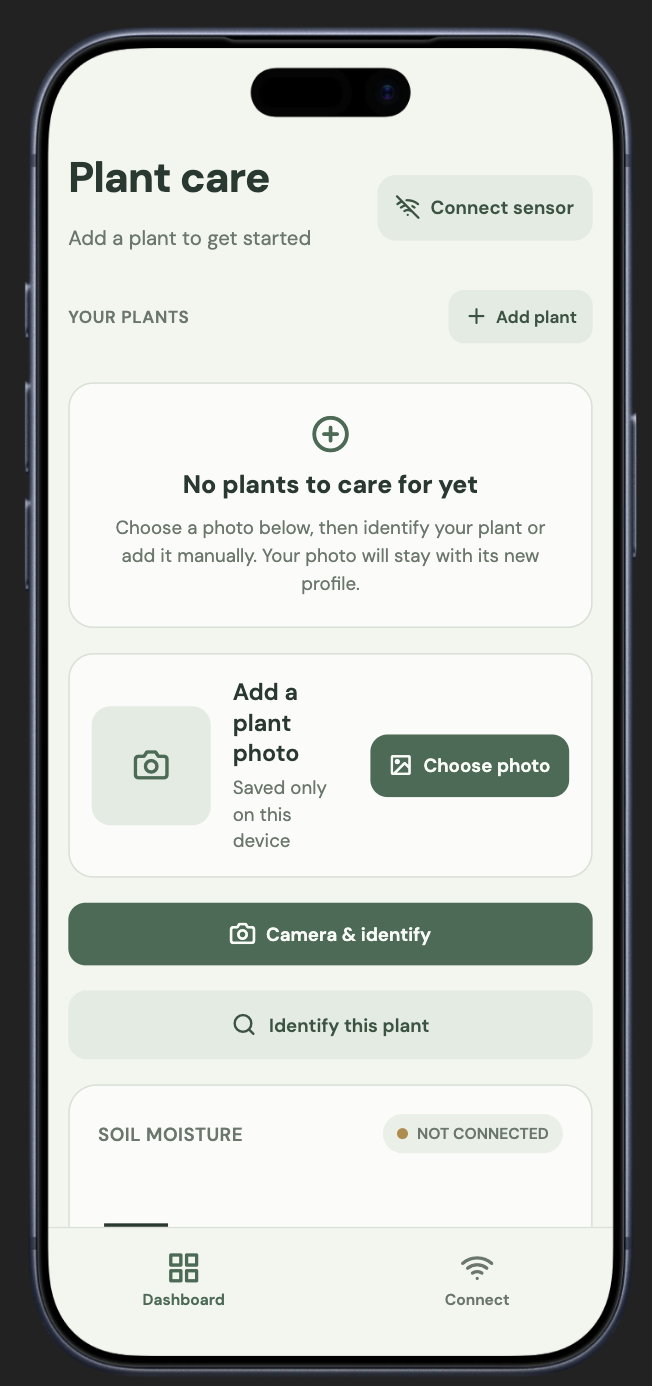
Plant Care Dashboard: Onboarding and profile creation screen
-
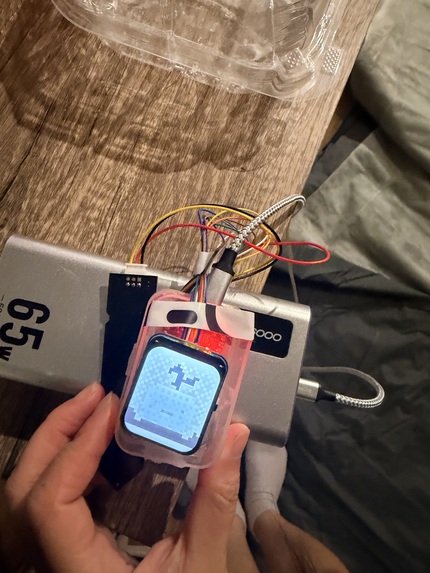
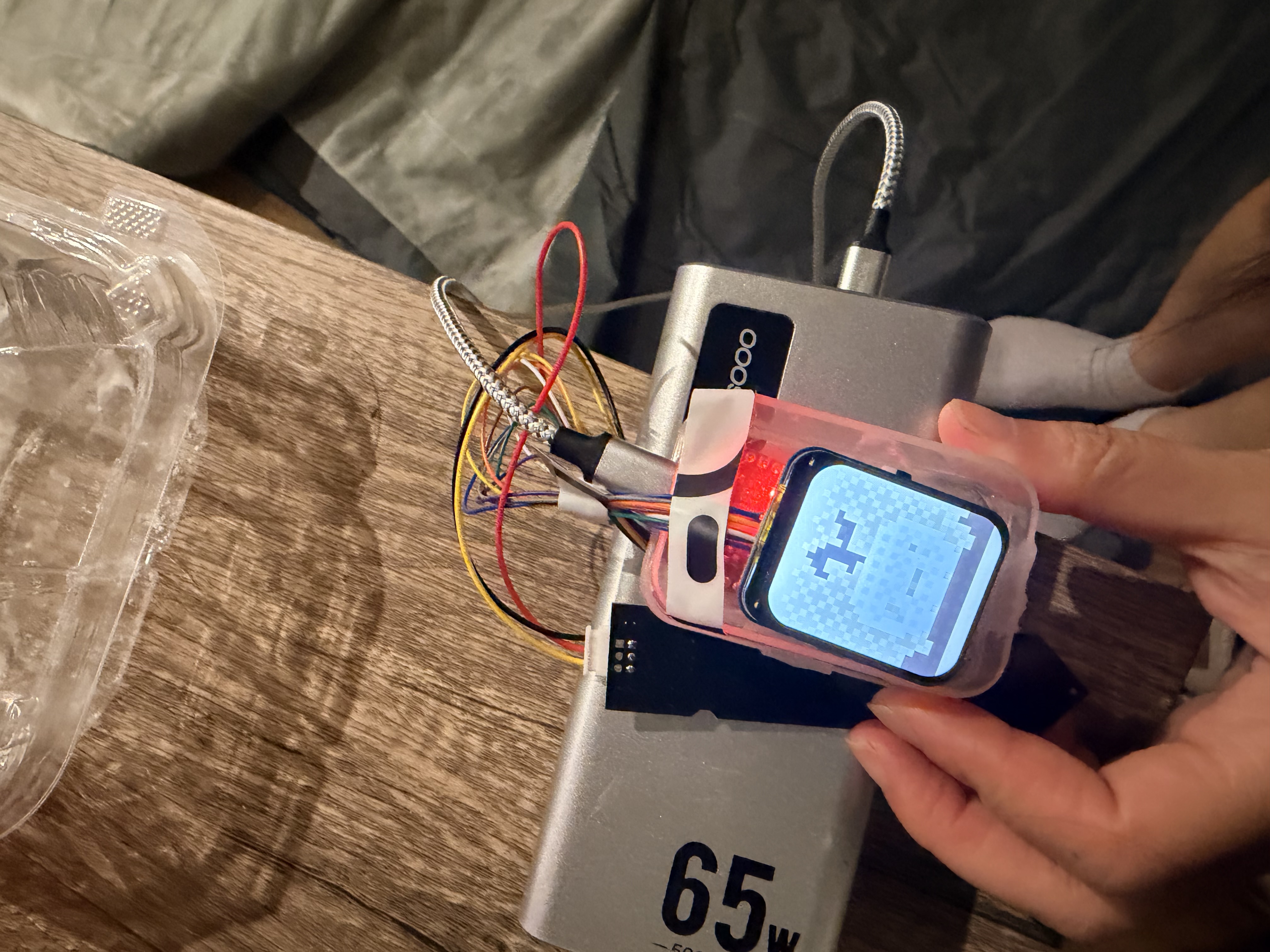
Live test of the assembled Sprout IoT sensor unit.
-
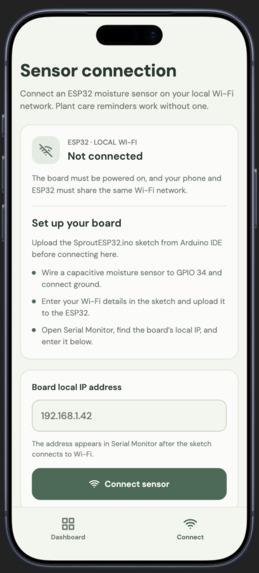
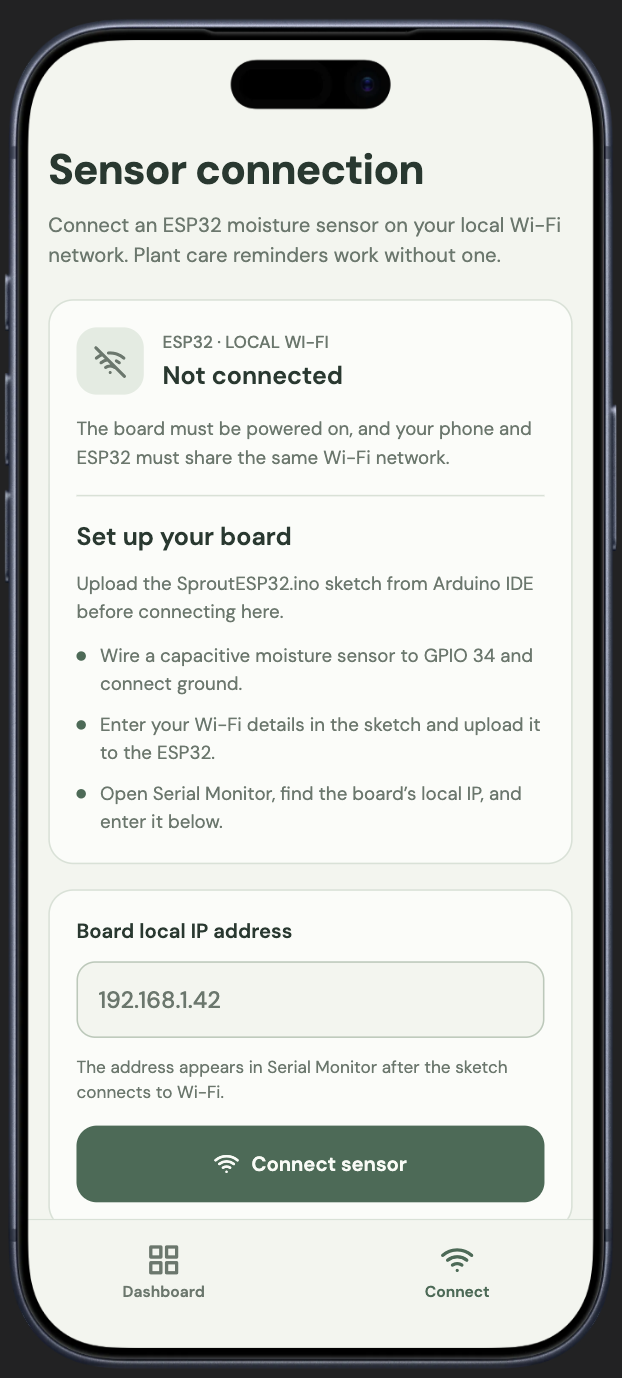
Hardware integration screen — step-by-step setup and local Wi-Fi pairing for the ESP32 soil moisture sensor.
-
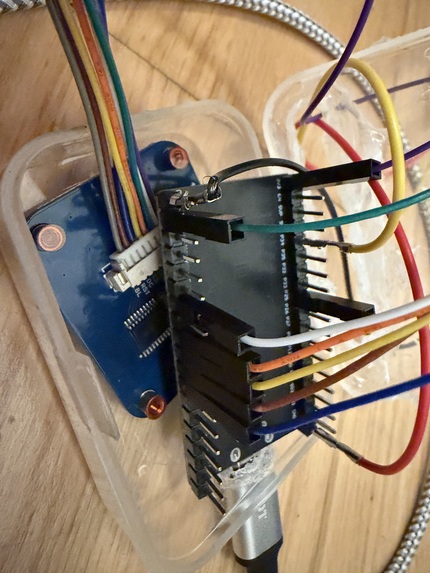
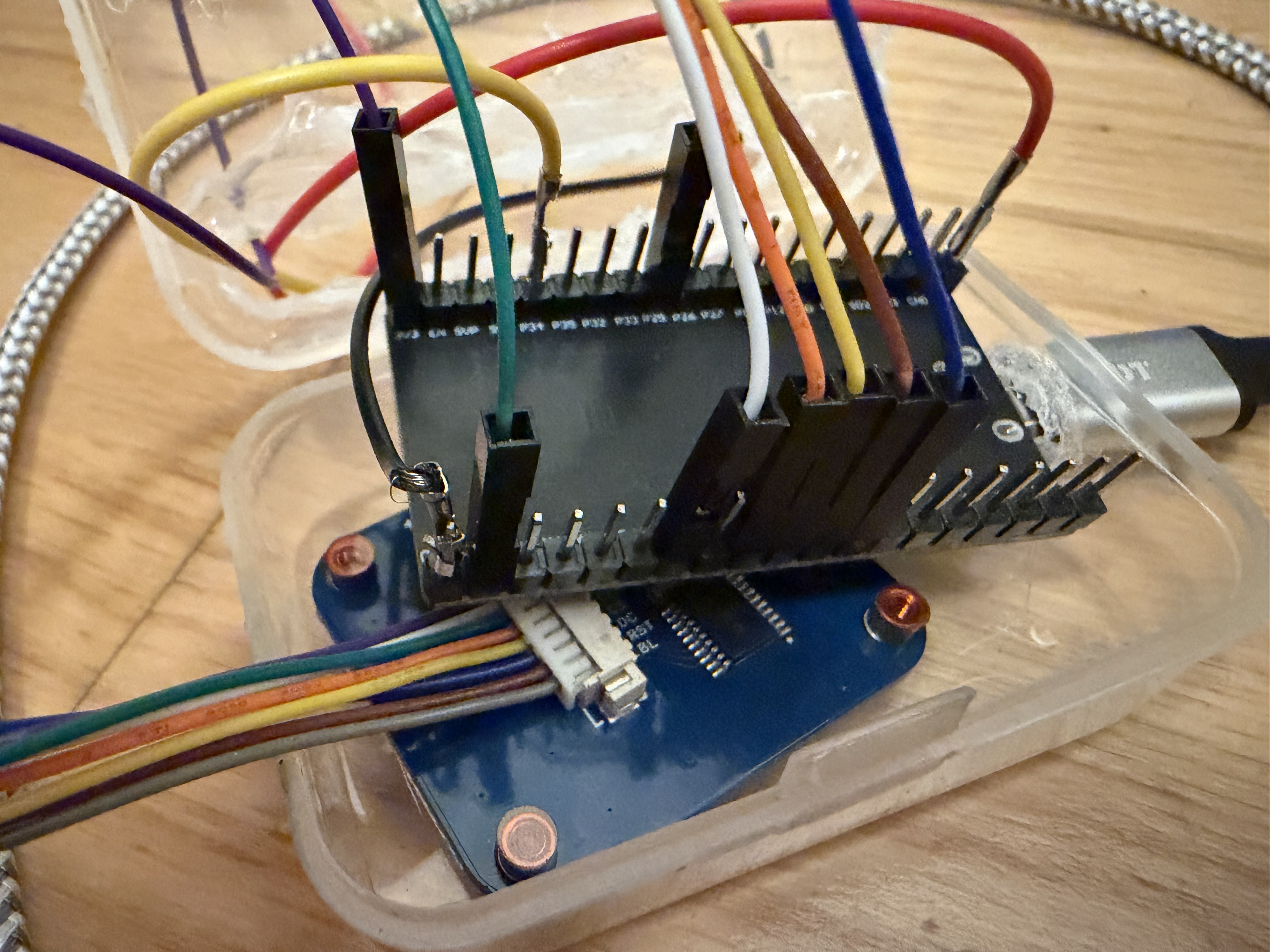
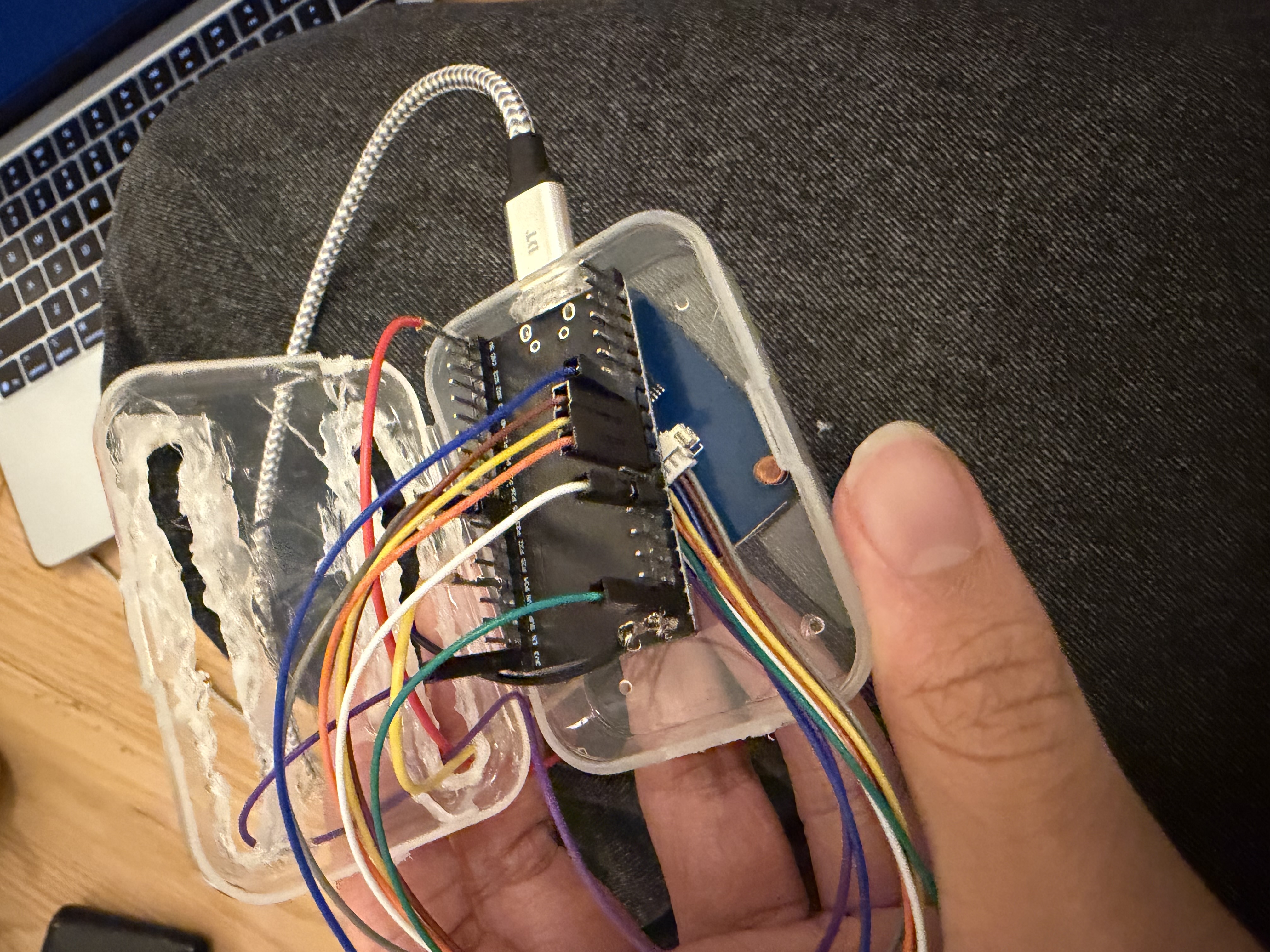
Compact ESP32 pin wiring and internal component layout.
-
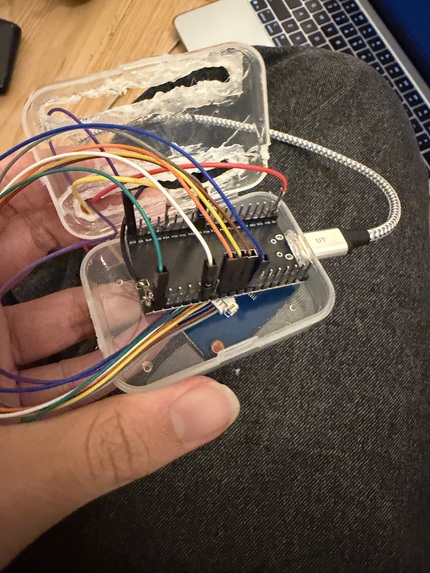
Assembling the custom compact enclosure housing the ESP32 board, LCD display module, and jumper wiring.
-
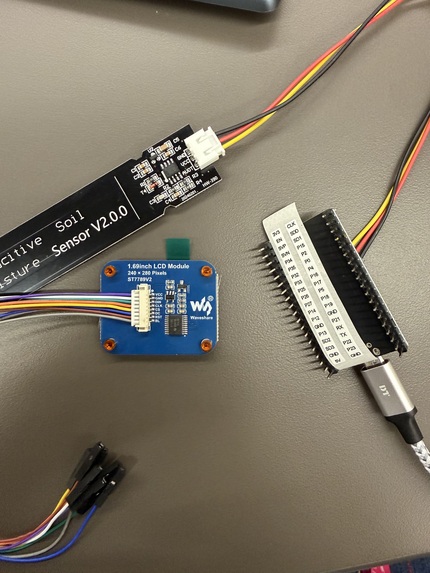
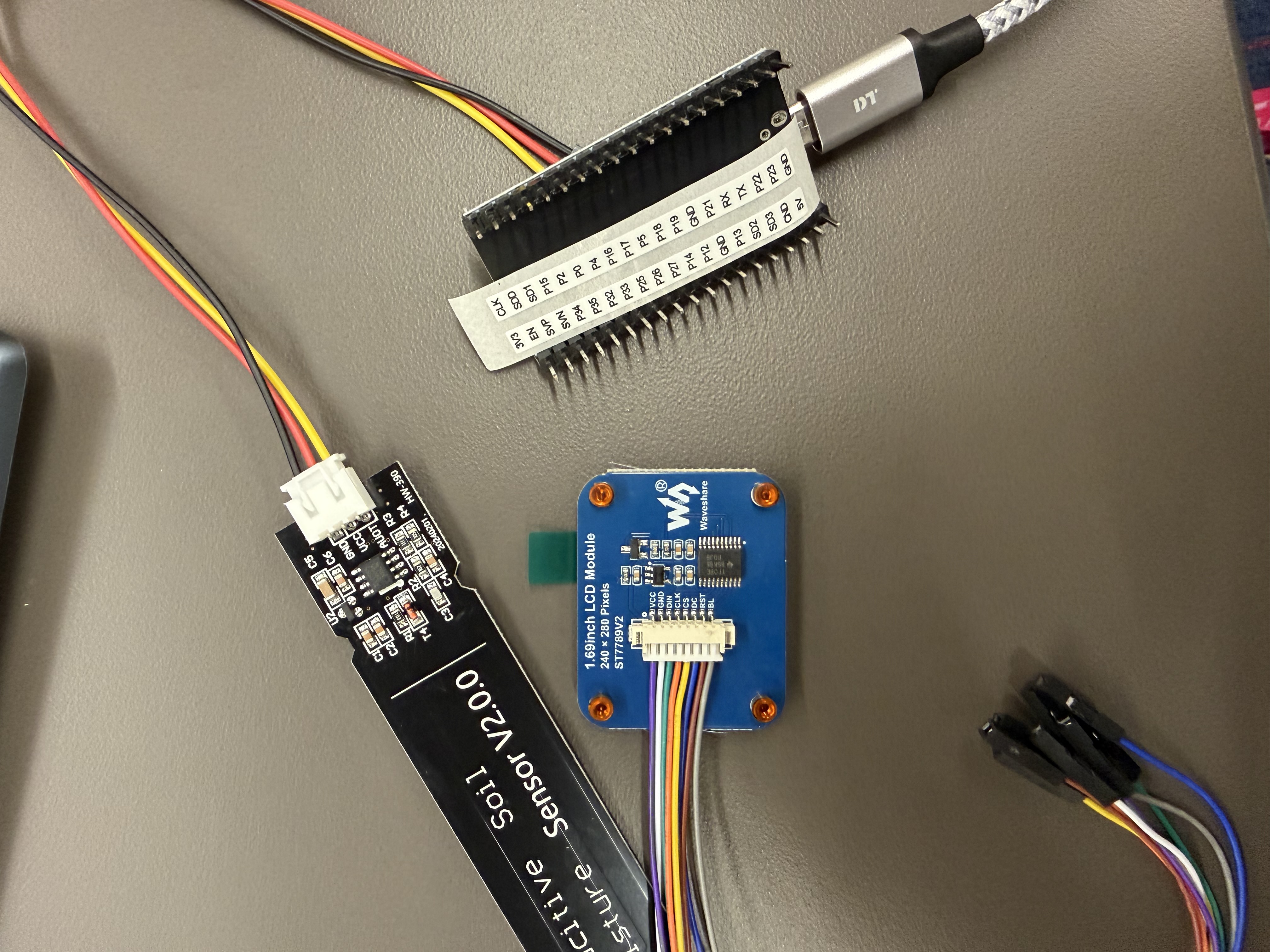
The core hardware stack before wiring and enclosure fitting.
Inspiration
We wanted to make plant care easier and more accessible, especially for people who struggle to determine when their plants need water. Many plant owners rely on guesswork or fixed watering schedules, which can lead to overwatering or underwatering. We were inspired to combine AI and hardware to create a smarter way to understand plants' needs and help people care for them with more confidence.
What it does
Our smart plant-watering app uses AI-powered plant identification to help users identify their plants from a photo. It pairs this with an ESP32 microcontroller and a capacitive soil-moisture sensor to monitor actual soil conditions. By combining plant identification with real-time moisture readings, our goal is to help users make more informed watering decisions based on their plants' needs rather than guesswork.
How we built it
We built the app using Replit and integrated Google's Gemini API for image-based plant identification. For the hardware component, we use an ESP32 with Wi-Fi connectivity and a capacitive soil-moisture sensor to collect soil data. Our goal is to connect the hardware to the app through a backend API, allowing sensor readings to be displayed in the user interface and used to inform watering recommendations.
Challenges we ran into
One of our biggest challenges was integrating different technologies into one cohesive application. Working with an AI API introduced challenges with request delays, reliability, and usage limits. Connecting a web application to physical hardware also required us to think beyond the user interface and consider how sensor data would be transmitted, processed, and displayed reliably.
Accomplishments that we're proud of
We're proud to have developed an application that brings together AI-powered plant identification and physical sensor technology to address an everyday problem. We also challenged ourselves to work with technologies across both software and hardware, pushing beyond what we already knew and turning our idea into a working project.
What we learned
Through this project, we learned more about integrating external APIs, working with AI models, developing applications in Replit, and exploring microcontrollers and sensor data. We also learned that building a successful application involves more than making individual components work; those components need to communicate reliably and provide a useful experience for the user.
What's next for Sprout
Moving forward, we hope to complete and strengthen the connection between the ESP32 and our deployed app, improve sensor calibration, and provide more personalized watering recommendations for different plant species. We also want to explore historical moisture tracking, watering reminders, and additional plant-care insights to help users maintain healthier plants while reducing unnecessary water use.
Built With
- api
- css
- esp32
- gemini
- html
- javascript
- replit


Log in or sign up for Devpost to join the conversation.