-
-
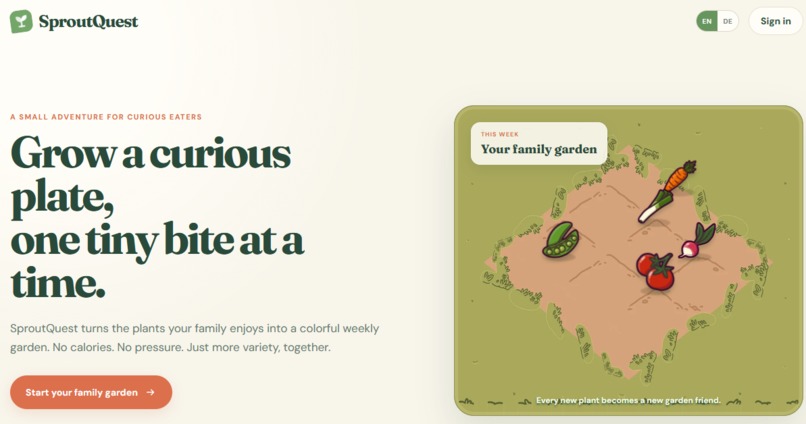
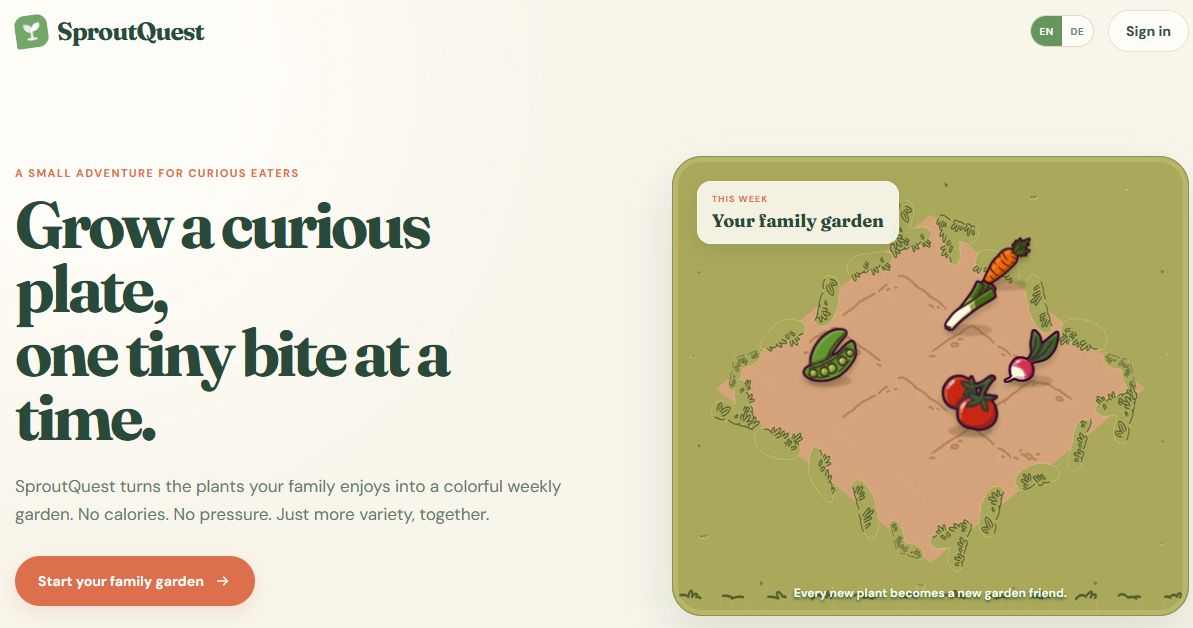
Landing Page
-
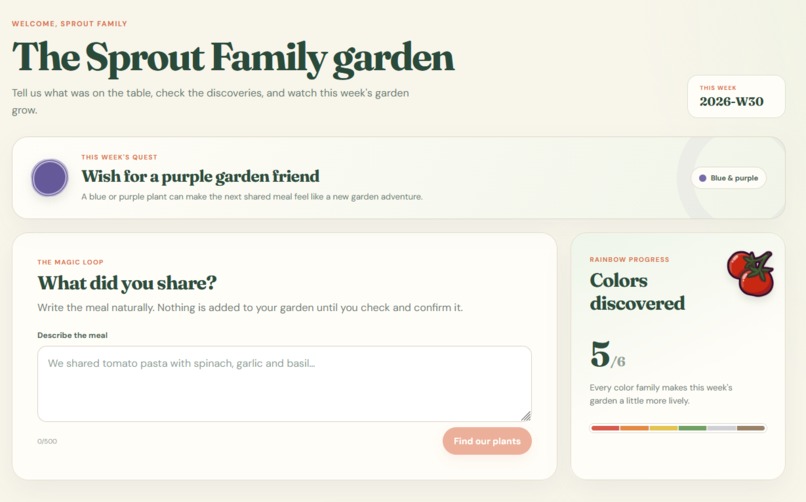
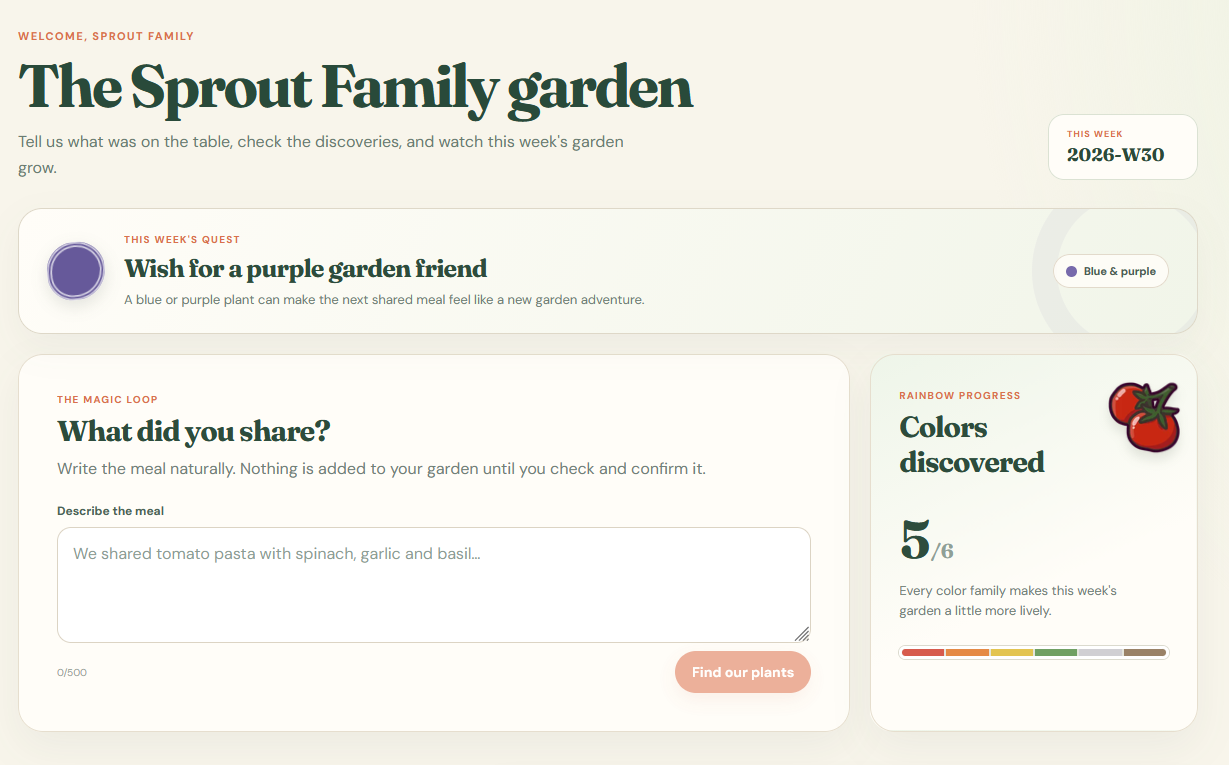
Family Dashboard
-
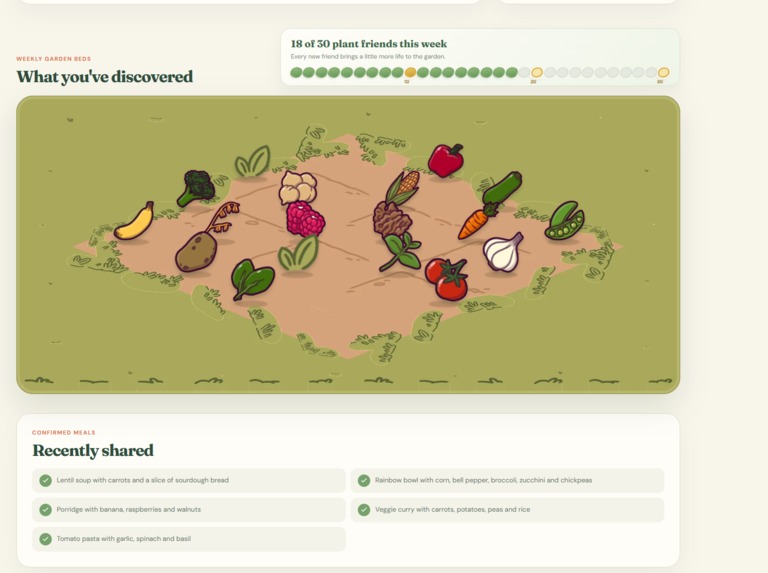
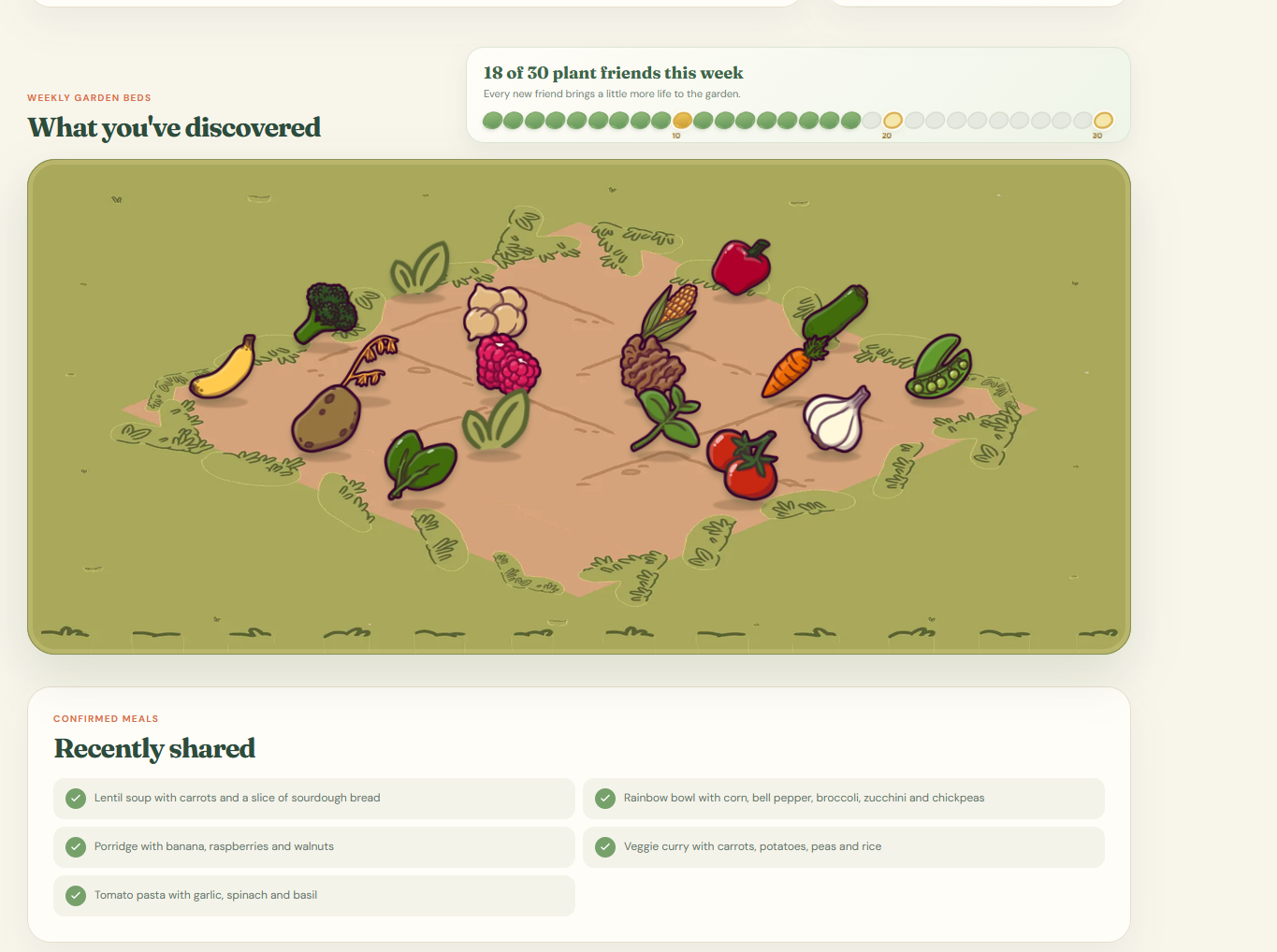
Family Garden and tracked meals
-
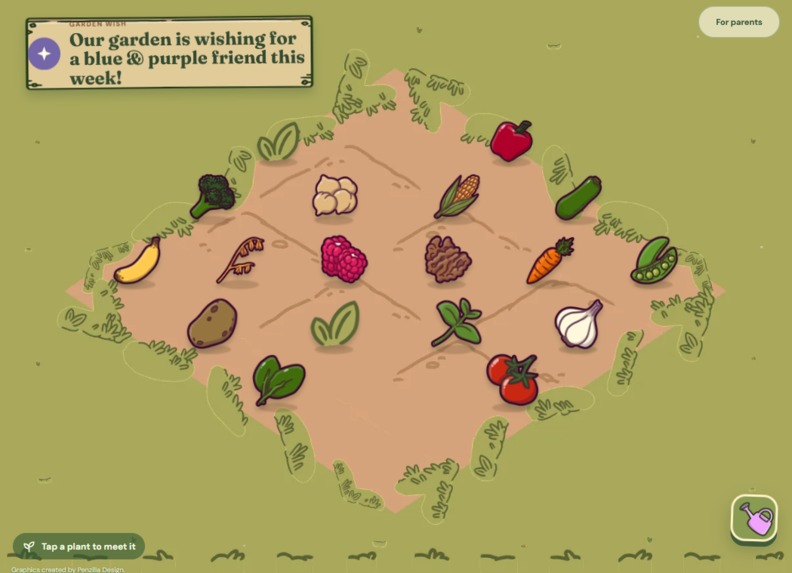
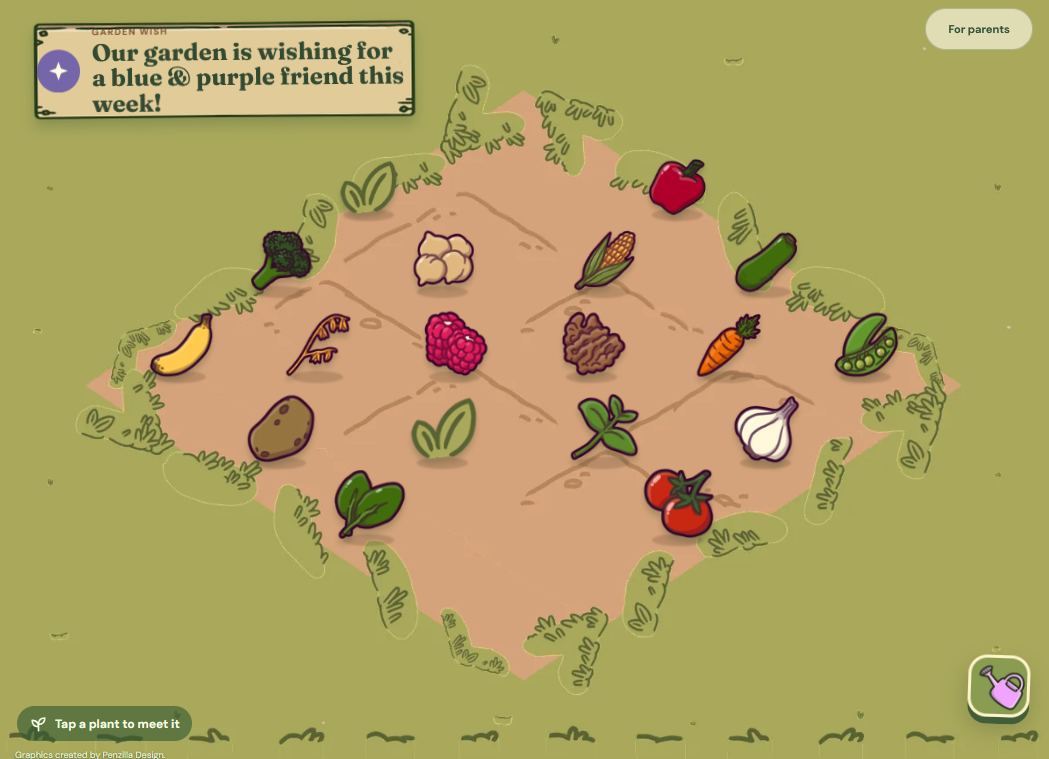
Kid Mode
Inspiration
I had this on my app ideas list for quite some time, originally I wanted an app for my ipad which hangs on the kitchen wall normally, where we as a family can track our vegetables and nutrition intake, while cooking. And that specific idea came after I saw a netflix documentary about the American Gut Project, who found that it's better for your microbiome to eat about 30 different plant types per week. And I wanted it to be lightly gamified, or playful, so that our toddler can have fun with it, too and of course learn some things about the food we eat.
What it does
The user types the meal into the textbox, AI will figure out what veggies, herbs and legumes are in the meal and will display them, the user can accept it, or edit the text input. After the user accepts, the veggies will than be added to the virtual garden at the bottom of the page. there is also a panel displaying how many different vegetables have already been eaten this week. There is also a "soft" weekly quest about which vegetables of which colors to be eaten. But no judgement here. This is no hard calorie tracker, whatsoever, it's meant to encourage people to eat a more varied diet. At the top is a button to enter the kid mode, there you can click a crop on the field and get some interesting facts displayed for each crop. You can also water some plants when activating the watering can. Click and Hold on the"For parents" button to leave the kid mode and enter parent mode again.
How I built it
I'm a System Administrator by day and a Indie Gamedesigner by night, so I can understand code and IT but I am no programmer by trade. So I really love what's possible with AI now, especially with tools like Codex. I used GPT-5.6 Terra for Scaffolding and the initial Setup including the Landingpage and later switched to Sol for all the Logic and backend stuff. Instead of Loops and Goals, I lean to a more human in the loop method of work. In gamedev I work with game design documents and heavy documentation, I use this method in app dev too and have the AI constantly write documentation and reference the docs in an AGENTS.md, so that every new agent or session which works on a task knows exactly what's going on.
Challenges I ran into
- The garden! I used an asset pack for the graphics, which I bought from itch.io, which is normally used in game engines like Unity or Godot. So I had some pain, making it look good in svelte. Definitley needs some rework after the hackathon, but time was running fast and hey, my toddler likes it :)
- In the kid mode there are many cards with facts about food to explore, but ofc AI was lazy and didn't want to get as creative as I wanted it, so I had to re-check everything and point it so rework some facts.
- Had some issues with Codex freezes on windows when the chat got a little longer, but it always finished the task and the content documentation paid out very well.
Accomplishments that we're proud of
- The speed in which you can build a well looking app is amazing
- My toddler likes it! Best playtester ever :D
What I learned
- Documentation while developing pays out well
- Check everything, especially if you build graphic heavy stuff
- Checklists are awesome in a hackathon
What's next for SproutQuest
There were some stuff, which were out of scope for the hackathon, such as:
- Photo and Audio Input, instead of text only
- Family member profiles
- Recipe suggestions based on what the family ate
- Juice, sound, haptic feeling, seasonal stuff, more and better graphics, garden rework.
- make a monetized app out of it!
Built With
- betterauth
- cloudflare
- codex
- d1
- durable-objects
- gpt-5.6
- svelte
- sveltekit
- typescript

Log in or sign up for Devpost to join the conversation.