-
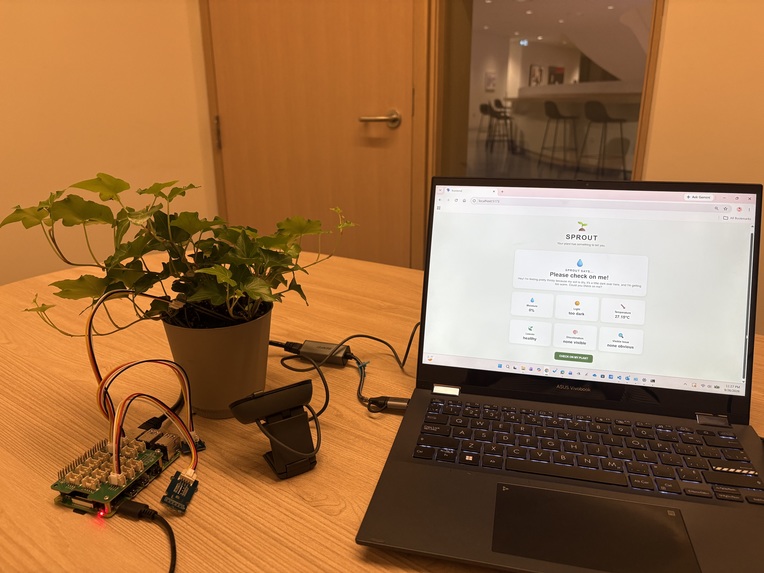
Sprout in action - combining real-time plant sensors, computer vision, and voice feedback into one interactive system.
-
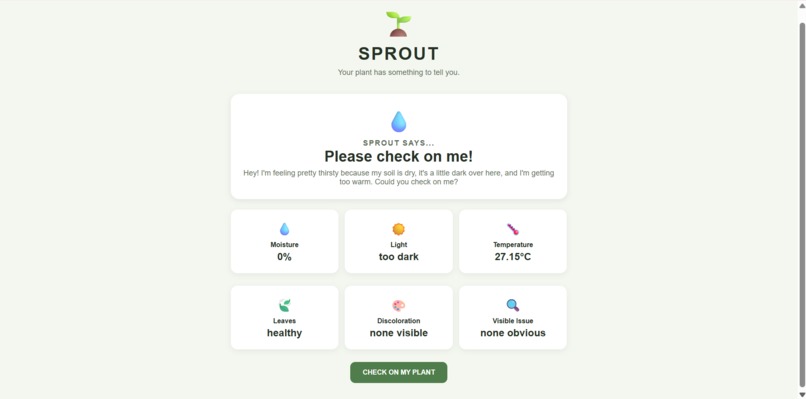
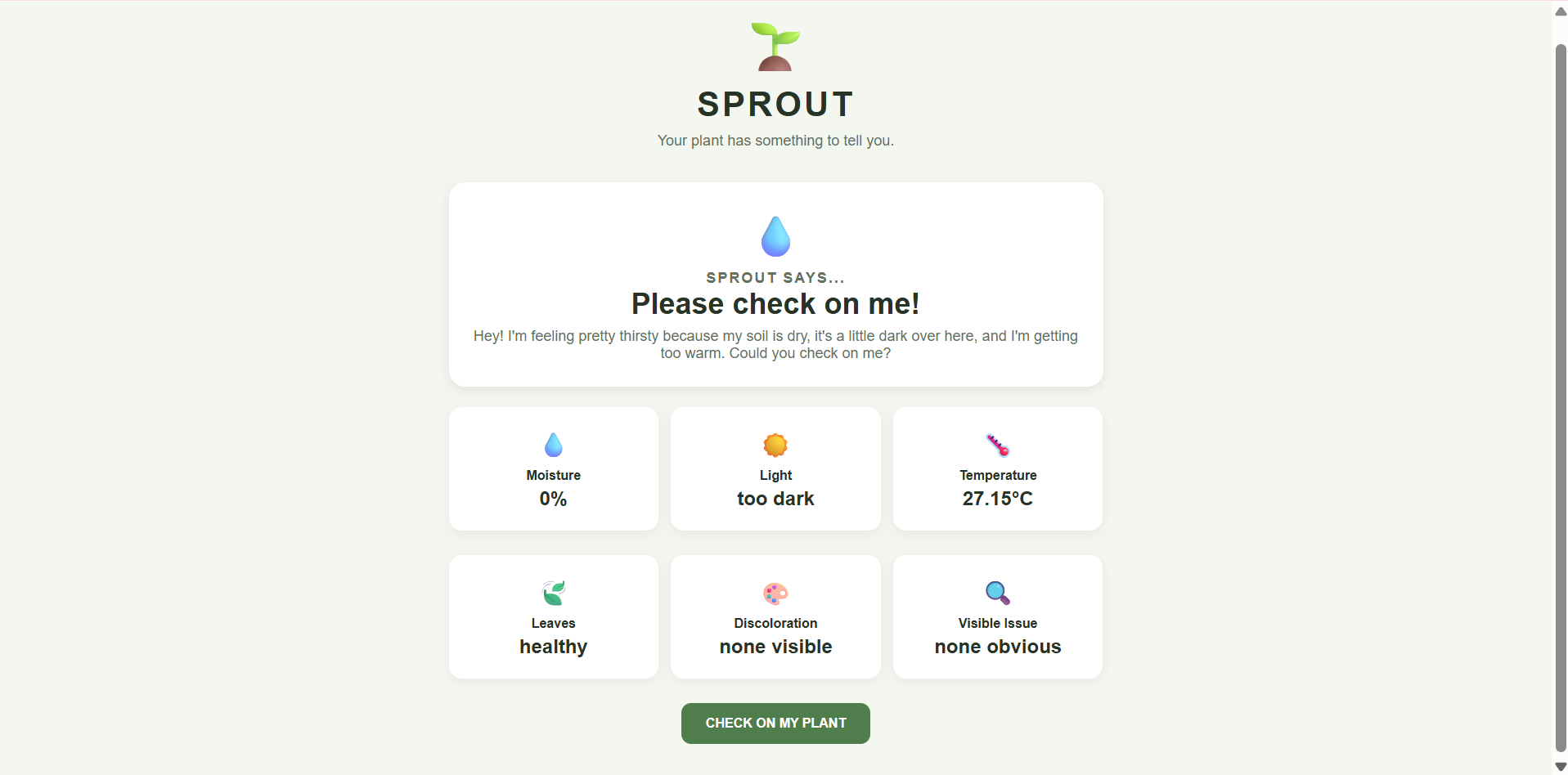
The Sprout dashboard displaying live sensor readings alongside AI-powered visual analysis of the plant’s leaves and visible condition.
-
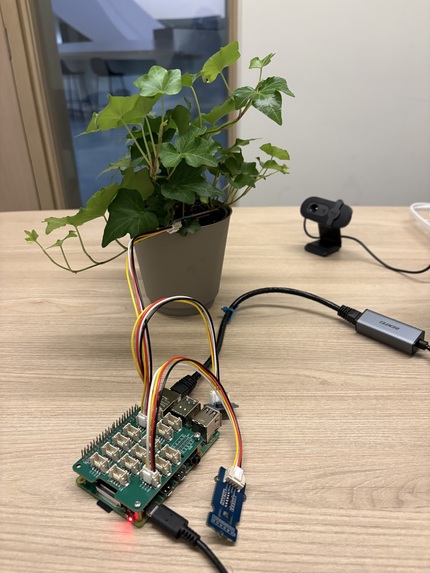
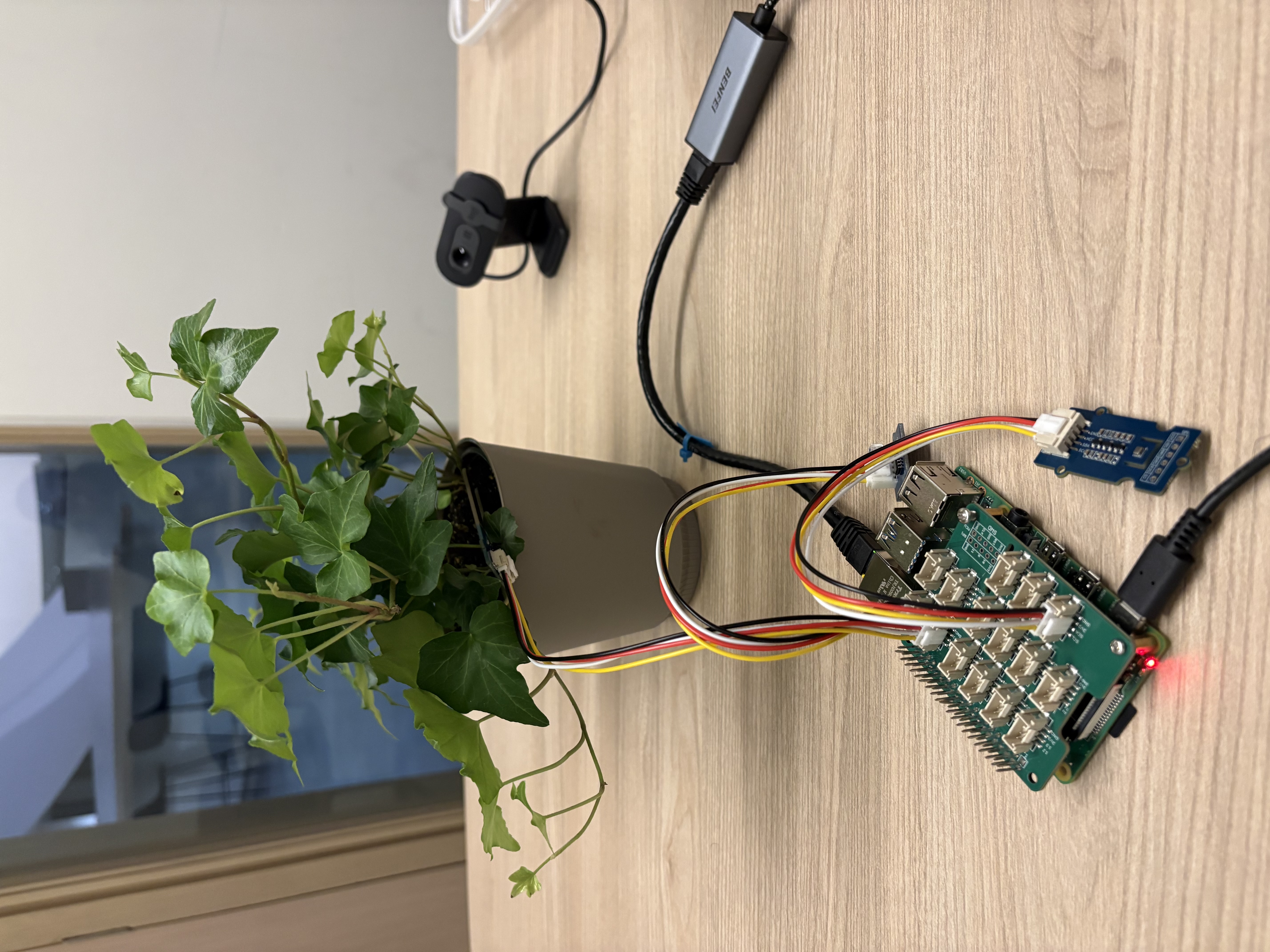
Sprout’s Raspberry Pi and Grove sensor setup monitoring soil moisture, light, and temperature, with a webcam for visual plant analysis.
Inspiration
We wanted to make plant care more interactive and approachable. Plant owners often have to interpret sensor readings or notice physical signs to figure out what their plant needs. We thought it would be more fun and intuitive if the plant could communicate those needs directly. This led us to Sprout — a smart plant system that gives your plant a voice and personality.
What it does
Sprout monitors soil moisture, light, and temperature using sensors connected to a Raspberry Pi. The collected data is analyzed to determine the plant's overall condition, such as whether it needs water, more light, or a different temperature.
Instead of simply displaying numbers, Sprout translates the readings into messages that are easy to understand, such as telling the user that the plant is thirsty or getting too much light.
How we built it
We built Sprout using a combination of hardware, backend, frontend, and AI technologies. A Raspberry Pi collects readings from our moisture, light, and temperature sensors. Our Python and Flask backend processes the sensor information and provides it to the web application.
The frontend was built with React and Vite and provides an interactive interface where users can check on their plant. We also integrated Gemini for image-based plant analysis and ElevenLabs to turn Sprout's messages into speech.
Challenges we ran into
One of our biggest challenges was bringing together several different systems within a limited hackathon timeframe. We had to coordinate the Raspberry Pi and sensors with our Python backend, web interface, AI services, and voice generation.
We also had to work with hardware that required testing and calibration, while developing the software components in parallel. Making sure all of these pieces could communicate with each other was an important part of the challenge.
Accomplishments that we're proud of
We're proud that we were able to turn a simple plant-monitoring idea into an interactive prototype that combines physical hardware with software and AI. Rather than presenting users with a collection of sensor values, Sprout gives those values meaning by turning them into a personality and conversation.
What we learned
We learned how different parts of a technical system come together to create a complete product. This included working with sensors and Raspberry Pi hardware, building a backend API, developing a React interface, and integrating external AI and voice APIs.
What's next for Sprout
We would like to expand Sprout beyond basic environmental monitoring. Future versions could provide more personalized recommendations based on the type of plant, improve the AI vision analysis, and track changes in the plant's condition over time.
We'd also like to make Sprout more customizable, allowing users to choose different personalities and voices for their plants.
Built With
- computer-vision
- css
- elevenlabs
- flask
- gemini-api
- github
- html
- javascript
- python
- raspberry-pi
- react
- vite


Log in or sign up for Devpost to join the conversation.