-
-
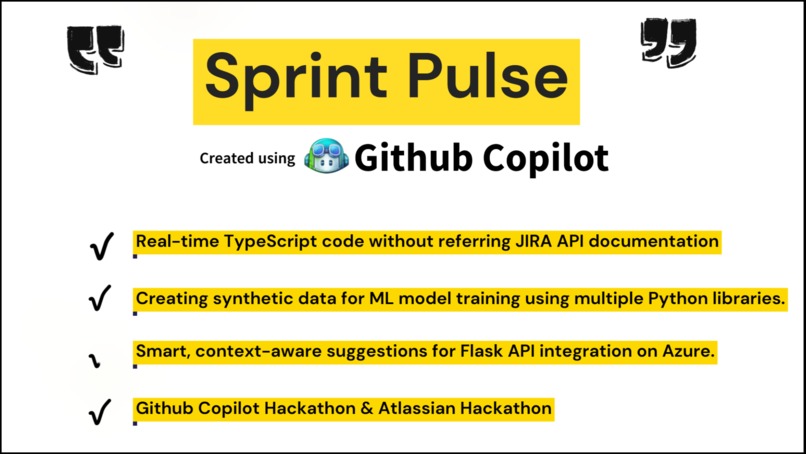
1. How Github Copilot helped creating SprintPulse App
-
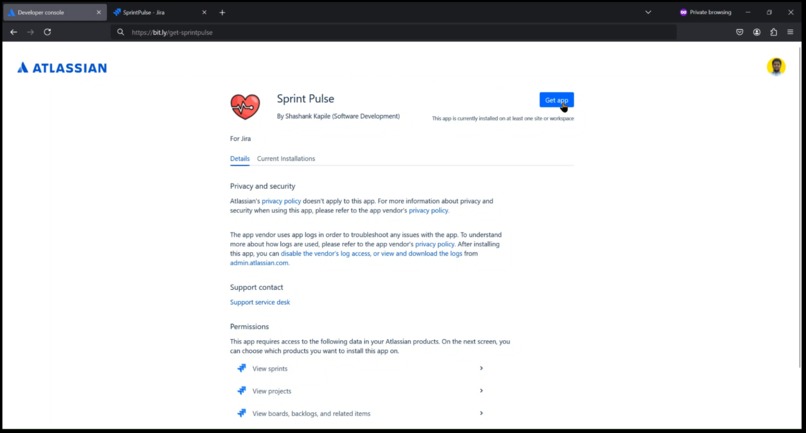
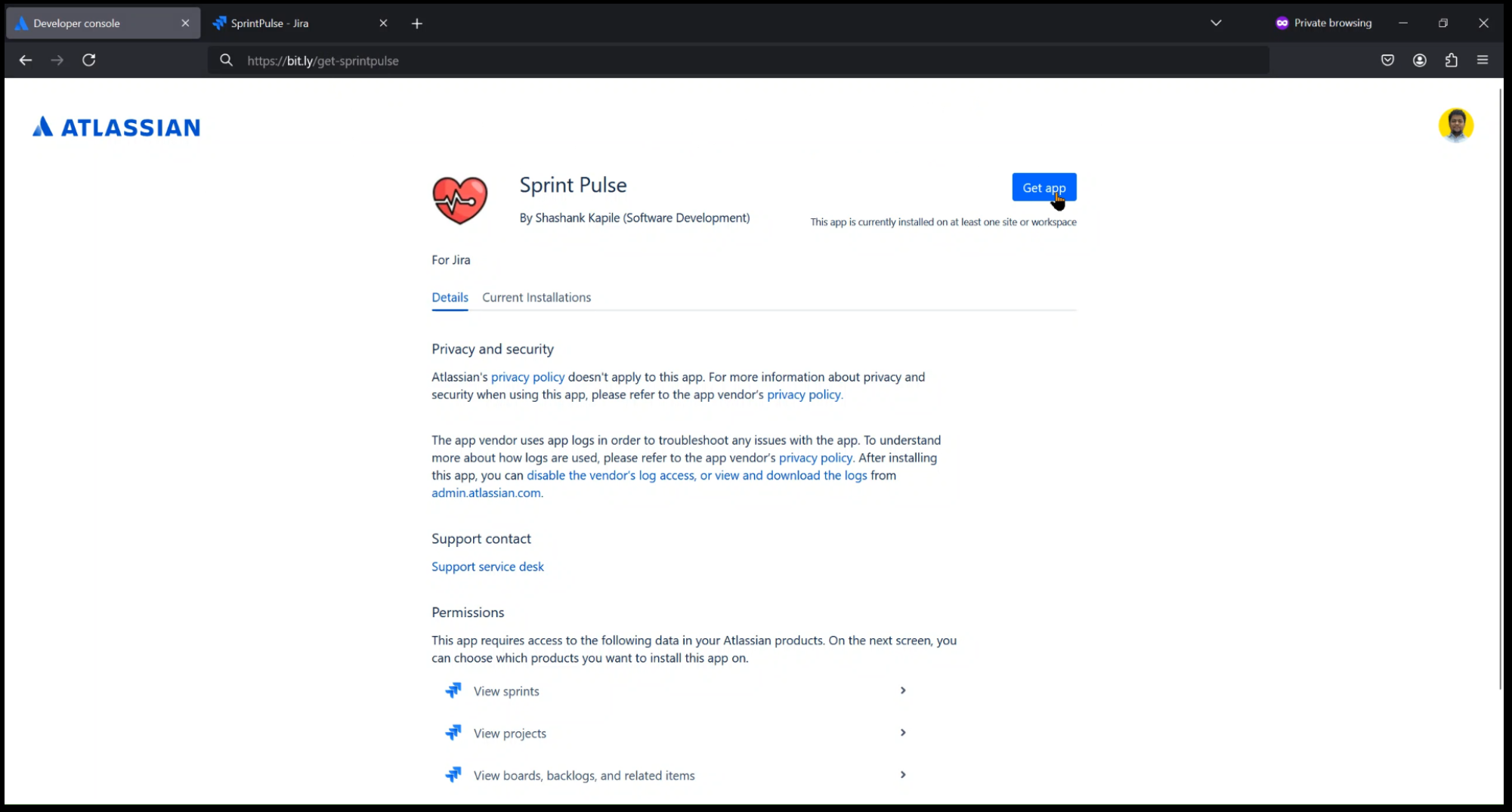
2. Install SprintPulse app from Atlassian Marketplace URL
-
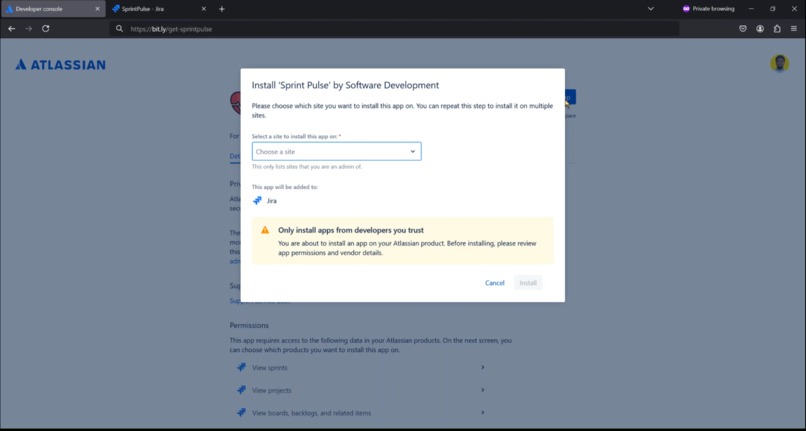
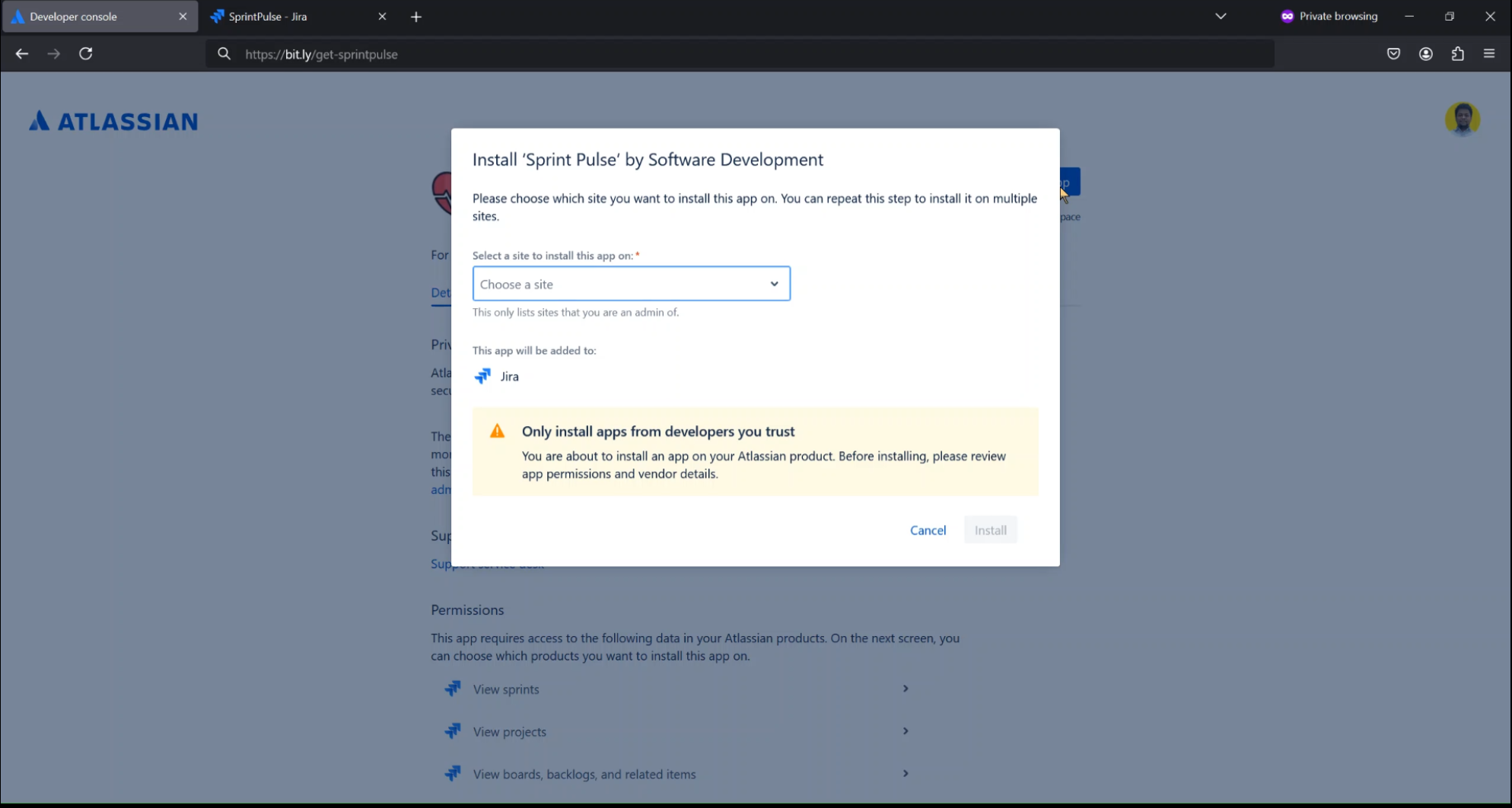
3. Choose your Jira board to install the App in
-
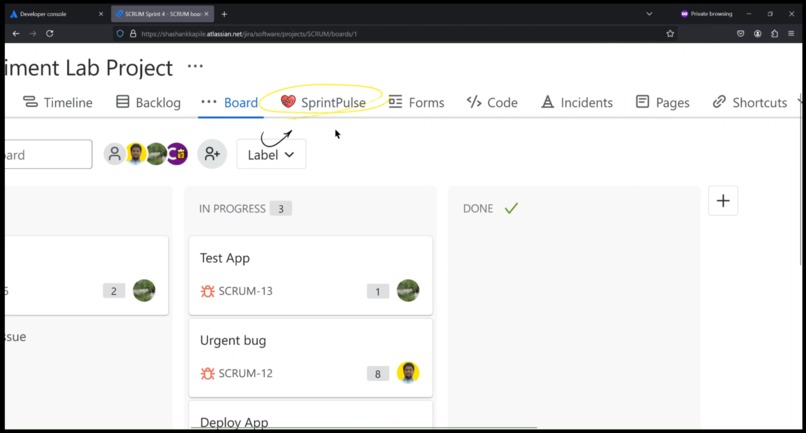
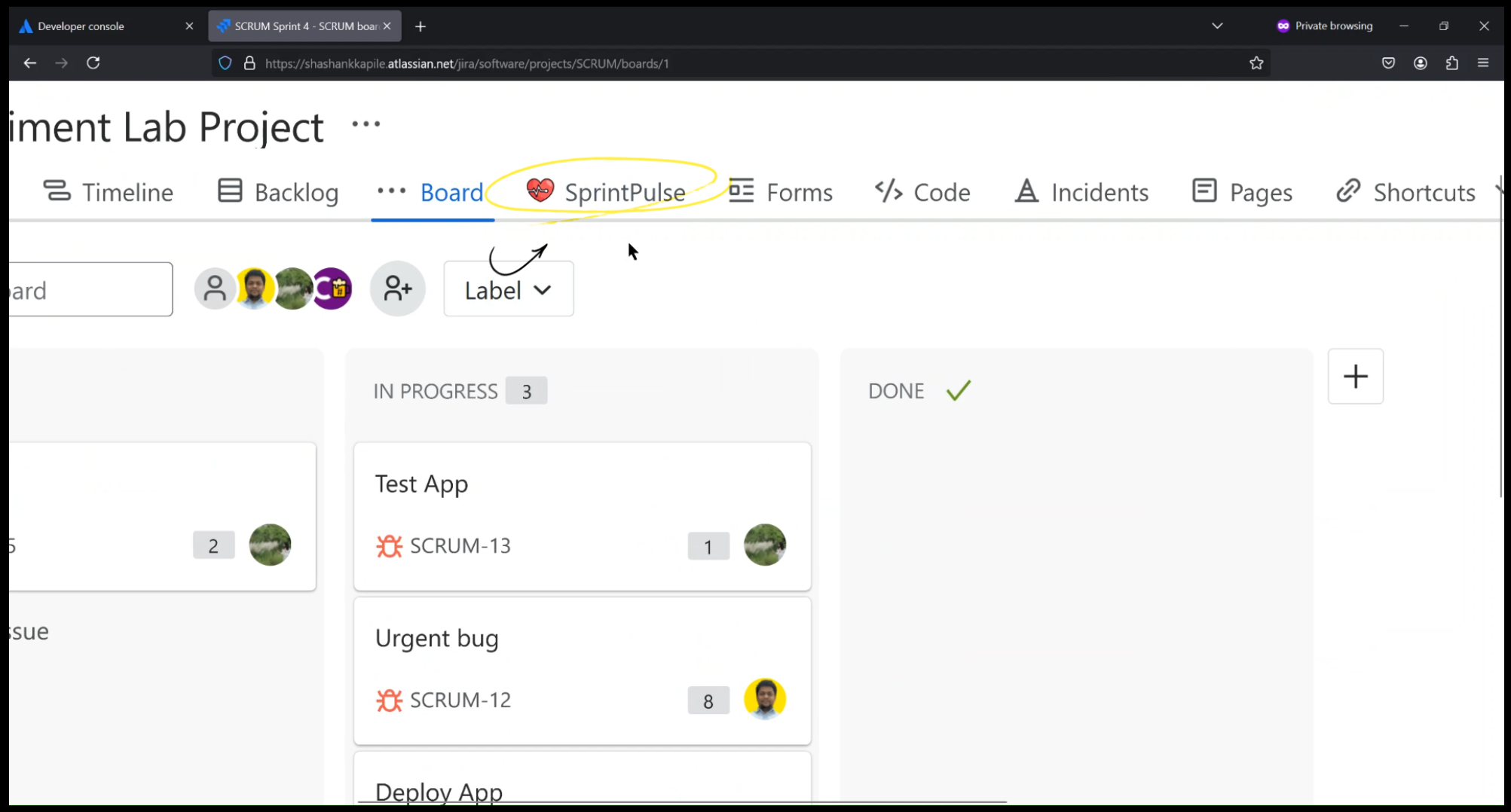
4. App shows on your Jira sprint board
-
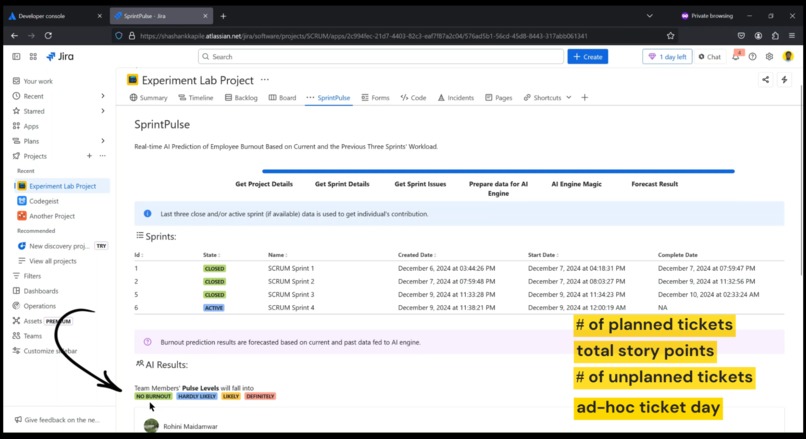
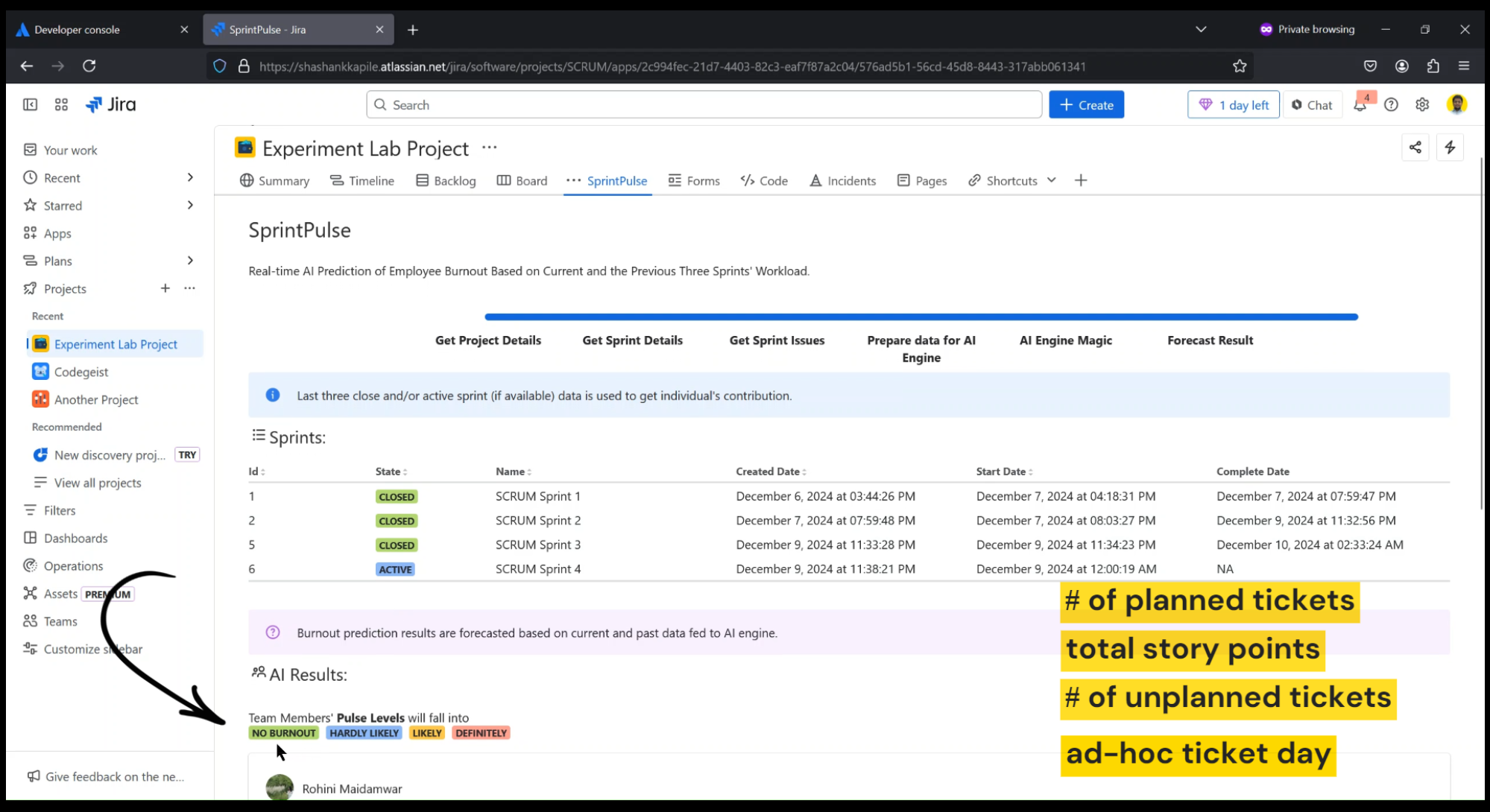
5. App loads past sprint data using Jira REST APIs
-
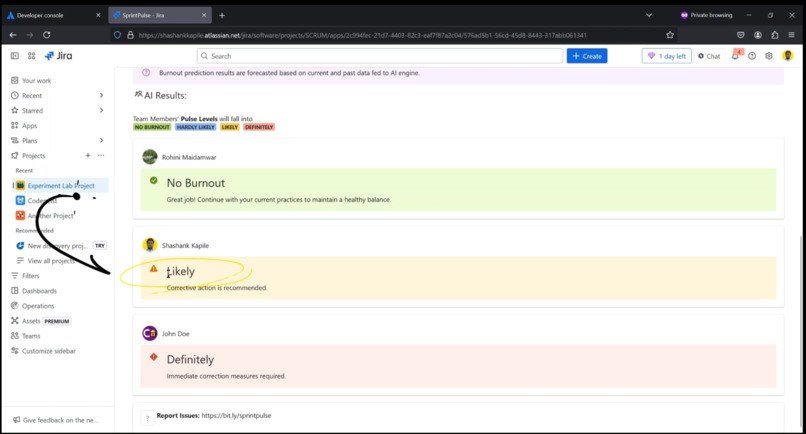
6. App uses our Backend API and gets 'BurnOut' prediction
-
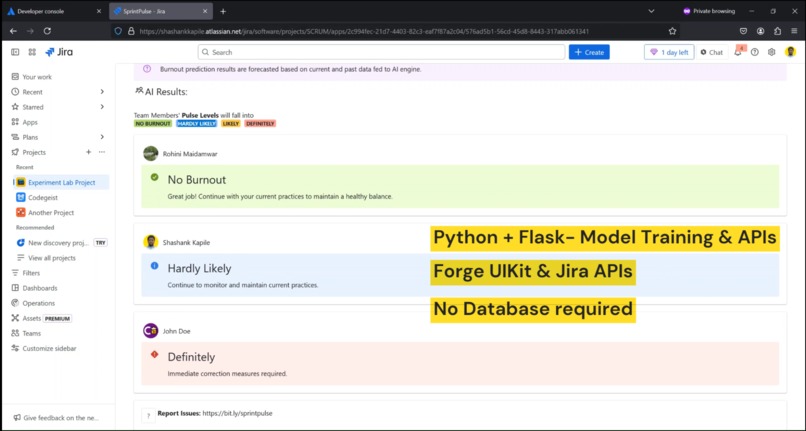
7. App tech used.
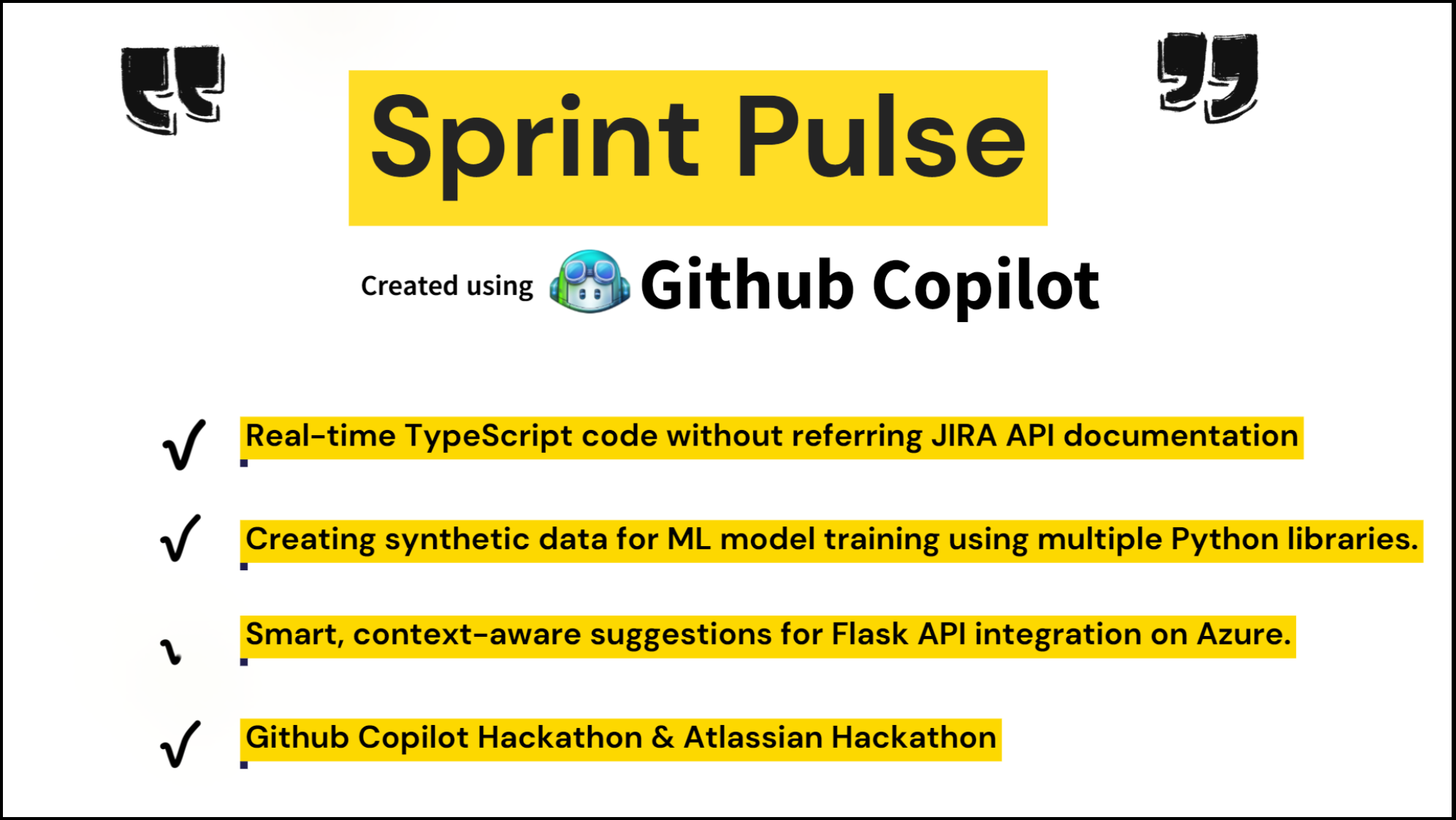
TLDR; Watch quick 3 minute video for Explaination + App Demo.
❤️ Sprint Pulse
Inspiration
From our personal experience, burnout is a major challenge in fast-paced work environments, and many teams struggle with balancing workloads effectively. We wanted to build a solution that could help teams proactively manage workload distribution and prevent burnout before it happens.
Our goal was to create a tool that provides actionable insights to improve team mental well-being using real data from Jira.
✨ What it does
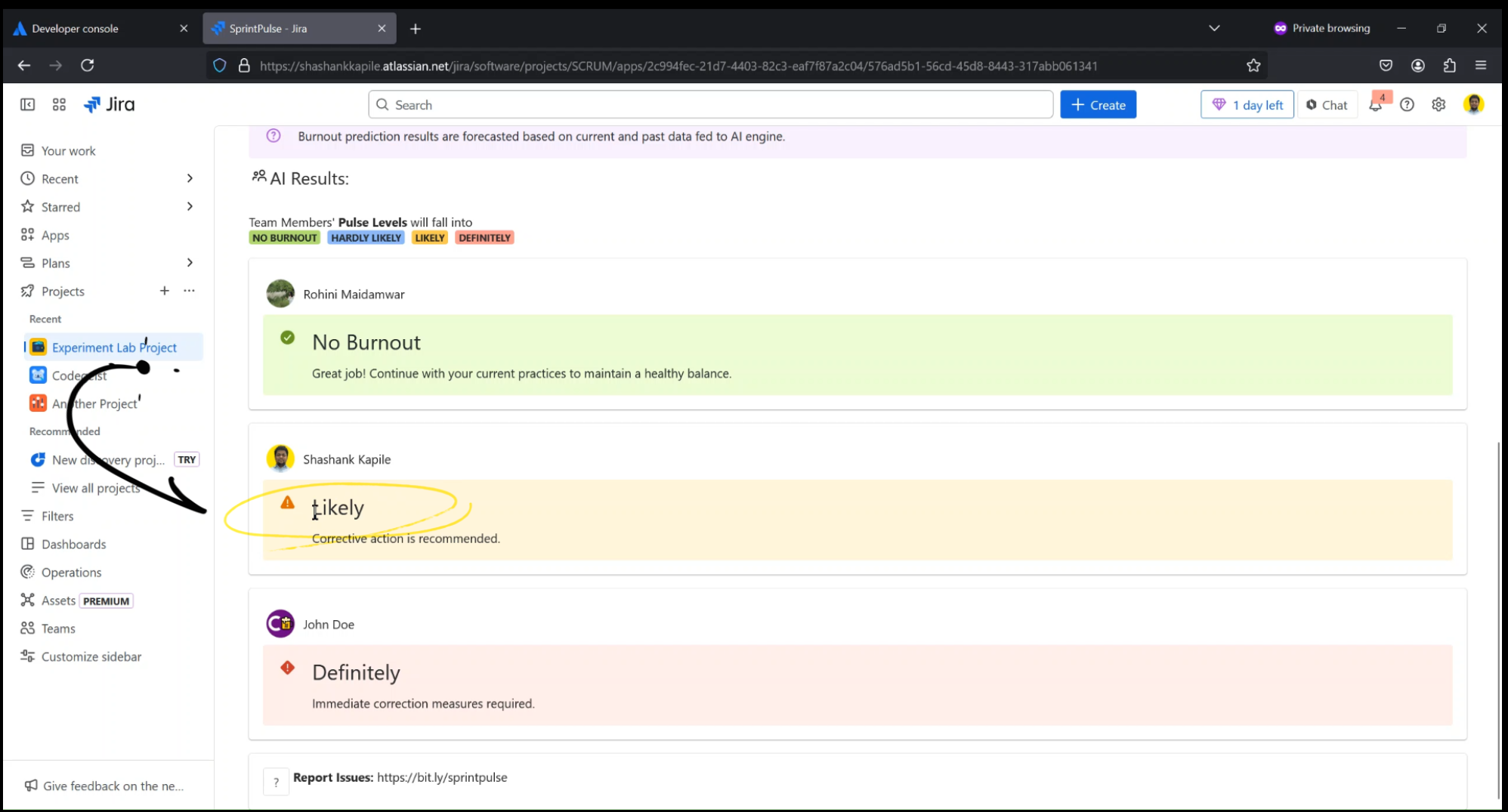
Sprint Pulse predicts the risk of burnout for team members by analyzing data from the last 3 sprints, including workload patterns, issue completion rates, and time spent on tasks. It classifies burnout risk into four categories
- ✅ No : No burnout risk
- ✅ Possible: Possible risk of burnout
- ✅Likely: Risk is on higher side
- ✅ Definitely: Burnout!
allowing teams to take timely action and distribute tasks more wisely.
How we built it
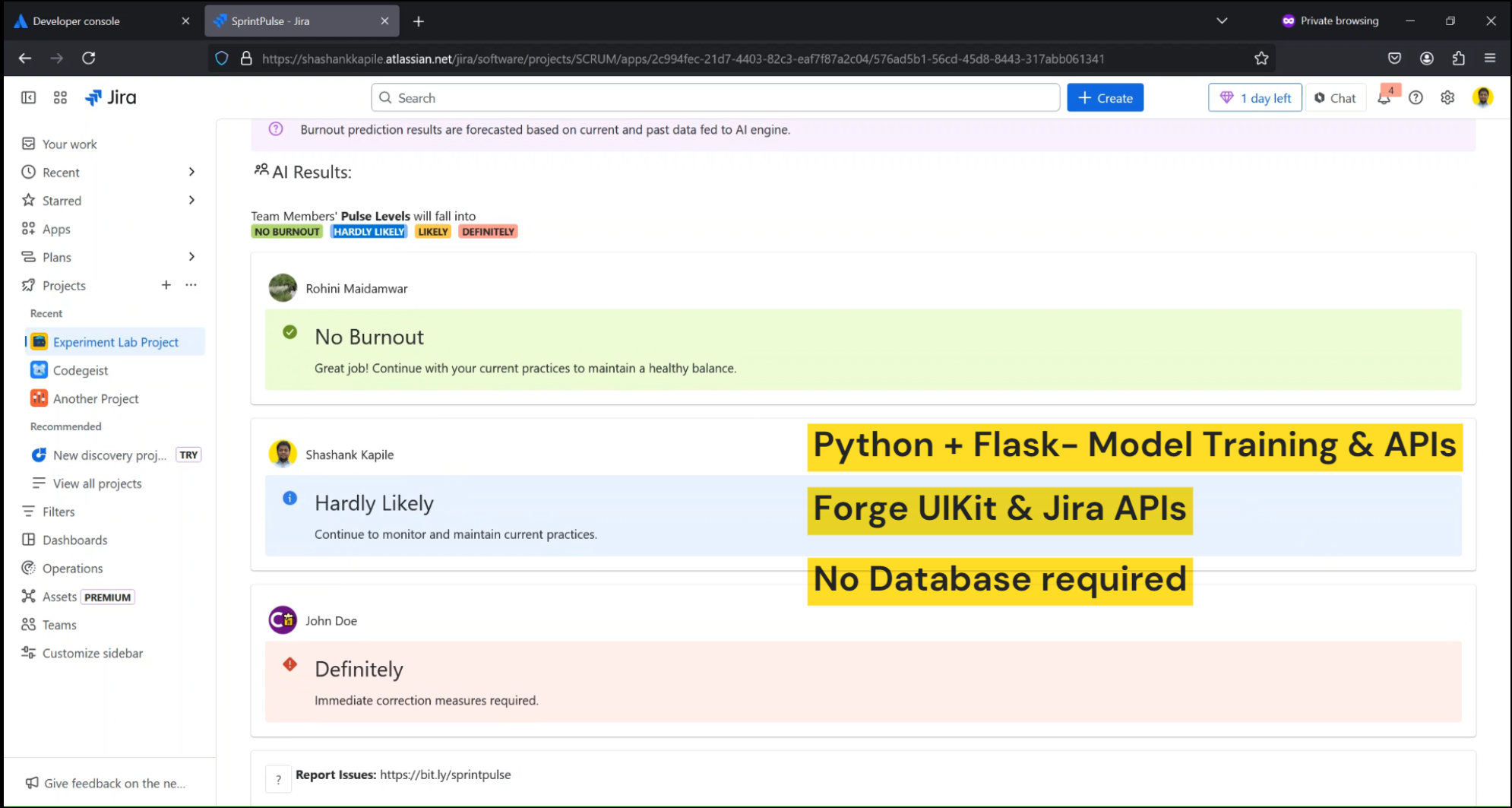
We started by learning Atlassian Forge and React, using GitHub Copilot in VS Code to accelerate development. The app’s frontend was built using Forge UI modules to integrate seamlessly with Jira. For the backend, we used Python to generate synthetic data and train machine learning models, which were deployed via Flask APIs. Copilot helped us quickly understand the unfamiliar frameworks and reduce the development time significantly.
Architecture
- Backbone: GitHub Copilot
- Frontend: Atlassian Forge app using React and Forge UI components.
- Backend: Flask APIs hosted on Azure App Service, providing model predictions to the Forge app.
- Machine Learning: Python models trained using synthetic sprint data, focusing on historical patterns from the last 3 sprints to predict burnout.
Deployment:
- Forge app deployed to the Atlassian Marketplace.
- Backend deployed on Azure App Service for scalability and reliability.
Technologies Used
- Frontend: Atlassian Forge, React, Forge UI modules
- Backend: Flask, Python
- Machine Learning: Scikit-Learn, Pandas, NumPy
- Hosting: Azure App Service
- Development Tools: GitHub Copilot, VS Code, Jupyter Notebooks
Process Flow
Pretty simple. After installing the app from marketplace URL.
- Jira data from the last 3 sprints is fetched by the Forge app.
- Data is sent to the Flask backend, where the machine learning model analyzes workload patterns.
- The model returns a burnout risk classification (No, Possible, Likely, Definitely).
- The Forge app displays the results in a user-friendly interface, allowing teams to take appropriate actions.
🎯 Challenges we ran into
Challenge #1:
- Unavailability of open-source dataset to train ML models on.
- Building machine learning models with limited real-world data required us to generate synthetic sprint data for training.
Challenge #2:
- ZERO experience on Atlassian Forge platform app development
- Integrating Flask backend and deploying it on Azure.
- Time constraints during the hackathon
Accomplishments that we're proud of
- Building a fully functional Forge app with no prior experience in Forge or React.
- Successfully deploying the app to the Atlassian Marketplace.
- Creating an AI-driven solution that addresses a real-world problem and helps improve team well-being.
- Leveraging GitHub Copilot to drastically reduce development time and streamline learning.
- Completing a project that served dual purposes—participating in both the GitHub Copilot Hackathon and the Atlassian Hackathon.
What we learned
- Gained hands-on experience with Atlassian Forge, React, and Azure App Service.
- Learned how to generate synthetic data for machine learning when real-world data isn’t available.
- Discovered how GitHub Copilot can accelerate development, even in unfamiliar frameworks.
- Improved our understanding of sprint dynamics and how workload patterns affect team well-being.
What's next for Sprint Pulse
- Real Data Integration: Connect Sprint Pulse to real Jira project data for more accurate burnout predictions.
- Improved Models: Enhance the machine learning models by incorporating additional metrics like task complexity and team velocity.
- Custom Reports: Provide detailed, customizable reports that help managers visualize trends and workload distribution over time.
- Multi-Platform Support: Expand Sprint Pulse to support other task management platforms beyond Jira.
Built With
- copilot
- forge
- github
- github-copilot
- machine-learning
- python
- typescript


Log in or sign up for Devpost to join the conversation.