-
-
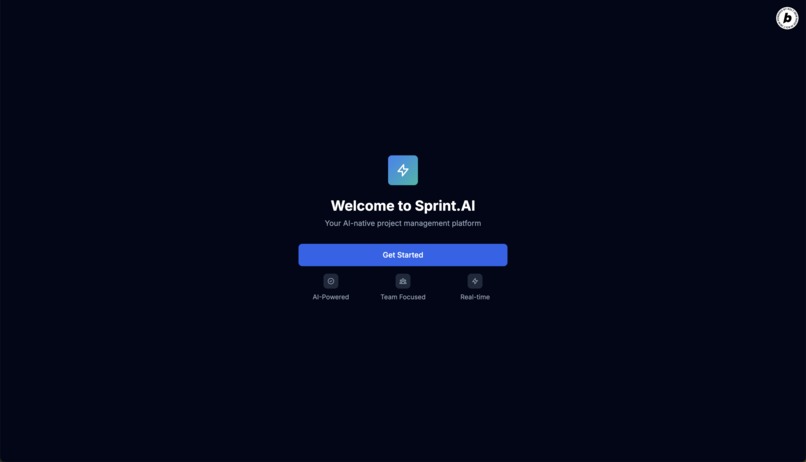
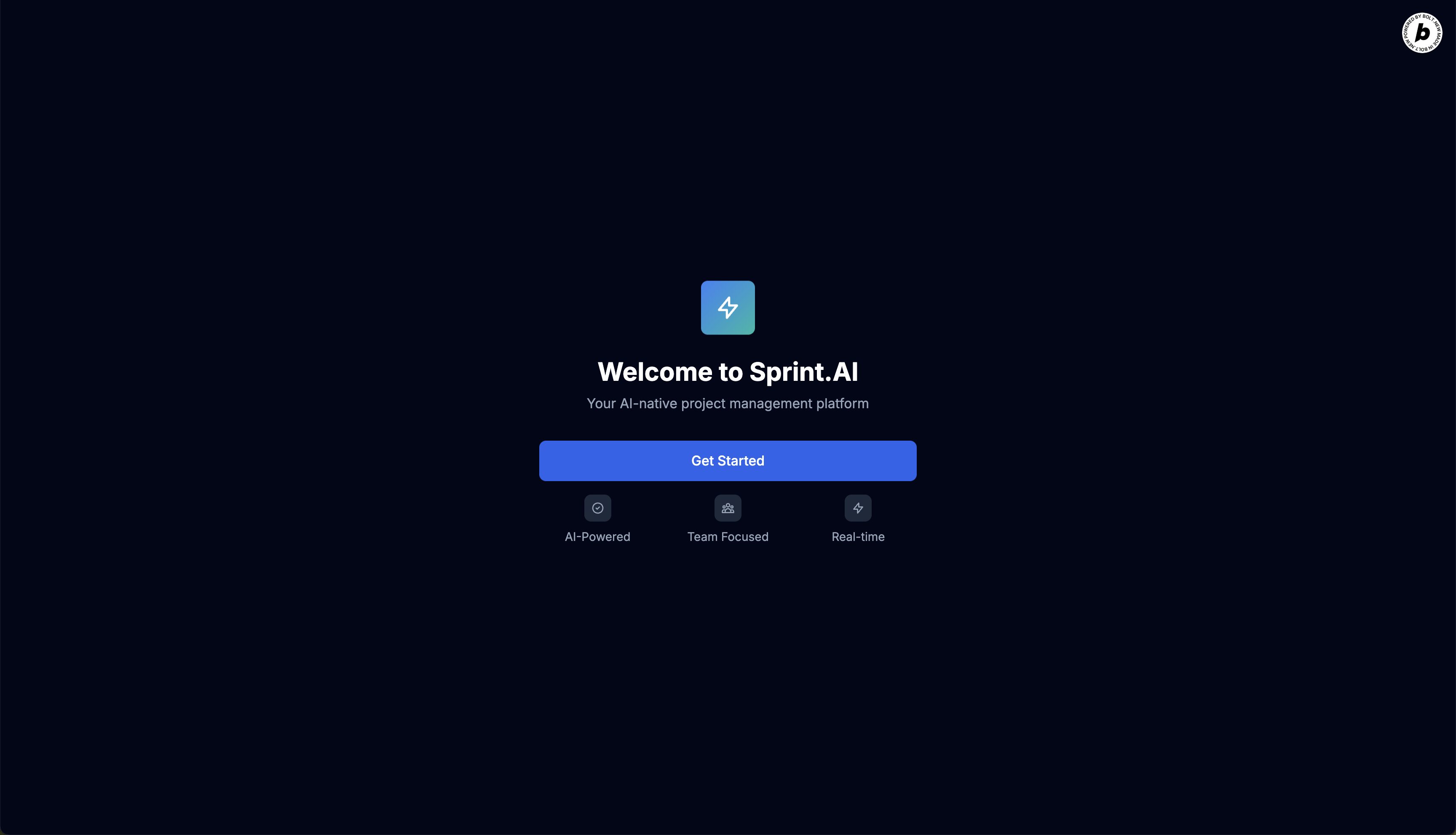
landing page
-
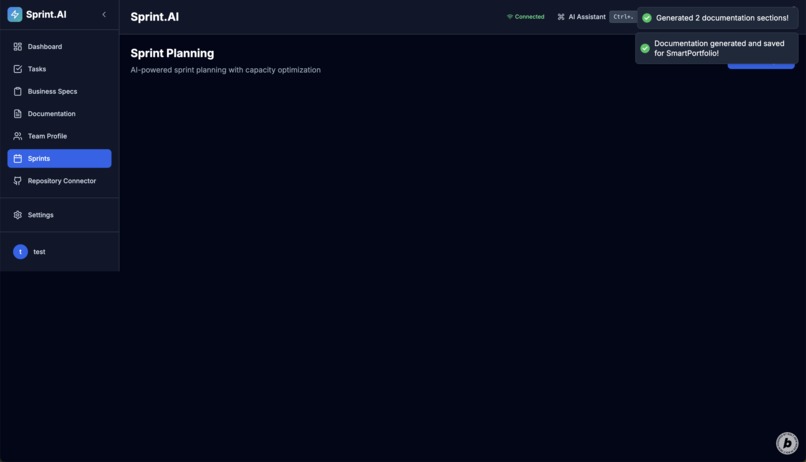
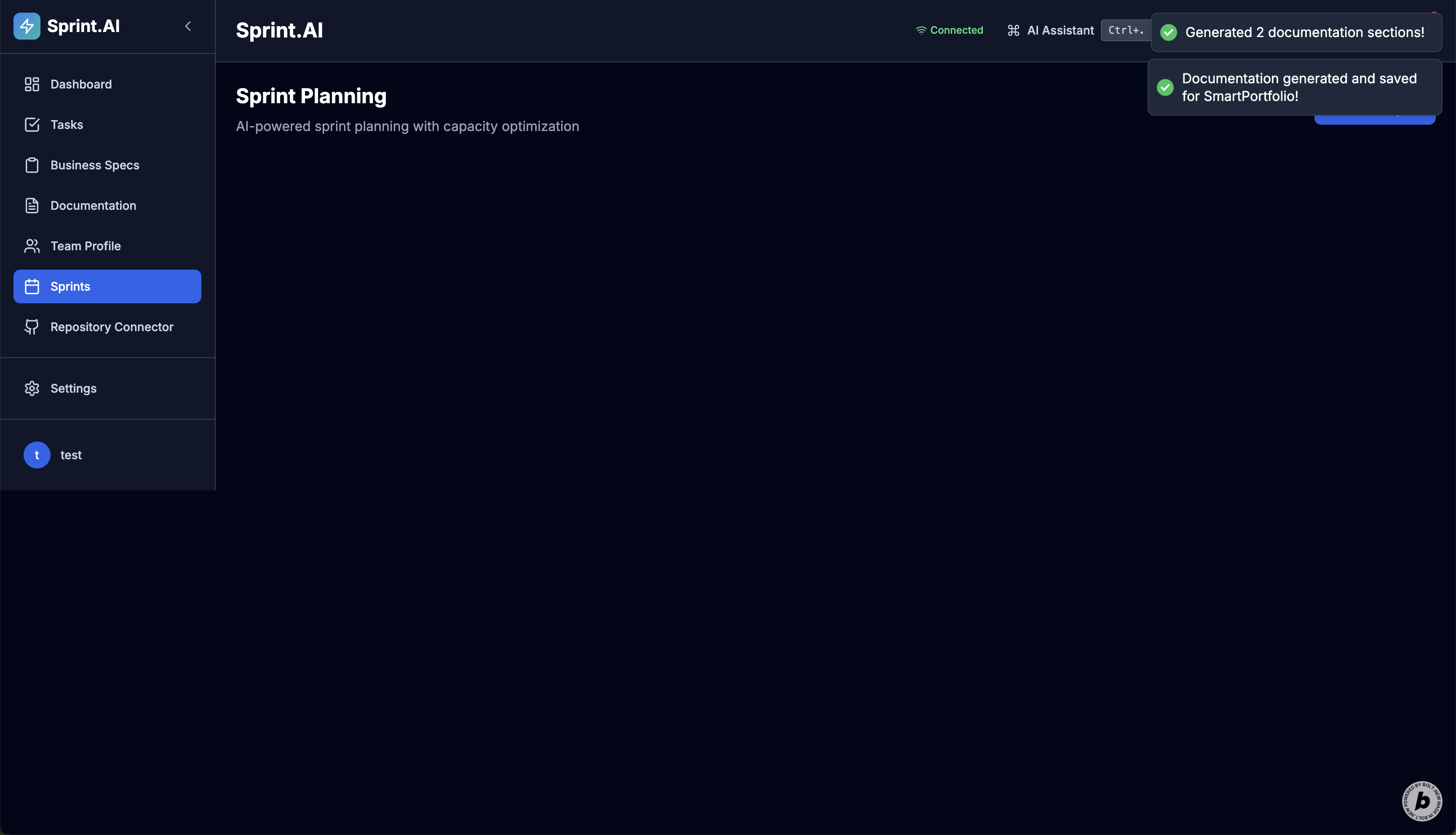
sprint planning
-
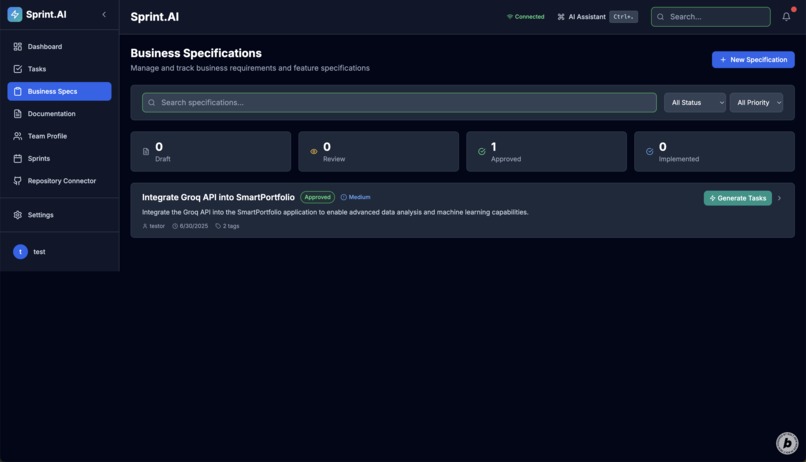
business specs
-
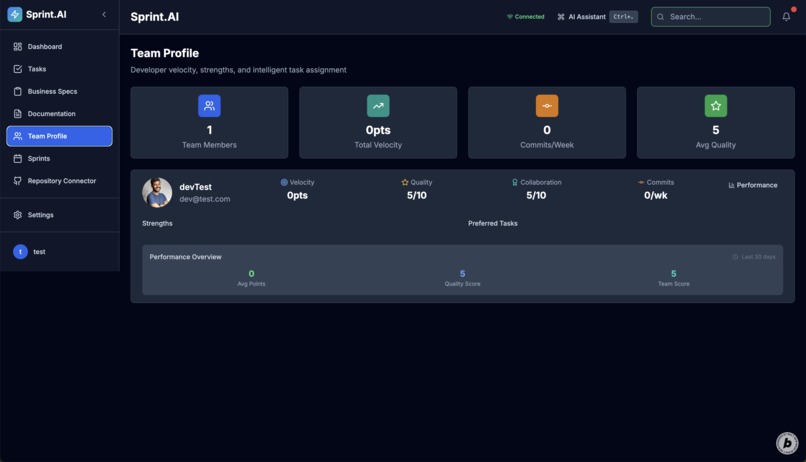
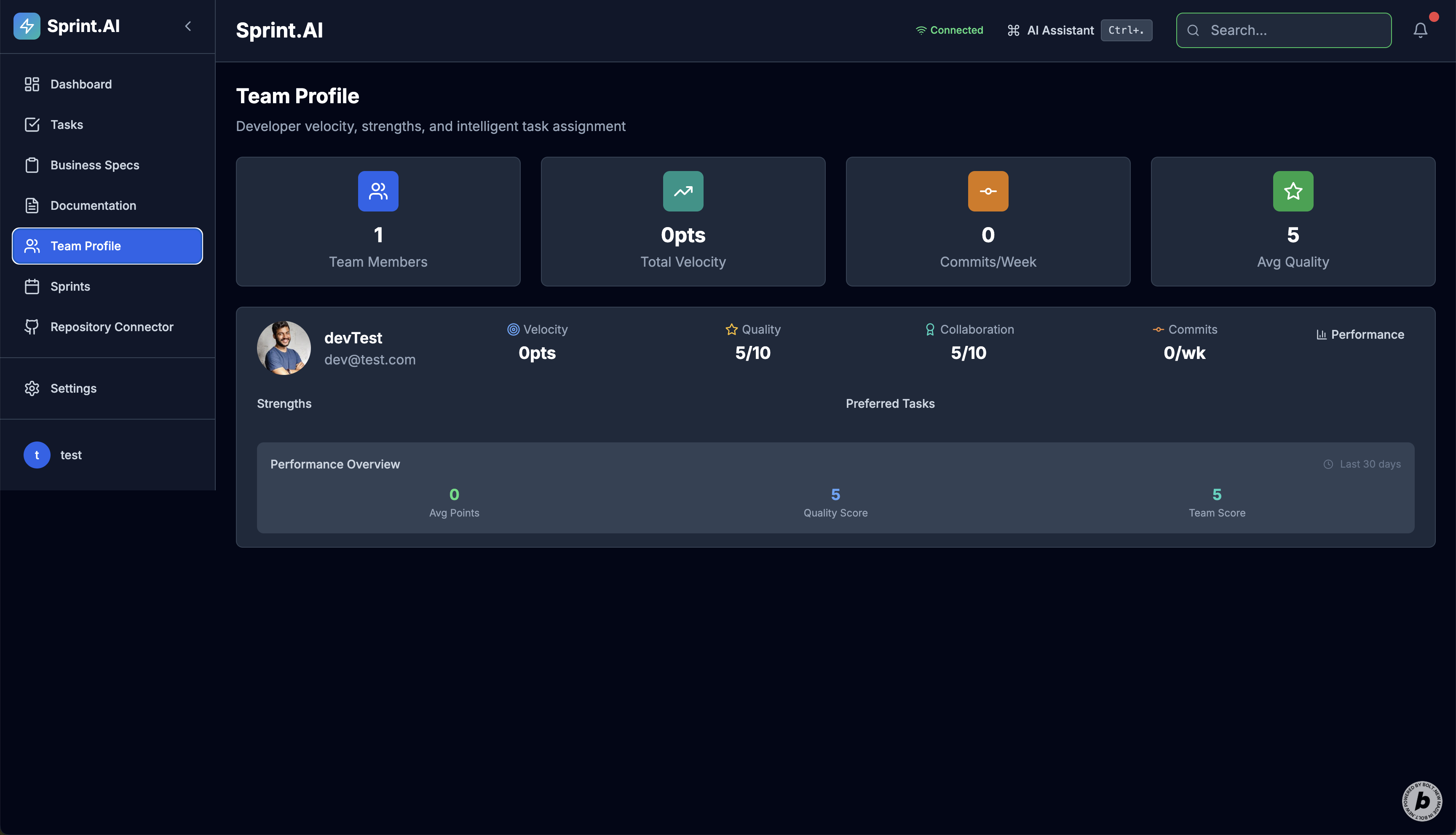
team profiles
-
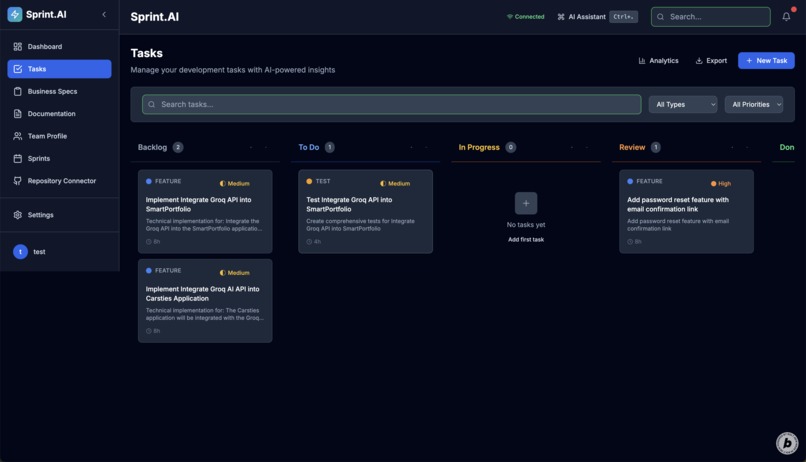
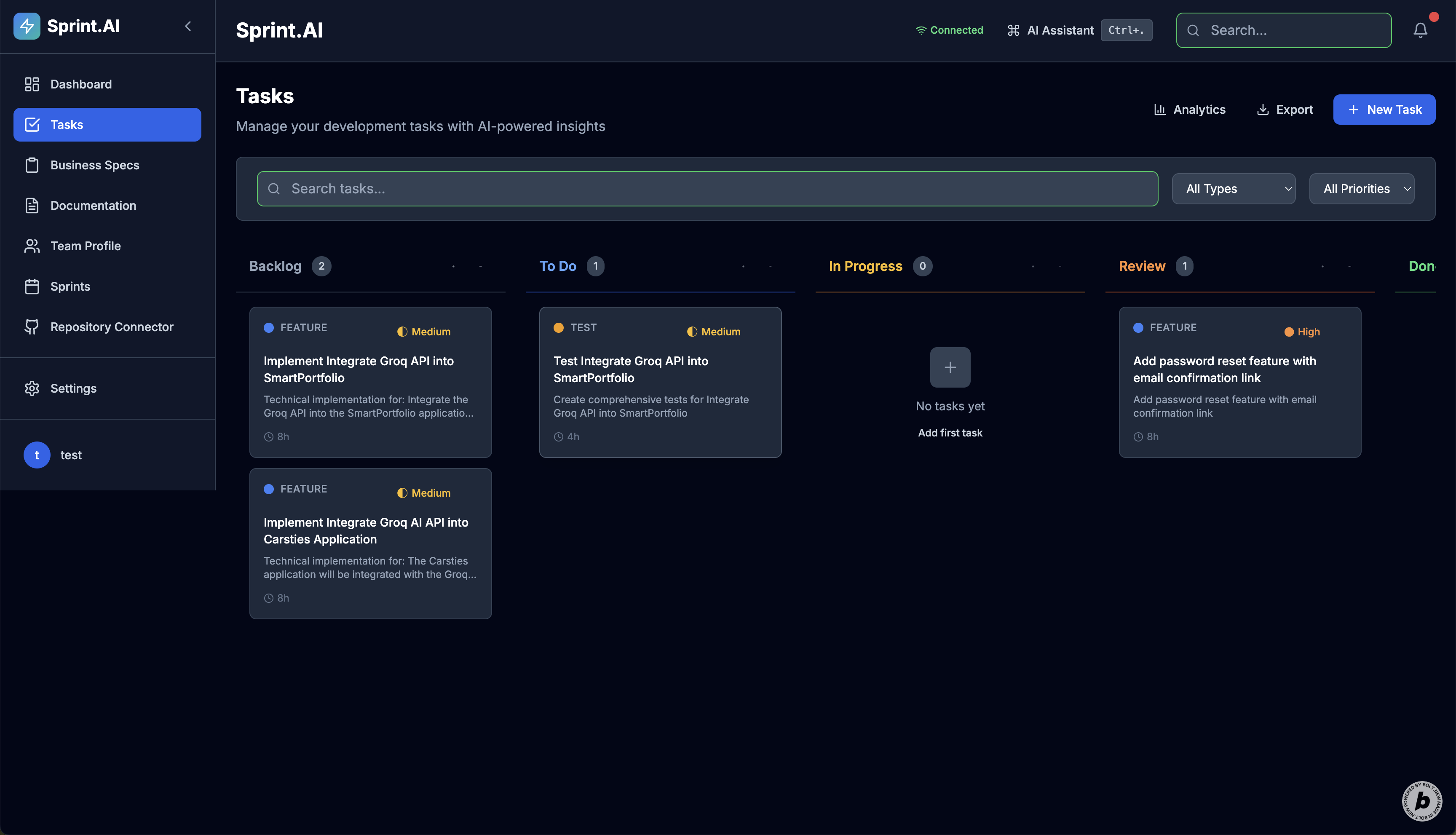
ticket management
-
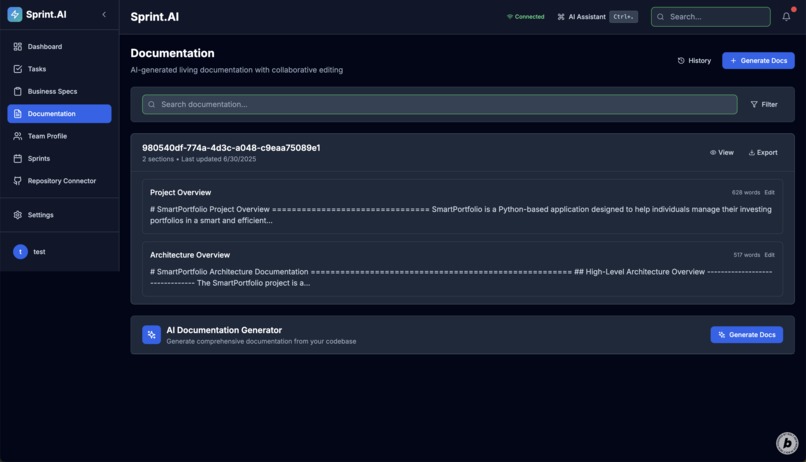
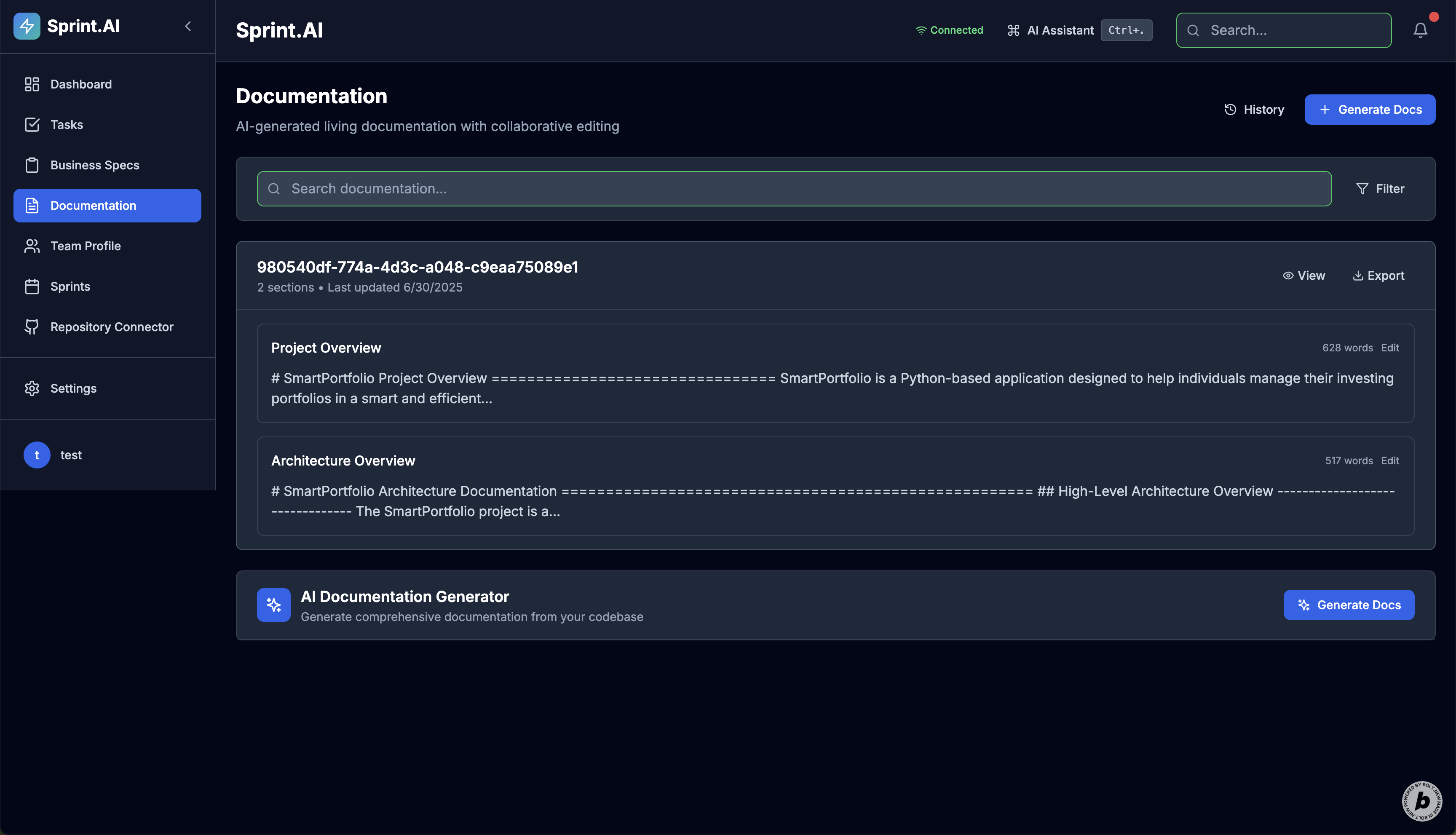
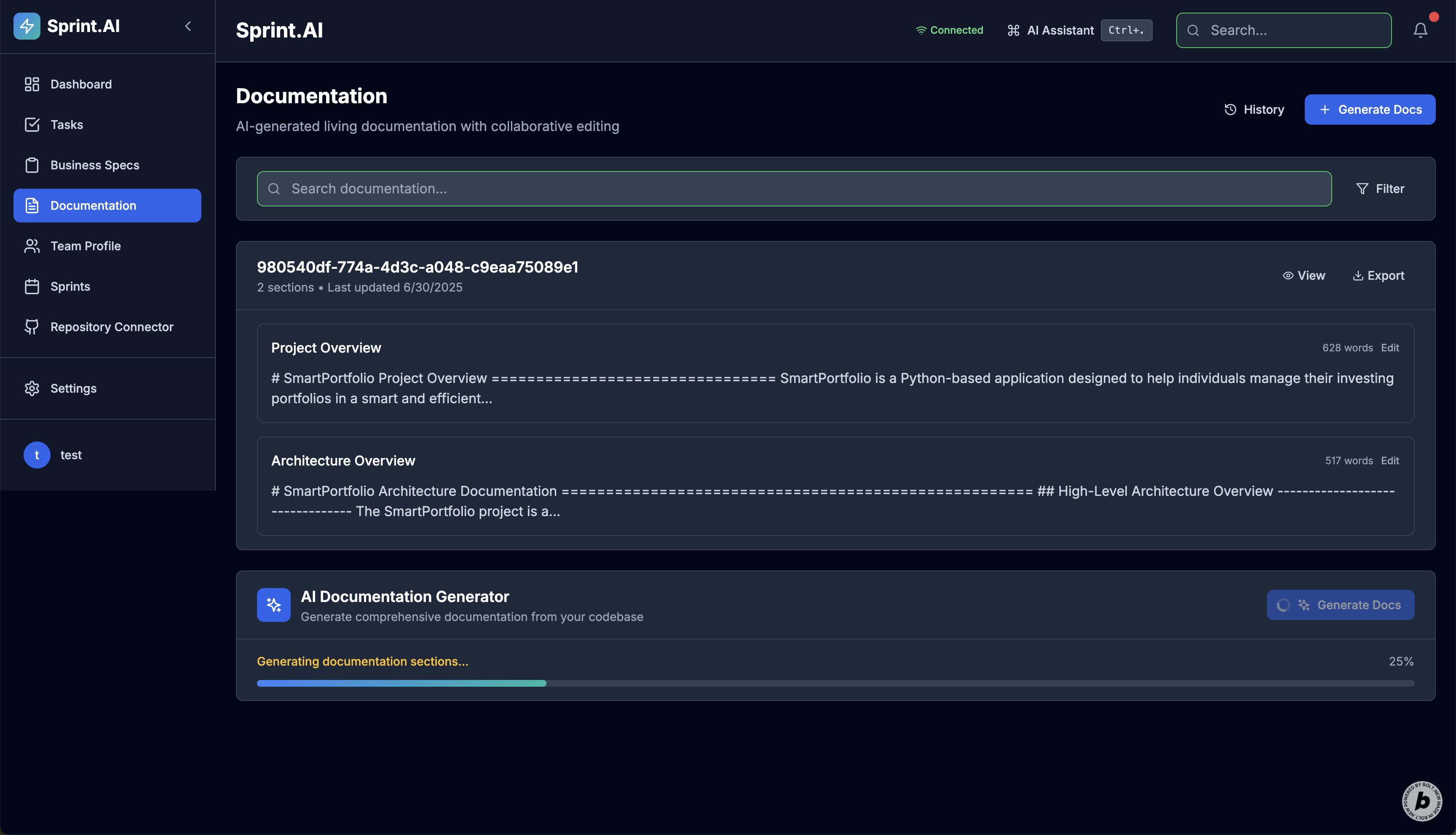
documentation management
-
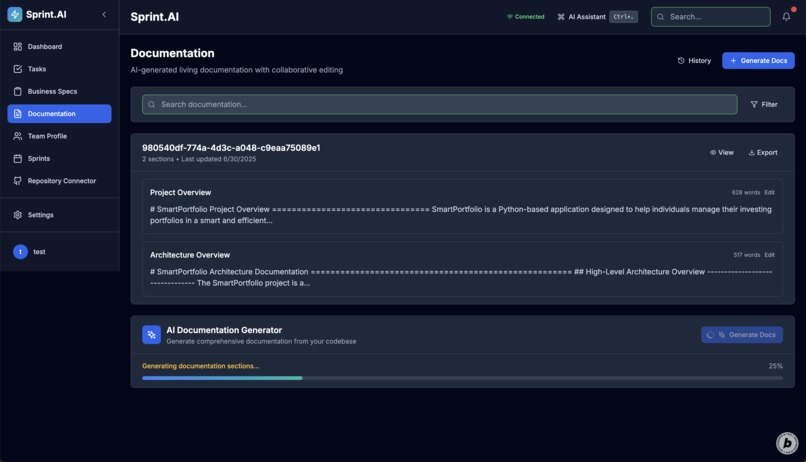
generating new documentation
-
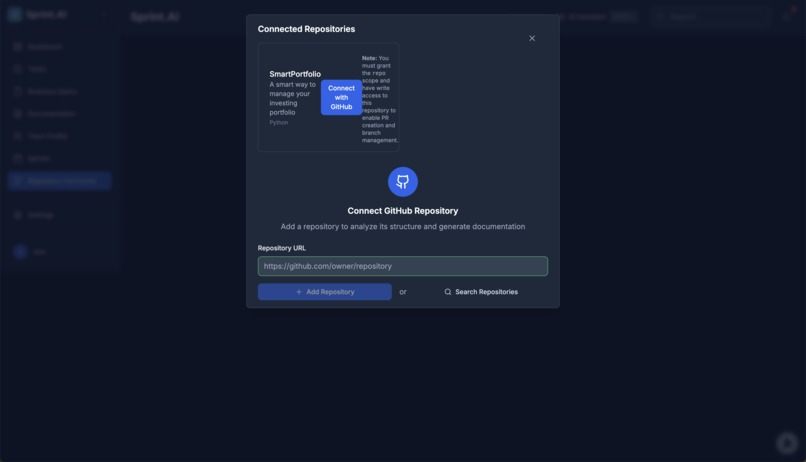
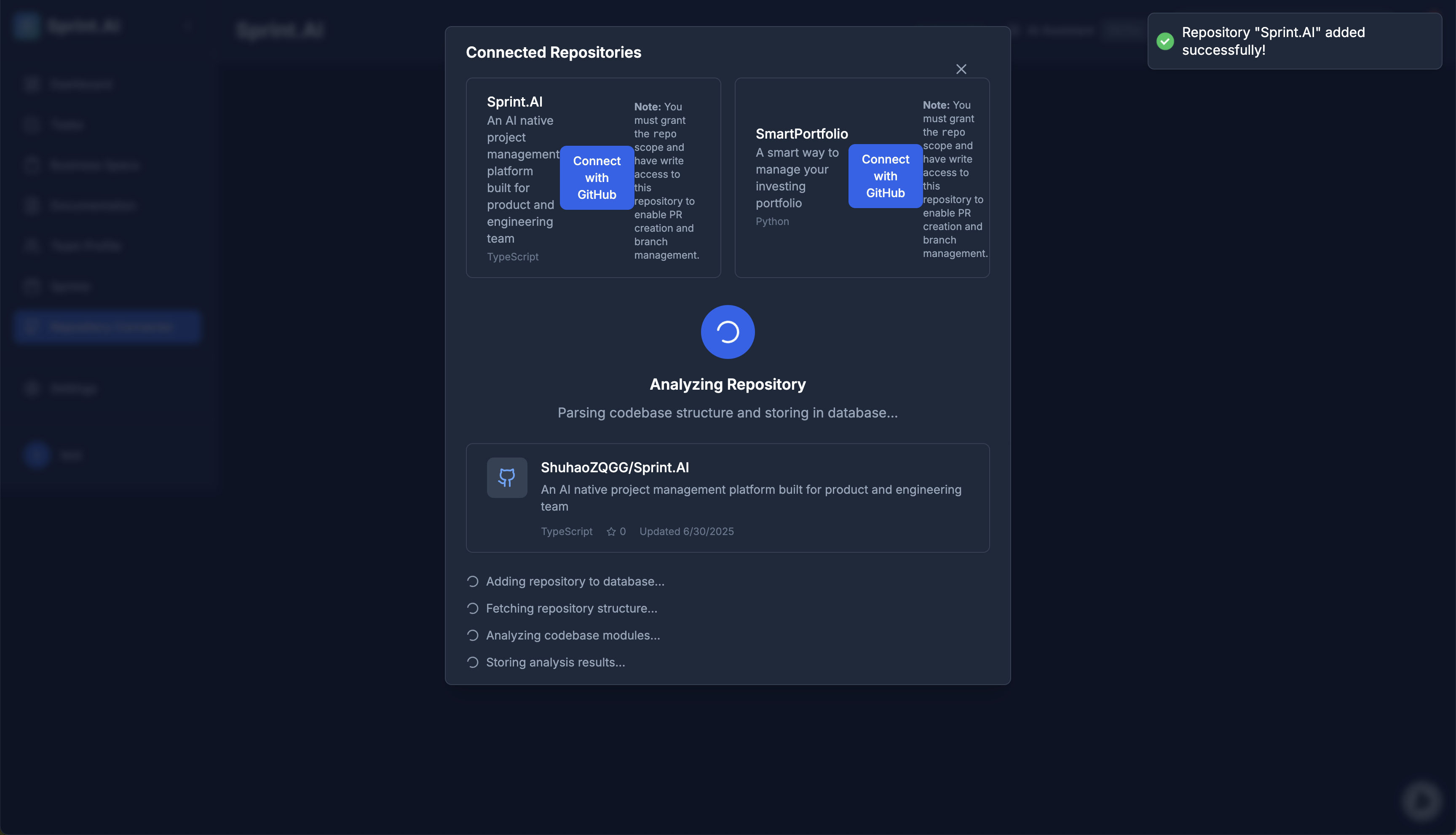
repo connection
-
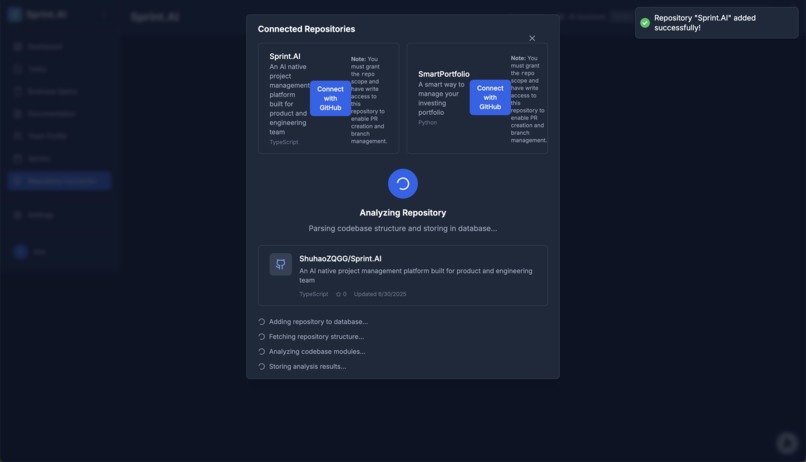
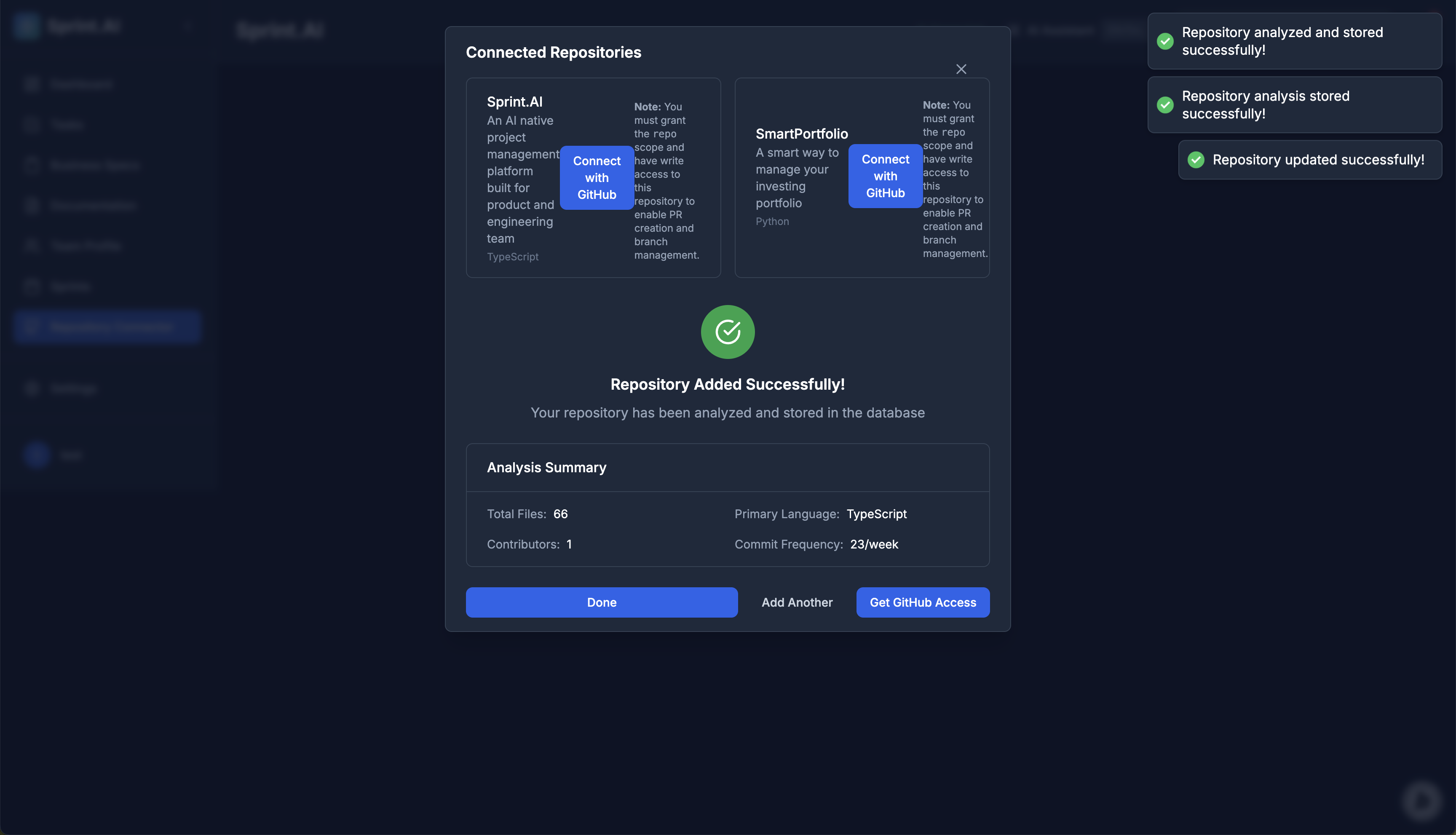
repo analysis
-
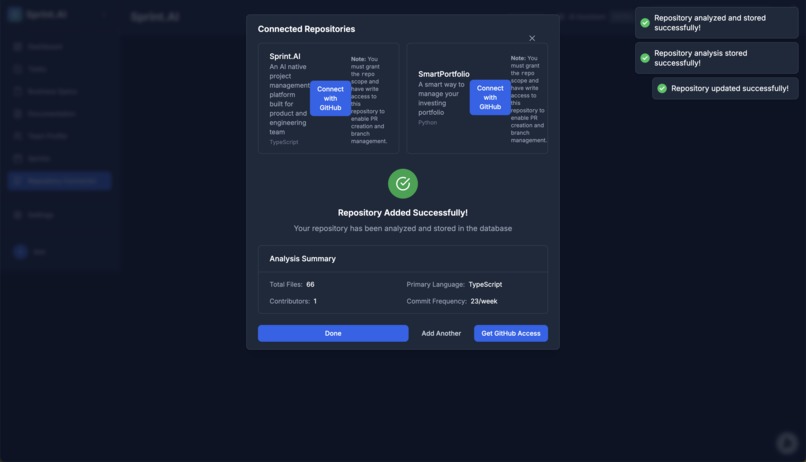
repo analysis finish
-
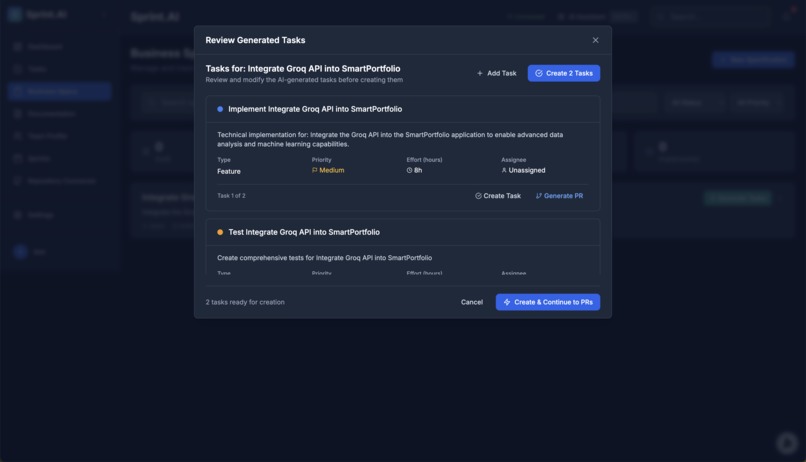
business specs card
-
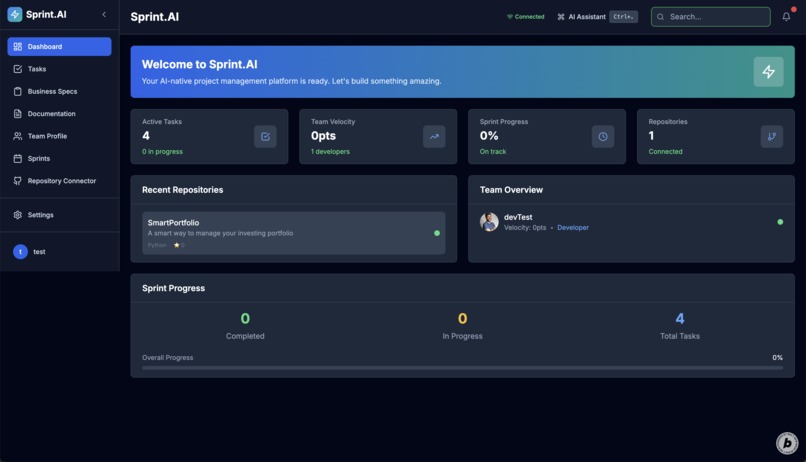
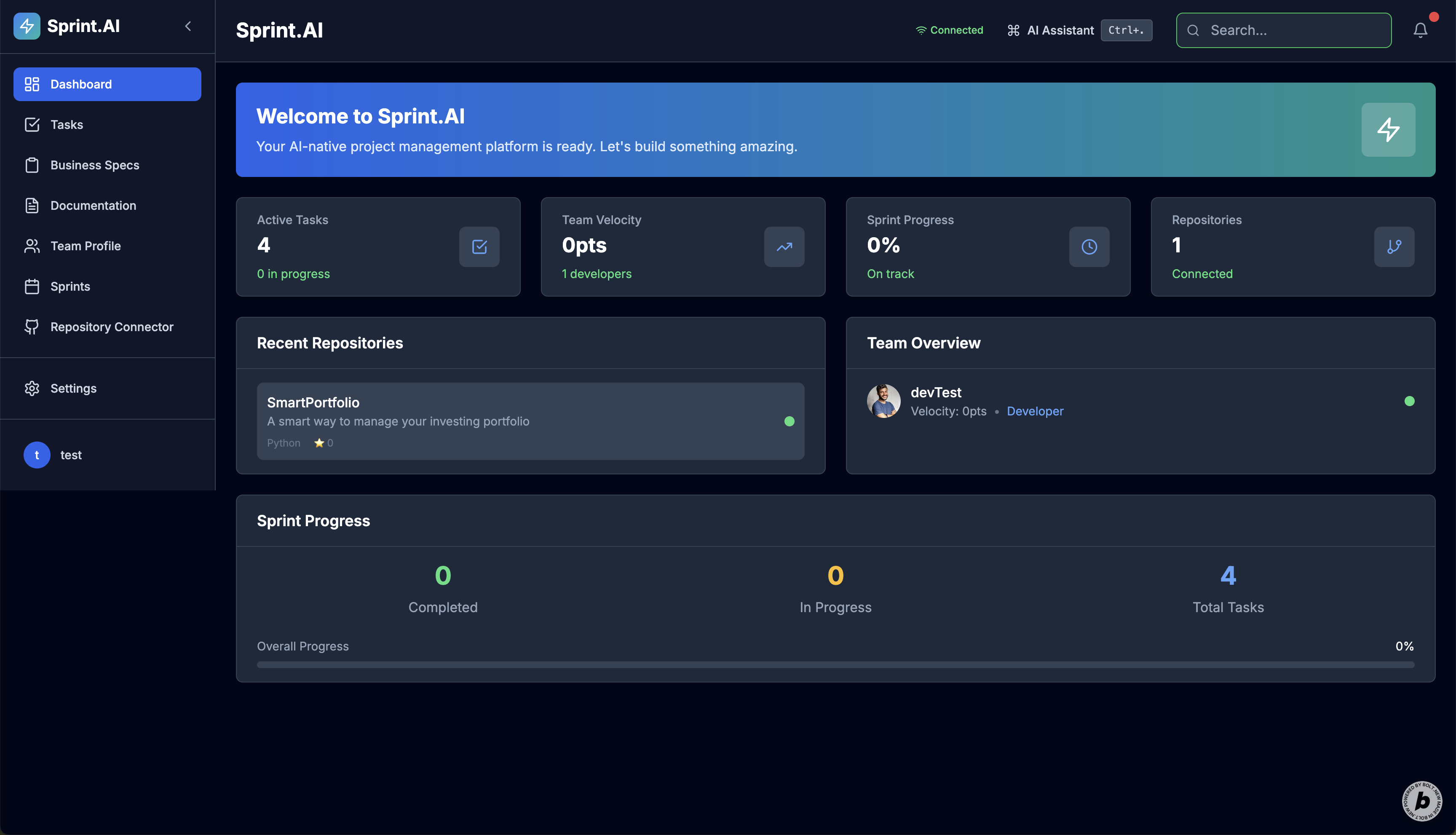
dashboard
-
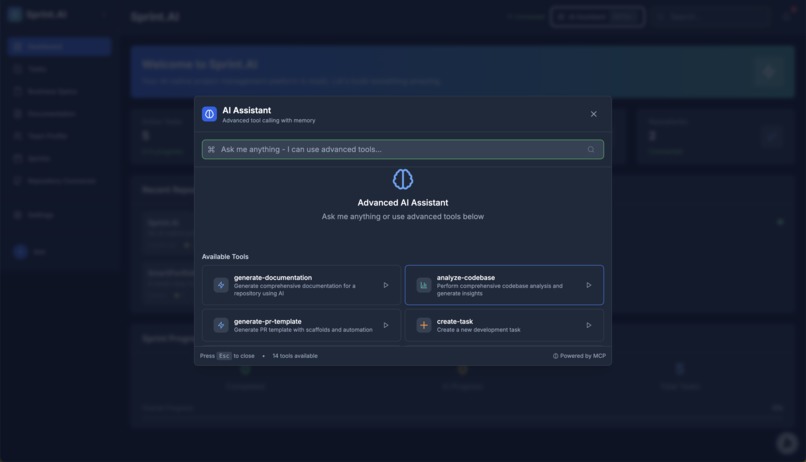
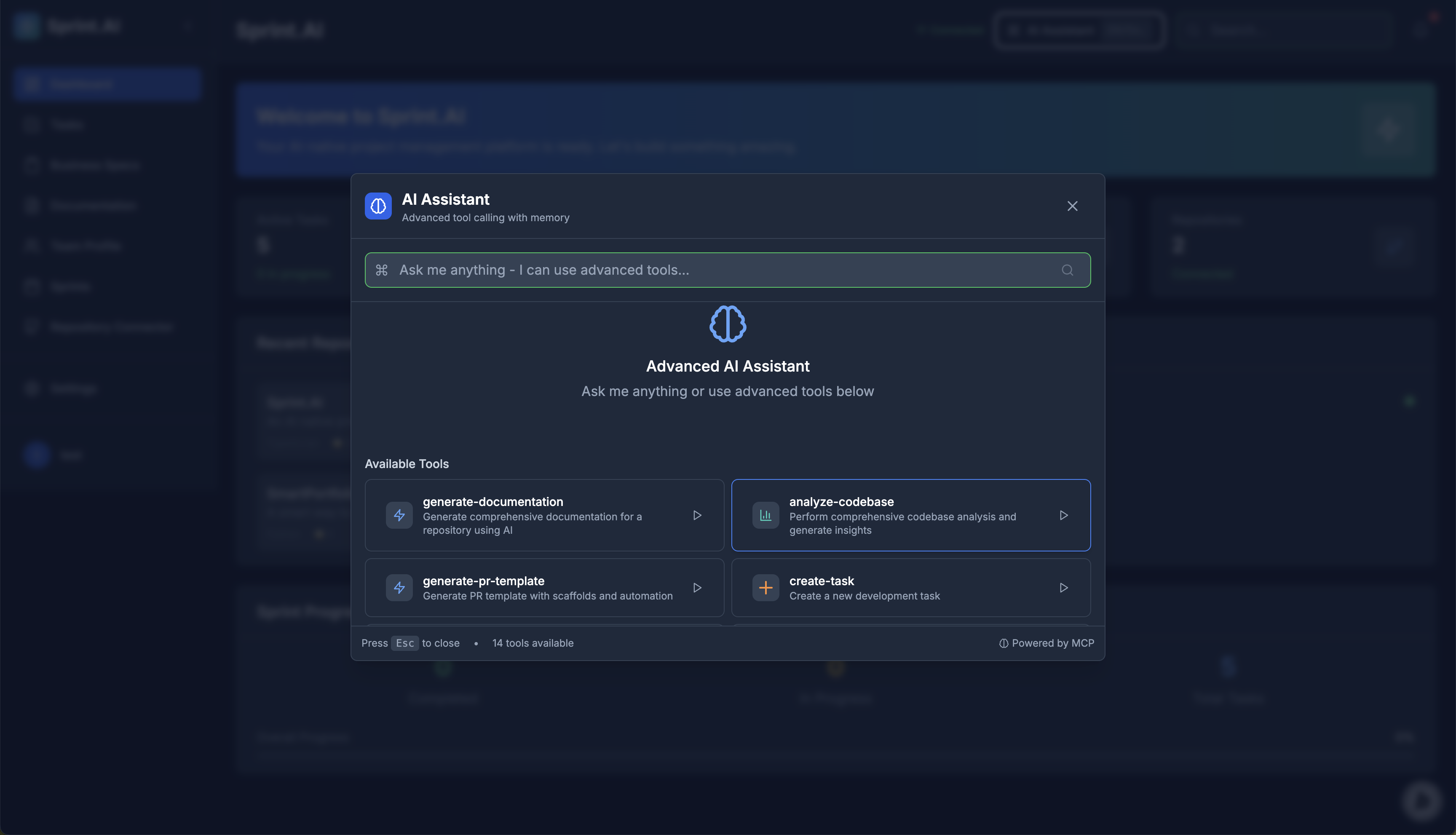
AI command overlay
-
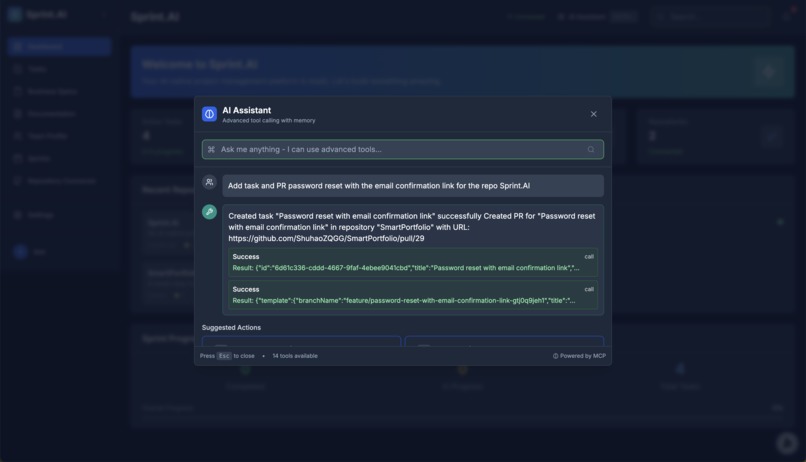
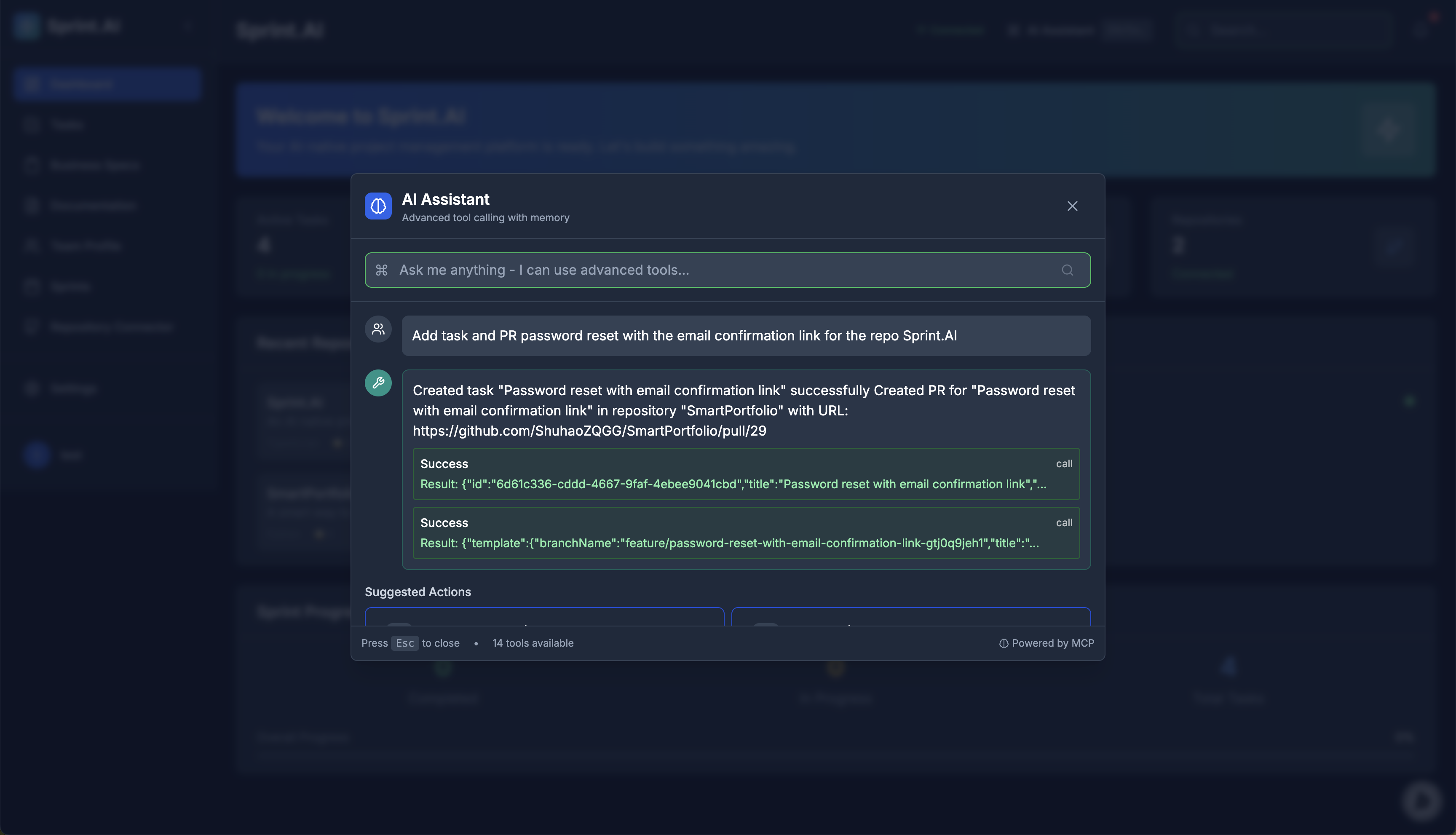
AI tool calls
-
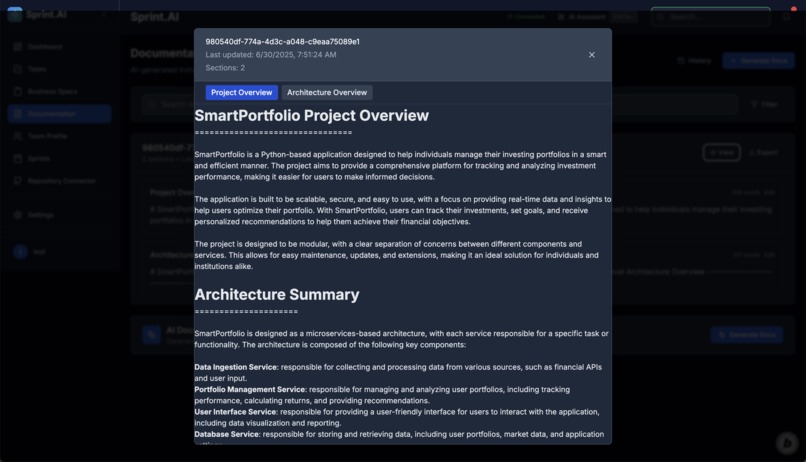
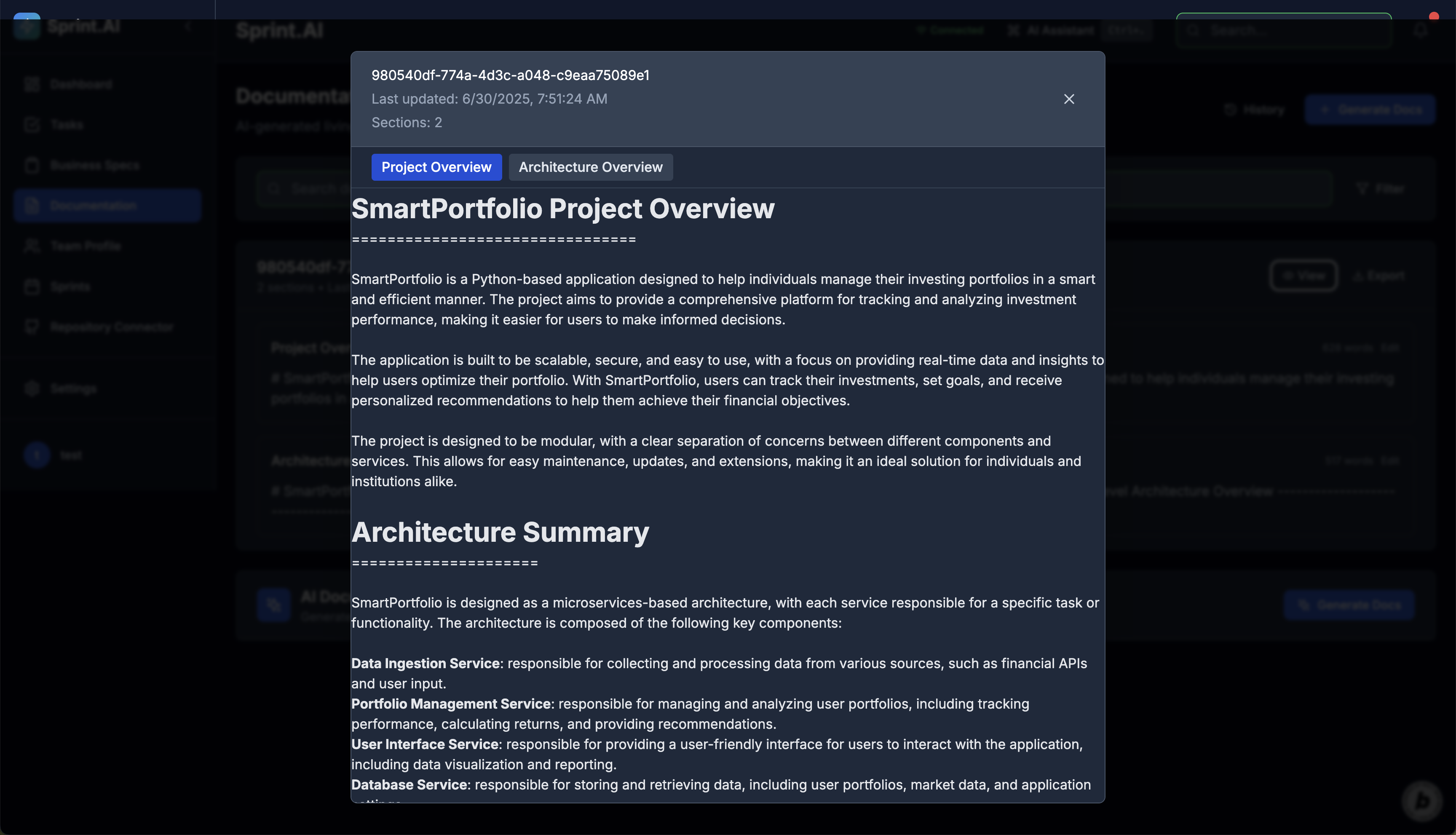
documentation view
-
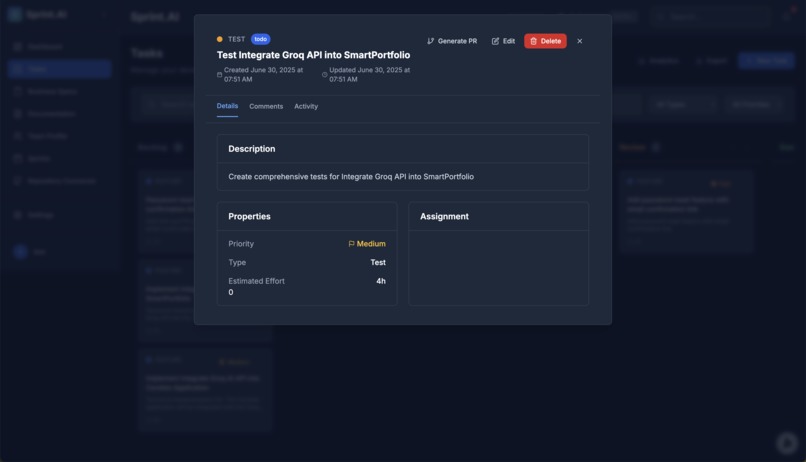
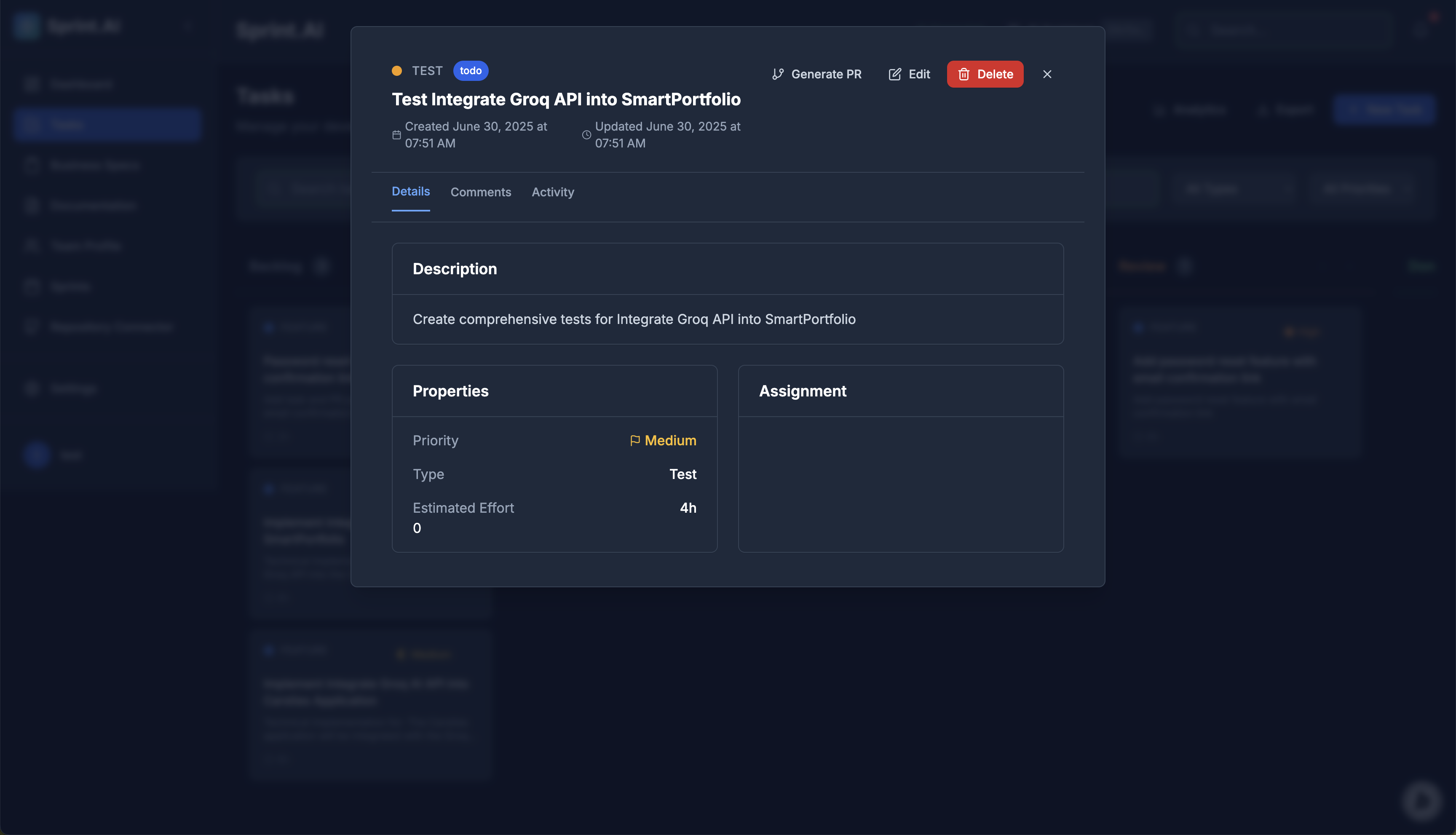
Ticket card



🚀 Sprint.AI — AI-native Sprint Planning & Docs
🌟 About the Project
Sprint.AI was born out of a frustration with fragmented product development workflows.
Modern product and engineering teams juggle disconnected tools:
- Confluence for documentation.
- Jira for task planning.
- GitHub for code and PRs.
This patchwork results in lost context, outdated specs, and hours spent in sync meetings.
We asked: What if planning, documentation, and execution all lived in one AI-native flow?
Sprint.AI is our answer — a disruptive platform that unifies:
- Living, AI-synced documentation
- Autonomous ticketing and PR generation
- Developer-aware sprint planning
💡 What Inspired Us
- Observing product managers struggle to scope work without developer input
- Watching engineers burn time manually writing docs or setup tasks
- Working in async-first environments where coordination was always the bottleneck
- Seeing the power of LLMs + code understanding, but not applied natively in sprints
🛠️ How We Built It
- Frontend:
Next.jswithTailwind CSSfor a clean, fast UI - AI Engine: Powered by the
Groq APIfor code summarization, spec parsing, and PR generation - Repo Integration: GitHub API to analyze structure and commit history
- Database: Cloud first
Supabasefor task and profile storage - Overlay Interface: Custom keybinding
Ctrl + .summons an AI command palette to interact with specs in real-time - Sprint Engine: Tracks velocity, scopes effort, and dynamically updates boards
🧠 What We Learned
- Building intuitive UX for AI tools requires designing around trust and transparency.
- Developers don’t just want automation — they want context. That’s why we layered explanations into PR drafts and task estimations.
- Async teams value tools that don't interrupt them — so we made the AI overlay feel ambient and lightweight.
⚠️ Challenges We Faced
- Parsing and summarizing complex codebases reliably with LLMs
- Creating meaningful developer profiles from noisy Git commit data
- Balancing automation with human control — letting users confirm or override AI actions
- Designing an interface that feels invisible until it’s needed (the overlay UX)
🧭 What's Next
- Integrating Slack to capture product conversations as feature ideas
- Exporting sprint insights and velocity reports
- Improve LLM performance, finalize the leftover features, expand on more new features.
Built With
- groq
- llama
- mcp
- netlify
- nextjs
- supabase
- typescript

Log in or sign up for Devpost to join the conversation.