Inspiration As artificial intelligence continues to evolve, so too do the methods used by malicious actors to exploit it. With the increasing sophistication of phishing scams, deceptive links, and fraudulent messages—many powered or enhanced by AI—we recognized a growing need for a reliable tool that can help users identify potential scams. Our goal was to create a solution that empowers individuals to navigate the digital world with greater confidence and security.
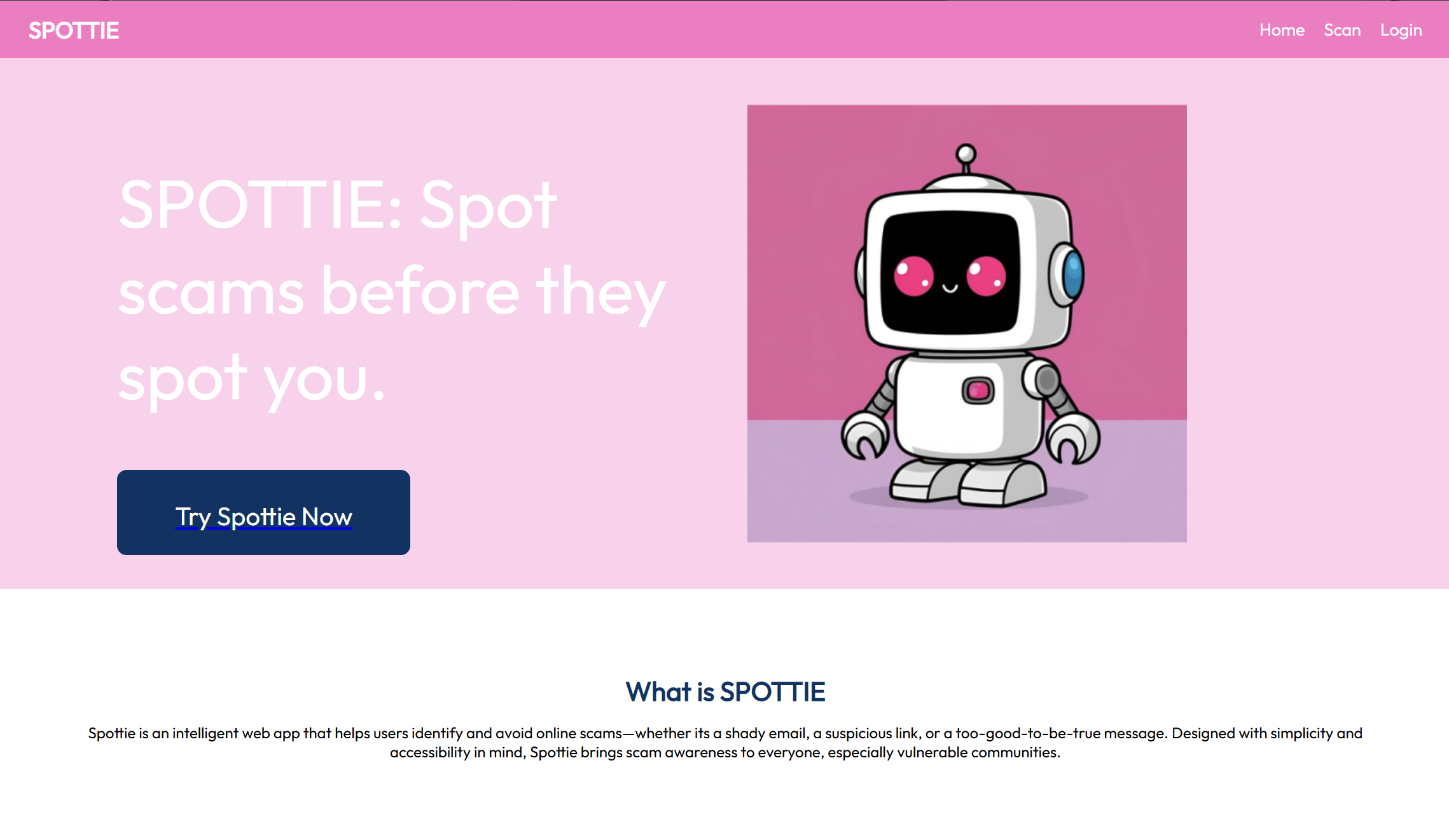
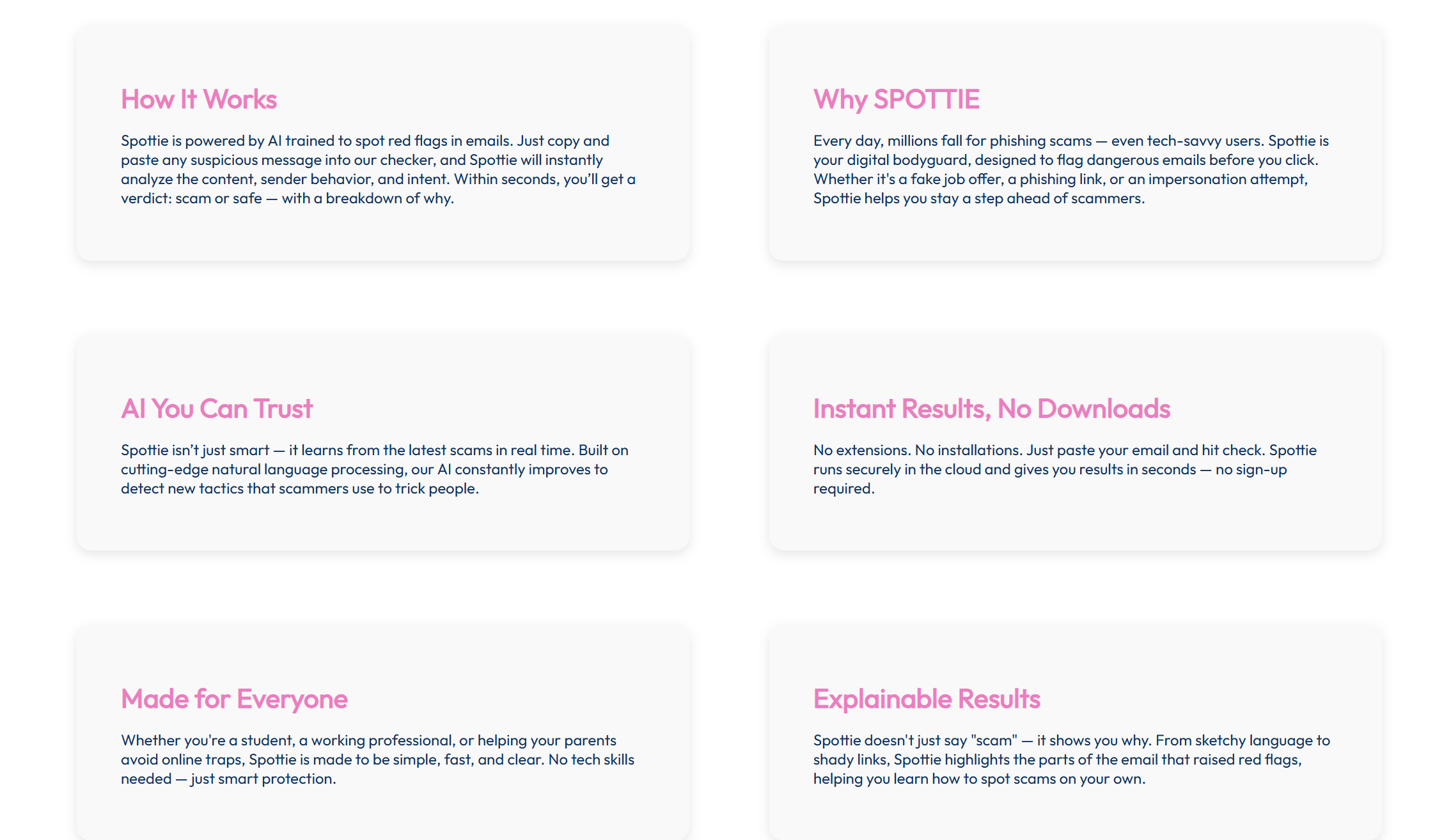
What It Does Spottie is an AI-driven web application designed to detect scams in real time. Users can input suspicious text or URLs, and Spottie will analyze the content using natural language processing techniques. The app then returns a scam likelihood score, provides a rationale for its classification, and offers next-step guidance. Whether it’s an email, text message, or link, Spottie helps users assess credibility with speed and accuracy.
How We Built It Spottie was developed using the following technologies:
Frontend: React, for an intuitive and responsive user interface
Backend: Node.js and Express, to manage routing and API interactions
AI/ML Model: Integrated a fine-tuned language model via OpenAI’s API (or custom-trained model) to assess scam likelihood
Database: Firebase, to store user interactions and maintain performance logs
Deployment: Hosted on Vercel for seamless deployment and scalability
We also incorporated real-world datasets of scam-related content to test and improve the model's accuracy and robustness.
Challenges We Faced Throughout development, we encountered several technical and conceptual challenges:
Training the model to identify subtle or evolving scam tactics
Minimizing false positives and false negatives to maintain user trust
Creating a straightforward user experience for individuals with varying levels of technical literacy
Ensuring fast and secure processing of potentially sensitive data
Accomplishments Developed a fully functional prototype capable of analyzing text and links for scam potential
Designed a clean, accessible interface suitable for a wide range of users
Achieved a high rate of accuracy in initial testing against phishing and scam examples
Laid the groundwork for further integration, such as browser extensions and mobile support
What We Learned Applied advanced AI capabilities in a practical cybersecurity context
Gained experience integrating third-party APIs and managing full-stack architecture
Developed a deeper understanding of ethical considerations in AI deployment
Strengthened our skills in collaborative problem-solving under time constraints
What’s Next Moving forward, we plan to:
Expand Spottie into a browser extension for real-time scam detection
Incorporate continuous learning from anonymous user-submitted data to improve accuracy
Introduce multilingual support to broaden accessibility
Collaborate with cybersecurity organizations and educational institutions
Add educational modules to help users recognize scams independently
Built With
- css
- express.js
- firebase
- git
- html
- java
- javascript
- node.js
- openai-api
- react
- vercel

Log in or sign up for Devpost to join the conversation.