-
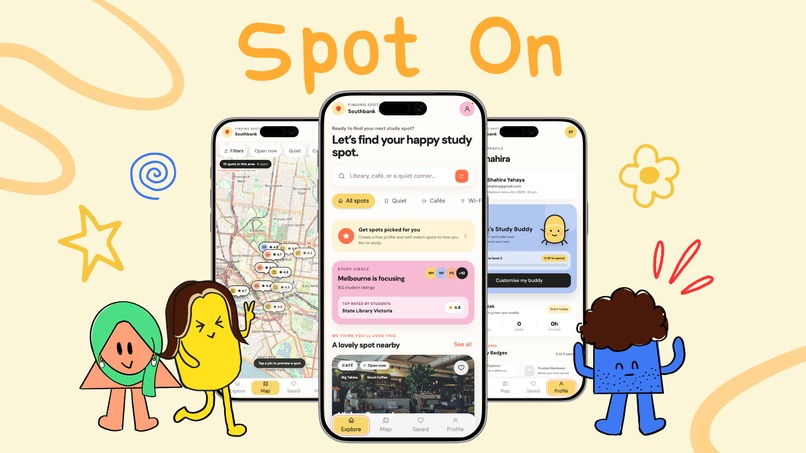
Cover
-
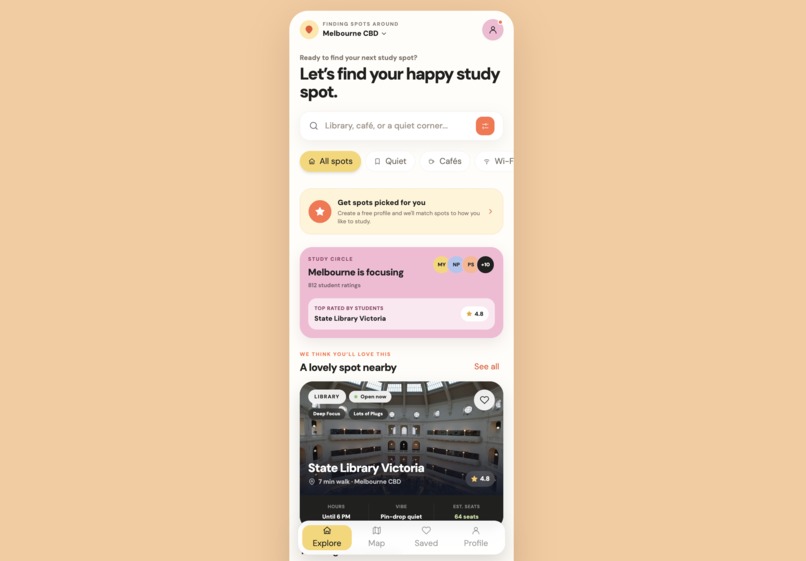
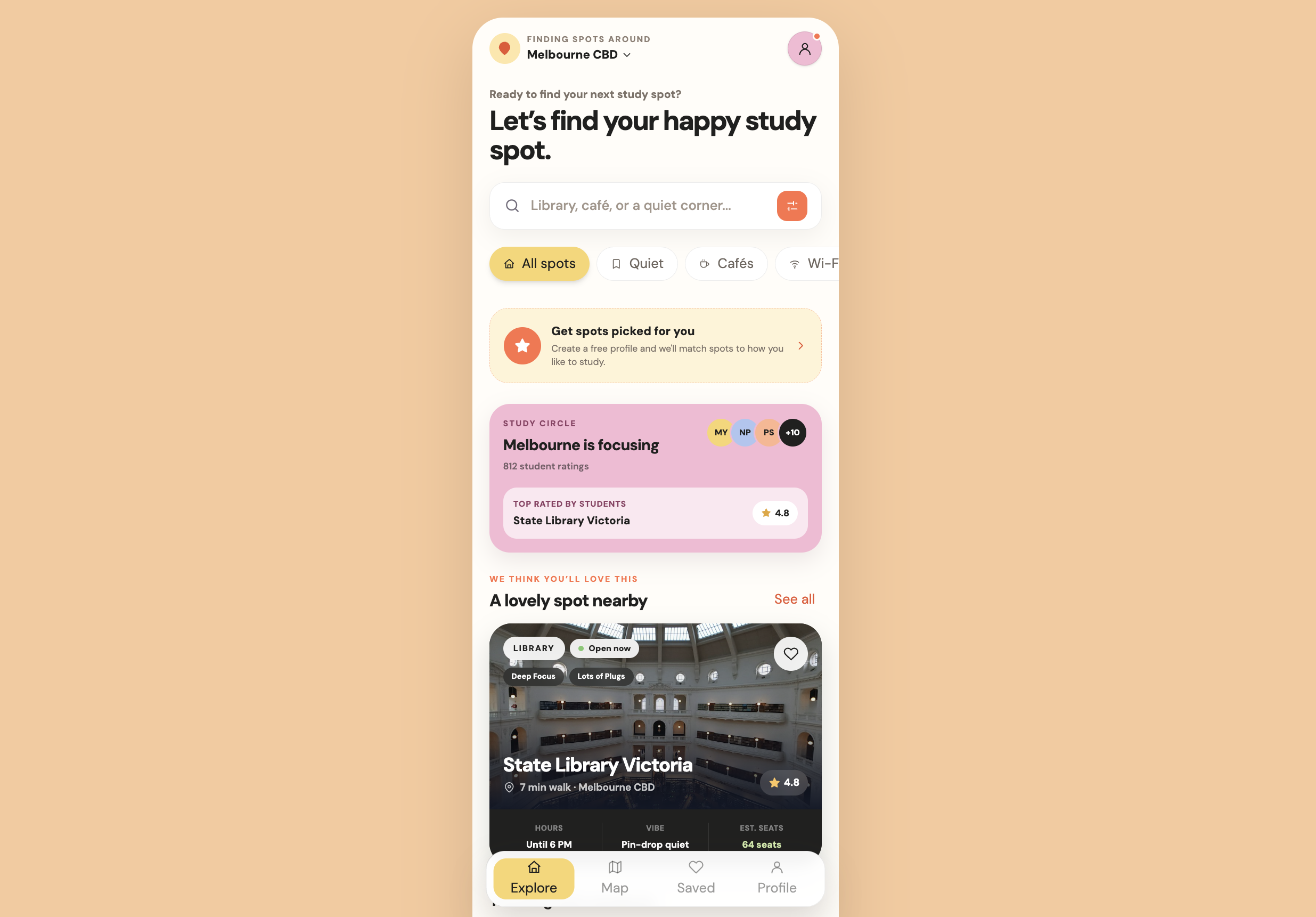
Explore
-
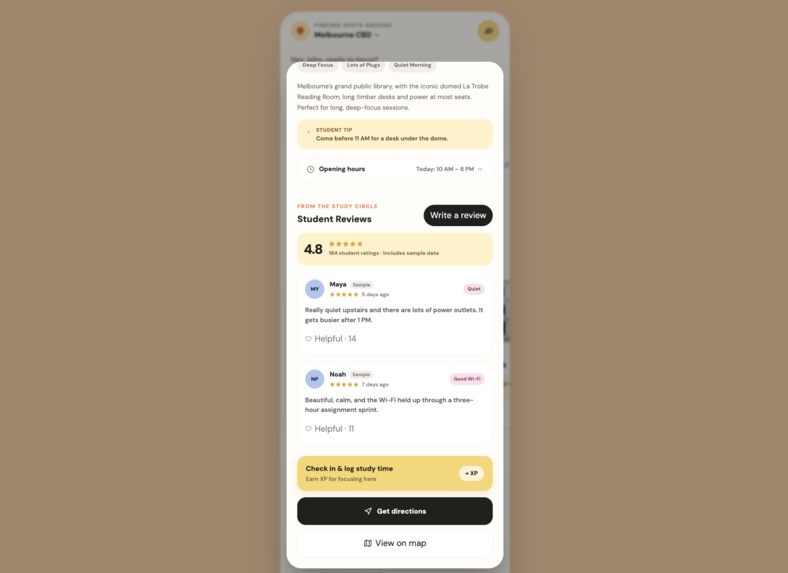
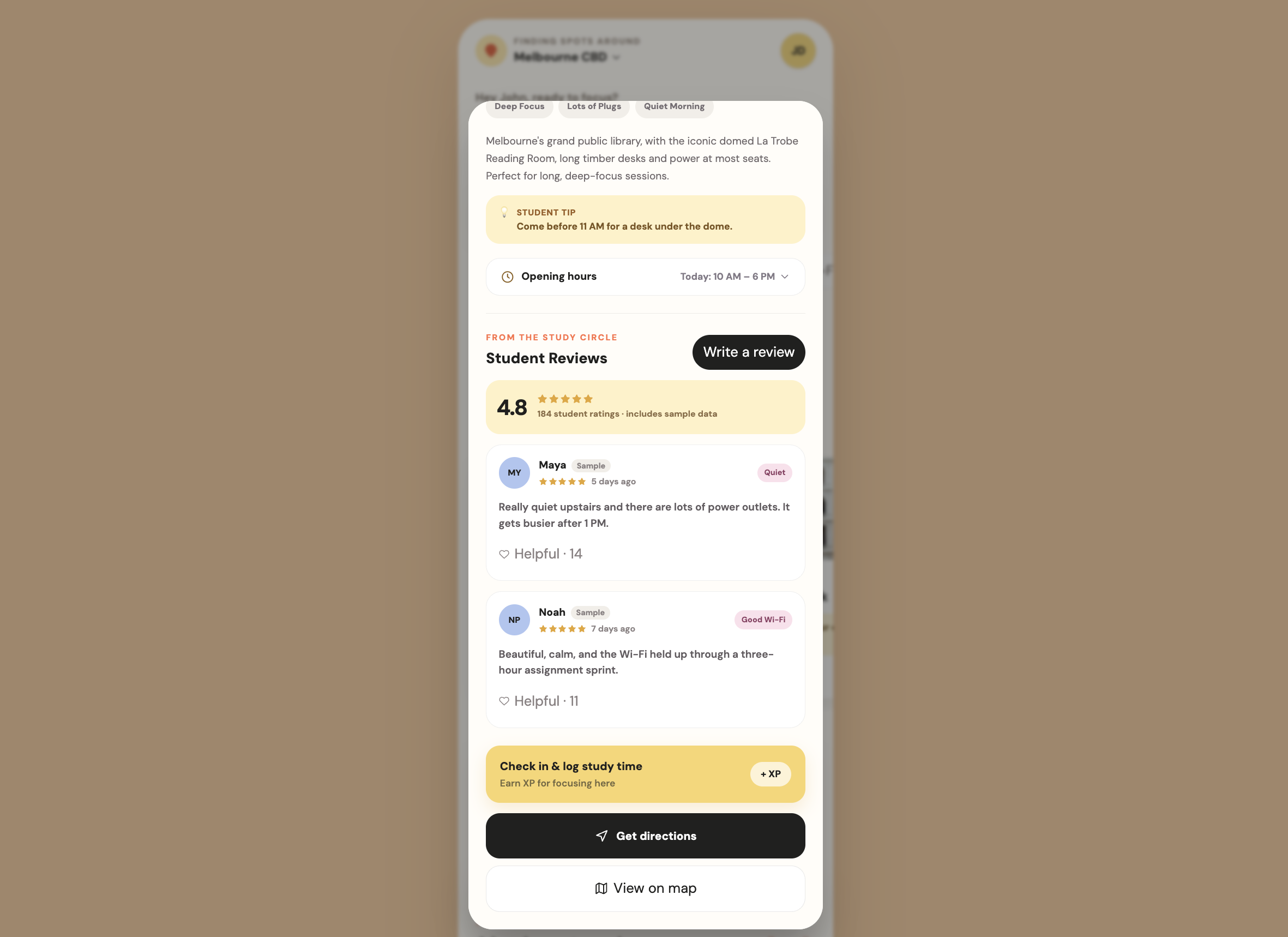
Review
-
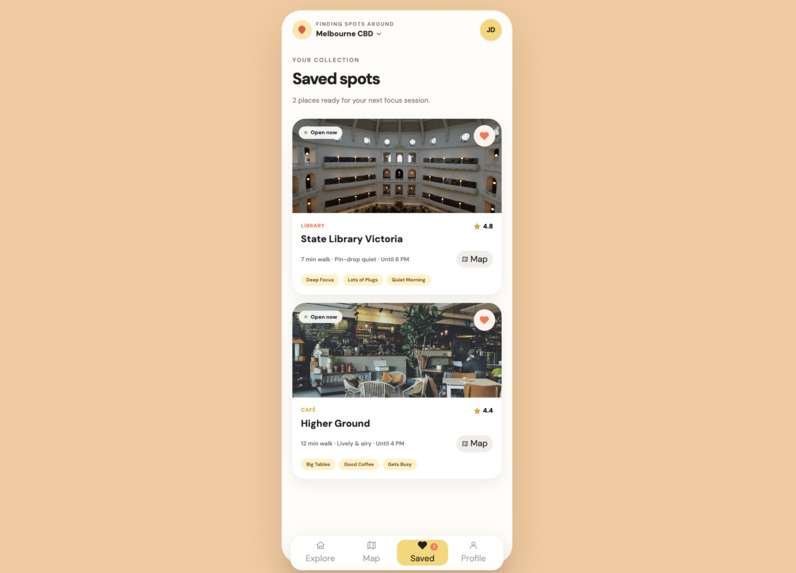
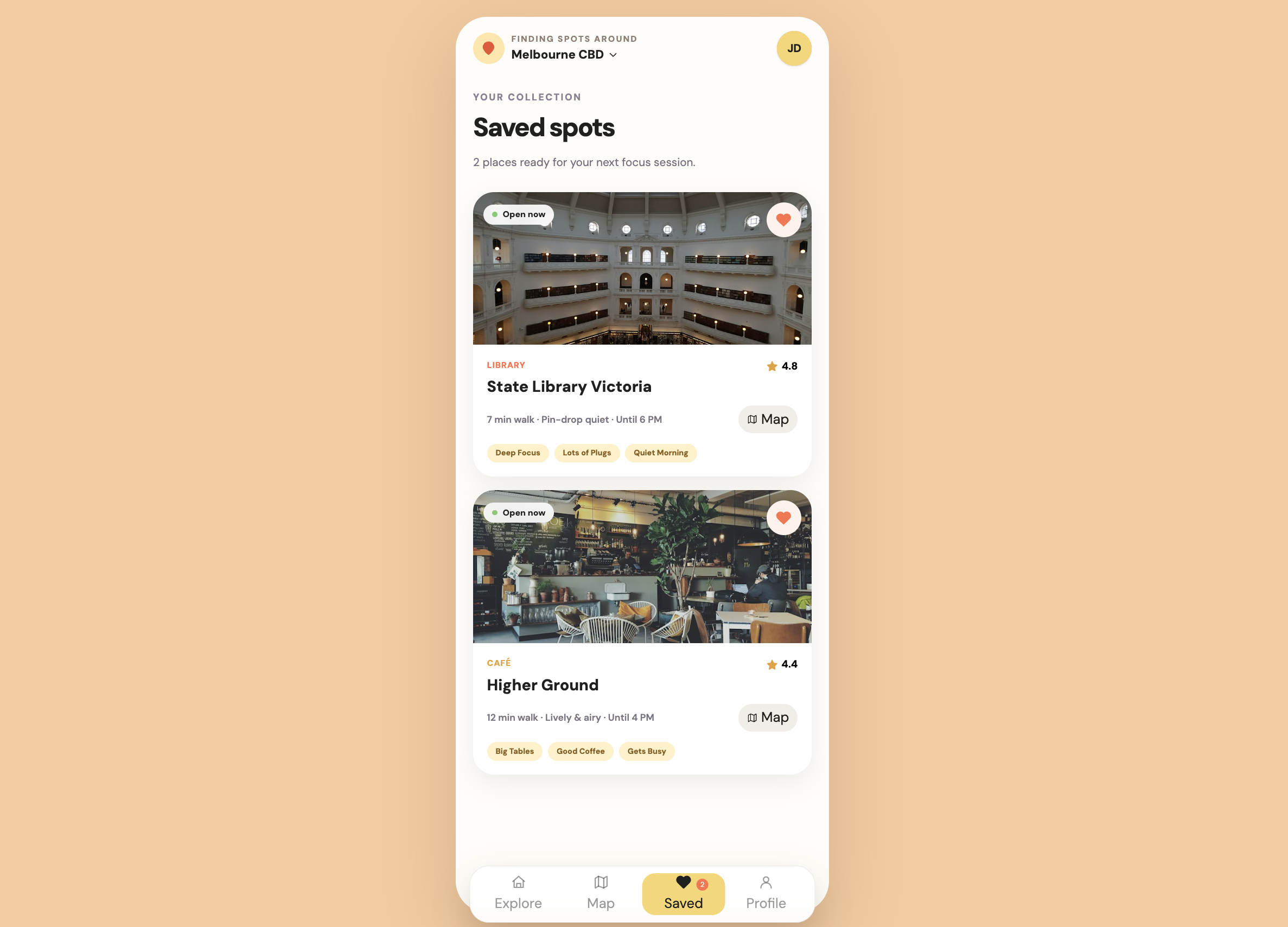
Saved Spots
-
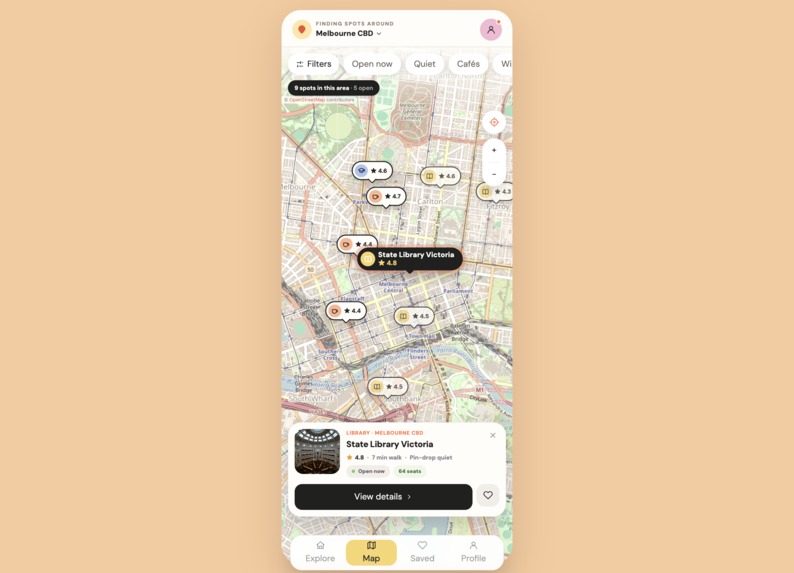
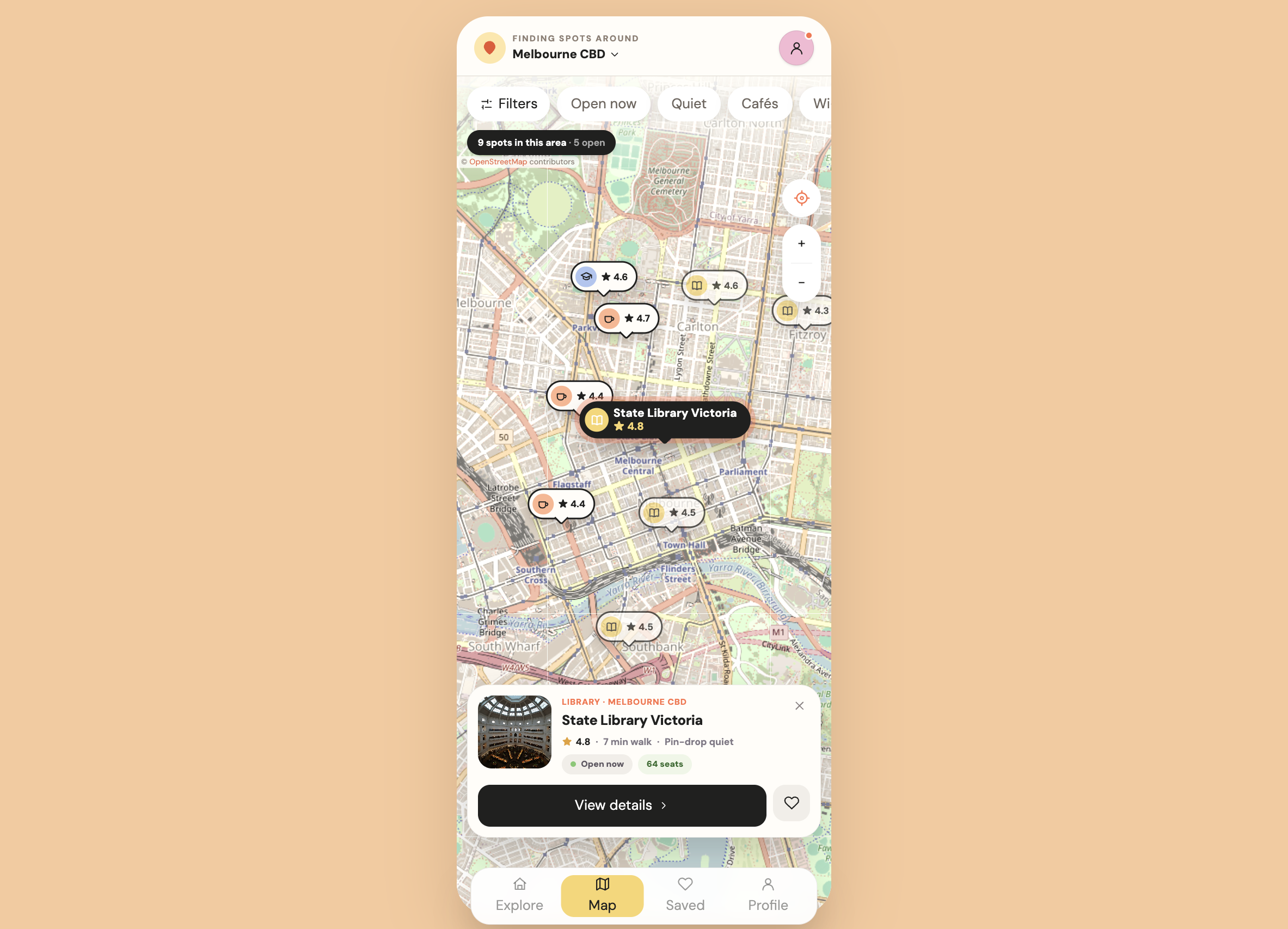
Map
-
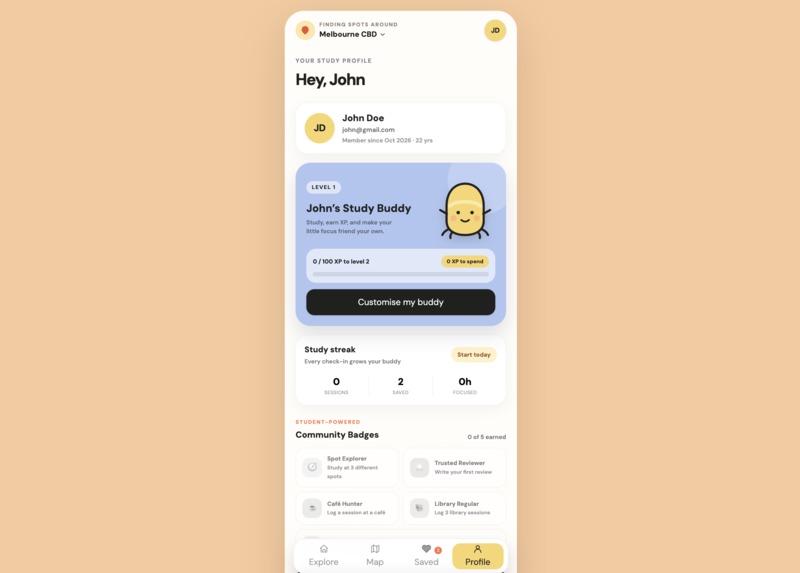
Profile
-
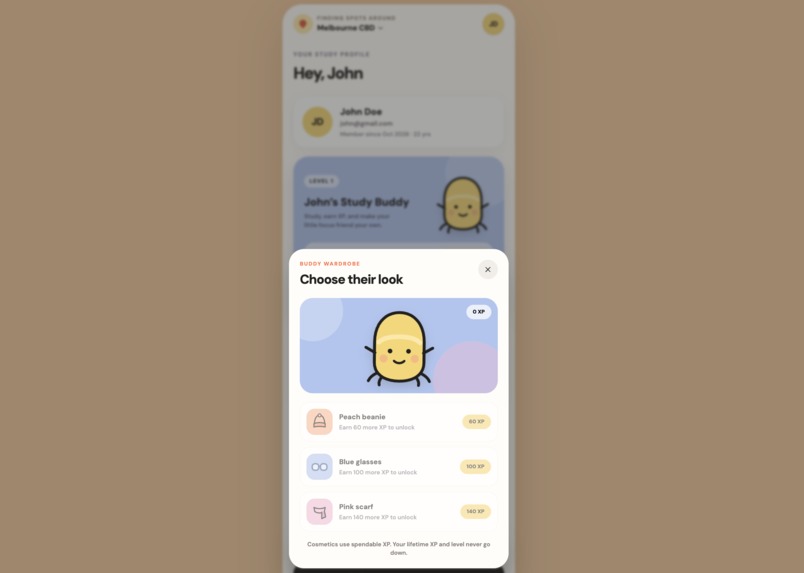
Study XP
Inspiration
As students, we know how frustrating it can be to find a good place to study. A library might be too crowded, a café might be too noisy or a place that looks perfect online might have no available seats when you arrive.
That inspired us to create a platform that helps students find study spaces that actually match their needs, whether they want somewhere quiet, social, nearby or comfortable for a long study session.
What it does
Our project helps students discover the best study spots around them based on factors like noise level, seating, Wi-Fi, opening hours, distance and overall study vibe.
Users can search for nearby libraries, cafés and other study spaces, filter locations based on their preferences, explore spots on a map and save their favourites.
Our goal is to make choosing where to study quick and easy, instead of relying on trial and error.
How we built it
We built the project as a mobile-first web application using React, TypeScript, Vite and Tailwind CSS.
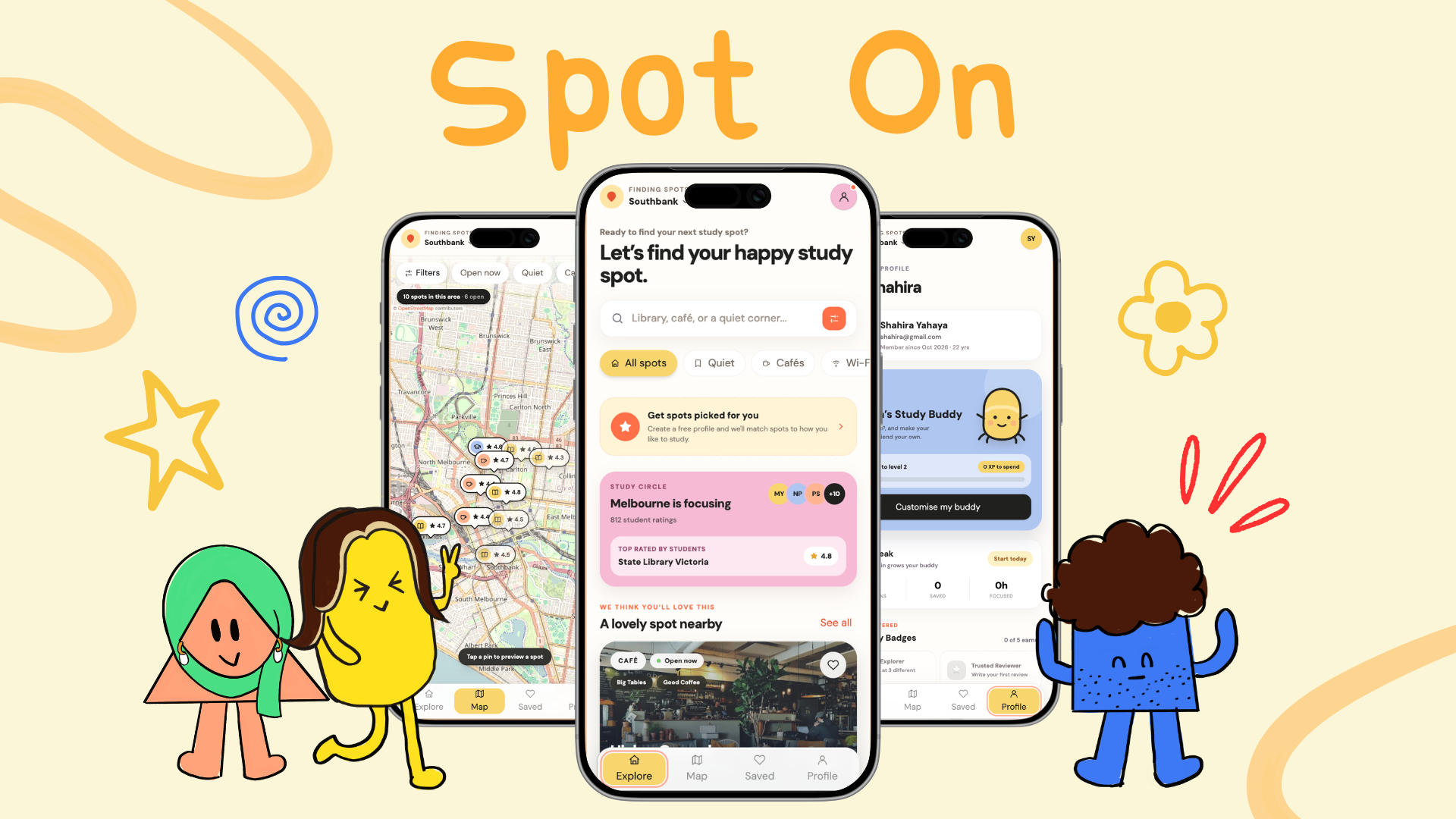
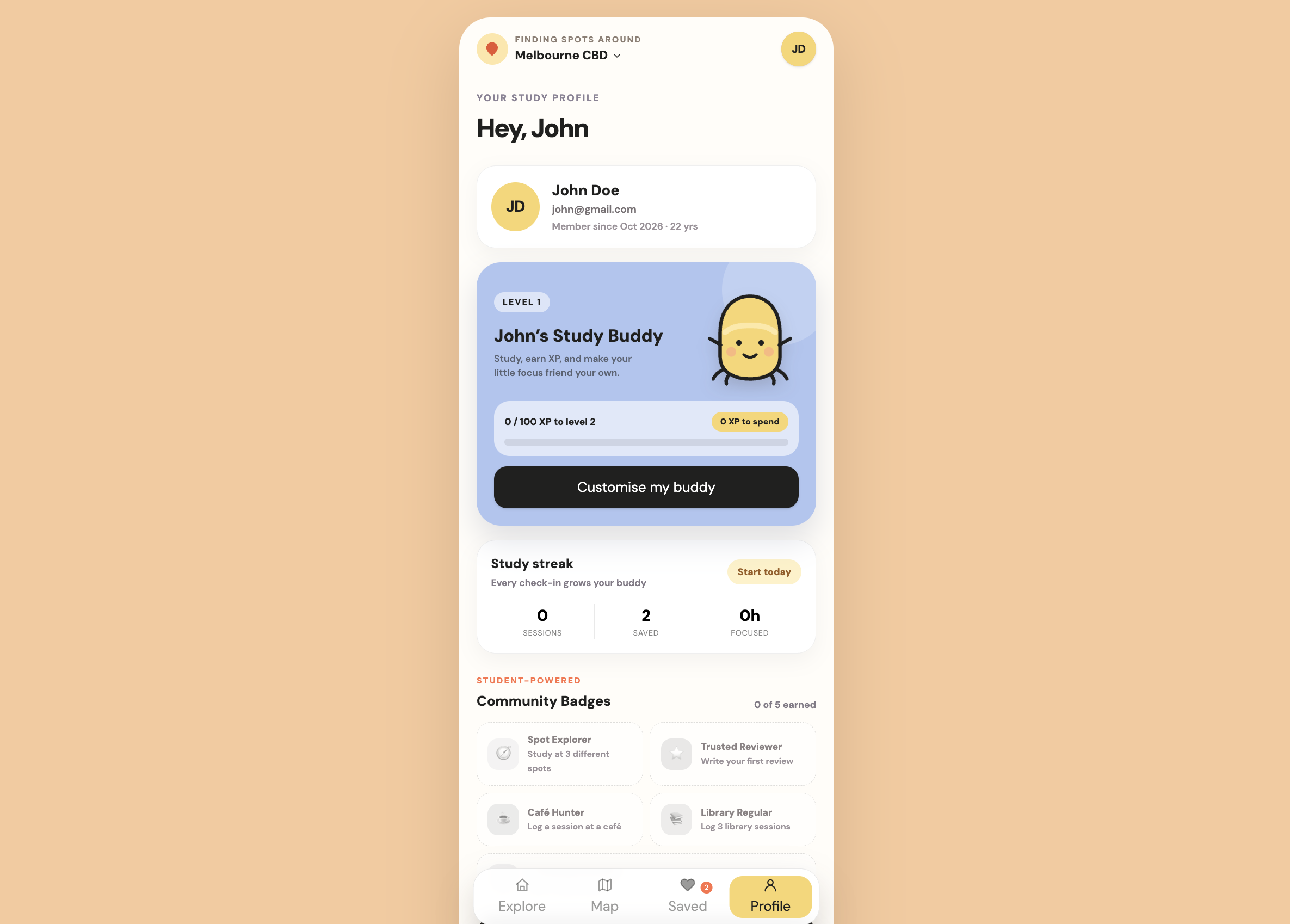
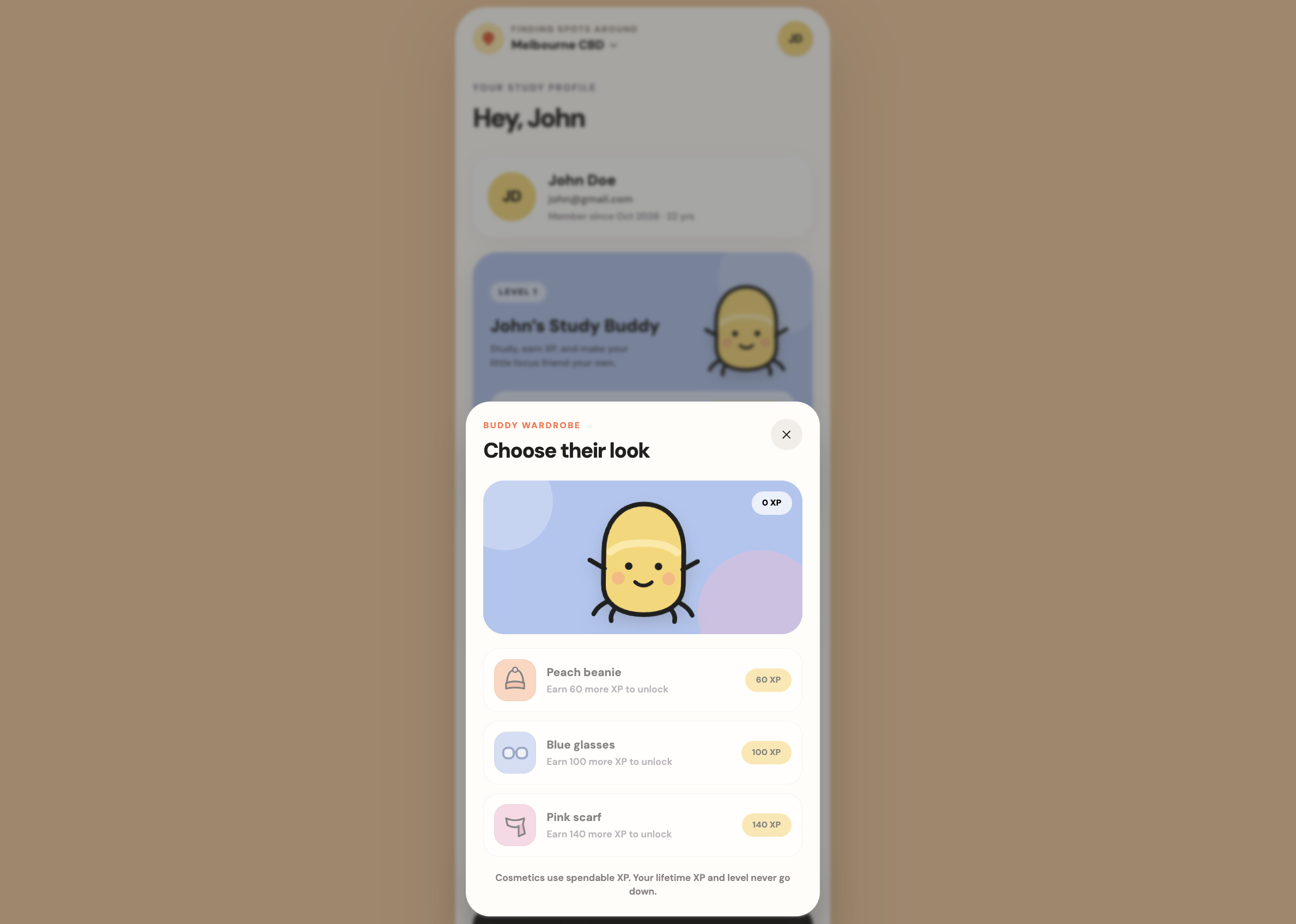
We focused on creating an interface that feels simple, friendly and easy to use on a phone. The app includes an explore page, map view, saved locations, user profiles, search and filtering features.
We also designed each study spot to show the information students would care about most, such as distance, noise level, opening hours, ratings and seat availability.
Challenges we ran into
One of our biggest challenges was deciding how much information to show without making the app feel cluttered.
There are many things students may want to know about a study space, so we had to focus on the most useful information and keep the interface easy to understand.
Another challenge was making a web application feel like a real mobile app while keeping everything responsive and interactive.
We also had to think about how community-powered information, such as live noise and crowd levels, could stay accurate and useful.
Accomplishments that we're proud of
We’re proud that we were able to turn a simple student problem into a working, interactive prototype within a limited timeframe.
One of our biggest accomplishments was creating a mobile-first experience that feels like a real app rather than just a basic website. We built core features such as study spot discovery, search and filtering, map exploration, saved locations and user preferences.
We’re also proud of how we approached the design. Instead of overwhelming users with information, we focused on the details students actually care about when choosing where to study, such as noise level, seating, distance, opening hours and overall study vibe.
Most importantly, we created something that we would genuinely use ourselves. Seeing the idea develop from a rough concept into a functional product was one of the most rewarding parts of the project.
What we learned
Throughout this project, we learned how important it is to design around the user's actual problem rather than simply adding more features.
We also improved our skills in React, responsive design, UI development, state management and working together as a team under a limited timeframe.
Most importantly, we learned how a simple everyday student problem can be turned into a useful and engaging product.
What's next for SpotOn
In the future, we would love to add live community updates for crowd levels, noise, available seats, power outlets and Wi-Fi quality.
We also want to introduce personalised recommendations that learn what type of study environment works best for each student.
Built With
- css
- figma
- html
- javascript
- react
- tailwindcss
- typescript
- vite


Log in or sign up for Devpost to join the conversation.