-
-
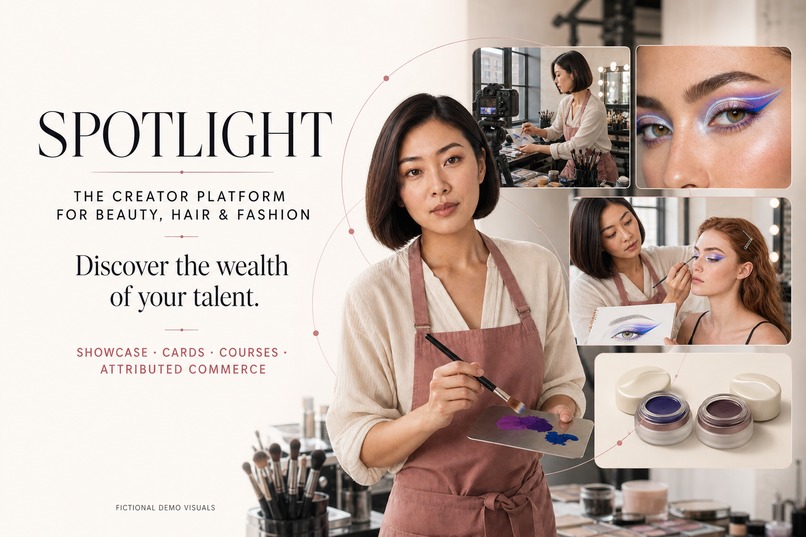
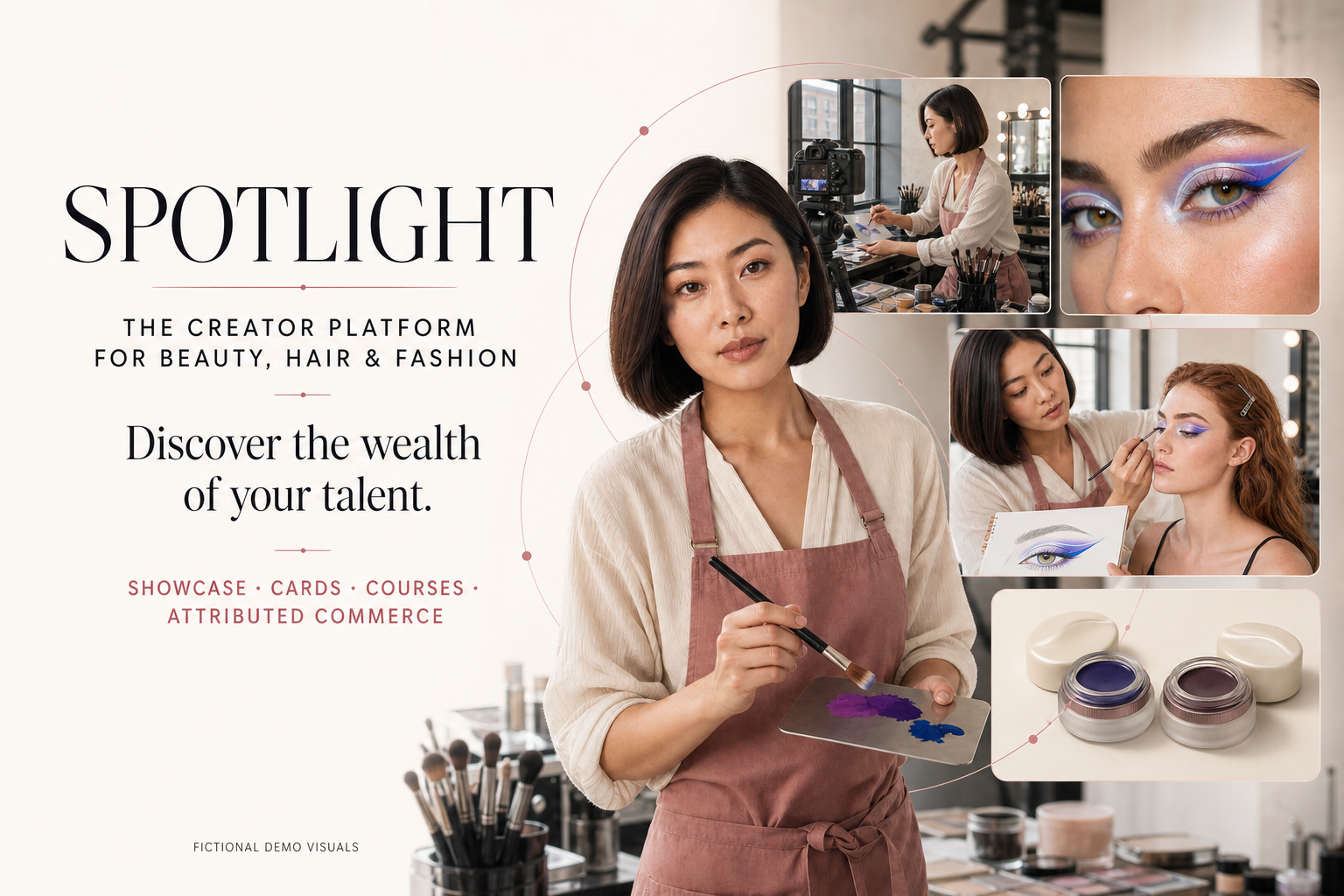
cover for spotlight
-
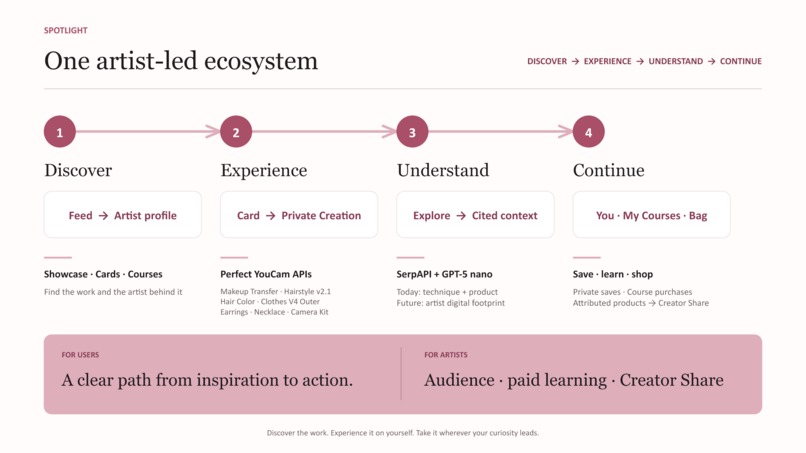
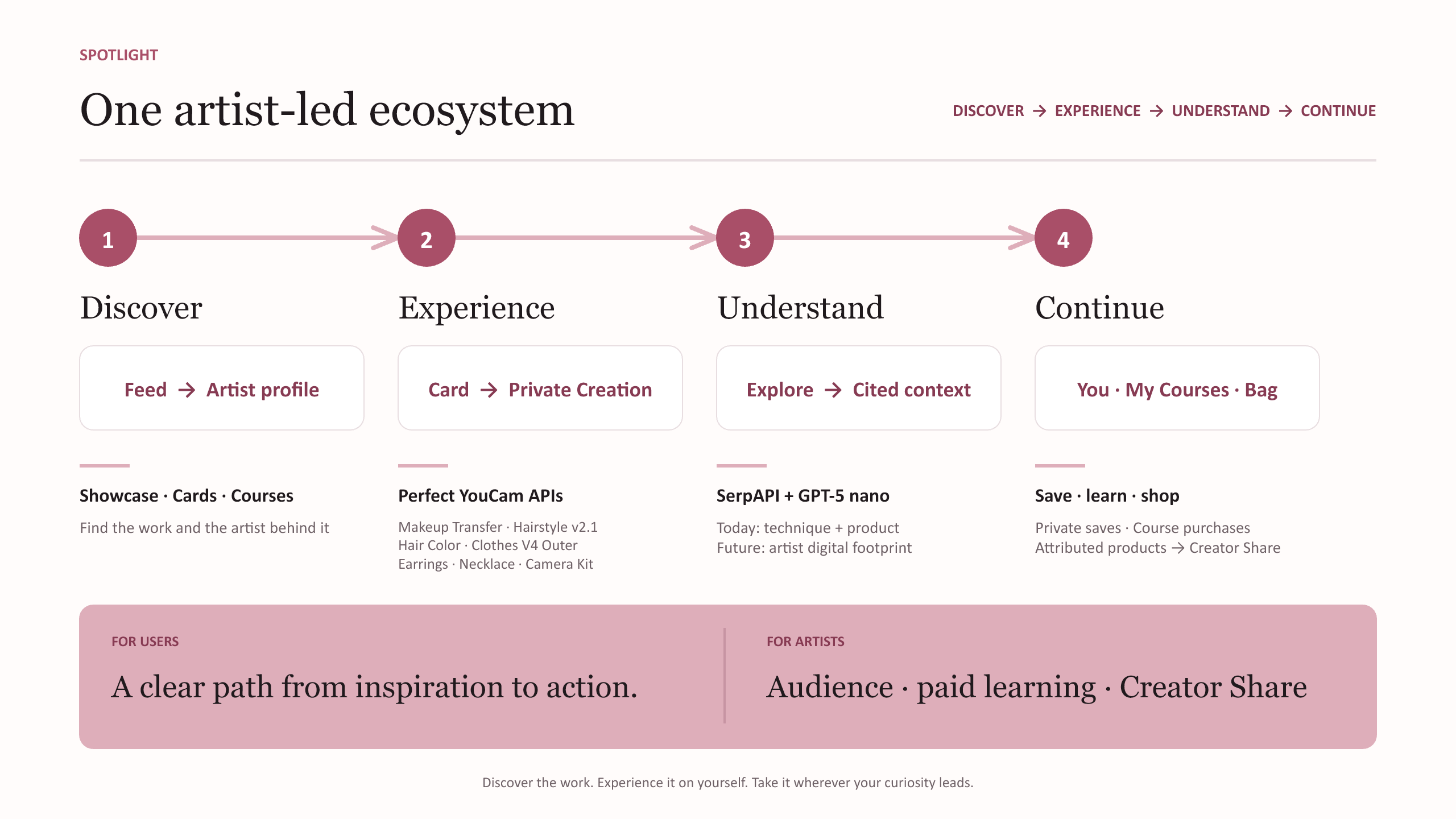
spotlight ecosystem overview
-
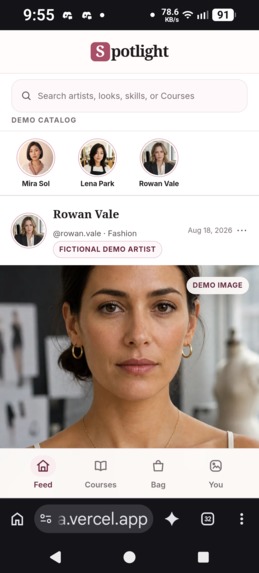
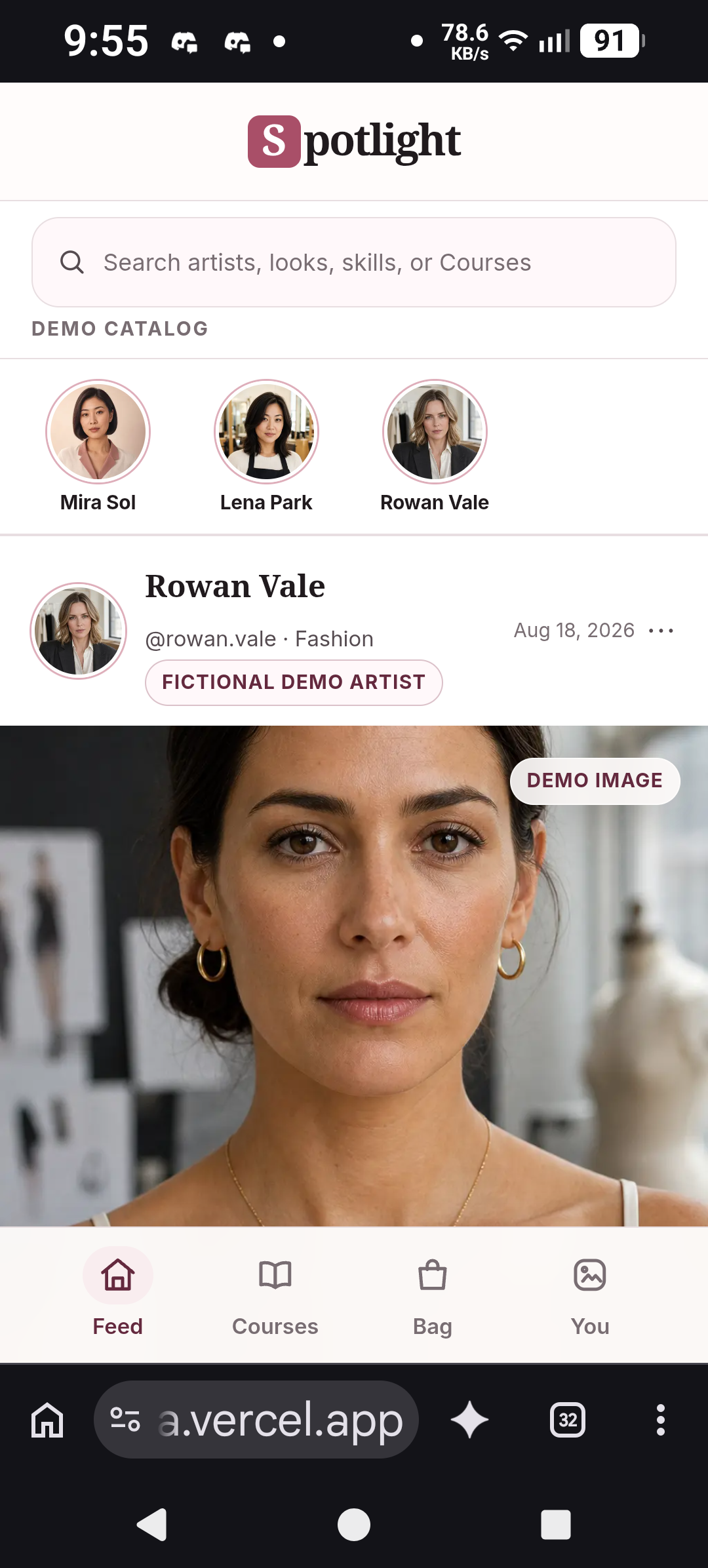
spotlight home app screen
-
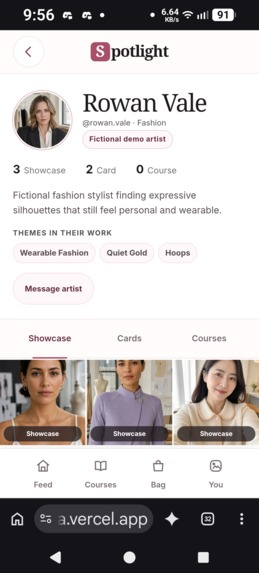
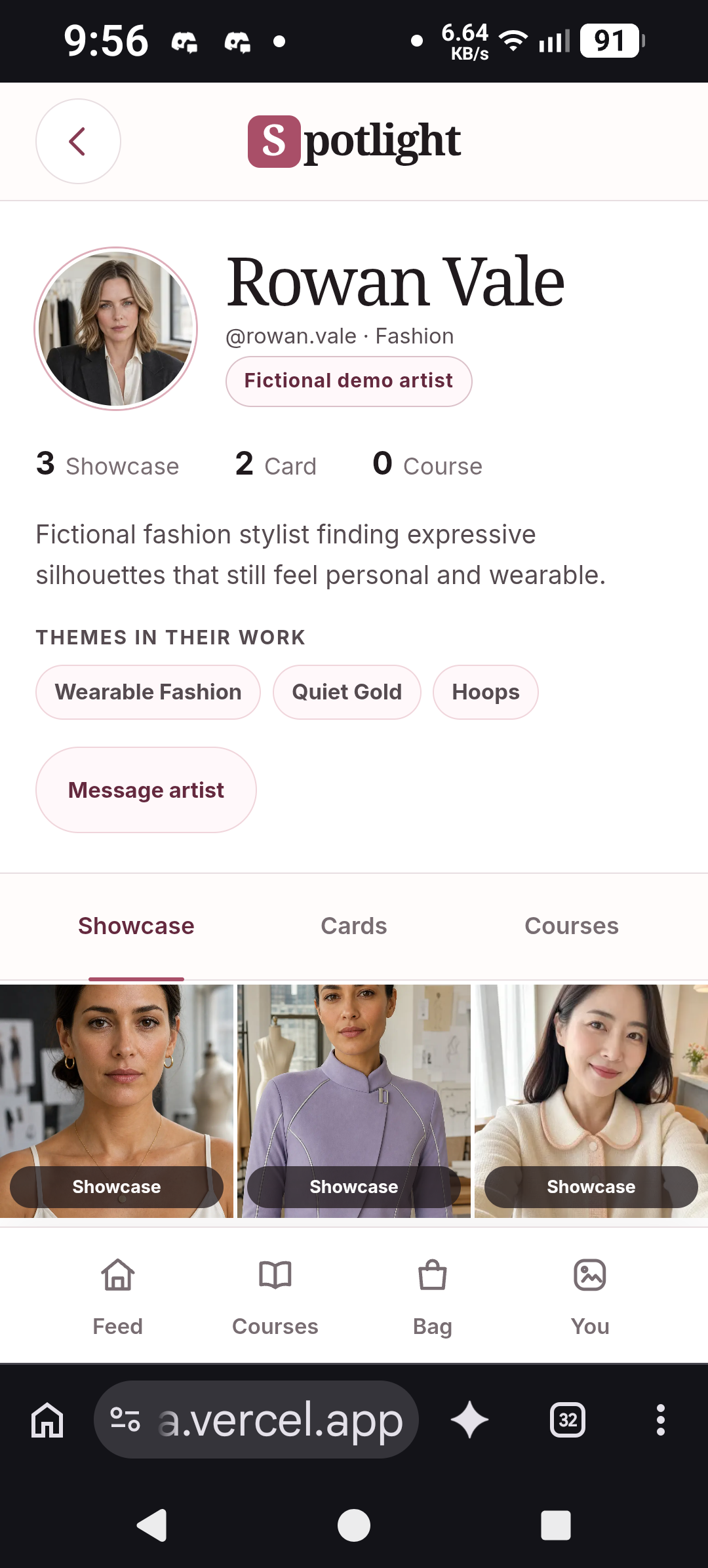
artist profile
-
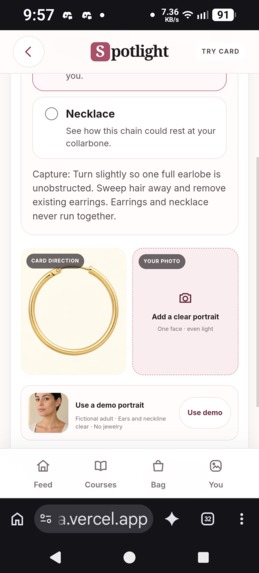
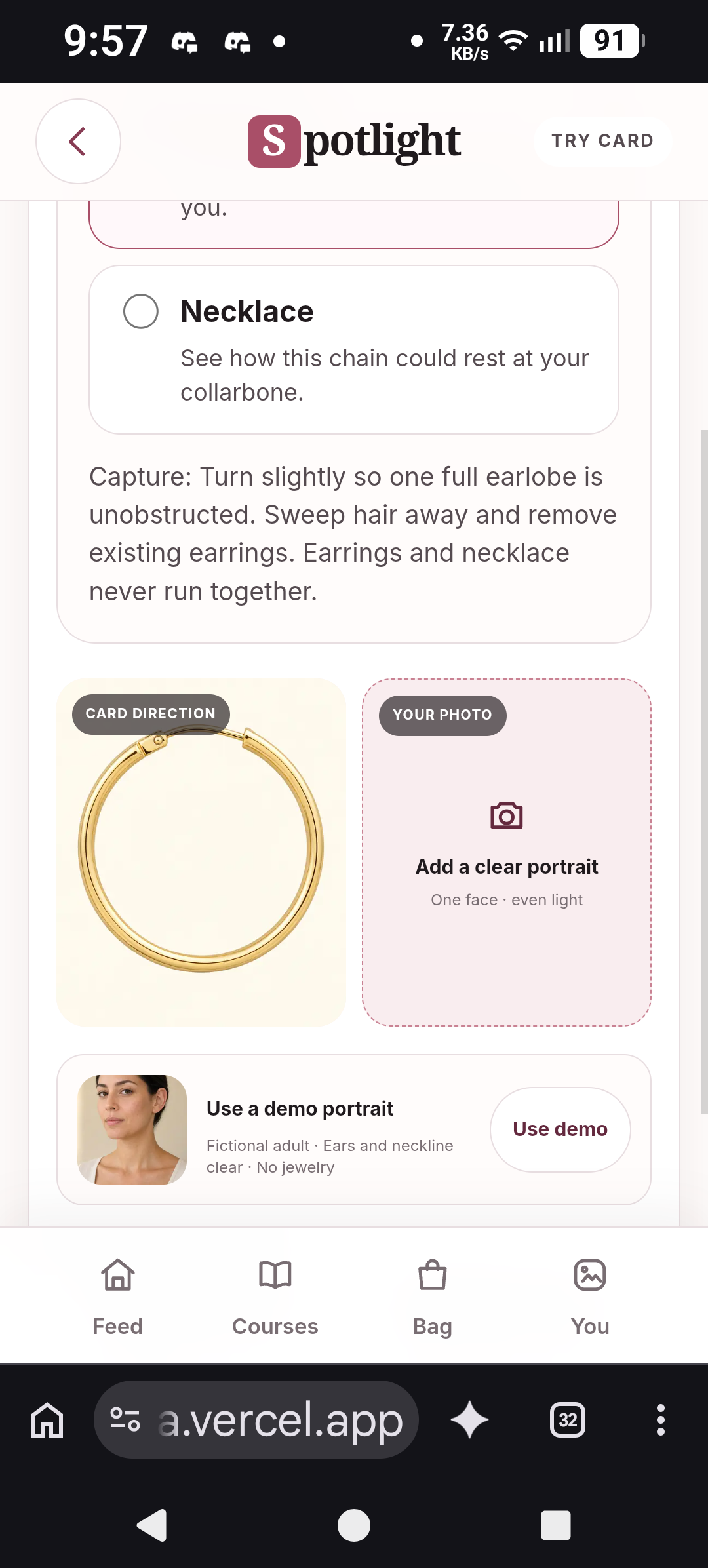
artist cards (fashion category)
-
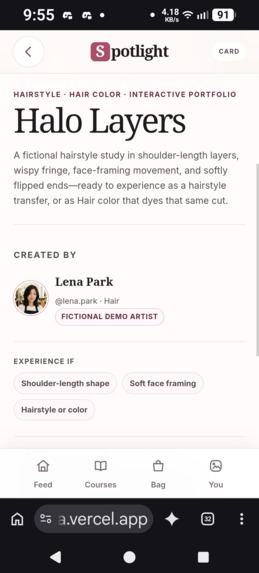
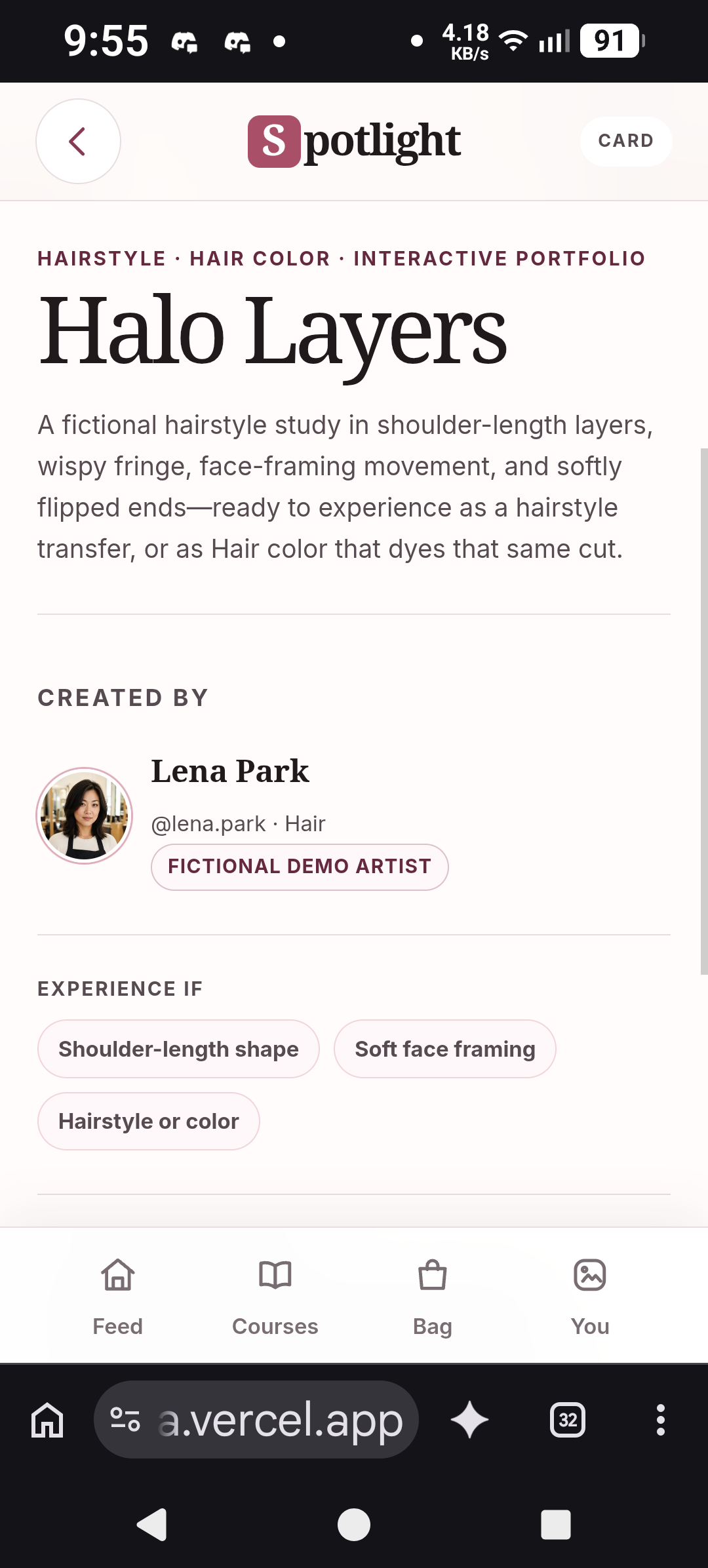
artist cards (hair category)
-
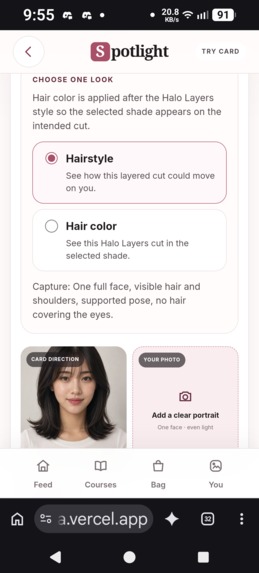
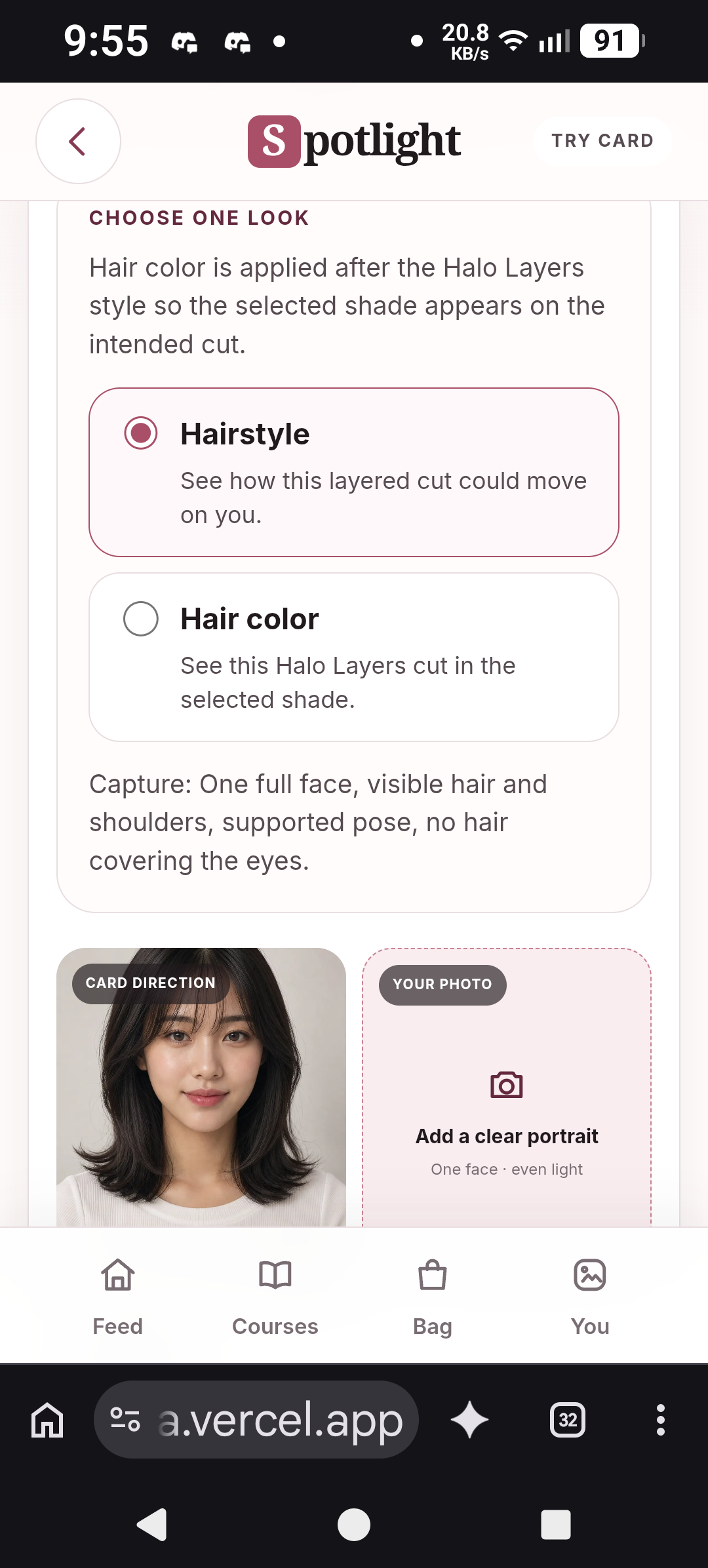
hairstyle VTO
-
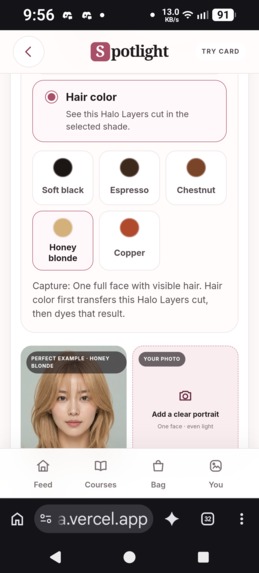
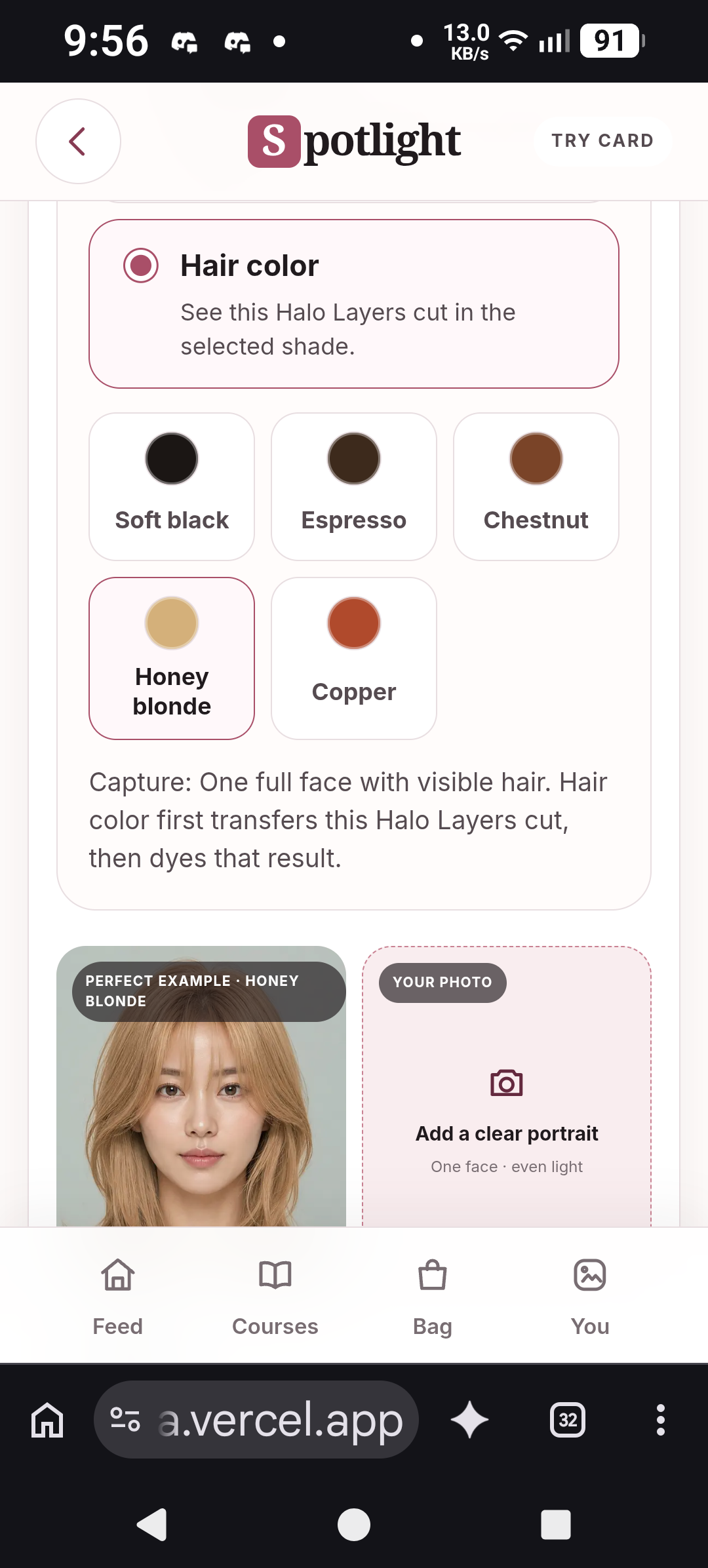
haircolor VTO
-
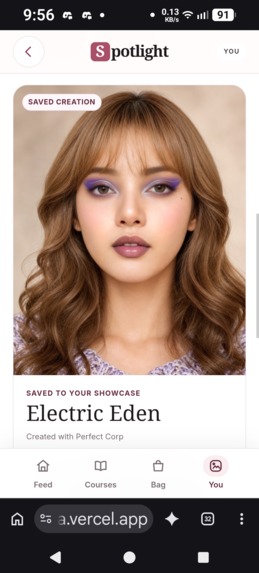
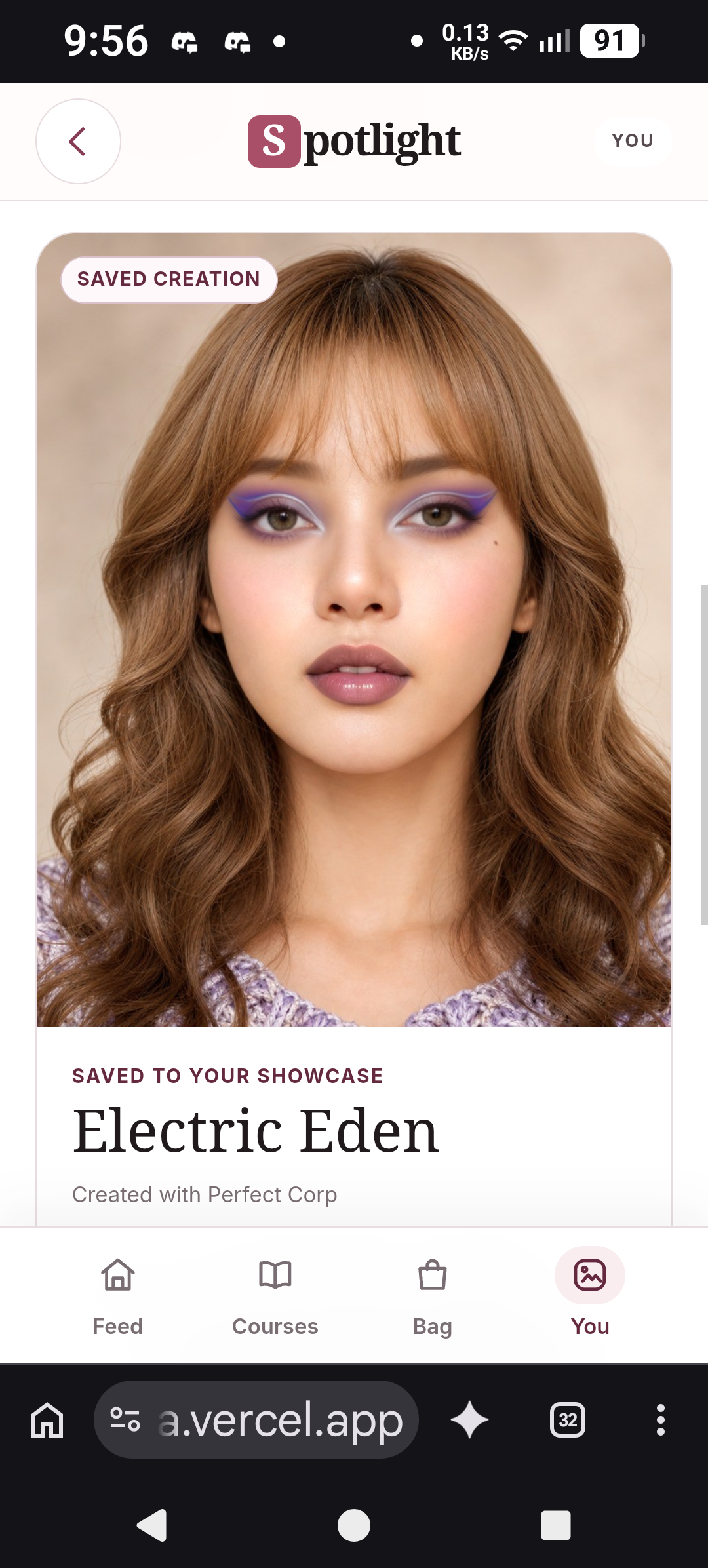
You collection (my portrait result of makeup VTO)
-
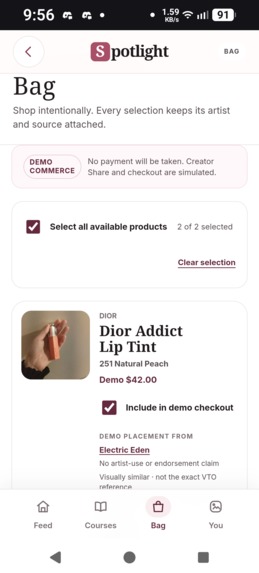
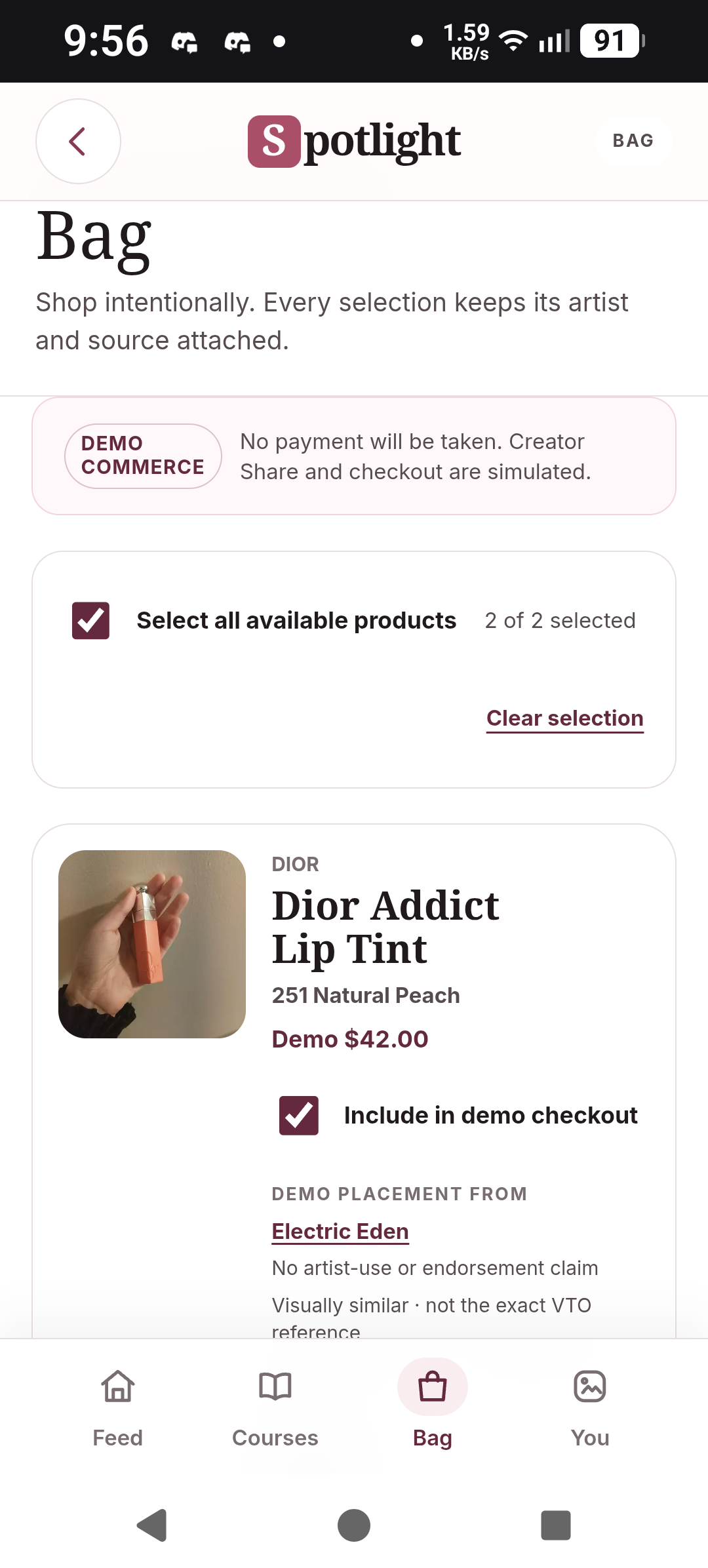
Product checkout (real product demo)
-
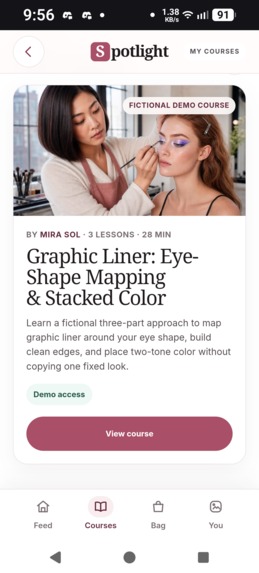
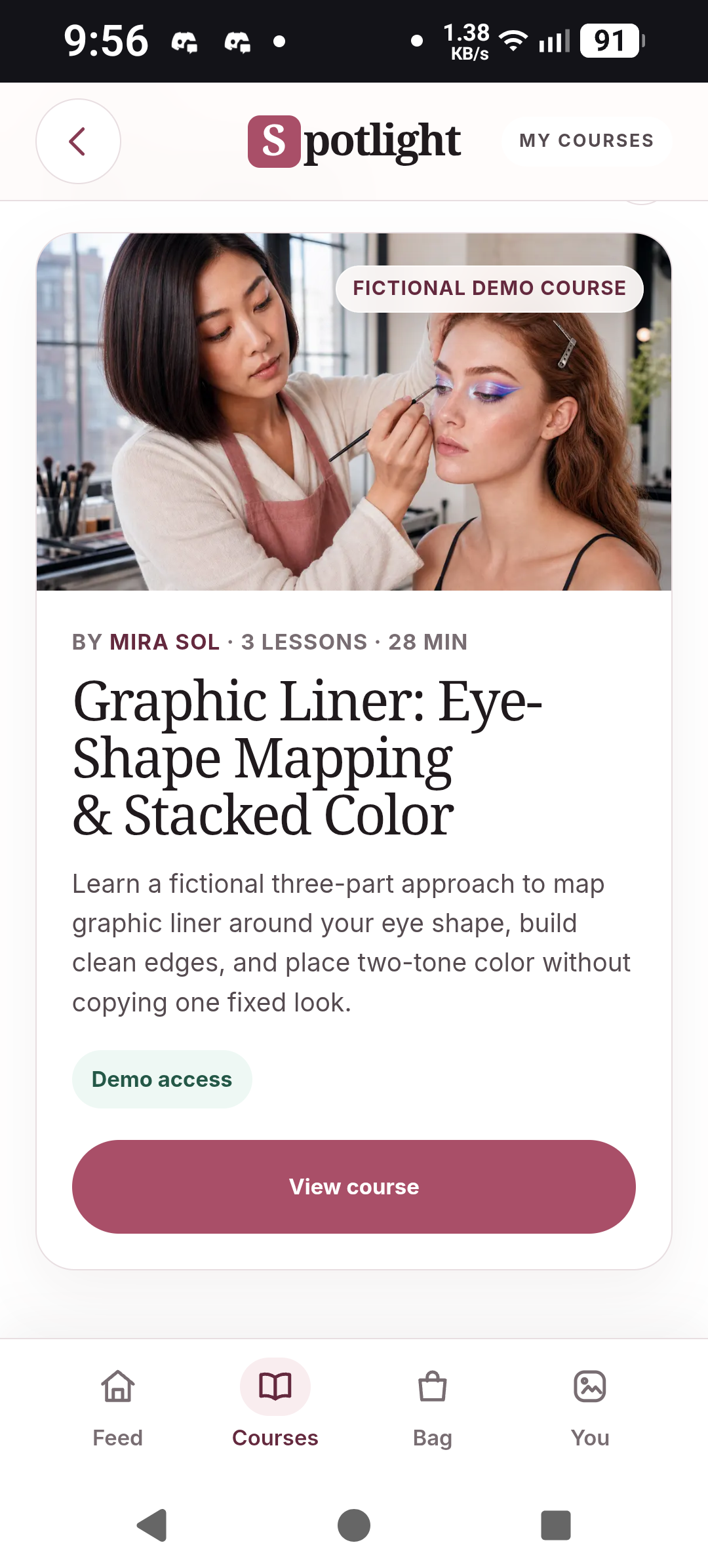
Course checkout
Inspiration
Have you ever saved a beauty look you loved, but wondered whether it would work for you?
I often found makeup, hair and fashion inspiration online, but recreating it in real life was much harder. When my result looked different, I could not tell whether it was the product, my technique, the direction itself, or a detail the tutorial had skipped (or the lack of tutorials).
Social platforms offer endless inspiration. Tutorial platforms provide general instruction. Review sites rank popular products. Virtual try-on tools simulate appearances. But these experiences are fragmented, and none creates a continuous path from inspiration to personal understanding and learning.
I did not need more inspiration. I needed to understand what created the look, what I might adapt, who could teach me, and what to try next.
That is why I built Spotlight.
What it does
Spotlight is an artist-led beauty and fashion learning platform that connects the work, its creator, and the user's buying decisions.
A user discovers an artist through Feed and explores their profile through three spaces:
- Showcase presents the artist’s work, process, and point of view.
- Cards let users privately experience selected looks on their own photos.
- Courses provide a path to deeper, artist-led learning. In the demo video, the user discovers Mira Sol, a fictional artist, and opens her Electric Eden Card. After explicit consent, Perfect Makeup Transfer applies the Card’s server-selected trusted reference to an AI-generated portrait. The user can also take a selfie with the YouCam camera.
The result is an appearance simulation.
The user can then ask what defines the look. Spotlight retrieves current public technique evidence through SerpAPI, and GPT-5 nano turns that evidence into a concise explanation with supported visual cues and visible citations.
Spotlight does not inspect the user’s portrait or decide what they should wear. It helps them understand what they are seeing and what they may want to explore.
The user can save the private Creation to You with its source Card and artist still attached, continue to the artist’s related Course, try another Card, or intentionally save a disclosed product to Bag. These are independent choices, not a required sales funnel.
The core transformation is:
“I love this look, but I don’t know whether it will work for me.”
to:
“I understand what creates this look, what I might experiment with, who can teach me, and what I should try next.”
How I built it
Spotlight is a mobile-first Next.js and TypeScript application.
Perfect powers the appearance transformations. The server resolves each Card’s trusted reference so the browser cannot submit arbitrary reference media. The processing system includes photo validation, explicit consent, stable request identity, polling and resume behavior, reconciliation, controlled retry, and separation between fake and live providers.
The demo includes independently implemented Perfect lanes for Makeup Transfer, Hairstyle, Hair Color, Clothes, Earrings, and Necklace. They are treated as separate transformations rather than presented as one combined AI effect.
The Explore experience uses SerpAPI for public evidence retrieval and GPT-5 nano through the OpenAI Responses API for interpretation. Questions are screened before any external call. Allowed questions map to curated searches rather than copying raw user text into public search.
GPT receives normalized evidence—not the user’s portrait—and returns a strict structured response. Deterministic validation rejects unsupported citations and claims before anything appears in the interface. Spotlight, rather than the model, selects valid internal destinations such as a related Course, Card, or artist profile.
Saved Creations and simulated Course and Bag states persist locally in the browser. Production processing uses private server and provider storage rather than claiming the entire photo lifecycle is browser-only.
Challenges I ran into
Hair Color became one of the most demanding parts of the build.
Perfect’s Hair Color function changes the color, but it does not create the hairstyle together. To deliver the promised look consistently, Spotlight had to run two transformations in sequence: Hairstyle first, followed by Hair Color on that result.
That turned one user choice into a two-step pipeline costing up to three API units. I could not simply keep retrying until something looked acceptable. Every live test was explicitly authorized, bounded, and run without automatic retries.
Different shades also reacted differently to the same hairstyle foundation.
Honey Blonde repeatedly produced a darker mustard or olive result. I worked with Codex through several rounds of debugging, adjusting the shade language, reference foundation, color values, and color-versus-shine intensity. Honey Blonde ultimately required its own lighter hairstyle foundation before the color step.
The calibration used two Hairstyle runs and seven Hair Color trials—11 API units in total—to produce five consistent, accepted shade examples.
This taught me that integrating a creative AI API is not just connecting an endpoint. It requires visual judgment, controlled experimentation, cost safeguards, and honest communication about what the system is actually doing. Spotlight therefore describes Hair Color as a disclosed Hairstyle-to-Hair-Color pipeline rather than pretending it is one combined transformation.
Accomplishments I’m proud of
- Built a complete artist-to-Card-to-private-Creation journey.
- Integrated real Perfect transformations across multiple independent beauty and fashion categories.
- Created a bounded, cited SerpAPI-to-GPT explanation system.
- Prevented GPT from seeing the user’s portrait or inventing application routes.
- Preserved artist and Card provenance when a Creation is saved.
- Built artist-led Course discovery and a personal My Courses state.
- Built a source-attributed Bag with visibly simulated checkout and Creator Share.
- Recorded the provenance of synthetic artists, people, portfolio media, and Course materials.
- Kept real processing clearly separated from fictional people, businesses, and economics.
- Used accessible controls, visible focus, reduced-motion behavior, and non-gesture alternatives throughout the mobile experience. ## What I learned
Throughout the build, I kept asking myself: if I were going to spend money because of an artist’s work—on their Course, a recommended product, or future professional guidance—what would make me feel comfortable?
At first, I thought a strong portfolio and the ability to try a look on myself would be enough. But there was still a missing link: TRUST.
I wanted to understand not only what the artist had created, but who they were, how they thought about their craft, how well they could explain their techniques, and whether their work reflected real expertise rather than a single trend. A Card could help me explore whether a visual direction felt relevant to me, but that alone could not tell me whether this was someone I wanted to learn from or trust.
That changed how I thought about an artist profile. With the artist’s consent, Spotlight could connect what they choose to present with a cited public digital footprint: their official portfolio, interviews, editorial credits, collaborations, public tutorials, and recent work. This additional context could help users decide whether to take a Course, act on a recommendation, or return to that artist.
That is why external evidence through SerpAPI became important. However, the hackathon artists are fictional, so it would have been dishonest to invent online histories for them. Instead, I limited the demo’s research to subjects with real public evidence: the graphic-liner technique behind Electric Eden and one real product.
That limitation taught me something important: trust cannot be created by filling gaps with generated authority. A future artist-research feature should be opt-in, cited, correctable, and clear about what comes directly from the artist versus what was found through independent public sources.
The lasting value of Spotlight is not simply displaying an artist’s portfolio or simulating their work. It is providing enough context for someone to understand the work, build confidence in the person behind it, and decide whether they want to keep learning from them.
What’s next
The next phase is less about adding more AI demonstrations and more about building the practical infrastructure required to make Spotlight a real platform.
- Production commerce and sponsorships: The hackathon Bag, checkout, pricing, and Creator Share are simulations. A real system would require connected merchant catalogs, live prices and inventory, payment processing, order attribution, postbacks, returns, refunds, and creator payouts. Sponsorships would need equally clear rules so used, recommended, sponsored, and visually similar never become interchangeable claims.
- Artist footprint and trust: A future opt-in Explore more experience could collect cited public information about an artist’s work—such as their official portfolio, interviews, editorial credits, collaborations, tutorials, and recent projects. Artists should control their official links and be able to correct or challenge discovered information. Spotlight should never infer credits, affiliations, or product use that its sources do not establish.
- Creator publishing: Artists should eventually be able to upload ordinary photos and videos directly to their Showcase and the global Feed. Making that real requires media storage, processing, rights and consent records, moderation, accessibility, and publishing controls—not merely seeded demo posts.
- Course delivery: Spotlight currently demonstrates fictional Course discovery, a sample lesson, simulated checkout, and local access state. A long-term decision remains open: should Spotlight host lessons natively, integrate with an established course platform, or use a hybrid approach? The answer affects video hosting, creator tools, enrollment, access control, learning progress, refunds, and memberships.
- Creator operations: A later Creator Portal could bring together Card publishing, Course management, product and sponsorship setup, Creator Share reporting, and analytics. These systems are deliberately outside the hackathon demo. The current build proves the central experience: discovering an artist’s work, experiencing a direction personally, understanding the technique, and choosing an informed next step while keeping the artist attached.
Built With
- gpt-5-nano
- indexeddb
- next.js
- node.js
- openai
- openai-responses-api
- perfect-corp
- perfect-js-camera-kit
- pnpm
- react
- redis
- serpapi
- sharp
- typescript
- upstash-redis
- vercel
- vercel-blob
- vitest
- youcam-ai-hairstyle
- youcam-api
- youcam-clothes-v4
- youcam-hair-color
- youcam-jewelry-vto
- youcam-makeup-transfer
- zod

Log in or sign up for Devpost to join the conversation.