-
-
01-cover
-
02-problem
-
03-find-them
-
04-get-matched
-
05-hold-your-place
-
06-for-speakers
-
07-huddles-claude
-
08-dont-lose-them
-
09-privacy
-
10-how-we-built-it
-
11-whats-next
Inspiration
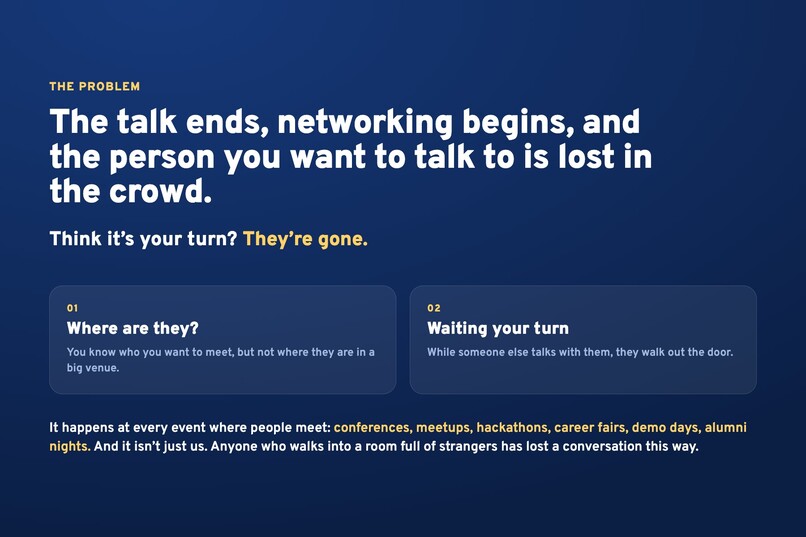
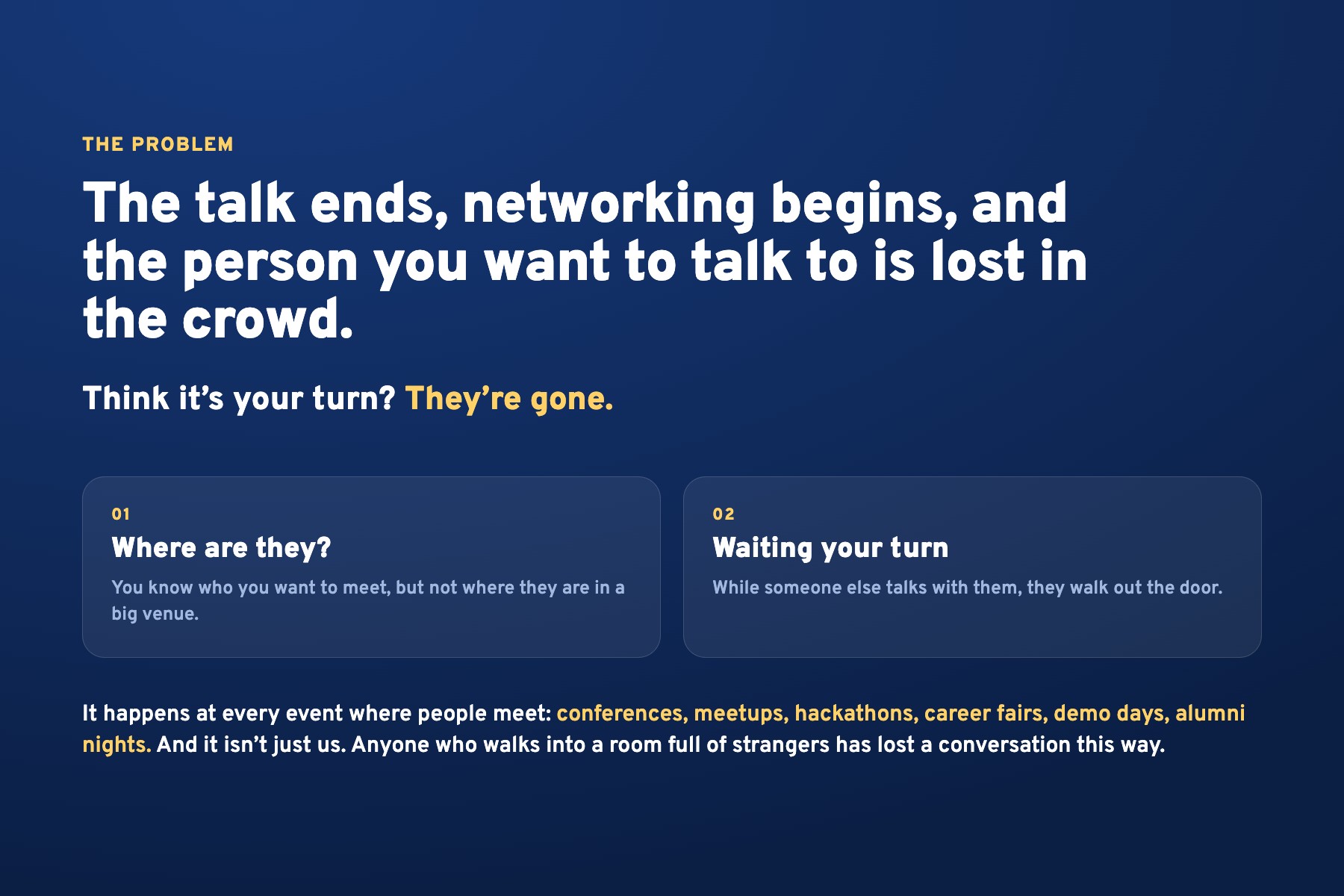
The talk ends, networking begins, and the person you want to talk to is lost in the crowd. Think it's your turn? They're gone.
It happens everywhere people meet in person: conferences, meetups, hackathons, career fairs, startup demo days, alumni nights. We've felt it at events back home, and even more as international students building a network from scratch. Events are where we meet the people who could change our path. But we kept missing them in the same two ways:
- We didn't know where they were. The venue was big, and after a talk we couldn't clearly remember their face.
- We waited, and they left. While someone else was talking with them, they walked out the door.
And we realized it isn't just us. Students, career changers, first-time founders, introverts, people new to a city: anyone who walks into a room without already knowing everyone has lost a conversation this way. The problem isn't only on the guest side either. Speakers get mobbed after a talk and answer the same question again and again.
We built SPOT so that the right conversation doesn't depend on luck, for everyone in the room.
What it does
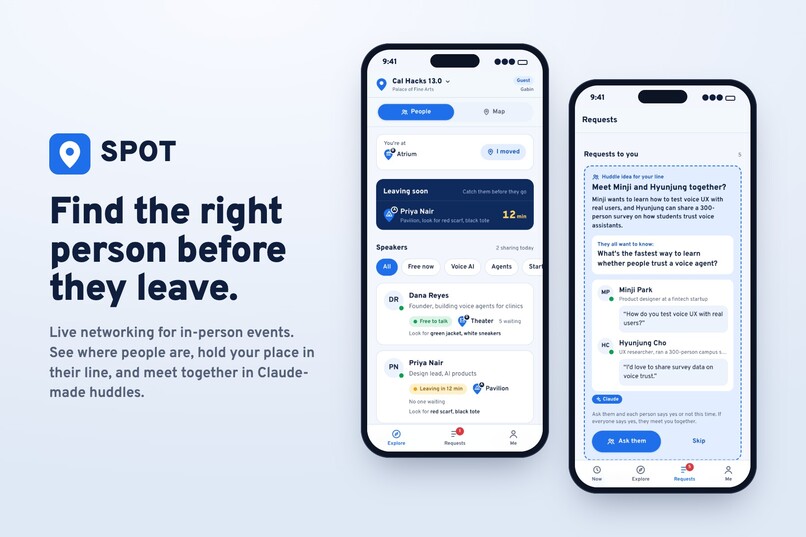
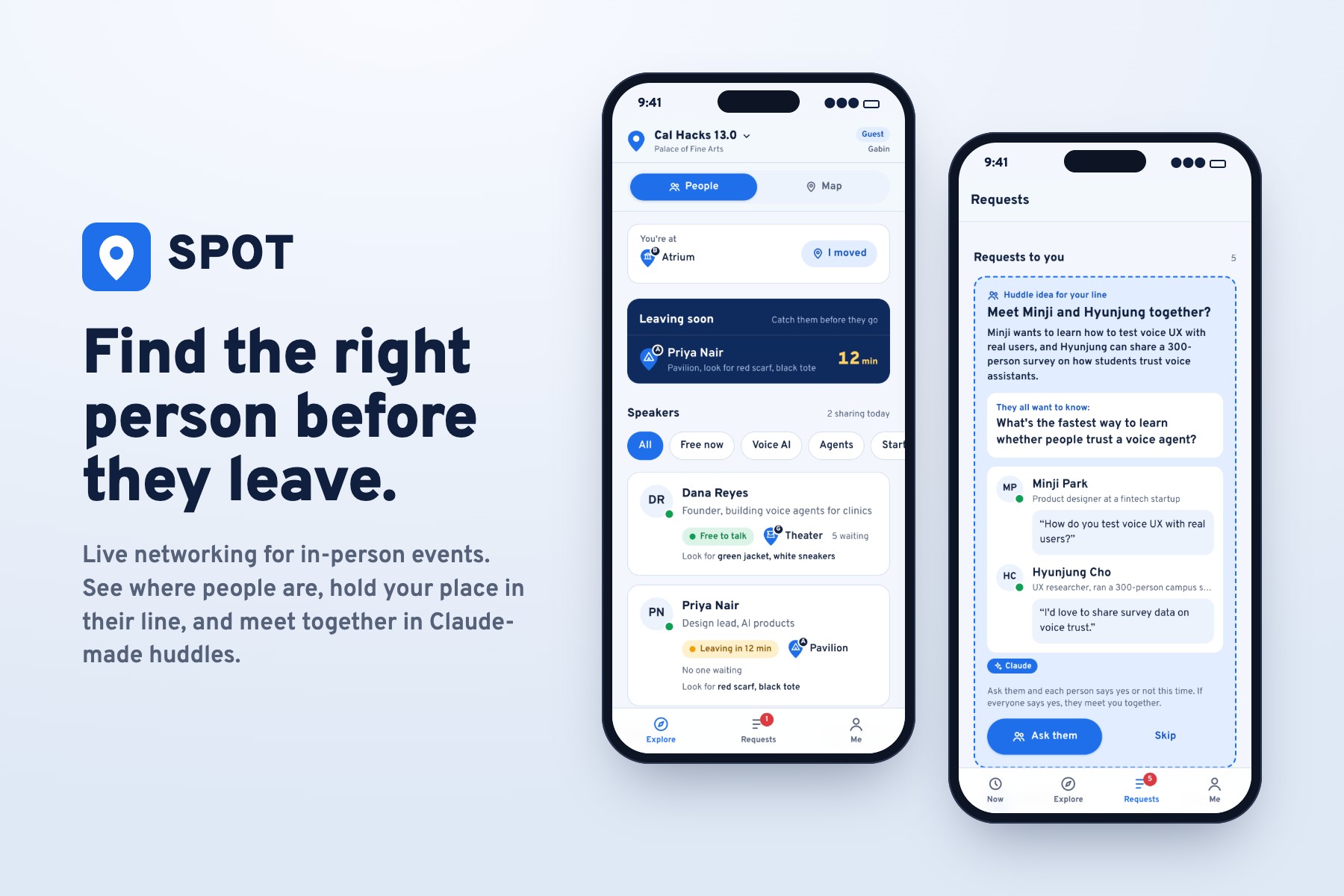
SPOT turns the chaos after a talk into a plan. It's a live networking app for any in-person event. You can see where the people you want to meet are, save your place in their line, and get a heads-up before they leave. You never lose the chance to talk with them.
Guests always know where someone is, when it's their turn, and before that person heads out. Speakers know who is waiting and why, and stay in control of their time. With Claude grouping people who want to ask the same thing, one waiting line becomes a small conversation. It's more connections in less time.
For guests
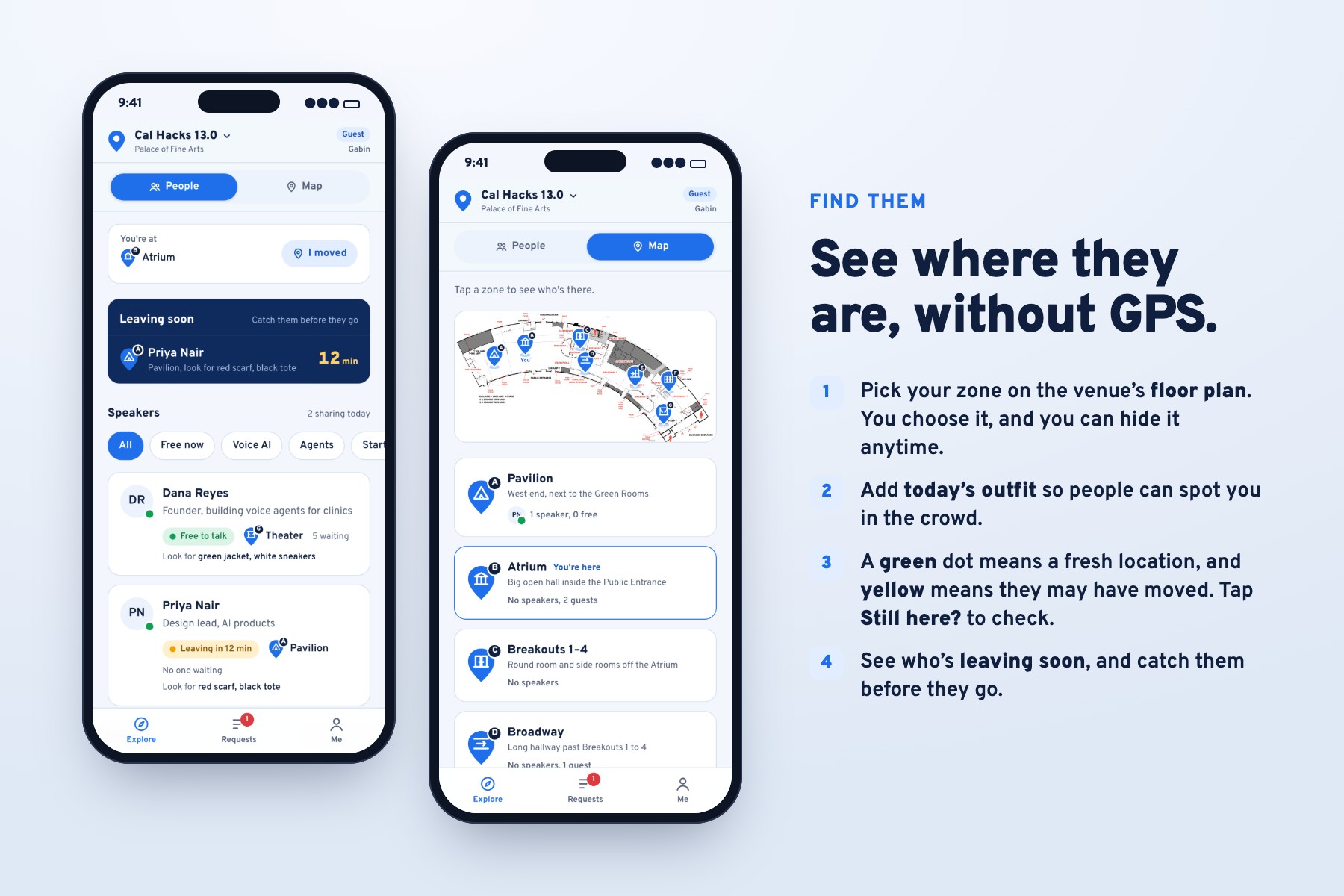
Find them
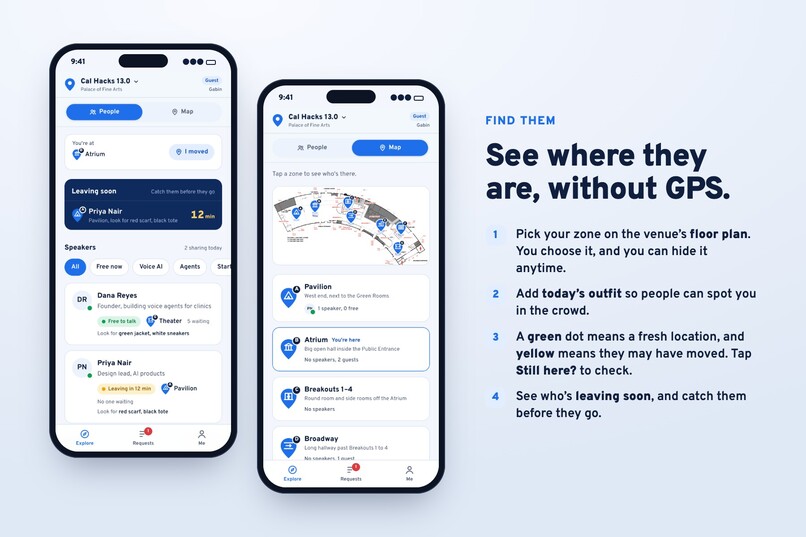
- Pick your zone on the venue's floor plan (e.g. Atrium, Theater). No GPS and no tracking: you choose it, and you can hide it anytime.
- Add today's outfit in a few words ("white hoodie, black cap") so people can spot you. Clothes only, never physical features.
- A green dot means someone updated their location in the last 15 minutes, and yellow means they may have moved. For an older location, tap Still here? and they confirm with one tap.
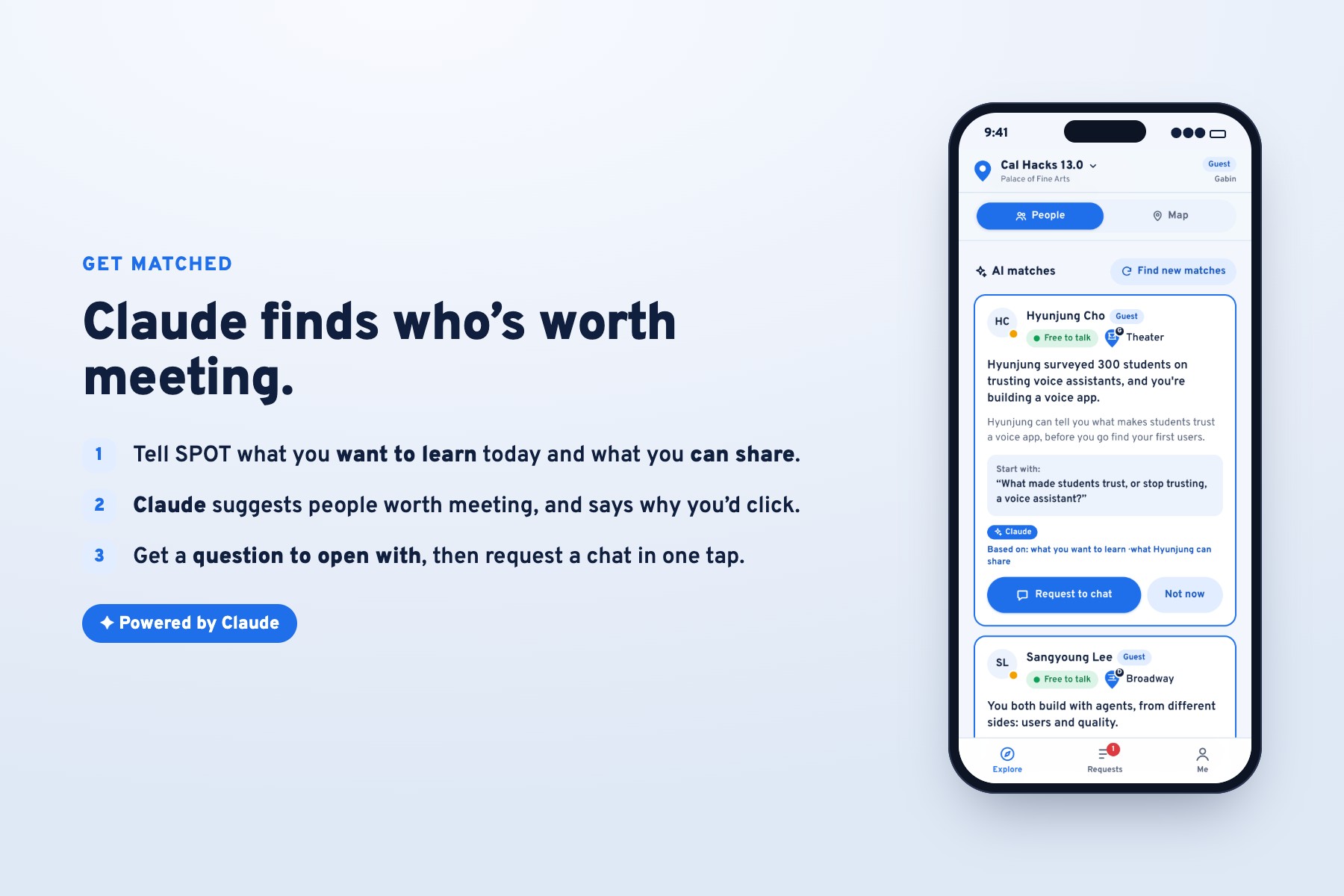
Get matched
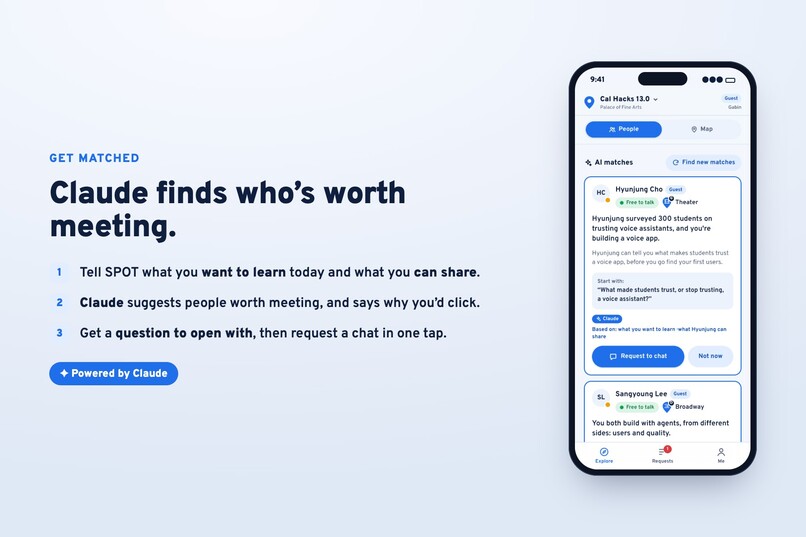
- Tell SPOT what you want to learn today and what you can share. Claude suggests people worth meeting, with why you'd click and a question to open with.
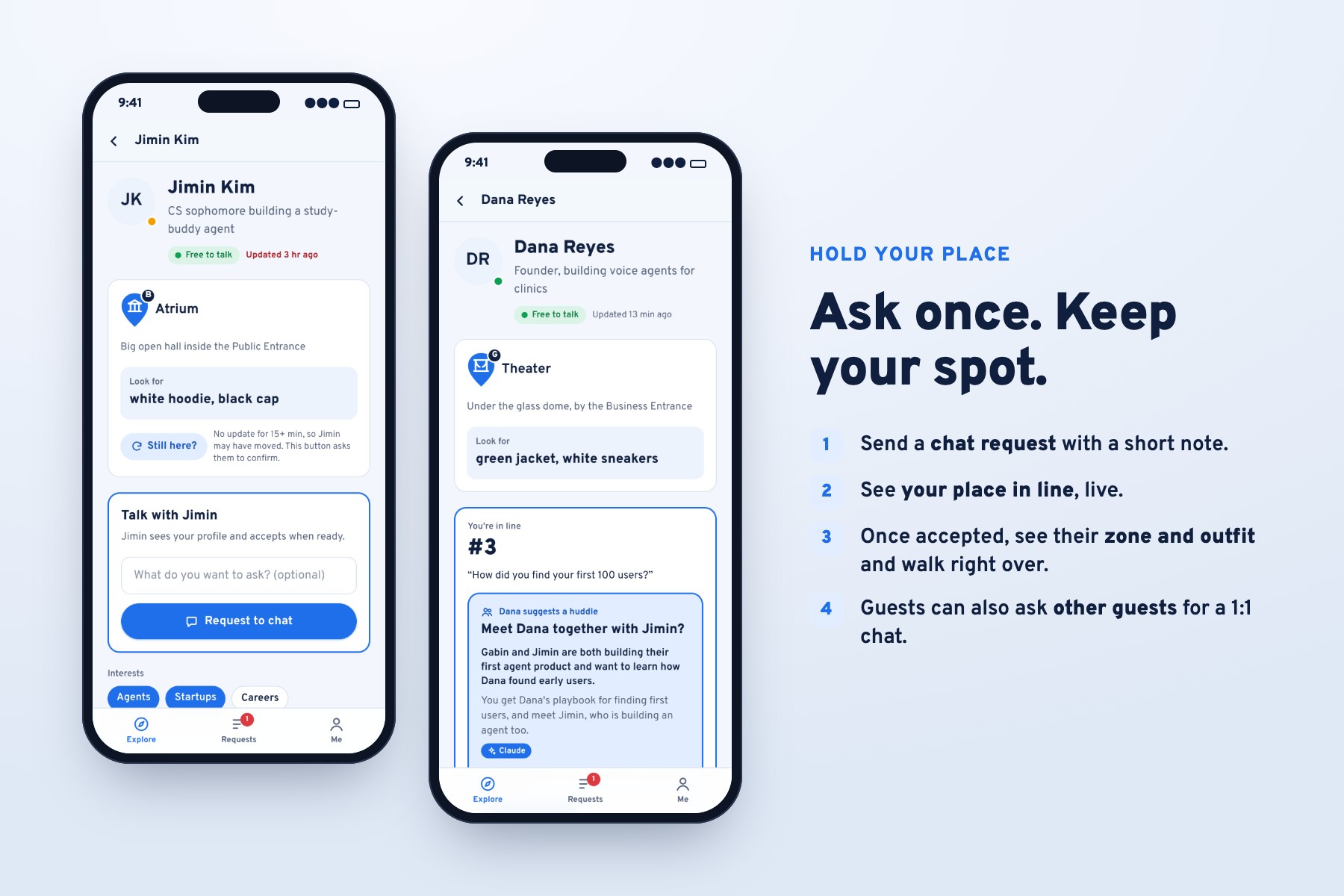
Hold your place
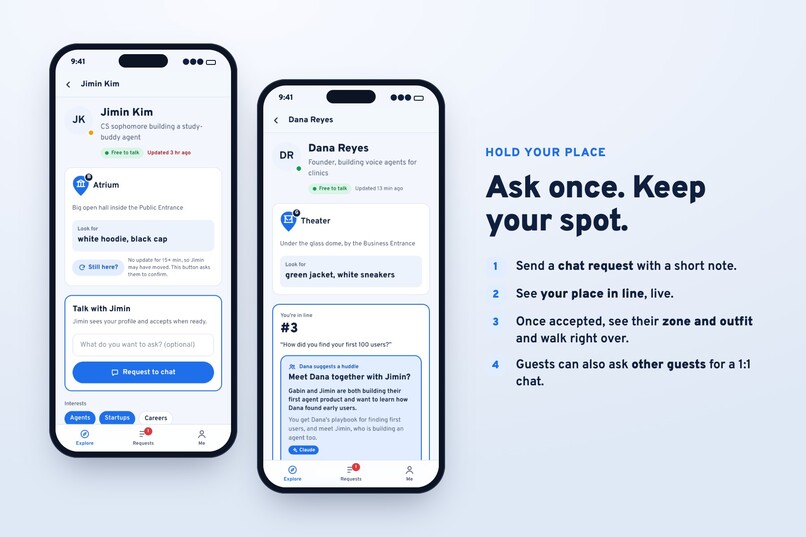
- Send a chat request with a short note and see your place in line.
- When your request is accepted, you see their zone and outfit, so you can walk right over.
- Guests can also ask other guests for a 1:1 chat.
Don't lose them
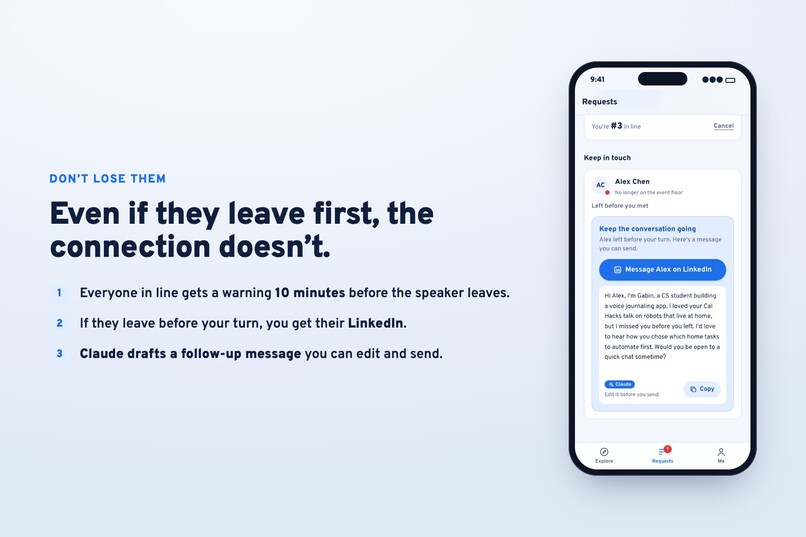
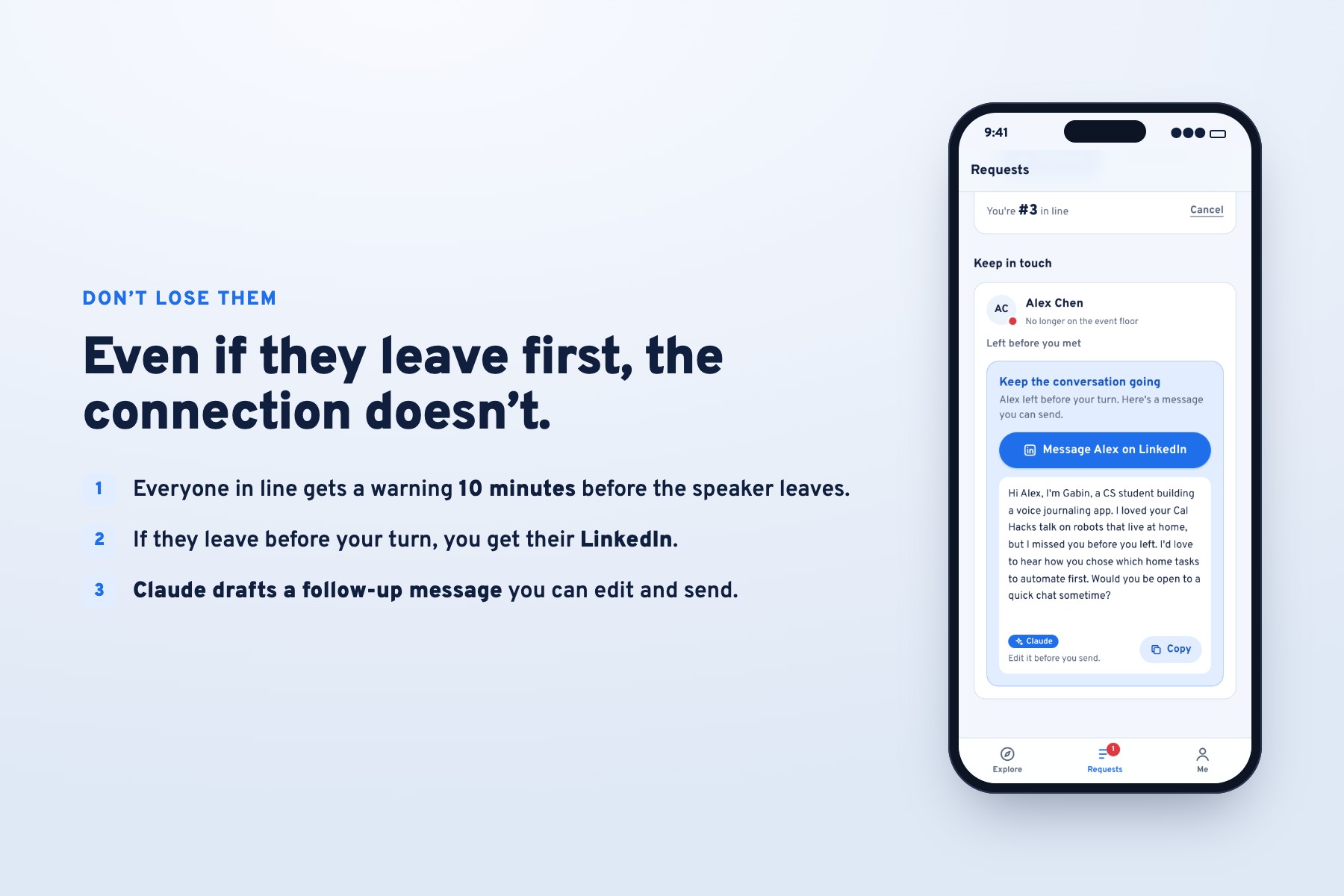
- If a speaker is leaving soon, everyone in their line gets a warning 10 minutes before.
- If they leave before your turn, you get their LinkedIn and a follow-up message drafted by Claude, ready to edit and send.
For speakers
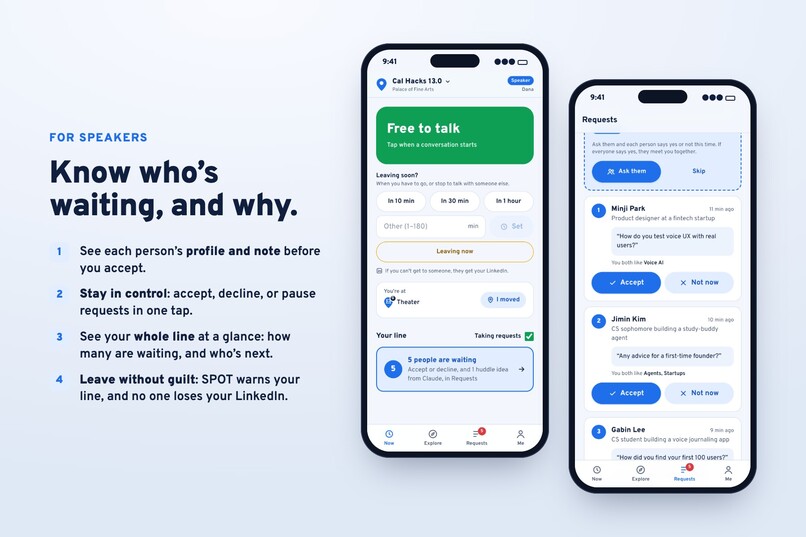
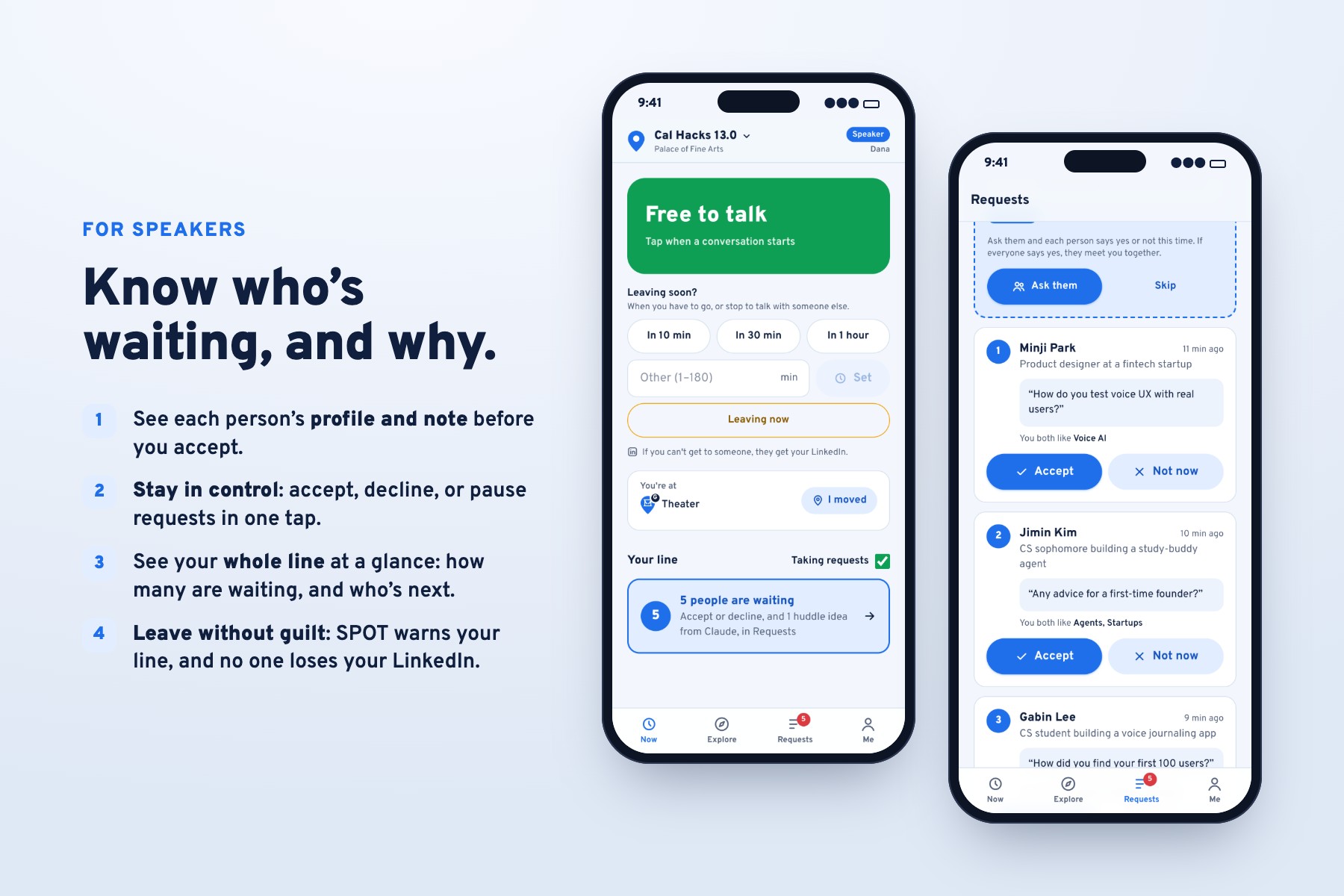
- Know who's waiting, and why. See everyone in your line with their profile, interests, and a note about what they want to ask, before you accept. No more guessing who's hovering nearby.
- Stay in control. Accept, decline, or mark "We met" in one tap. Pause new requests anytime, and the people already in line stay in line.
- No more chasing or getting mobbed. Your status (Free to talk, In a conversation, Leaving soon) tells people when to come. The person you accept sees "Stay where you are, they're on the way," so they come to you.
- See who’s waiting for you. How many people are waiting, and who's next.
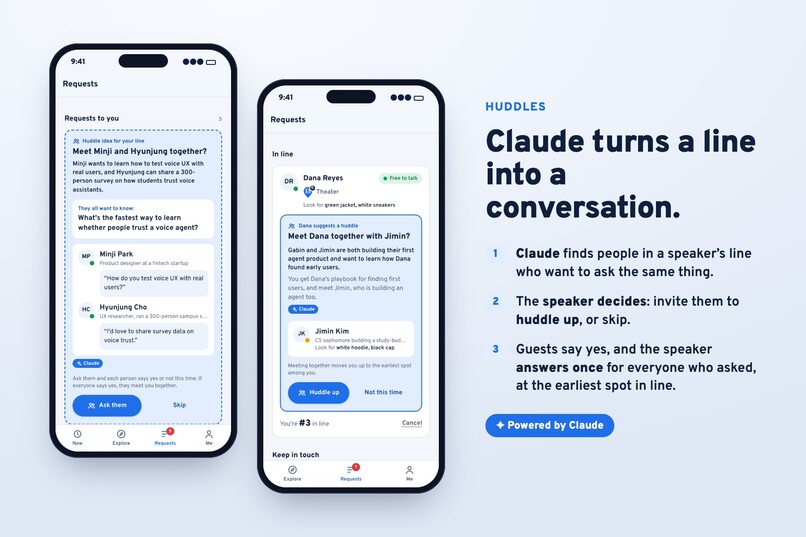
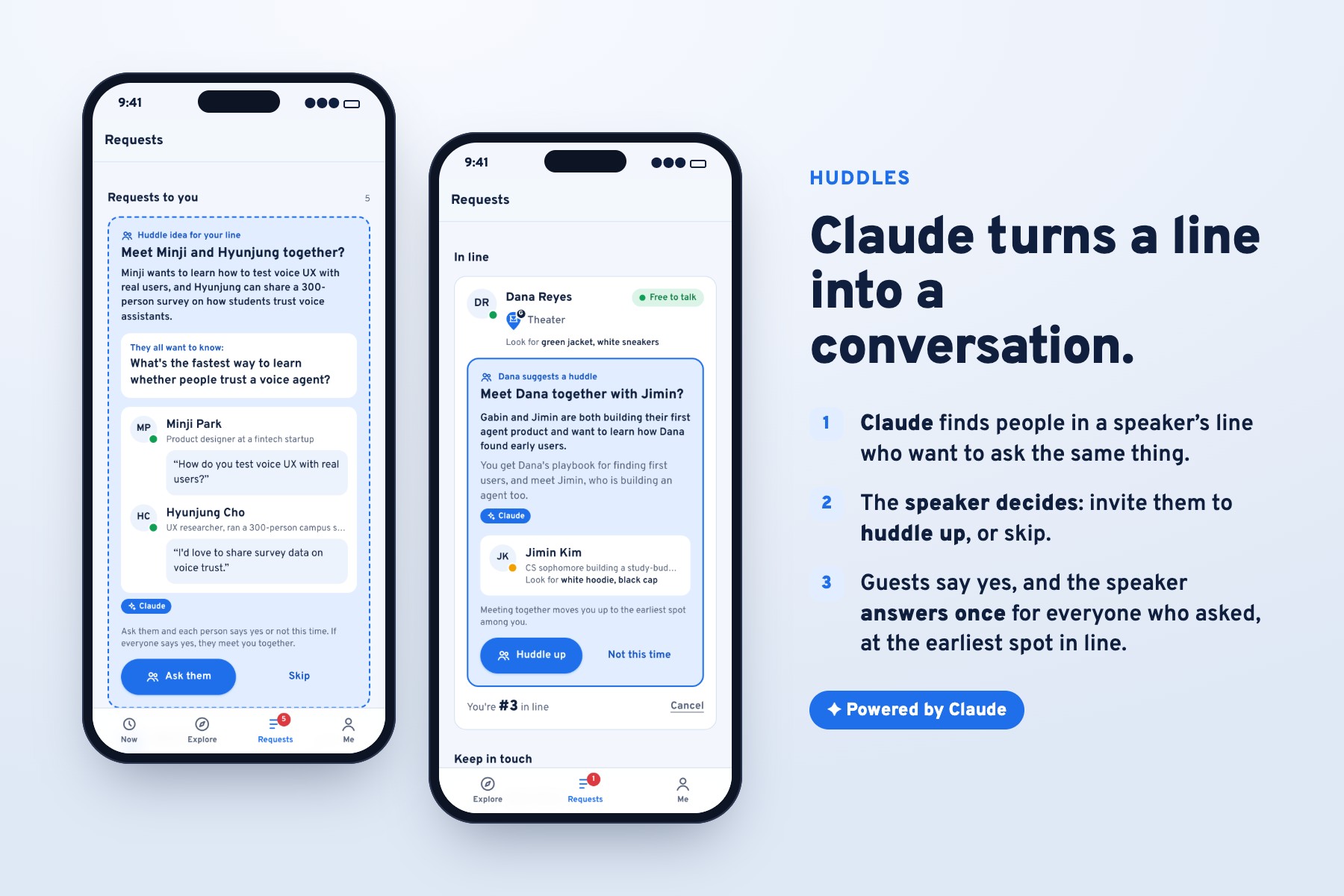
- Answer once, not five times. Claude spots people in your line who want to ask about the same thing and suggests a huddle, with the reason and a shared question. You decide: invite them to huddle up, or skip.
- Leave without guilt. Set when you're leaving, and SPOT warns your line for you. Anyone you couldn't get to receives your LinkedIn, and you see a People you missed list with theirs, so no connection is lost.
Huddles: answer once, for everyone who asked
- After a talk, speakers hear the same question from person after person. Huddles fix that.
- Claude reads what people in a speaker's line wrote (interests, what they want to learn, what they can share) and finds the ones who want to ask about the same thing. It suggests a group of 2–3 with the reason and the one question they share, so the speaker can answer it once for everyone instead of repeating it one by one.
- The speaker sees the idea first. Once they invite them to huddle up, each guest accepts, and the group takes one place in line at the earliest member's spot.
- Speakers save their time and energy for new conversations, not repeated answers, and the line moves faster. SPOT isn't just a queue. It creates more connections, because people in a huddle meet the speaker and each other.
Privacy by design
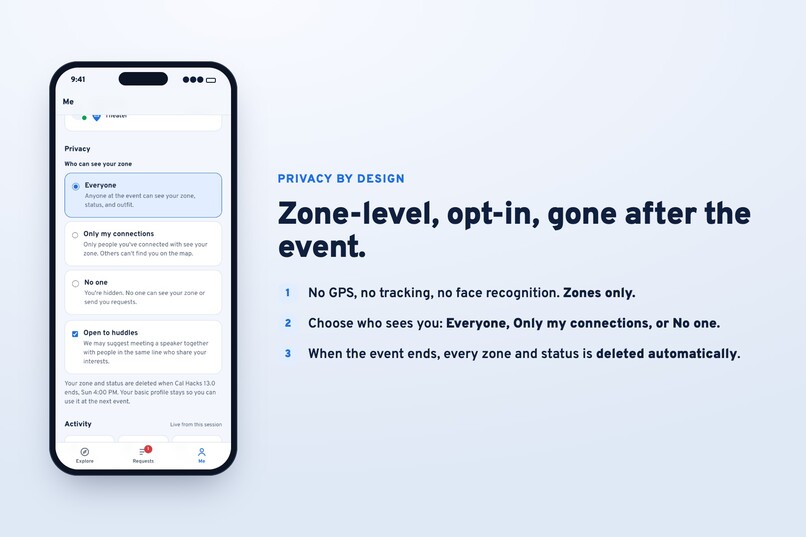
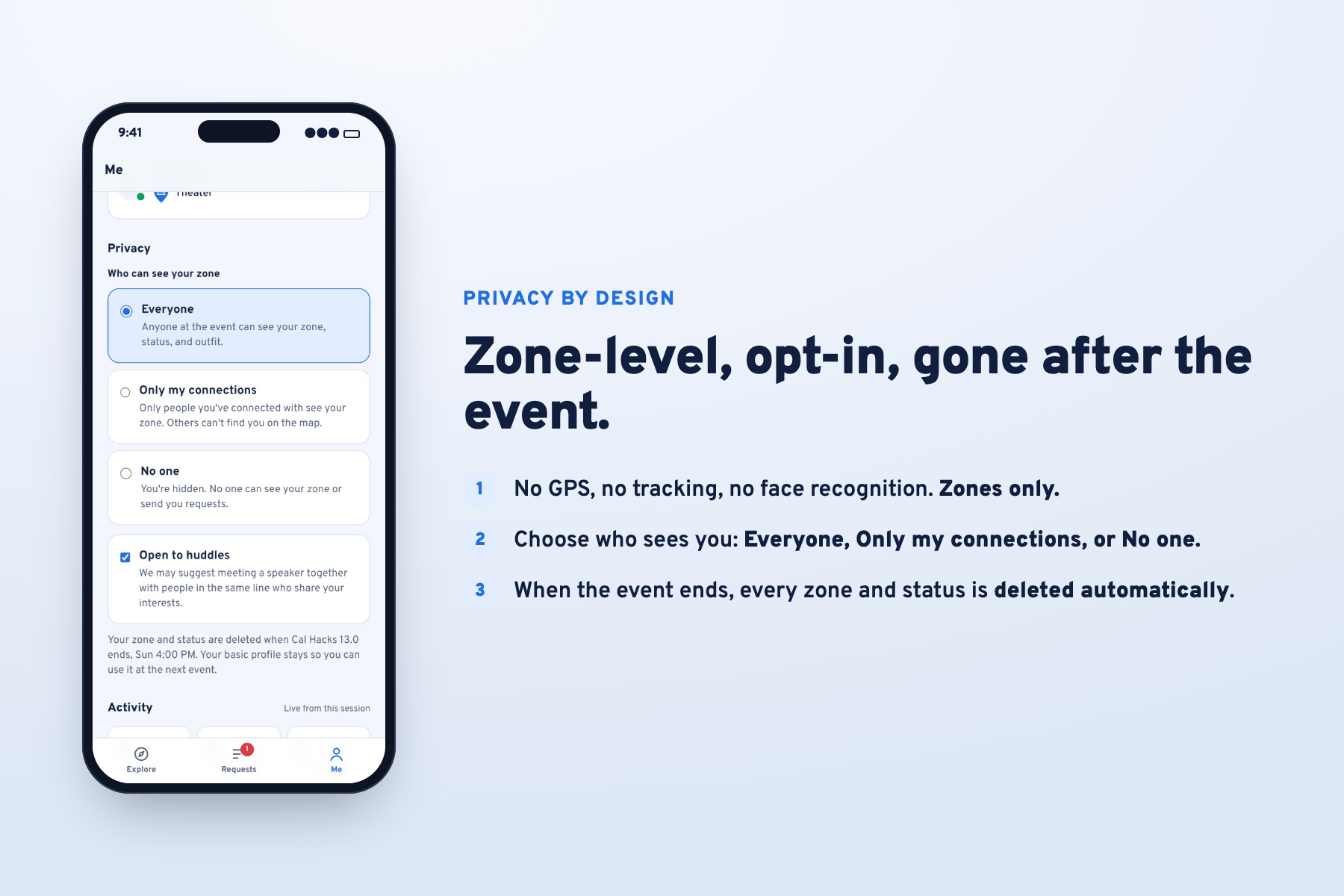
- Only people who opt in are shown, and only by zone.
- Choose who sees your zone: Everyone, Only my connections, or No one. Connect with friends using a code or an invite link.
- When someone leaves, they drop off the map. When the event ends, all zones and statuses are deleted automatically.
How we built it
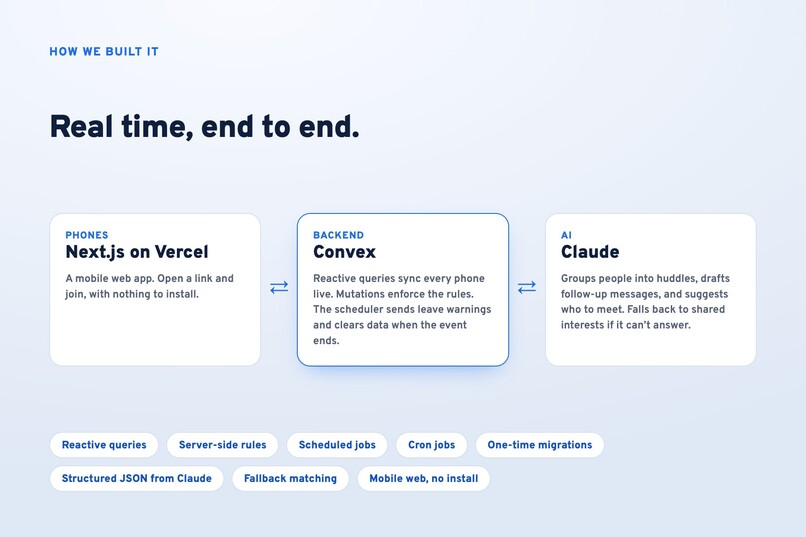
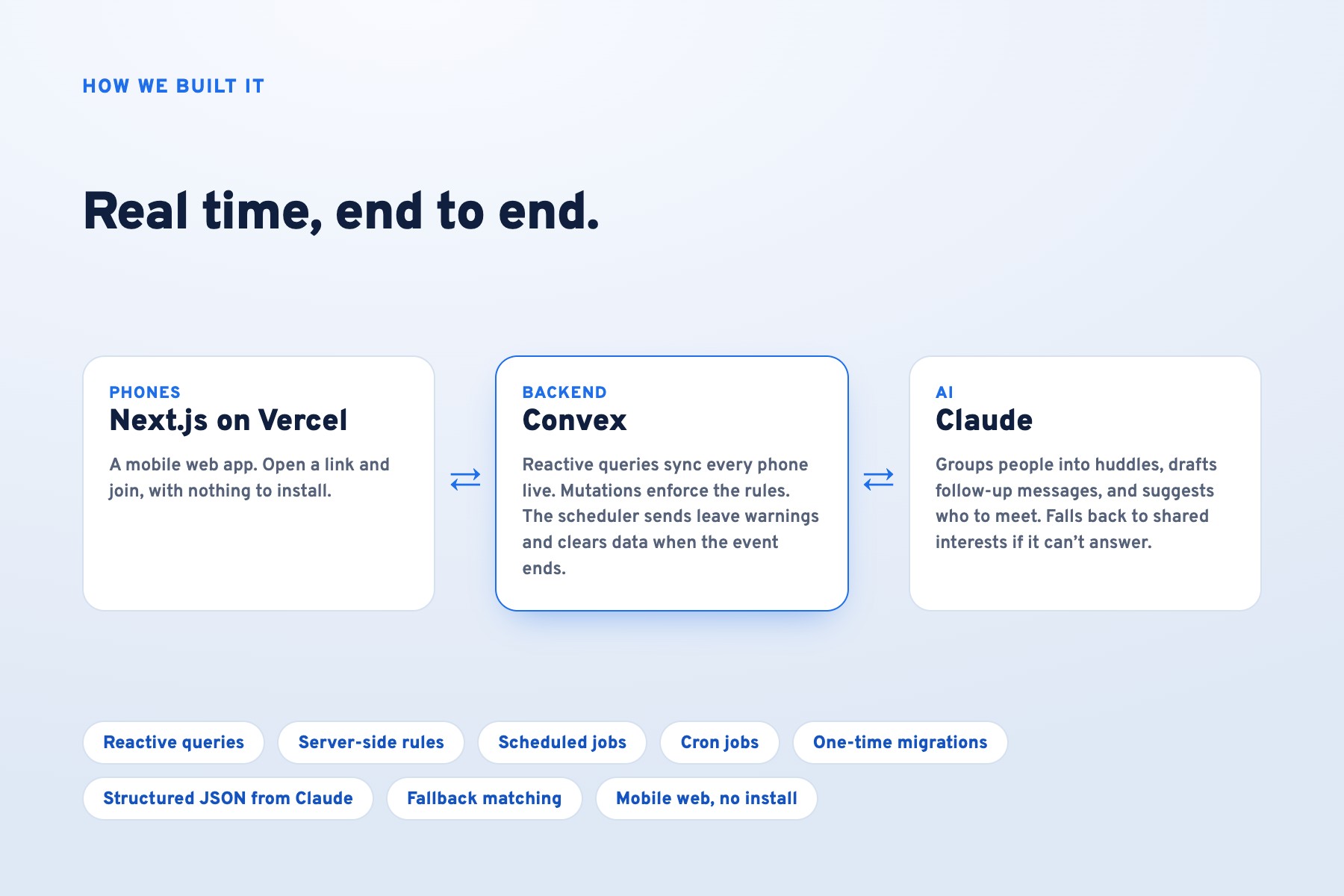
- Frontend: Next.js 16, React 19, and Tailwind CSS v4, deployed on Vercel. It's a mobile web app, so people just open a link and join, with nothing to install.
- Backend: Convex powers the whole backend.
- Reactive queries keep every phone in sync in real time.
- Mutations enforce the rules on the server, e.g. no duplicate requests and no requests to someone who left.
- The scheduler sends the 10-minute warnings, closes a speaker's line when they leave, and clears everyone's location when the event ends.
- Cron jobs and one-time migrations keep development and production data safe.
- AI: We used Claude across the product, running in Convex actions with structured JSON output: huddle suggestions, follow-up messages, and matching people worth meeting. Every reply is checked against the real line. If Claude times out, fails, or leaves people out, SPOT falls back to matching by shared interests, so the app never breaks.
- Data model: A profile is the person. A participation is that person at one event, with their role, outfit, zone, and status. Roles are fixed per event, so no one is both a speaker and a guest at the same event.
Challenges we ran into
- Time: "Leaving in 10 min" showed up as "11 min" on other phones because of clock drift. We moved the clock to the server and resync every screen when a status changes.
- Real-time groups: A huddle can break at any moment, when someone cancels or the speaker leaves. Matching re-runs on the server after every change, and members always go back to their own place in line.
- Fair, safe AI: Claude may use only what people wrote, never job titles or how impressive someone sounds. It never guesses pronouns and keeps private notes private.
- Location without tracking: Indoor GPS is off by tens of meters, and tracking people without asking feels creepy. Choosing your own zone, plus a 15-minute freshness rule, turned out to be more accurate and more respectful.
- Two sides, one product: Every feature had to help both sides. A line that only helps guests just puts more pressure on speakers. So we gave speakers control and context.
Accomplishments that we're proud of
- A complete, deployed product that real people can use at an event today.
- The huddle flow, where Claude suggests, the speaker decides, and guests agree. It turns a waiting line into a conversation.
- A design that works for both sides: guests find people, and speakers get control instead of a crowd.
- Privacy built into the design from day one, not added later.
What we learned
- Networking problems are timing problems. What matters is who's free, where, and for how long, right now.
- In real-time apps, the server has to own the rules and the clock.
- AI is most useful for judgments that are tedious for people, like noticing three strangers want to ask the same question.
- We started by building for ourselves, but the same moment happens to anyone who walks into a room full of strangers. Designing for that moment kept every decision honest.
What's next for SPOT
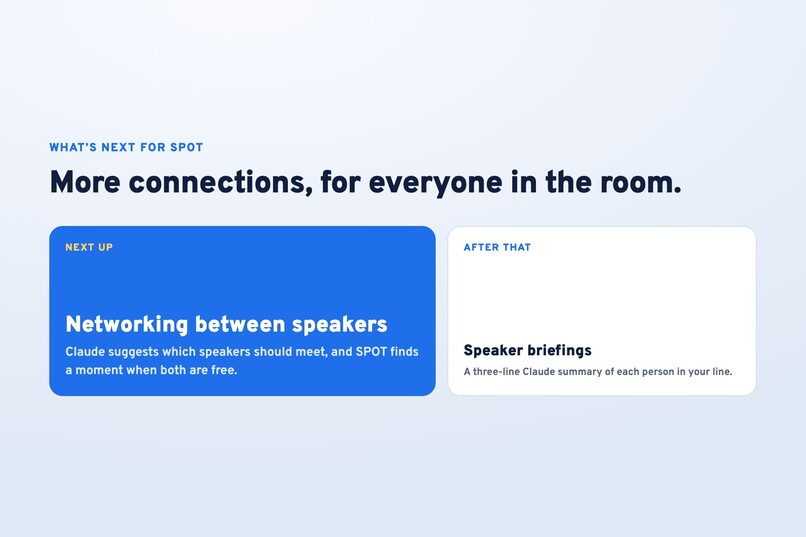
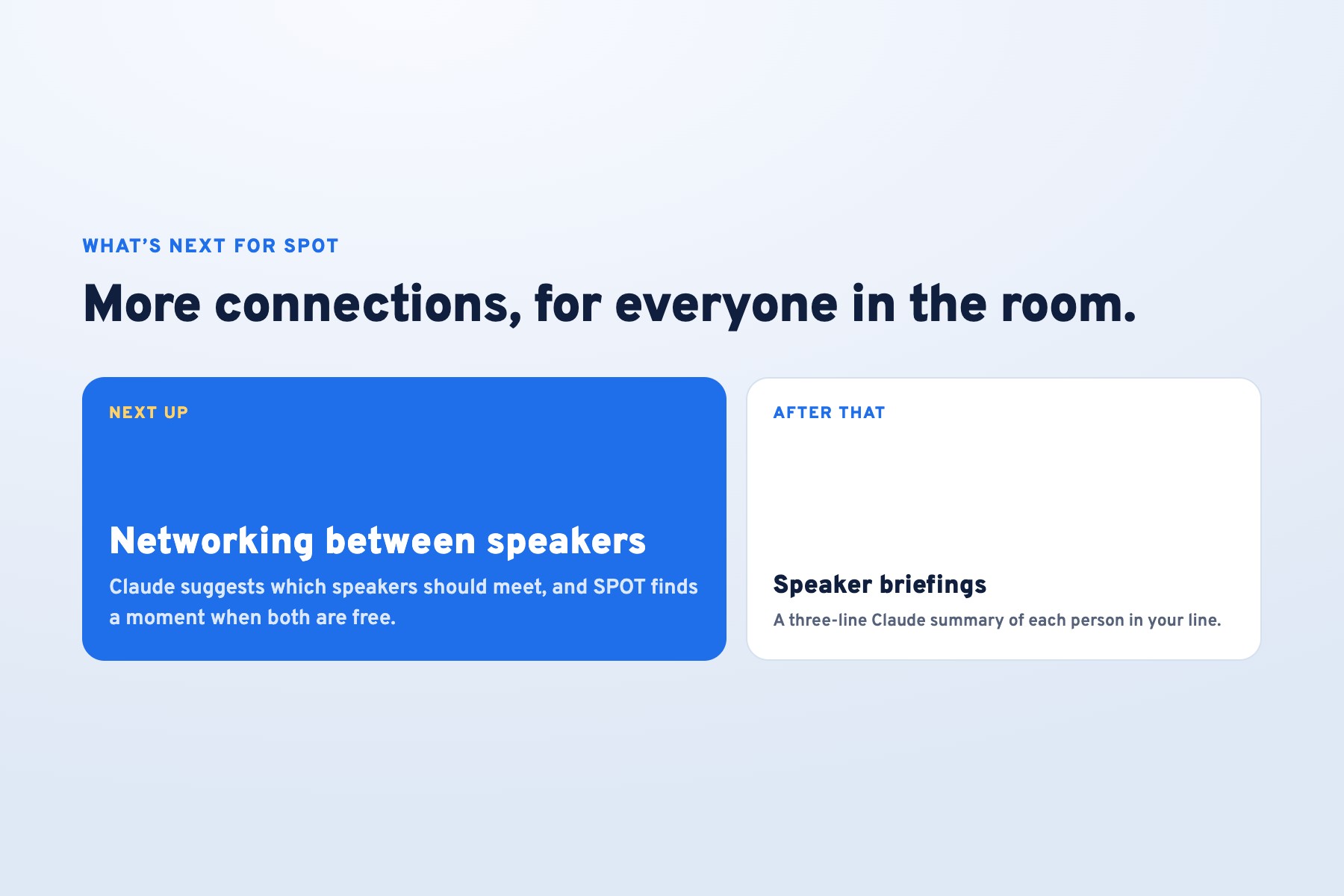
- Networking between speakers. Speakers are busy with their own lines, so they rarely get to meet each other. Next, we want to give them their own space: Claude suggests which speakers should meet based on their talks and interests, and SPOT finds a moment when both are free, for example between talks or after their lines clear.
- A three-line Claude briefing for speakers about each person in their line.

Log in or sign up for Devpost to join the conversation.