-
-
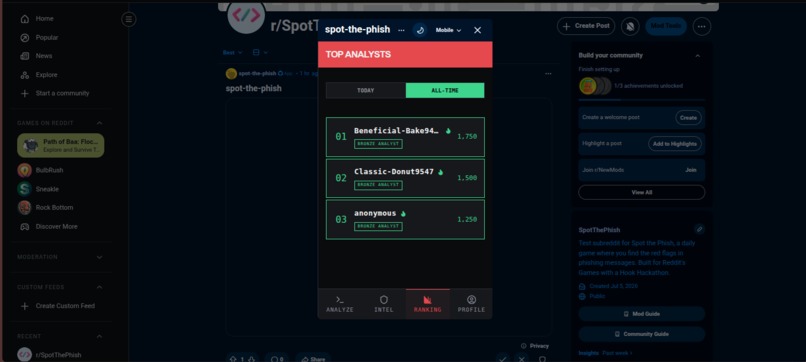
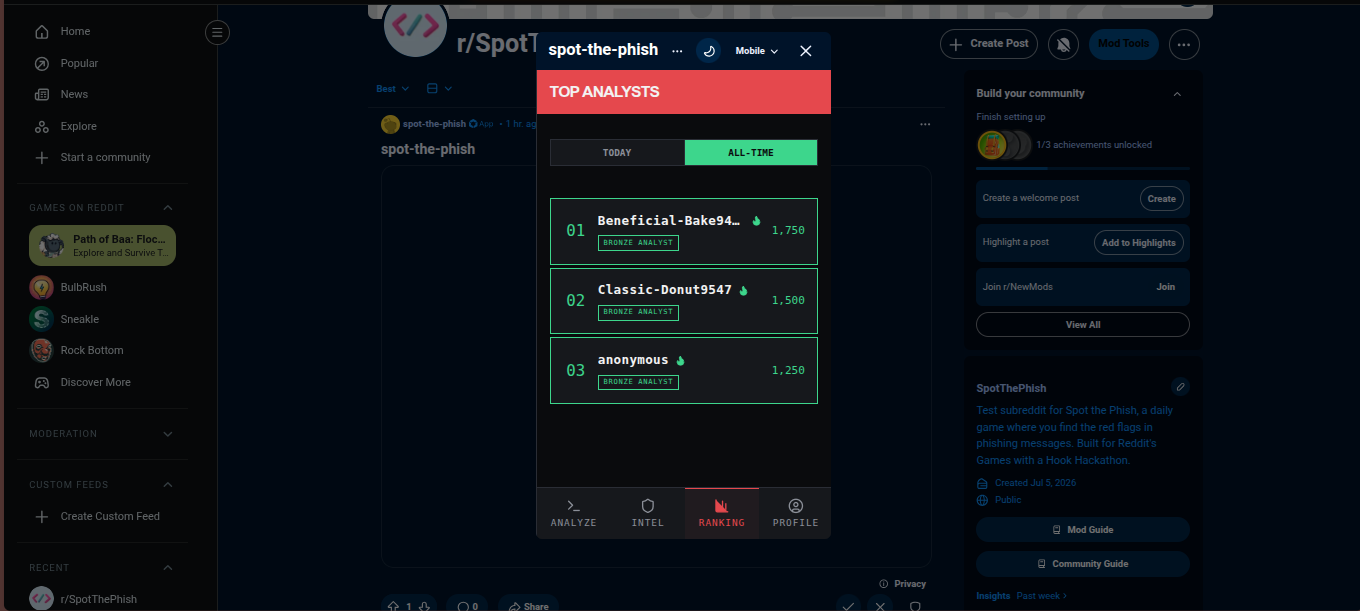
Ranking screen
-
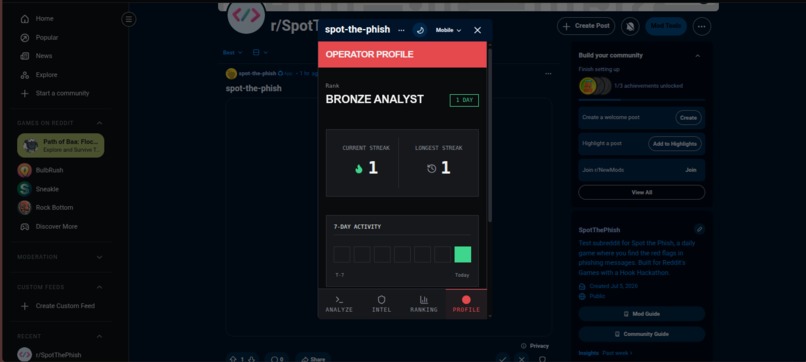
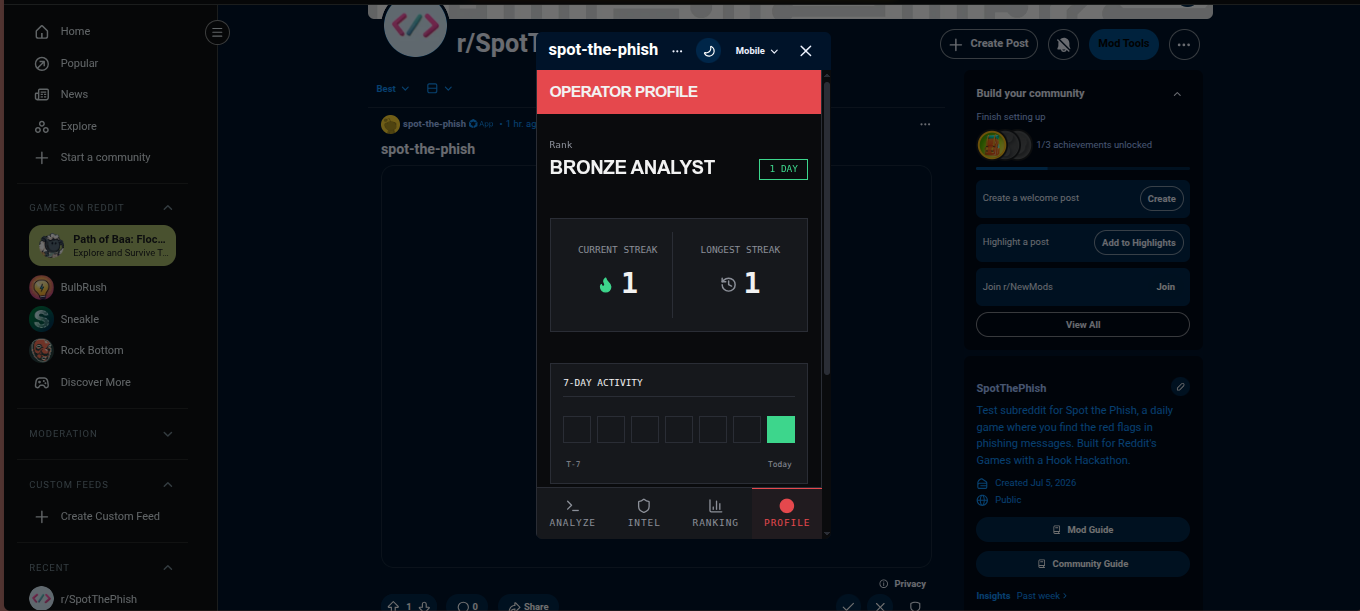
Profile screen
-
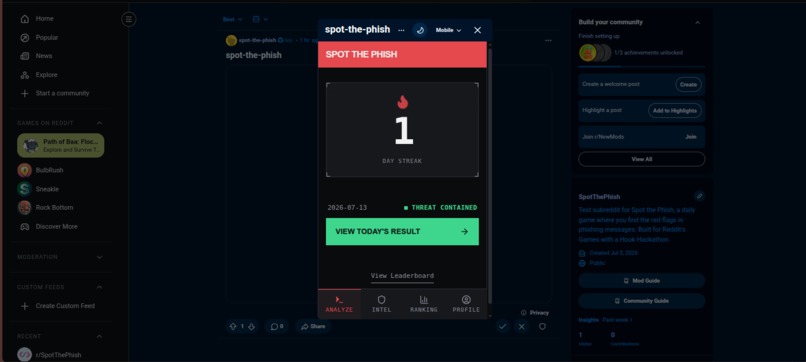
Home screen
-
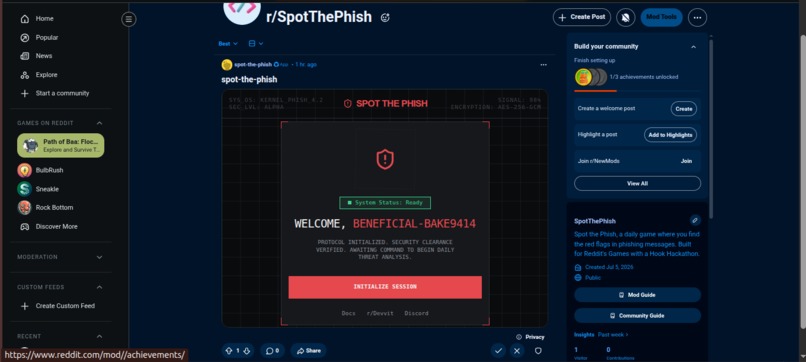
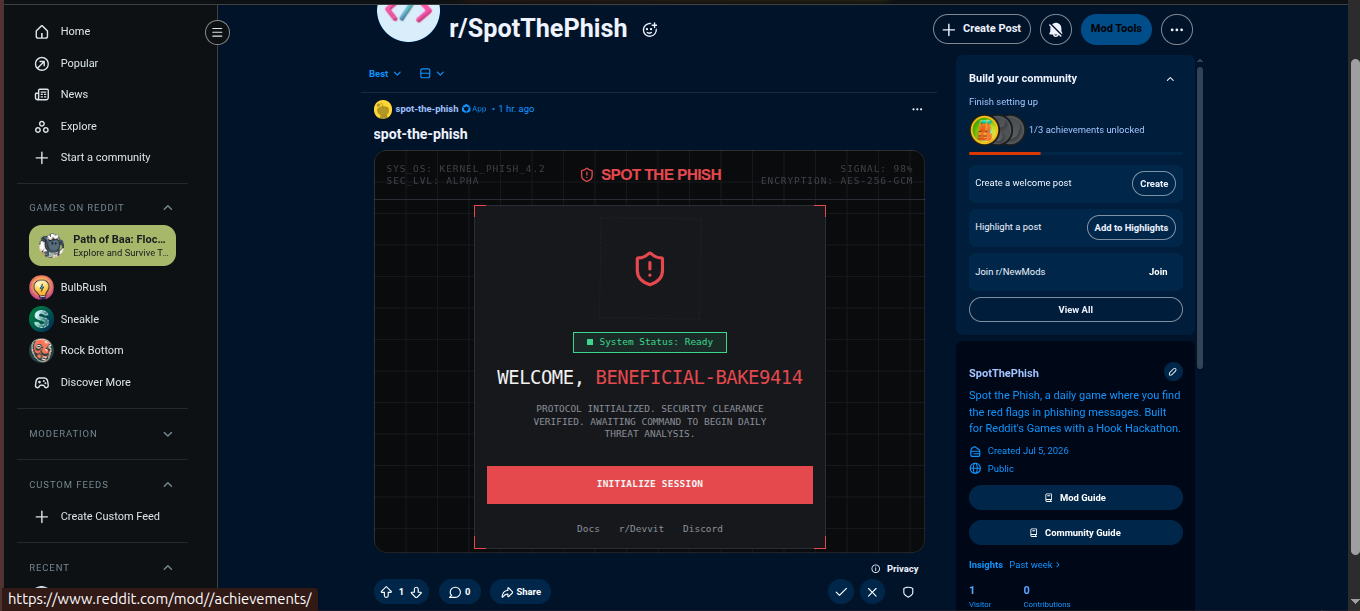
Splash Screen
-
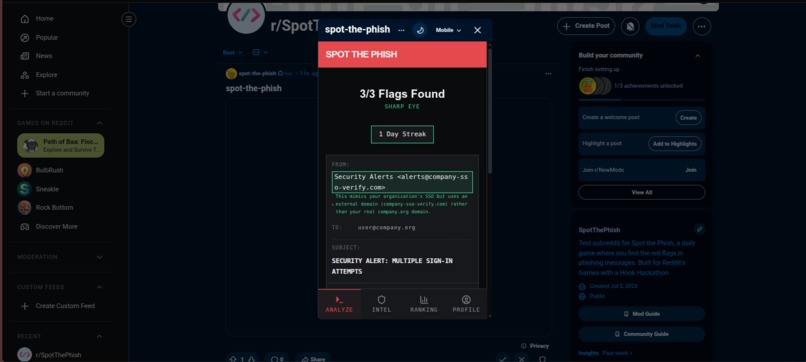
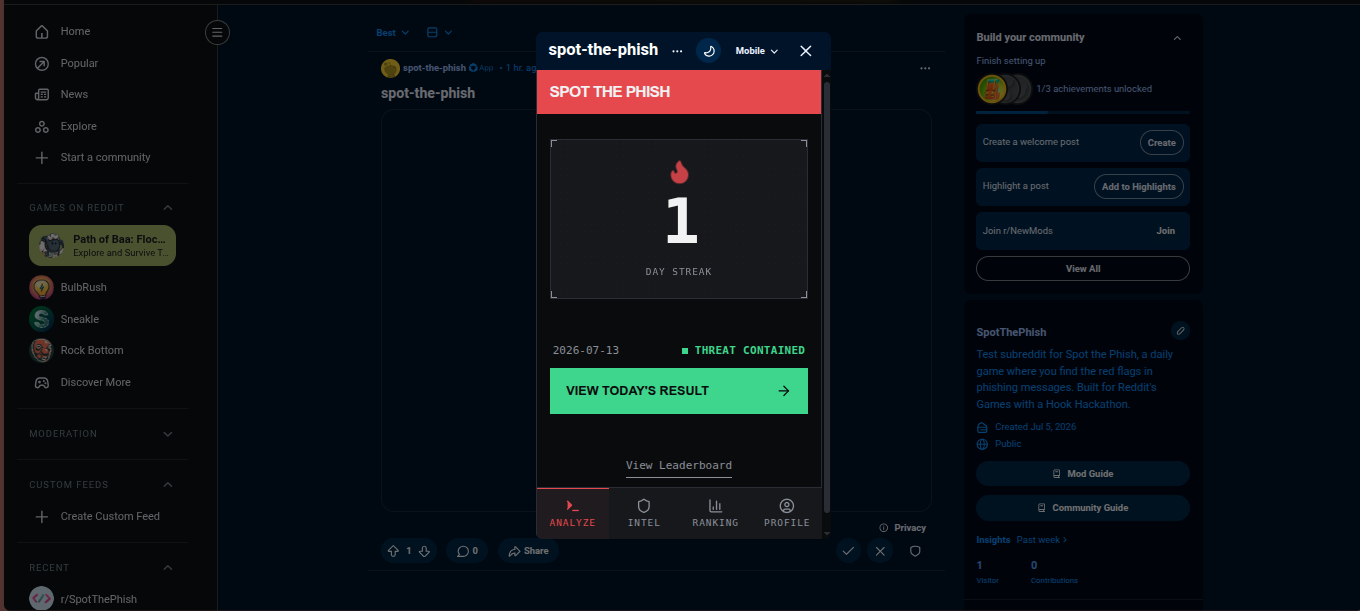
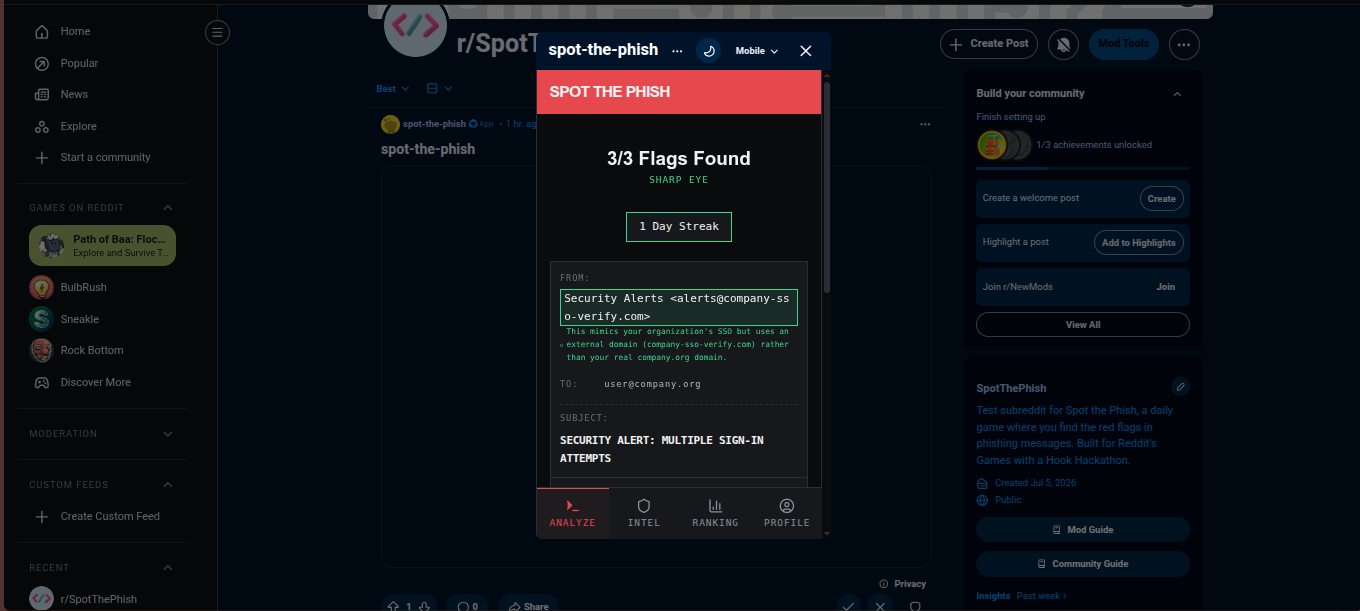
Results screen
-
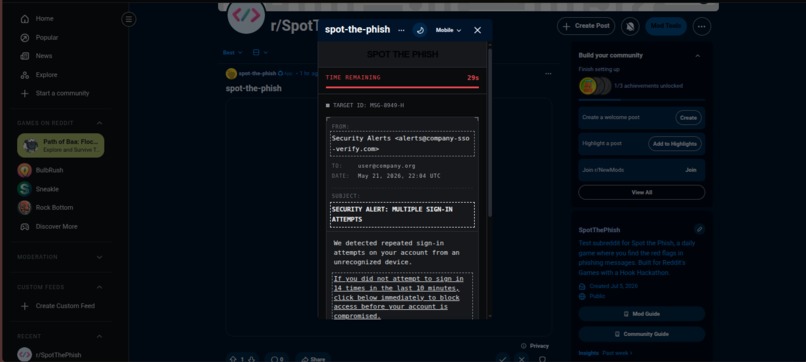
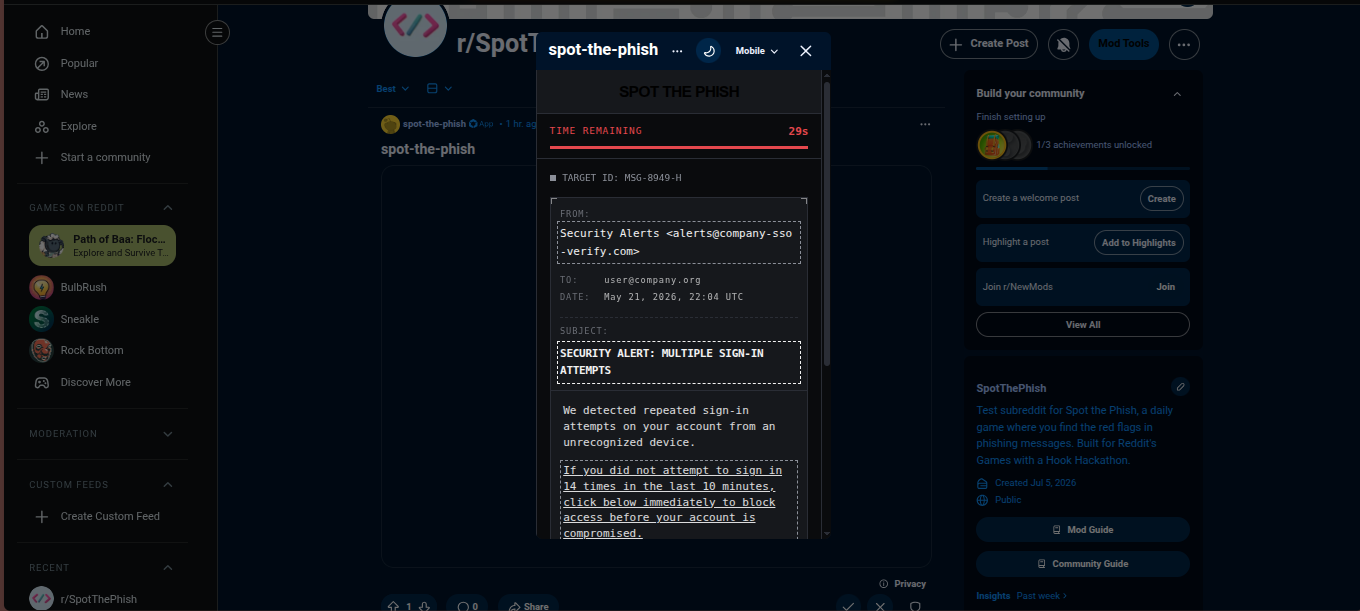
Gameplay screen
Inspiration
I'm currently working toward CompTIA Security+ certification with a goal of moving into a SOC analyst role, and one thing kept striking me while studying: most phishing-awareness training is dry, static, and forgettable, a slideshow or a one-time quiz that nobody thinks about again. Meanwhile, apps like Duolingo have proven that a daily habit loop with a streak mechanic can make people voluntarily return to learn something every single day.
Spot the Phish is my attempt to combine those two things: real security-literacy content, delivered as a genuinely playable daily habit, built natively for the place people already spend their time scrolling like on Reddit itself.
What it does
Every day, Spot the Phish serves one new simulated phishing message, an email, rendered exactly like the real thing, complete with a spoofed sender, a subject line, and a body. Players have 30 seconds to tap every element they believe is a red flag: a lookalike domain, urgency language, a mismatched link, and so on. Some messages are entirely clean, deliberately testing whether players over-flag out of nervousness rather than genuine suspicion.
After submitting, players get an annotated breakdown of exactly what they caught, missed, or wrongly flagged, each with a plain-English explanation of why it mattered, turning every round into a bite-sized security lesson, not just a score.
Beyond the core loop, the app tracks:
- Daily streaks, with a Bronze/Silver/Gold Analyst rank tied to your longest streak
- Leaderboards, both daily and all-time, scoped per subreddit
- A personal profile with lifetime accuracy, a 7-day activity strip, and total threats detected
- An Intel tab a standing reference library of common phishing patterns, so the game teaches even outside the daily round
How I built it
Built on Reddit's Devvit Web platform: React 19 + TypeScript + Tailwind CSS v4 on the frontend, a Hono server running inside the Devvit sandbox, and Redis for all persistence (streaks, per-user round locks, leaderboards, profile stats).
Scoring is entirely server-authoritative, the client sends only which elements it tapped, and the server independently recomputes correctness against its own copy of the day's scenario. This closes an easy cheating vector (a client that already "knows" the answer key can't be trusted to grade itself) and also enforces a one-attempt-per-day lock, so leaderboard scores can't be inflated by replaying the same message.
The visual design is a custom "Tactical Intelligence Interface" system, a deliberately hard-edged, zero-border-radius, terminal/SOC-dashboard aesthetic (built with Google Stitch, then hand-ported into real components) meant to make round feel like an active security operation rather than a casual mobile game.
Challenges I ran into
- Trusting the client vs. the server. Early versions computed scoring entirely client-side, which meant the answer key was sitting in the network response the whole time. Reworking
/submitto be fully server-authoritative, recomputing correctness independently rather than trusting anything the client claimed was the single biggest architectural change of the build. - Tailwind v4's config model. The scaffold used Tailwind v4's CSS-based
@themetokens rather than thetailwind.config.jsI originally reached for out of habit, required verifying v4's actual token syntax directly rather than assuming v3 conventions still applied. - Devvit's Redis is a restricted, managed proxy no assumption of full Redis command support (like key-scanning) was safe to make. The moderator "reset all data" tool works by having the app maintain its own player registry rather than relying on unverified whole-keyspace operations.
- Streak integrity. Getting "missing a day resets your streak to zero immediately, not just the next time you play" right took a genuine logic pass current streak and longest streak needed to behave completely differently (one is volatile, one is a permanent record), including separating which one actually drives your Analyst rank.
Accomplishments that I'm proud of
A fully working daily-habit game loop real persistence, real anti-cheat, a genuinely novel interaction (tap-to-flag rather than another trivia clone), and a cohesive, intentional visual identity built solo, end to end.
What I learned
How much of "game design" for a daily habit loop is actually about data integrity and abuse-resistance, not just the fun interaction on the surface, the tap mechanic was the easy part; making sure it couldn't be gamed was most of the real work.
What's next for Spot the Phish
Expanding the scenario pool well beyond the initial set, adding difficulty progression across the week, and exploring subreddit-vs-subreddit leaderboards so security-awareness can become a friendly competition between communities, not just individuals.
Built With
- devvit
- hono
- react
- redis
- tailwind
- typescript
- vite
