-
-
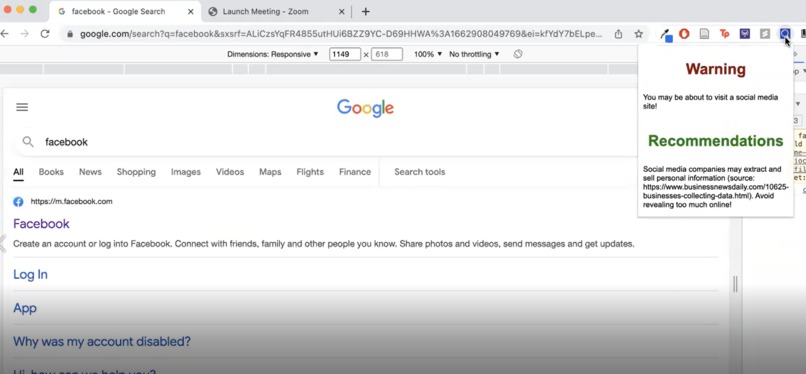
Screenshot of demo
Inspiration
As both computer science students and avid internet users, we see firsthand the impact that data can have in our day-to-day lives, particularly data we don't even know we're generating. We're also passionate about accessible healthcare and making sure everyone has the means to live a healthy life. When we stumbled across the issue of health insurance companies taking data from unknowing individuals and using it in a potentially harmful way, we were excited to share our preventative, yet simple Chrome Extension that anyone can use to both increase their awareness and empower them to take their privacy into their own hands.
What it does
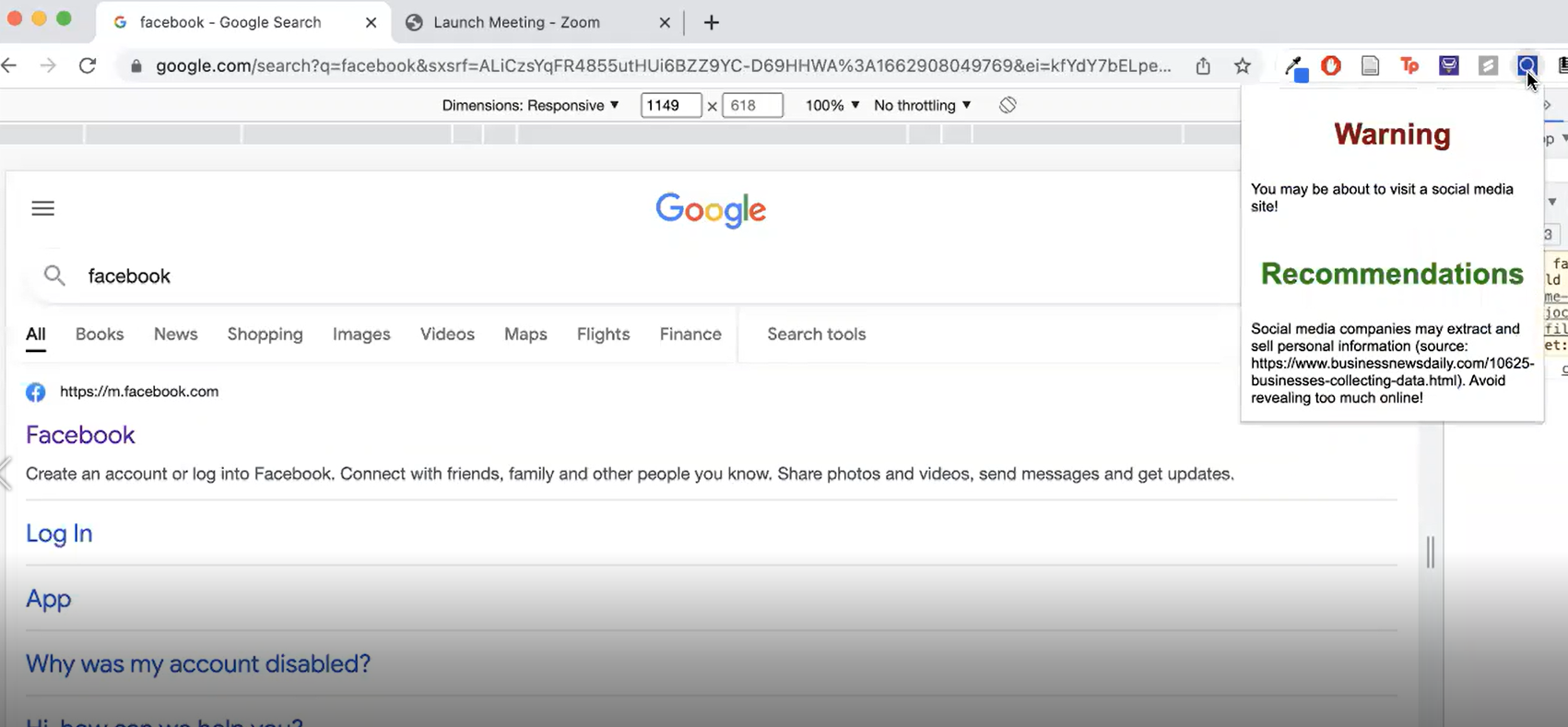
The two key parts of our product are our chrome extension and ML models. The Chrome Extension has a pop-up that displays potential warnings and recommendations to mitigate risk based on your search query. Our ML models classify the sentiment of user-written content and categorize search terms to increase the range of recommendations.
How we built it
We used HTML and CSS for the front end. To transfer the user's search queries from the webpage to the popup, we used JavaScript. We used Python and libraries such as Keras and Scikit-Learn to develop our ML models.
Challenges we ran into
Since we're new to building chrome extensions, we had difficulty understanding how to send messages between the web page and popup. Additionally, we're also new to NLP and it was difficult to pick up the data processing tools necessary to build a model.
Accomplishments that we're proud of
We're excited that we were able to build a functioning prototype and that we learned many new skills along the way!
What we learned
We took a deep dive into the details of creating a chrome extension. Additionally, through our research, we learned so much about not only the methods health insurance companies use to track their customers, but also the importance of maintaining our privacy online.
What's next for Spot My Search
Our future steps include (1) increasing the range and detail of recommendations, (2) collecting user data over time to create user profiles of how companies may be perceiving them and (3) correlating their online presence to the price of their insurance plan to understand the effectiveness of our recommendations.


Log in or sign up for Devpost to join the conversation.