Here is a drafted hackathon submission for SportShield AI. It leans into that high-energy, technical, and professional aesthetic, framing the project as a serious SaaS solution ready for the real world.
Feel free to tweak the specific models used in the "How we built it" section to perfectly match your exact stack!
Inspiration Live sports broadcasting loses billions of dollars annually to illegal streaming. The current industry standard is basically playing an endless game of whack-a-mole—manually hunting down links and issuing takedowns after the damage is done. We realized that to actually protect exclusive broadcasting rights, we needed an autonomous, all-seeing watchdog. We wanted to build a system that plays defense at the speed of the internet.
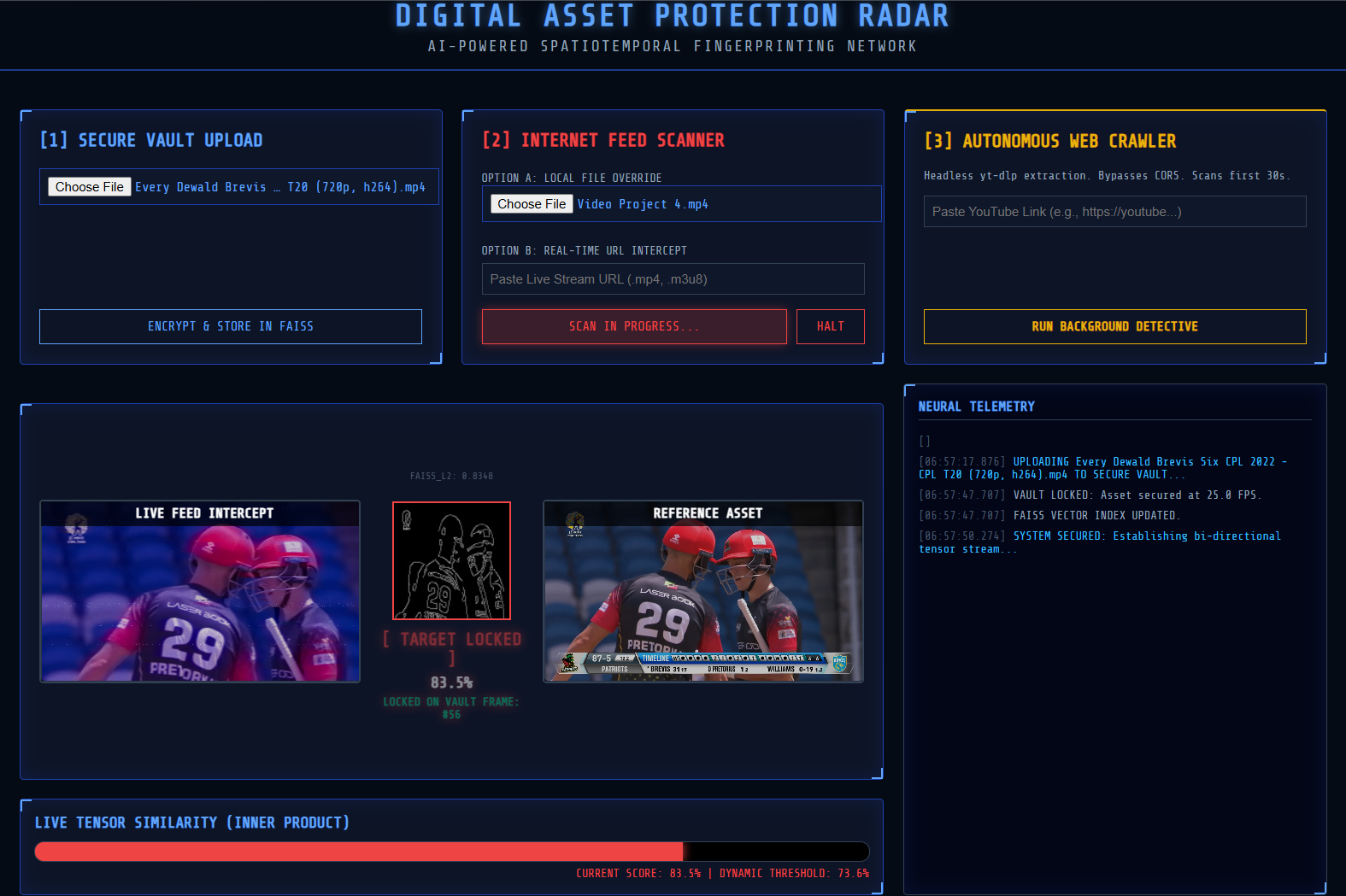
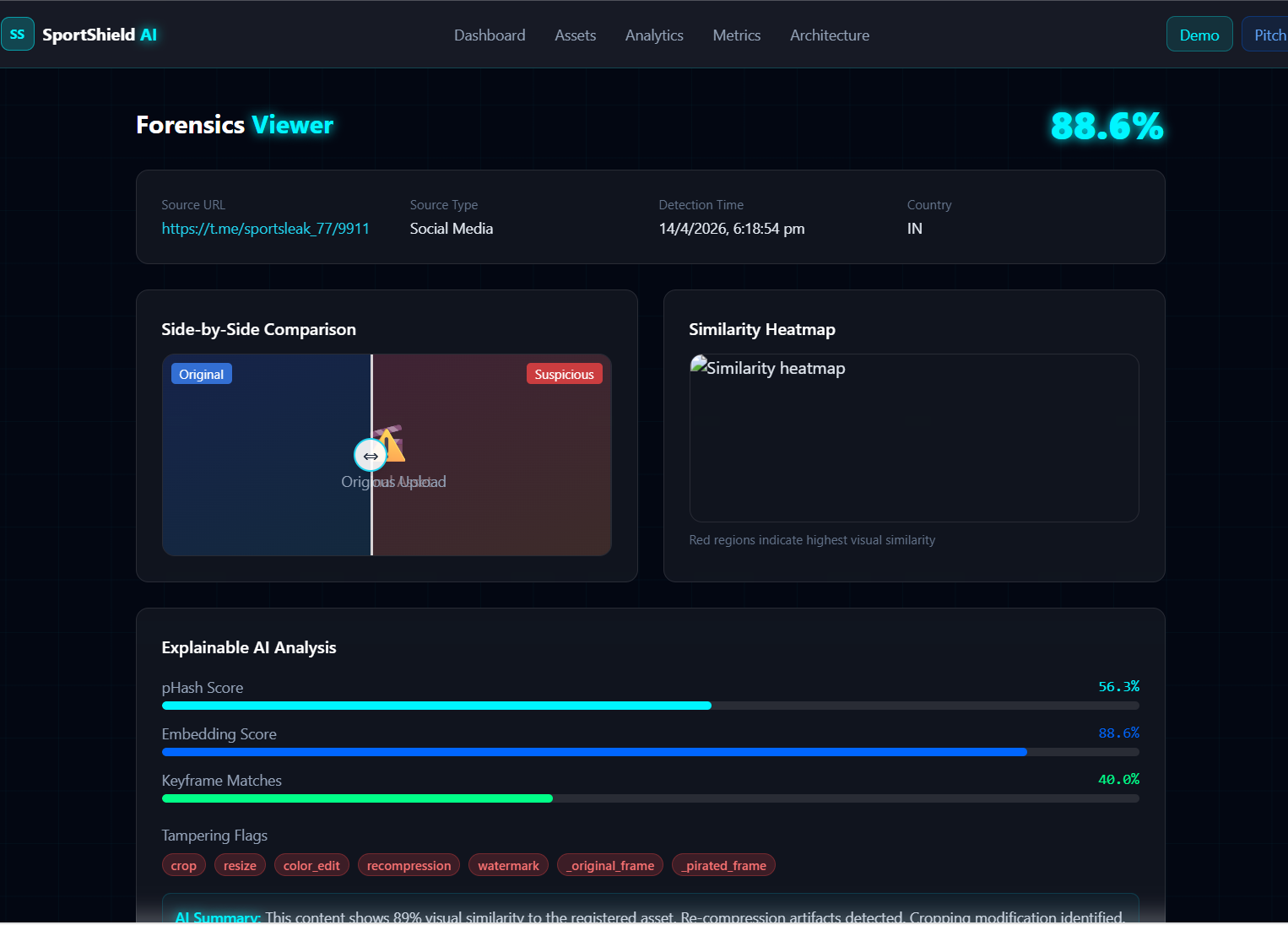
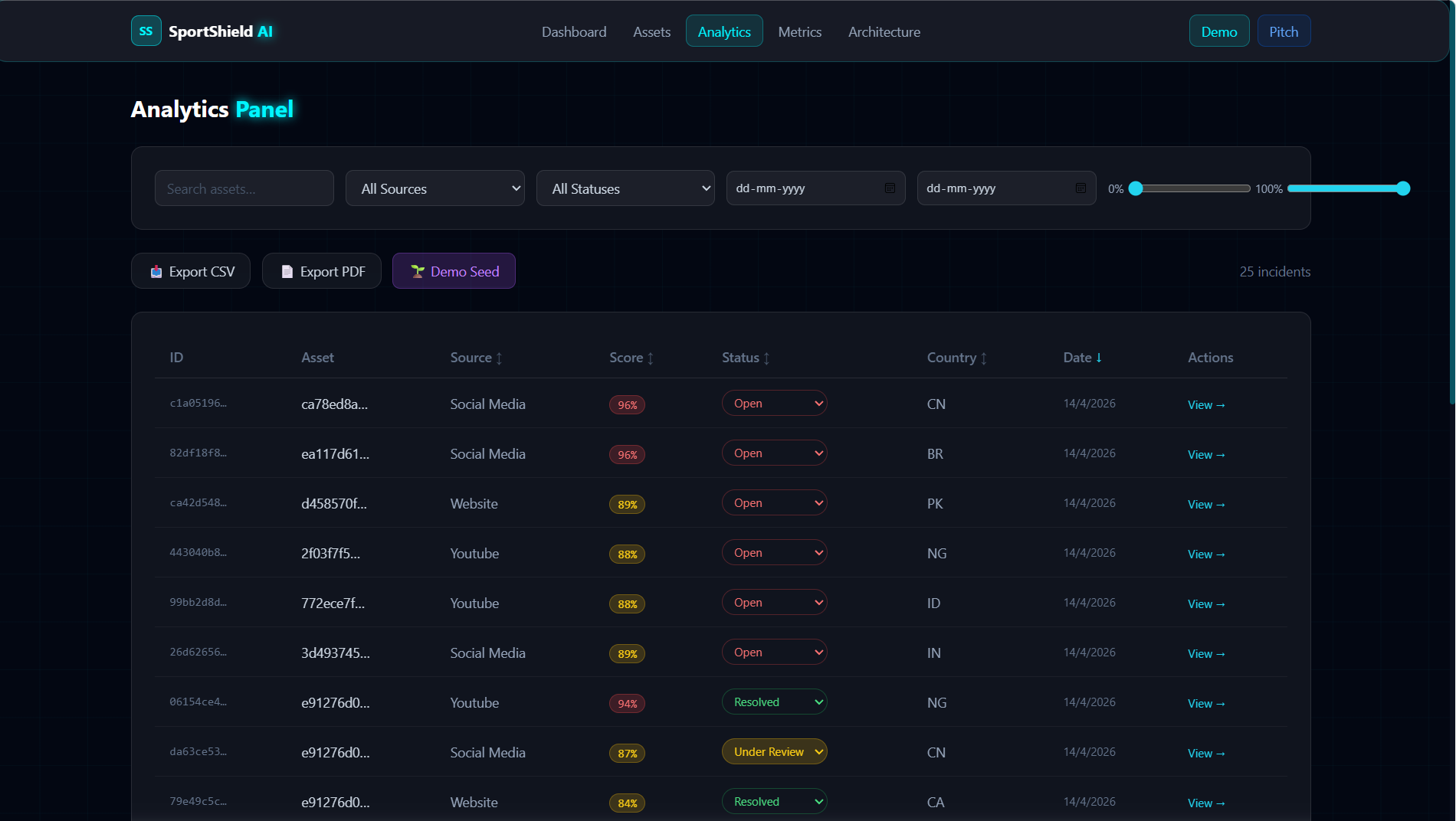
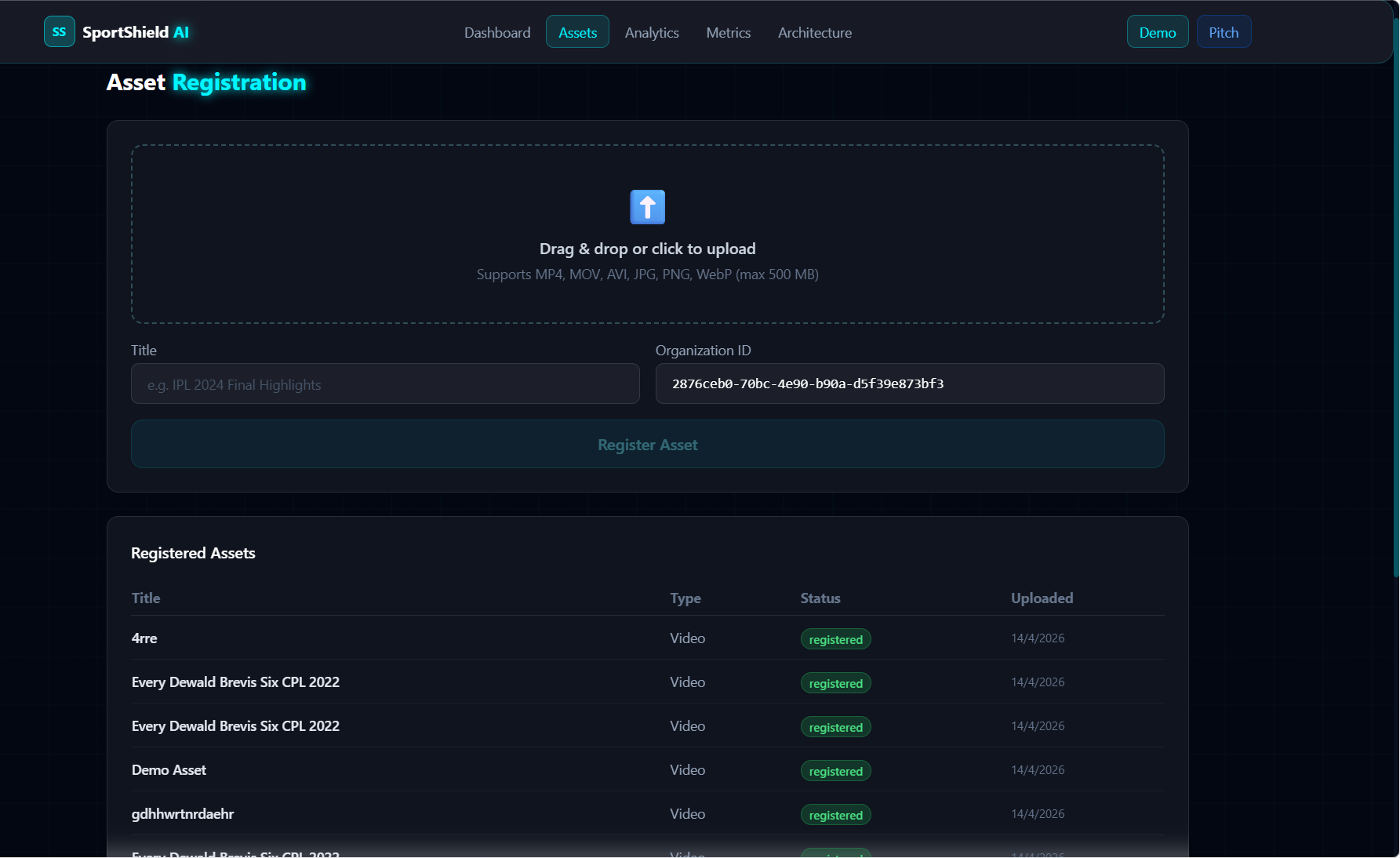
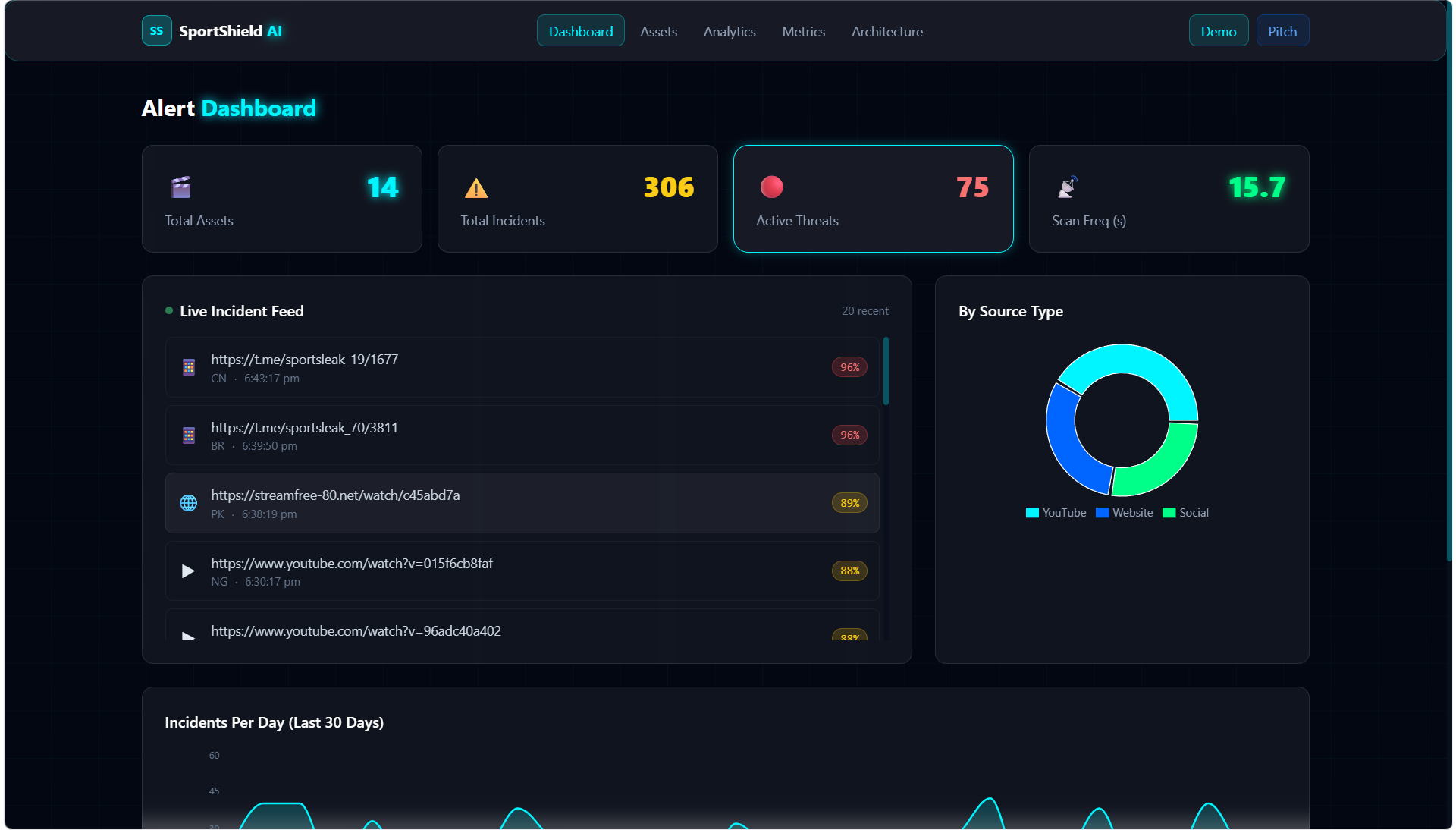
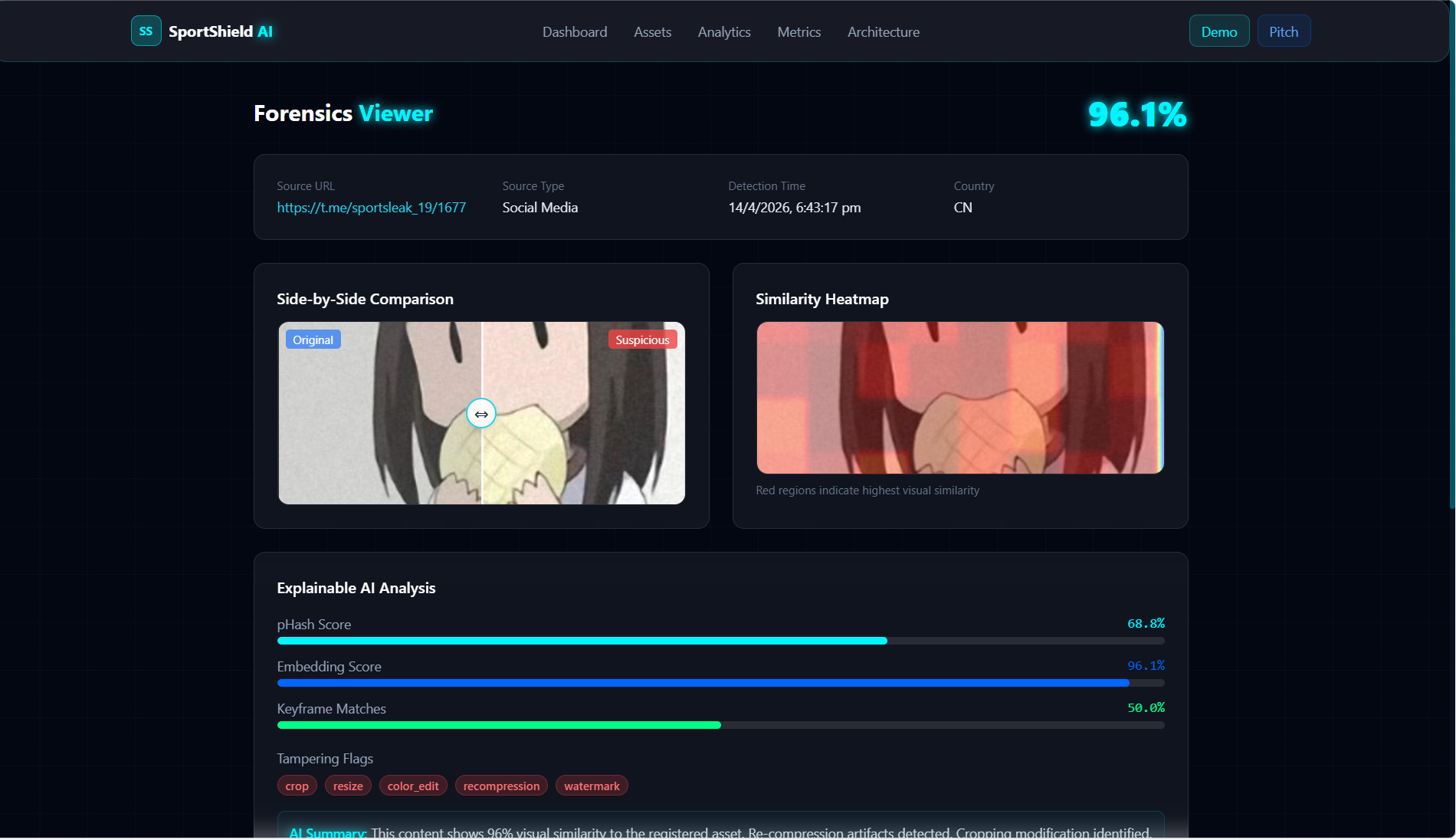
What it does SportShield AI is an automated SaaS platform designed to detect and flag pirated sports streams in real-time. At its core is our custom vision engine, Tensai no Me (Genius Eye). Instead of relying on user reports or simple watermarks, the platform actively ingests live video, processes the frames, generates heatmaps, and runs real-time classification to instantly detect suspicious re-streams. Broadcasters get an immediate alert, allowing them to shut down massive revenue leaks autonomously.
How we built it We engineered a robust, full-stack automated pipeline focused on speed and reliability.
Backend Architecture: We built the core application using Python and FastAPI to handle high-speed asynchronous processing.
Vision Engine: Tensai no Me handles the heavy lifting, using advanced computer vision architectures to evaluate video frames and detect unauthorized rebroadcasting signatures.
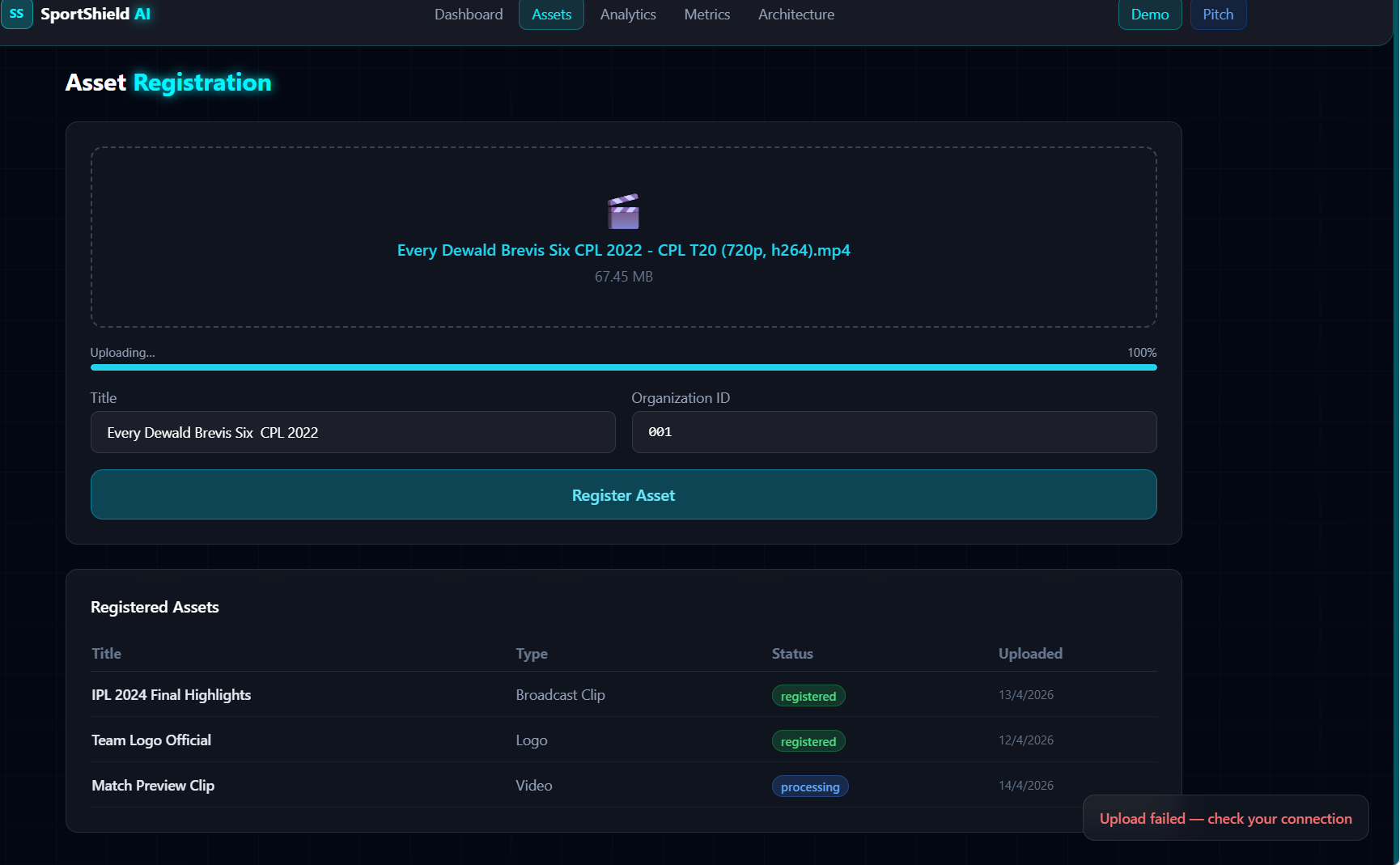
Database Management: We integrated a PostgreSQL database using SQLAlchemy to handle the intense data load of logging frames, generating analytics, and tracking flagged streams.
Deployment: The backend is fully containerized with Docker and deployed via Render to ensure a production-ready environment.
Challenges we ran into The Latency vs. Accuracy Trade-off: Processing live video is computationally expensive. We had to relentlessly optimize our inference pipeline so the computer vision models could run fast enough without bottlenecking the live feed.
Infrastructure & Deployment: Moving from a local environment to a production server threw us severe curveballs. We spent significant time debugging internal network routing, database connection errors, and managing the strict storage limits required for handling thousands of image frames and heatmaps.
Data Pipeline Integrity: Ensuring the seamless handoff of data from the video ingestion point, through the AI models, and into the PostgreSQL database without dropping frames was a massive architectural hurdle.
Accomplishments that we're proud of Successfully architecting Tensai no Me and getting the vision pipeline to accurately ingest, analyze, and classify frames autonomously.
Developing a complete, end-to-end SaaS architecture—from the deep learning model down to the deployed containerized backend.
Pushing through the "deployment wall" to get a highly complex, computationally heavy system running live in the cloud.
What we learned We learned that building the AI model is only 20% of the battle; the other 80% is infrastructure. We gained deep, practical experience in system architecture, Docker containerization, asynchronous API design, and the harsh realities of cloud database deployment. Most importantly, we learned how to rigorously optimize code for a production environment.
What's next for SportShield AI Advanced Obfuscation Defeat: Upgrading the model to recognize when pirates attempt to bypass detection by mirroring, cropping, or applying UI overlays to the stream.
Distributed Scaling: Moving the architecture to a more scalable, cloud-native system to handle thousands of concurrent live streams simultaneously.
Automated Takedowns: Integrating directly with hosting provider APIs to automatically issue DMCA takedowns the exact millisecond a stream is flagged with high confidence.
Built With
- docker
- faiss
- gemini
- javascript
- postgresql
- python
- render

Log in or sign up for Devpost to join the conversation.