Inspiration
The idea for SportsSocial came from a moment we think a lot of people can relate to. During our first year of college, we went to the basketball court hoping to play — but no one else was around. We realized there was no simple way to let others nearby know we were down to play, or to find others who felt the same. That moment stuck with us.
We thought: what if there was a platform where people could easily find teammates or opponents nearby — for both sports and esports? That’s how SportsSocial was born.
If you’re testing the website, feel free to use these test credentials: Email: [email protected] Password: 12345678
What It Does
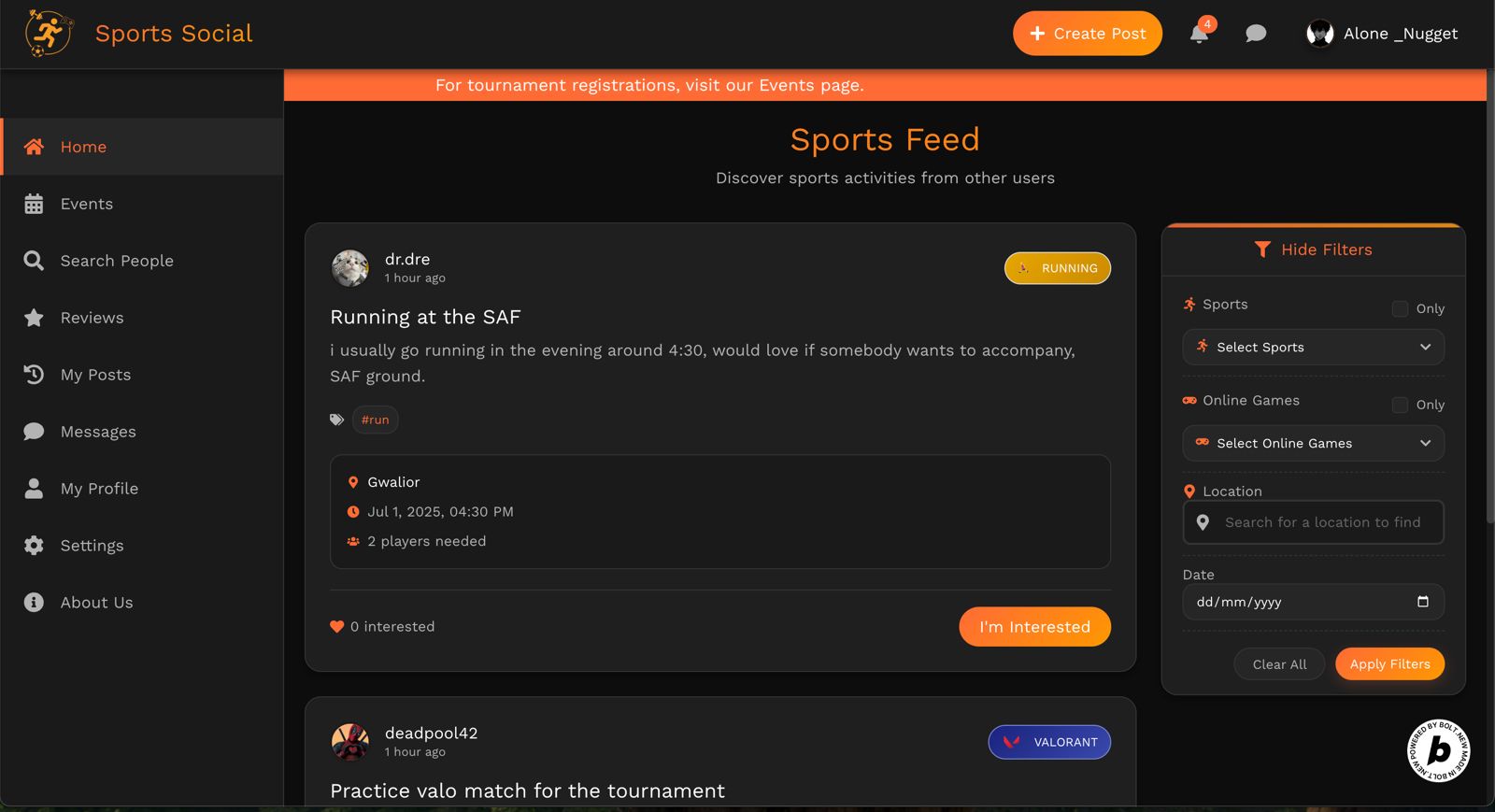
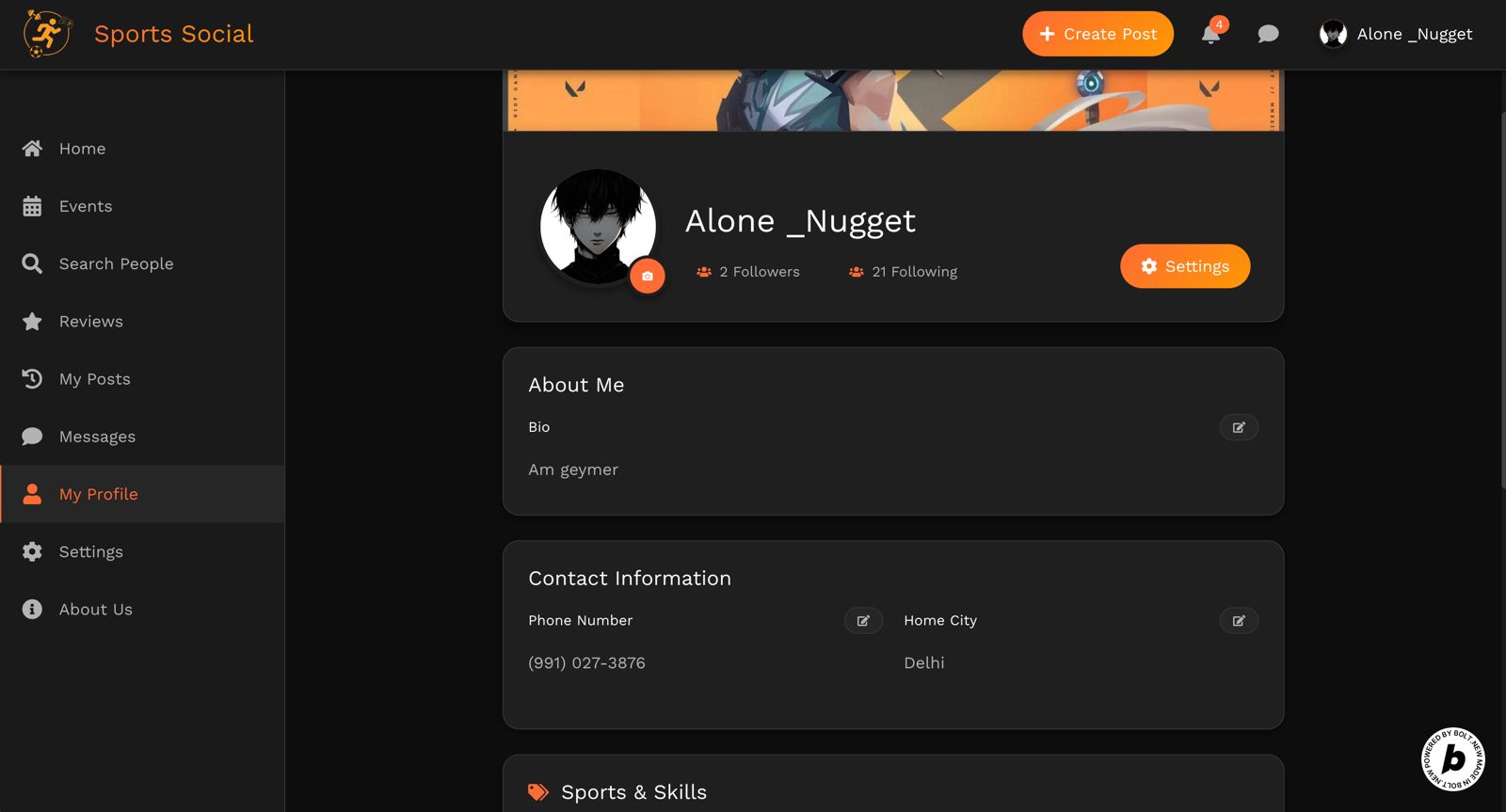
SportsSocial is a social platform that helps users find and connect with others who want to play sports or games — whether online or in real life.
- Users can create posts for upcoming matches or activities
- Others can browse, filter, and join those posts based on location, sport, or time
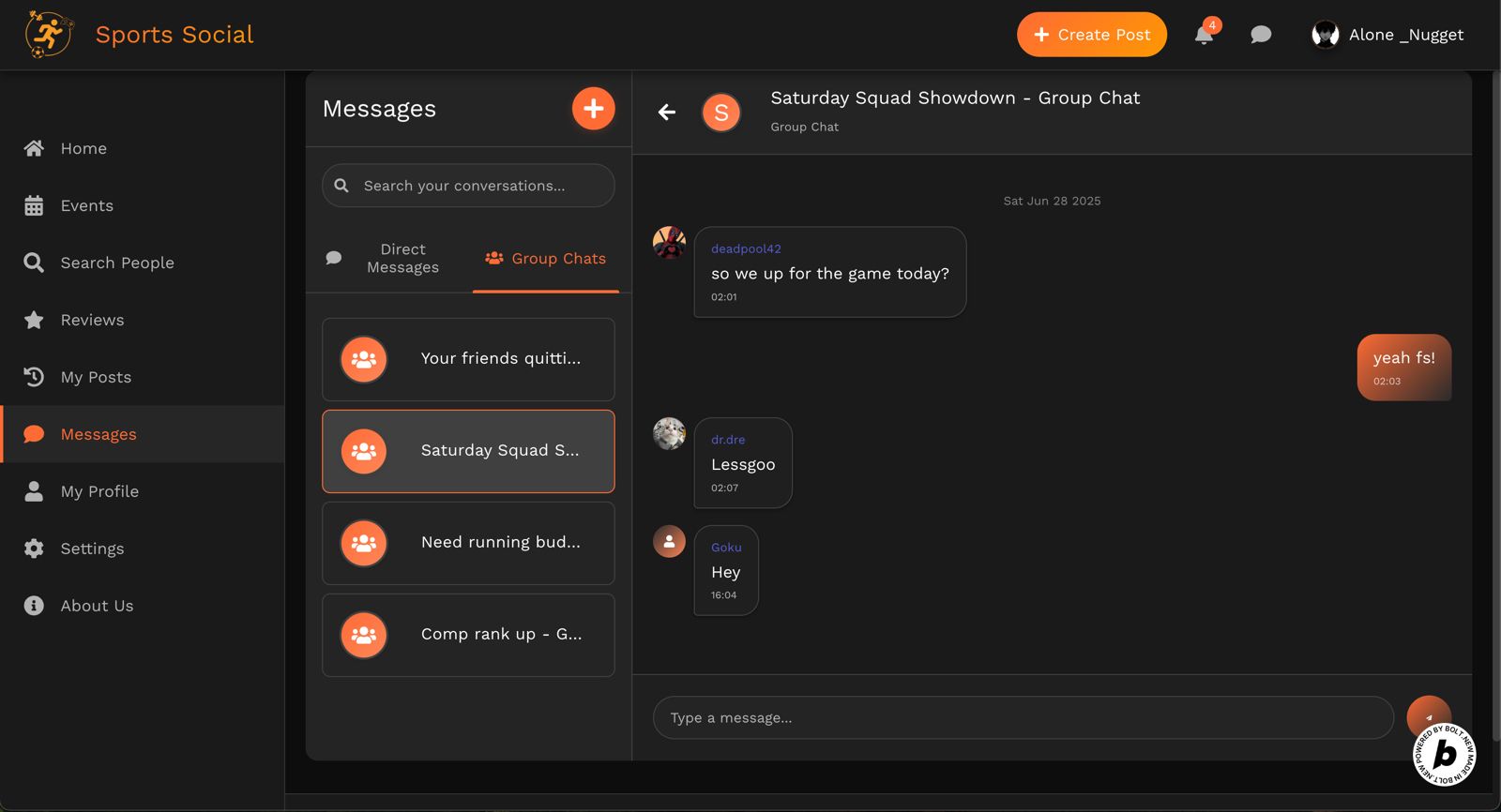
- There's also real-time chat for better coordination
- And soon, users will be able to share achievements and host large-scale events
How We Built It
We built SportsSocial using the MERN stack, and from the start, we guided Bolt to handle all the heavy setup for us:
- We prompted Bolt to use React.js for the frontend and Node.js + Express for the backend.
- For the database, we asked it to use Supabase, which came with ready-to-use migration files that Bolt gave us, and it saved us from setting up schemas or dealing with hosting.
- We told Bolt to implement JWT-based authentication and integrate WebSockets for real-time messaging.
- For styling, we asked for a dark UI using SCSS, and for discovering activities nearby, we prompted it to use Google Maps API with PostGIS for location-based filtering. Once the base was generated, we took over — refining the UI, adjusting components, fixing bugs, and adding smaller details ourselves. By letting Bolt handle the complex boilerplate and integrations, we saved days of setup time and focused on making the user experience clean, responsive, and usable.
Challenges We Ran Into
Since we were building everything by prompting Bolt, our biggest challenge was learning how to communicate clearly and specifically with it. While Bolt handled most of the code, making it do exactly what we wanted — especially for a full-scale social platform — wasn’t always straightforward.
- Prompting complex features: As the project grew, it became harder to describe and generate more complex features like real-time messaging, location filtering, and post interactions. Getting those pieces to work well together required a lot of back-and-forth refining our prompts.
- Real-time features: Getting Bolt to correctly implement WebSockets for messaging involved multiple iterations. Ensuring real-time chat updates across routes with proper syncing took careful prompting and debugging.
- Designing the social experience: Structuring how users create, discover, and interact with posts was tricky. We had to break down each interaction and think about how to explain it in a way Bolt could understand and build effectively.
- Running big projects on Bolt: As the codebase scaled, it became harder to manage everything through a single Bolt workspace. Complex features and interdependent components were harder to modify and maintain.
- Team collaboration limitations: One major issue was that Bolt doesn’t support real-time collaboration. Since our project was linked to a GitHub repo, multiple teammates couldn’t work on the same Bolt project unless we forked it — which made teamwork slower and more fragmented.
- Feature prioritization: We had more ideas than time — so choosing which features to prompt for and which to save for later was an ongoing challenge.
Accomplishments That We're Proud Of
- We built something real and usable, not just a demo
- We have over 150+ organic users within 5 days of launch
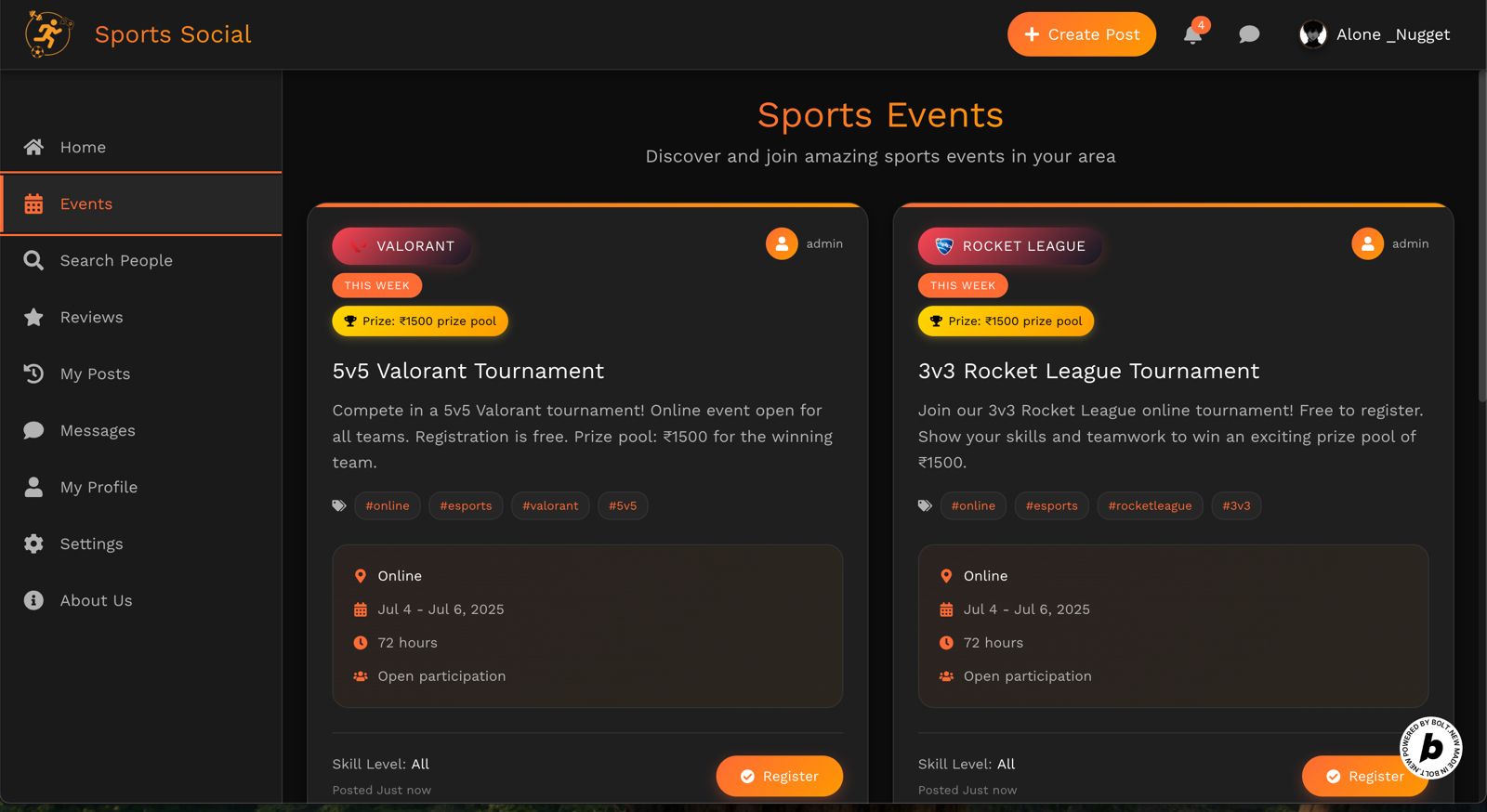
- We’re already hosting our first public event — a Valorant tournament from July 4–6, with 40+ teams registered as of June 30
- Most importantly, we solved a problem that we — and many others — actually face
What We Learned
- Building a full-scale social platform with Bolt taught us a lot about turning ideas into working features through clear and structured prompting.
- We learned how to break down complex features like real-time chat, JWT auth, and location filtering into small, promptable steps. We also got hands-on experience with tools like Supabase and PostGIS, and saw how all the pieces fit together in a real-world stack.
- Most importantly, we learned that building a great user experience is as much about communication and planning as it is about code.---
What's Next for SportsSocial
- Activity Feed: A social space where users can post achievements, updates, and progress
- Phone Number Verification: To improve user trust and safety
- Open Event Hosting: Letting anyone create and promote tournaments or meetups
- Mobile App: To make it easier to discover and join games on the go
- And of course, more community events, both online and offline
This project means a lot to us, and we’re excited to keep building it beyond the hackathon.
Built With
- bolt
- express.js
- git
- github
- google-maps
- javascript
- jwt
- node.js
- postgis
- postgresql
- react.js
- scss
- supabase
- websockets

Log in or sign up for Devpost to join the conversation.