Inspiration
Athletes often record themselves practicing, but simply watching a video doesn't tell them exactly what they are doing wrong. Professional athletes have access to coaches and advanced performance-analysis systems, while beginners and amateur athletes usually don't.
We wanted to make sports performance analysis more accessible by turning an ordinary sports video into actionable coaching feedback.
This led to SportIQ, an AI-powered multi-sport performance coach that uses computer vision to understand movement, identify technique patterns, and provide personalized insights.
What it does
SportIQ analyzes sports videos and transforms visual movement into meaningful performance insights.
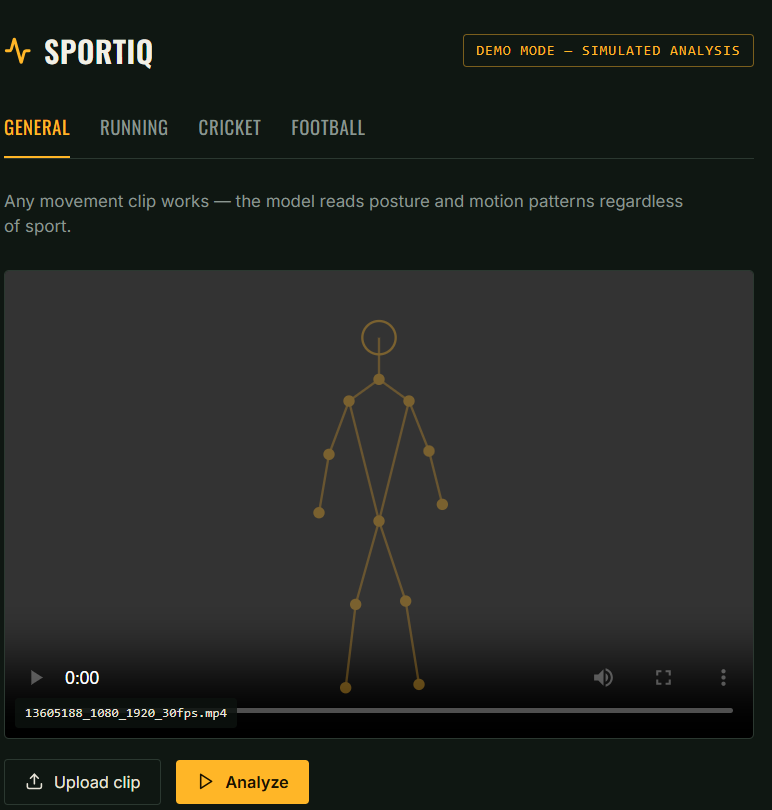
Users select a sport and upload a video. SportIQ uses computer vision to identify the athlete, track body movement, and extract relevant motion information.
The platform can analyze areas such as:
- Body posture and positioning
- Movement and footwork
- Balance and stability
- Technique and form
- Movement consistency
- Sport-specific performance metrics
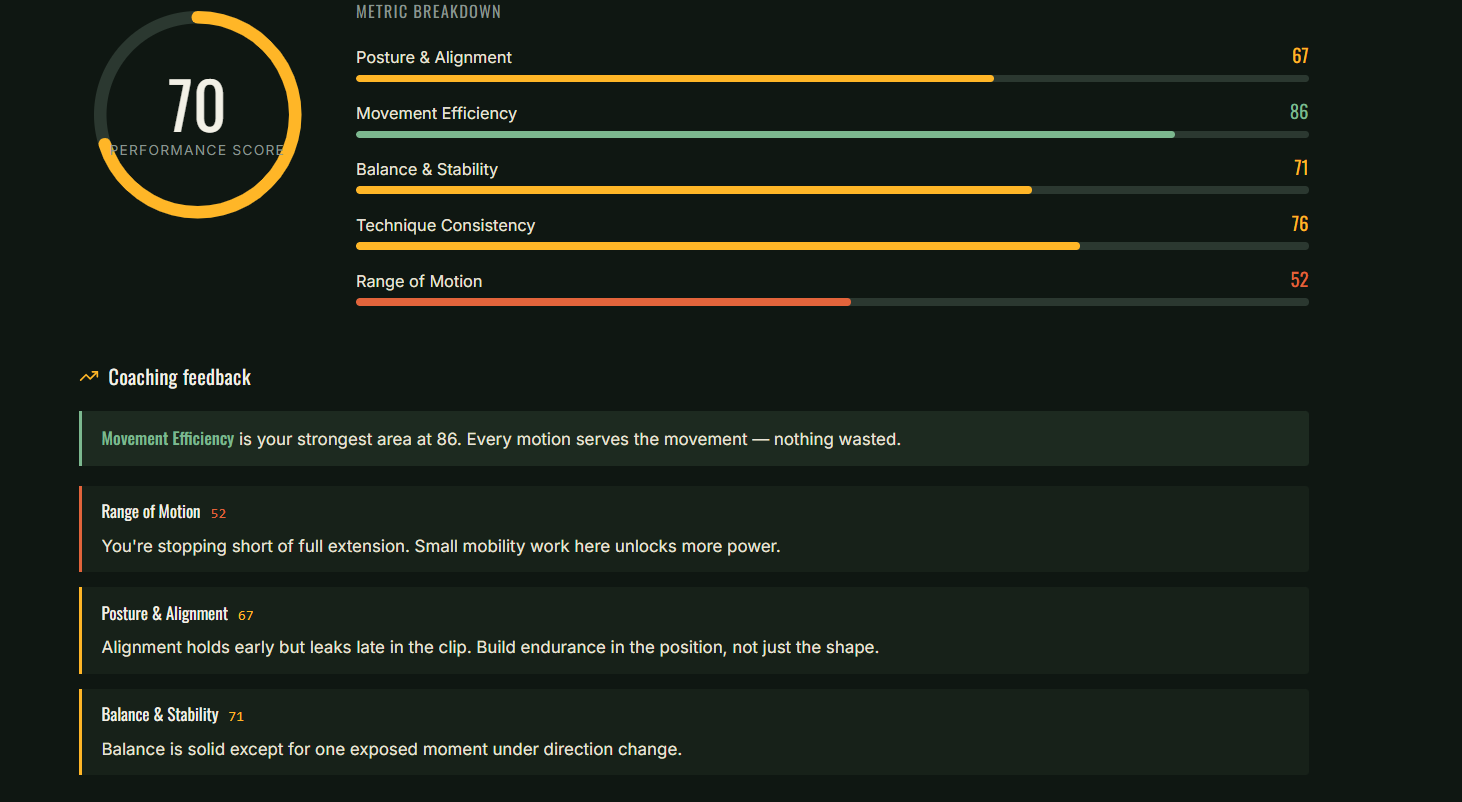
The system then generates a performance score and AI-powered coaching recommendations explaining what the athlete can improve.
Our initial implementation focuses on cricket, football, and running, while the architecture is designed to support additional sports in the future.
How we built it
SportIQ combines OpenCV 5, AI, and AWS into a single vision-based pipeline.
Core workflow:
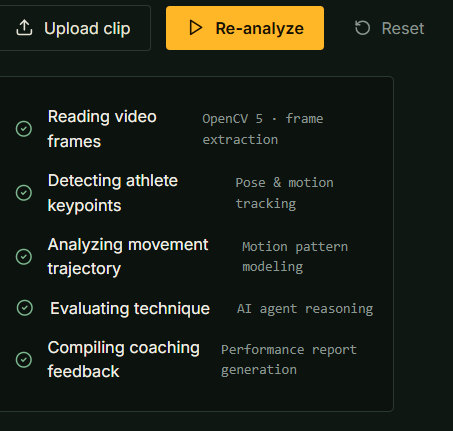
Video → OpenCV 5 → Motion Analysis → AI Agent → Performance Evaluation → Coaching Feedback
OpenCV 5 performs the core image and video analysis, including processing frames and extracting visual movement information.
The AI layer interprets the visual results and determines which analysis and feedback are relevant to the selected sport.
AWS provides the cloud infrastructure for components such as video storage, processing, application services, and scalable data handling.
We designed the system around an Agentic Vision workflow where visual information influences the next stage of analysis rather than simply being displayed to the user.
Challenges we ran into
Building a multi-sport vision system introduced several challenges.
The first challenge was making the system work across different sports because every sport has different movements, equipment, environments, and performance indicators.
Another challenge was extracting useful information from real-world videos. Camera angles, lighting, motion blur, occlusion, and video quality can all affect computer-vision accuracy.
We also had to balance the complexity of our analysis with the need for a system that could provide results quickly enough for a practical user experience.
Finally, designing an agentic workflow required us to ensure that the visual analysis actually influenced subsequent decisions rather than simply adding an AI chatbot on top of computer-vision results.
Accomplishments that we're proud of
We are proud to have created a single platform that approaches sports analysis from a multi-sport perspective rather than building a solution for only one sport.
We also integrated computer vision with AI-driven reasoning to move beyond simple detection and toward actionable coaching feedback.
Another accomplishment is our focus on making advanced performance analysis accessible through ordinary video instead of requiring expensive specialized equipment.
Most importantly, SportIQ demonstrates how computer vision can turn raw visual data into information that athletes can actually use to improve.
What we learned
Through SportIQ, we learned that building a computer-vision application is about much more than detecting objects or tracking movement.
We learned how different sports require different interpretations of the same visual information, and how important it is to design a flexible architecture from the beginning.
We also learned about combining computer vision with cloud infrastructure and AI reasoning, particularly how visual evidence can be used to influence subsequent decisions in an agentic workflow.
The project also taught us the importance of evaluating real-world limitations instead of assuming that a model will perform perfectly on every video.
What's next for SportIQ
Our goal is to turn SportIQ into a more comprehensive personal sports-performance platform.
Future versions could support additional sports such as tennis, badminton, basketball, and volleyball, along with more advanced sport-specific metrics.
We also want to introduce:
Long-term athlete progress tracking Personalized training plans Automatic highlight and key-moment detection More advanced AI coaching Comparison between training sessions A mobile application Real-time analysis from live camera feeds
Ultimately, we want SportIQ to become an accessible AI coach that can watch, understand, and help athletes improve—regardless of their level or access to professional coaching.
Built With
- ai/computer
- api
- css
- html5
- javascript
- lucide
- react
- vision
- vite

Log in or sign up for Devpost to join the conversation.