-
-
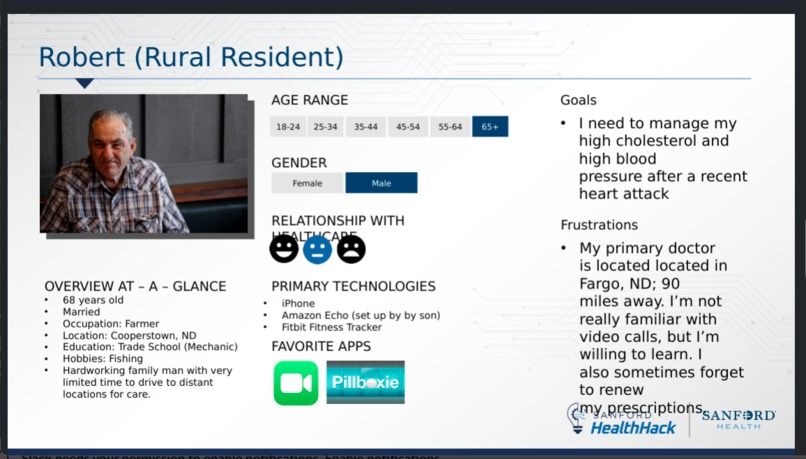
Robert, our chosen user persona.
-
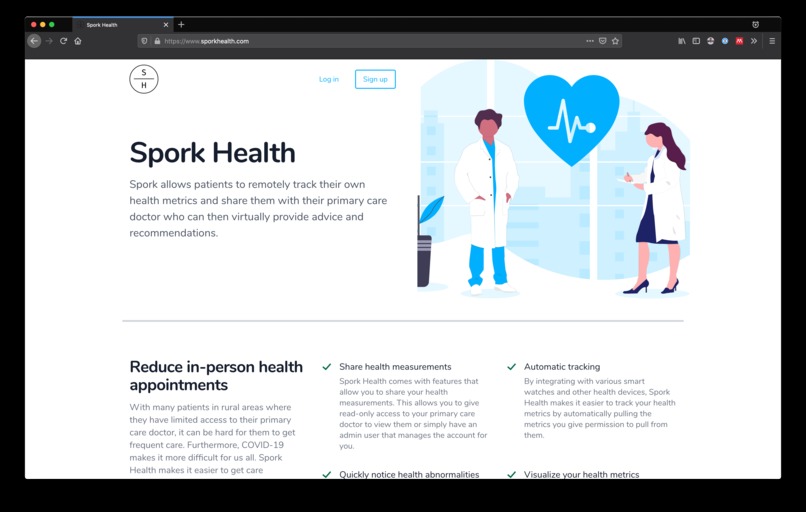
Homepage
-
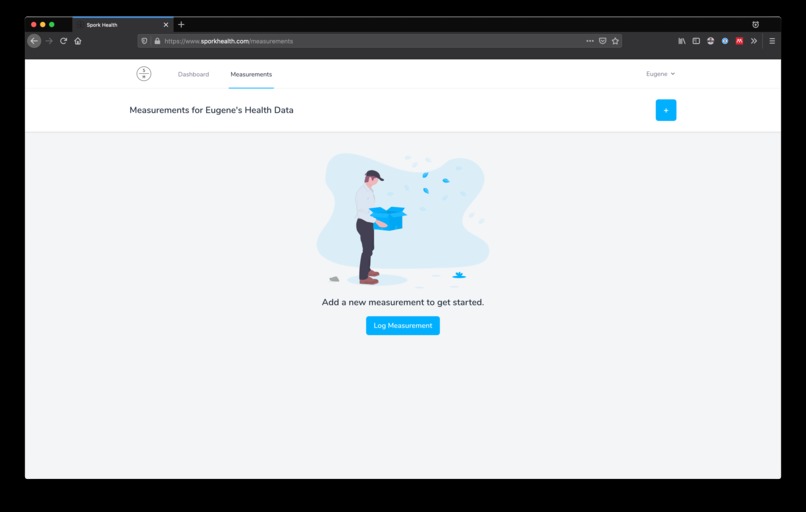
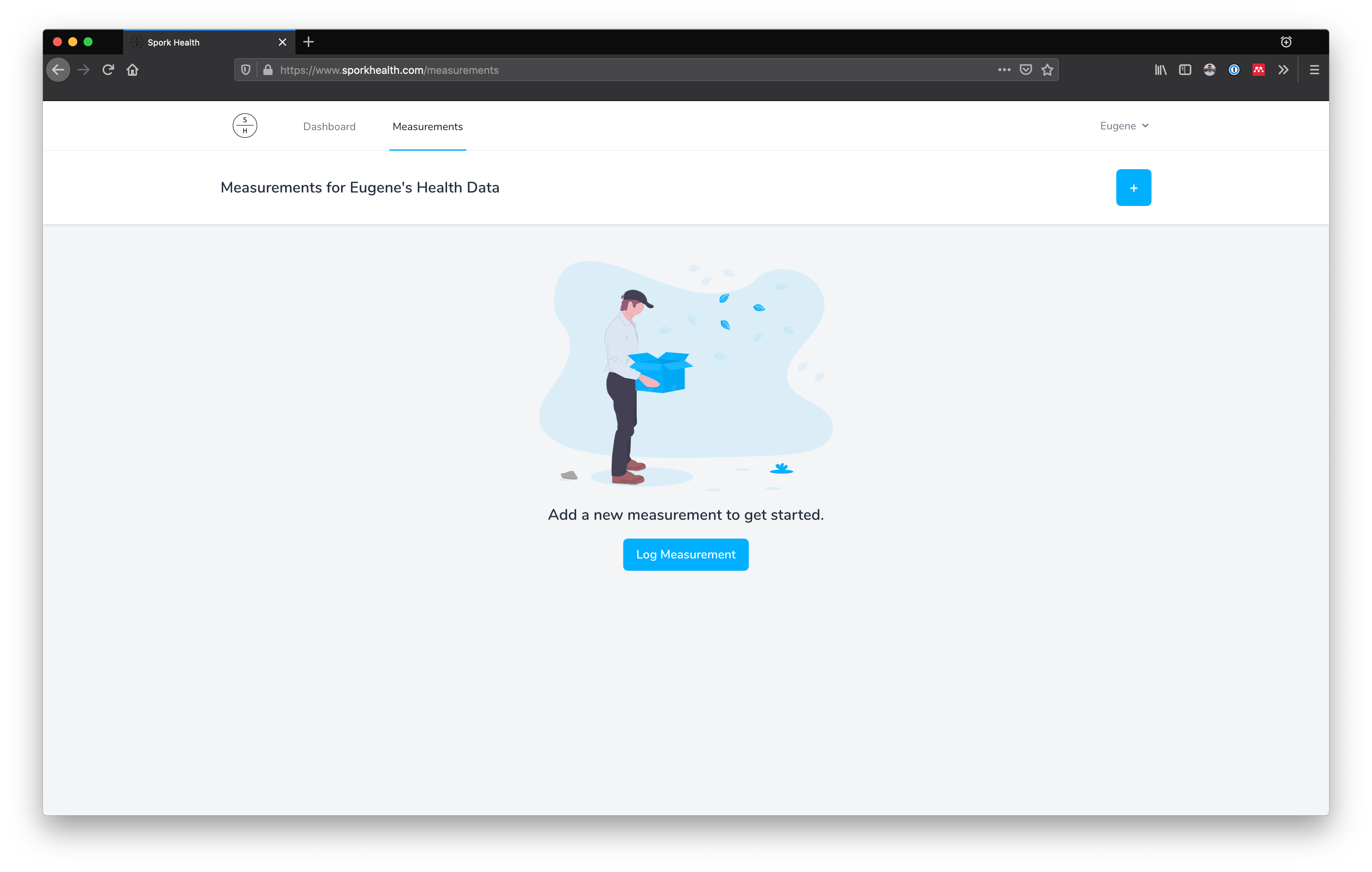
Empty measurements page
-
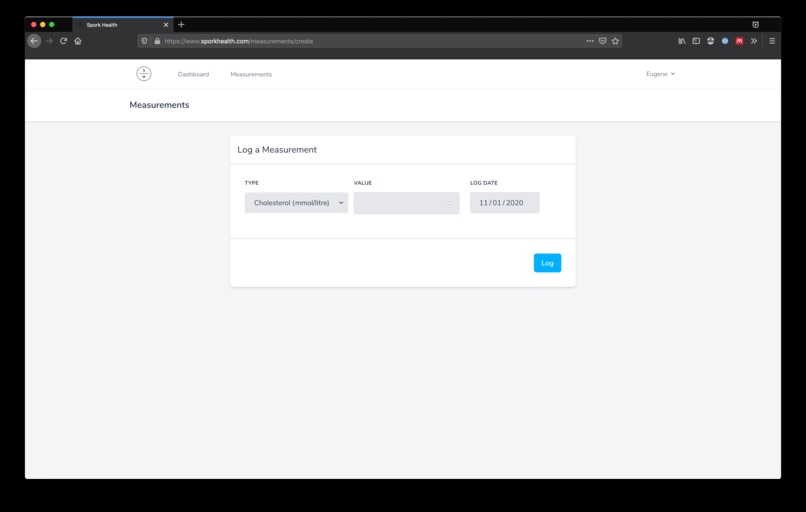
Logging a measurement
-
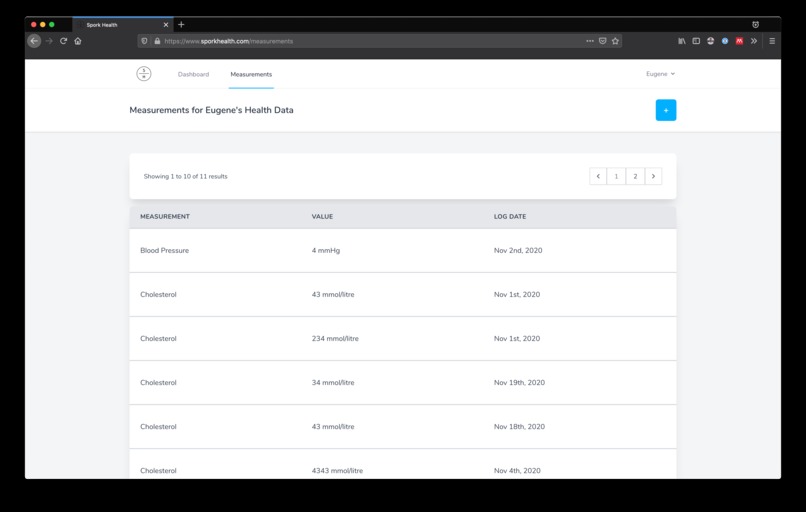
Logged measurements
-
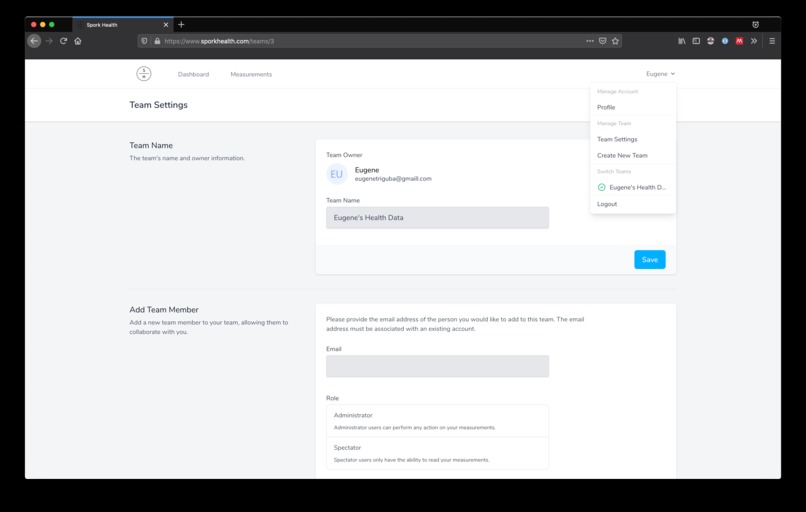
Team view to share your measurements

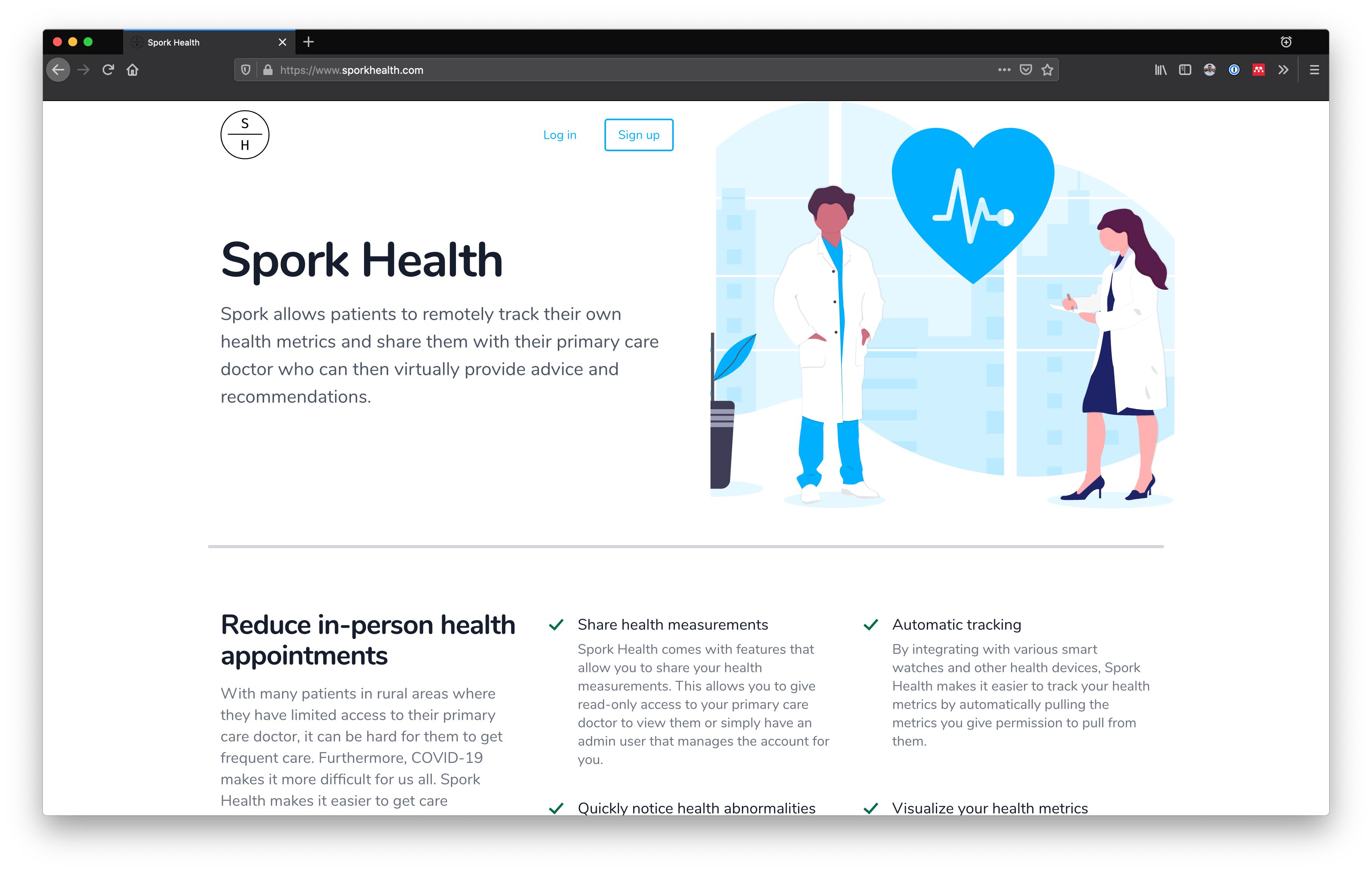
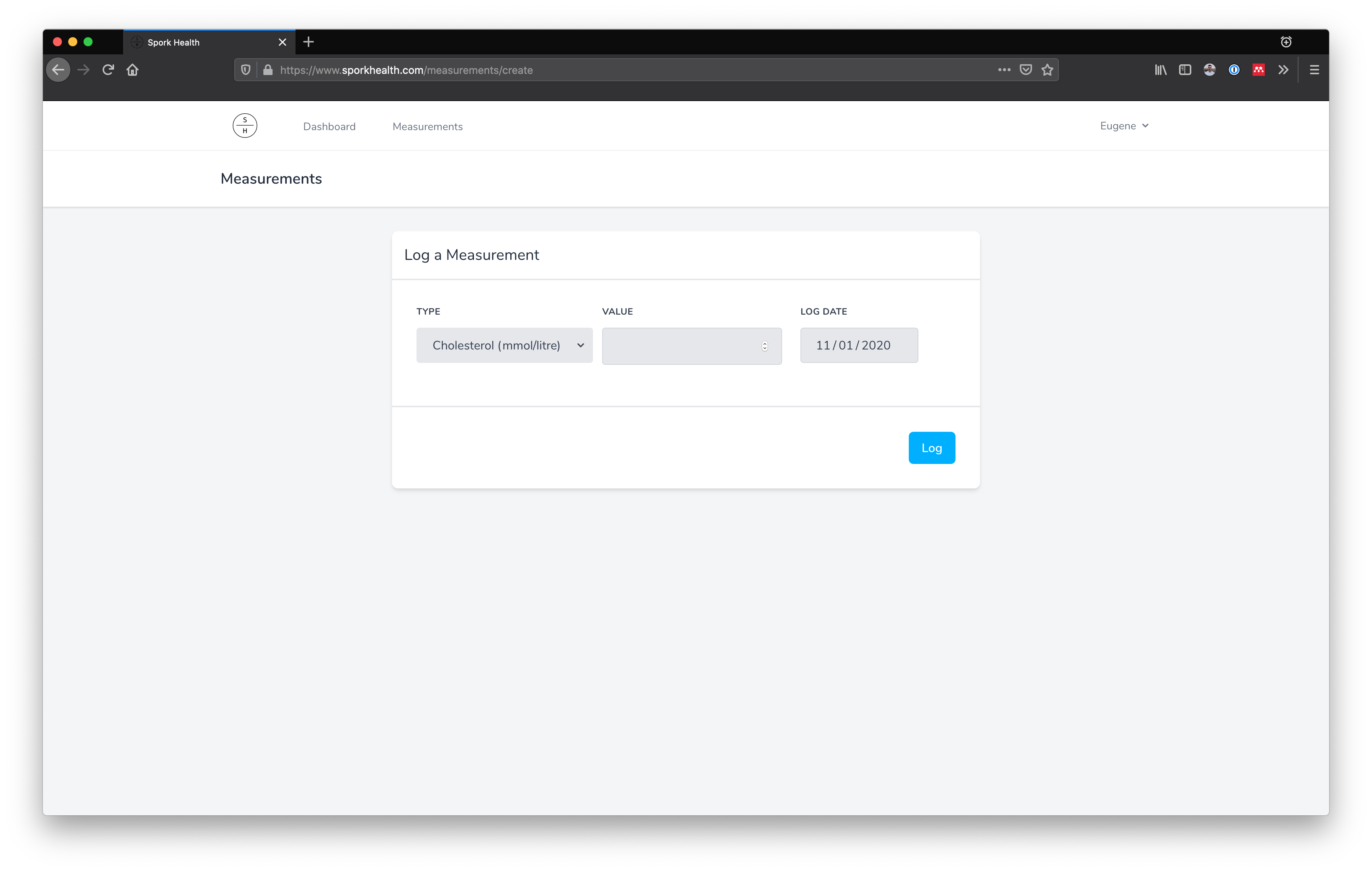
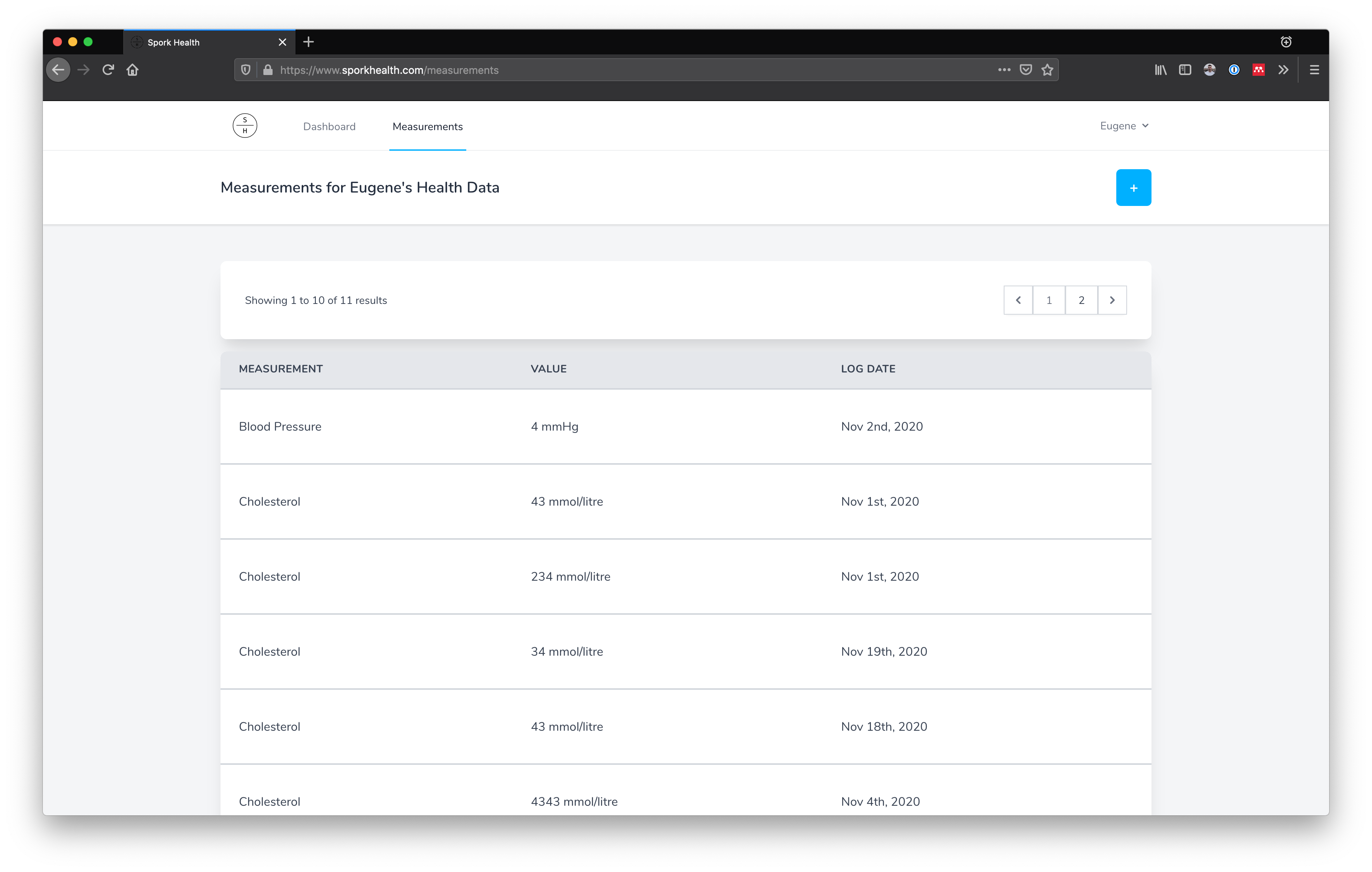
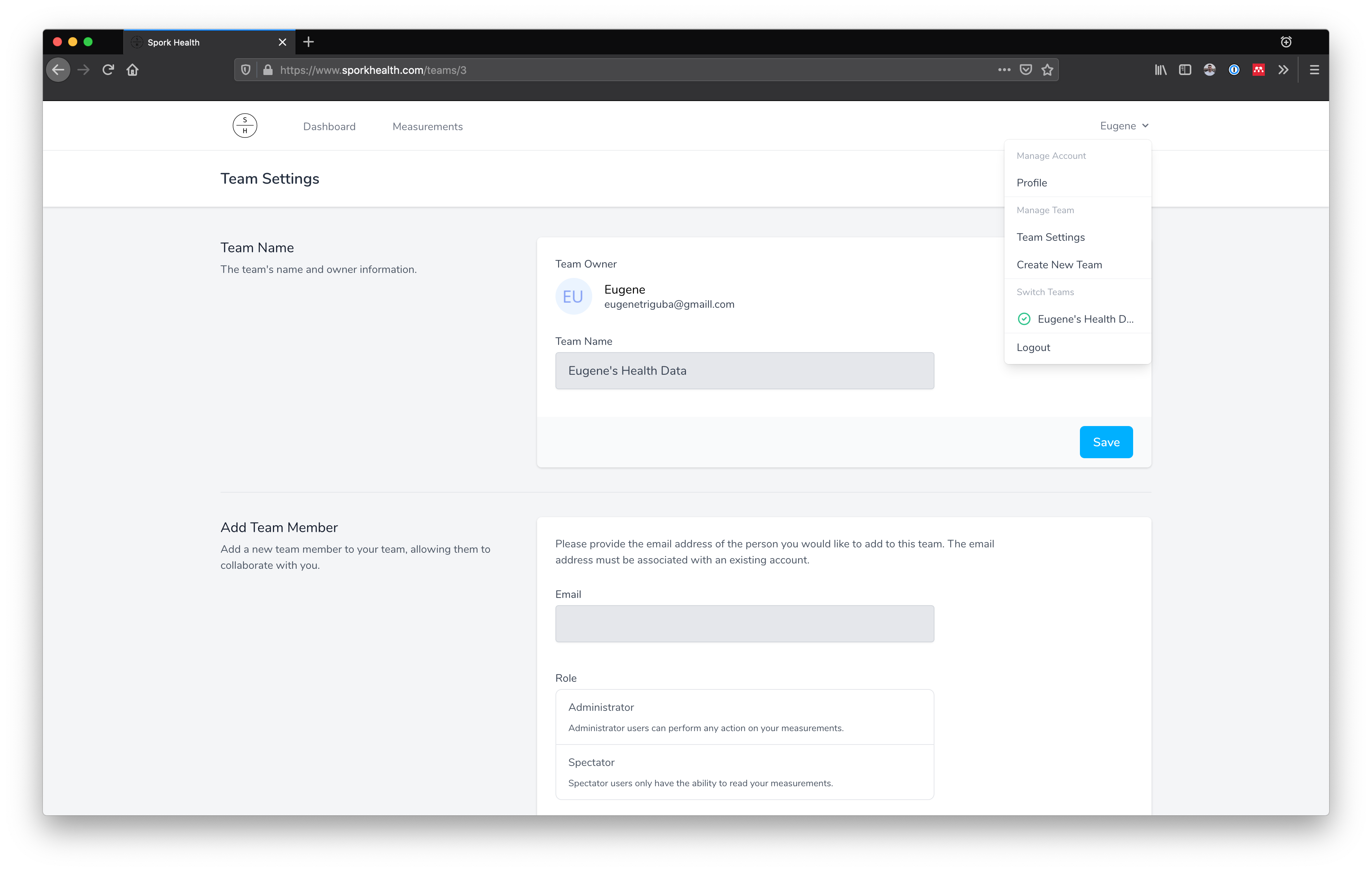
Overview of Spork Health
Since rural patients may have a hard time getting to their doctor often, we wanted a way to reduce those lengthy trips they have to make so they could get more frequent attention and care. By logging their health metrics on Spork Health or automatically sending it up through the use of a smart watch, it allows their doctor to be more aware of how they are doing health-wise which gives that doctor more information for them to have more effective remote virtual calls. While we believe this solution would be great for rural residents like Robert, it could also be great for other people in general who may want to avoid more in-person meetings in the time of COVID-19.
Prototype
The source code for the prototype is on GitHub. Furthermore, the prototype is live on a production server to play around with.
Things we'd improve for the future
- API integration with smart watches (such as Fitbit)
- Ideally, we'd like to avoid having someone to enter in all their data manually everyday. One caveat to this is that most of these smart watches are rated as "wellness" devices by the FDA and therefore, all the metrics they track may have varying degrees of accuracy. See this Stanford Medicine article for more information.
- Integration with more specialized health devices
- It'd also be nice to integrate with other more specialized devices that may be for taking blood pressure, for instance.
- More measurement types
- We only have blood pressure and cholesterol measurements as types that can be added to the log of measurements since our primary focus was just on our User Persona, Robert, and his goal. However, it would be nice to expand that list to make it more generally useful.
- Data visualization
- There is a "Dashboard" page for the app where we hoped to have some summary statistics about the metrics that are being tracked and ways to visualize the data to more easily get an overview.
- Alerts for Robert/his doctor for if the measurements are trending in a negative way or if they are abnormal in some way.
- More flexibility for each measurement. Right now, it is just a measurement type and a numeric value for each one. However, for something like taking a blood pressure measurement, it is usually expressed with two numbers such as 120/80 to refer to the systolic and diastolic pressure.
- Health logs
- While things such as the raw health measurements gives the doctor the objective side of a patients well-being, it is also nice to get a more subjective "how am I feeling" day-to-day log for a fuller picture. This also opens up the possibly for comments on those logs where their doctor may inquire more.
Challenges we ran into
The main challenges we ran into was the time constraint of development in 2 weeks on top of our school, work, and extracurricular activity schedules. Furthermore, there is also the challenge of hardware. We're supplying the software solution, but it requires some hardware on the users end.
Technologies Used
The prototype was developed using PHP and a web framework called Laravel.
A notable exclusion to this is that we did not use the EMR API. The reasoning for that was mainly because we didn't see a fit for it. Our solution was more about Robert tracking his own health metrics and pulling data off of those devices he is using. If we were able to then push those metrics back up to the EMR API, that could potentially avoid having the doctor need an account on Spork Health. However, for the actions the EMR API offered, it was mainly reading information from it rather than pushing information up to it.
We also did not use any datasets. However, there could potentially be some interesting machine learning related features here if we did where we could alert Robert or the primary care doctor if the metrics he is tracking are trending in a negative direction or are abnormal in some way to ensure those things are spotted and handled in a timely manner if it is detected that it may lead to something serious.


Log in or sign up for Devpost to join the conversation.