
Inspiration
The inspiration for our project came from the struggles that small business owners face in finding reliable sponsors. Many entrepreneurs have brilliant ideas but often lack the connections or resources to secure funding or support.
We noticed that even though sponsorship opportunities exist, there is no easy way for business owners to discover or reach out to potential sponsors who align with their goals. This disconnect motivated us to create a platform that simplifies and accelerates this process.
What it does
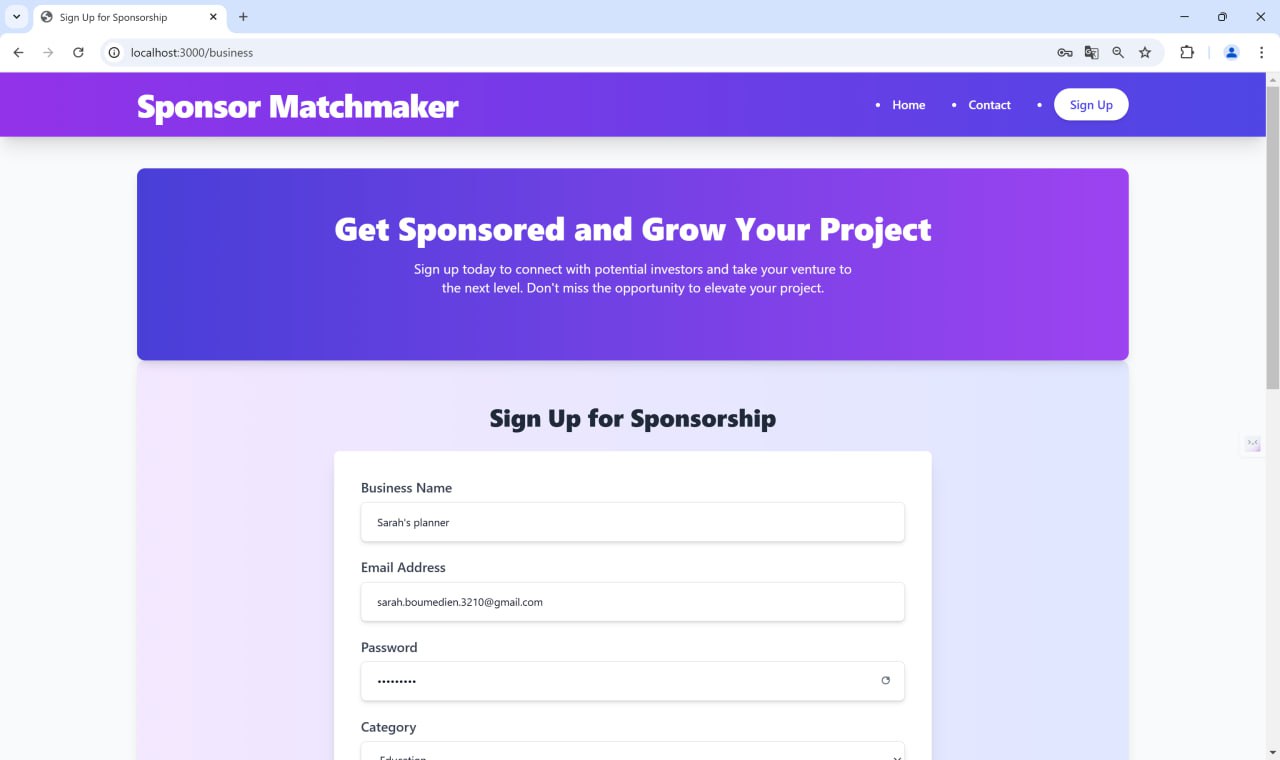
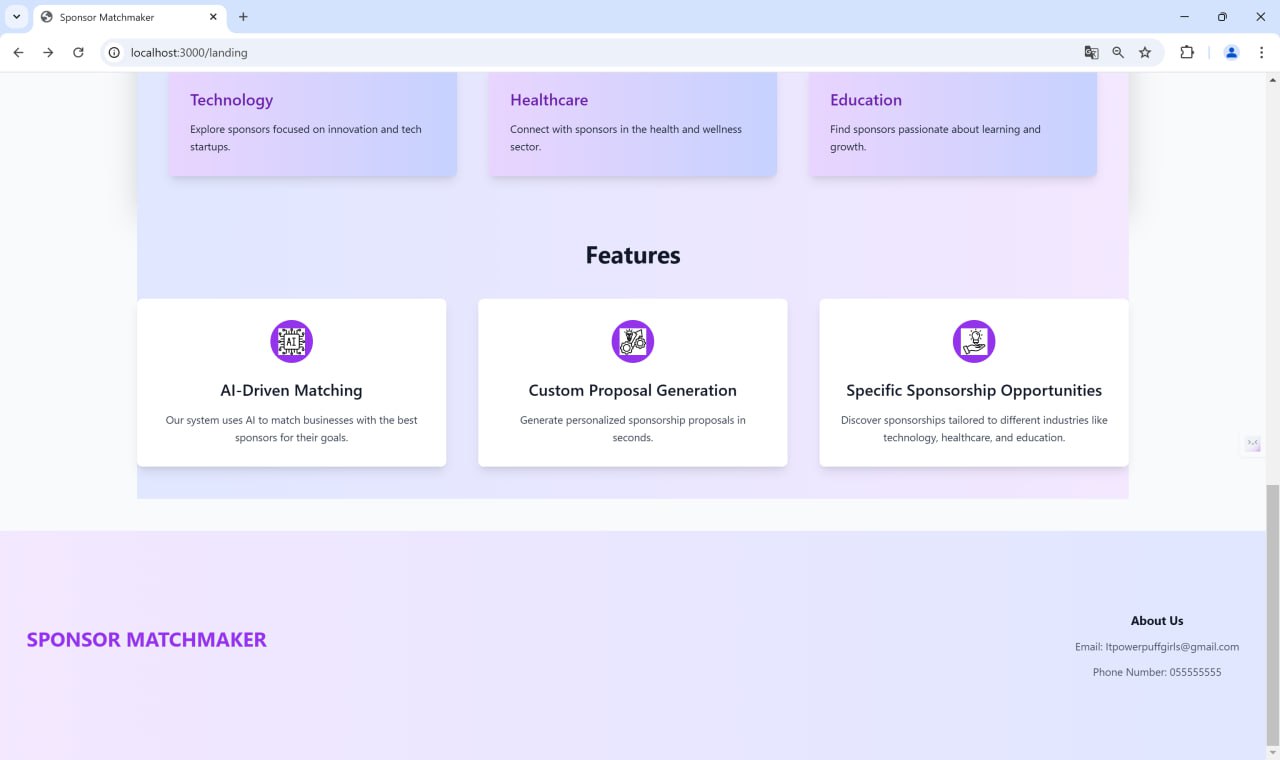
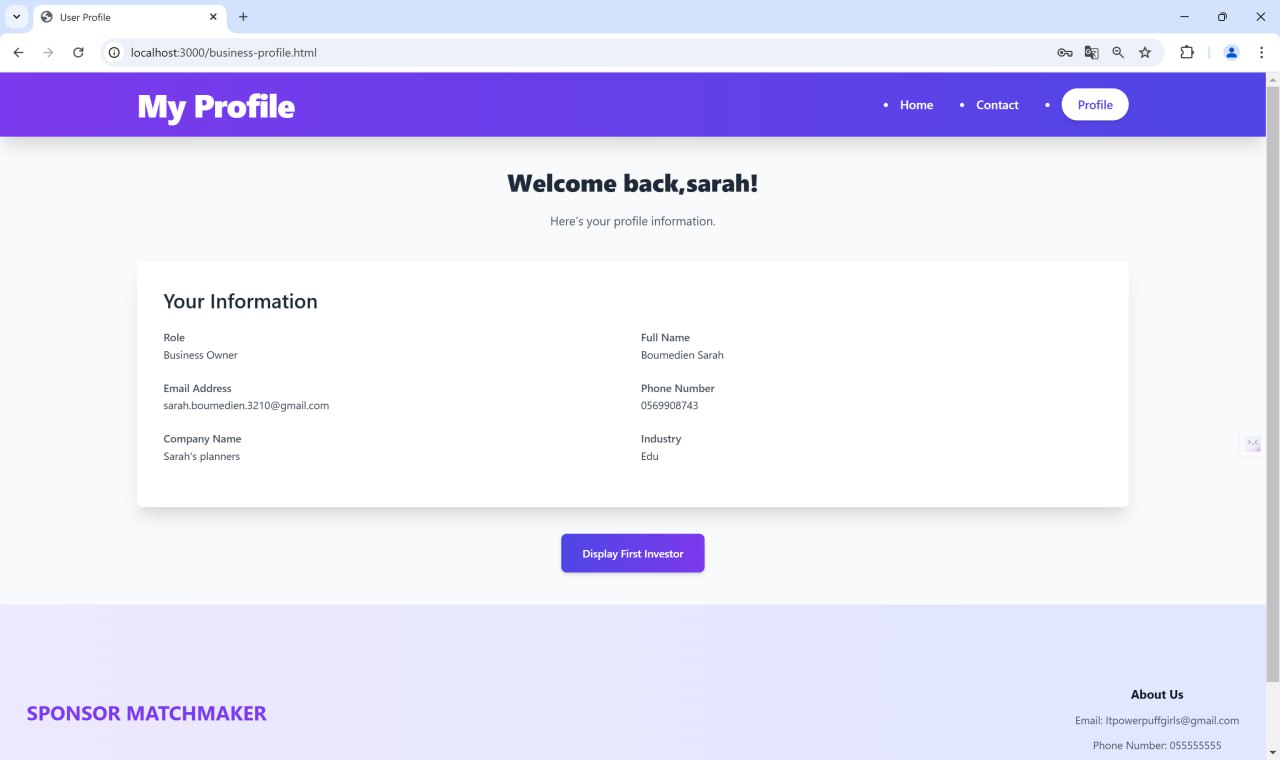
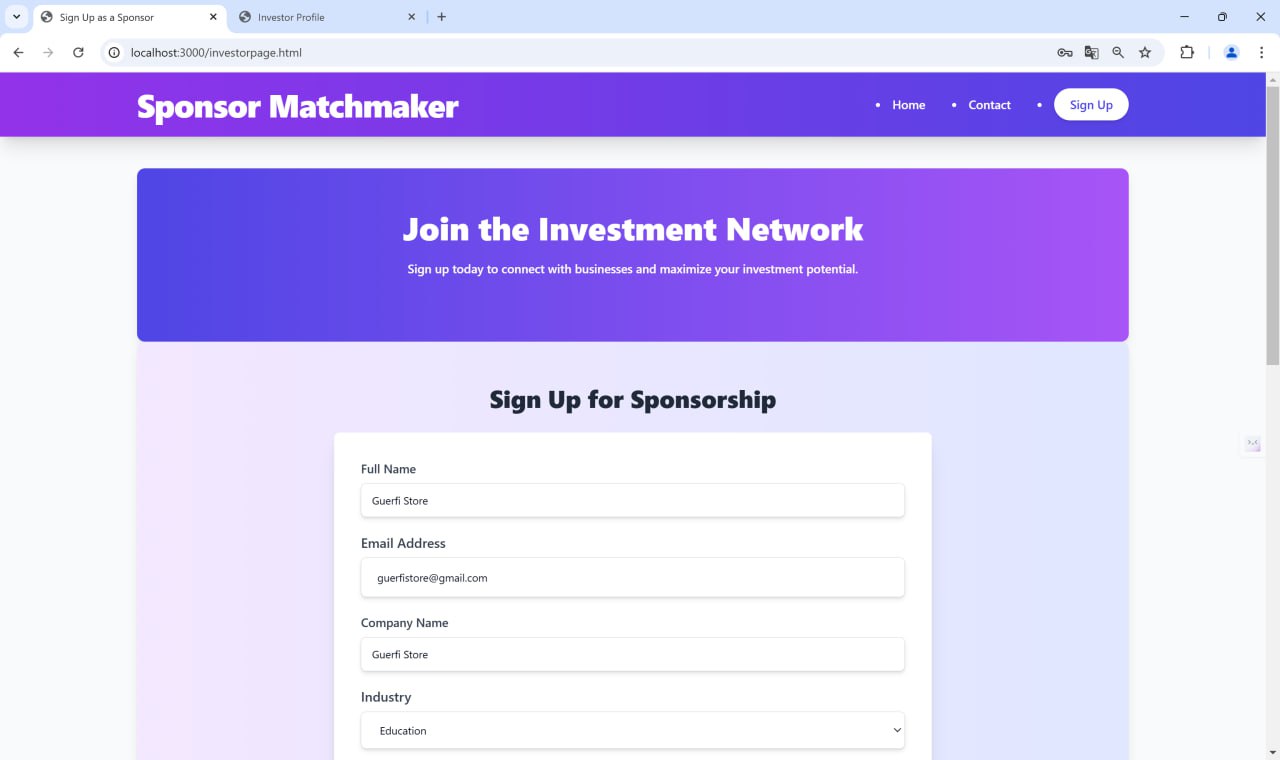
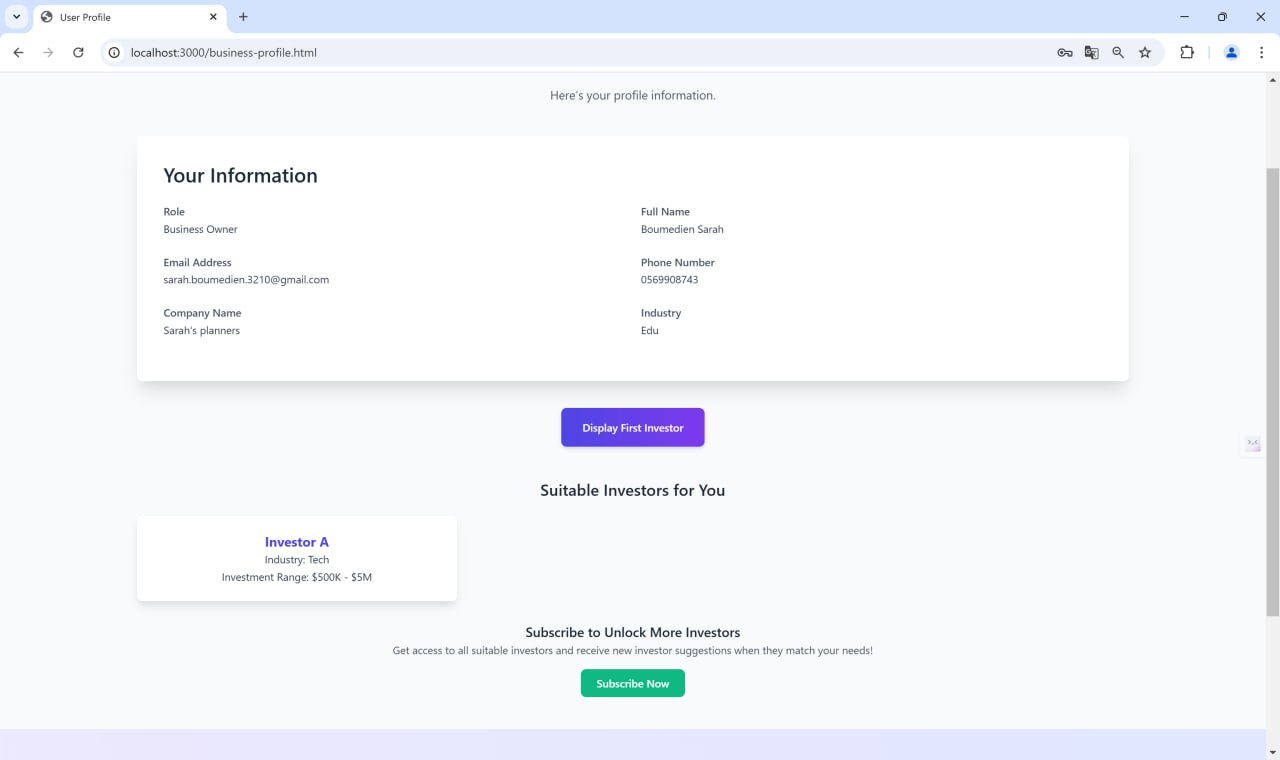
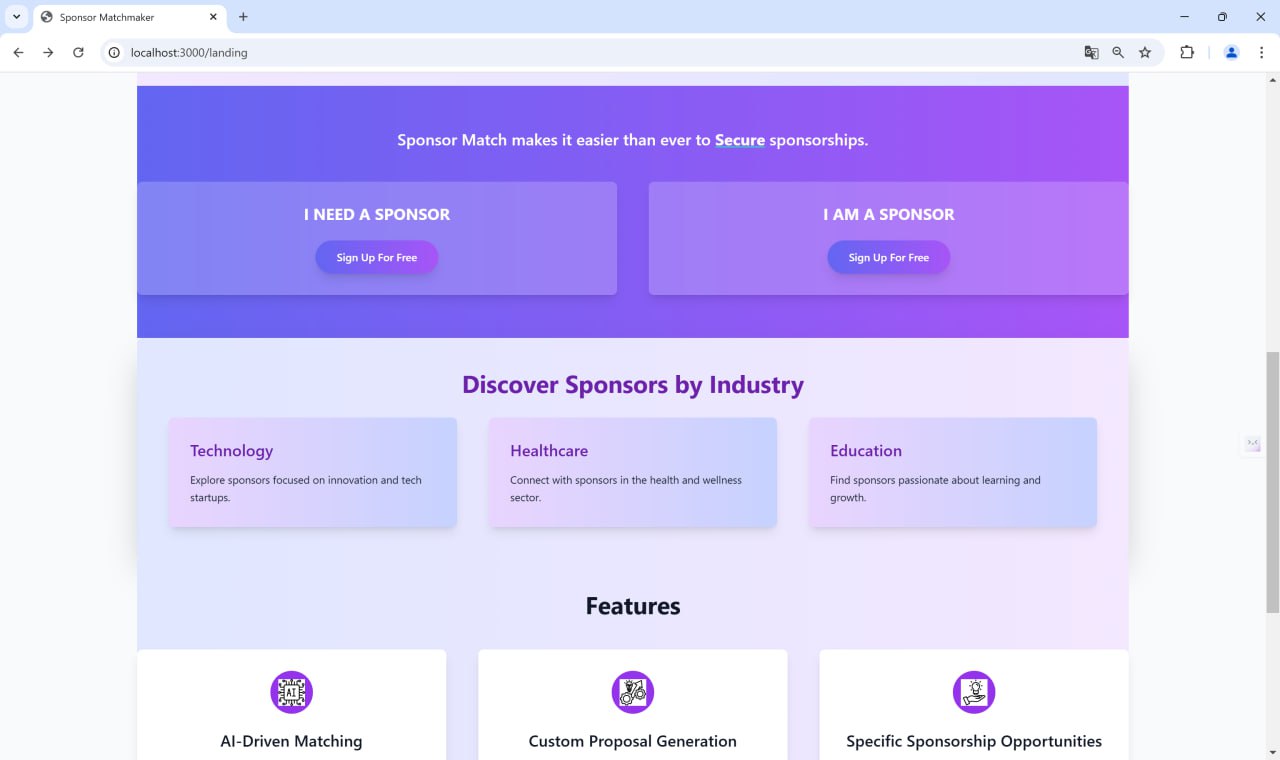
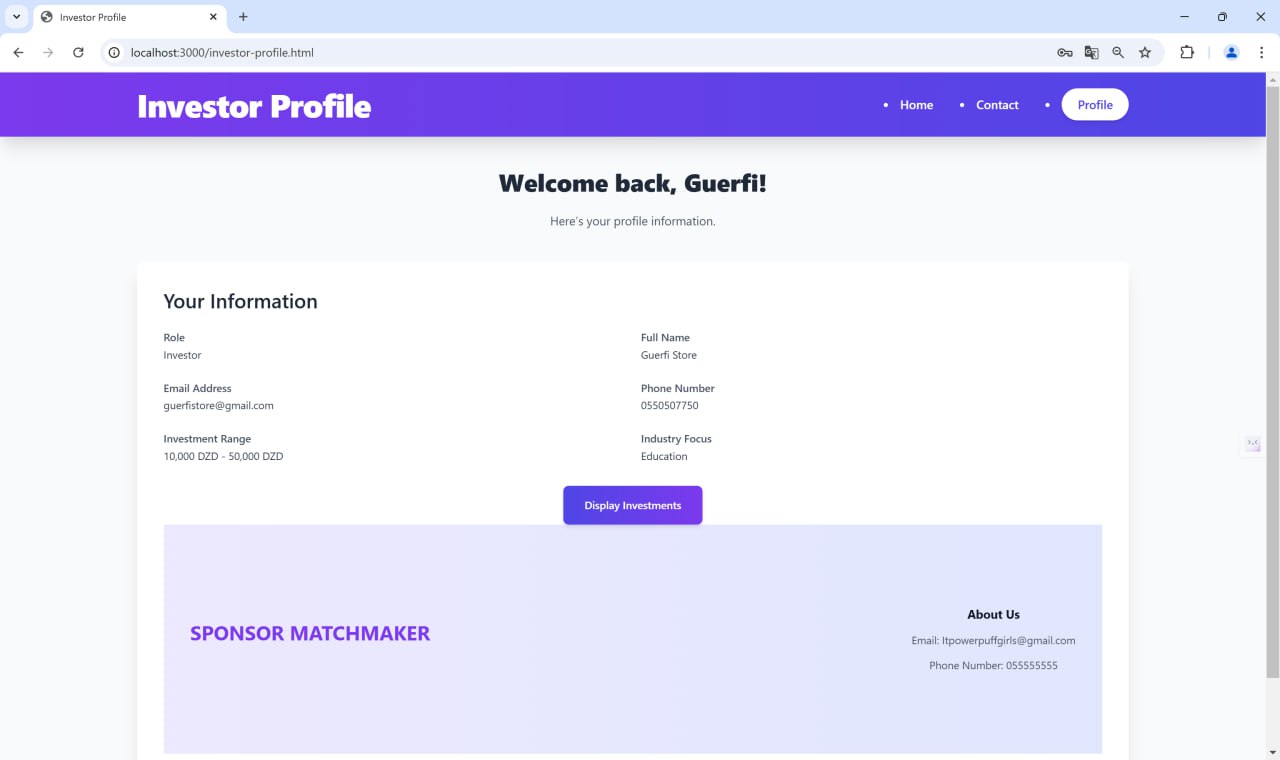
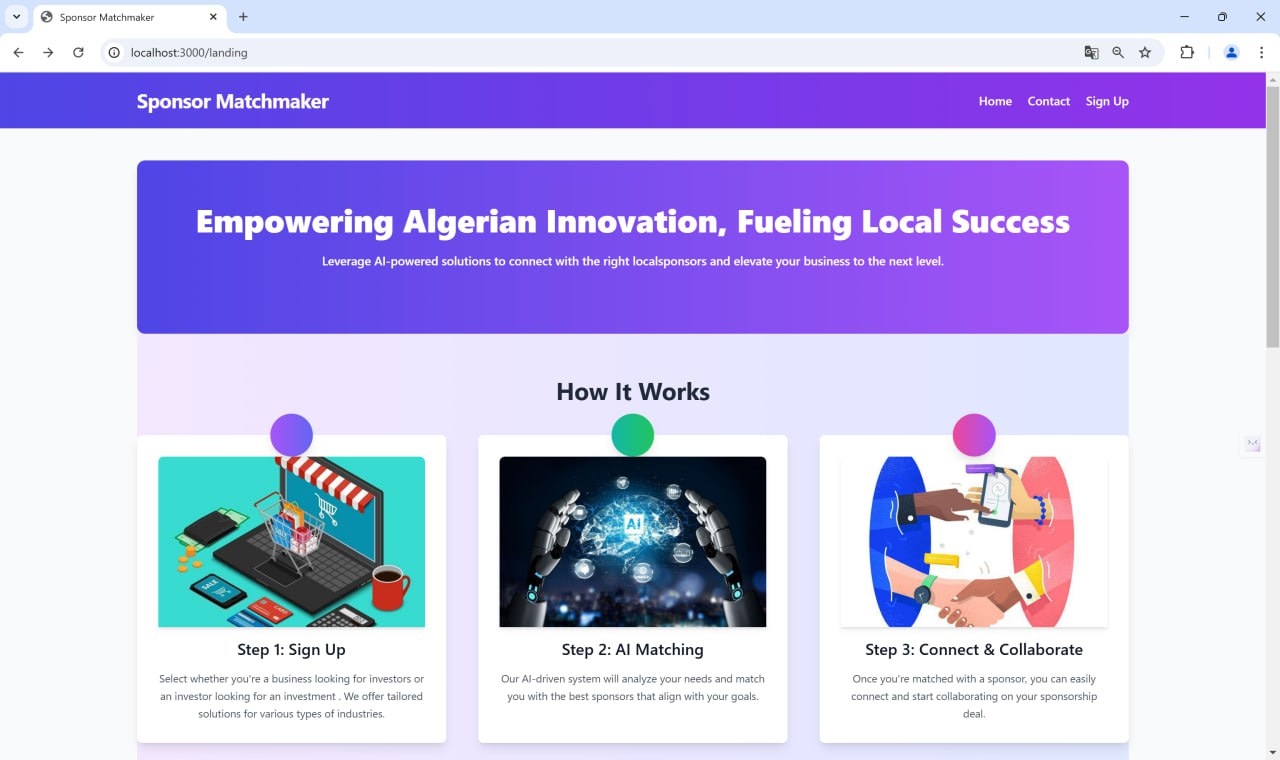
The Sponsor Matching Platform helps small business owners find and connect with suitable sponsors. Here's how it works:
- AI-Powered Matching:
- Using a AI, the platform matches businesses with sponsors based on compatibility.
- Factors such as the business's goals, industry, and location are analyzed to recommend the best sponsorship opportunities.
- Using a AI, the platform matches businesses with sponsors based on compatibility.
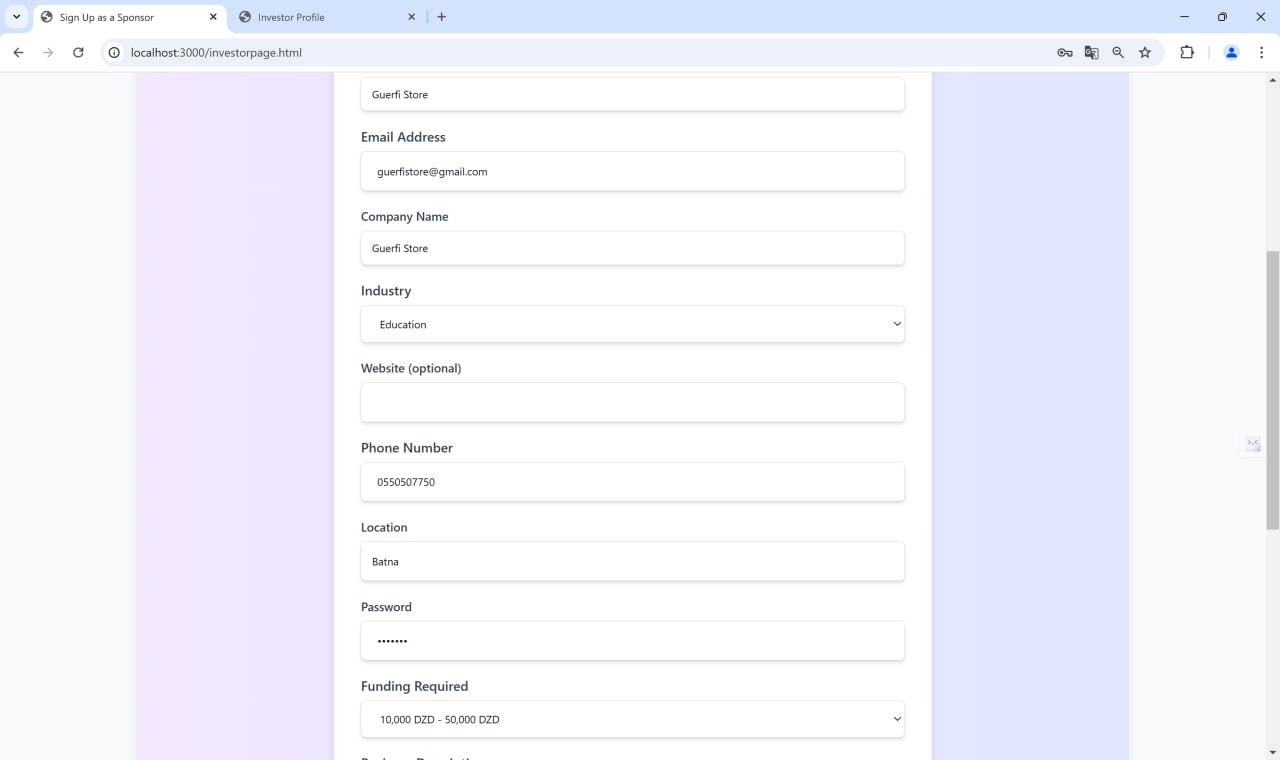
- Sponsor Profiles:
- Each sponsor has a detailed profile showcasing their sponsorship history, supported industries, and contact information.
- This helps businesses make informed decisions before reaching out.
By integrating these functionalities, the platform saves time, reduces frustration, and empowers small businesses to grow by making sponsorship opportunities accessible and personalized.
## How we built it
Building the Sponsor Matching Platform required a combination of planning, teamwork, and technical implementation. Here's how we approached it :
### 1. Research and Ideation
- Each sponsor has a detailed profile showcasing their sponsorship history, supported industries, and contact information.
- We began by understanding the challenges small business owners face in finding sponsors.
- Conducted research on existing sponsorship platforms and identified the gaps we wanted to address.
- Brainstormed the core features of the platform, focusing on an AI-powered matching system
### 2. Roadmap and Team Roles
- Created a roadmap to outline the development phases and prioritize tasks.
- Divided responsibilities among the four team members:
- AI Integration: Handling AI and ensuring accurate matching.
- Backend Development: Building the server and database for data handling.
- Frontend Development: Designing the user interface.
- UI/UX Design: Creating a user-friendly layout and intuitive navigation.
### 3. Backend Development
- AI Integration: Handling AI and ensuring accurate matching.
- Used Express.js to create the server-side backend for handling requests and communicating with the database.
- Designed a non-relational database to store business profiles, sponsor information, and AI-generated matches.
### 4. AI Integration - Integrated gemini API to analyze data and recommend sponsor matches based on user input (e.g., business type, location, ...).
- Set up a workflow to extract and process data directly from the database without relying on external text files.
- Fine-tuned the integration to ensure accurate, relevant recommendations.
### 5. Frontend Development - Built the user interface with a clean and responsive design, making it easy to navigate on both desktop and mobile devices.
### Tools and Technologies Used - Backend: Express.js, Node.js
- Frontend: html , css , javascript
- Database: MongoDB for storing and retrieving data
- AI Integration: gemini API for sponsor matching
- Version Control: GitHub for collaboration and version control
This structured approach allowed us to combine our technical skills and creativity to deliver a meaningful solution.
## Challenges we ran into While building the Sponsor Matching Platform, we faced some significant challenges related to AI model selection and integration ### 1. Choosing the Right AI Model - Selecting the most suitable AI model for sponsor matching was a major obstacle. We needed a model that could accurately process and match business data with sponsors based on multiple criteria such as industry, goals, and location.
### 2. Integration of the AI and other comonents - Integrating the chosen AI model into our backend system and linking the database proved to be a complex task. The AI model needed to interact seamlessly with our database and user interface
### 3. Time Management
- Balancing hachathon time with the demands of this project was a major challenge.
These challenges were tough but crucial to our project's success. By carefully selecting the right AI model and ensuring seamless integration, we were able to create a platform that truly met the needs of small business owners and sponsors.
## Accomplishments that we're proud of We are extremely proud of what we’ve achieved, especially considering this was our first hackathon experience. As beginners in the web development and AI field, we had limited prior knowledge, but through dedication and teamwork, we were able to bring our ideas to life.
One of the accomplishments we’re most proud of is the brilliant idea we came up with—creating a platform to help small businesses connect with potential sponsors. This idea is not only innovative but also very important for boosting business in Algeria. By developing a tool that simplifies and personalizes the sponsorship process, we are empowering local entrepreneurs and supporting the growth of the business ecosystem.
## What we learned Throughout the development of our Sponsor Matching Platform, we gained valuable knowledge and skills, both technical and collaborative. Here’s what we learned from this experience: ### 1. The Importance of Idea Validation - Lesson: A good idea is the foundation of any successful project. We learned that validating our concept early on by researching the needs of small business owners and sponsors was crucial in shaping the platform’s direction. It ensured we were addressing real pain points and not just building for the sake of building.
### 2. Web Development Fundamentals - Lesson: As beginners in web development, we gained hands-on experience with Express.js, frontend frameworks, and API integrations. This experience deepened our understanding of both backend and frontend development and taught us how to build a functional, interactive platform.
### 3. Teamwork and Collaboration - Lesson: Working on a hackathon project as a team taught us the importance of clear communication, task delegation, and collaboration. We learned how to divide the work efficiently, track progress, and support one another through challenges. We also discovered that open communication and regular check-ins are key to staying on track.
### 4. User-Centered Design - Lesson: We realized the importance of creating a user-friendly interface that is intuitive and accessible. During the development
## What's next for Sponsors Match Maker
Our journey with Sponsor Match Maker is just beginning. Now that we've developed the platform prototype, our goal is to take it beyond this initial stage and turn it into a fully functional, impactful project. Here’s what we envision for the future: ### 1. Refining and Expanding Features - Next Steps: We will focus on improving the platform’s functionality based on user feedback and further testing. This includes adding more sophisticated AI capabilities, such as more precise matching algorithms and additional sponsor filtering options.
- We also plan to introduce new features like automated sponsorship proposals, real-time notifications for businesses about potential sponsors, and detailed analytics for users to track their sponsor interactions.
### 2. Scaling the Platform
- Next Steps: To ensure the platform can support a larger user base, we’ll work on scaling the backend infrastructure. This will involve optimizing database queries, improving the system’s performance, and ensuring the platform can handle high traffic volumes without issues.
- We will also expand the geographical coverage to include more regions of Algeria and eventually beyond, allowing businesses in different areas to connect with relevant sponsors.
### 3. Building Partnerships with Local Sponsors
- Next Steps: We plan to actively partner with Algerian sponsors from various industries to ensure a wide range of sponsorship opportunities for businesses. We aim to establish relationships with both large organizations and local small businesses that want to contribute to the growth of the ecosystem.
- Outreach efforts will include attending business conferences, networking events, and collaborating with government bodies that support entrepreneurship in Algeria.
### 4. Marketing and Awareness Campaigns
- Next Steps: Raising awareness of the platform is essential for its success. We’ll launch a marketing campaign targeting small business owners across Algeria, highlighting the benefits of the platform and showcasing success stories of businesses that secured sponsorships.
- We will use social media, content marketing, and partnerships with local organizations to spread the word and encourage sign-ups.
### 5. Real-World Impact
- Next Steps: Ultimately, our mission is to create real impact by helping small businesses in Algeria grow and thrive. By connecting them with the right sponsors, we can empower entrepreneurs, support job creation, and contribute to the overall economic development of the country. We want the platform to become a key tool for boosting Algerian businesses and building a stronger entrepreneurial ecosystem.
The journey ahead is challenging, but we’re excited about the potential to turn Sponsor Match Maker into a real and influential platform in Algeria. Our vision is to make it not only a business tool but also a catalyst for change, innovation, and growth in the local business landscape.
