Inspiration
AI made everyone a builder. It made no one a distributor. The entries in this competition make the pattern visible: many products work, yet distribution remains the bottleneck.
Uganda has capable people who can sell and support software, with no structured way to prove they understand a product before a Builder trusts them.
Spondea puts those shortages against each other. AI is what makes the middle affordable - the training, examining, quality control and coordination that would otherwise need managers nobody can pay for yet.
What it does
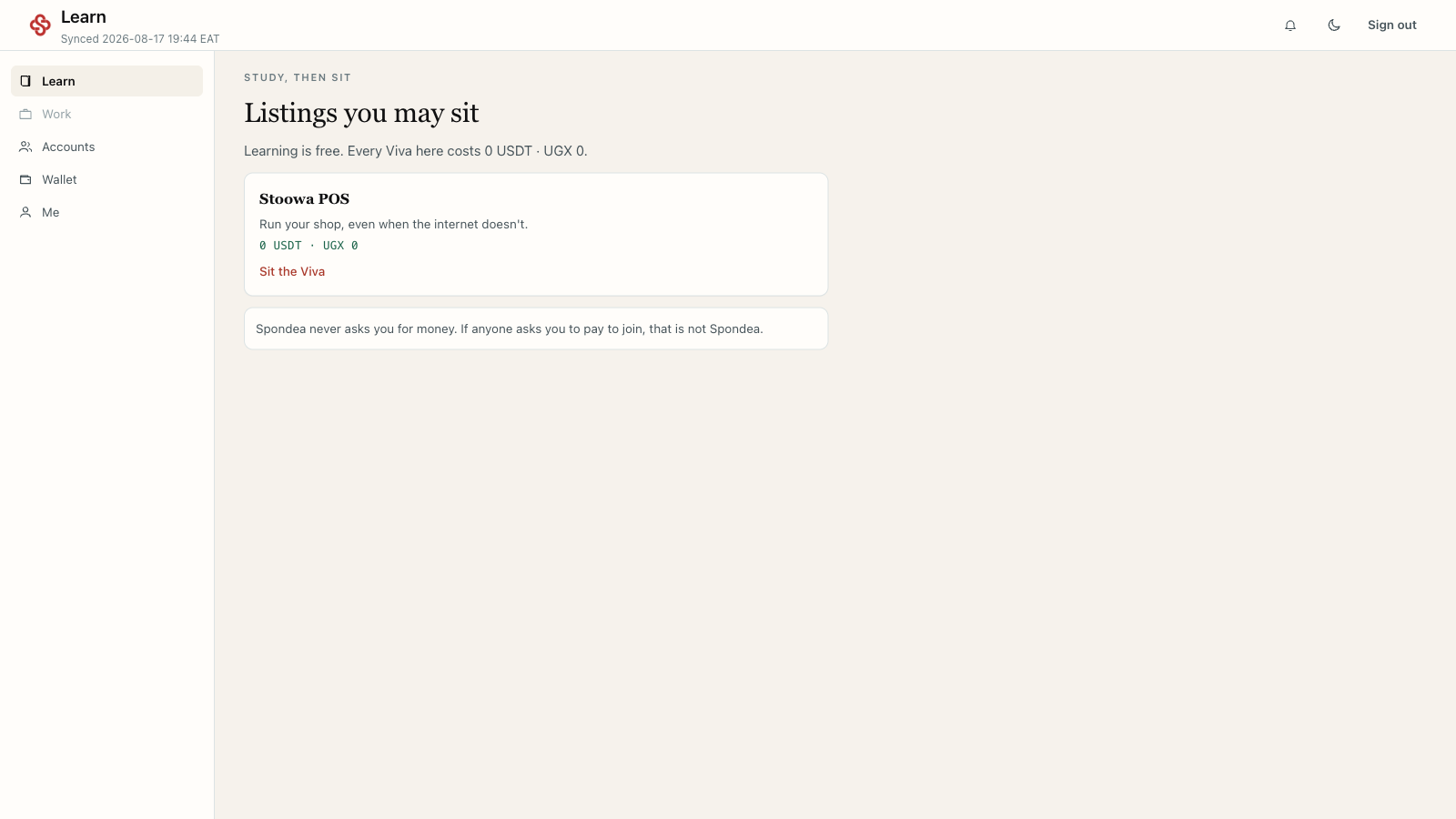
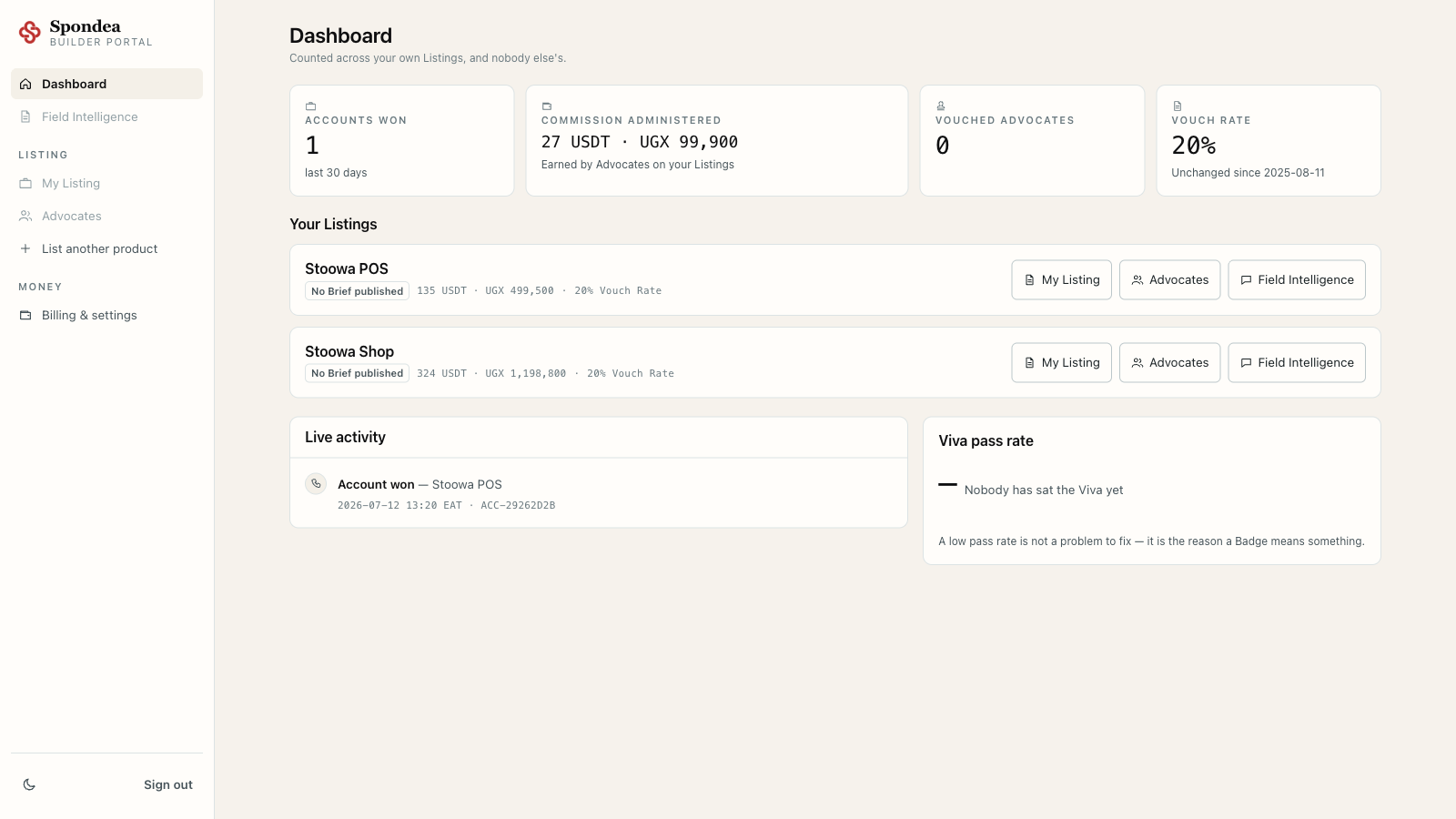
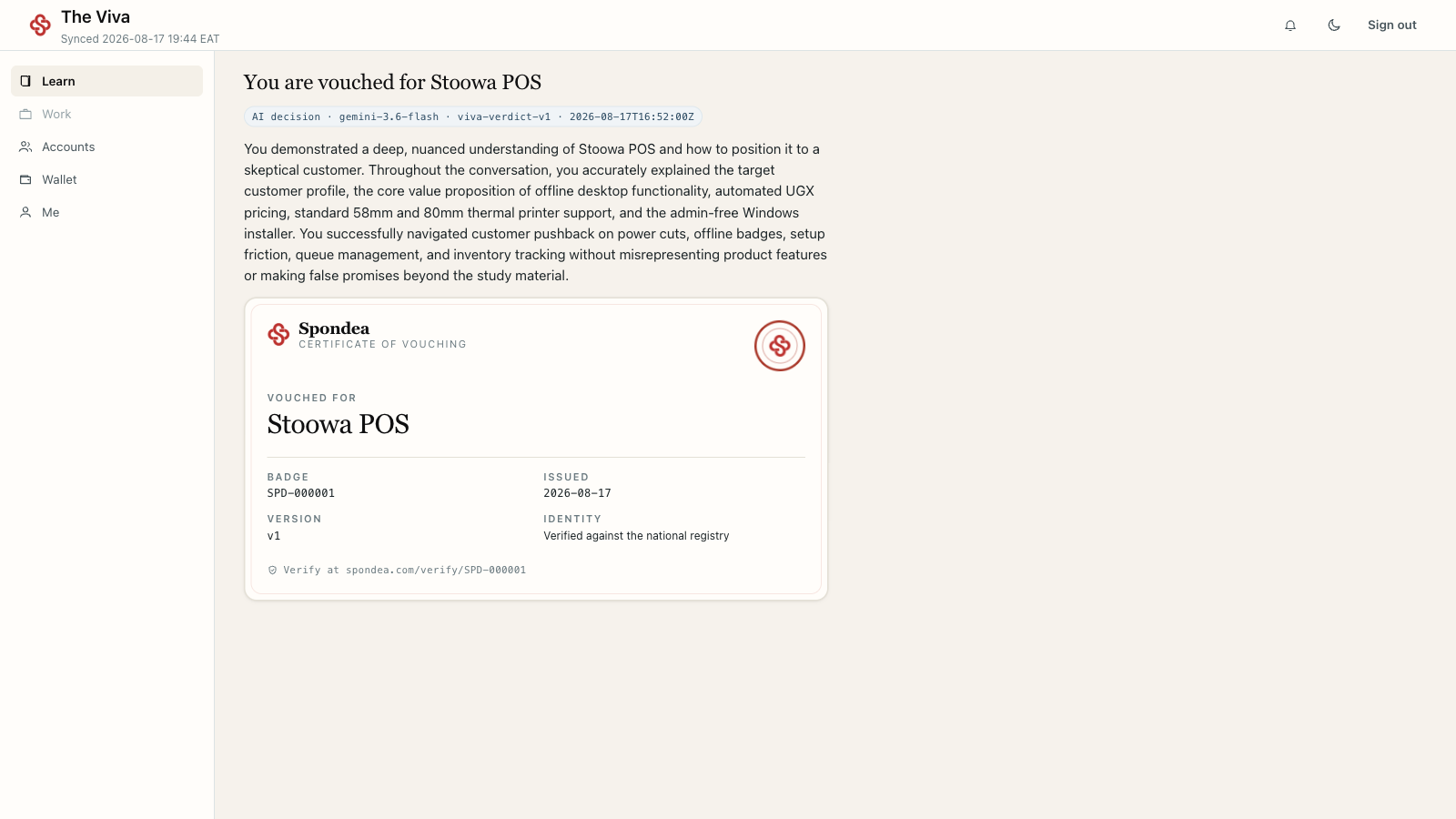
A Builder lists a product and sets a Vouch Rate - the share of a sale that goes to the Advocate who wins and services the Account. An Advocate studies any Listing free: no account, no fee, no identity check. They sit the Viva, a Socratic oral-style examination on that specific product, where Gemini generates each question from the published brief and from what the candidate just said - there is no question bank to memorise. Pass it, verify identity, and a Badge issues for that one Listing.
They then log an Intro - first genuine contact with a prospect, in their own words, stamped with the server's clock, so the claim exists before the sale does. That record, never a last click, decides who earns. Won business becomes an Account; the Ledger settles it.
Commission is flat and one-hop: one Builder-set rate, one recipient. Nobody pays anything to join, and no earning is gated on how many people you brought in - the calculation has no term that can reference a count of participants. Recurring Streams follow an account being maintained, capped at 24 periods by a database constraint rather than a promise.
How we built it
A Turborepo monorepo - Astro site, Rails 8 core, SvelteKit Advocate app and
Builder portal - built to a 360px baseline, because the target device is a
low-end Android on data paid for by the megabyte. Google Cloud runs it: one
Compute Engine e2-small in africa-south1, the closest region to Kampala,
deployed with Kamal alongside Postgres, Cloud Logging and Monitoring.
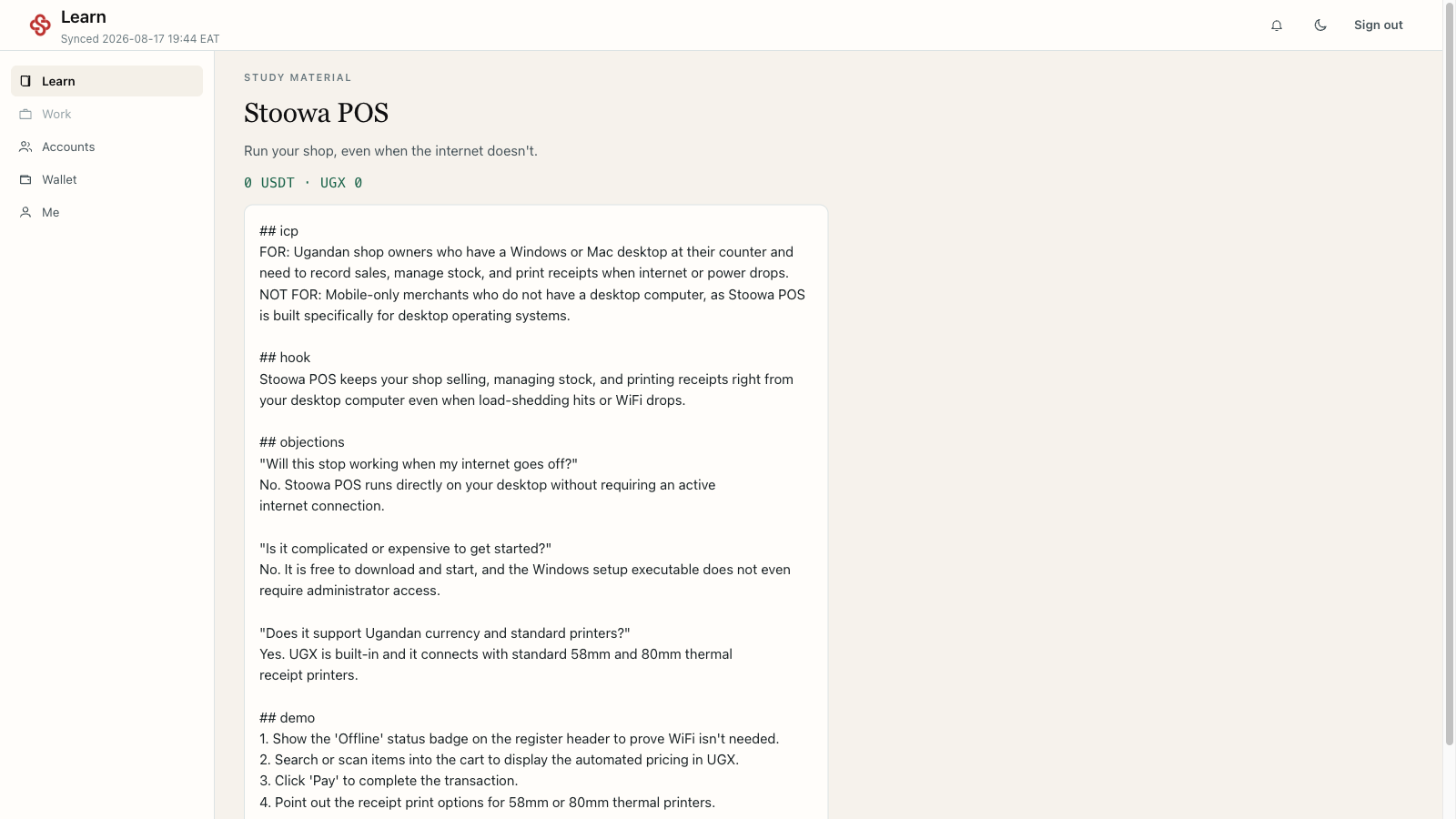
Gemini is the operating layer, not a feature. It reads a Builder's product
and drafts the sales brief; it examines candidates; it recommends payouts
and Trainer promotions; it synthesises what Advocates hear in the field back to
the Builder. Every call asks for structured output against a supplied JSON
schema - a model that free-texts its verdict is a model whose decision cannot be
checked. Every call is written to an append-only gemini_calls table before
the answer is handed back, so a refused call leaves the same evidence a
successful one does.
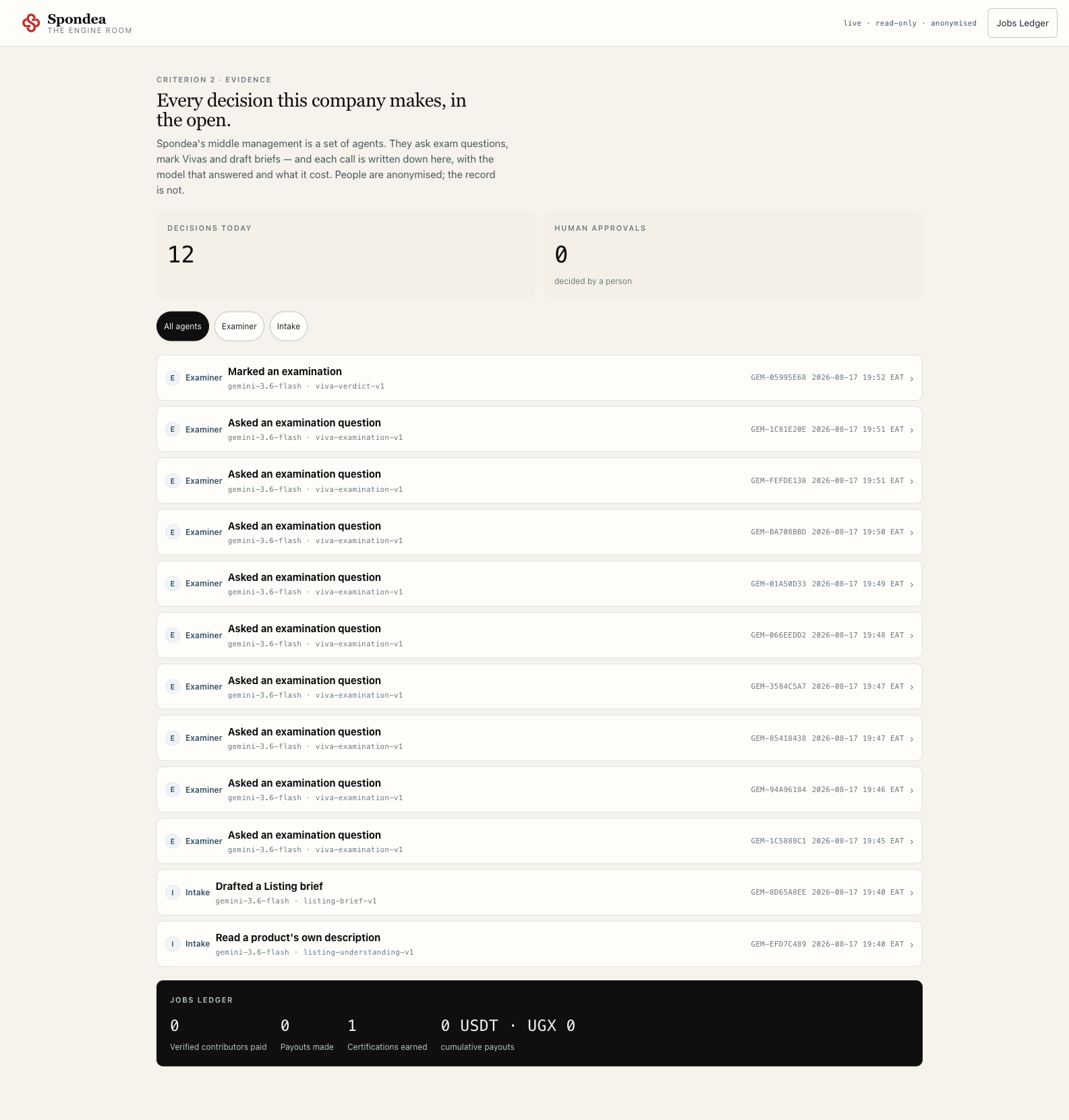
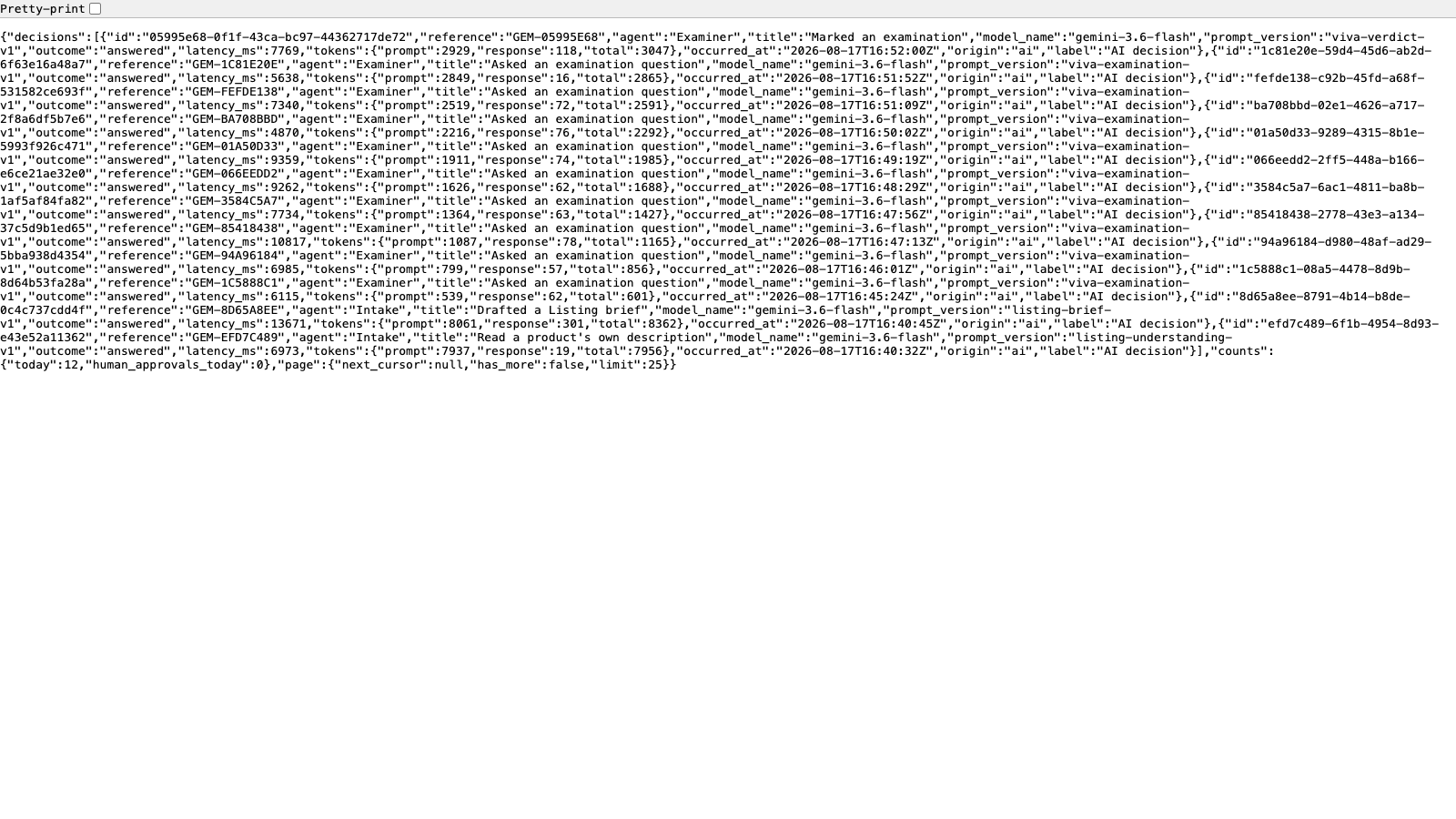
Those rows are public at api.spondea.com/api/v1/evidence/decisions: model
name, prompt version, token counts, per decision, with no login.
The examiner can say no, and does. In a rehearsal sitting on a development machine - not the production journal - it failed the founder, quoting three specific gaps against specific exchanges and catching a claim about the product that contradicted the brief it had drafted. A certification nobody can fail is not a certification.
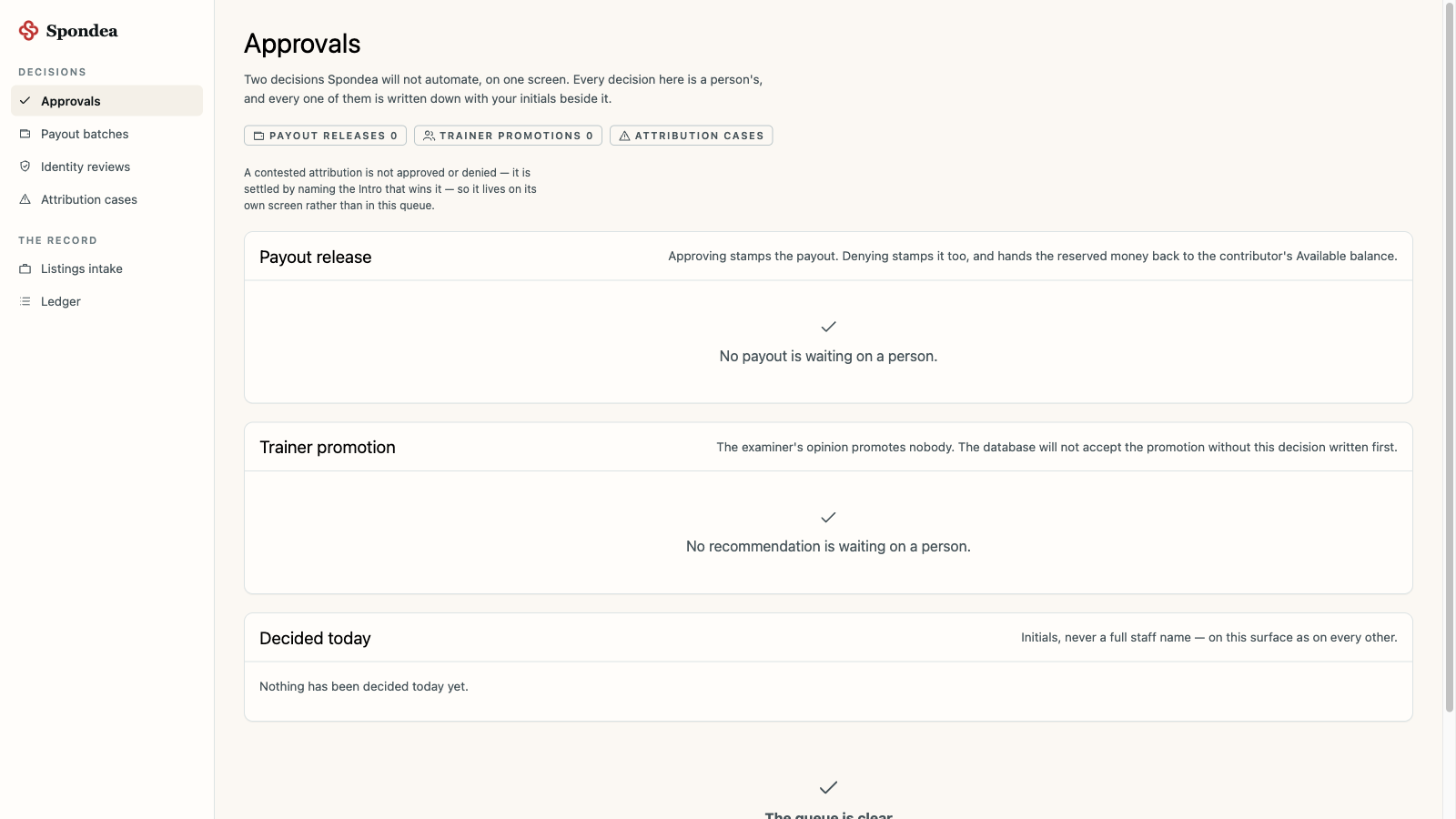
Two things are deliberately unreachable from any automated path. Payout release and Trainer promotion are refused by the database itself unless an approval naming a member of staff exists. Gemini may attach a recommendation; it can never satisfy the gate.
Challenges
The honest one is revenue. Paying Builders to date: zero. The public counters state zero explicitly, including "0 payouts recorded". Building the evidence infrastructure before having the revenue to display was a choice: the Ledger, the public decision journal and the human gates are the expensive part, and they are what make a number believable later.
The rail is USDT over TRC-20 both directions. The disbursement adapter is registered and the payee check is real - it reads the legal name identity review confirmed, and refuses a release to anyone it has not verified. What is missing is not the machinery but the money: nobody has paid Spondea anything, so no payout has been requested and the approval queue is empty. That queue is where a human decides, and we would rather show it empty than put a settlement through it that no customer ever funded.
Accomplishments
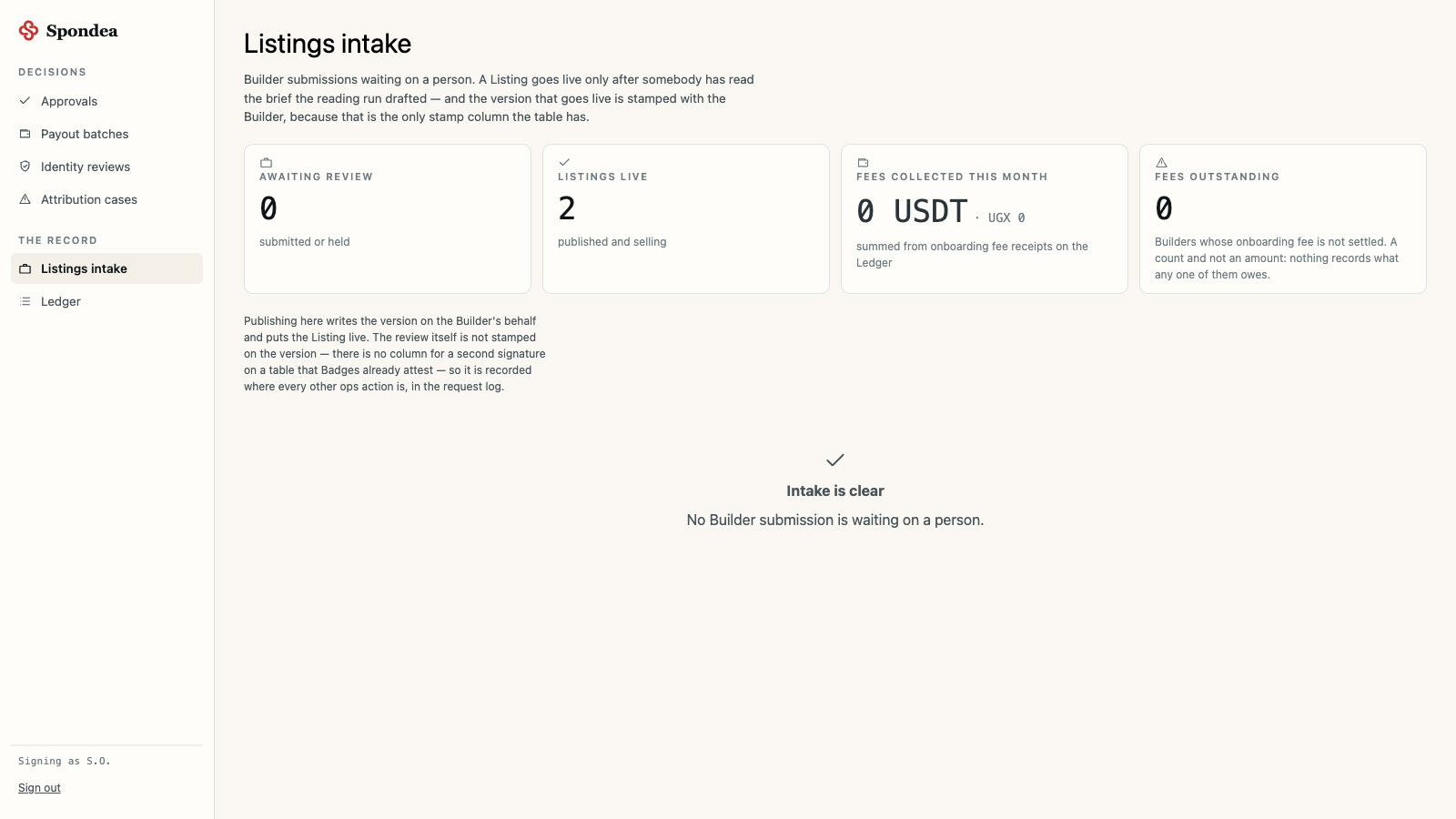
A working chain, in production, with nothing stubbed: a product listed, read by Gemini, published through a human gate, examined, and certified - 12 decisions logged, 1 Viva sat, 1 Badge issued - all publicly auditable.
To be exact: this is a founder-driven demonstration, not organic third-party usage - the human answering the examination is us. What is real is everything on the machine's side of the line. Gemini read the product's live site, drafted the brief, generated each question from the candidate's previous answer, and returned the verdict; every one of those calls is journaled at a public URL with its model and prompt version. This is the exact path a Ugandan Advocate walks, and what you see is the AI running it for real.
What we learned
Building the audit surface first changed what we were willing to ship. Several times the honest answer was to show a zero.
What's next
The falsification test is 10 paying Builders, written down in advance so it can fail honestly. The next run of this chain has a third party on the candidate's side of the examination; that is the difference between a demonstration and a business, and we would rather name the gap than dress it.
Uganda first because it is the hardest version of the problem - a distribution layer that works on a 360px phone on metered data works anywhere.
Built With
- astro
- cloud
- compute
- gemini
- kamal
- postgresql
- ruby
- sveltekit
- tron
- usdt

Log in or sign up for Devpost to join the conversation.