-
-
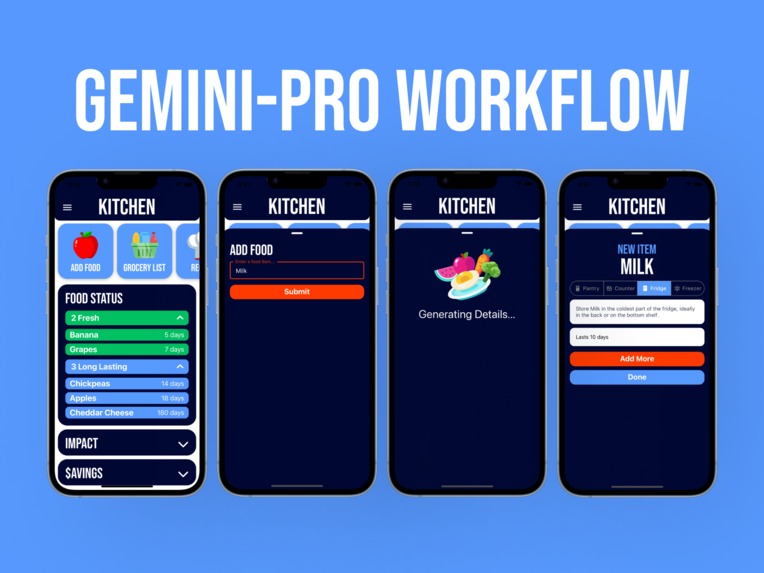
Gemini-pro workflow
-
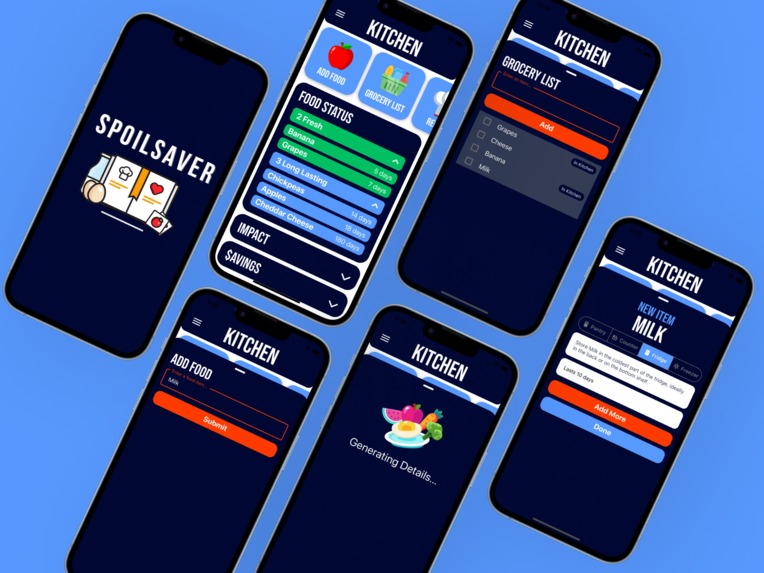
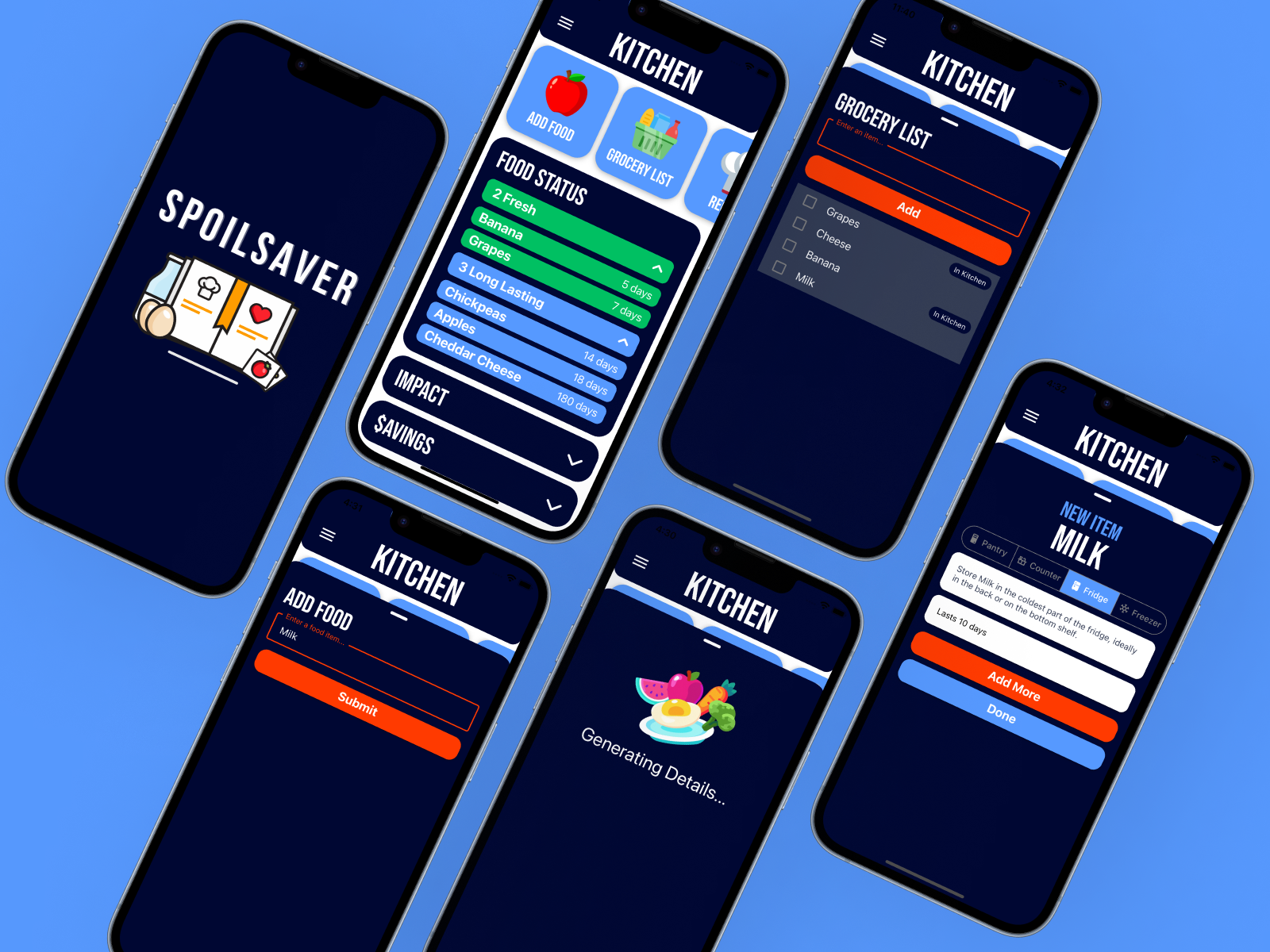
Overview of our app screens
-
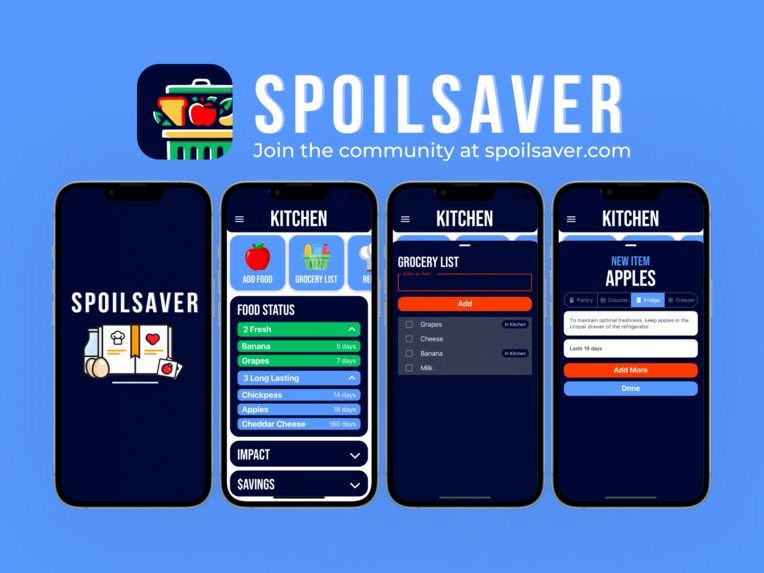
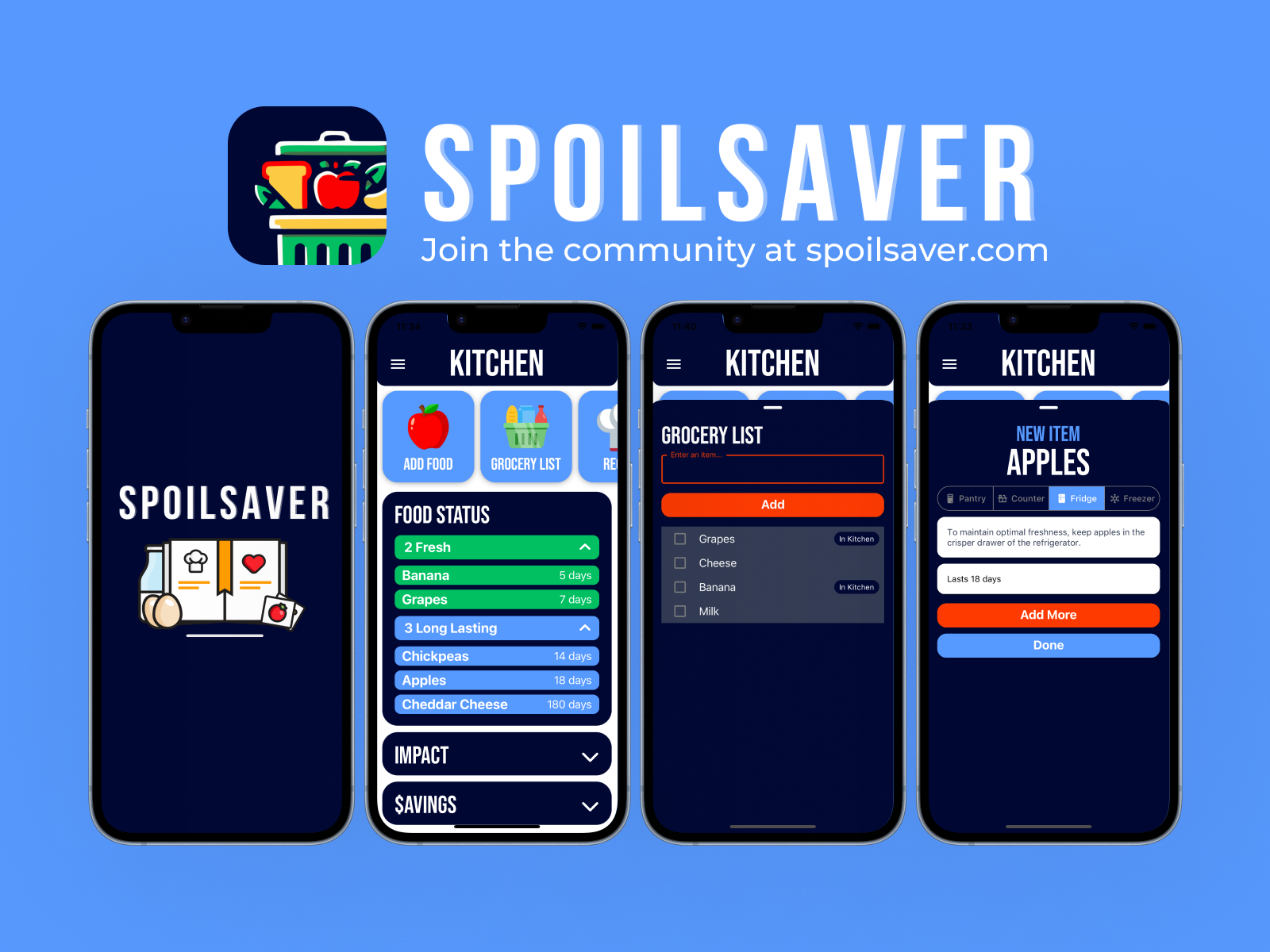
Promotional App Ad
Inspiration
The idea for SpoilSaver emerged from our own experiences with food waste and sustainability. As a consumer, I was constantly throwing away expired food items, and I realized that I wasn’t alone. Millions of people face the same challenge, with food waste being a significant contributor to environmental issues. According to studies, around one-third of the food produced globally is wasted every year, leading to unnecessary environmental strain.
I wanted to create a solution that would help individuals manage food more effectively, reduce waste, and ultimately save money. With our background in technology, we saw the potential to leverage the Gemini-pro model to build a mobile tool that could provide personalized, actionable insights for smarter food management.
What it does
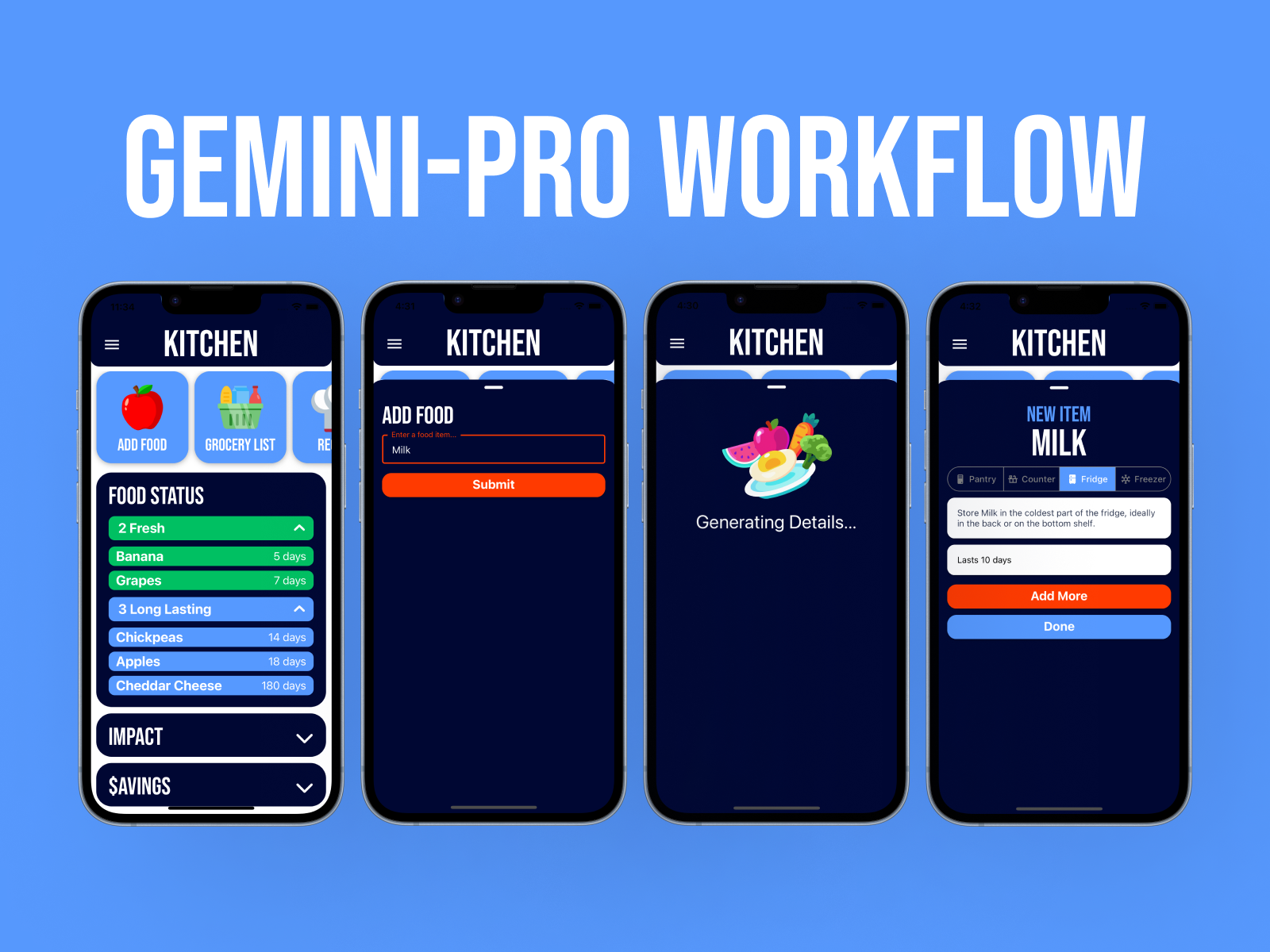
SpoilSaver is an AI-powered mobile app designed to help individuals reduce food waste and save money. It offers a suite of features to help users manage their food more effectively. With Smart Storage Recommendations, Spoiler Alerts, and Grocery Lists, SpoilSaver helps users track their food inventory and get notified before items expire, ensuring they can make the most of what they’ve bought. The app uses AI to estimate expiration dates and recommend where to store certain foods to help them last longer, and giving users a clear picture of their food’s freshness by providing real-time insights helping them make smarter decisions about what to eat next.
How we built it
We built SpoilSaver using a MERN stack (MongoDB, Express, React, Node.js) alongside Expo and React Native for a powerful, cross-platform mobile experience. Our goal was to create an app that not only helps reduce food waste but also delivers a seamless and engaging user experience.
Frontend (Expo, React Native) To ensure that SpoilSaver was responsive and accessible across both iOS and Android, we used Expo and React Native. Expo simplified our development process, allowing us to focus on building intuitive features such as:
Smart Storage Recommendations: Helping users store food in the most effective way. Spoiler Alerts: Alerting users when food is nearing expiration. Grocery Lists: Allowing users to track what they need and what they have. These features empowered users to manage their food efficiently, ensuring they reduce waste and maximize the value of what they buy.
Backend (Node.js, Express, MongoDB) On the backend, we used Node.js and Express for handling API requests and app logic, while MongoDB served as the database to store user data like food inventories, expiration dates, and other related information. This infrastructure ensured seamless syncing of data, allowing users to access updated information from multiple devices.
AI Integration with Gemini-Pro To take our app's capabilities to the next level, we integrated Gemini-Pro, an advanced AI model, which played a central role in generating personalized food details. Gemini-Pro helped us create accurate expiration date predictions and made smart suggestions for food storage and use. The AI model provided:
Recommended Storage Locations: Gemini-Pro analyzes food items and suggests optimal storage conditions (e.g., fridge, pantry, freezer) based on their type. Expiration Date Estimates: The model predicts expiration dates for various food items, helping users stay ahead of potential waste. Personalized Recommendations: Based on users' existing food inventory, Gemini-Pro suggests recipes and meal ideas, making it easier for users to use up their ingredients before they spoil. By leveraging Gemini-Pro’s capabilities, we created a highly intelligent system that dynamically adapts to user preferences and food inventory, enabling users to manage their kitchens with greater efficiency.
Challenges we ran into
Building SpoilSaver definitely wasn’t a smooth ride, and we faced several challenges along the way that pushed us to think creatively and problem-solve on the fly. The most significant hurdles came from working with AI and ensuring our app’s backend could handle real-time syncing efficiently.
- AI Integration and Fine-Tuning One of the hardest challenges was working with Gemini-Pro, our AI model. We knew we needed it to provide personalized food recommendations like estimated expiration dates and storage tips, but the text-based responses Gemini-Pro gives aren't always neatly structured. This meant that the data we received often wasn’t in the format we could easily use.
It felt like we were constantly tinkering with the prompts—rewording them, testing responses, and then reformatting the data. Each time we hit a roadblock, we’d dive back into the code to make sure Gemini-Pro’s output could be parsed correctly. It was a bit of trial and error, but over time, we found a way to get consistent, reliable information that we could use to help our users make smarter, more sustainable decisions.
- Data Storage and Syncing Challenges Another challenge was ensuring the app could handle syncing large amounts of data seamlessly across devices. As users input their food items, expiration dates, and storage preferences, we realized that we needed to ensure everything updated in real time, no matter how much data was being added.
This was especially tricky as we were working with MongoDB and cloud technologies. The app had to be responsive and efficient, even as users added more and more food items. Ensuring that the data stayed synced across devices and that the app didn't slow down as inventories grew was something we worked hard to refine.
Despite these hurdles, we pushed through by constantly iterating and testing. In the end, seeing SpoilSaver come together with real-time, AI-driven recommendations, and smooth syncing across our frontend and backend made it all worth it.
Accomplishments that we're proud of
One of the key accomplishments we’re proud of is the speed and efficiency with which we were able to develop SpoilSaver during the hackathon. While we’ve worked on similar projects before, we’ve never been able to get so close to developing a production-level app in such a short time. The integration of Gemini-Pro AI played a crucial role in this achievement. Without its ability to generate estimated food details, expiration dates, and storage recommendations, we wouldn’t have been able to move forward so quickly. Gemini-Pro significantly streamlined the process, allowing us to focus on refining the user experience and other core functionalities. Its seamless integration was instrumental in bringing our vision to life, helping us create a smarter, more efficient app for reducing food waste and promoting sustainability.
What we learned
Through the development of SpoilSaver, we learned several key lessons that will guide our future projects:
AI Can Accelerate Development: Integrating Gemini-Pro AI helped us move much faster than expected. The AI's ability to generate estimated expiration dates, food storage recommendations, and other personalized data allowed us to bypass many of the complexities we might have faced. Instead of spending time manually coding these features, we were able to focus on refining the user interface and improving the app’s overall functionality.
Simplicity is Key: In creating an app that’s both functional and user-friendly, we learned that simplicity is vital. The more straightforward and intuitive the user interface, the more effective it is. We focused on creating a clean, easy-to-navigate design that didn’t overwhelm users with information but still provided them with everything they needed to make smarter food management decisions.
These insights have not only enhanced our current project but will also influence how we approach future app development. We now understand the power of combining AI with user-centric design to create solutions that are both efficient and impactful.
What's next for SpoilSaver
The SpoilSaver team is excited for the future of our app as we are preparing for a beta launch, where we’ll open up the app to a select group of users to gather valuable feedback. This will help us refine key features, fix any bugs, and ensure the app delivers the best experience possible. Based on the insights we gather from beta testing, we’ll iterate on the app to fine-tune everything, focusing on both the user interface and functionality. After this iteration process, our goal is to get SpoilSaver onto the App Stores, making it available for individuals to use and start managing their food waste in a smarter, more sustainable way.


Log in or sign up for Devpost to join the conversation.