-
-
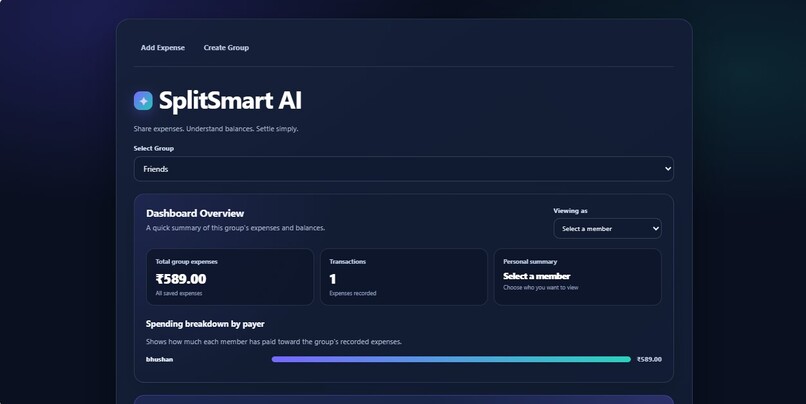
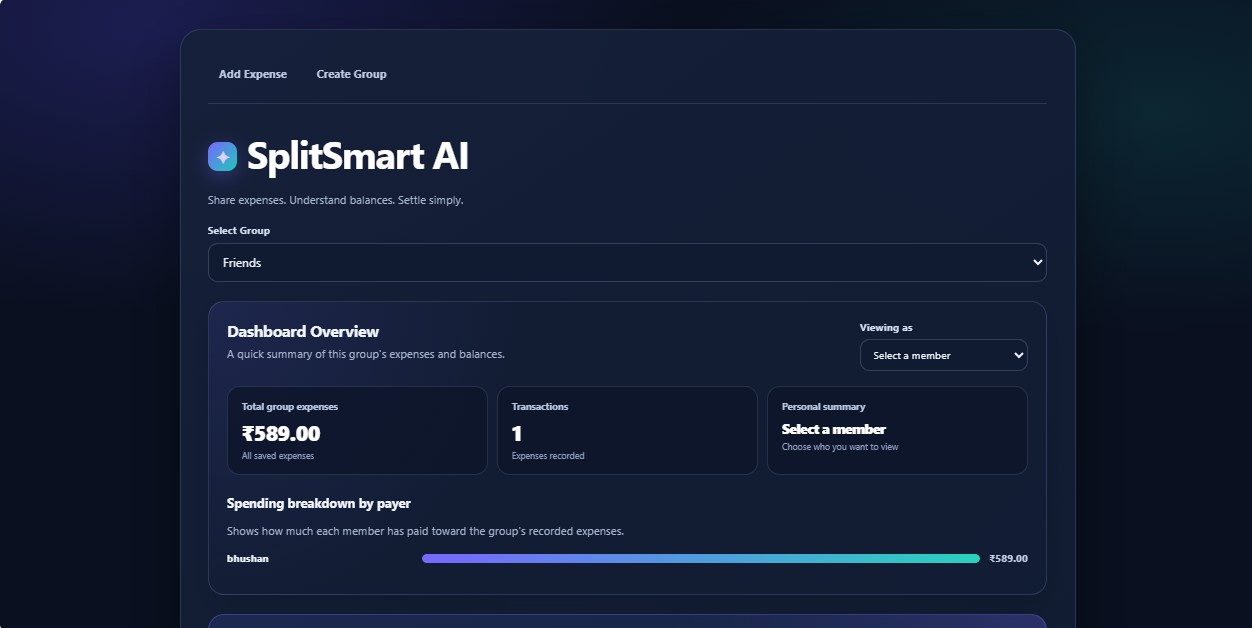
Dashboard
-
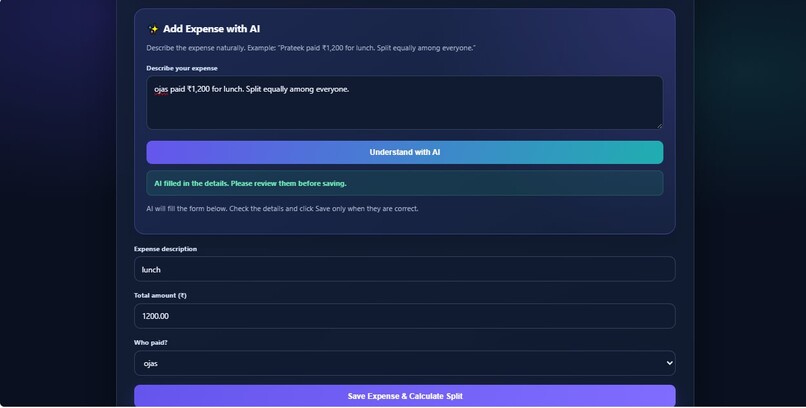
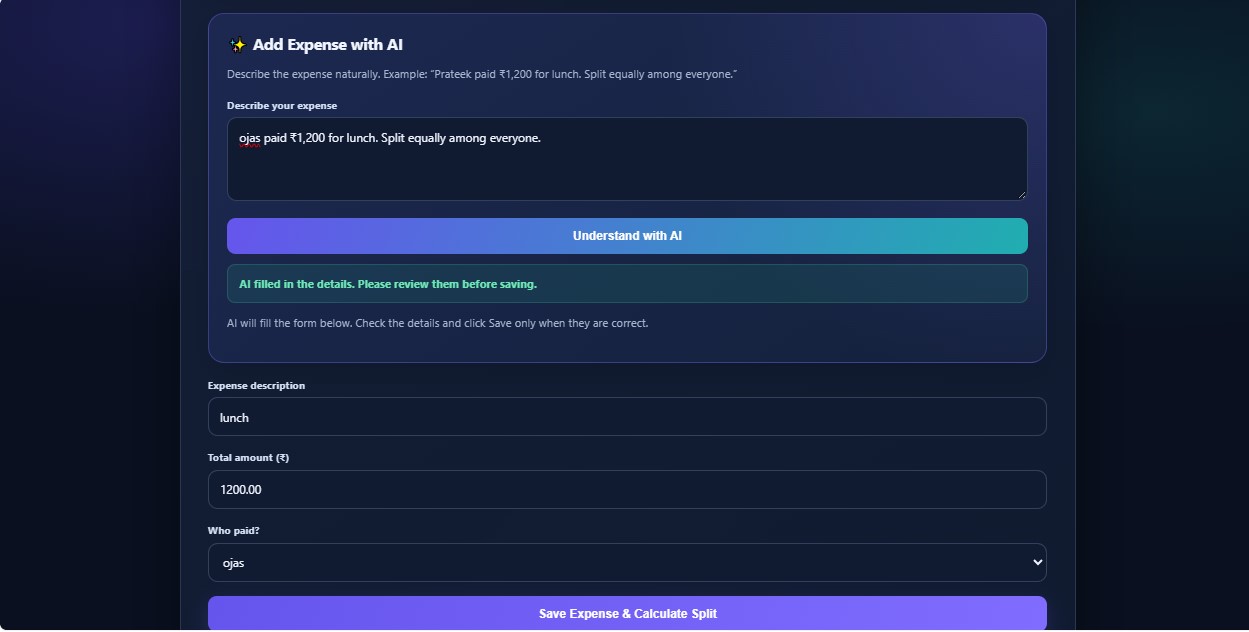
AI Extraction
-
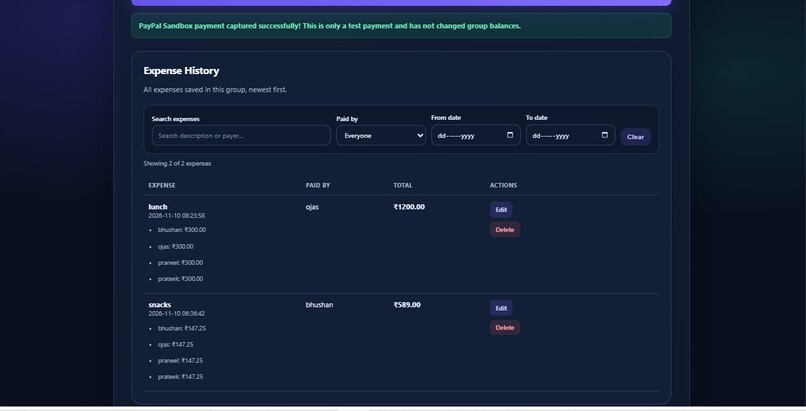
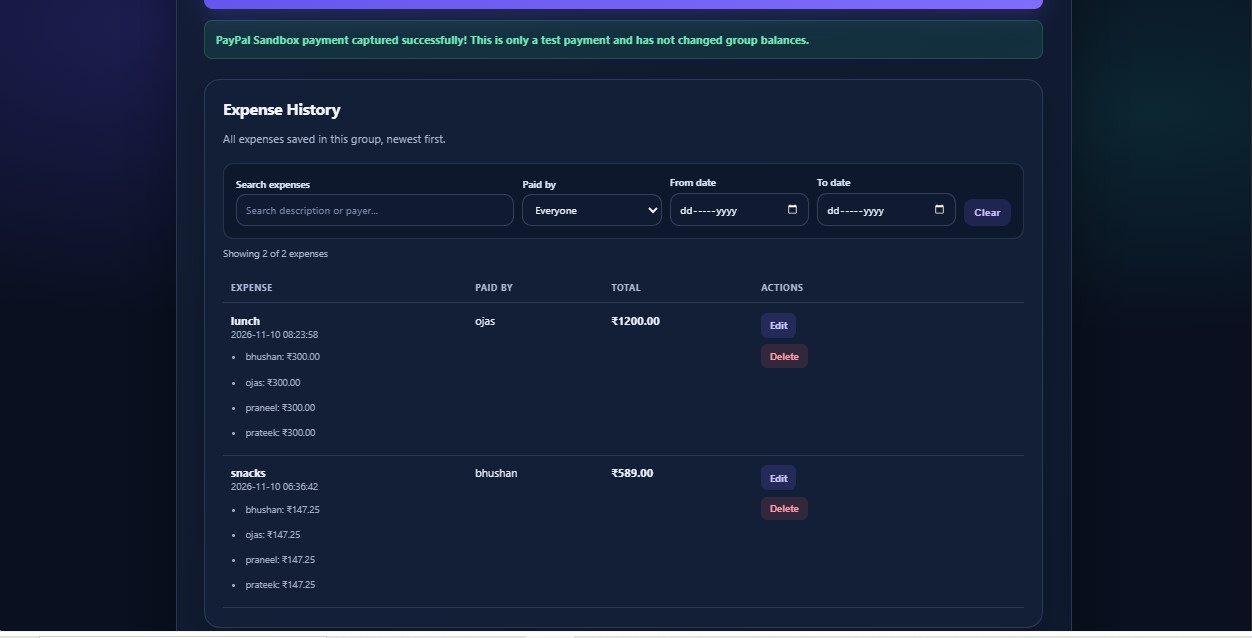
Expenses History
-
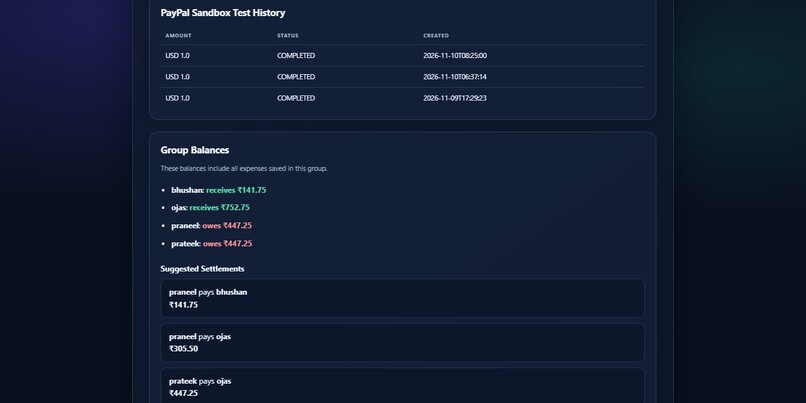
Settlement suggestions
-
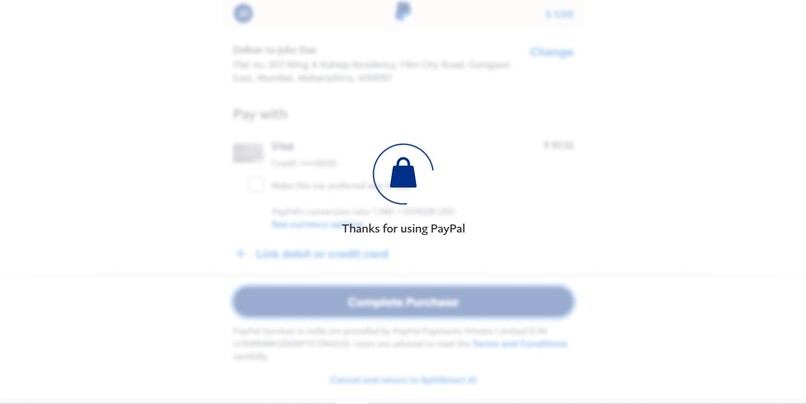
PayPal Sandbox Checkout
Inspiration
Managing shared expenses with friends during trips, outings, and group activities can become confusing. Keeping track of who paid, how much everyone owes, and how to settle balances often involves manual calculations, messages, and spreadsheets.
I wanted to build something that could make this process simpler, faster, and more transparent.
That idea led to SplitSmart AI — an AI-powered group expense management platform that brings expense tracking, intelligent data extraction, automated calculations, and payment integration together in one place.
What it does
SplitSmart AI helps users create groups, add members, record shared expenses, and understand everyone's financial contributions.
Its key features include:
AI-powered expense entry: Users can describe expenses in natural language, and Groq AI extracts relevant information such as the description, amount, and payer.
Group expense management: Create groups, add members, and maintain expense records.
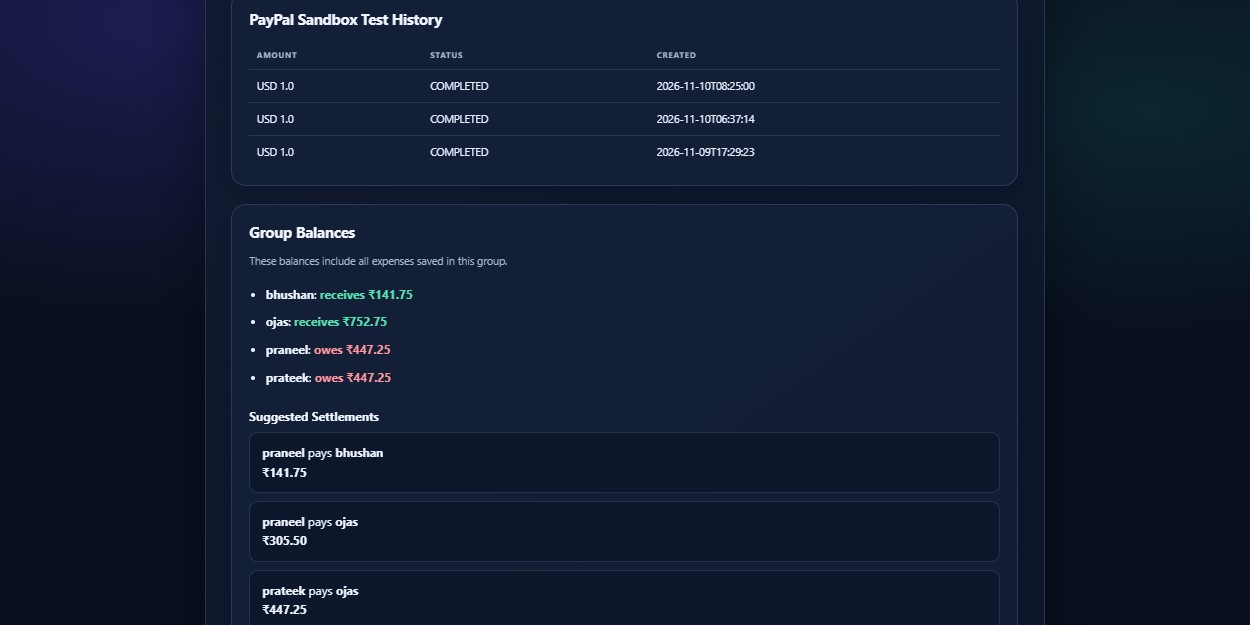
Automated expense splitting: Calculate individual shares and track who owes whom.
Simplified settlements: Generate clear settlement suggestions to reduce the number of transactions needed.
Interactive dashboard: View total spending, individual contributions, balances, and expense history.
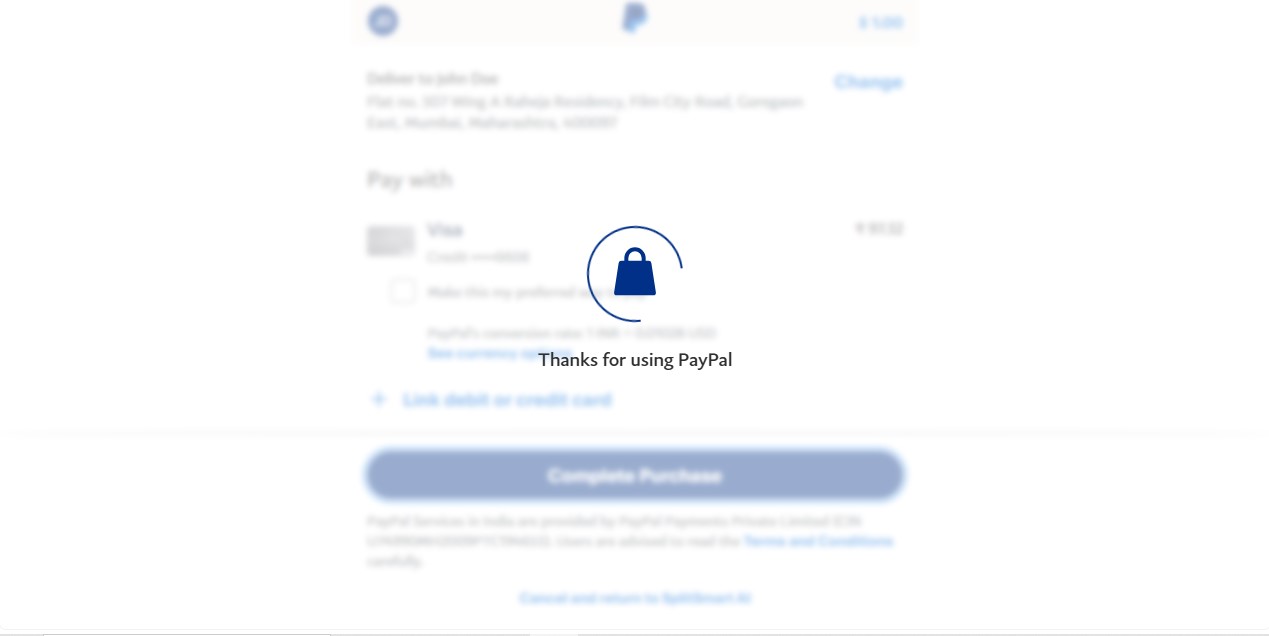
PayPal integration: Demonstrate order creation, buyer approval, and payment capture using PayPal Sandbox.
How we built it
I developed SplitSmart AI using Python and Flask for the backend, with HTML, CSS, and JavaScript for the frontend.
Supabase and PostgreSQL handle database storage, while Groq AI powers natural-language expense understanding.
I also integrated PayPal Sandbox to demonstrate a payment workflow, including creating an order, redirecting to checkout, approving the payment, and capturing it successfully.
The application is deployed using Vercel, and the source code is available on GitHub.
Challenges we ran into
One of my biggest challenges was that I started this project as a beginner with limited experience in full-stack development and API integration.
Understanding how the frontend, backend, database, AI service, and payment gateway communicate with one another took considerable learning and experimentation.
I faced challenges with database connections, environment variables, authentication, expense calculations, and PayPal Sandbox integration.
Another important challenge was ensuring that AI-generated expense information was reviewed before being saved. I designed the application so that AI assists with extracting information, while the actual calculations are handled by Python logic.
Working through these problems helped me understand how individual technologies can be combined into a complete working application.
Accomplishments that we're proud of
Successfully finishing the working project.
What we learned
Building SplitSmart AI taught me much more than just writing code.
I learned how to develop a Flask application, work with APIs, manage data using Supabase, integrate Groq AI, implement authentication, and connect a payment gateway using PayPal Sandbox.
Most importantly, I learned how to approach a real-world problem, break it into smaller tasks, debug issues independently, and gradually turn an idea into a working product.
What's next for SplitSmart AI
I would like to extend SplitSmart AI with more flexible expense-splitting options, improved AI capabilities, additional payment methods, and stronger production-ready security.
My goal is to make managing shared expenses as simple and transparent as possible.
Built With
- artificial-intelligence
- css
- flask
- generative-ai
- groq
- html
- javascript
- large-language-models
- paypal
- paypal-sandbox
- postgresql
- python
- restapi
- supabase
- vercel
