-
-
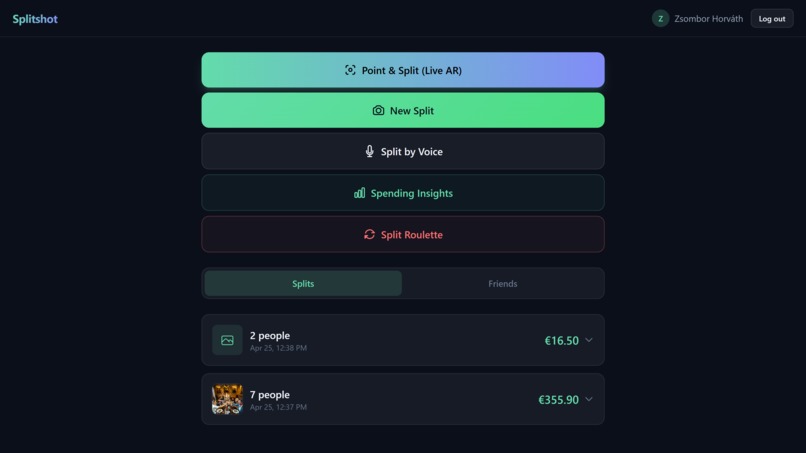
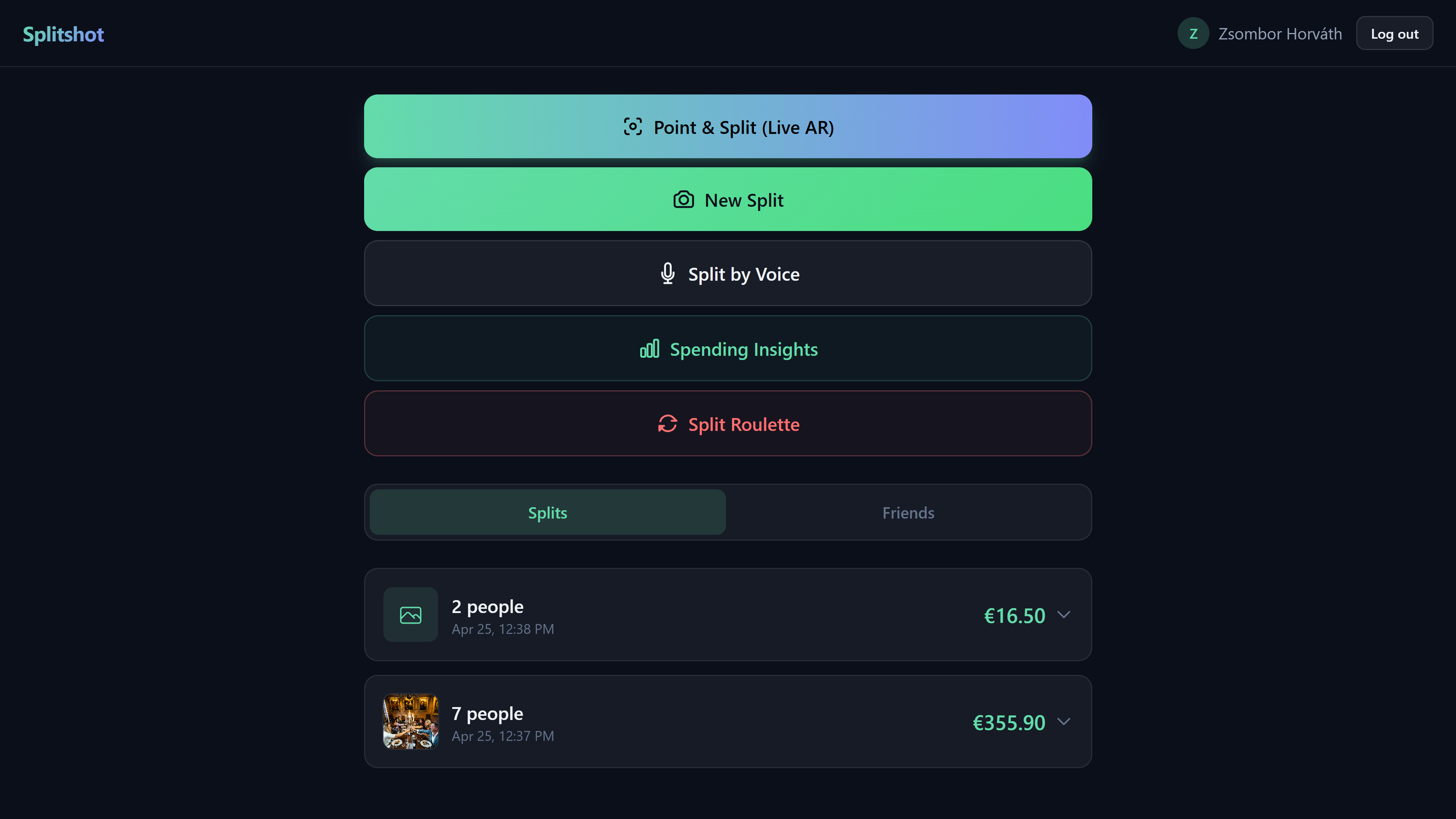
Main Interface
-
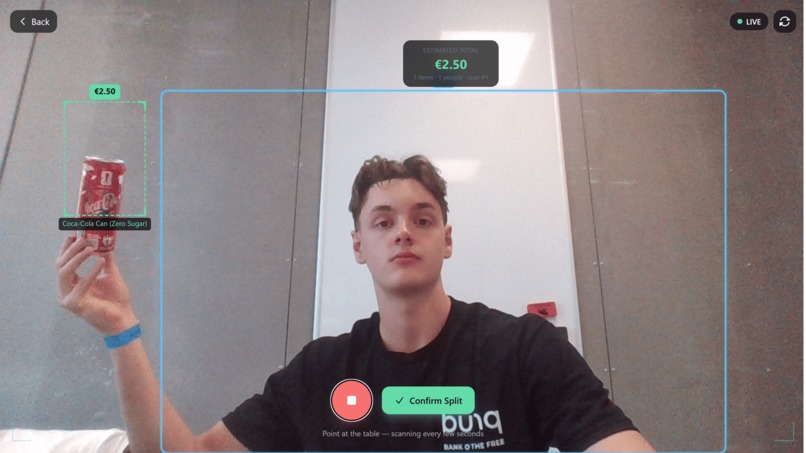
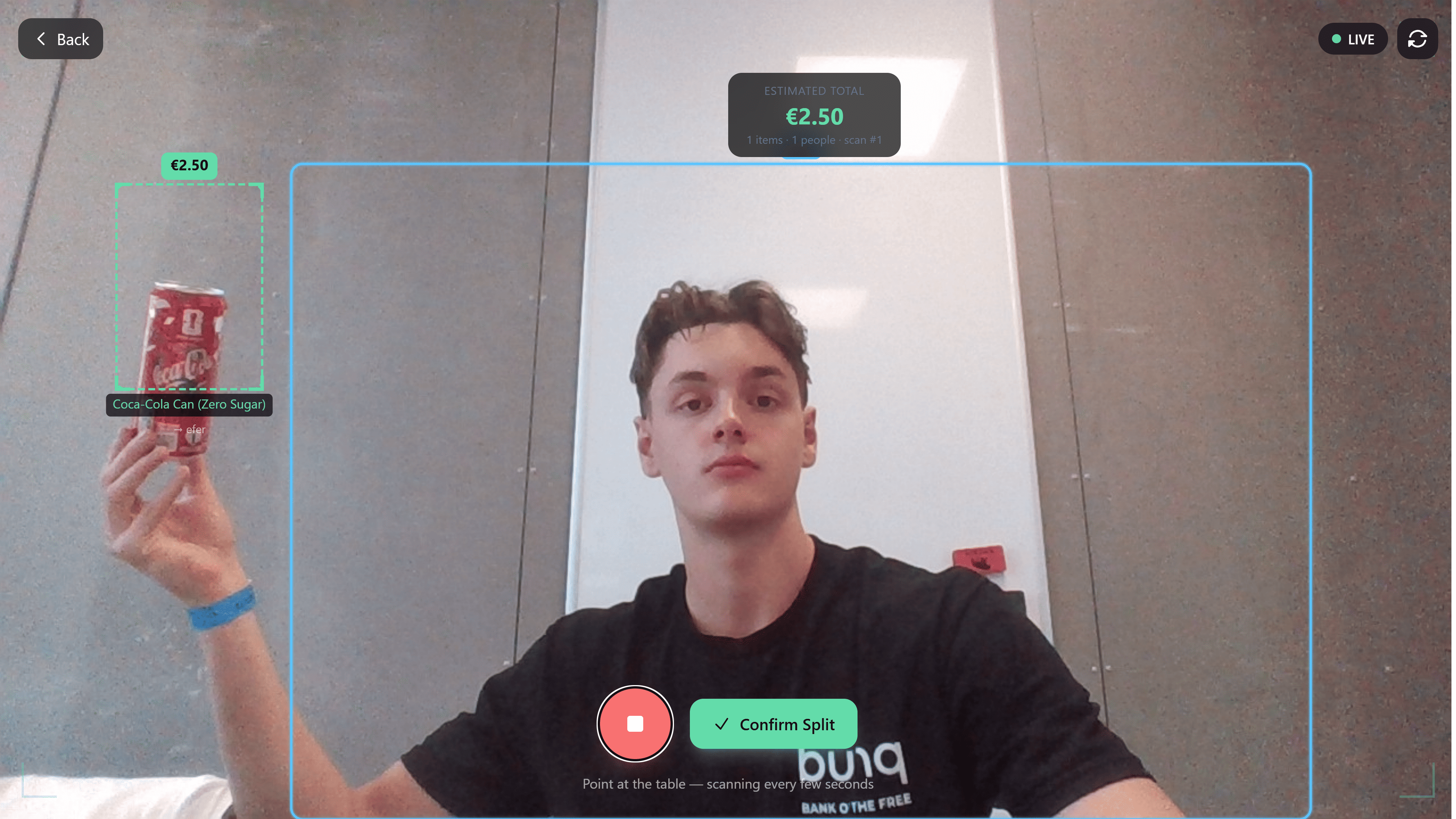
Real-Time Object/Human Detection for Bill Splitting
-
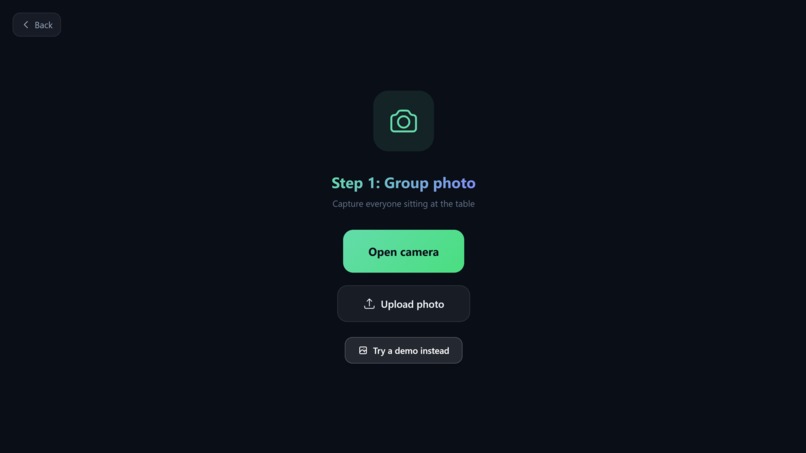
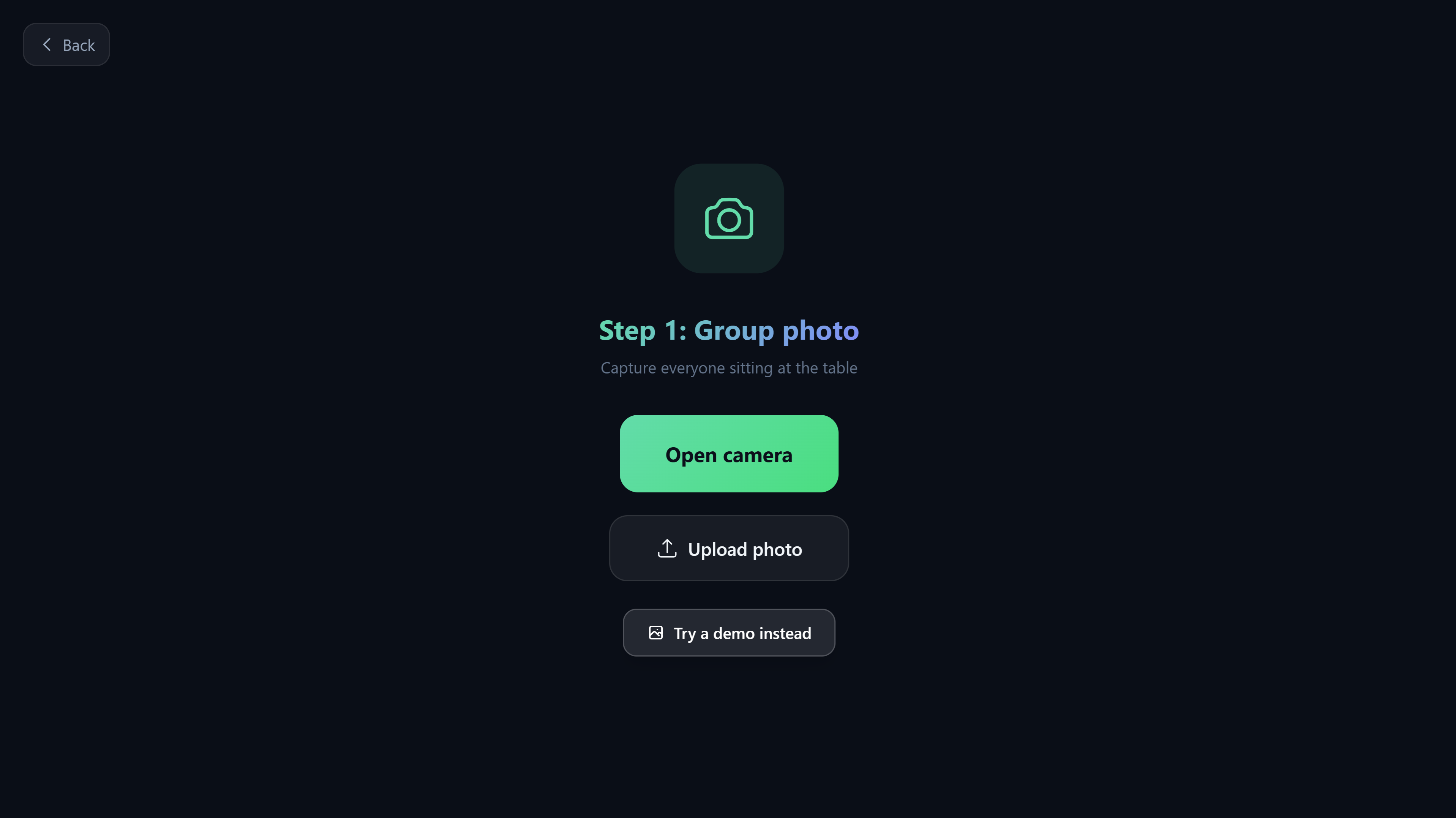
Main Menu for Group Photo Analysis
-
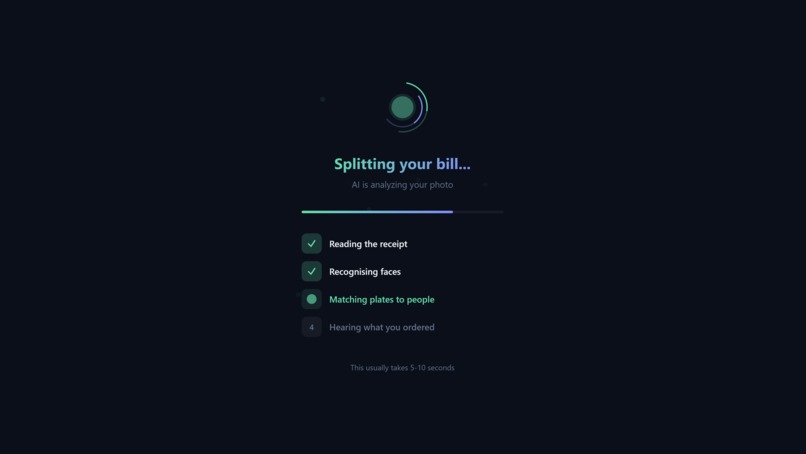
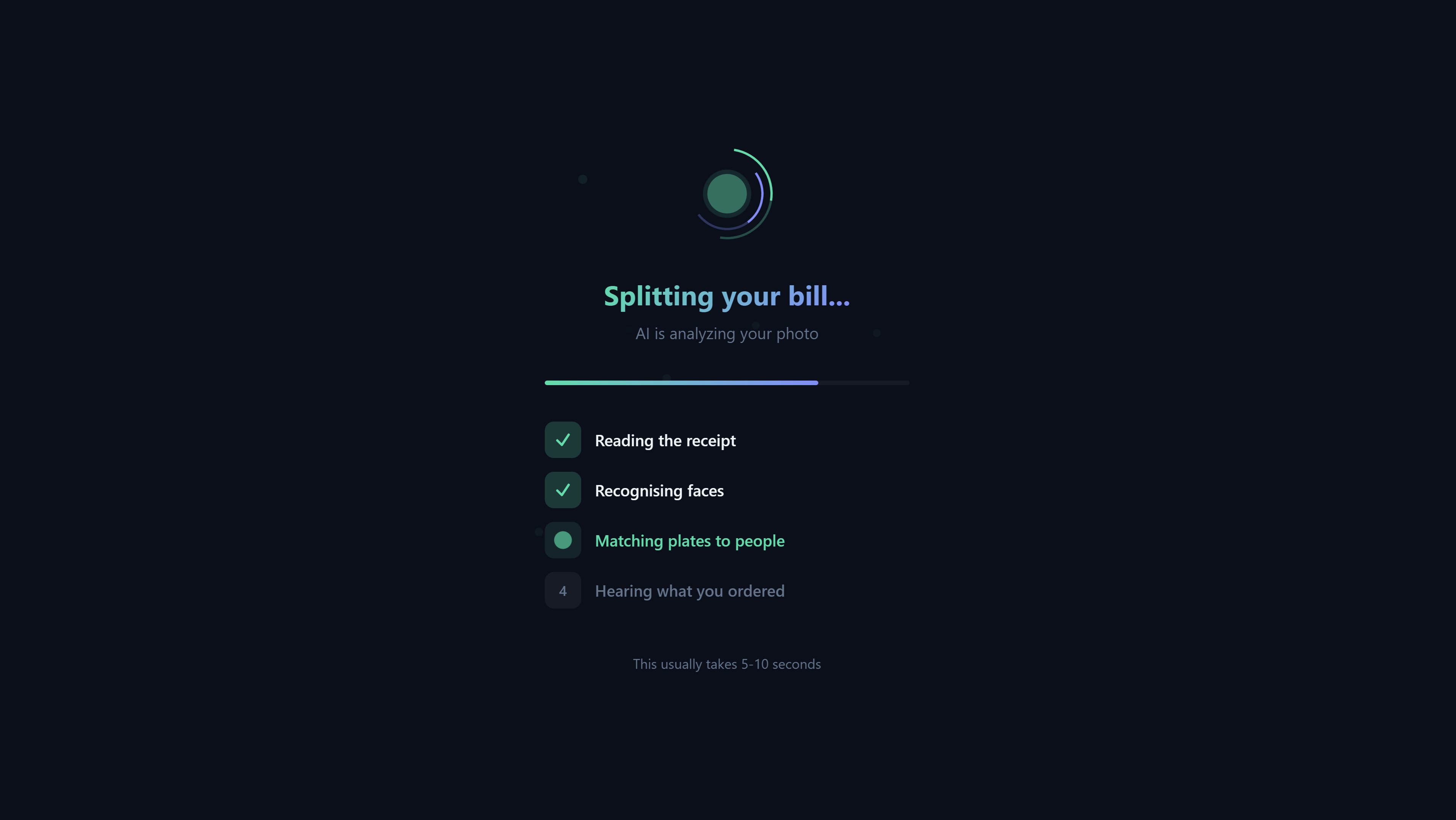
Computer Vision Algorithm Running
-
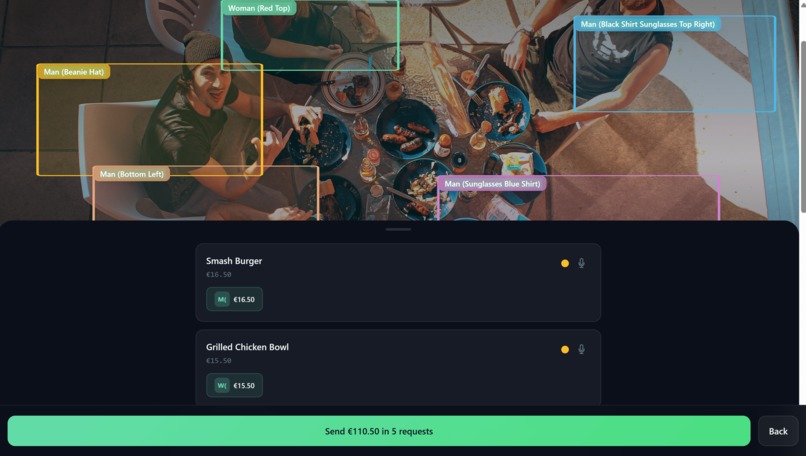
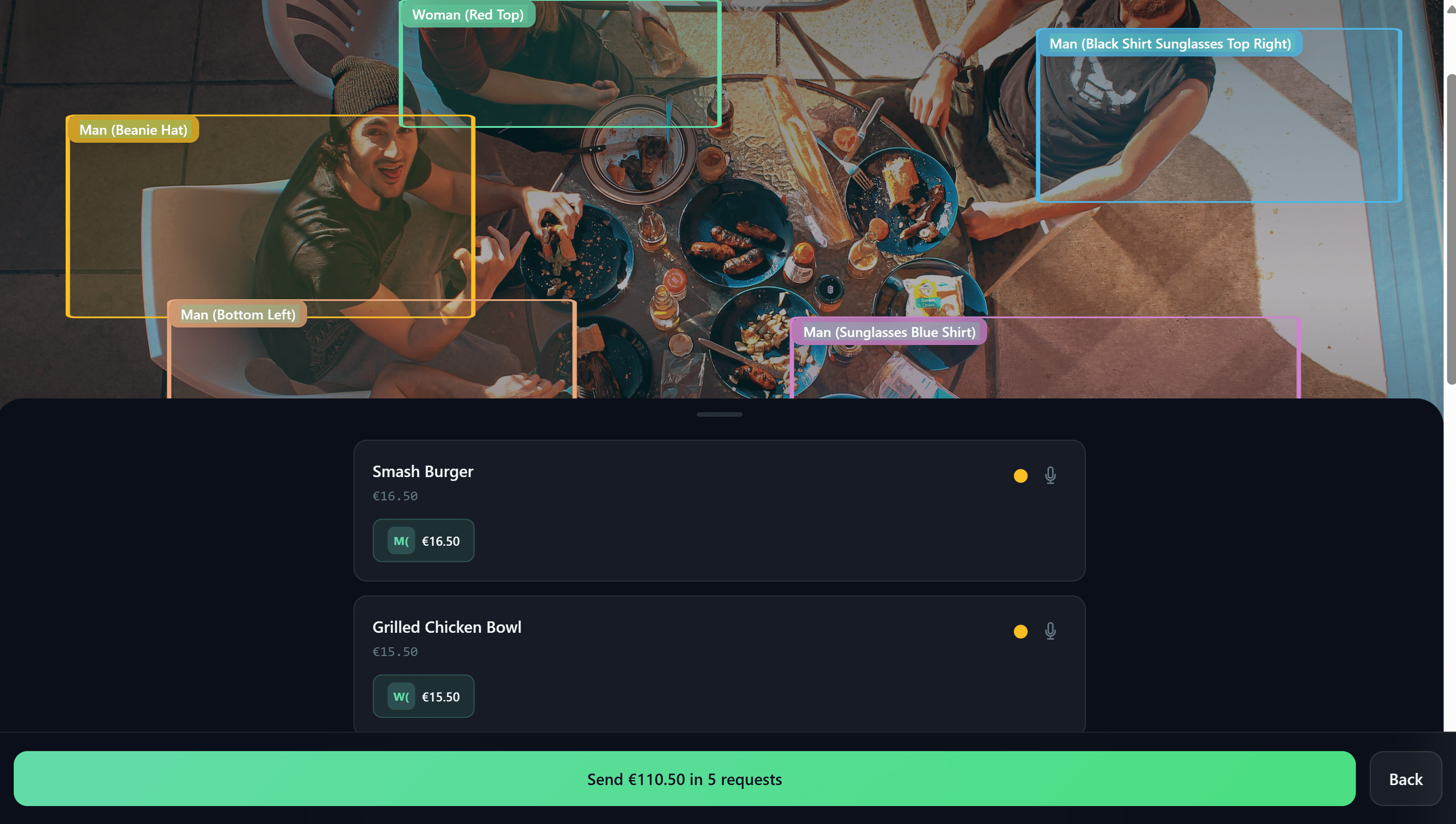
Detected People with Corresponding Items Based on Image
-
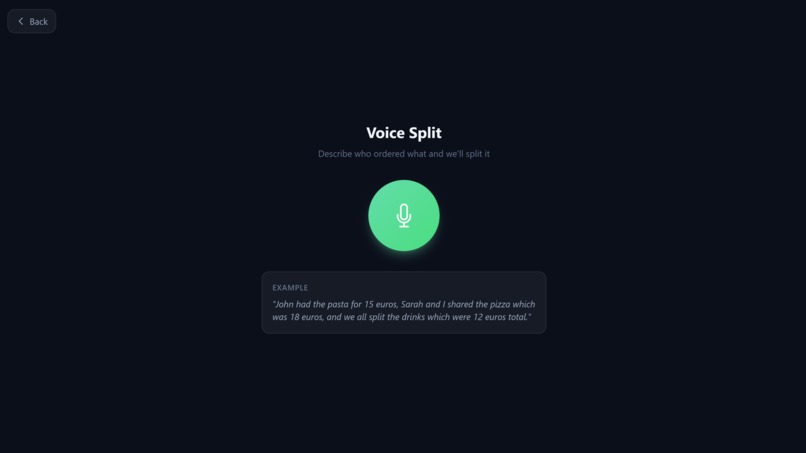
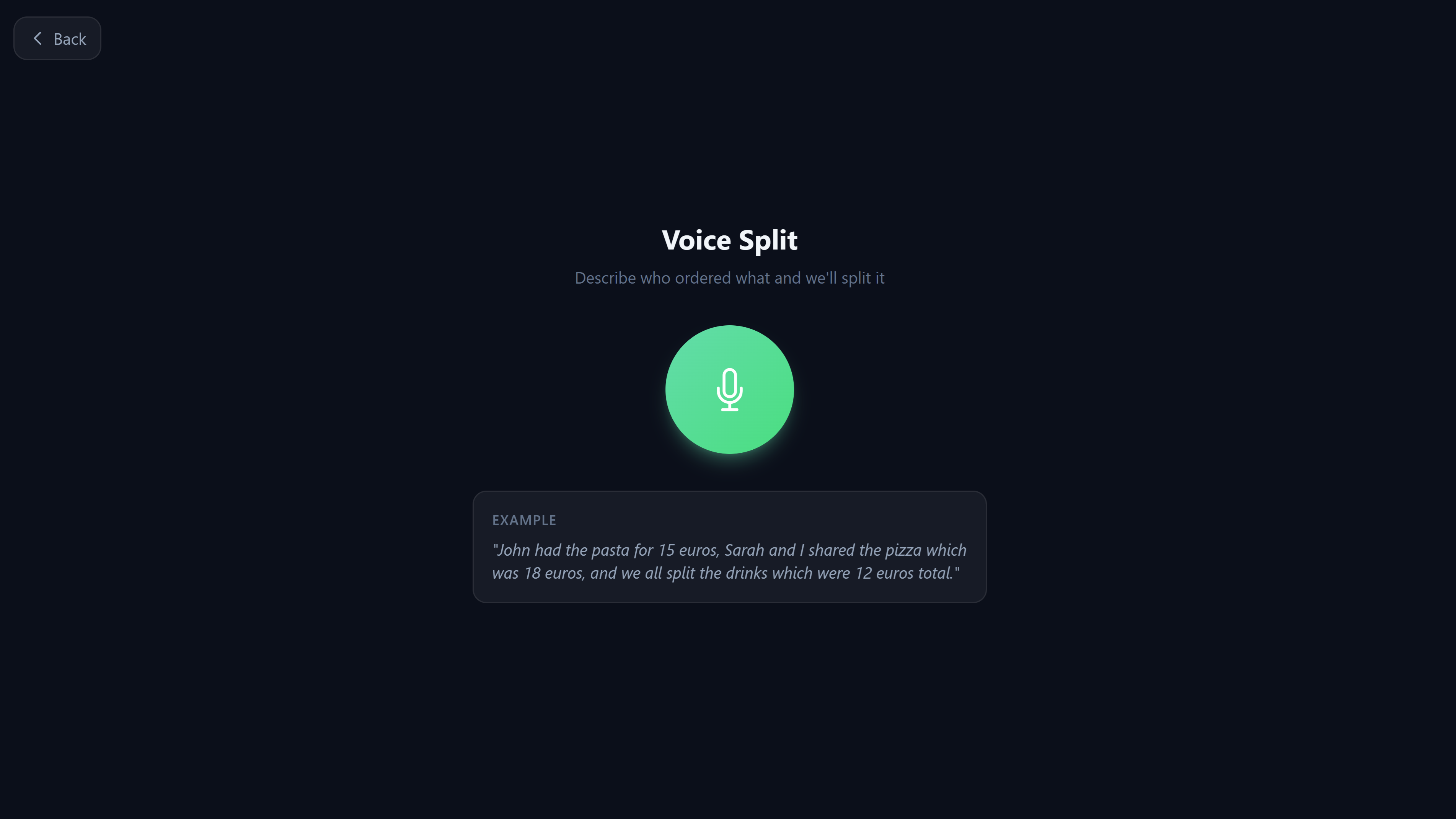
Bill Splitting through Voice Analysis
-
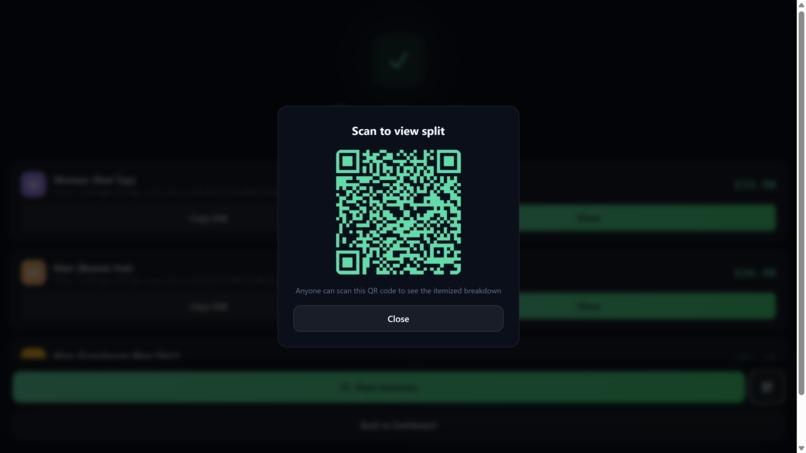
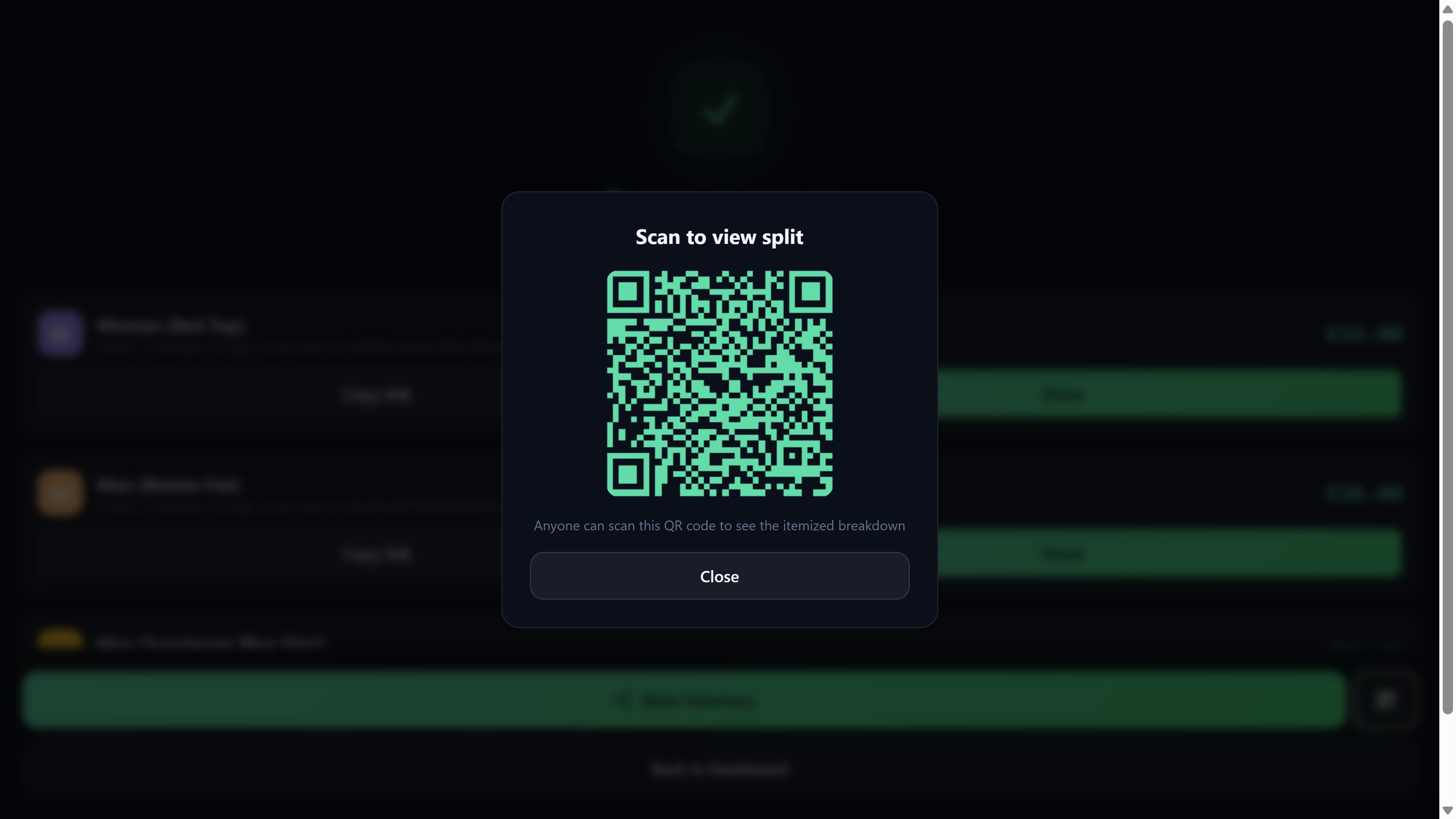
Share Bill View Option through QR Code
-
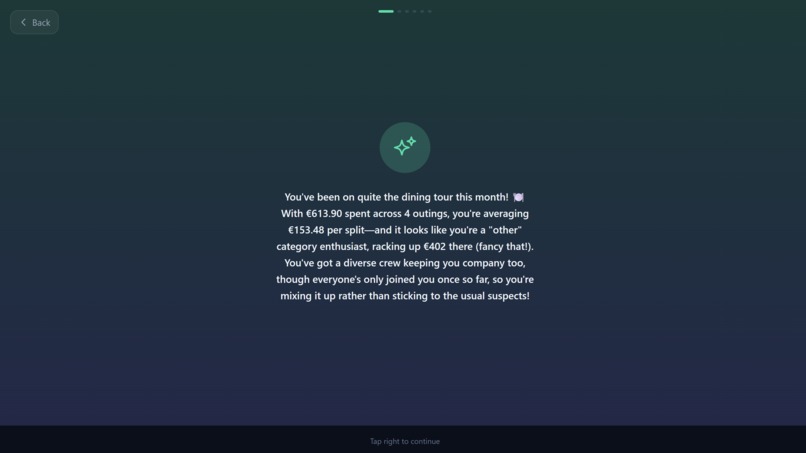
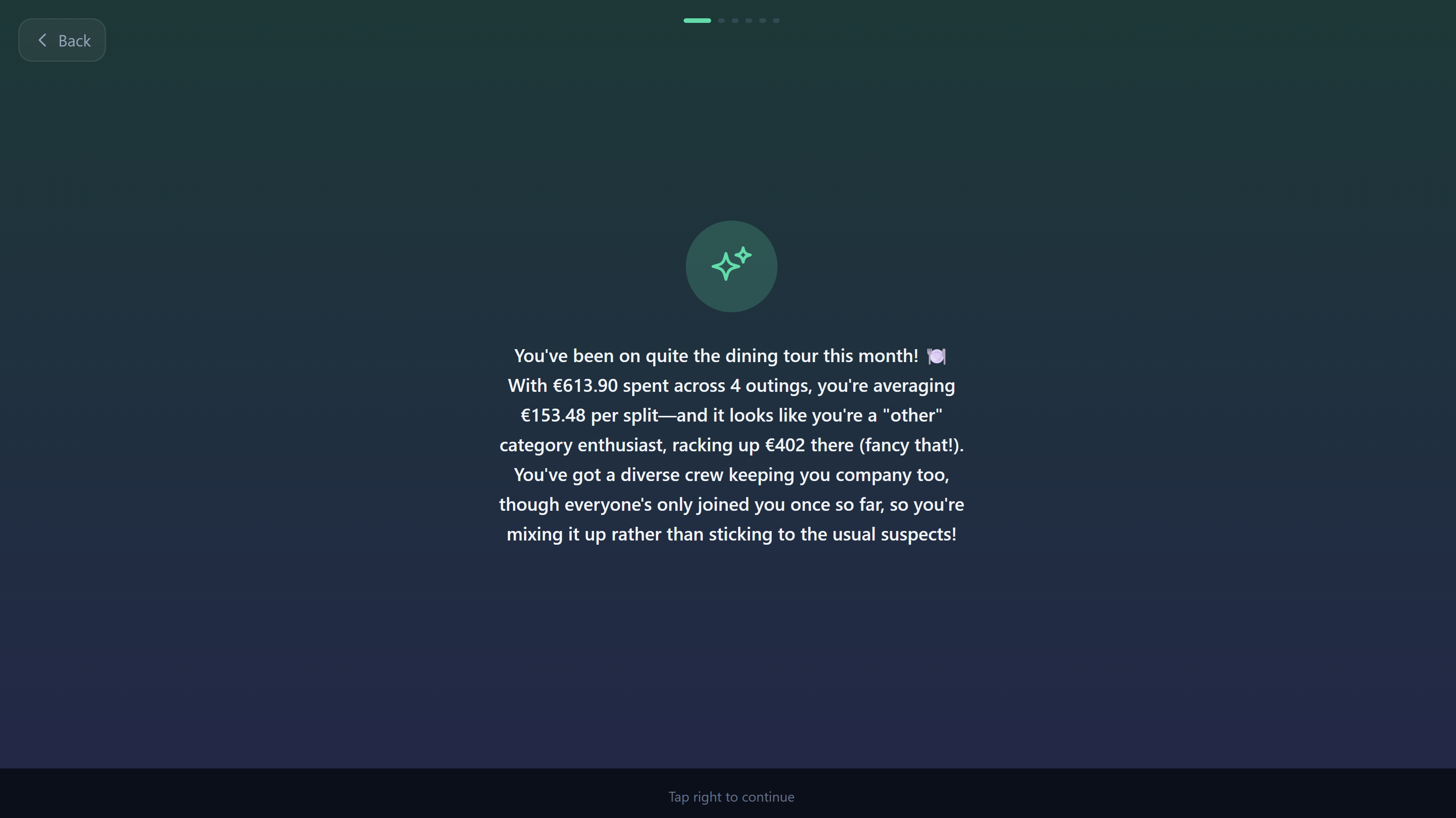
Compact Analysis of Spending Habits with the help of LLM
-
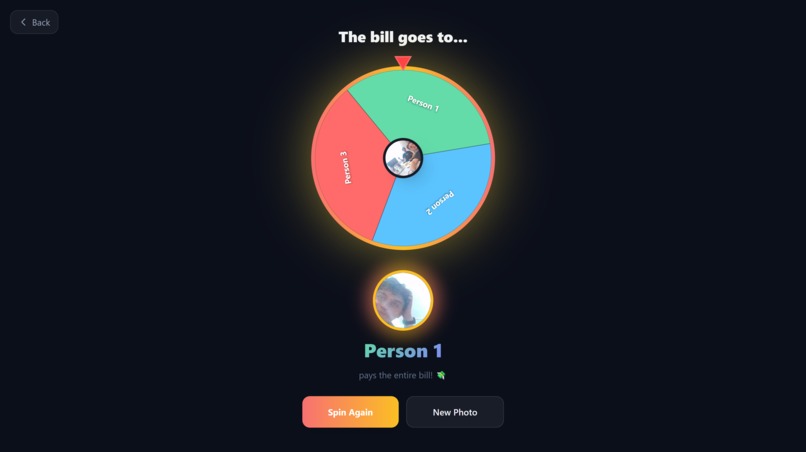
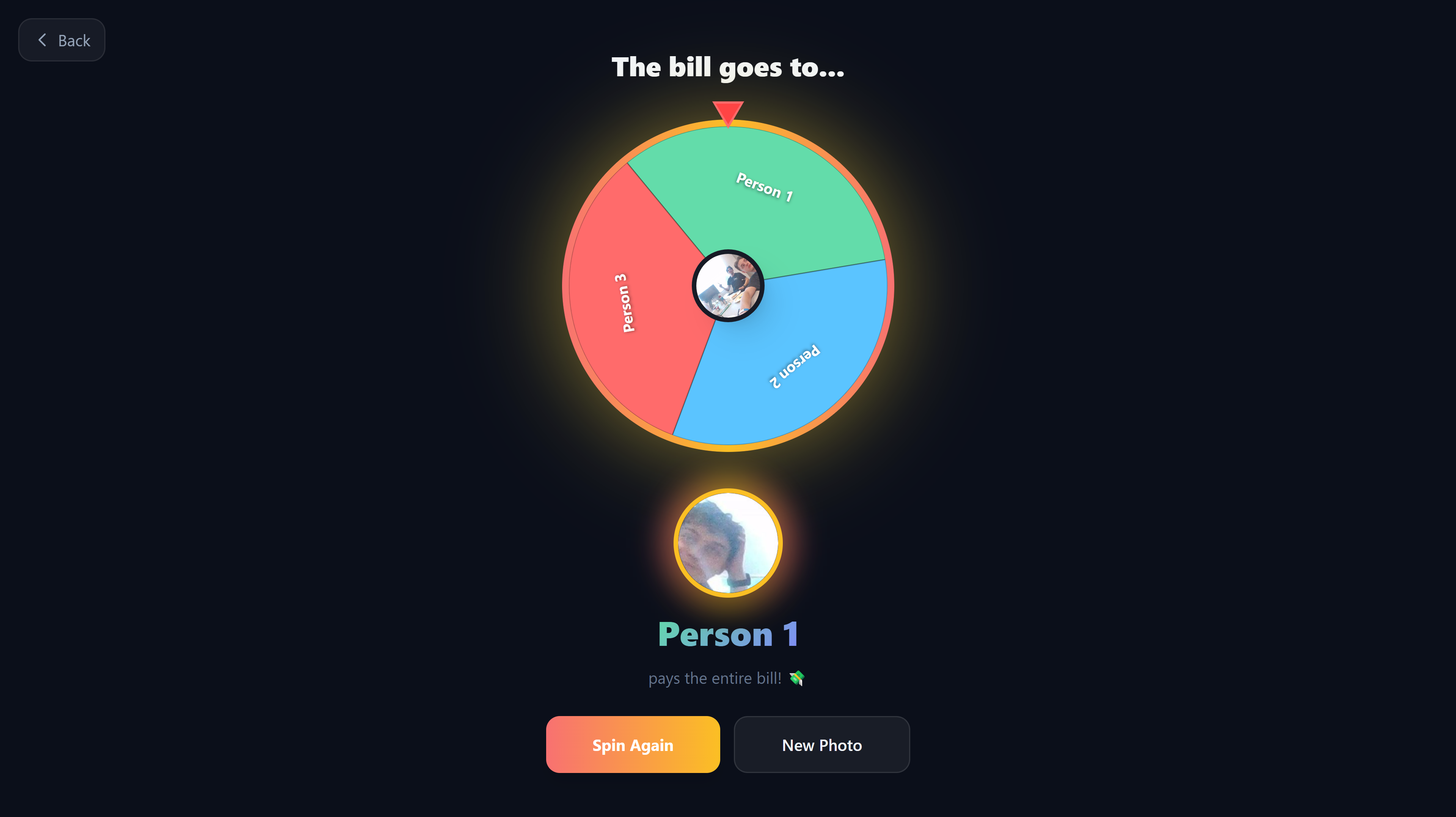
Roulette Wheel Selection for Bill Paying
Inspiration
Splitting the bill kills the post-meal buzz. For the bunq Hackathon 7.0, we wanted to eliminate the friction of manual math and chasing IBANs. We built Splitshot to make settling the tab as natural as snapping a quick picture or having a conversation.
What it does
- AR "Point & Split": Point your camera at the table to see real-time AR tags mapping people, plates, and prices.
- Voice Splitting & Disputes: Dictate the order or correct the AI instantly using natural language ("Actually, John had the pasta").
- bunq Payments: Settle up instantly via IBAN requests, emails, or shareable bunq.me links.
- Smart Dashboard: Track debts and view AI-generated spending summaries in an Instagram-style interface.
How we built it
- Frontend: Next.js 14, Tailwind CSS, Framer Motion.
- AI Engine: Claude Sonnet (vision/AR tracking), Claude Haiku (text parsing), and Deepgram Nova-3 (audio transcription).
- Backend & Storage: PostgreSQL (Neon), Drizzle ORM, AWS S3 (face enrollments).
- Banking: bunq Sandbox REST API with strict RSA-signed authentication.
Challenges we ran into
- Browser AR Latency: Keeping live camera overlays smooth despite API delays required building custom interpolation animations.
- Multimodal Merging: Combining fuzzy voice descriptions, visual table analysis, and receipt OCR into a single, accurate JSON output.
- Cryptographic Security: Implementing bunq's complex 3-step RSA-signed authentication within a serverless architecture.
Accomplishments that we're proud of
- "Magical" Voice Disputes: Allowing users to seamlessly correct visual AI mistakes simply by talking to the app.
- Live Spatial Reasoning: Pushing Claude Vision to map 2D images to physical table dynamics in real-time.
- Hackathon Polish: Delivering a beautifully animated, fully functional full-stack banking app under strict time constraints.
What we learned
- How to maximize LLM spatial reasoning capabilities for real-world physical mapping.
- The intricacies of securely integrating European banking APIs.
- That giving users an intuitive audio fallback to correct visual AI drastically improves trust in the product.
What's next for Splitshot
- Go Live: Migrating from the sandbox to the production bunq environment for real-money requests.
- Native Apps: Building dedicated iOS and Android apps to unlock hardware-accelerated AR tracking.
- Trip Splitting: Expanding to handle multi-day, multi-currency group vacations with algorithmic debt simplification.
Built With
- amazon-web-services
- bunqapi
- claude
- deegram
- docker
- framer
- nextjs
- postresql
- react
- tailwind
- turborepo
- typescript


Log in or sign up for Devpost to join the conversation.