-
-

Splitr Thumbnail
-
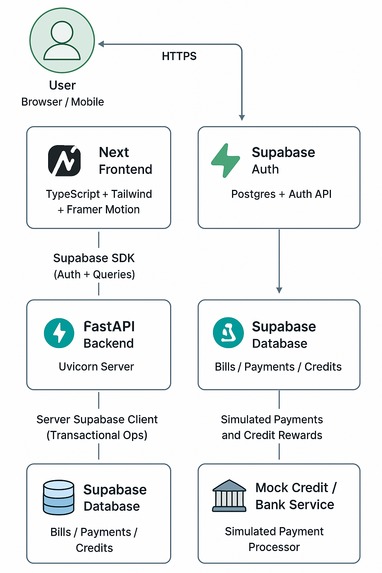
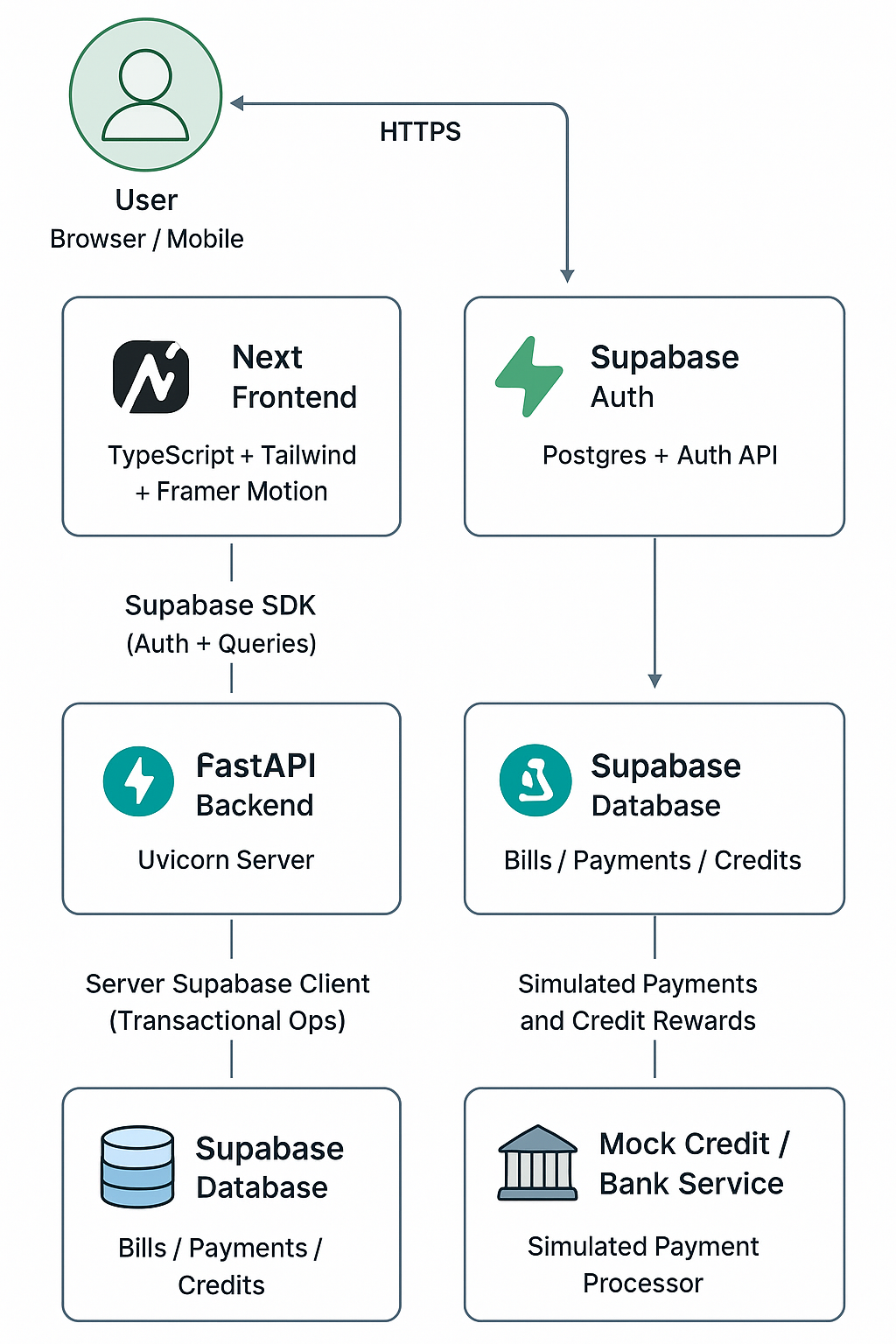
System Design
-

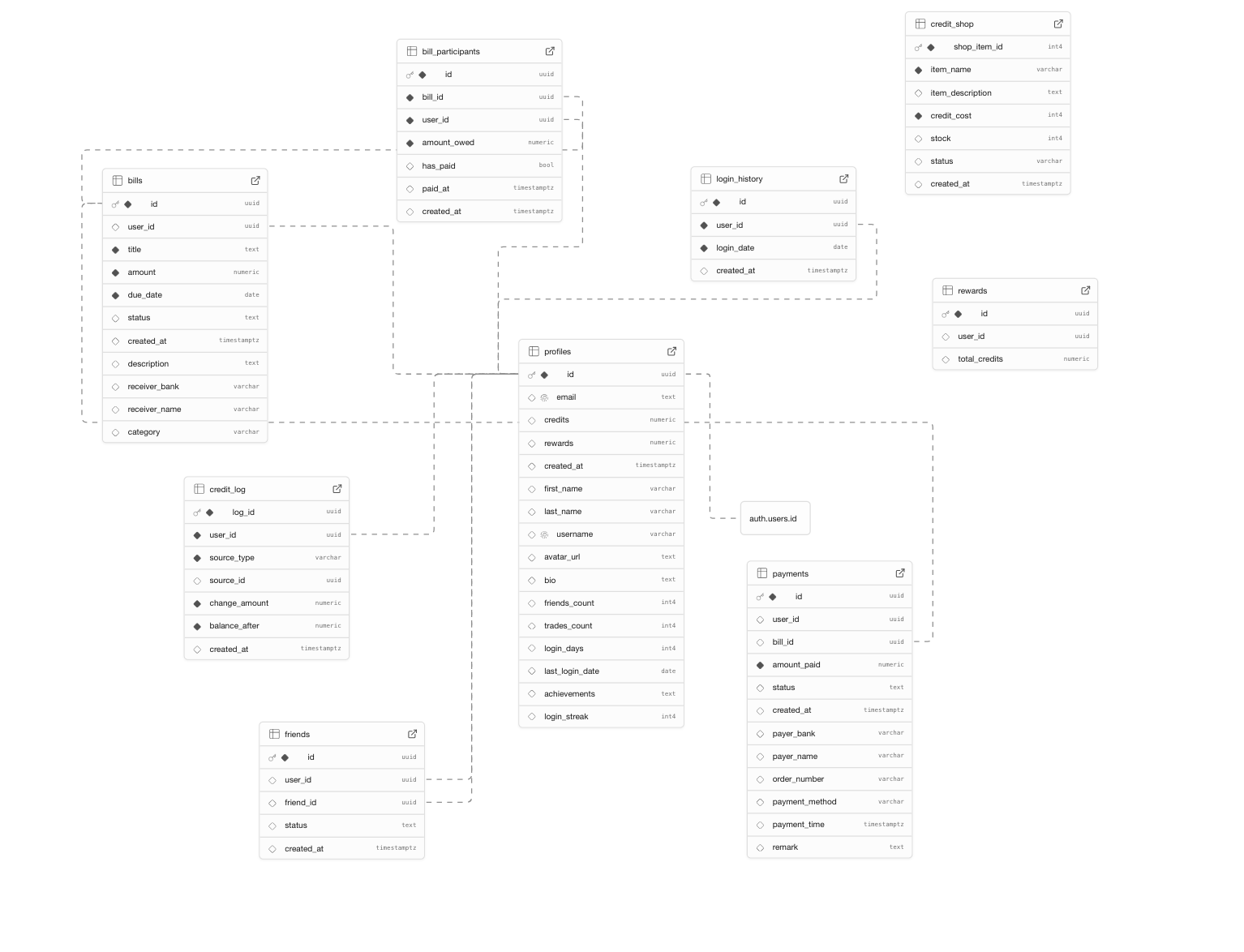
Main Program DataBase
-
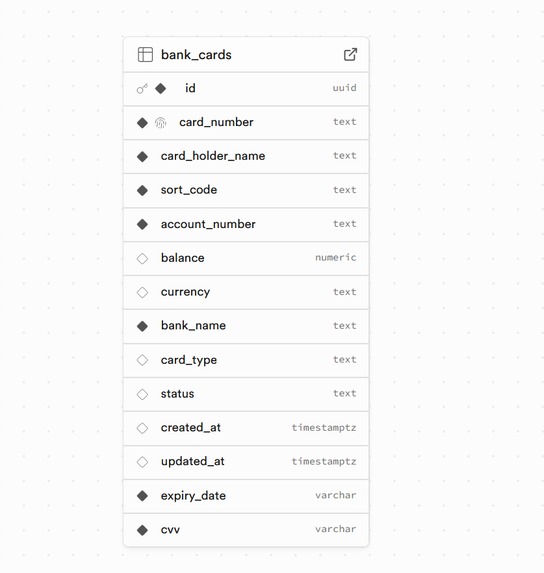
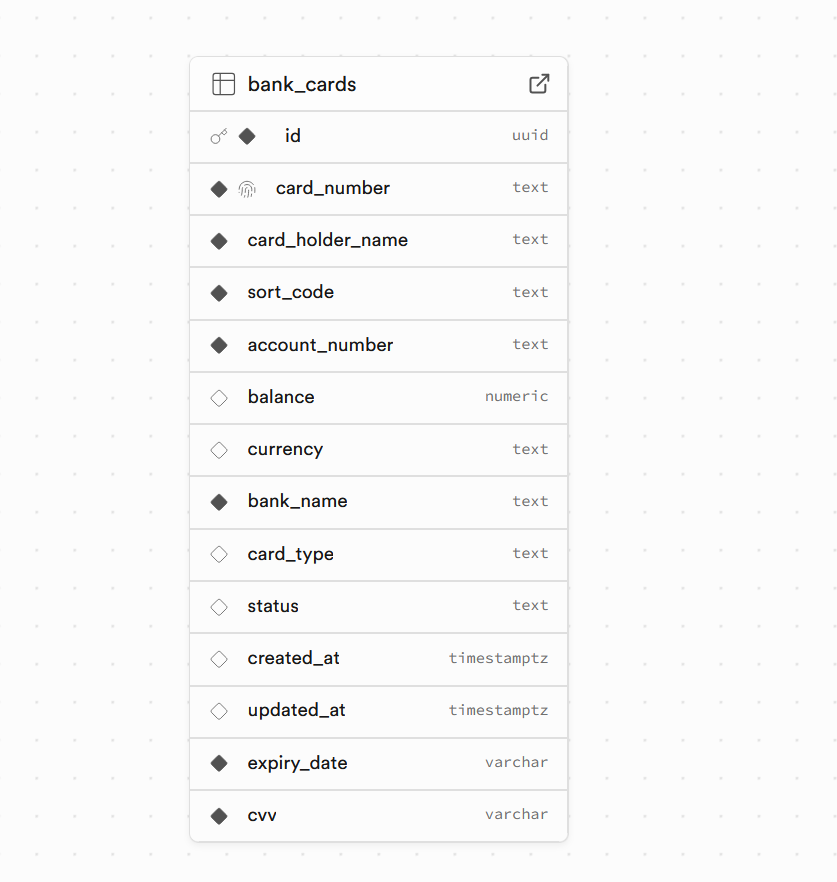
Mock Credit Card System Backend
-
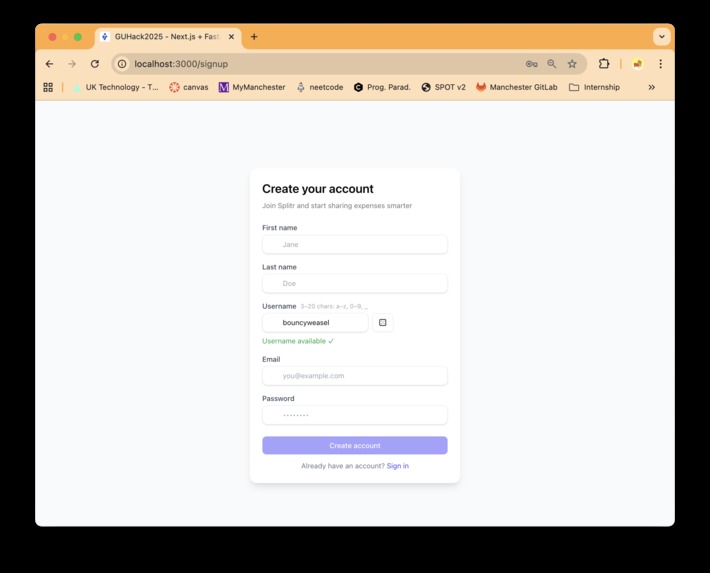
Sign-up page
-
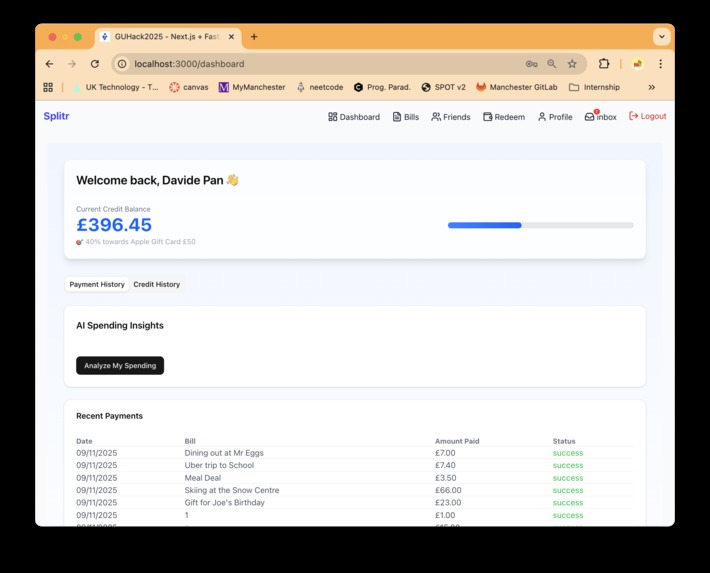
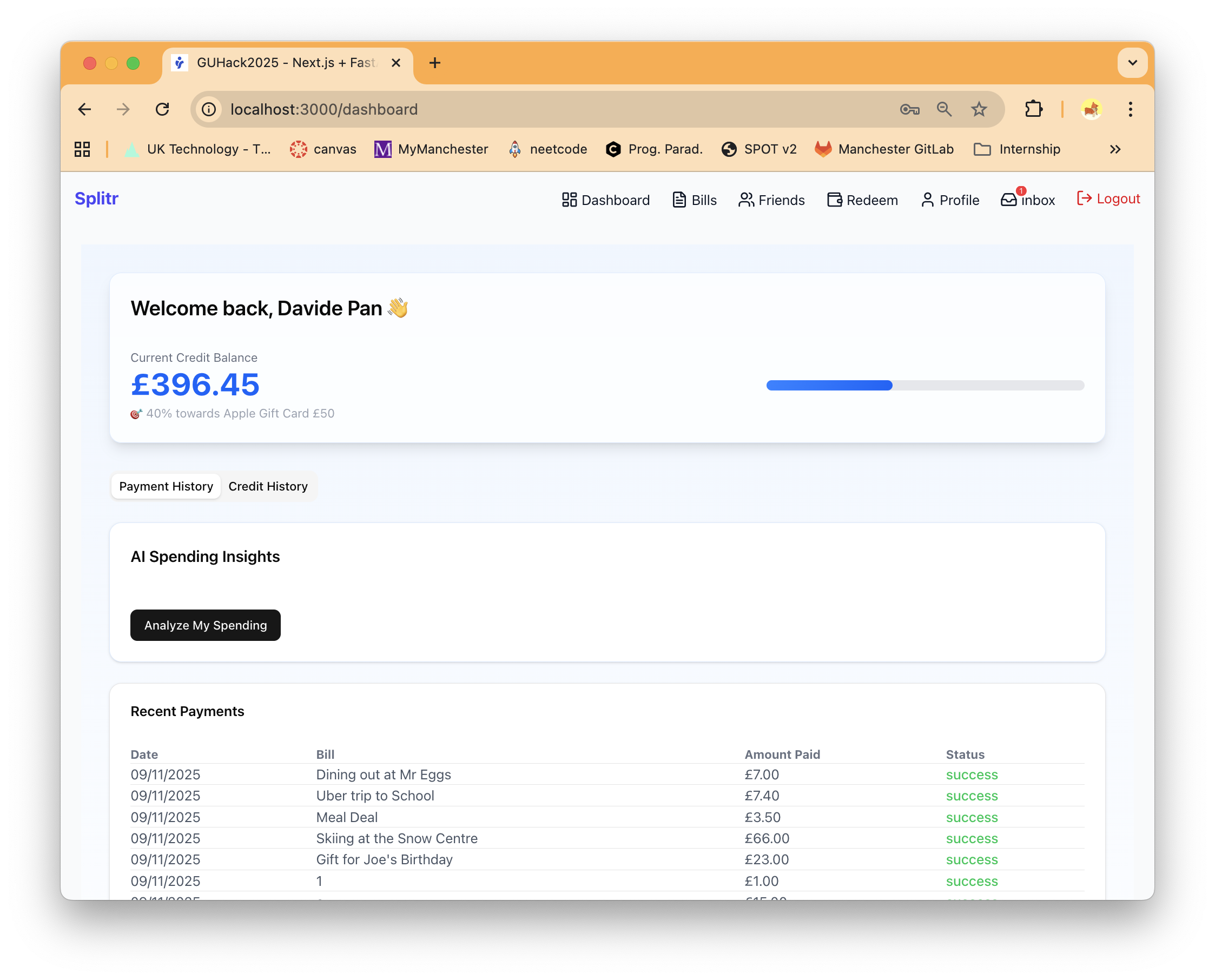
Dashboard page
-
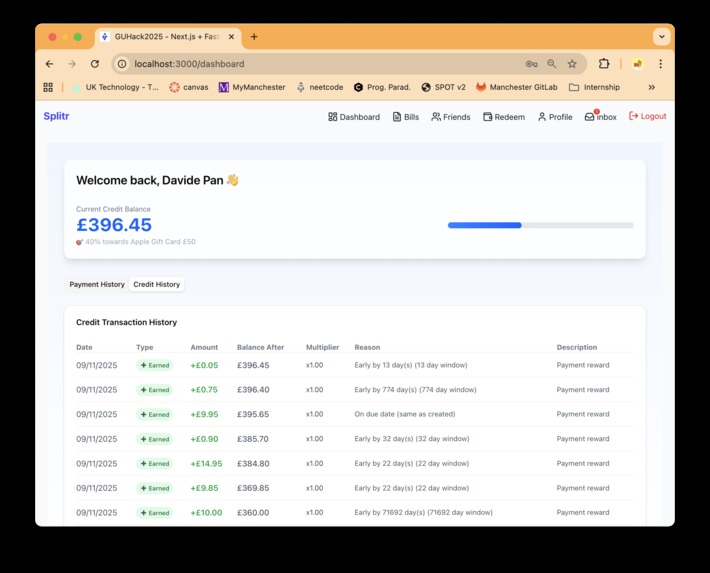
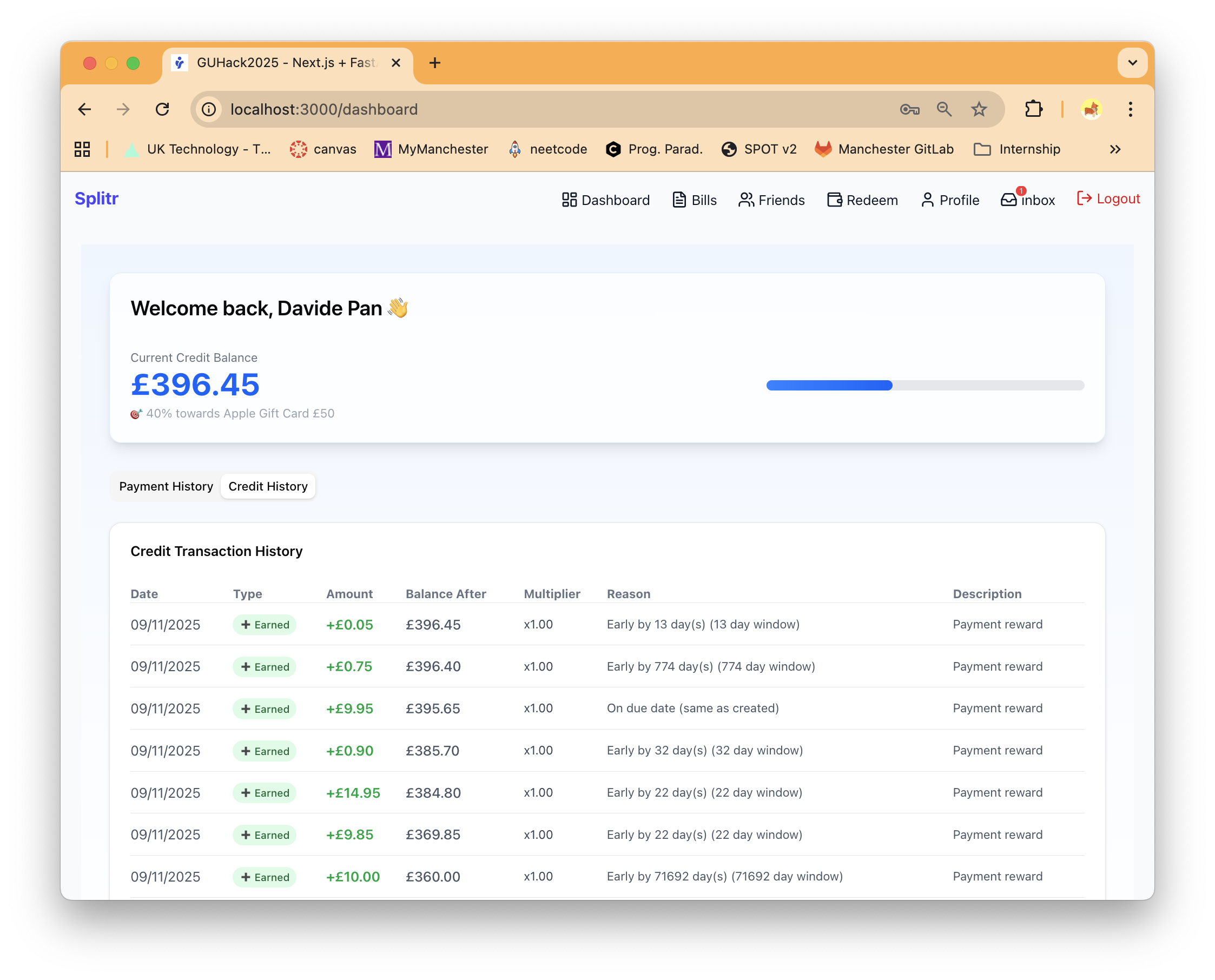
Credit history page
-
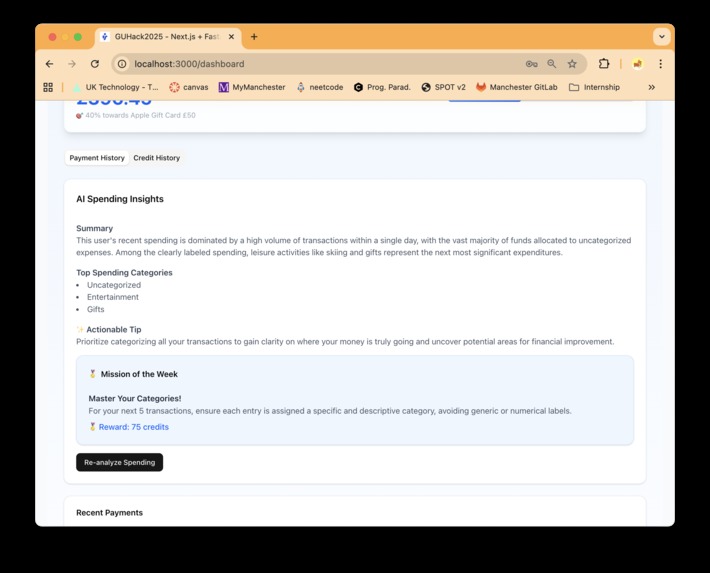
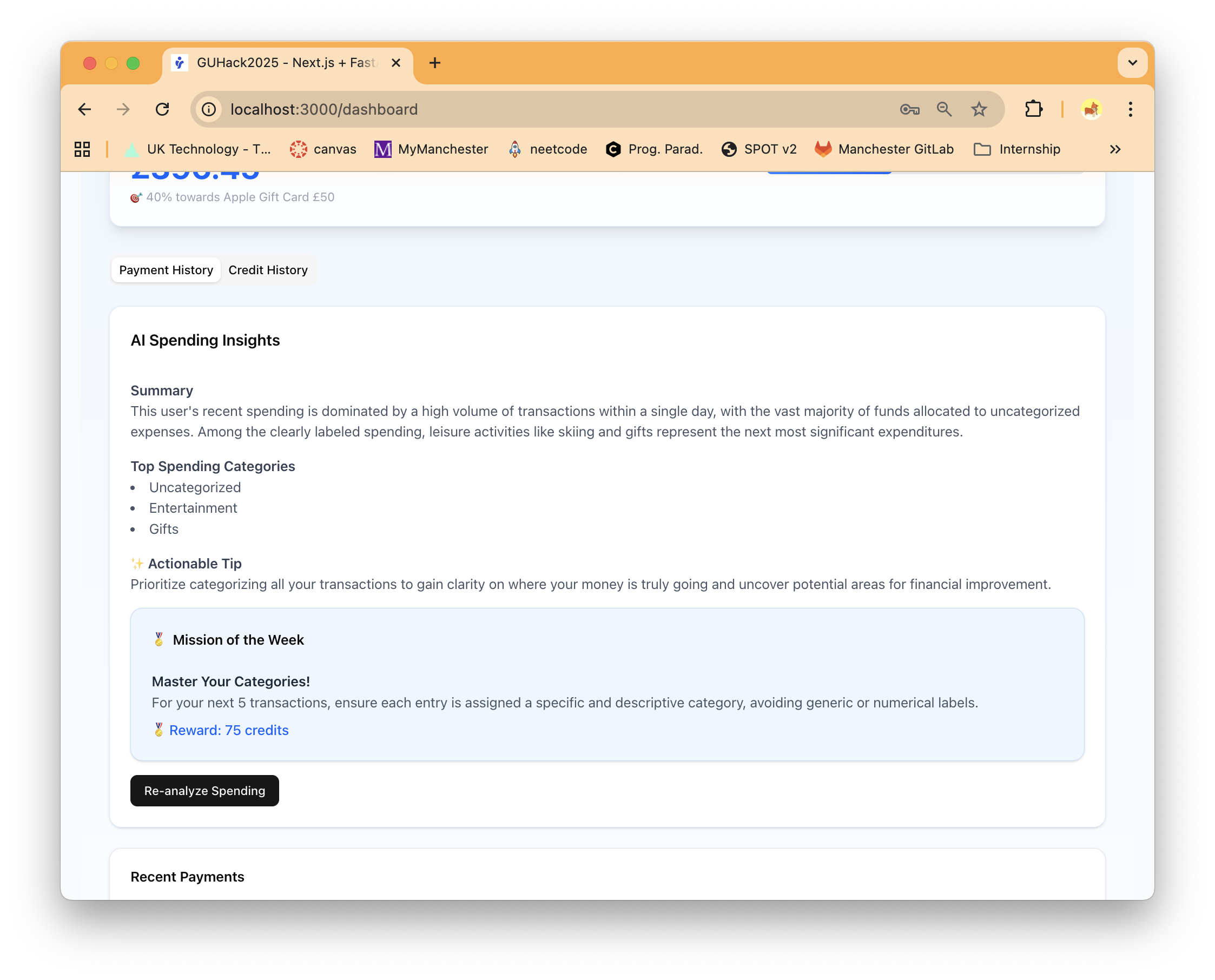
AI Insights & Weekly Missions
-
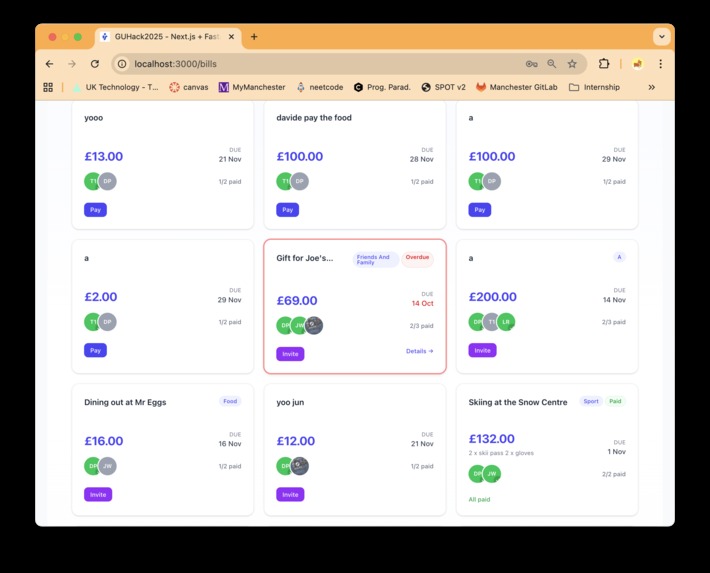
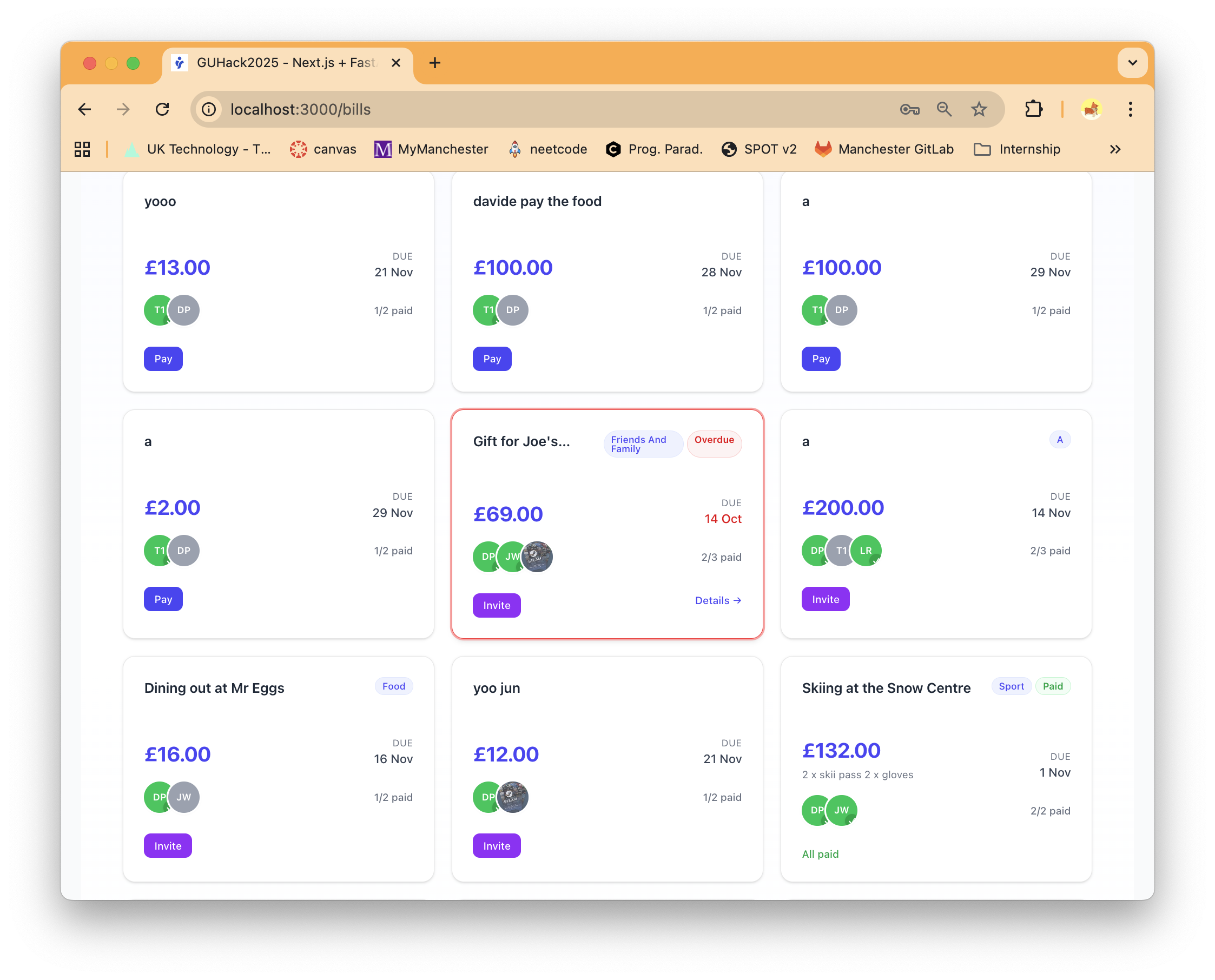
Bills page
-
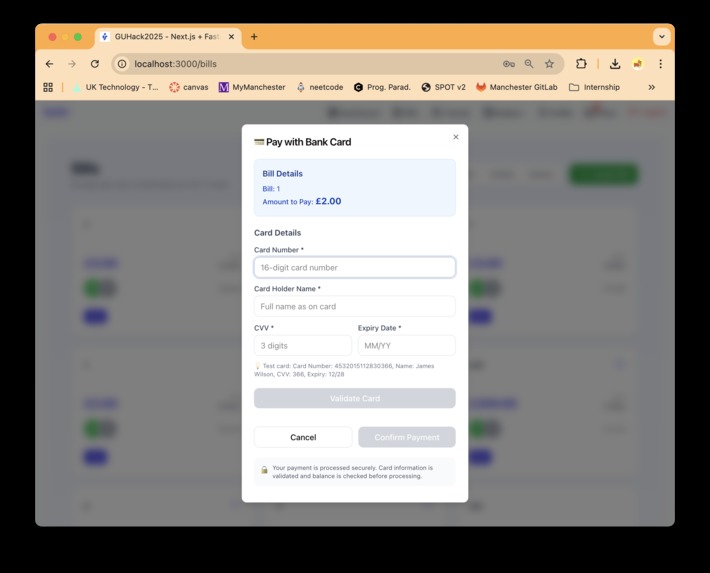
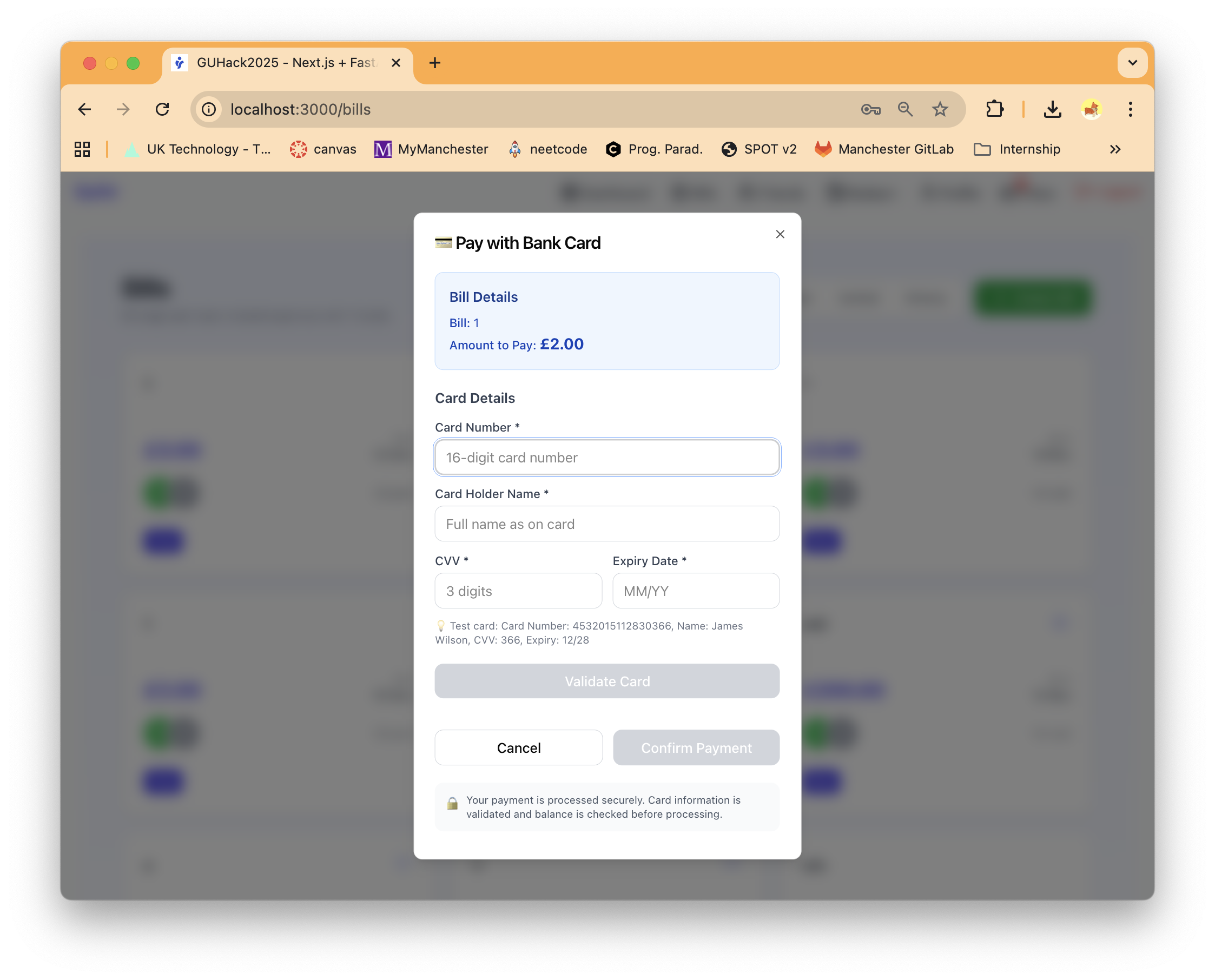
Credit card payment
-
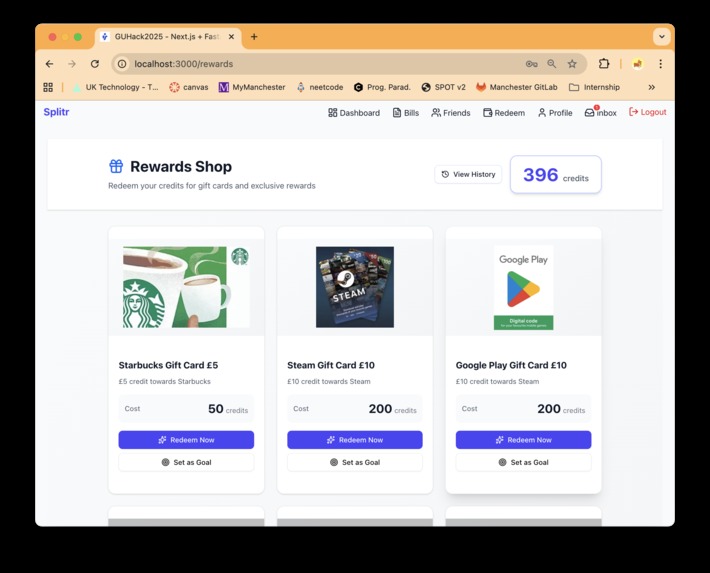
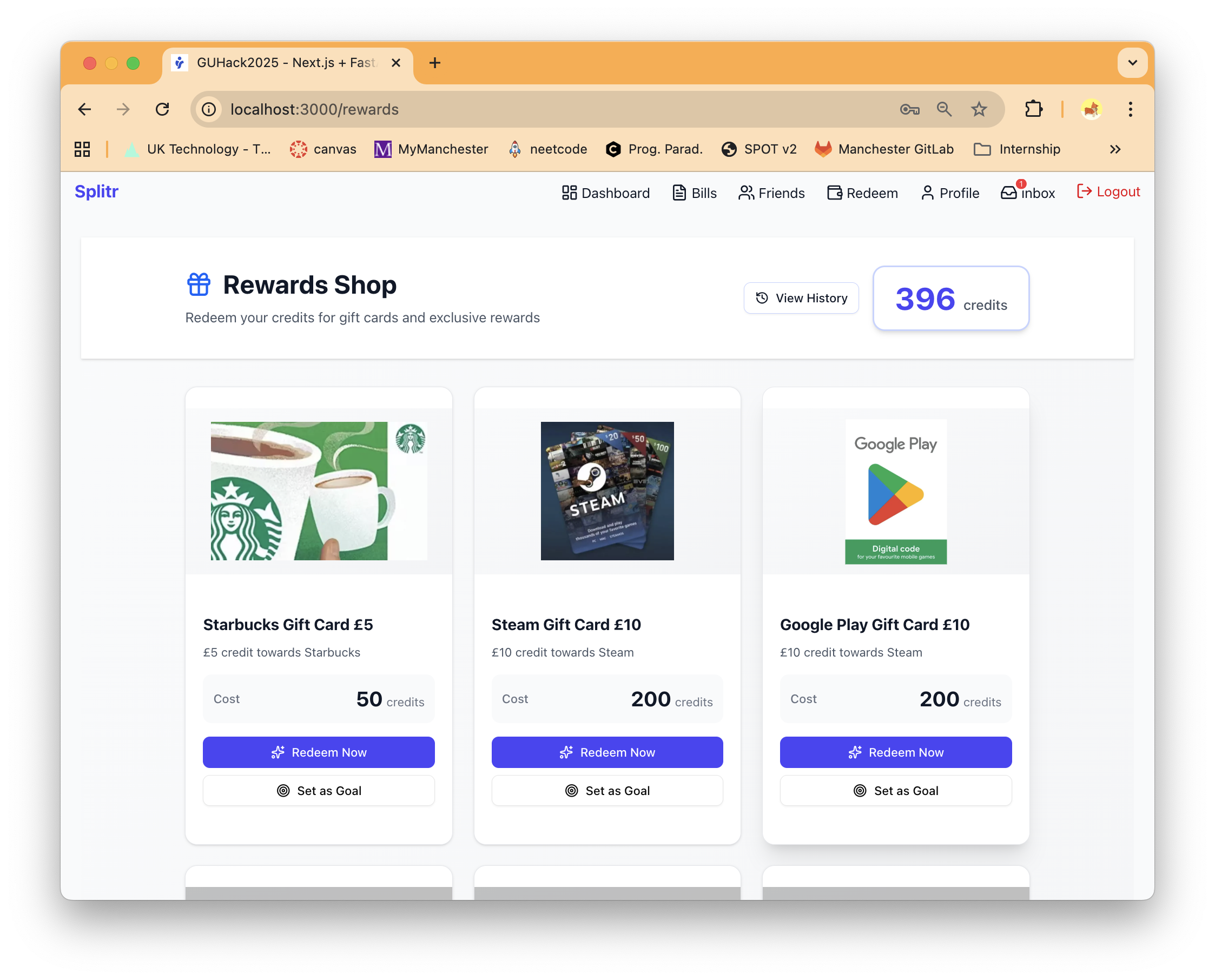
Redeem shop page
-
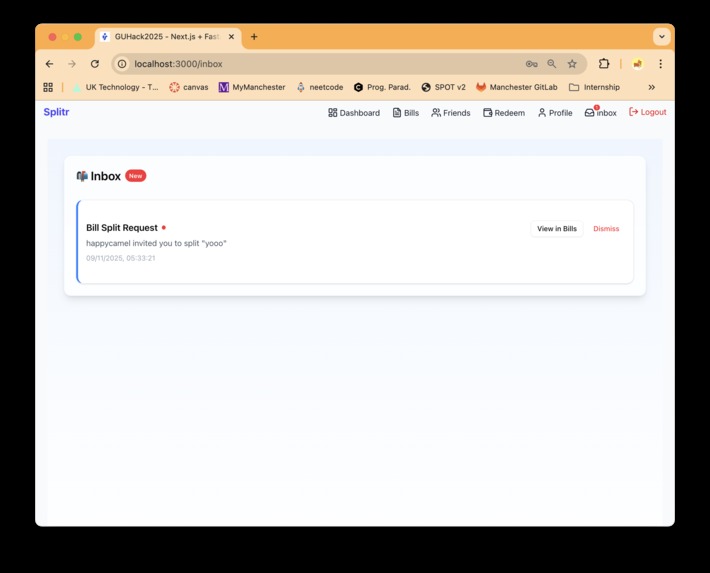
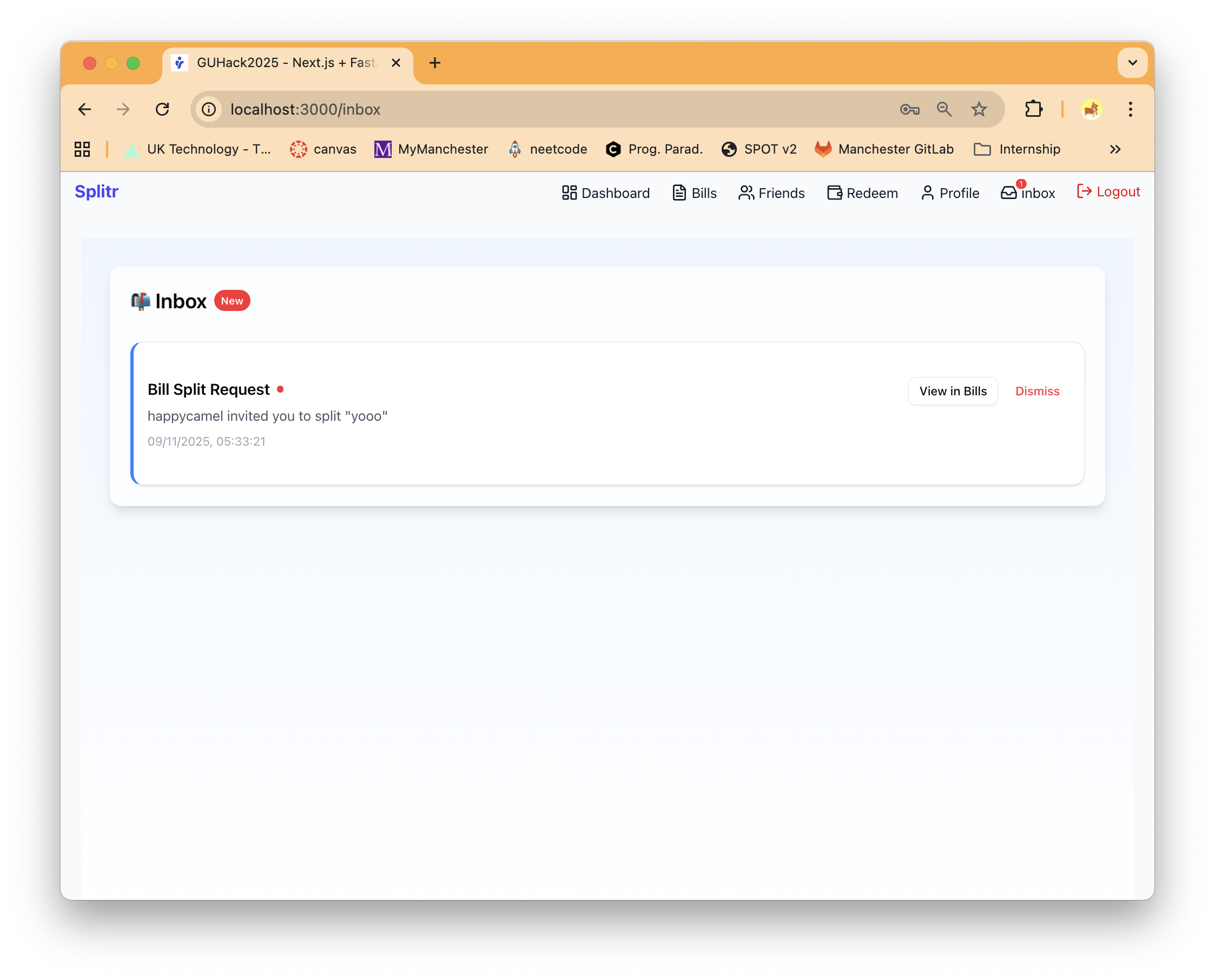
Notifications page


Splitr — Split Everything You Can Imagine & Get Rewarded
Inspiration
Managing shared expenses with roommates and friends is repetitive and error-prone — splitting totals, tracking who paid, chasing late payments, and keeping a tally of shared credits felt like avoidable friction. Splitr was inspired by the need for a lightweight, trustworthy workflow that makes splitting fair, transparent, and rewarding.
What it does
- Create bills, split amounts among participants, invite friends to pay, and track payment status (open / partially paid / paid).
- Automatically credit payers for on-time payments and show users a redeemable credit balance.
- Simple auth-backed UX: signup / login (Supabase) → dashboard → bills / friends → payments / redeem.
- Built-in dev mock for card/processor flows so you can demo payments without a real gateway (backend mock bank).
Key flows:
- Create bill → backend records bill + participants (transactional).
- Participant pays → payment recorded, participant marked paid, credits added and logged.
- Redeem credits → credits consumed and redemptions logged.
(See frontend pages: page.tsx, bills flow: frontend/app/bills/page.tsx.)
How we built it
- Frontend: Next.js (App Router), TypeScript, Tailwind CSS, Framer Motion. Supabase JS SDK for auth and client queries. Key code: supabaseClient.ts.
- Backend: FastAPI + Uvicorn; small service layer that delegates DB ops to Supabase client. Key entrypoints: main.py and reward/account helpers in reward.py.
- Database & Auth: Supabase (Postgres + Auth) is the single source of truth for profiles, bills, participants, payments, and credit_log.
- Local dev: .env/.env.local configure Supabase and local mock bank; mock bank code under backend for demos.
Architecture summary:
- Frontend uses Supabase for auth and queries, and calls backend endpoints for protected business logic (payments, reward issuance) to avoid client-side manipulation.
- Backend uses Supabase server client to perform transactional operations (create bill + participants + ledger entries) and to keep reward logic authoritative.
Challenges we ran into
- Supabase join shapes sometimes return nested arrays for joined rows; required defensive normalization in frontend queries to avoid runtime errors.
- Local dev HTTPS / CORS caused browser warnings; added TLS options and documented mkcert/ngrok workflows.
- Repo clutter: multiple one-off scripts and legacy helpers required reorganization and conservative cleanup tooling.
- Payment integration complexity (idempotency, webhooks, reconciliation) was scoped down; we used a mock bank for reliable demos.
Accomplishments that we're proud of
- End-to-end demoable flows: signup/login → create bill → split & invite → pay via mock bank → credits issued → redeem.
- Reorganized backend into focused routers/services and added safe cleanup utilities for test data.
- Clean Next.js app-router UX with a client-side Layout component and protected dashboard pages.
- Implemented enriched credit history UI that computes reward multipliers and reasons for entries.
What we learned
- Next.js app-router: server vs client components, usePathname rules, and proper placement of client-only logic.
- Supabase practicalities: careful handling of joined row shapes, choosing when to use client SDK vs server-side service keys.
- Importance of server-side reward/payment logic (prevent client manipulation) and atomic DB operations for multi-row workflows.
- Local dev tooling (mkcert/ngrok) is essential for realistic testing with HTTPS.
What's next for Splitr
- Add DB migrations (Alembic / Supabase migrations) and canonical schema.
- Replace mock bank with a real payment provider (Stripe/other) with idempotency and secure webhook handling.
- Add background workers for async tasks (email notifications, reconciliation) and broaden test coverage (backend pytest + frontend testing-library + Playwright).
- Harden ops & security: secrets in CI, Sentry for errors, metrics, staging environment.
Built With
- gemini
- next.js
- python
- react
- tailwind
- typescript


Log in or sign up for Devpost to join the conversation.