-
-
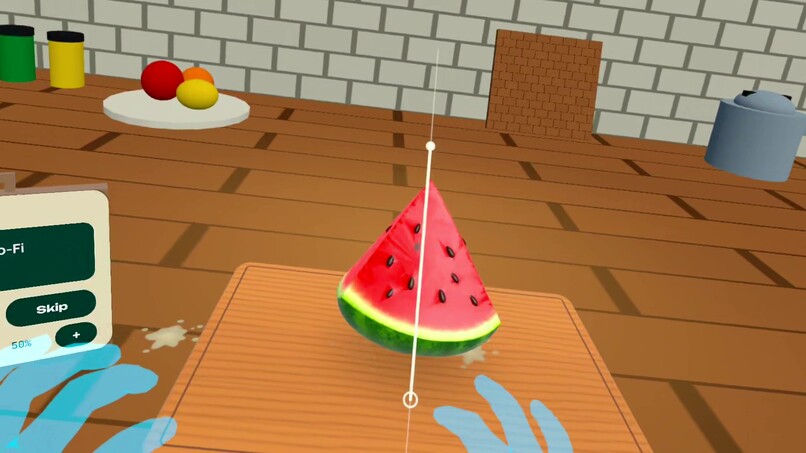
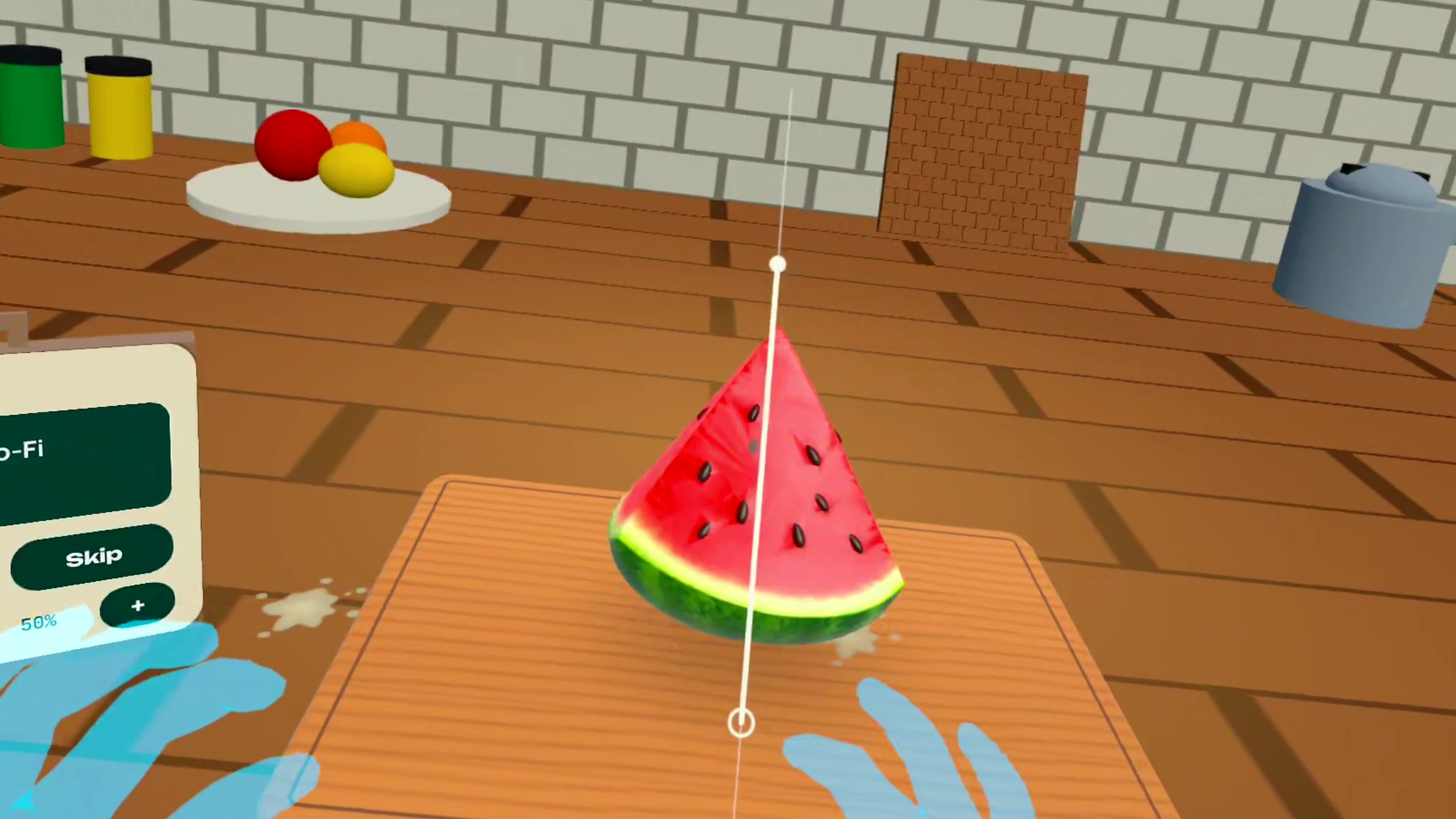
Line up a watermelon wedge in the virtual kitchen. The white line marks the cut.
-
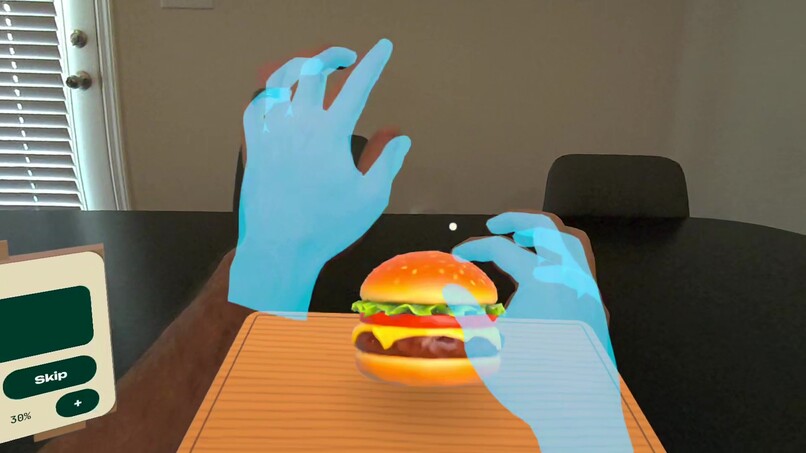
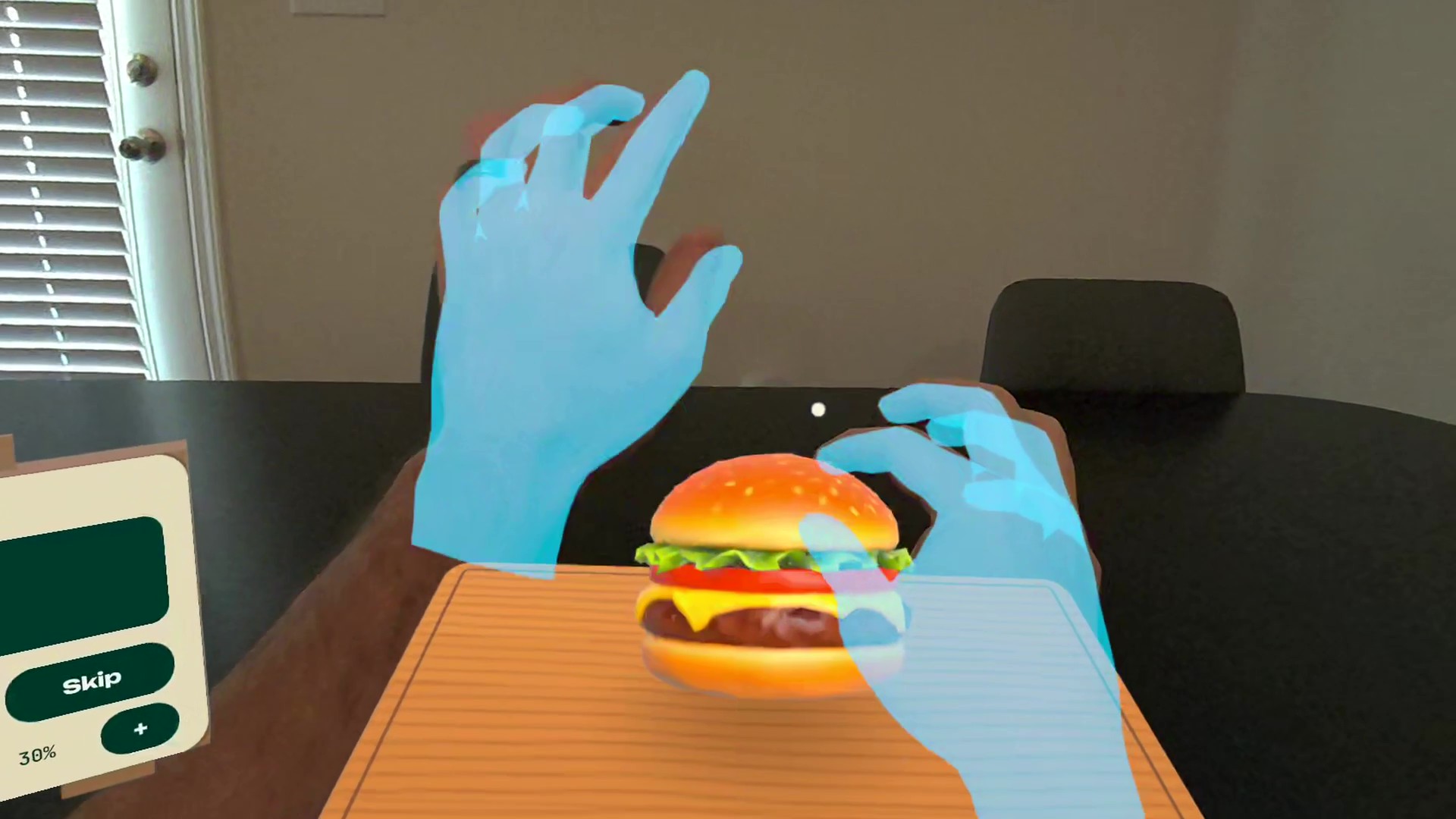
Where would you cut? Line up a burger on your own table with Quest hand tracking.
-
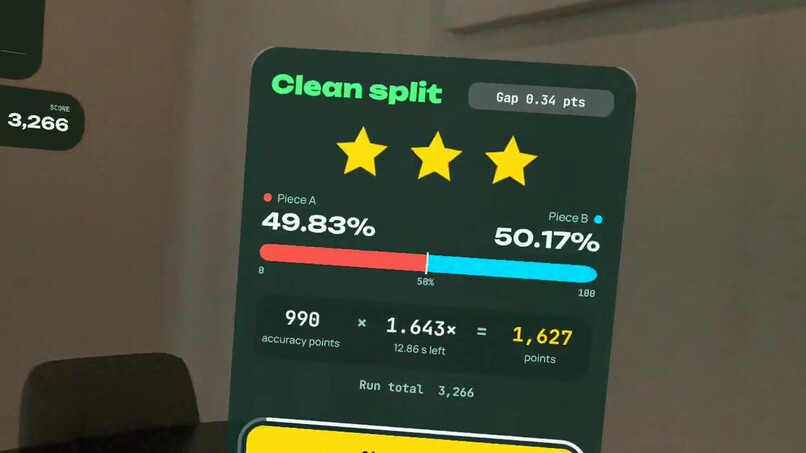
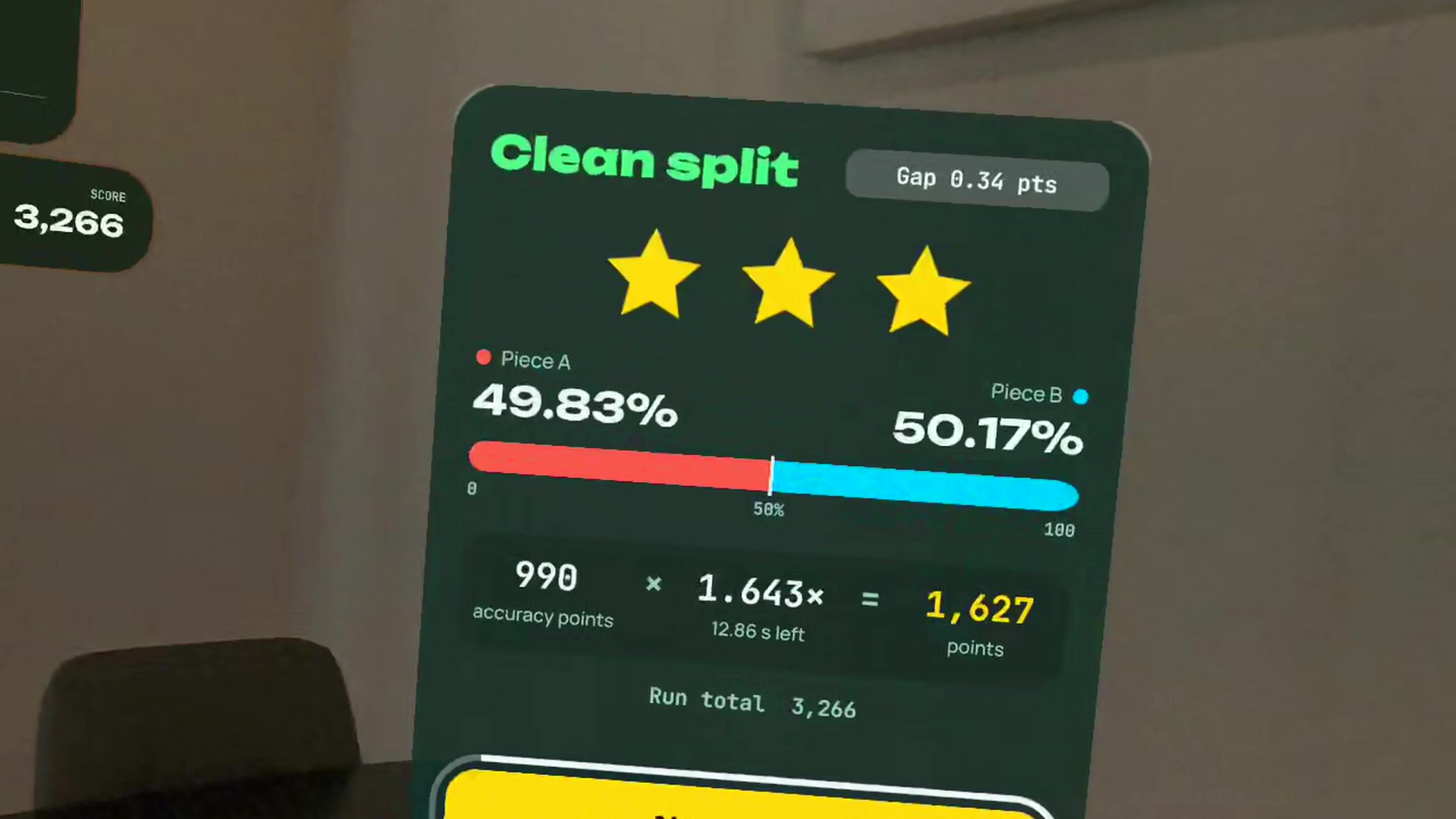
49.83% and 50.17%. The score shows just how close the two pieces came to an even split.
-
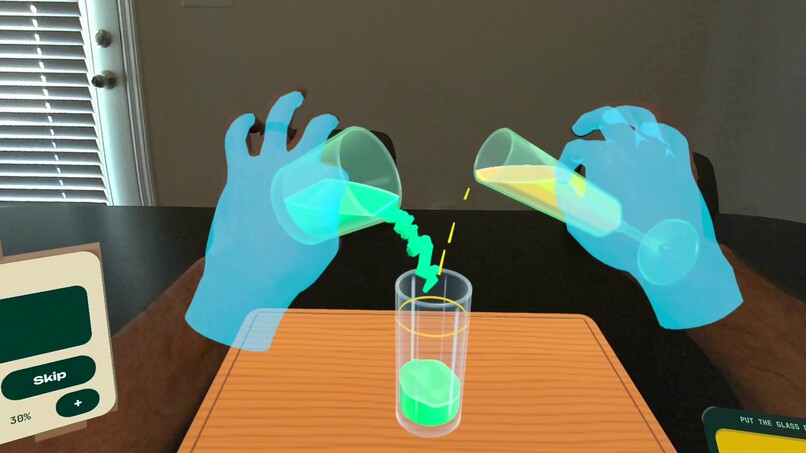
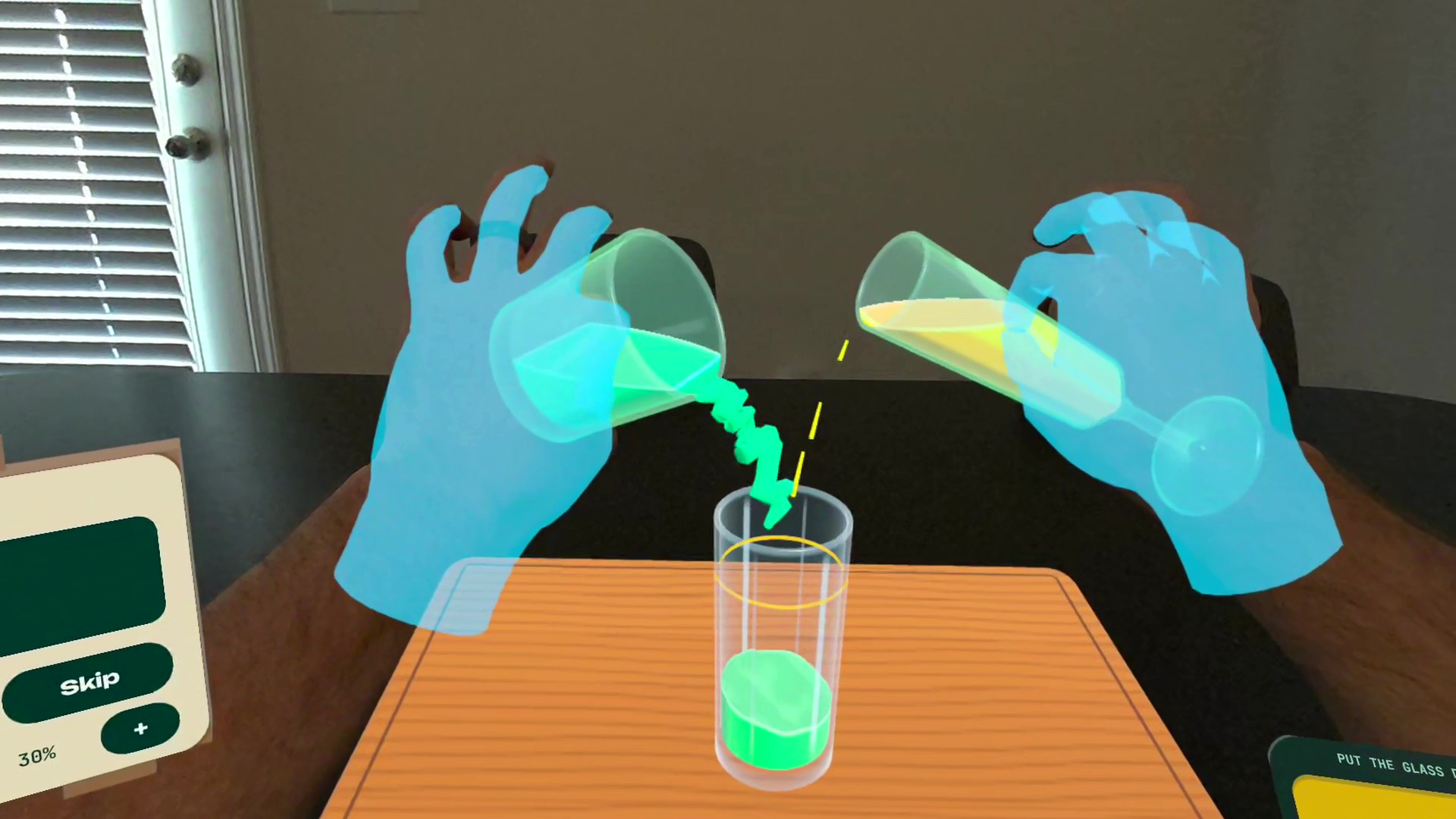
In Pour Decision, tip a glass in each hand to mix juice on your real table.
Inspiration
Someone cuts the last piece of food in half. The other person gets first pick. I wanted to know how close my idea of “half” really was, so I built a game that lets you make the cut and check your eye against the geometry.
What it does
In Split Decision, a cutting board sits on your table in mixed reality. Turn a burger with one hand, pinch beside it with the other, draw a line, and open your fingers. The halves separate, the layers inside are exposed, and the game tells you how much of the burger each side got, down to a hundredth of a percent. With a room scan, the pieces can tumble off the board onto your real table and floor.
There are 35 objects to learn. In Practice, a guide shows where a perfect cut would have gone. In a pass-the-headset duel, both players get the same objects in the same poses, and a ghost line shows where the other player cut. The daily challenge gives everyone the same run. Chef’s Orders asks for fractions, ending with two cuts to make three equal pieces. Pour Decision asks the same question with juice. How high should you fill a wide tumbler to give it half of what’s in a tall flute?
How I built it
I ported the rules from a Three.js prototype into an engine-independent C# core and built the Quest experience in Unity 6 with URP. The slicer intersects the 3D mesh, closes each exposed face, and calculates the volume on either side. Before awarding a score, it checks that both pieces are closed and their combined volume matches the original. Keeping that logic separate from Unity lets me test cuts across the entire object catalog without putting on a headset.
Meta hand tracking drives the pinch and grab gestures. Passthrough and the MR Utility Kit place the food in the player’s room, and Meta account sign-in connects to Epic Online Services for rankings. The board can be repositioned for seated play. Players can swap cutting hands, extend their reach, slow the timer, or use head-gaze dwell controls.
Challenges and what I learned
Opening your fingers moves your fingertips. An early cut could shift at the exact moment you committed to it. I used the last firm pinch sample for the endpoint, so releasing your hand preserves the line you meant to draw. A doughnut posed a different problem. A cut can cross the hole, and closing the new faces has to preserve that opening for the volume calculation to be trustworthy.
What I’m proud of
My favorite moment is the pause before the percentages appear. Two people can look at the same cut and confidently disagree. When the result surprises you, Practice lets you see where the line would have needed to go and try it again.
What’s next
I’d like to put two players around the same physical table using shared spatial anchors, then give them new Chef’s Orders and community-themed daily challenges.


