-
-
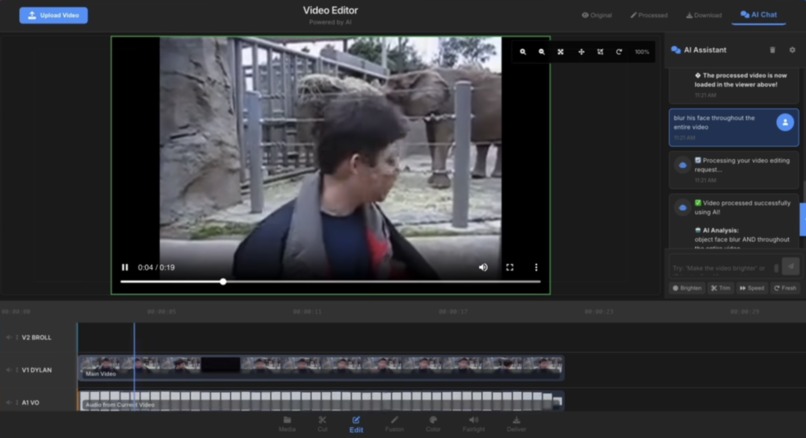
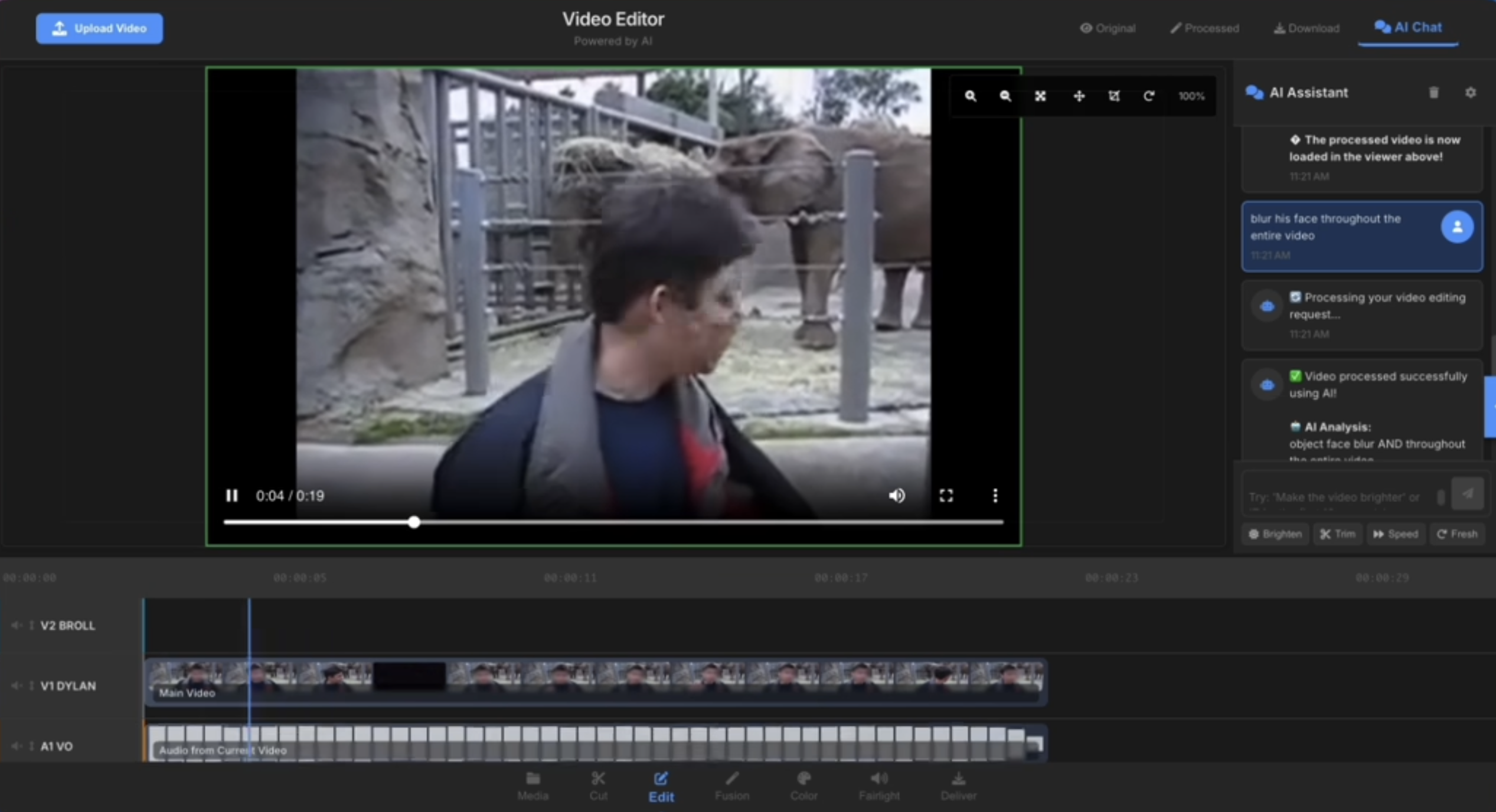
our video editor ui
Inspiration
Video editing is still slow, repetitive, and requires learning complex software. We wanted to build the equivalent of Cursor for video editing; an AI that can understand natural language and make edits for you.
What it does
Splice lets users edit videos using simple prompts. Instead of manually trimming clips, adding captions, creating cuts, or applying effects, users can describe what they want and the AI automatically performs the edits.
How we built it
We built a full-stack web application that combines AI agents, video processing pipelines, and a natural language interface. User prompts are interpreted by an LLM, translated into editing actions, and executed on the video automatically.
Challenges we ran into
- Converting vague user prompts into precise editing actions.
- Making AI-generated edits feel intentional and high quality.
- Handling video processing efficiently without long wait times.
- Coordinating multiple editing operations within a single request. ## Accomplishments that we're proud of
- Built a working prototype in a short amount of time.
- Successfully turned natural language into real video edits.
- Created an intuitive editing experience that removes much of the manual work from video production.
- Earned interest and feedback from experienced builders and founders. ## What we learned We learned that the hardest part of AI video editing isn't generating edits—it's understanding user intent. We also gained experience building agent-based workflows and integrating AI into creative tools. ## What's next for Splice
- Improve editing accuracy and consistency.
- Add support for more advanced editing operations.
- Introduce collaborative workflows for teams.
- Build deeper integrations with professional editing software.
- Move closer to a fully autonomous video editing assistant.
Built With
- cohere
- css
- ffmpeg
- html5
- javascript
- numpy
- opencv
- python
- scikit-learn
- twelvelabs

Log in or sign up for Devpost to join the conversation.