-
-
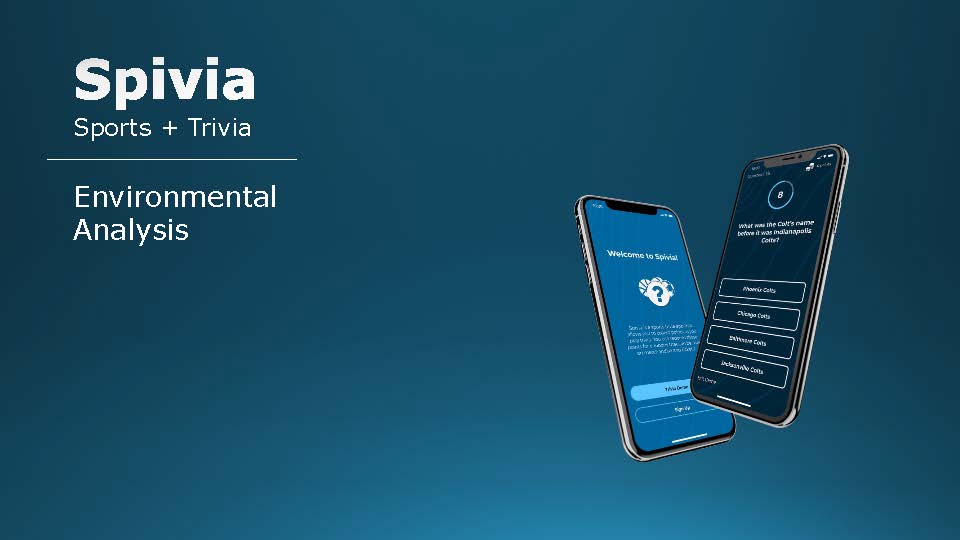
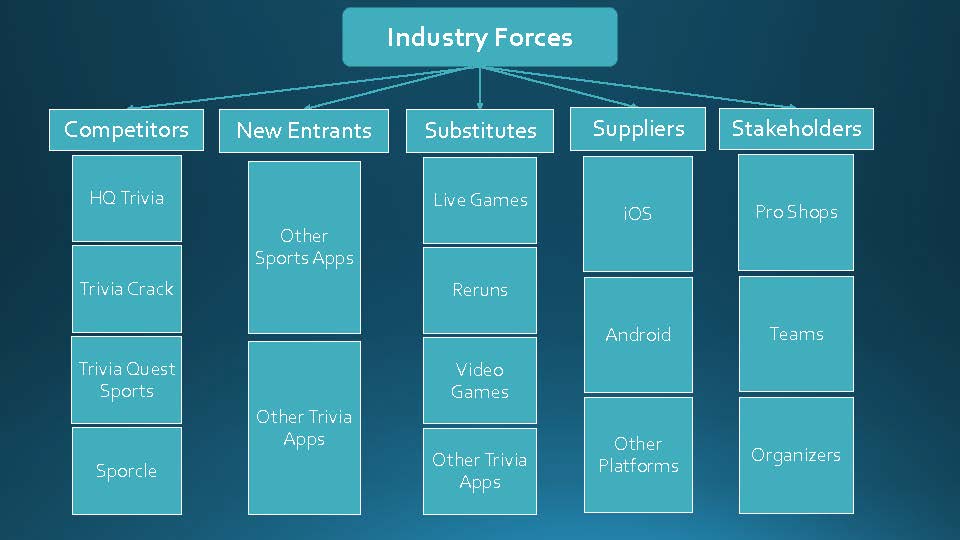
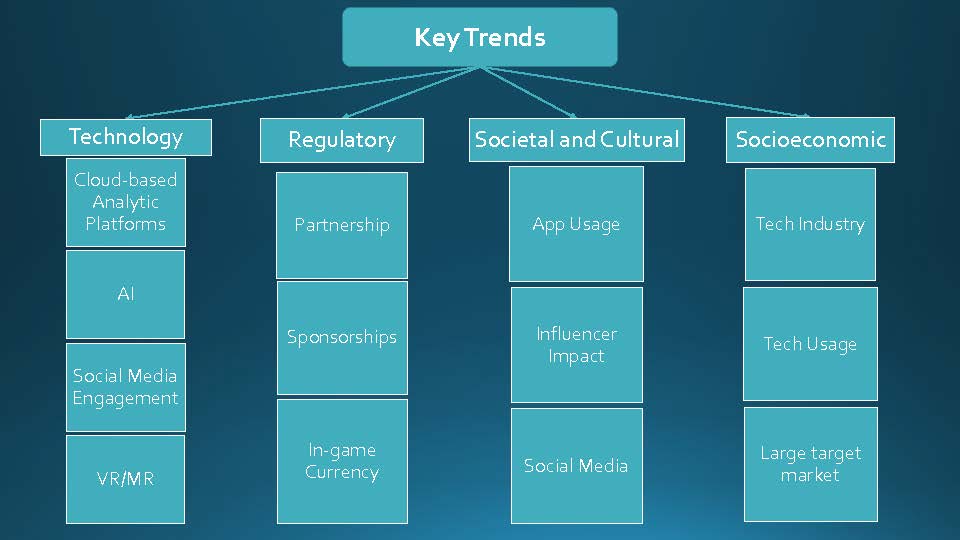
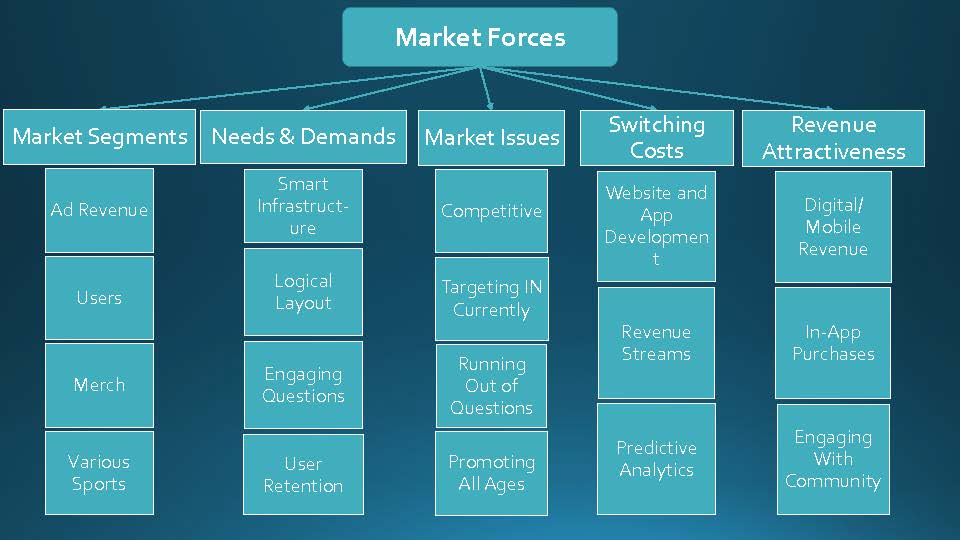
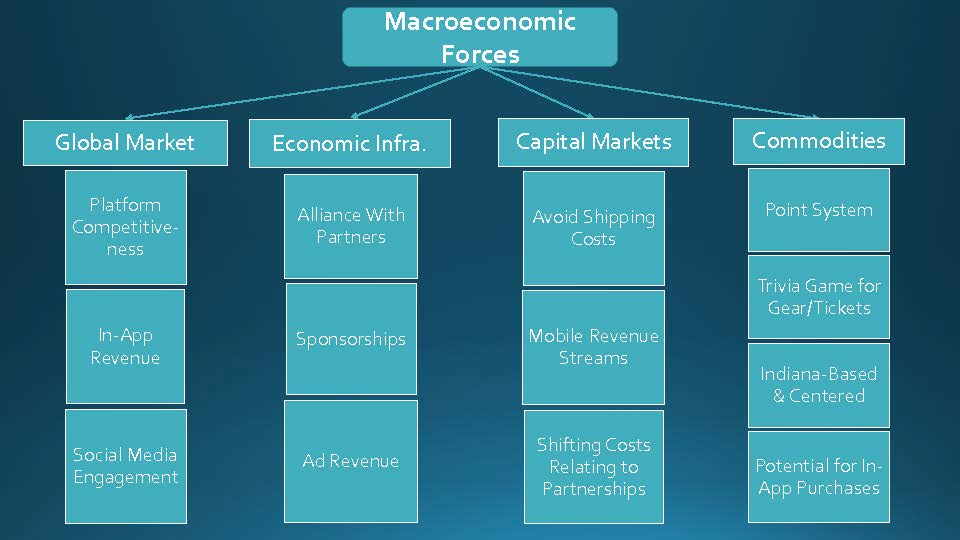
Environmental Analysis
-
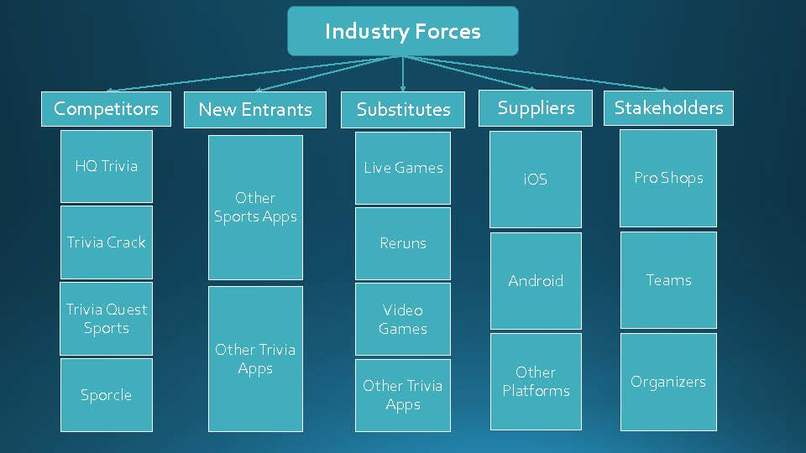
Environmental Analysis
-
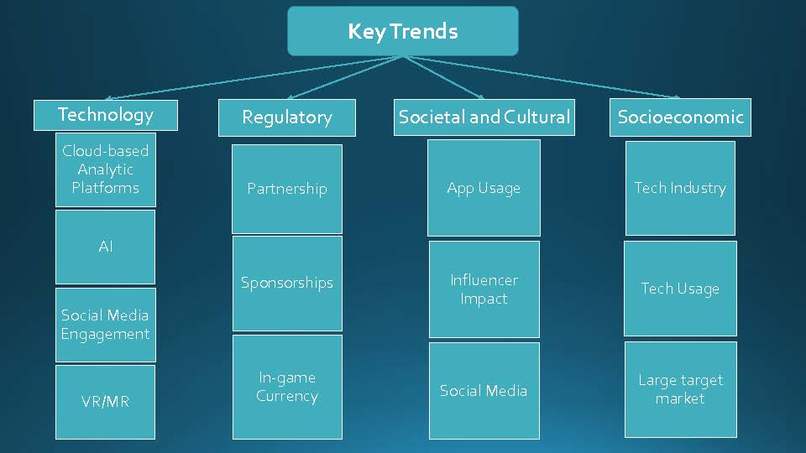
Environmental Analysis
-
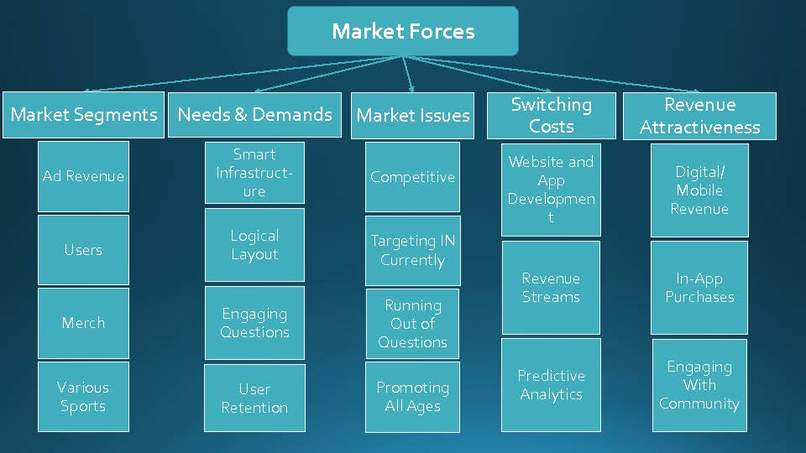
Environmental Analysis
-
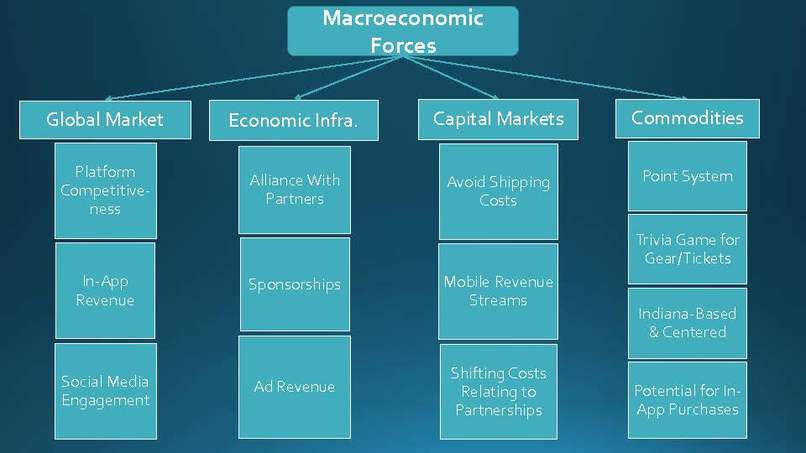
Environmental Analysis
-
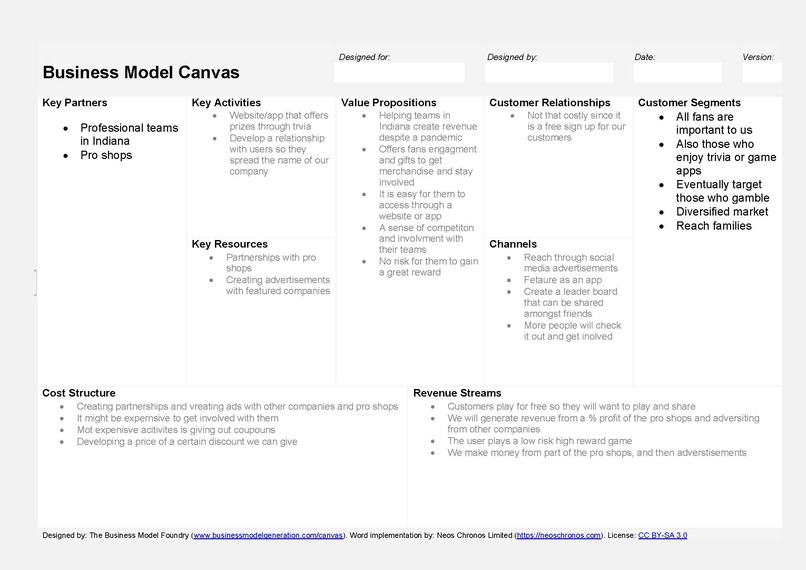
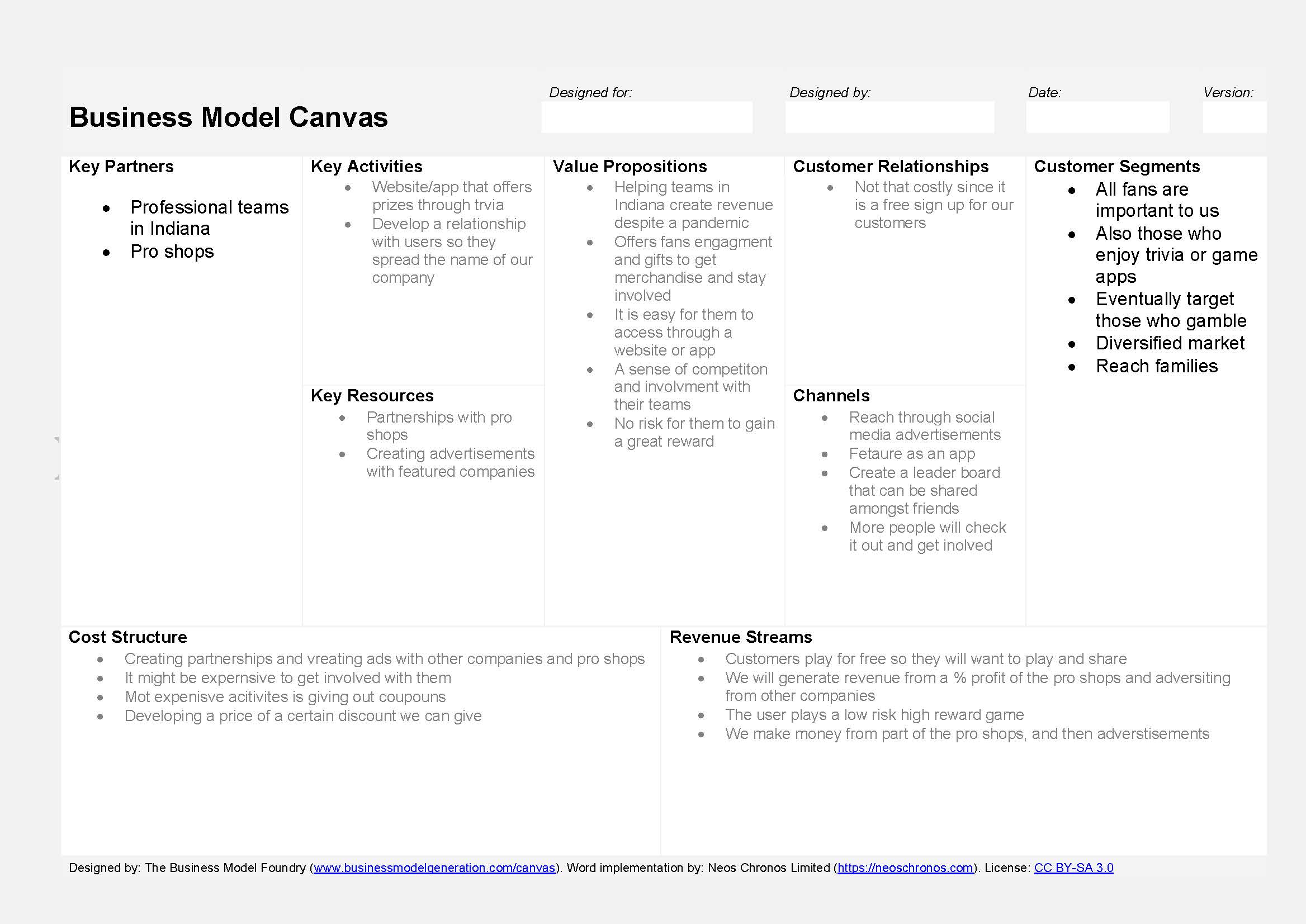
Business Model Canvas
-
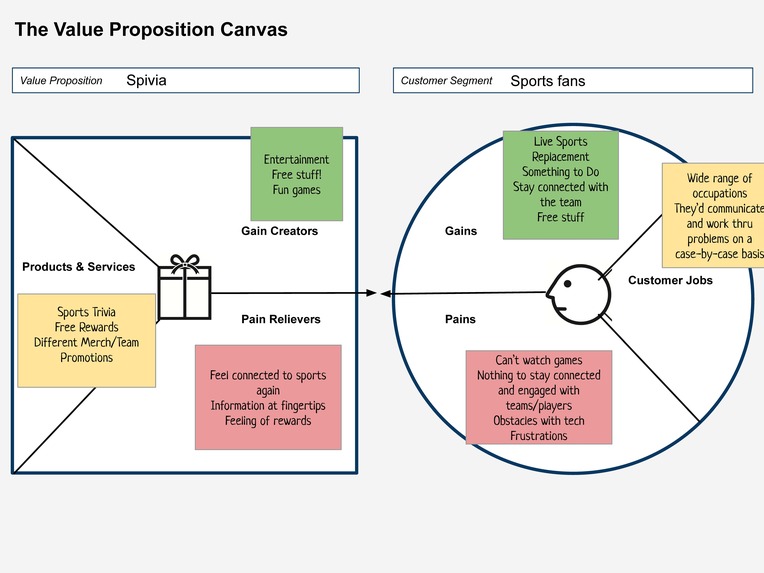

Value Proposition Canvas
-
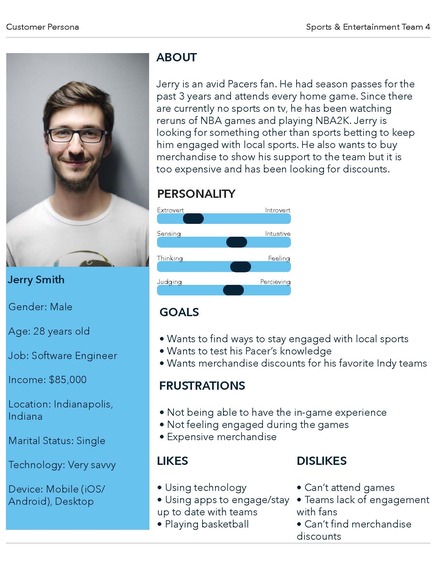
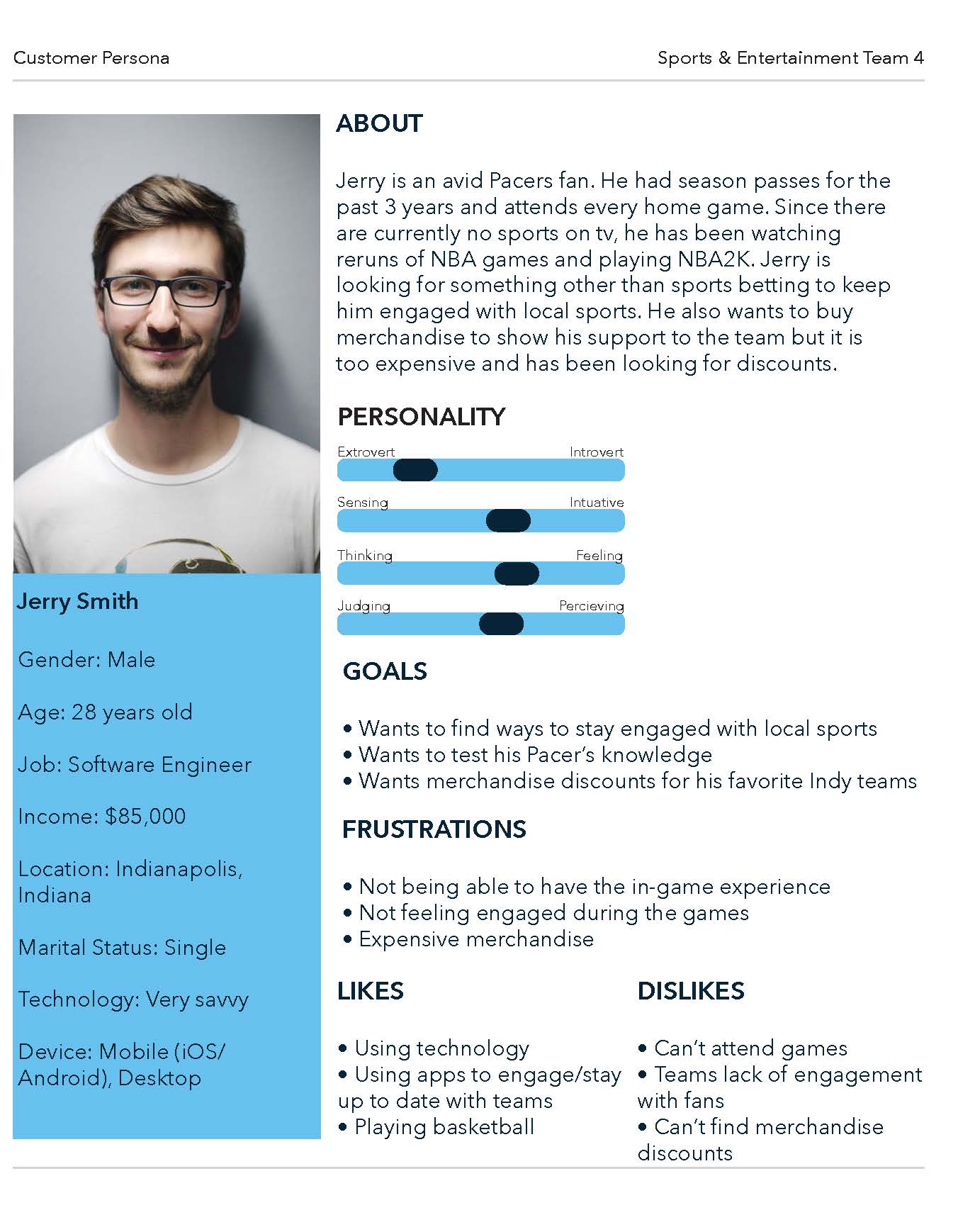
Customer Persona
Team Spiva - Sports and Entertainment Team 4
Overview
Due to the tremendous impact of COVID-19, unfortunately, the access to live sporting events has come to a halt for most major sports. Moreover, several fans all over the world have been saddened by the disruption of live games and have lost a sense of connection with some of their favorite sports and teams. According to the World Economic Forum "in these difficult times, the ability of sports to bring people together is missed more than ever" (Hall). However, to help combat this loss of touch with major sports and prepare for when more sports are live again, our team worked with subject matter experts (SMEs) to come up with a new innovation called "Spivia."
"Spivia" is a web and mobile application that allows users to take trivia on their favorite sports teams while earning points and ultimately access to coupons from their team's merchandise store. If the user also exceeds a certain point threshold (levels up), they will also have the ability to win V.I.P. tickets for the team of their choice once their season restarts.
Since several in-person sporting events have been impacted due to this pandemic, our team has devised a go-to-market plan that focuses on the use of social platforms to popularize our product.
Team Members
Vedant Chawla (Project Manager/ UX Designer, Senior Informatics @ Indiana University - Bloomington) Vedant was responsible for scheduling all internal and external meetings. To do this, he created a Trello board which consisted of each member's tasks and conducted weekly meetings addressing all goals that were to be achieved by the team each week. Though Abigail designed most of the web and application prototypes, Vedant helped wherever he could in the design as well using Figma.
Gregory Deadman (Business Analyst/Data Science, Senior Finance @ Marian University) Gregory was responsible for market research, survey creation/distribution/analysis, advertisement research/implementation, and the financial (revenue) and value proposition models. To perform these tasks, he used Google and Microsoft Suites (such as Google Docs, Forms, Slides, and Sheets and Microsoft Excel), various market and competitor sources, and financial concepts and theories.
Paice Fuller (Software Engineer, Senior Computer Science/Psychology @ IUPUI) Paice was responsible for website development. He assisted in project conceptualization and led website development. Website design and development followed the application prototypes created by Abigail and Vedant and Cary assisted in implementing the overall website design. Paice added the Javascript to the website behind the trivia function.
Daniel Scotto (Go to market research, Senior Communications @ DePauw) Daniel was responsible for completing market research and identifying the correct market for our product. He also created the business canvas model and reached out to the pro team shops.
Cary Martin (Software engineer/Data analyst, Sophomore Computer Science and Economics @ Depauw)- CJ was responsible for website development and further research on possible functions of the application. Coded html and css to create the front end of the website based off the prototype made by Abigail. Also used Boostrap as a library to help with the structure of the website. Conducted research on google’s cloud technology firebase as a possible use for authentication and database.
Abigail Willis (UX Designer, Human Computer Interaction Masters Student @ IUPUI) Abigail was responsible for creating low and high fidelity prototypes for the website and app. She also created a clickable prototype for the app using Figma. After Gregory created our user research survey, she created a customer persona based off of the data from the survey.
How did you decide on this customer segment, problem, and solution?
Between market research for the Environmental Analysis and the Google Form survey we distributed, we found that the problem was attempting to find a mostly viable substitute to the lack of live sports and games. We asked our survey participants what they were doing to substitute this feeling, and these answers varied from playing video games (42.6%) to nothing (26.7%). This really confirmed our push to develop an app relating to sports with a gaming aspect to it, which we decided was trivia. There are a majority of apps in the gaming category; and from our research, we found that two of the bigger trivia apps were HQ Trivia and Trivia Crack, neither of which are one hundred percent tailored to sports. Only one of these, HQ Trivia, offered rewards for participating, which was handing out money. We did not think it would be wise to base our reward system off of money, but instead, base rewards off of things like merchandise, tickets to games, and food & concessions. With guidance from our coaches, we decided to implement our idea into a functioning website first, and then eventually build it out into a mobile app that functions on both Apple and Google Stores. We used the data that we collected from the survey to create our customer persona. When we went to create our product, we made sure to cover all of the customer persona’s goals and frustrations. The customer persona and survey helped us understand what features our product should have.
How did your team build and iterate on the solution?
To create our product, Spivia, we first decided what the key features that we wanted our product to have. These features are 1)Allow users to play sports trivia and earn points from playing 2)Use those points to earn coupons that can be used for merchandise and tickets 3)Give users links to the sports team’s merchandise stores. Once we had the features figured out we designed the low fidelity web prototype in Figma. After everyone on the team was happy with the base design, we designed the high fidelity prototype and the developers used this design to build our functioning website. The website design closely followed the base design. We found web hosting and domain services through interserver.net. The basic design was laid out and approved before coding began. The trivia aspect of the website is a javascript program that can easily be modified to add additional questions or topics. Database implementation for users and the bank of trivia questions were put on hold due to the limited time frame of the project. While the developers were working on developing the website, we started designing our app in Figma. We designed the high fidelity prototype of the app similar to the website, but had the app contain more of our product’s features. We showed the app prototype to our coaches and a UX resource (Outside Resource). We received valuable feedback from them and made changes to create our final app design.
Key Metrics
We do not have any actual data relevant to the specified metrics of the ones provided in the example abstract. However, we do have lots of great survey data that further helps our drive to develop Spivia. We believe this with a second round of research will provide a well-rounded base for pro shops and teams to partner with us and mutually sponsor each other.
Chart 1 https://drive.google.com/file/d/14Unhvog6UlDPI-ndsPZeetlxX6U0Q28J/view?usp=sharing
Chart 2 https://drive.google.com/file/d/1f_bgp6Js5SmhZwKBCLBdJB-Cb1GgXvJw/view?usp=sharing
Technical Architecture
- Website Link - http://prfullerproject.net/main.html
- Website Demo Link - https://www.youtube.com/watch?v=0-0eWppt2Cw
- App Demo Link - https://www.youtube.com/watch?v=KgcIRSzH2Mg
- Presentation Link - https://youtu.be/37RCZe2Kers
Key Tools, Libraries, and Frameworks
Web Application
- Figma - We chose Figma because of its ability to allow multiple users to design and prototype live all at once, since multiple team members needed access to the designs. This was tool was also great in providing CSS, a stylesheet language pivotal in our web development
- HTML - We figured using this language would be the fastest way to build our app given the 5-week time constraint.
- CSS - Very compatible with HTML and Figma and was an easy style sheet language to use when manipulating the presentation of our website
- JavaScript - This language was used to make the website clickable and navigable Interserver.net -Web hosting and development
Mobile Application (Prototype)
- Figma - This helped us create various screens for both of our Lo-Fi and Hi-Fi fidelity prototypes.
If you had another 5 weeks to work on this, what would you do next?
If we were to have another 5 weeks, there are a few features that we would add to the application:
- Associate and collaborate with other sports teams outside of Indiana
- Create the ability to add friends through using a share button on the application or through social media
- Implement databases for user profiles and the trivia bank
- View where a user stands on the leaderboard
- Along with the discount coupons to merchandise, allow access to additional prizes such as tickets or other memorabilia from teams
- Approach Apple for discussion about application launch in their App Store
- Connect with advertisers to host various ads on both the website and application
Checklist of Completed Items
- Environmental Analysis
- Business Model Canvas
- Value Proposition Canvas
- Customer Persona


Log in or sign up for Devpost to join the conversation.