Inspiration
Our inspiration came from our shared love for music and curiosity about the patterns hidden inside sound. We wanted to explore how rhythm, brightness, and tone could be expressed visually — and how that visual form could become something of real financial value. That idea grew into SpiroMint, a browser-based app that transforms any audio file into a unique mathematical artwork using custom functions we wrote ourselves.
What it does
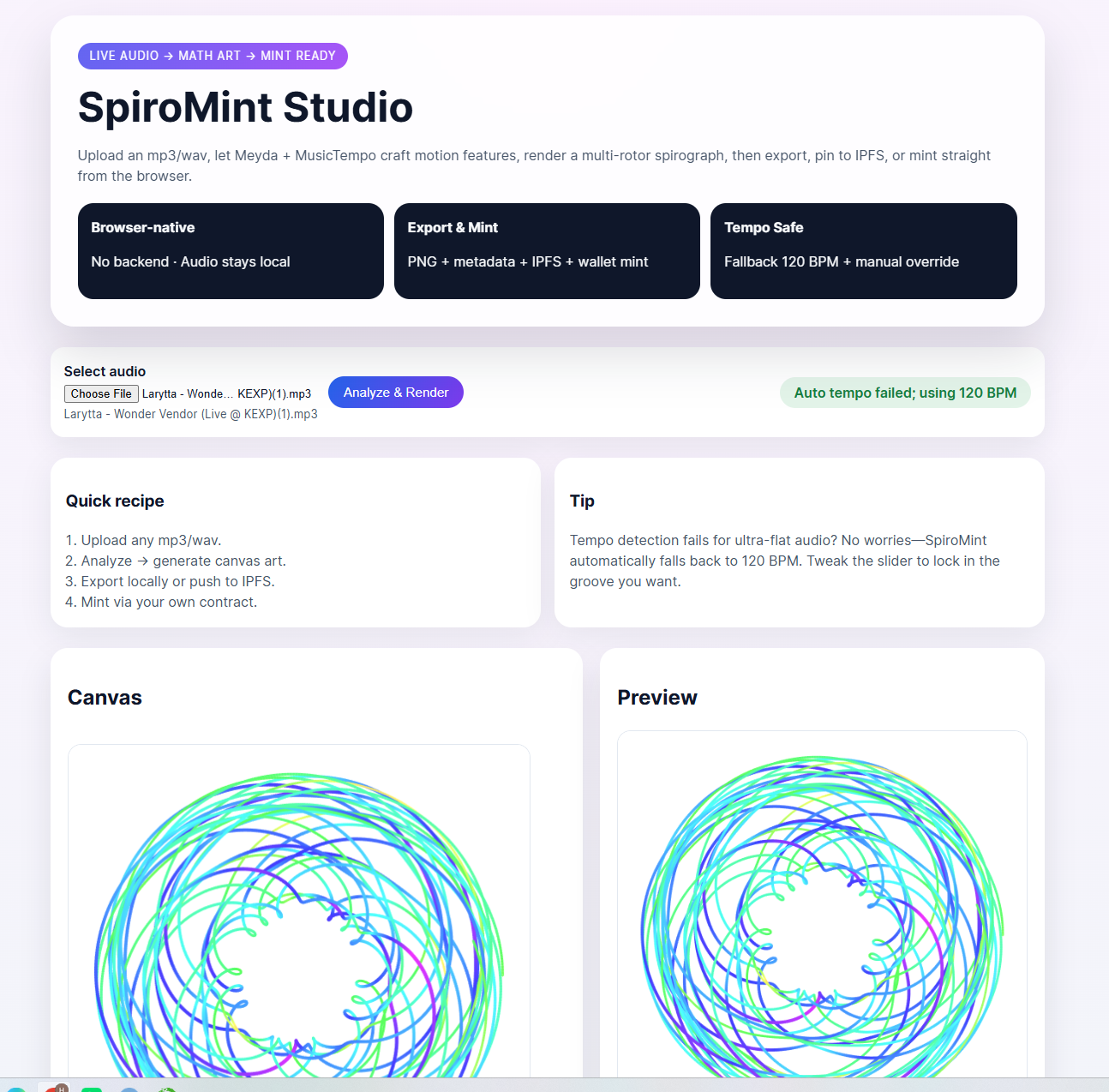
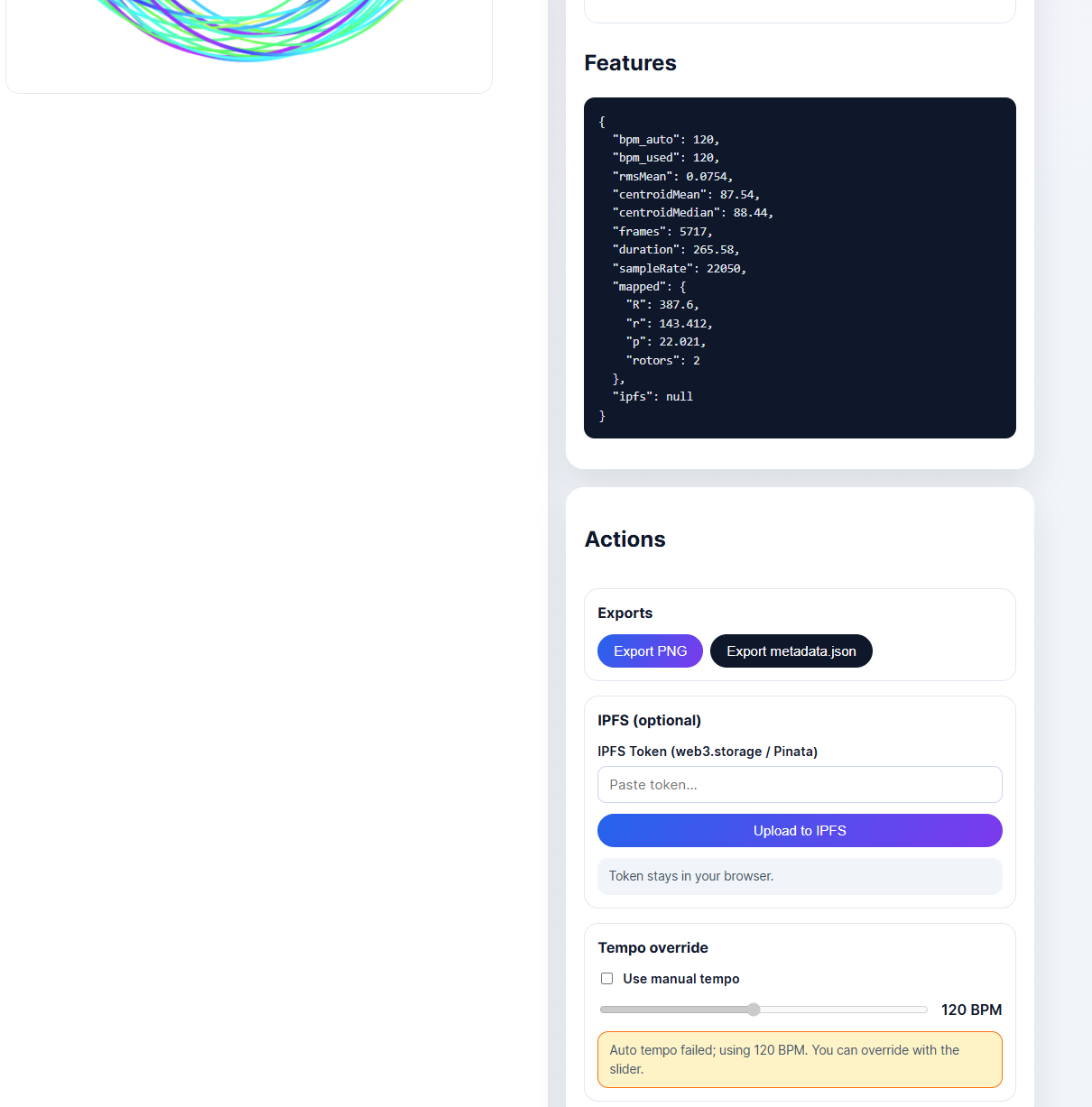
SpiroMint turns music into math — and math into value. It’s a browser-based app that analyzes the structure of sound and generates unique mathematical visuals based on audio features like tempo, loudness, and brightness. Each artwork carries a verifiable digital “fingerprint” that can be exported as metadata or uploaded to existing NFT platforms, allowing creators to visualize, verify, and eventually monetize their music through data-driven art.
How we built it
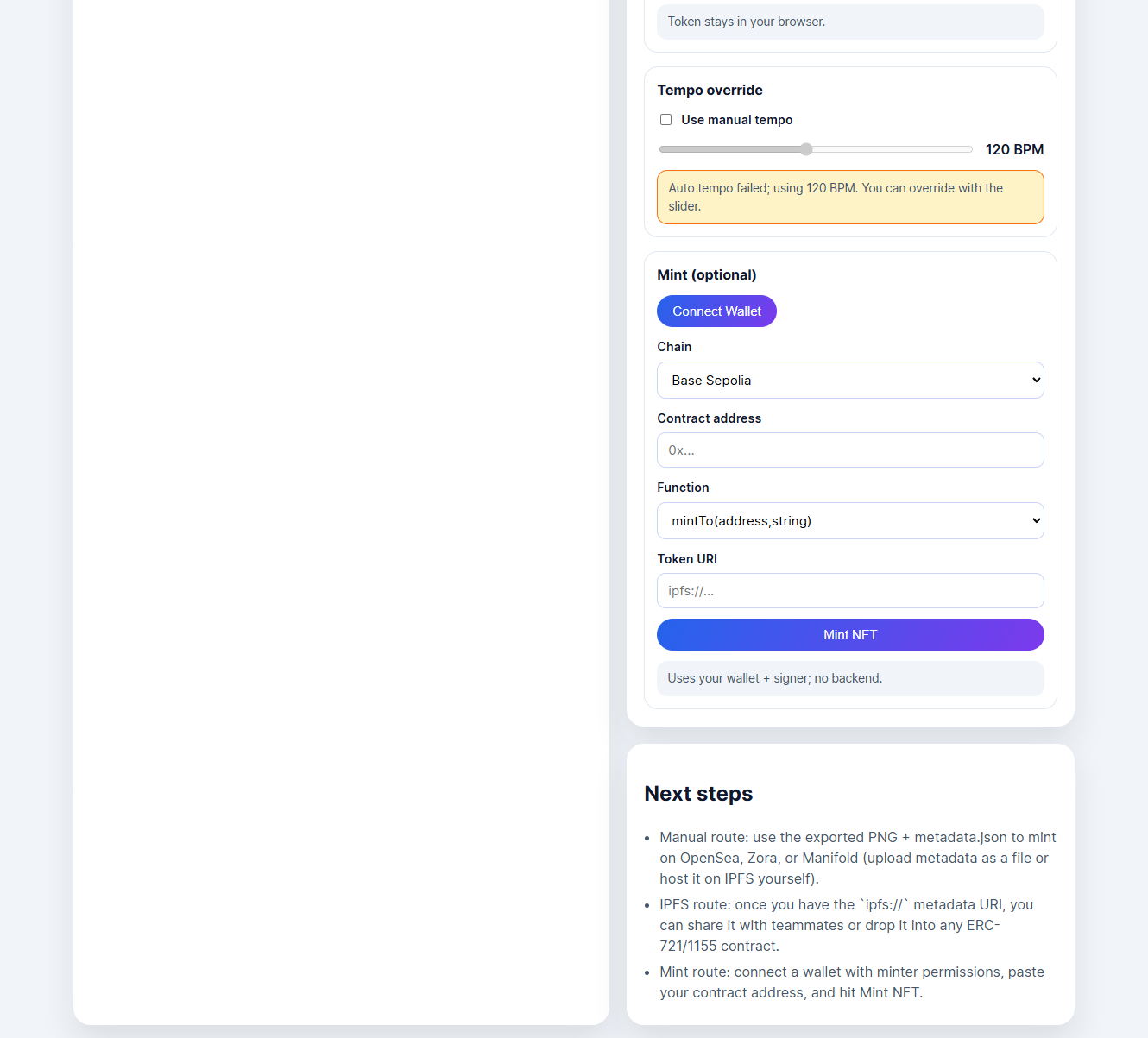
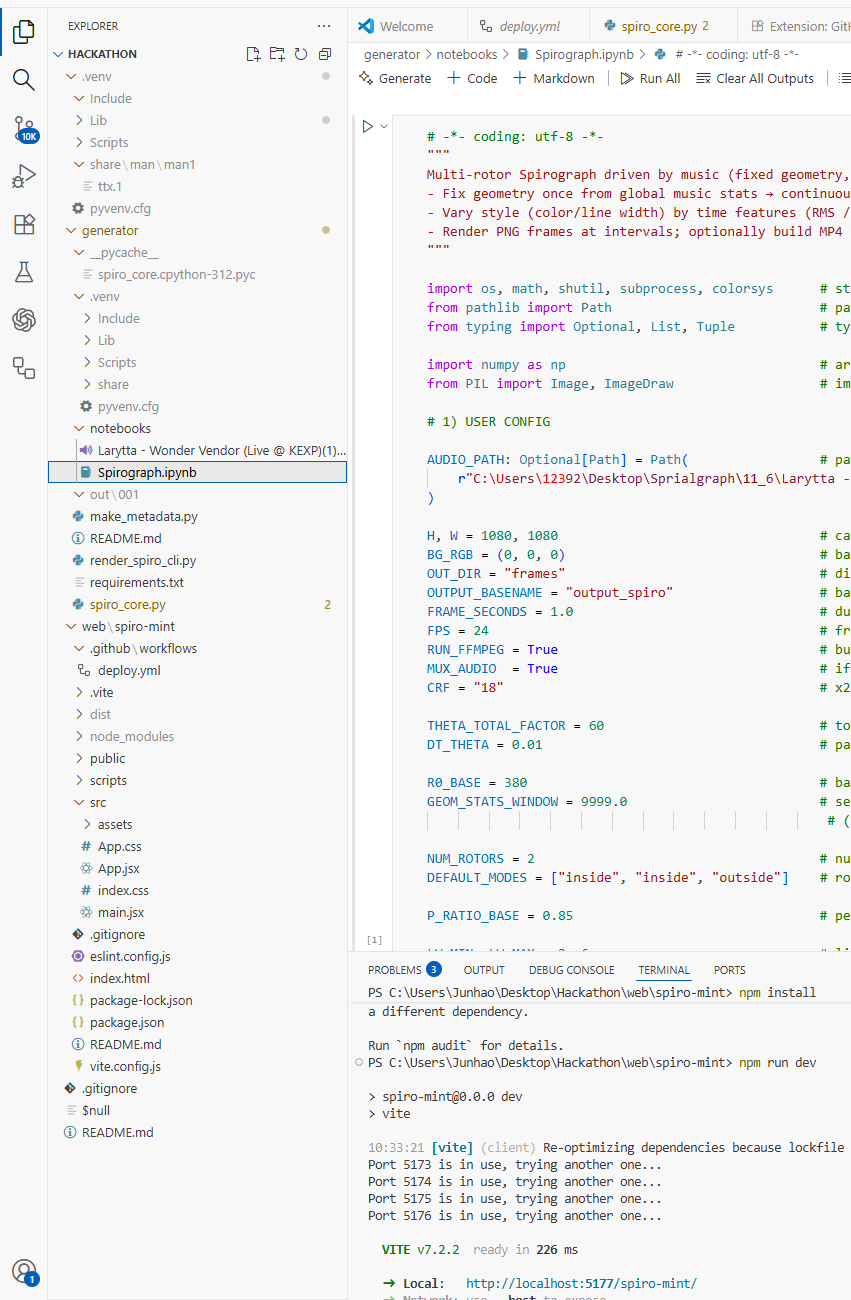
We built SpiroMint as a browser-only web app using JavaScript (Vite + Canvas) for rendering and Meyda + MusicTempo for audio feature extraction. Our custom mathematical functions generate spirograph patterns directly from the analyzed sound data, creating a unique visual signature for each song. We integrated Ethers.js and IPFS (via web3.storage and Pinata) to design the NFT minting and storage flow, keeping everything client-side with no backend required. While developing, we faced challenges setting up the NFT deployment due to limited access to the required testnet tokens, but we completed a fully functional prototype that connects music, math, and FinTech seamlessly.
Challenges we ran into
One of our biggest challenges came from the NFT implementation. While we successfully built the logic and interface, we couldn’t access the required testnet tokens to fully deploy and test live minting. Despite that, we built a working prototype that connects sound analysis, mathematical visualization, and metadata generation.
Accomplishments that we're proud of
We built the entire visualization system from scratch — including the mathematical functions that generate real-time spirograph drawings from audio files. We also developed a functioning browser app that runs entirely client-side, ensuring transparency and privacy. Despite not being able to deploy NFTs live due to token limitations, we achieved a fully working prototype that bridges AI, art, and FinTech in a creative new way.
What we learned
Through this project, we learned how to extract musical features like tempo, loudness, and brightness and translate them into geometric motion and color. We also learned the fundamentals of building an NFT infrastructure — how decentralized storage and smart contracts could support creator ownership and royalties.
What's next for SpiroMint
Next, we plan to launch a full version of the SpiroMint web platform that allows users to mint directly within the site and receive real-time transaction feedback. We want to integrate music platform APIs and build automated royalty tracking for artists. Ultimately, our goal is to make SpiroMint a space where creativity and finance coexist — helping musicians and digital creators transform their sound into sustainable, investable assets.
Built With
- api
- architecture
- base
- browser-native
- canvas
- client-side
- erc-1155
- erc-721
- es6+)
- ethers.js
- framer
- geometry
- githubpages
- html5
- ipfs
- javascript
- lucide-react
- mapping
- meyda
- motion
- musictempo
- parametric
- pinata
- react
- rendering
- sepolia
- shadcn/ui
- standard
- tailwindcss
- testnet
- v6
- vite
- web3.storage


Log in or sign up for Devpost to join the conversation.