-
-
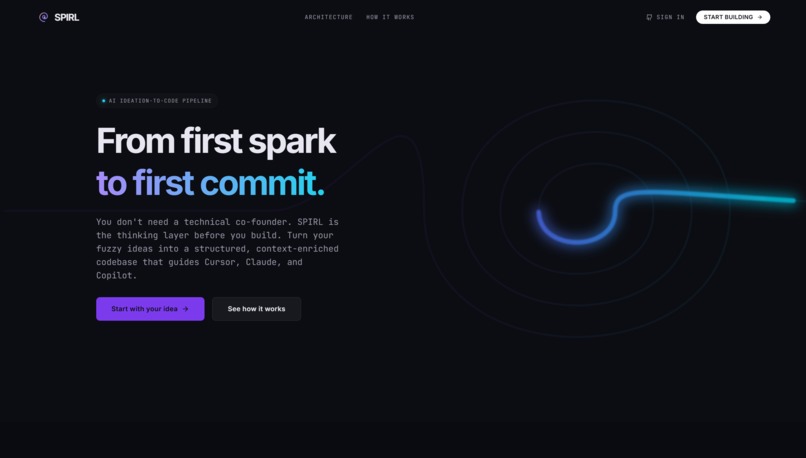
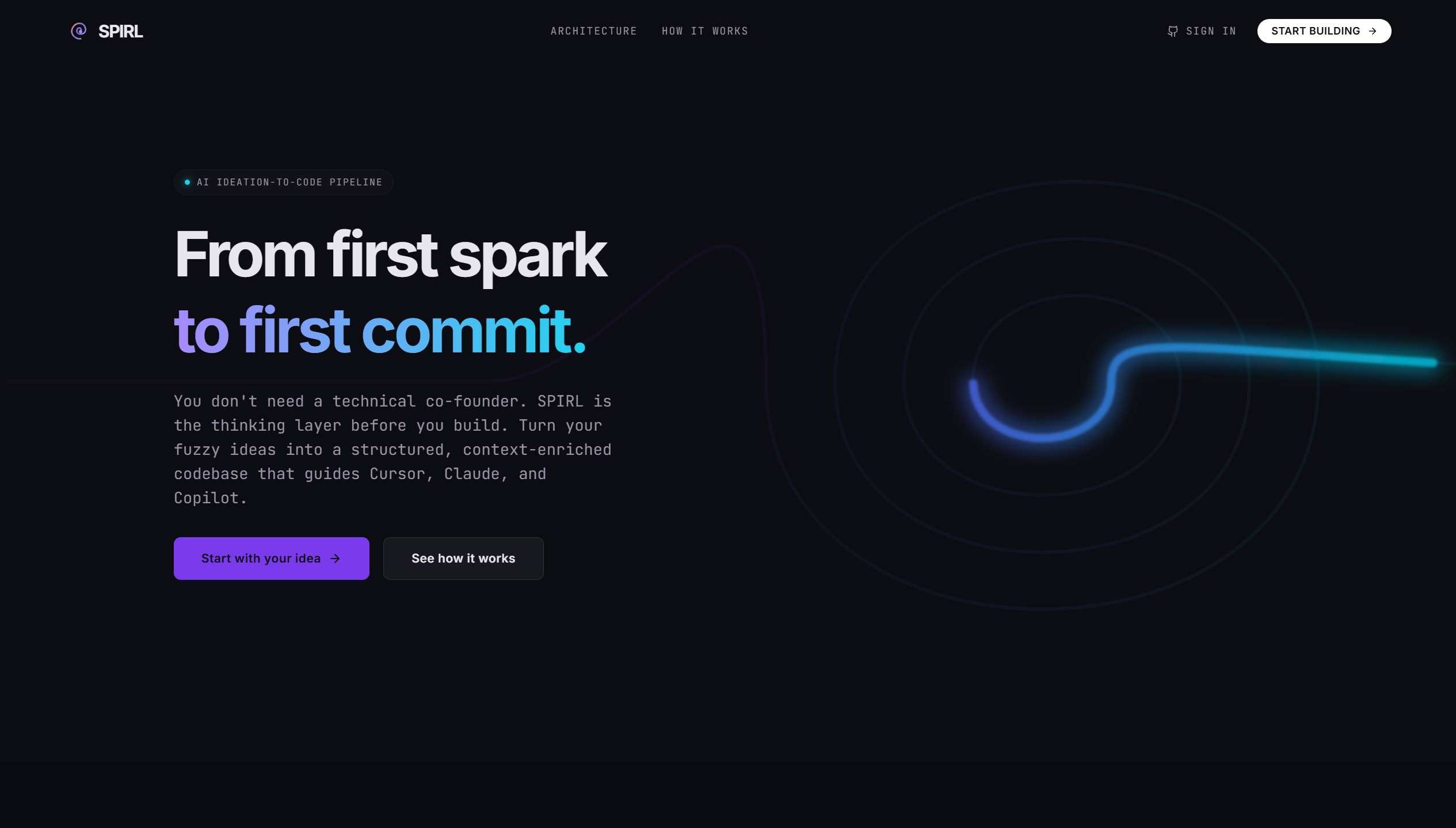
Hero section
-

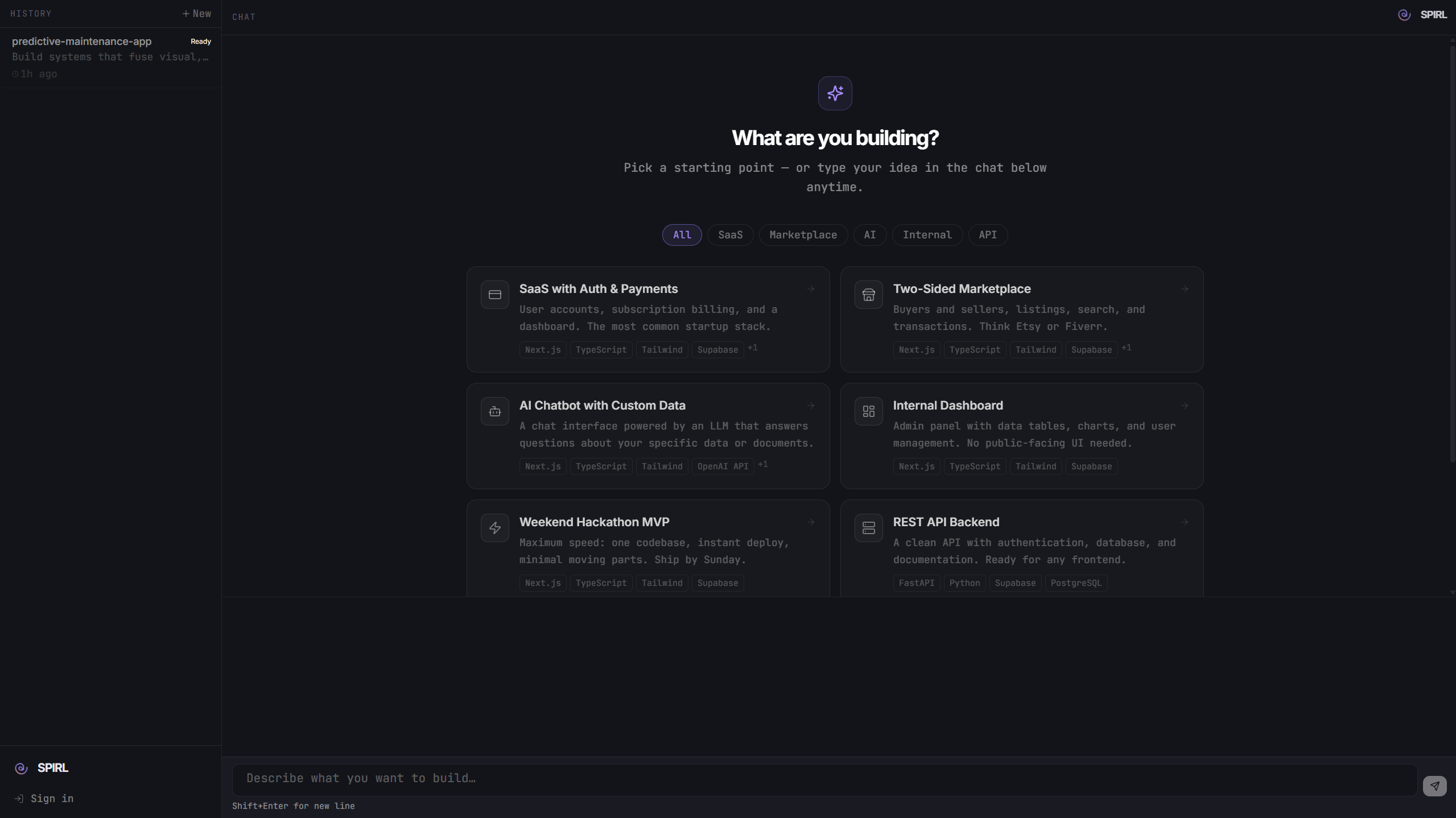
Start new chat
-

Phase 1: Discovery
-

Phase 2: Consultation
-
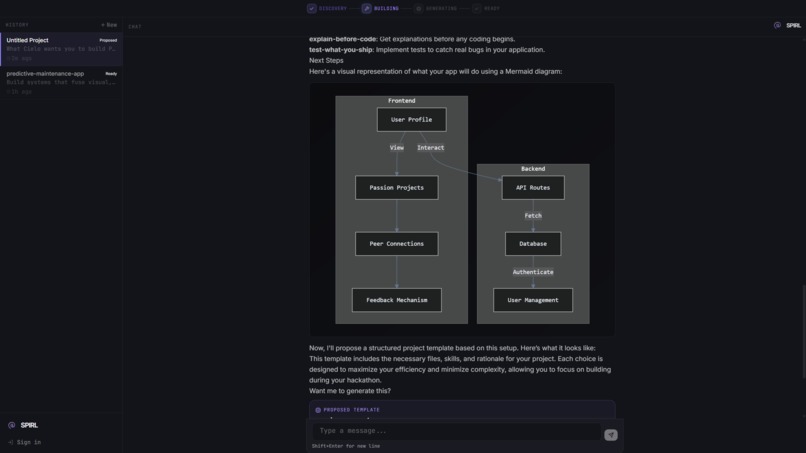
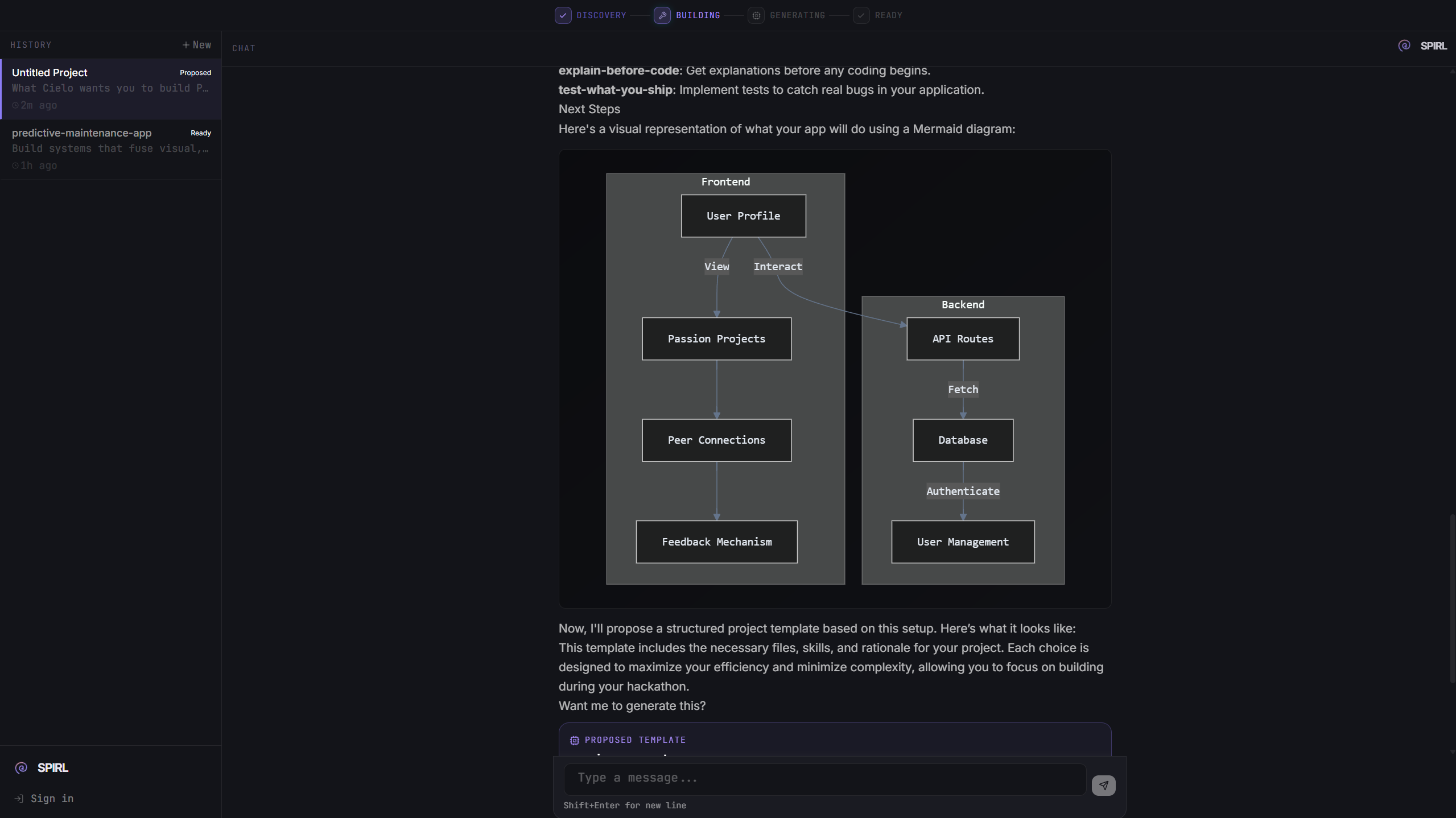
Use case diagram
-
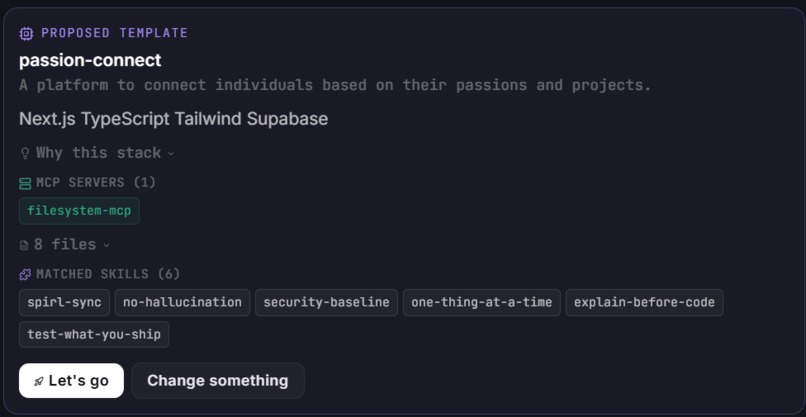
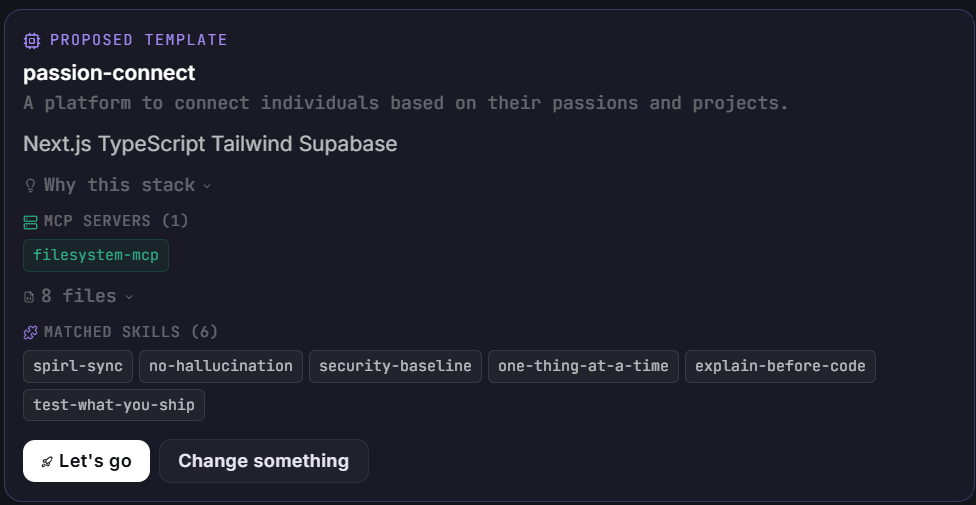
Template recommendation
-
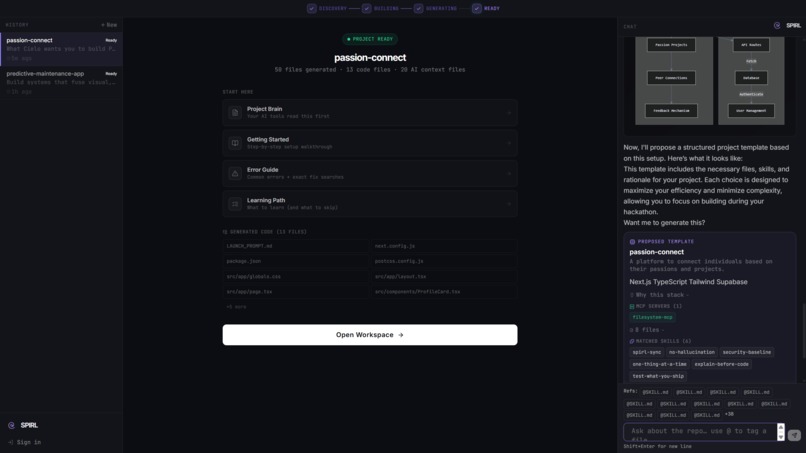
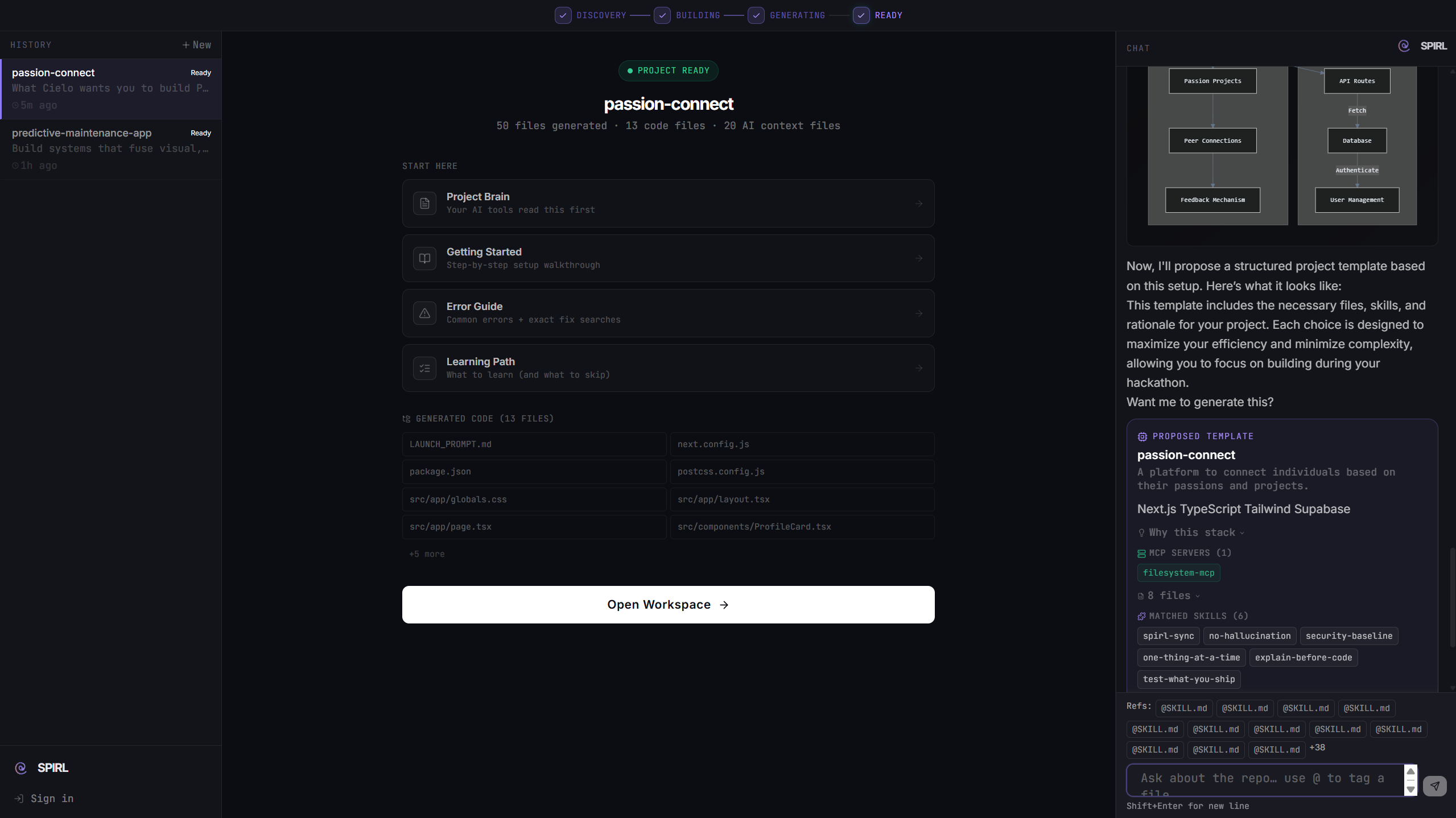
Workspace Generation
-
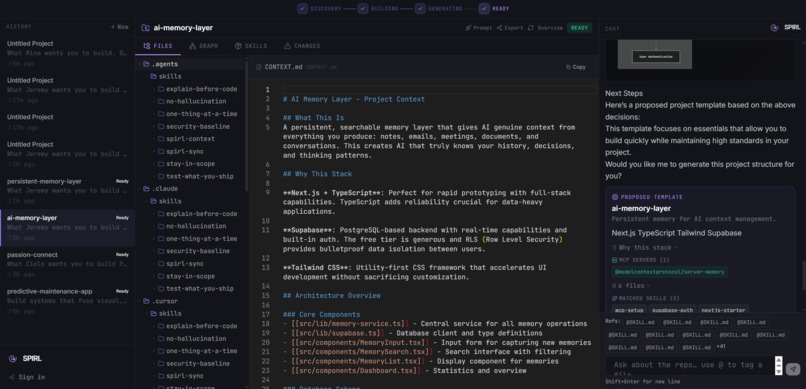
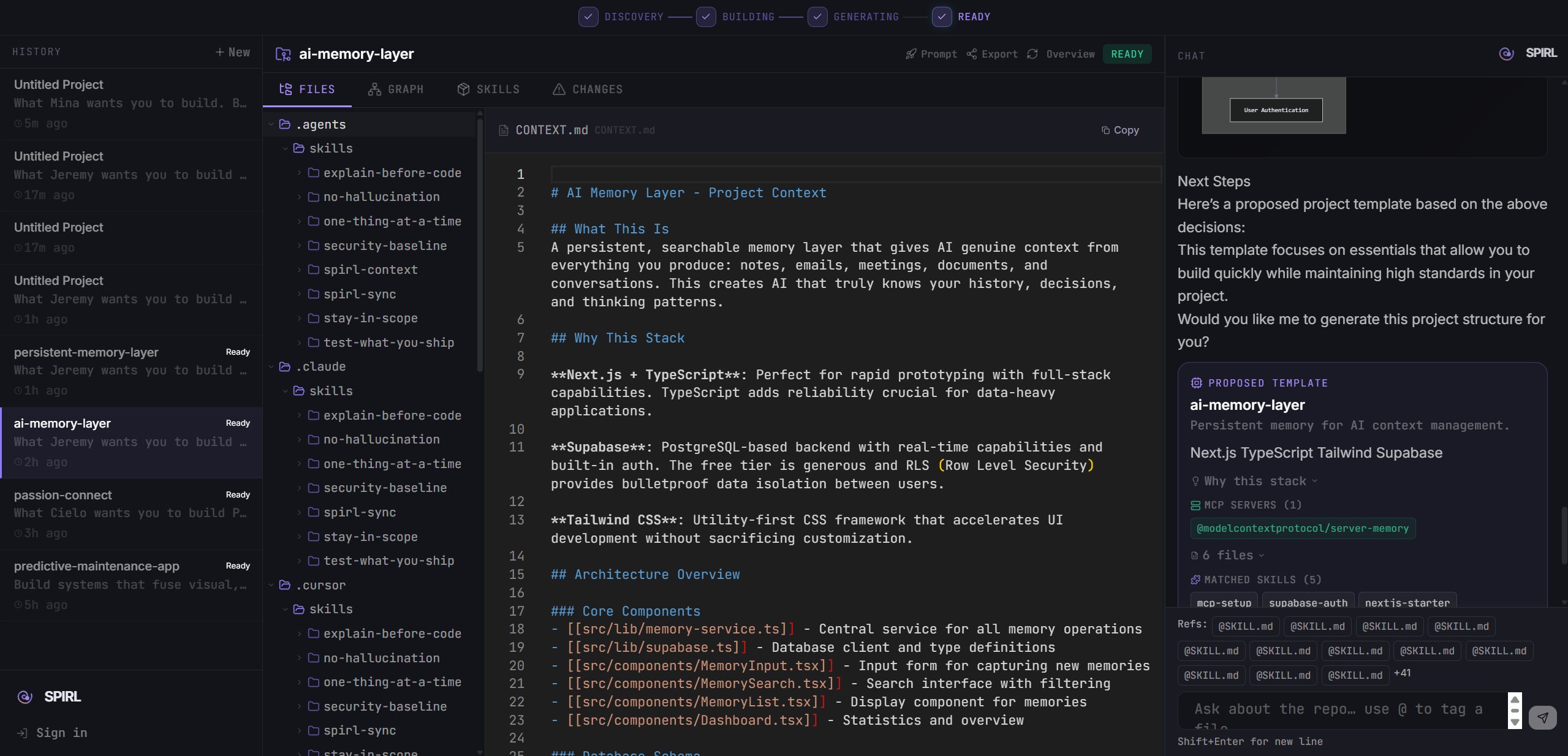
Folder overview


SPIRL - From first spark to first commit
Inspiration
We love building things that solve our own problems,and this one hit close to home.
Like many developers, we have been deep in the vibe coding workflow using tools like VS Code, Cursor, and Antigravity. But there is a painful reality: these tools are token-limited. Once you run out, you switch to another IDE and suddenly have to re-explain everything your stack, your vision, your decisions from scratch. It felt like starting over every single session.
We noticed something else too: social media is full of influencers talking about MCPs and skills as the "right way" to vibe code, but even with all that advice, we often did not have a clear picture of what we were actually trying to build. Without that foundation, no amount of tooling could save us.
That is why we built SPIRL an app that guides you through the thinking process before you write a single line of code, so every new session starts with the same solid ground.
What It Does
SPIRL walks users especially non-technical founders through 4 structured phases to make vibe coding smoother and more intentional:
- Ideation Phase -- Explore and refine your idea with our AI, discover what is happening in the current tech market, and find your ground truth before you build anything.
- Consultation Phase -- Discuss real-world constraints like timeline, budget, and tech stack so our AI can recommend the best approach for your situation.
- Building Phase -- Our AI generates a structured project folder with everything an AI coding assistant needs to understand exactly what you are building.
- Vibe Code Phase -- Download your generated project folder and start coding. Your context is also served as an MCP server, so every IDE you use already knows your project inside and out -- no re-explaining needed.
How We Built It
We built SPIRL using Cursor for core development and advanced enhancements, powered by the Claude Opus model. For design, we used Antigravity with Gemini. To make sure we were solving a real problem, we validated our idea by interviewing 10 FoundersHack participants their feedback directly shaped the product.
Challenges We Ran Into
The hardest part was differentiation. At first glance, SPIRL can look like just another AI chatbot -- and drawing a clear line between us and general-purpose tools like ChatGPT or Claude was not easy. We had to be intentional about making the structured, phased experience the hero of the product, not just the AI underneath it.
Accomplishments We Are Proud Of
The user interviews exceeded our expectations. The feedback was incredibly insightful and completely reshaped our scope in the best way. We originally set out to build a simple tool to help developers find skills to use while coding. But through those conversations, we realized the real gap was much earlier in the process. That insight pushed us to build a full end-to-end experience: from ground truth all the way to a ready-to-use project template.
What We Learned
We gained insight into Context Engineering and the nuances of managing fragmented data environments. Our potential customer validation revealed that industry practitioners use widely different ways to tackle context limitations. By interviewing various experts from various backgrounds, we identified several advanced techniques that were previously non-obvious, providing us with a much clearer roadmap for building robust AI systems.
What's Next for SPIRL
Here are some directions worth highlighting based on where SPIRL is heading:
- Template marketplace -- Let the community share and remix project templates so non-technical founders can start even faster
- IDE integrations -- Native plugins for Cursor, VS Code, and other vibe coding tools so SPIRL context loads automatically on session start
Built With
- antigravity
- claude
- cursor
- fastapi
- manus
- mcp
- nextjs
- openai
- openrouter
- skill
- supabase

Log in or sign up for Devpost to join the conversation.