-
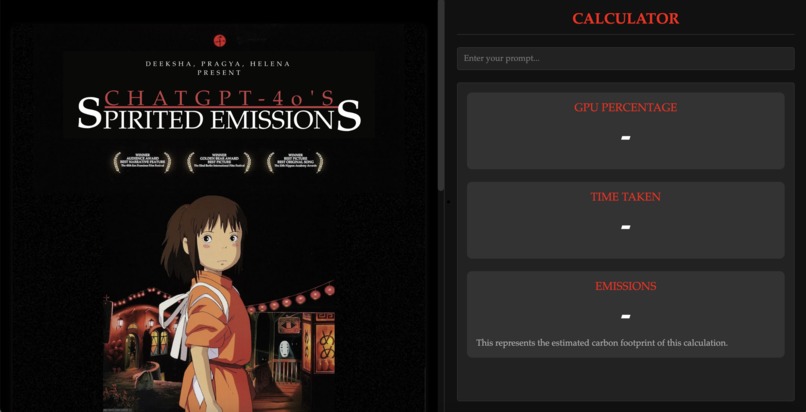
Front-End of Website
-
-
-
Inspiration
When we stumble upon AI Generated Ghibli Style Image Trends (2025) on Kaggle, we said in unison: "We hate this trend!" With the online community sharing this sentiment (ChatGPT insider exclaiming that their GPUs are melting and Miyazaki himself calling "this an insult to life itself"), we dived further by exploring negative impacts that the recent Ghibli AI art trend is bringing to the environment, more specifically, its carbon emission.
What it does
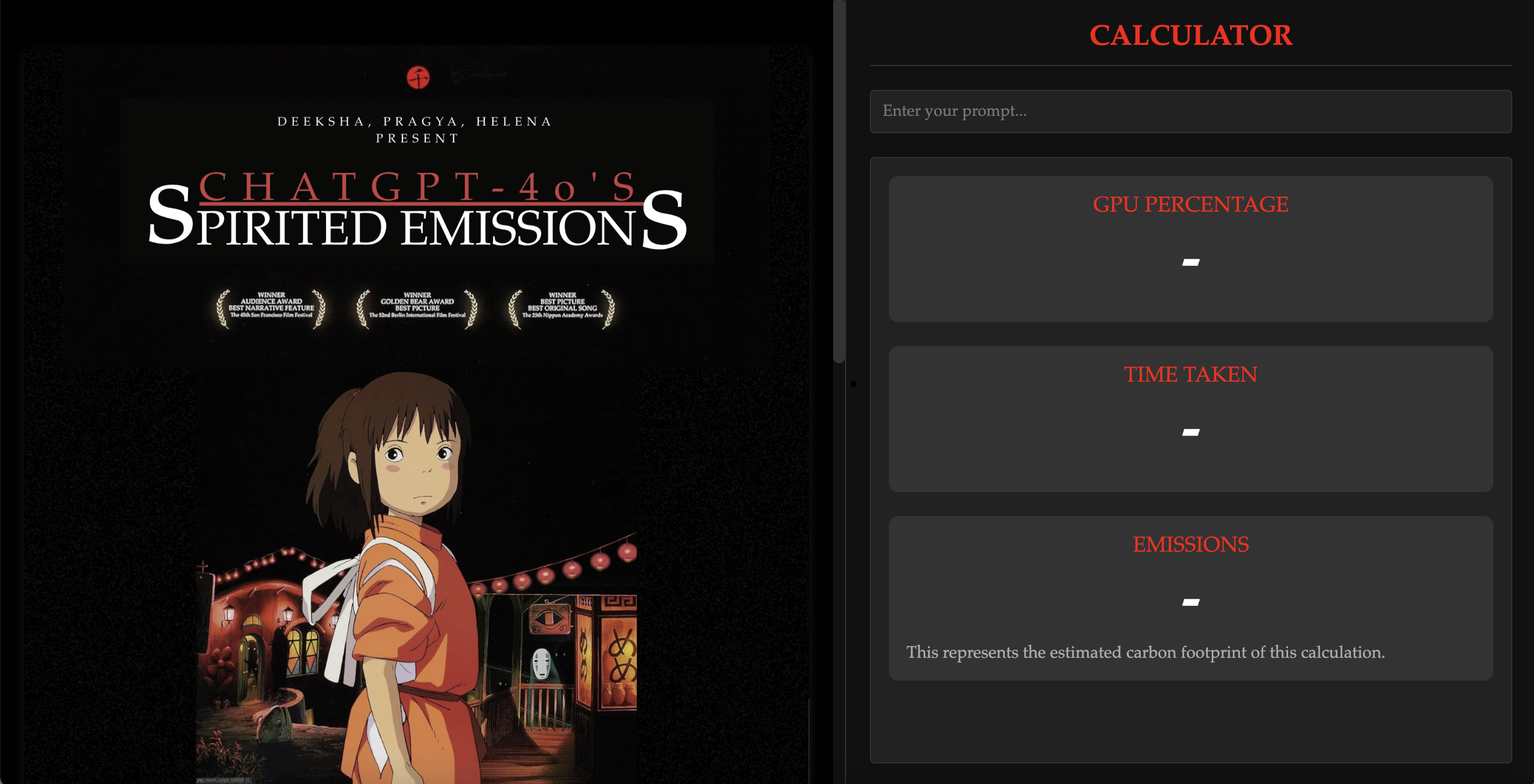
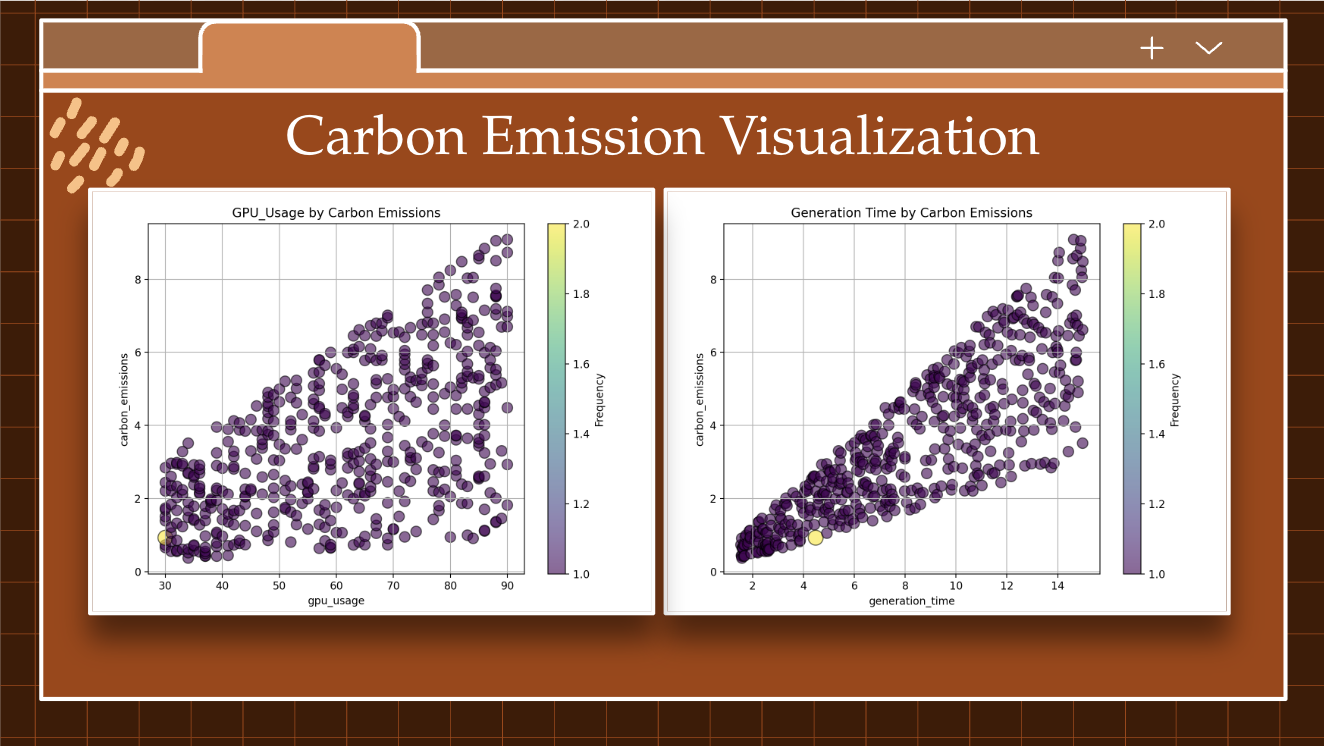
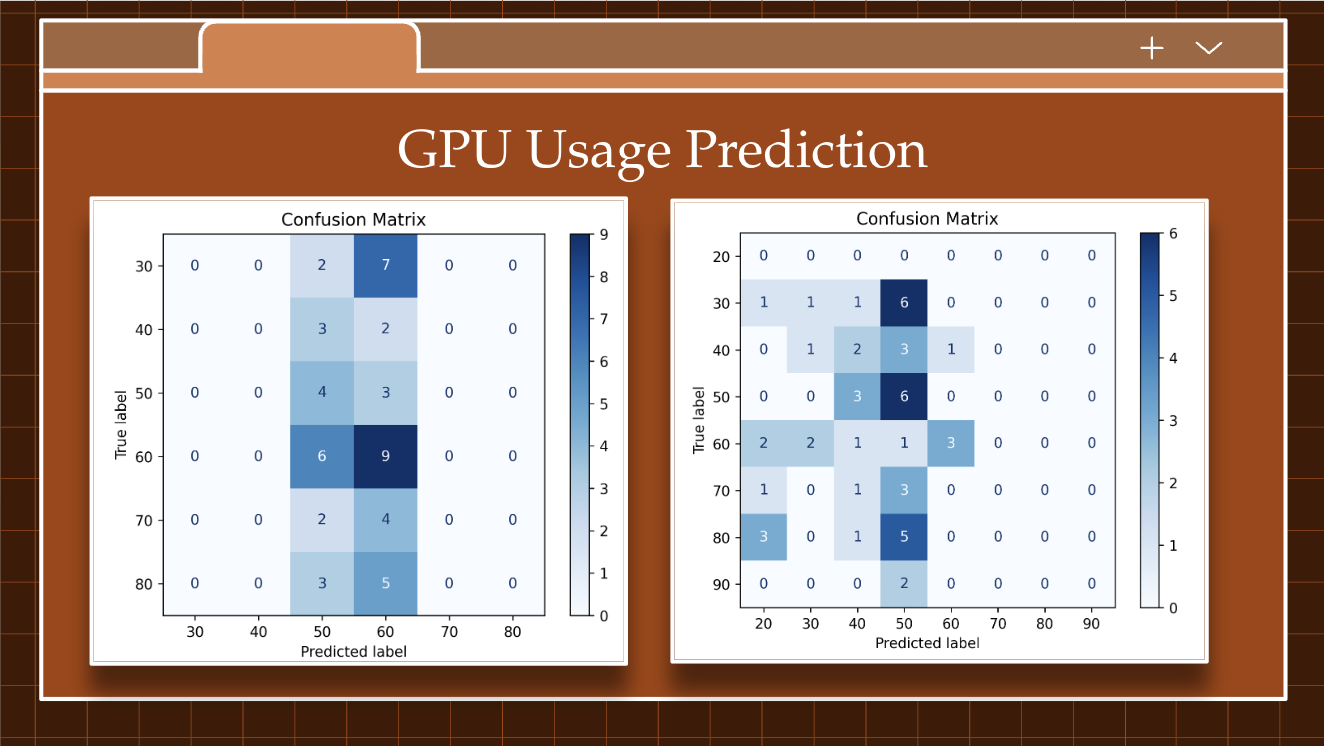
This project utilizes a regression neural network to predict the GPU-usage and generation time of an AI-generated image based on the written prompt provided by the user. Using that, we then predicted what its corresponding carbon emissions amount (in grams). We built an online calculator that turns a user prompt into how much GPU percentage this AI would have taken to generate and how much carbon is projected to be emitted into the atmosphere by creating that one image. This bring our measurements to the public, helping users visualize how trends like Ghibli AI art affects our environment.
How we built it
The platform we collaborated on is VS-Code. Mainly on Python, we have a front-end, which creates our eye-catching prompt-to-emission calculator and a back-end, which utilized a multilayer perceptron (MLP) regressor neural network.
Challenges we ran into
A major challenge we faced was finding the right model for our prediction. Since our input is text-based, we decided to use Hugging Face API to evaluate it sentimentally and extract what could make a prompt resource-intensive. However, this the sentiment value is not indexable, cannot be plot on a x-y plane, so we decided a neural network made the most sense. Finally, we settled with MLP regressor, which we fine-tuned for better performance.
Accomplishments that we're proud of
We're proud of making a fully developed project, one that utilizes databases, APIs, machine learning, and a front-end for our users. Even prouder is our ability to find a dataset that we are passionate to dissect and fully commit to a completed project.
What we learned
We learned how to leverage neural networks to train and test categorical data into numerical data. We needed to figure out the statistics and math behind our model, and that also took a bit of time to learn.
What's next for Spirited Emissions
Next, we want to alter the website to takes in an image and outputs the projected CO2 emissions produced to lay the Studio-Ghibli AI filter on it! Additionally, we would like to update the website to include different types of greenhouse gas emissions, such as nitrogen, and add a comparison of carbon emission production before and after this social media AI trend.


Log in or sign up for Devpost to join the conversation.