-
-
home
-
Your Learning Constellation - Admin View
-
explore pattern
-
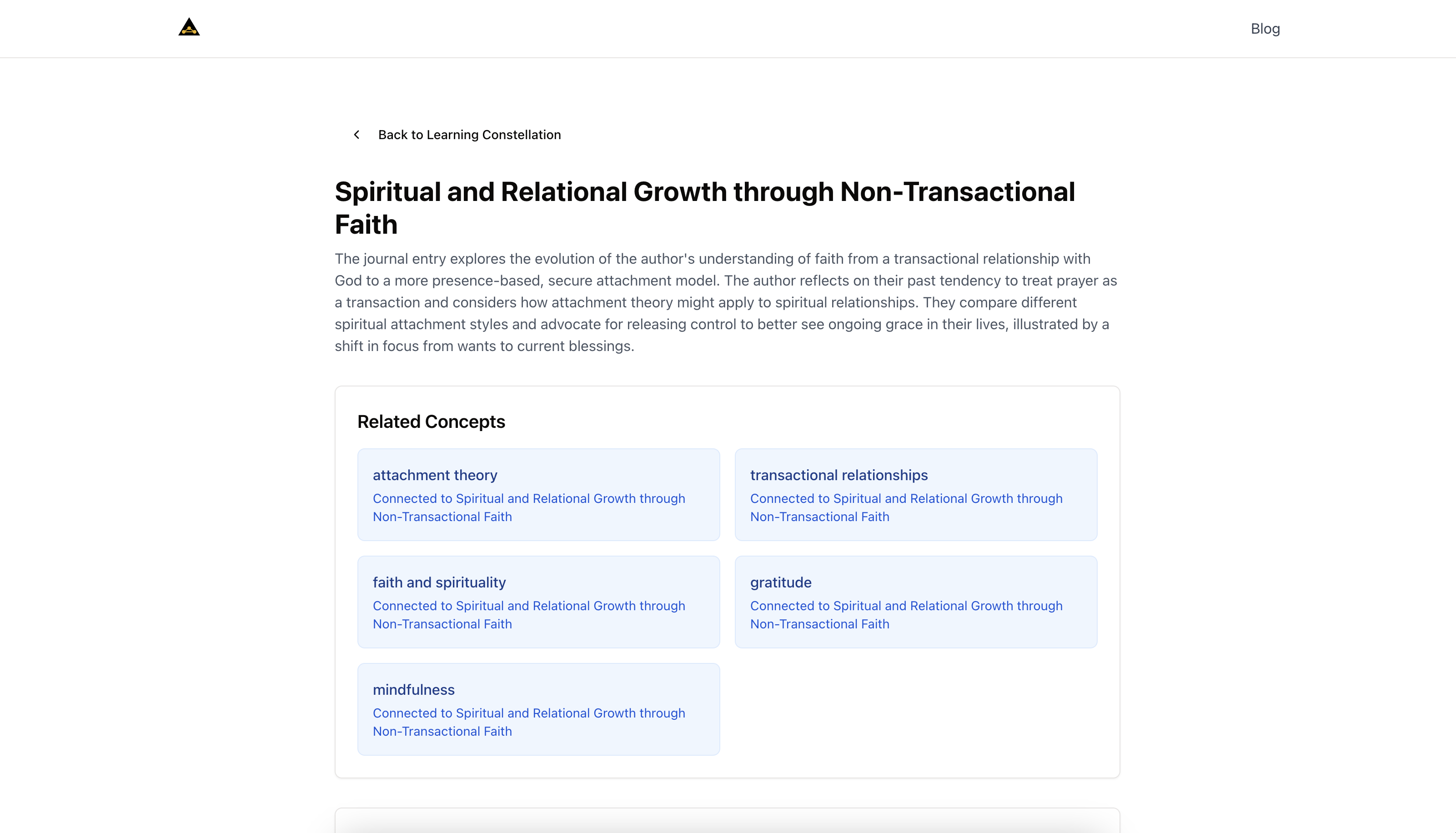
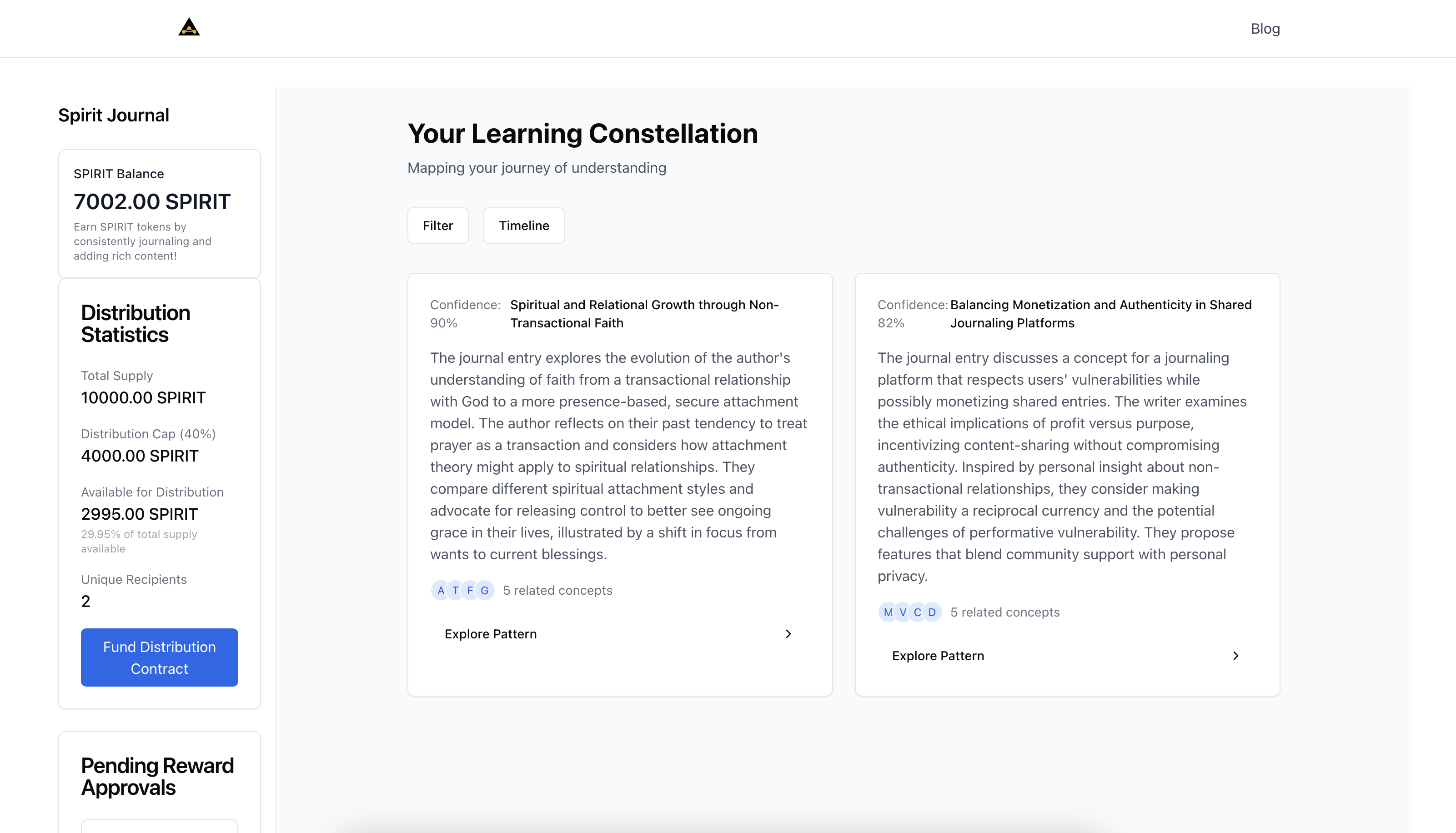
Your Learning Constellation
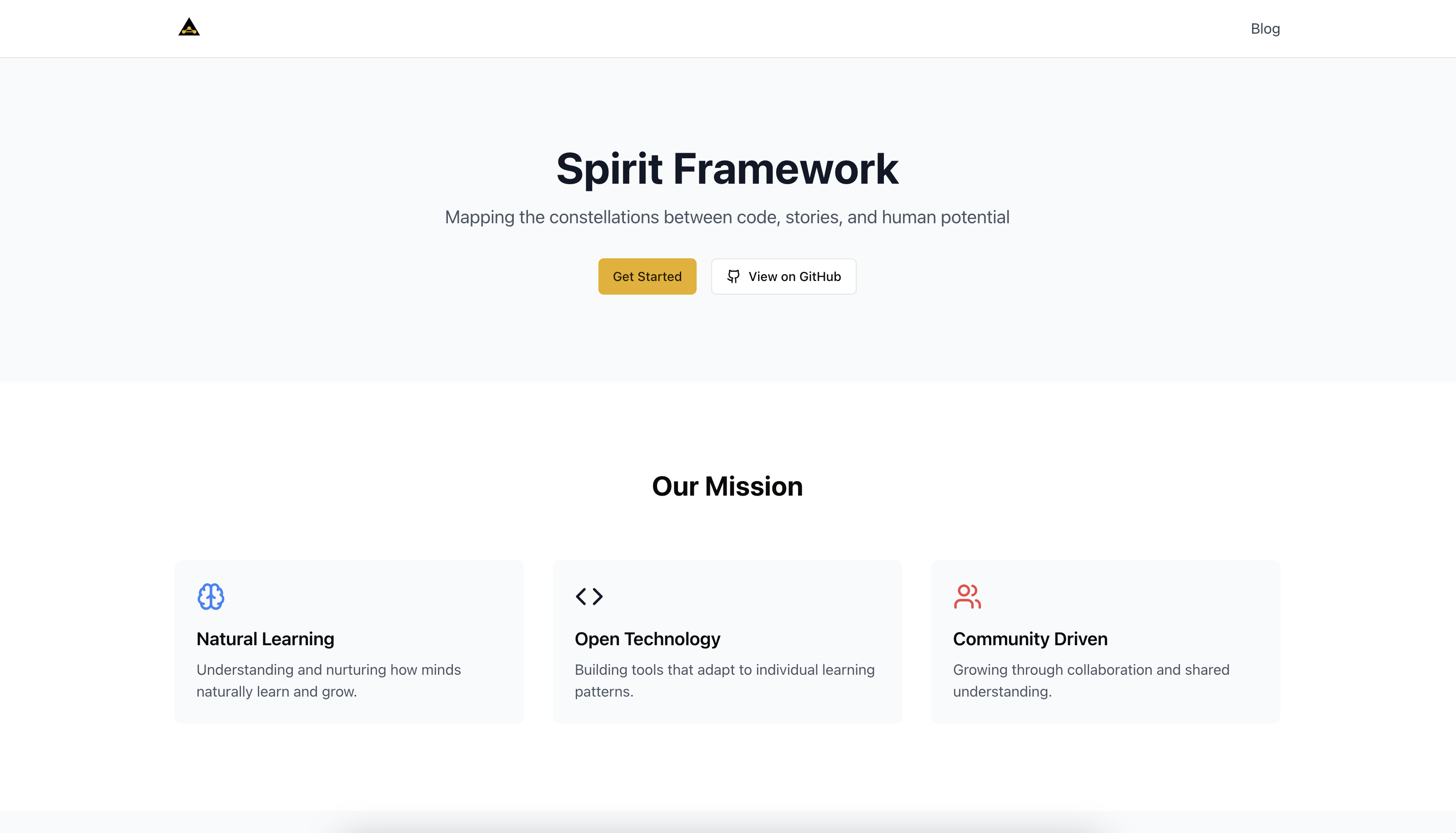
Spirit Framework Hackathon Submission
Inspiration
We all learn differently. The educational systems of today struggle to adapt to individual learning patterns, trapping knowledge in one-size-fits-all approaches. This realization sparked our vision: what if we could harness the power of personal learning experiences to create a collective intelligence that adapts to how each person learns?
Our journey began with a simple question: how can we transform the raw humanity of journaling—that private ritual of reflection and growth—into a shared resource that powers the next generation of learning technologies? Not as performative social media, but as mindful contributions to a learning ecosystem where vulnerability and wisdom become the foundation for smarter educational tools.
What it does
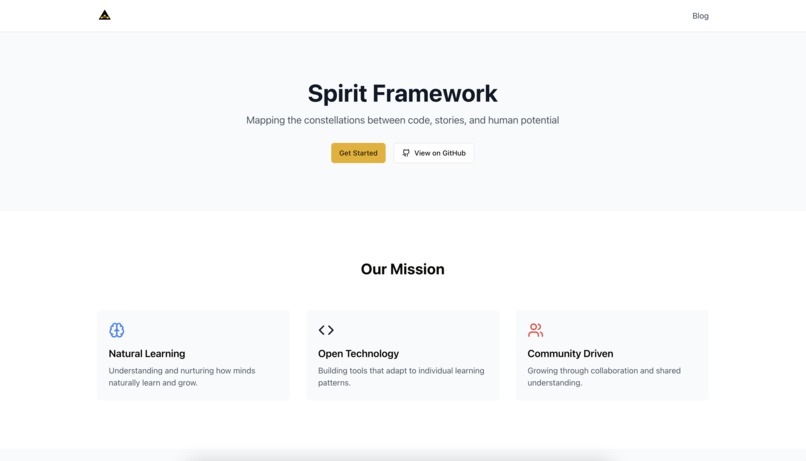
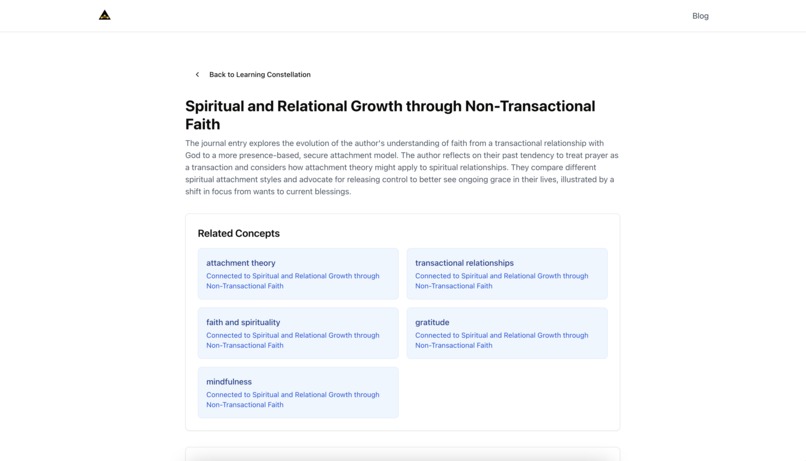
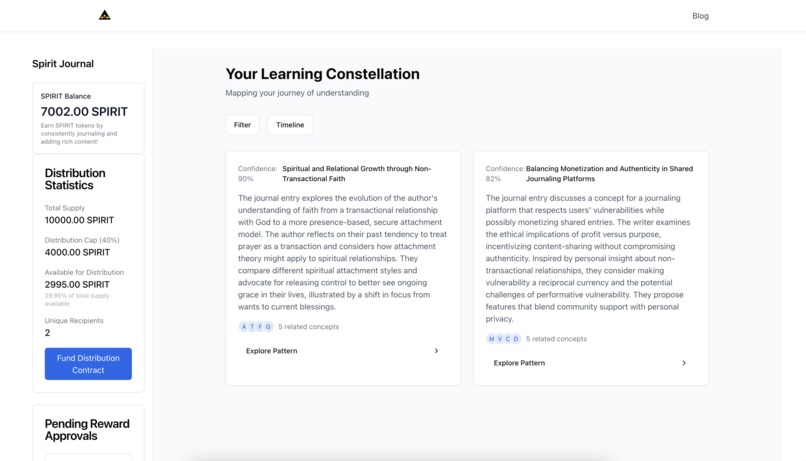
Spirit Framework is a decentralized learning intelligence platform built on the Electroneum blockchain. At its core is Spirit Journal—a space where users document their learning journeys, from overcoming challenges to achieving breakthroughs. These entries aren't just personal archives; they're contributions to a collective intelligence that will power adaptive learning APIs.
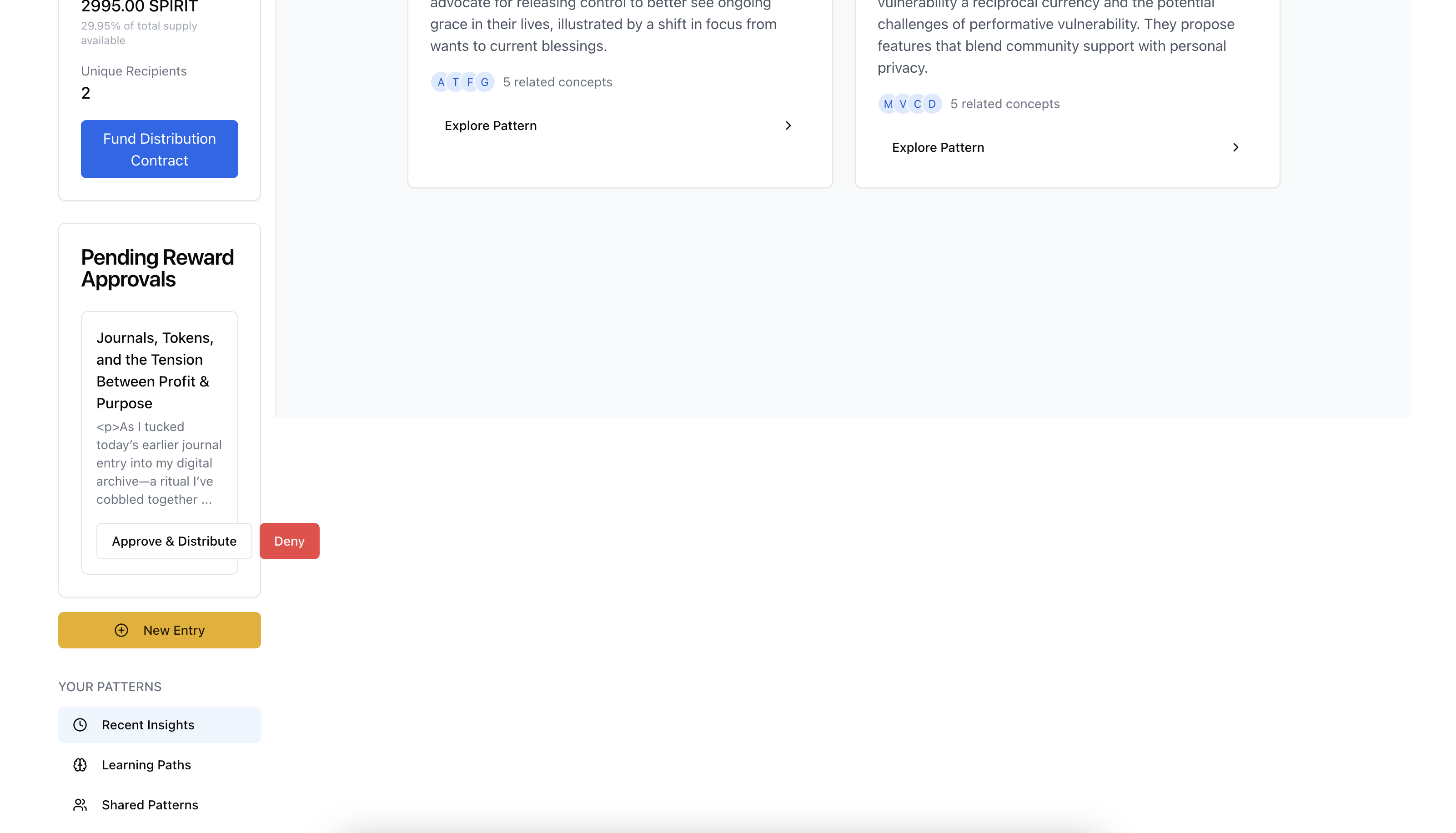
The platform rewards meaningful contributions with SPIRIT tokens on the Electroneum blockchain. These tokens represent both recognition of value and a stake in the learning ecosystem we're building together. The more users contribute to our understanding of how humans learn, the more they're rewarded.
Spirit Journal serves as the foundation for our future products:
- Spirit Study: An adaptive learning companion that personalizes to individual learning patterns
- Spirit Code: A VS Code extension that integrates learning intelligence into the coding experience
How we built it
We built Spirit Framework using a modern tech stack designed for performance and scalability:
- Frontend: React with TypeScript for type safety, Tailwind CSS for responsive design
- Backend: Express.js server with PostgreSQL database using Drizzle ORM
- Blockchain Integration: Ethereum.js for connecting to the Electroneum testnet
- Smart Contracts: Solidity contracts for SPIRIT token management and reward distribution
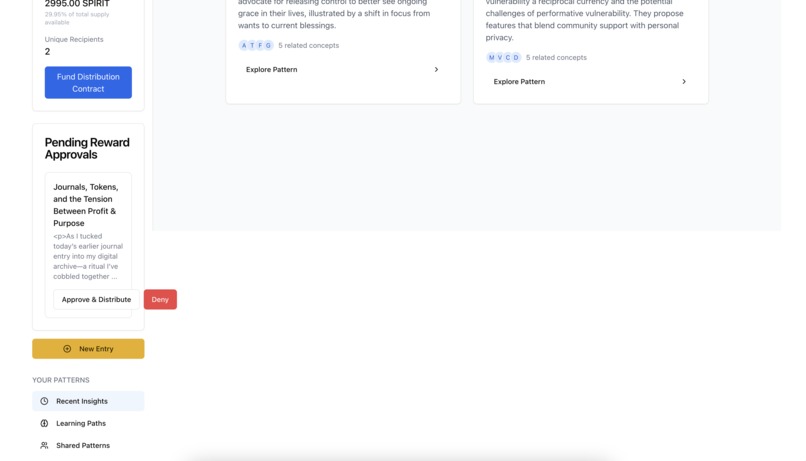
We approached development with a "journal-first" philosophy, focusing on creating an intuitive, frictionless experience for users to document their learning. The reward system was carefully integrated to incentivize quality over quantity, with an approval workflow to maintain the integrity of our learning dataset.
The architecture was designed with future AI capabilities in mind, laying the groundwork for our vision of personalized learning intelligence.
Challenges we ran into
Building Spirit Framework presented several significant challenges:
Balancing Tokenization and Authenticity: Creating a reward system that values contributions without turning journaling into a performance or incentivizing "trauma porn" for tokens.
Smart Contract Integration: Connecting our application to the Electroneum testnet required overcoming various technical hurdles, from wallet connection issues to proper token distribution logic.
Ethical Data Collection: Developing an approach that respects privacy while gathering meaningful learning patterns for our future AI systems.
Content Moderation: Building approval workflows that maintain content quality without gatekeeping or injecting bias.
UI/UX for Reflection: Designing an interface that encourages thoughtful reflection rather than social media-style shallow engagement.
Accomplishments that we're proud of
Despite the challenges, we've achieved several milestones that excite us:
Working Token Economy: Successfully implemented SPIRIT token rewards on the Electroneum blockchain, creating tangible value for learning contributions.
Intuitive Journaling Experience: Developed a clean, focused interface that puts the journaling experience first, with media support and rich formatting options.
Approval System: Built a fair, transparent system for evaluating journal entries that maintains quality without stifling authentic voices.
Foundation for Future Tools: Established the data architecture and API endpoints that will power our next products in the Spirit ecosystem.
Community-Centered Design: Created a platform that balances private reflection with optional sharing, fostering a culture where vulnerability is valued but not exploited.
What we learned
This project has been a profound learning journey for our team:
The Power of Personal Narratives: We discovered the incredible wealth of learning insights hidden in personal reflections when people document their challenges and breakthroughs.
Blockchain for Purpose, Not Profit: We learned to implement blockchain technology as a means to an end—creating reciprocity and value—rather than as the end itself.
The Balance of Public and Private: We gained insights into the delicate dance between personal reflection and shared wisdom, and how to honor both.
Technical Integration Complexities: We developed a deeper understanding of the challenges in connecting modern web applications with blockchain technology.
The Ethics of Learning Data: We confronted important questions about how learning experiences should be collected, stored, and utilized for collective benefit.
What's next for Spirit Framework
Our vision for Spirit Framework extends far beyond this initial implementation:
Spirit Study Launch: Developing our adaptive study companion that uses the collective learning intelligence from Spirit Journal to personalize education experiences.
Advanced AI Integration: Building sophisticated machine learning models that identify patterns in learning journaling to power our APIs.
Developer SDK: Creating tools that allow educators and developers to tap into our learning intelligence for their own applications.
Expanded Tokenomics: Refining our token economy to include more ways for users to contribute and be recognized, including "karma" systems for supportive readers.
Community Governance: Implementing decentralized governance mechanisms to give our community a voice in how the platform evolves.
Mental Health Partnerships: Forming alliances with mental health providers and writing coaches to add value to the journaling experience.
Mainnet Migration: Moving from the Electroneum testnet to mainnet once our token economy is fully tested and refined.
The future of Spirit Framework isn't just about building another platform—it's about creating a new kind of learning ecosystem where the wisdom of individual journeys becomes the foundation for smarter, more human-centered educational technologies.
Built With
- cloudrun
- d3.js
- drizzle-orm
- electroneum-blockchain
- ethereum.js
- express.js
- framer-motion
- nix
- node.js
- openai-api
- passport.js
- postgresql
- radix-ui
- react
- react-hook-form
- react-query
- recharts
- restful-apis
- shadcn-ui-components
- solidity
- tailwind-css
- tiptap
- typescript
- vite
- websockets
- zod

Log in or sign up for Devpost to join the conversation.