-
-
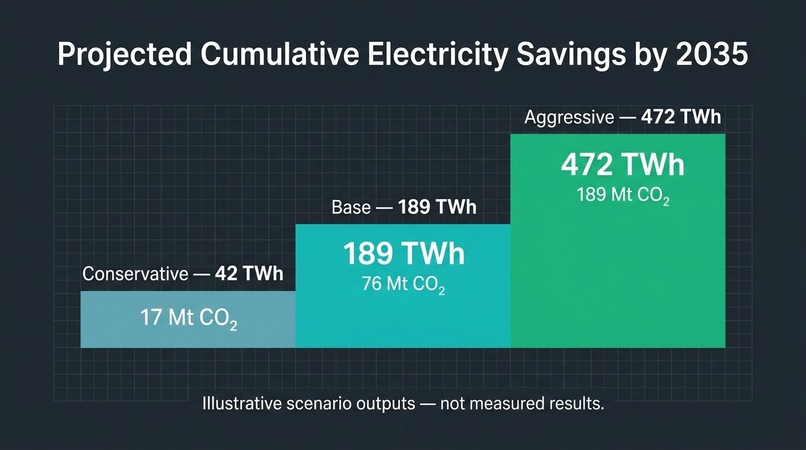
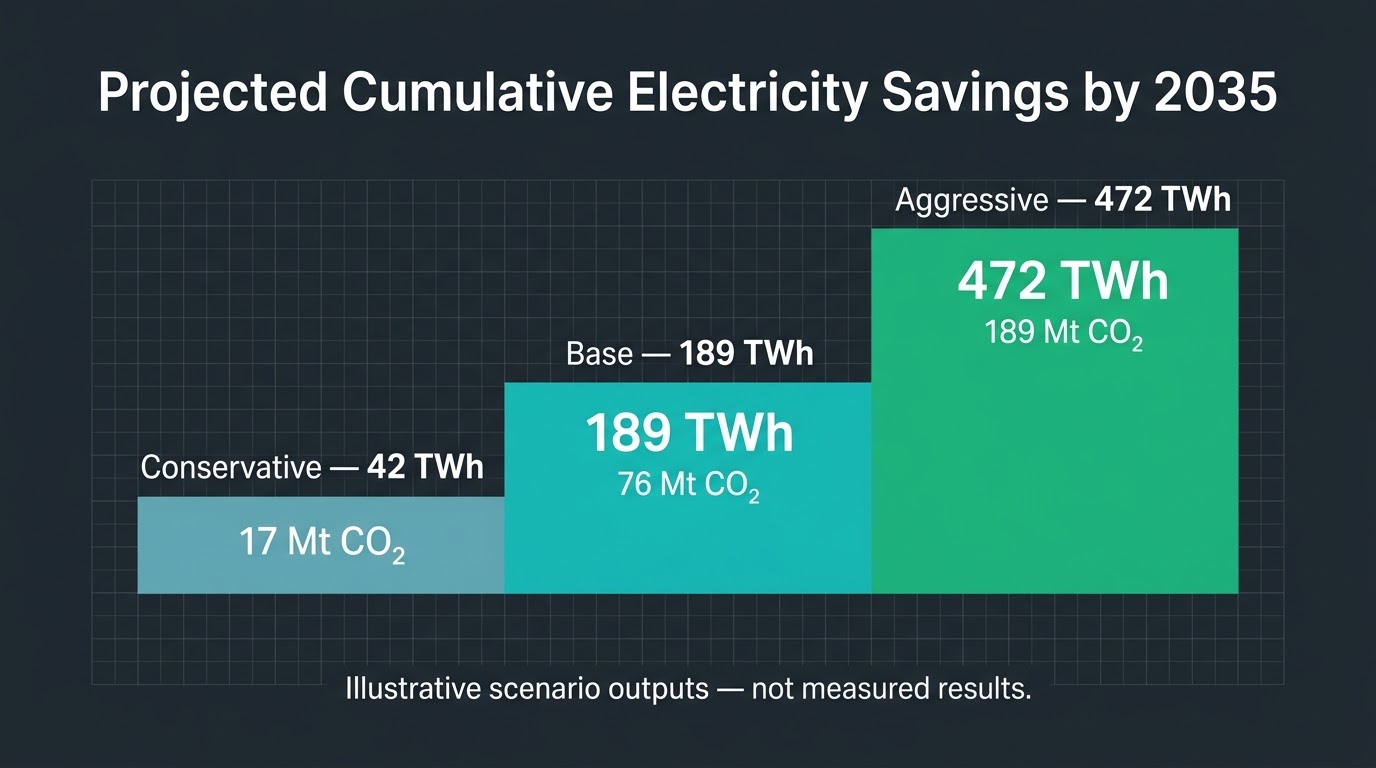
The chart projects electricity savings through 2025, as efficiency measures combine to reduce total energy use by 472 terawatt-hours.
-
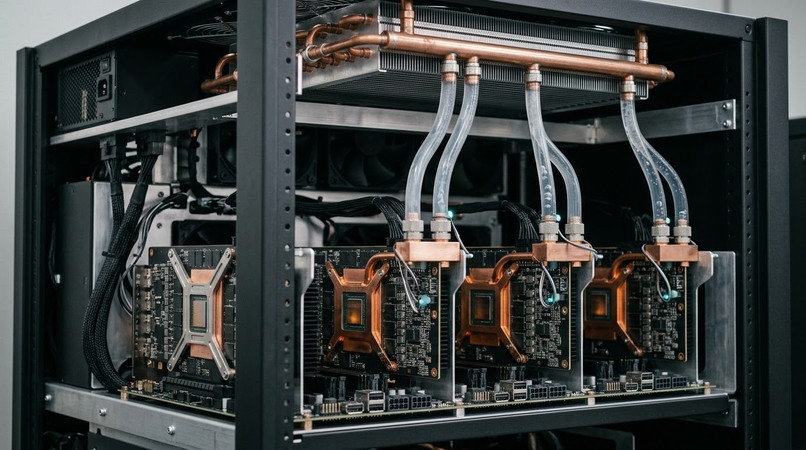
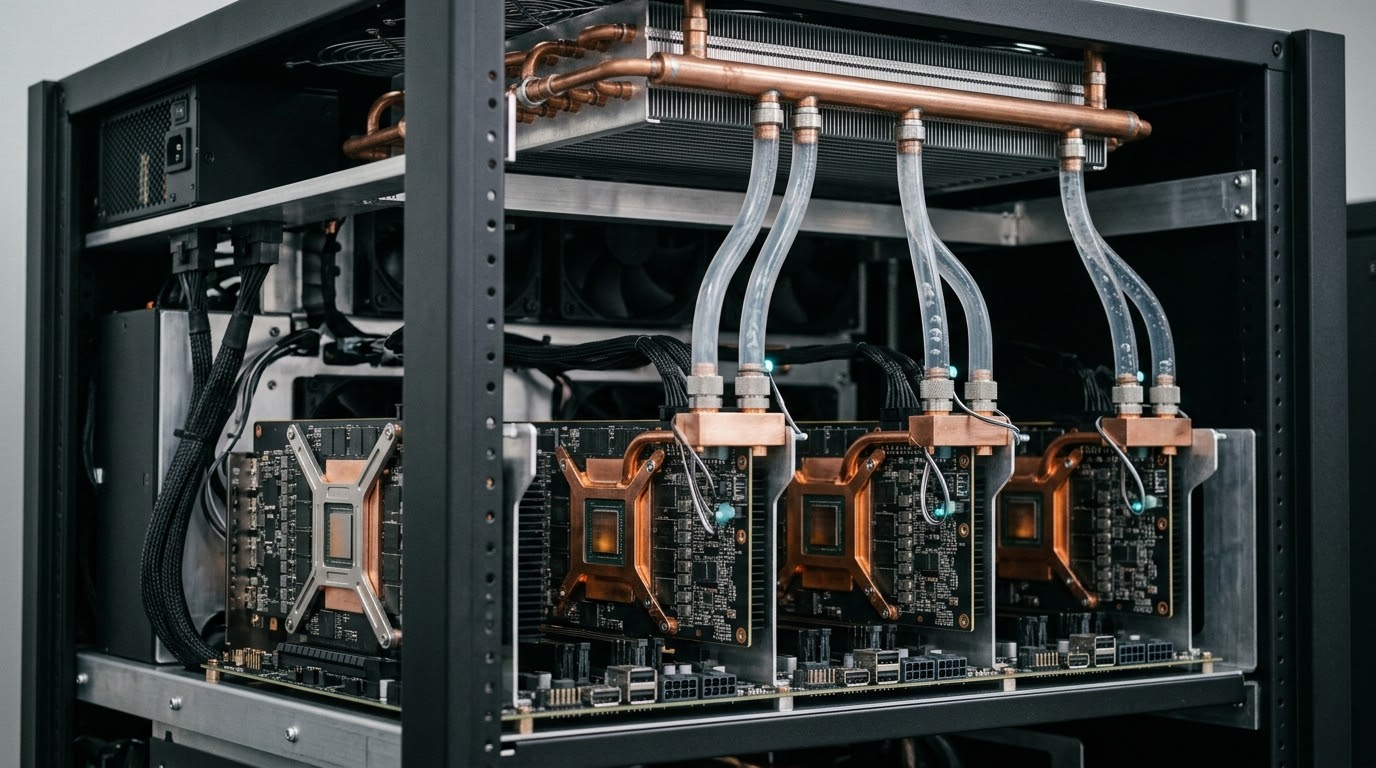
This product concept uses modular, high-density computing units with integrated cooling and power connections for efficient deployment.
-
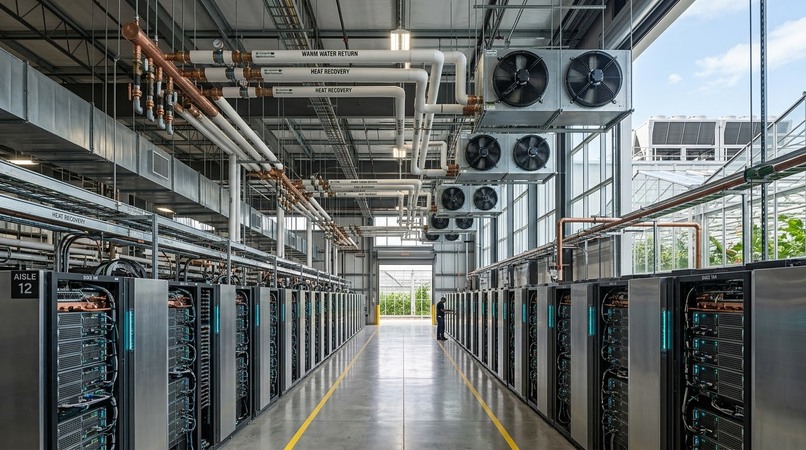
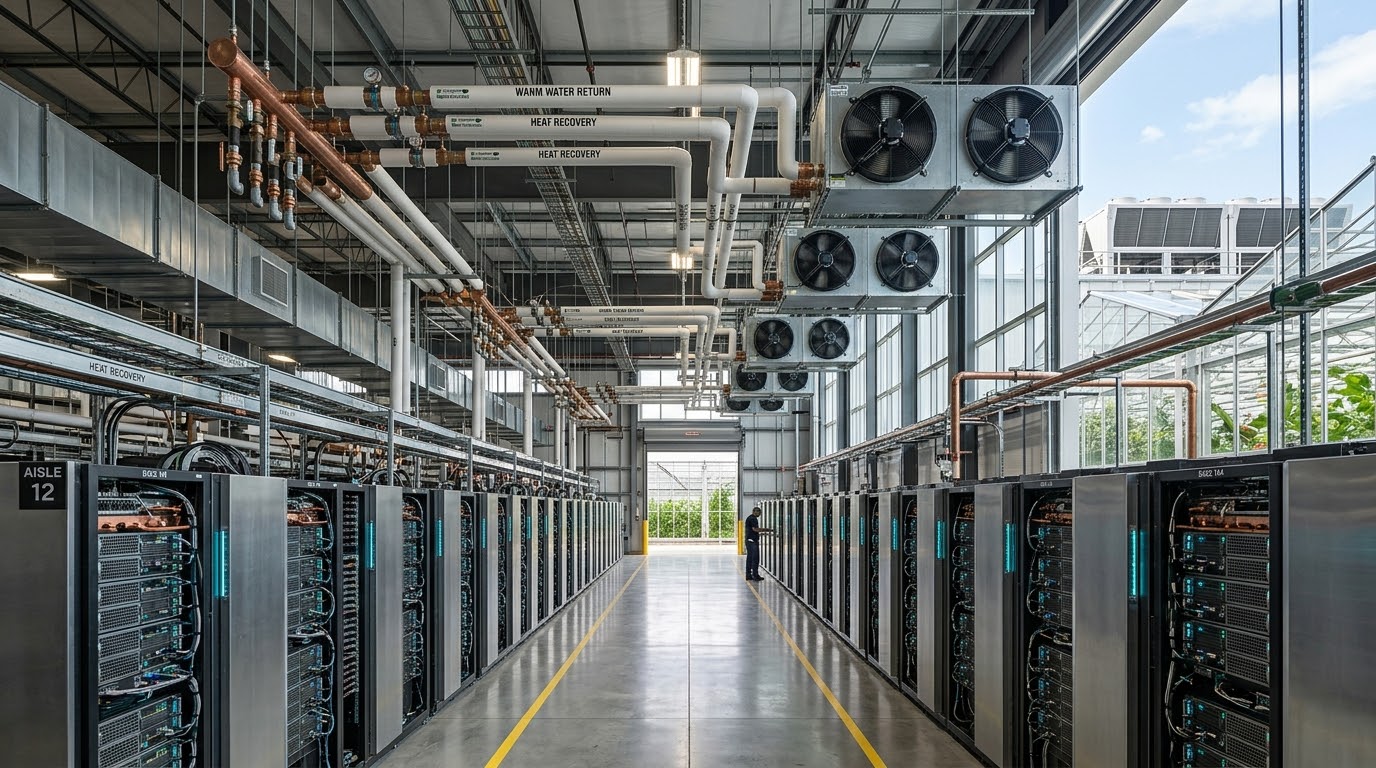
This is a vision of an integrated facility where power, cooling, and computing systems work together for efficient, reliable operation.
Inspiration
FluxCool AI began with curiosity and a lifelong desire to use science and technology to help humanity. As we learned more about the rapidly growing electricity demands of artificial intelligence—and the carbon emissions associated with producing that electricity—we wanted to explore how smarter computing infrastructure could reduce AI's environmental impact.
What it does
FluxCool AI is a concept for reducing the electricity used to cool high-performance GPUs and AI data centers. It combines direct-to-chip cooling, more environmentally responsible refrigerant choices, passive two-phase heat transport, and software that coordinates computing workloads with the thermal state of each processor.
Instead of waiting for a GPU to overheat and then increasing cooling power, the system anticipates when heat will be produced. During intense computation, a local thermal buffer absorbs short heat spikes; during communication, synchronization, or idle periods, that stored heat can be moved away from the chip more efficiently. The heat does not disappear—the goal is to reduce the extra electricity required to collect, transport, and reject it.
How we built it
We developed FluxCool AI by combining our background knowledge of physics, mathematics, thermodynamics, computer systems, and workload scheduling. We studied how GPUs generate heat, how direct-to-chip and two-phase cooling can transport that heat, and how software could use temperature, pressure, and workload data to coordinate computing and cooling as one system.
Our design evolved rapidly during the final stage of the hackathon. Knowledge we had gained while researching spintronics helped us rethink the problem at the system level and redirect our work toward a thermodynamics-based cooling concept within a very limited time frame.
Challenges we ran into
Our original concept centered on spintronic computing. On the day before submission, deeper research showed us that the broad idea already existed and would not be sufficiently original on its own, so we had to pivot quickly from quantum and spin-based computing toward improving the thermal management of conventional AI hardware.
The greatest challenge was transforming that setback into a stronger and more focused project. Rather than discarding what we had learned, we applied the same systems-thinking mindset to direct-to-chip cooling and thermal-aware software control.
Accomplishments that we're proud of
We are proud that we used our curiosity, intelligence, and teamwork in service of a problem that affects humanity. We also adapted under intense time pressure, turned a late discovery into a new direction, and developed a concept that connects physics, computer science, and climate responsibility.
Our scenario model suggests that widespread adoption and strong cooling performance could avoid as much as 189 million metric tons of CO₂ emissions over ten years. This is a predicted modeled scenario—not a measured result—but it shows why even modest improvements in data-center efficiency could matter at a global scale.
What we learned
We learned how much electricity AI infrastructure can consume and how that electricity use can translate into carbon emissions, depending on how the power is generated. We also learned an important engineering lesson: heat cannot simply be eliminated, but the energy required to move and reject it can be reduced through better hardware, control systems, and workload timing.
Most importantly, we learned that research sometimes disproves an original idea, and that discovering prior work is not failure. It is an opportunity to refine the problem, reuse what was learned, and build something more credible.
What's next for FluxCool AI
Next, we want to move FluxCool AI from a conceptual model into the real world by building a small prototype and testing it against a conventional cooling setup. We would then use measured temperature, energy, and performance data to improve the software controller, validate our environmental-impact estimates, and explore how the system could scale to real AI data centers.
Built With
- editing
- youtube

Log in or sign up for Devpost to join the conversation.