
Spinout Engine was inspired by a problem we kept seeing: great technical ideas often get stuck between research and company-building. A paper may contain something valuable, but turning it into a clear startup thesis, market angle, risks, and investor pitch is hard and time-consuming.
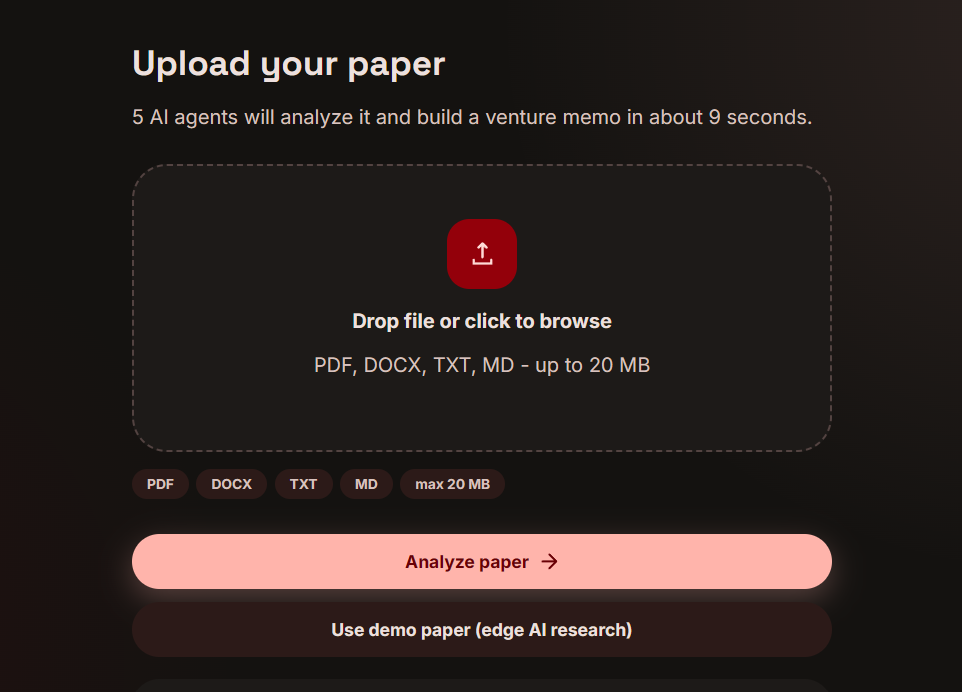
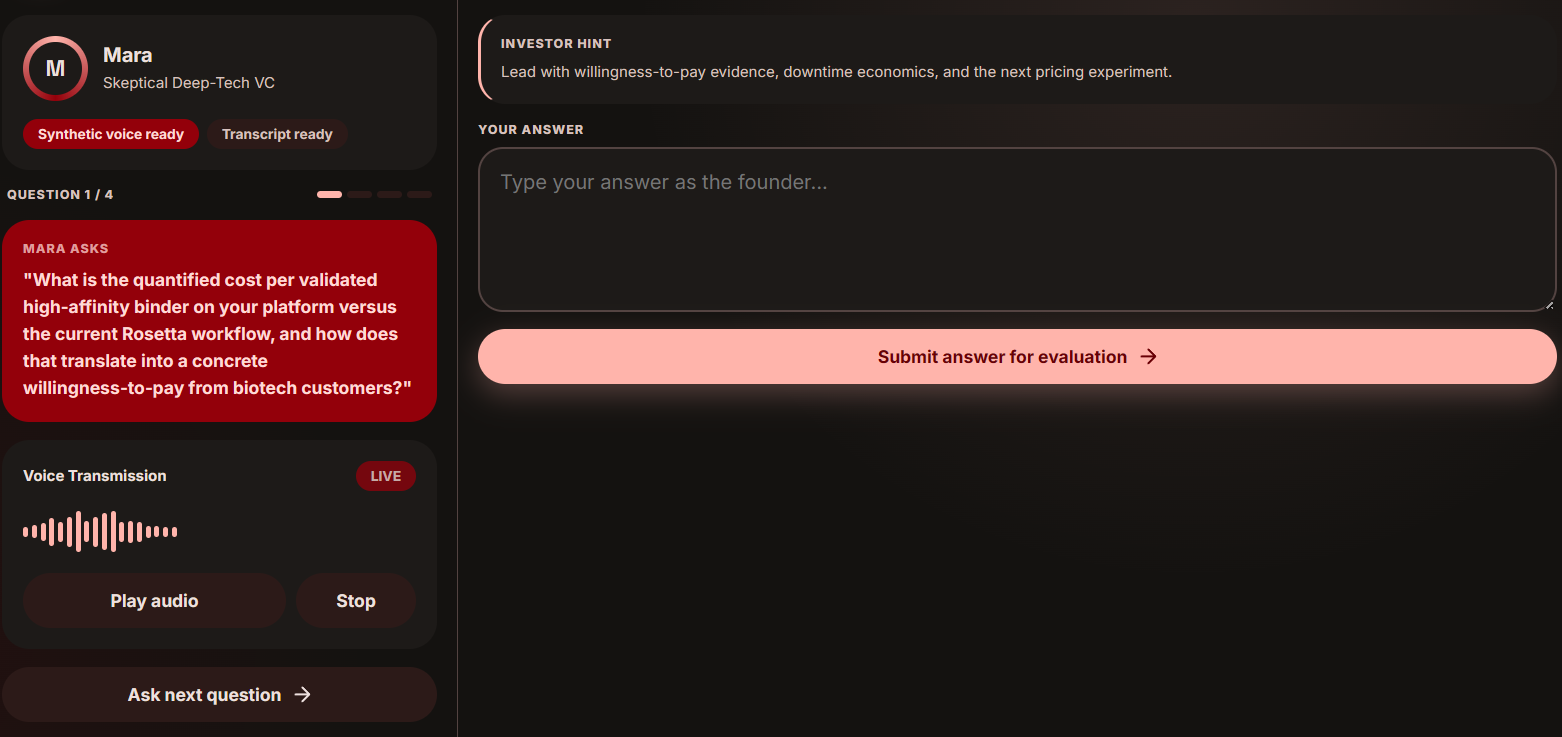
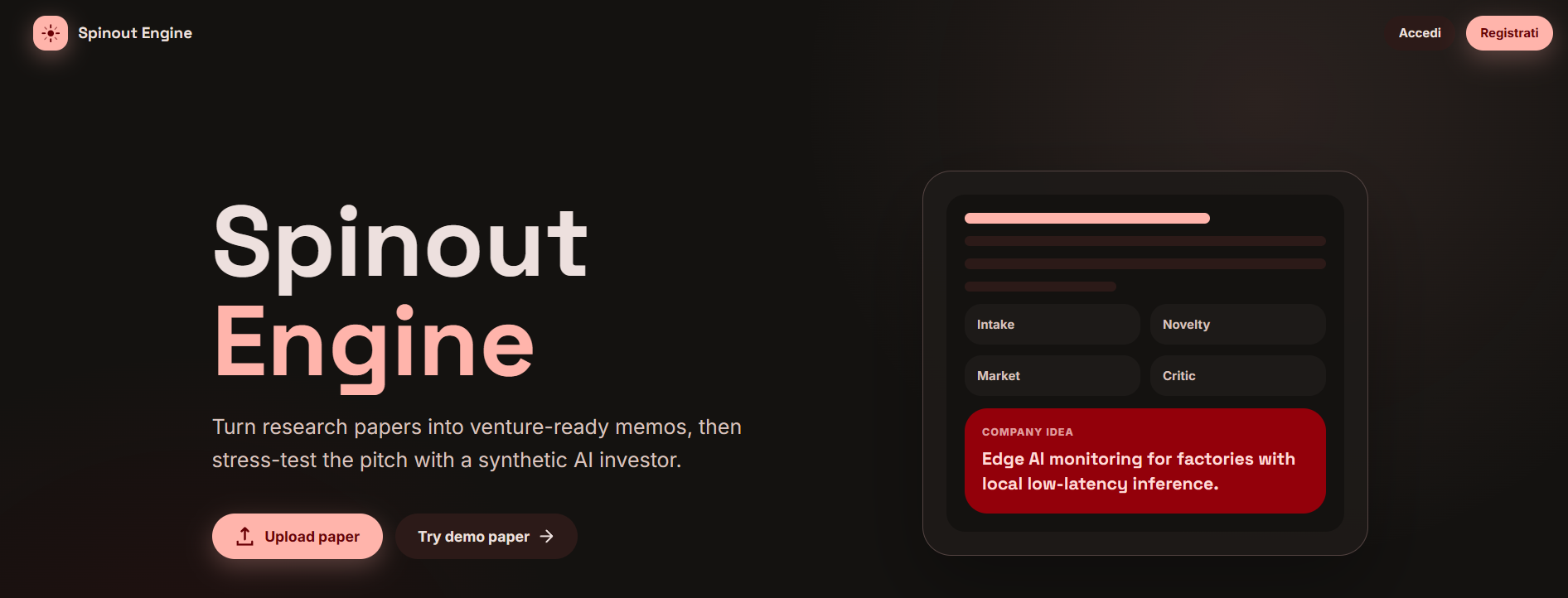
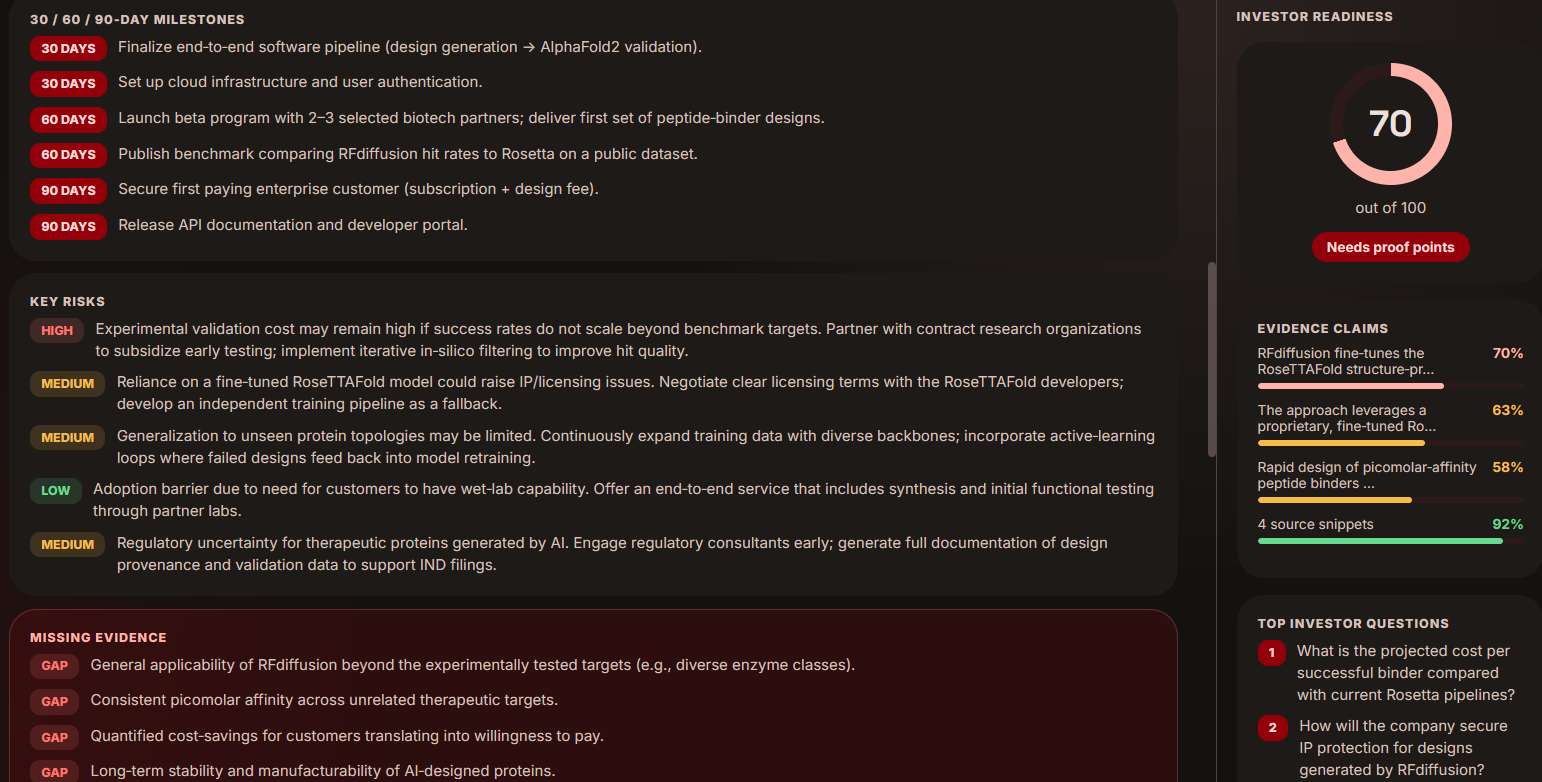
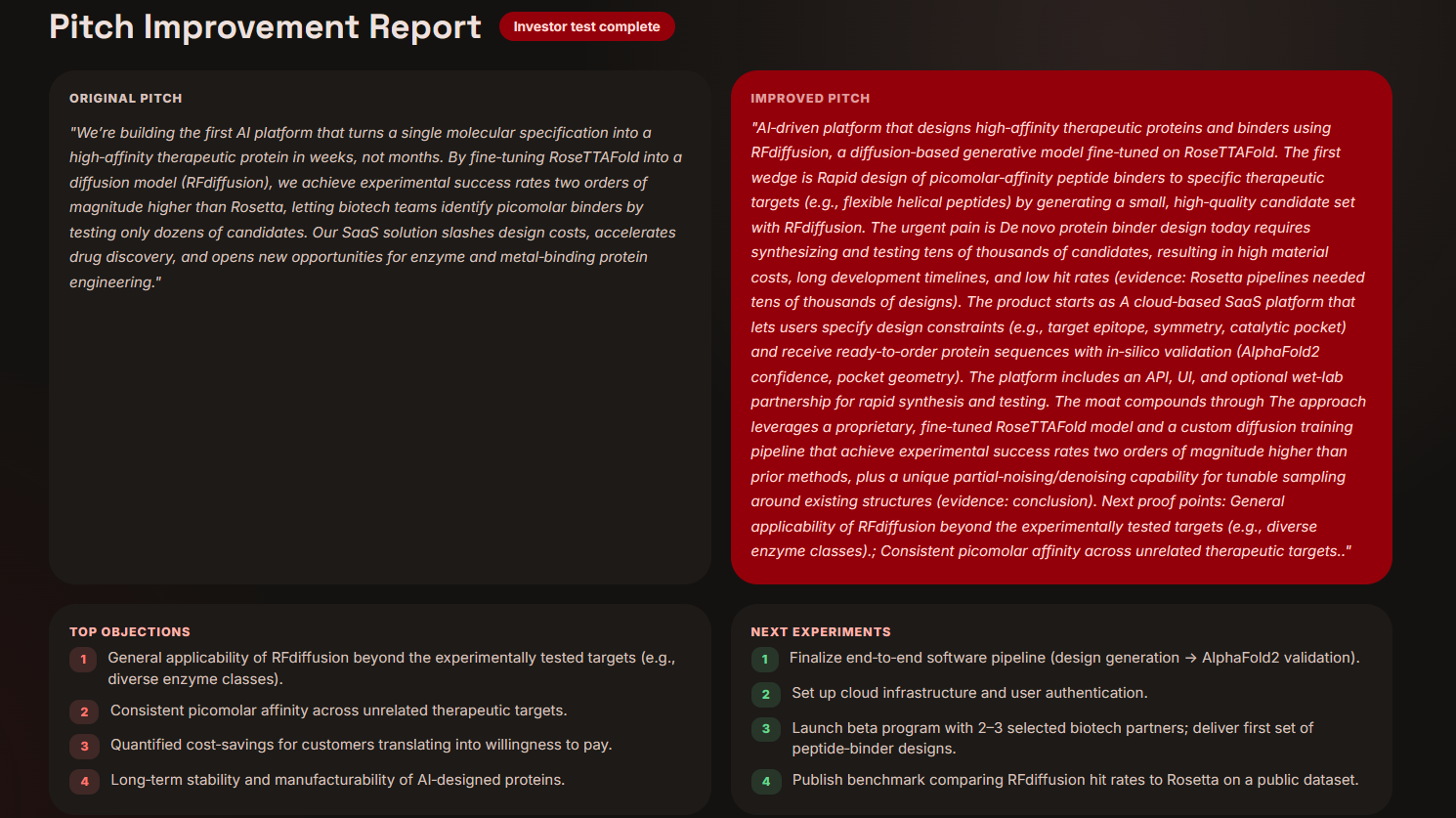
We built Spinout Engine to help with that first step. Users upload a PDF, DOCX, TXT, or Markdown file, and the system turns it into a structured venture memo. It also creates an AI Investor Room where a synthetic investor asks questions, gives feedback, and helps improve the final pitch.
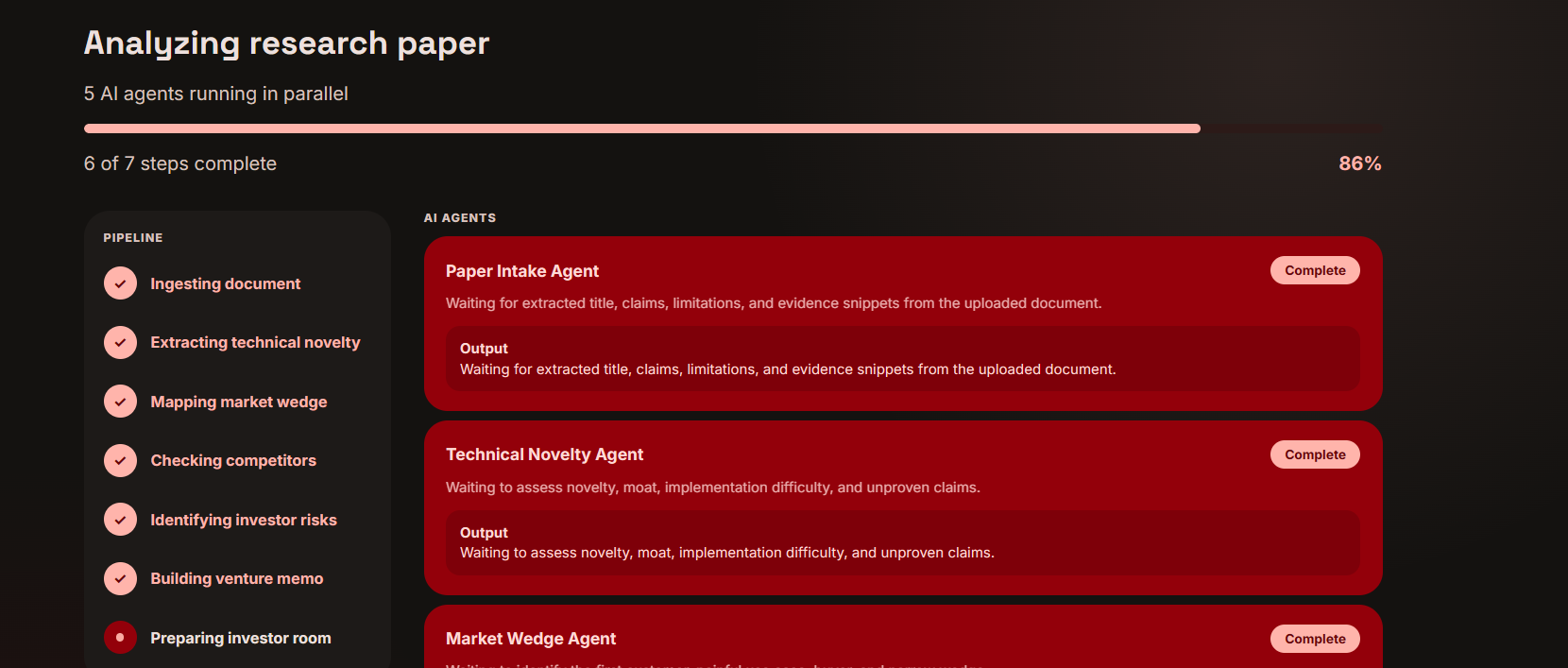
The stack is simple but production-oriented. The frontend is a static vanilla HTML/CSS/JavaScript app with Firebase Auth for login and session handling. The backend is built with Python, FastAPI, and Pydantic, with a multi-agent AI pipeline for paper intake, technical novelty, market wedge, competitor risk, and final synthesis. The AI layer runs through Scaleway Generative APIs using an OpenAI-compatible endpoint, with optional OpenAI and Gemini fallbacks. ElevenLabs powers the synthetic investor voice, while Scaleway Object Storage stores uploads, generated memos, and audio files through an S3-compatible setup. The backend is Dockerized and deployed on Scaleway Serverless Containers.
The hardest part was making all the pieces work reliably together: document parsing, AI orchestration, cloud deployment, storage, auth, audio generation, and a progress UI that reflects the real backend state. We learned that building a useful AI product is less about one big prompt and more about designing a clear workflow with good fallbacks.
Today, Spinout Engine can upload a real document, generate a venture memo, run investor-style Q&A, produce voice responses, and export the final result as Markdown or JSON.

Log in or sign up for Devpost to join the conversation.