-
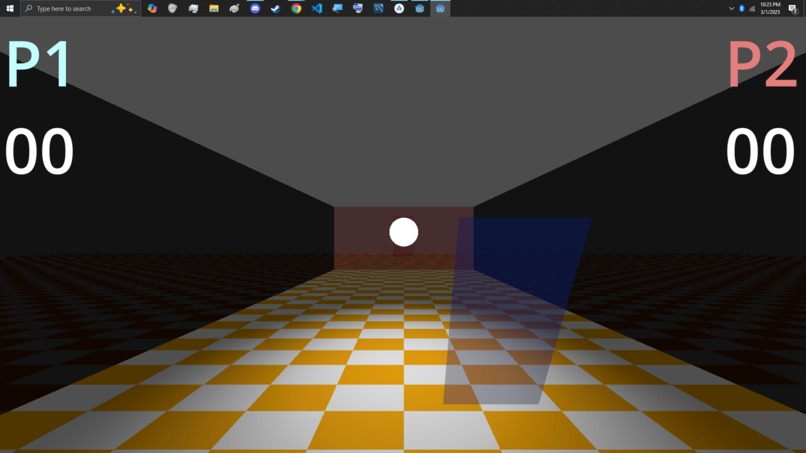
3d Pong
-
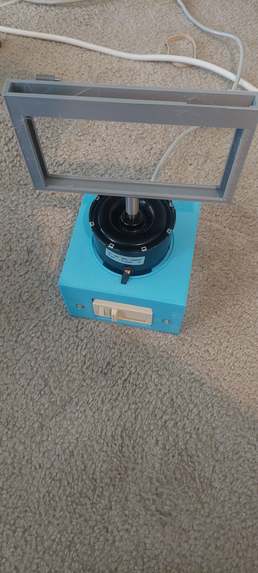
Spinning Display
Spinning Gaming Display
Inspiration
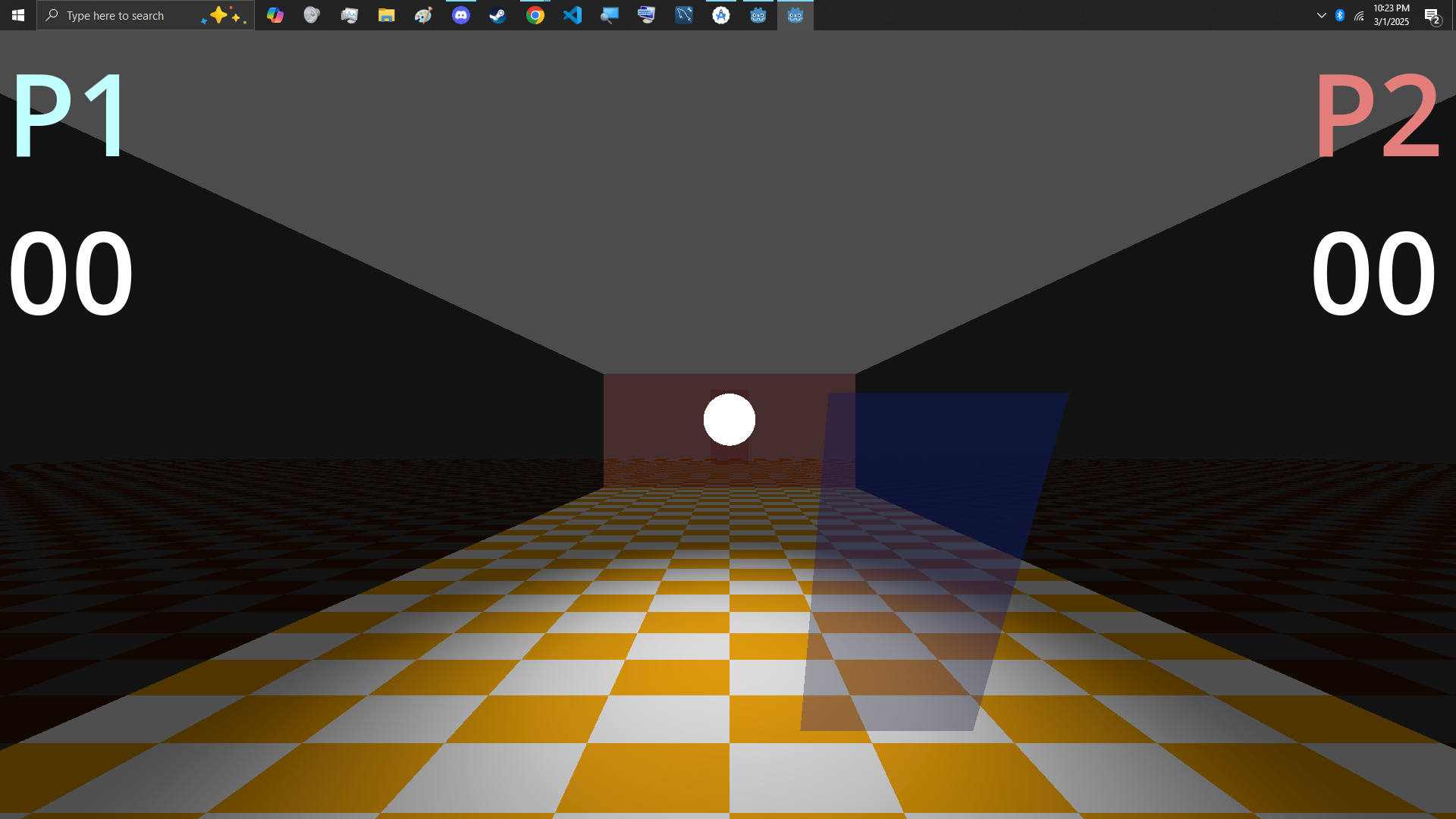
This spinning display has been created in the past; however, we believe that we are the first to create a real-time video/game specifically for the display. Initially, we knew that we wanted to create a retro-style game, but we didn't know exactly what to make. Ultimately we settled on a 3D pong game that leverages the unique visual properties of a spinning phone display to create an immersive gaming experience that bridges classic gameplay with innovative hardware.
What it does
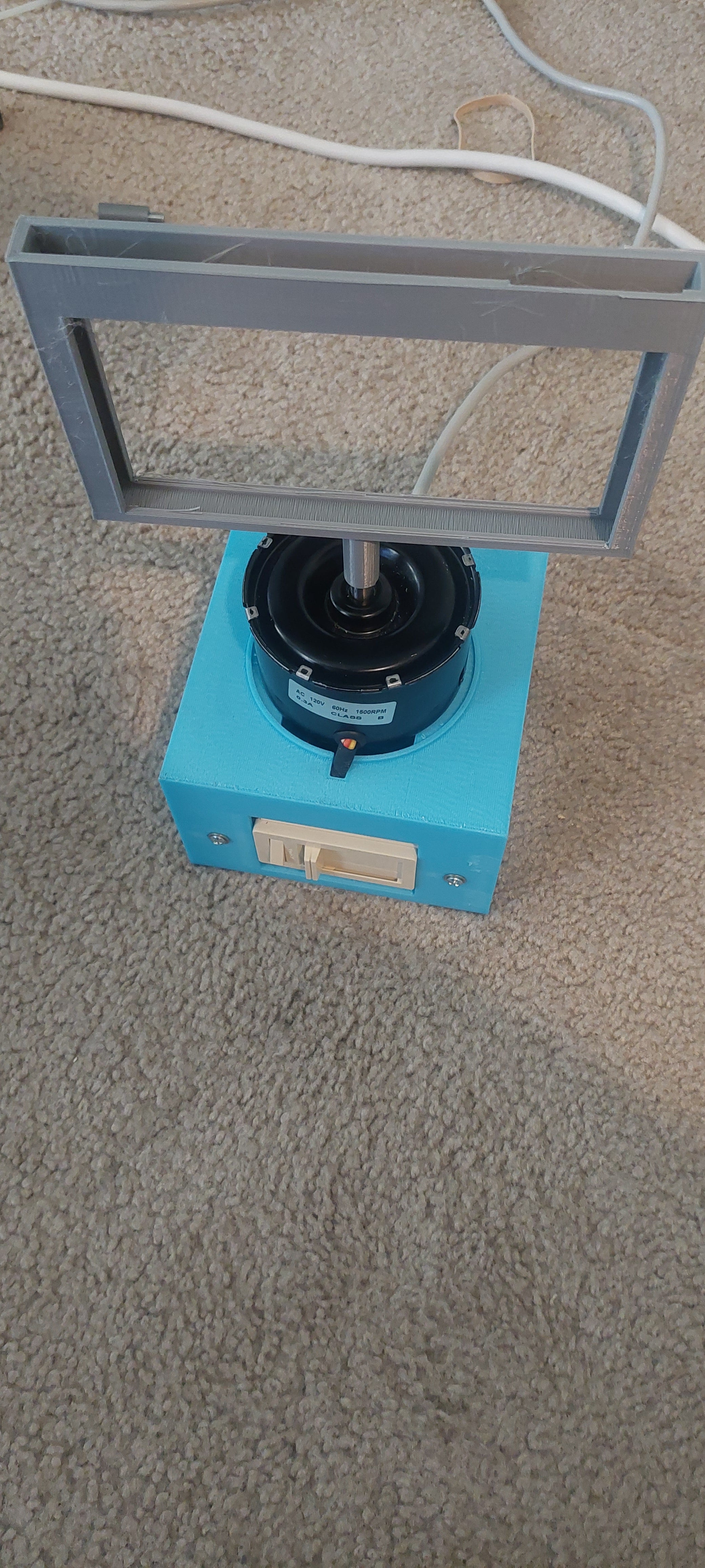
Our Spinning Gaming Display creates a mesmerizing 360-degree visual experience by rapidly rotating a smartphone inside a cylindrical housing, using precise timing algorithms to generate the illusion of floating 3D graphics on the phone's screen. The system renders our custom-built 3D pong game in real-time, allowing players to control paddles that appear to float in mid-air. The ball travels through what seems like actual 3D space, bouncing off walls and paddles with realistic physics. Players control their paddles using wireless controllers that communicate with the central processing unit, which calculates game states and renders appropriate visuals to the spinning display at over 30 frames per second. The combination of persistence of vision effects with real-time gameplay creates an arcade experience unlike anything available on traditional screens.
How we built it
We constructed the spinning display using a high-torque motor with a custom-designed 3D-printed mount that securely holds a smartphone inside a cylindrical housing. The phone's display serves as the visual output, spinning rapidly to create the persistence of vision effect.
For the software side, we developed a custom mobile application that renders the game on the phone's display with precisely timed visual outputs synchronized with the rotation. This required solving complex geometric problems to ensure that images appear stable and properly positioned in 3D space regardless of rotation speed. The game logic runs within the phone app, handling physics calculations, collision detection, and game state management while continuously adjusting the rendering based on rotational position.
Challenges we ran into
Creating a real-time game for a spinning display presented numerous technical hurdles:
Synchronization precision: We initially struggled with flickering and image distortion caused by timing discrepancies between the motor rotation and the phone's screen refresh rate. We solved this by implementing an optical encoder feedback system that provides real-time positional data to the rendering application.
Processing limitations: Rendering 3D graphics while simultaneously managing game physics, rotation compensation, and input processing pushed the smartphone's processing capabilities to their limits. We had to optimize our mobile application extensively, implementing specialized rendering techniques and efficient game logic to maintain smooth performance.
Power management: The rotating components required significant power, causing overheating issues during extended gameplay. We redesigned the power distribution system and added heat dissipation elements.
Controller latency: Early prototypes suffered from noticeable input lag that made gameplay frustrating. We rewrote our communication protocol from scratch to reduce latency to under 20ms.
Mechanical stability: At high rotation speeds, vibration caused visual artifacts and mechanical stress. We iteratively refined our balancing mechanism and dampening system to achieve stable rotation.
Accomplishments that we're proud of
Despite the challenges, we achieved several noteworthy milestones:
- Successfully created what we believe is the first-ever real-time interactive game for a spinning persistence of vision display
- Achieved a stable 30 FPS rendering rate with responsive controls
- Developed a reusable software framework that can be adapted for future games and applications
- Maintained position tracking accurate enough to create convincing 3D ball physics
- Built a system that operates reliably for hours without overheating or mechanical issues
- Created an experience that consistently amazes first-time players with its unique visual effect
What we learned
This project pushed our technical skills to new limits across multiple domains:
- Deep insights into real-time graphics rendering and the mathematics behind persistence of vision effects
- Practical experience with high-precision timing systems and motor control
- Advanced wireless communication optimization techniques
- Effective power management strategies for systems with both high-speed mechanical and electronic components
- The importance of iterative prototyping when working on novel hardware configurations
- How to balance processing resources between visual fidelity and gameplay responsiveness
What's next for Spinning Gaming Display
We see tremendous potential for expanding upon this foundation:
- Developing additional games specifically designed for the unique capabilities of the spinning display format
- Creating an SDK to allow other developers to build applications for our hardware
- Exploring augmented reality elements by integrating external cameras and sensors
- Scaling up the display size and resolution for larger installations
- Implementing multiplayer capabilities with multiple spinning units networked together
- Partnering with arcade venues to introduce this new gaming format to wider audiences
We believe we've only scratched the surface of what's possible with this technology, and we're excited to continue pushing the boundaries of interactive persistence of vision gaming.
Built With
- android-studio
- gemini
- godot

Log in or sign up for Devpost to join the conversation.