Inspiration
The inspiration for Crossed comes from daily word games like Wordle, The Spelling Bee, and The Mini. It comes from watching my grandfather perform his morning ritual of solving the crossword in his daily newspaper.
What it does
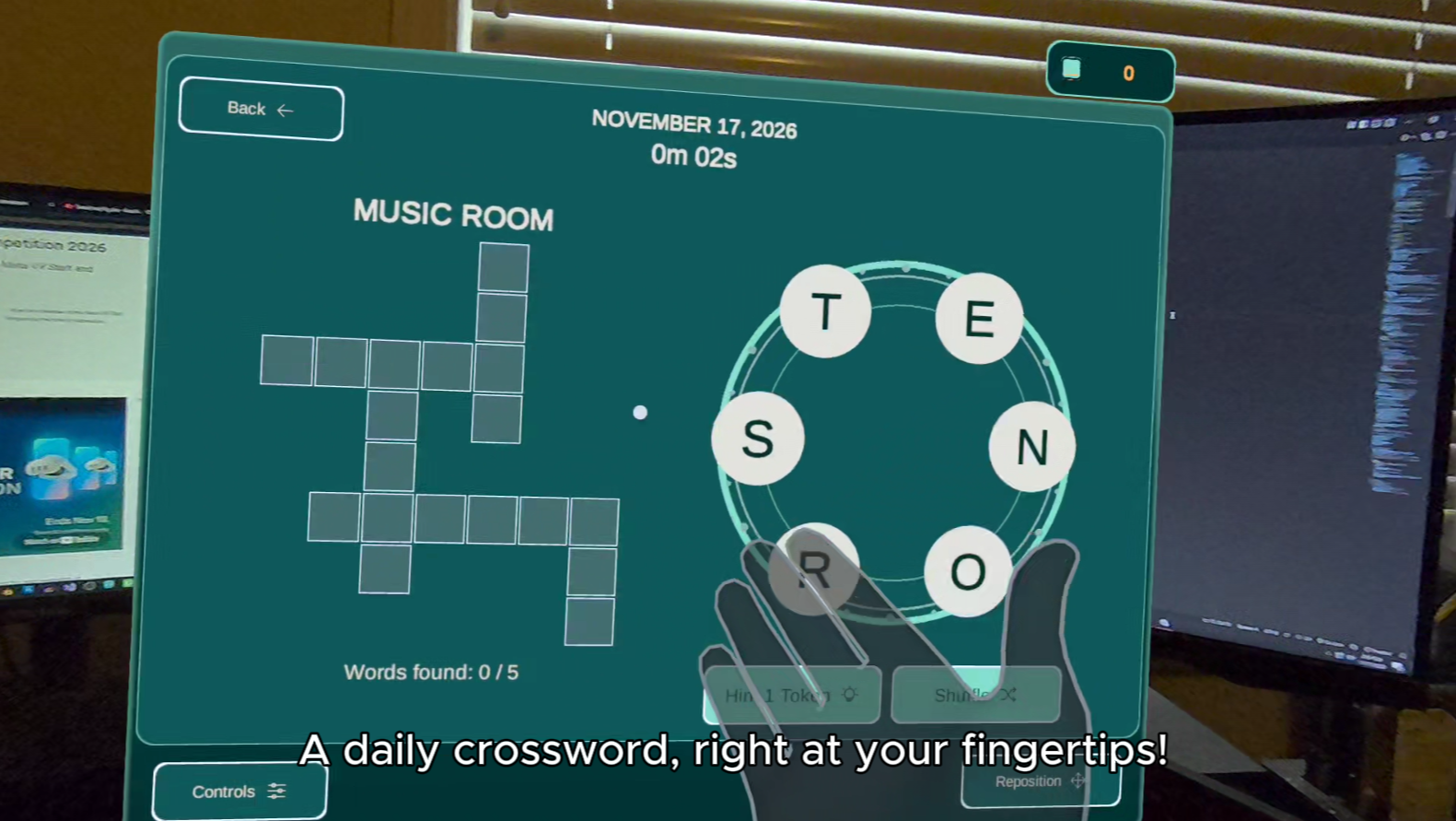
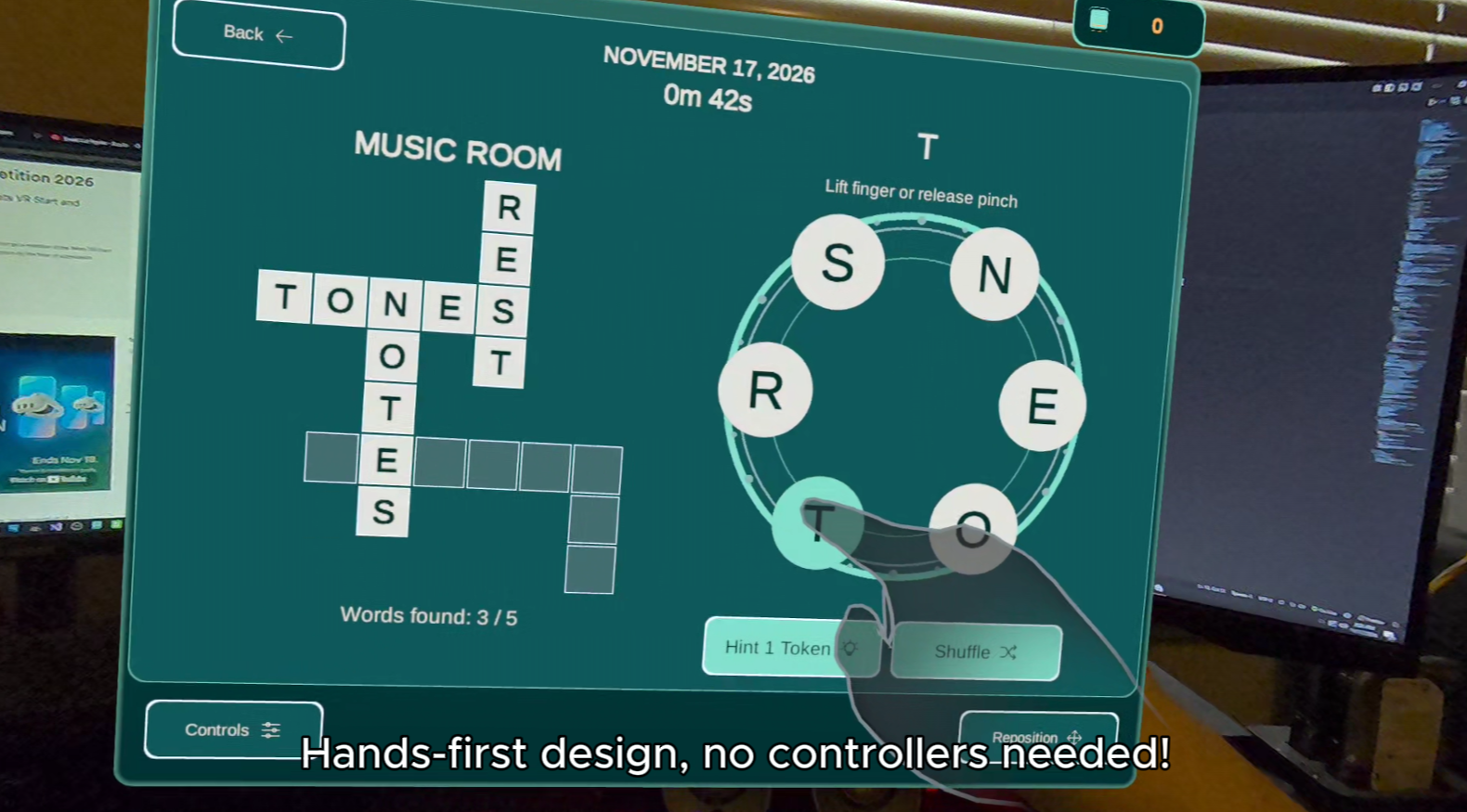
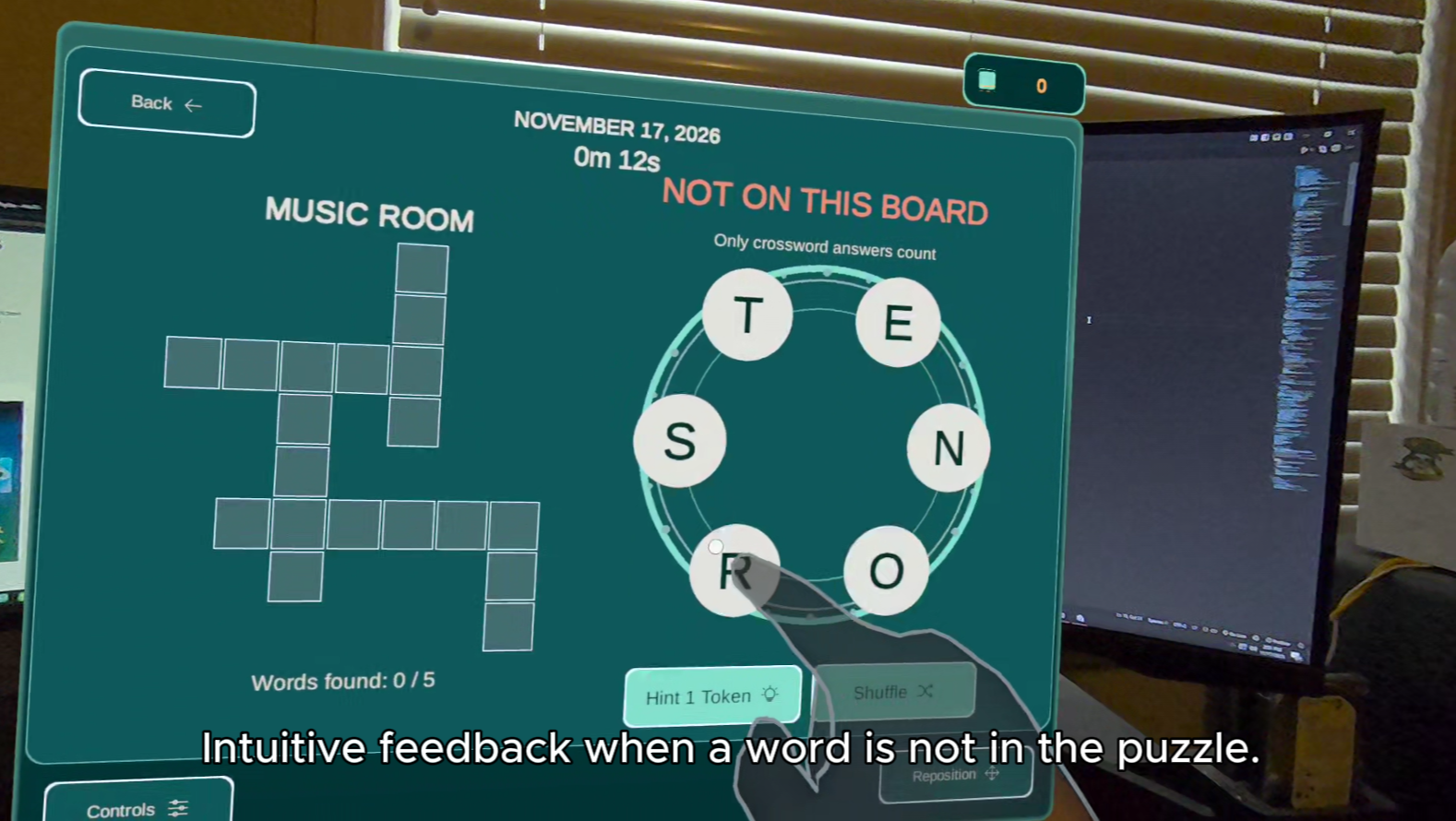
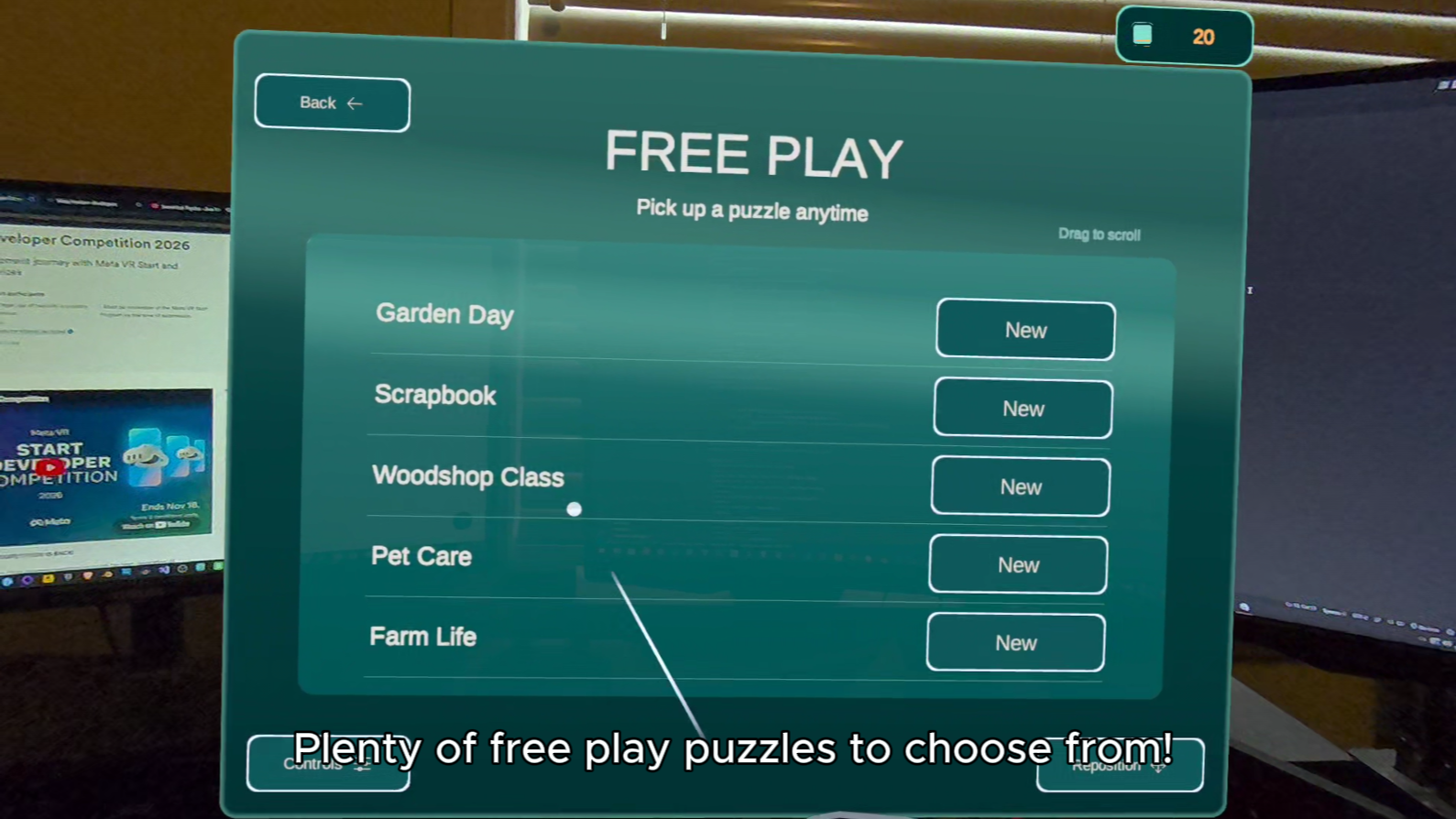
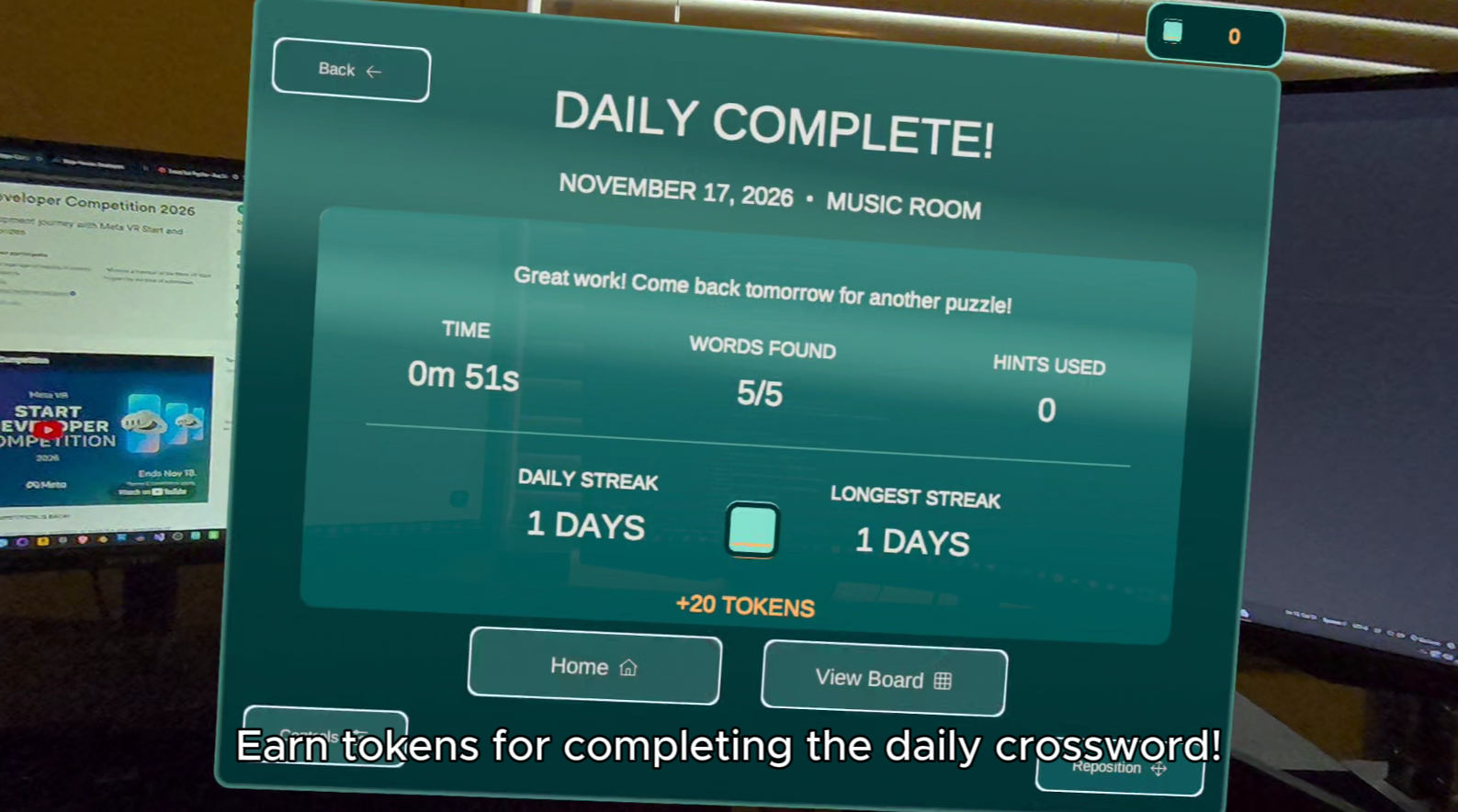
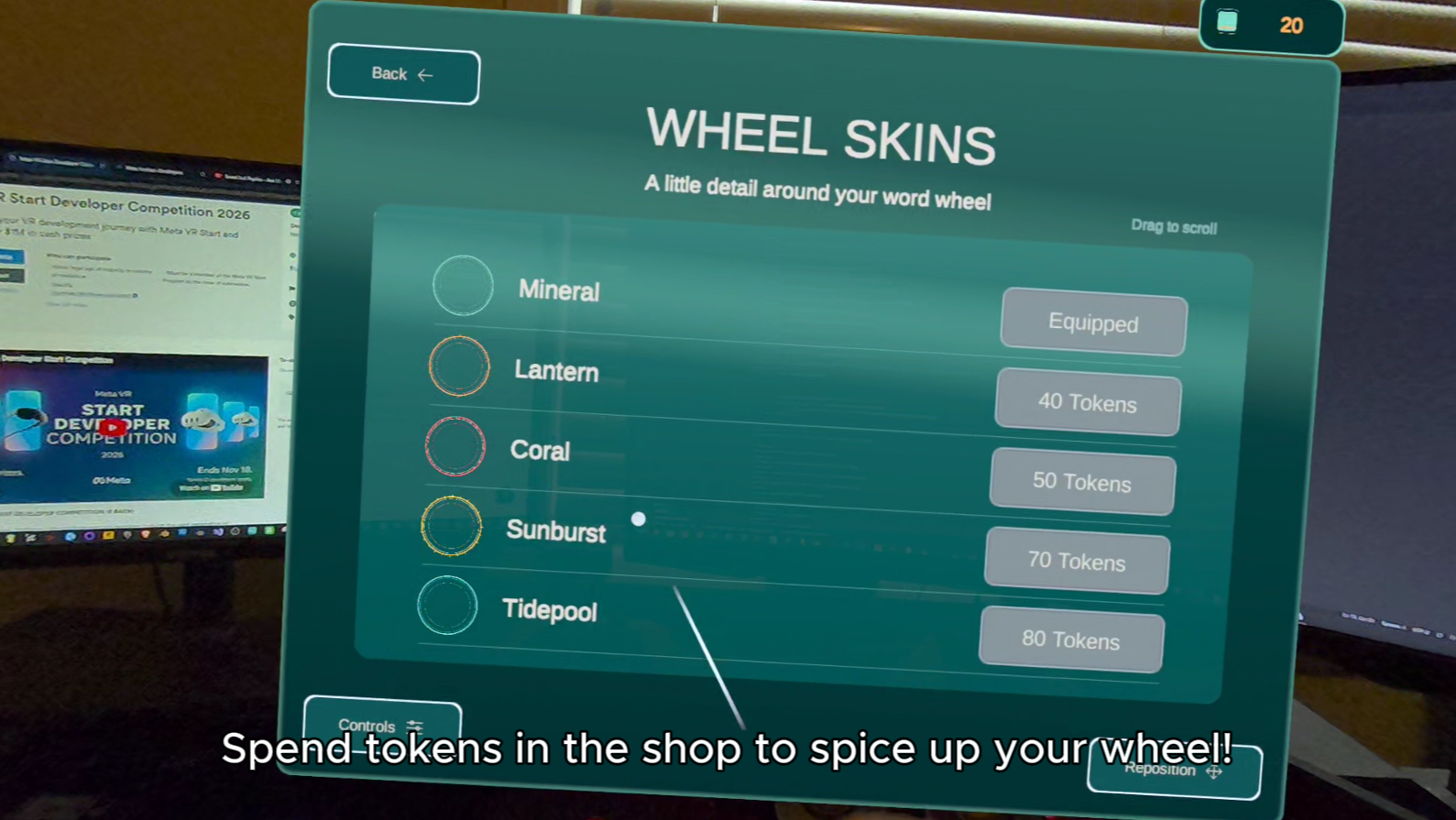
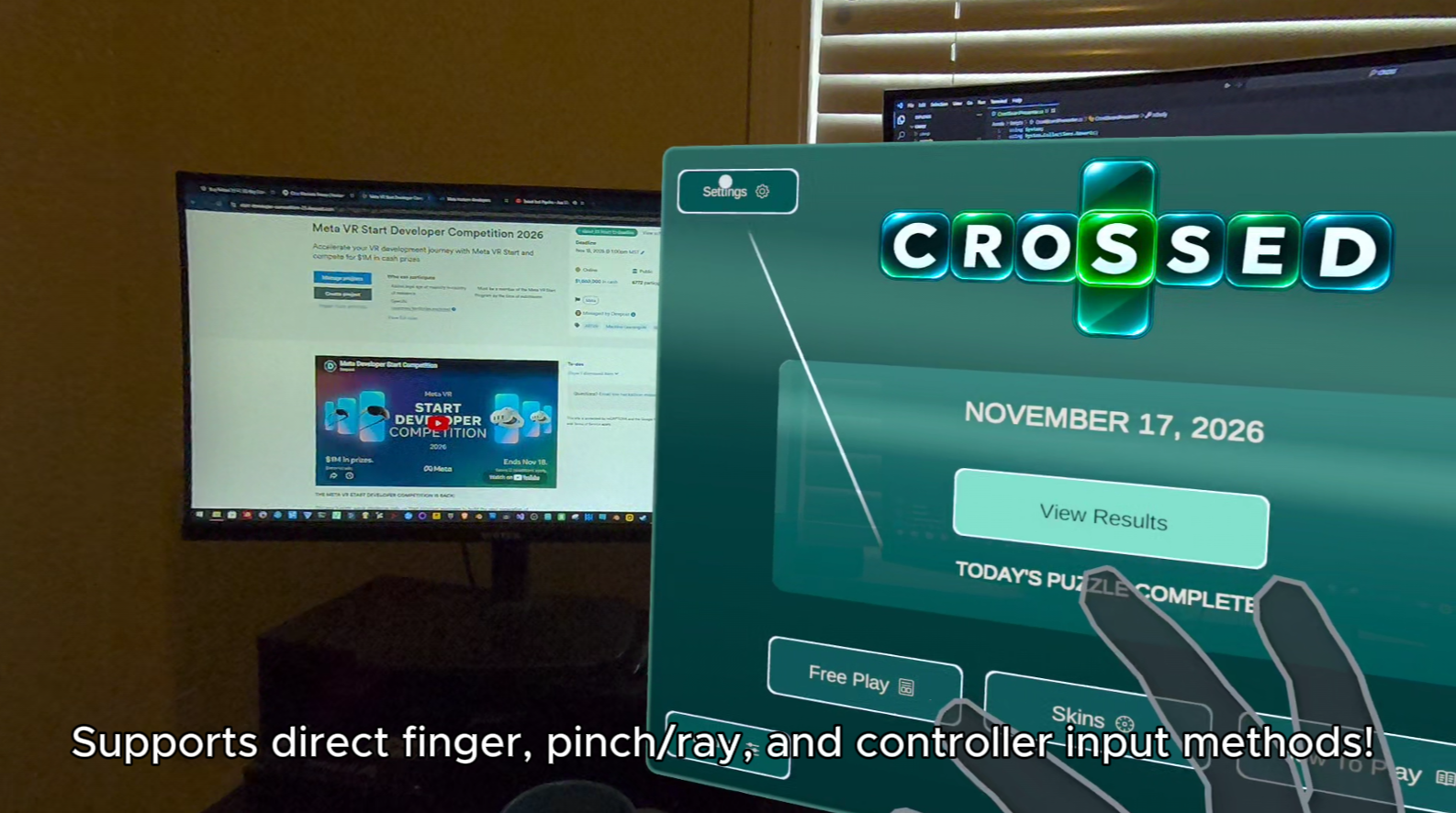
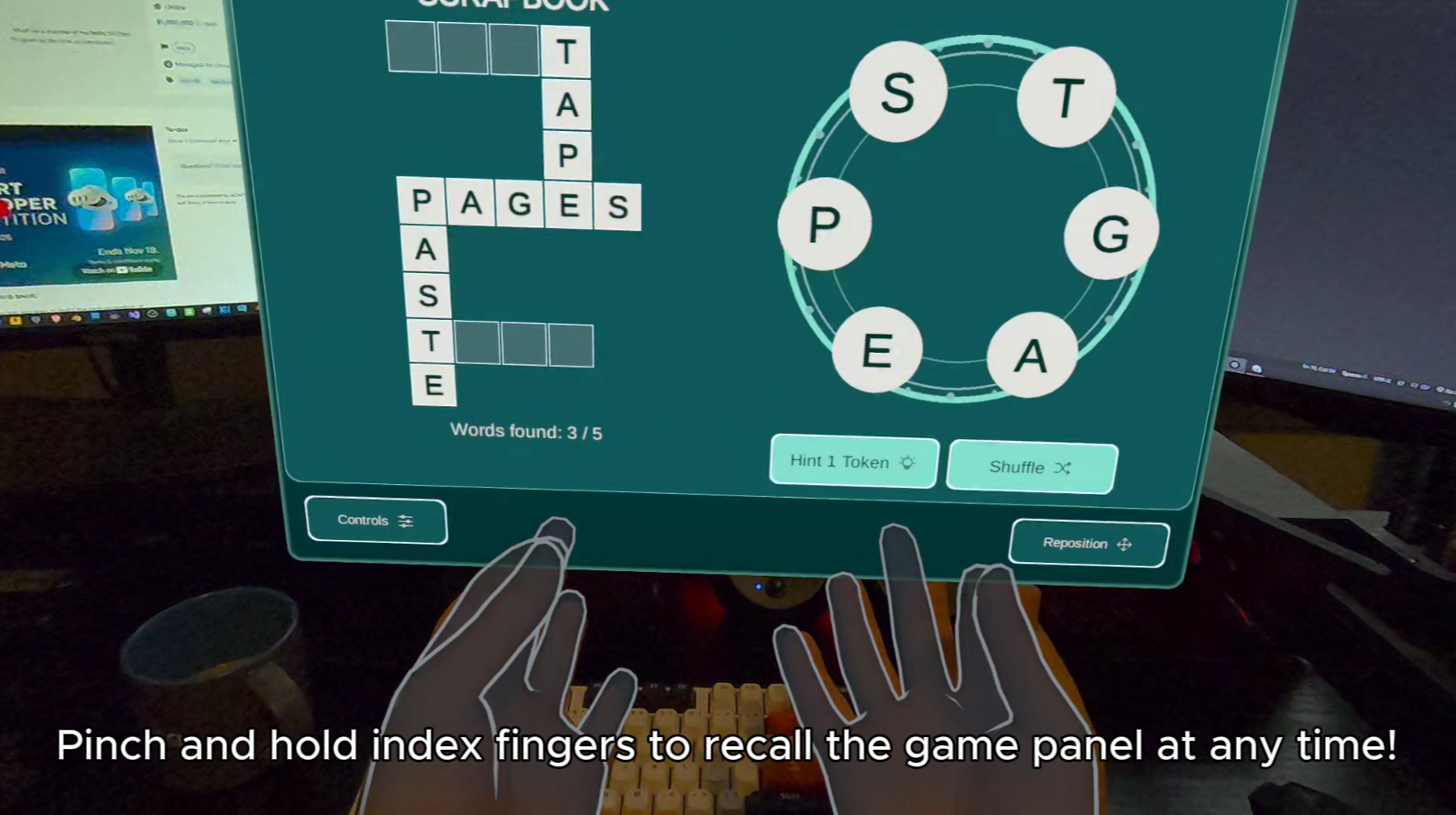
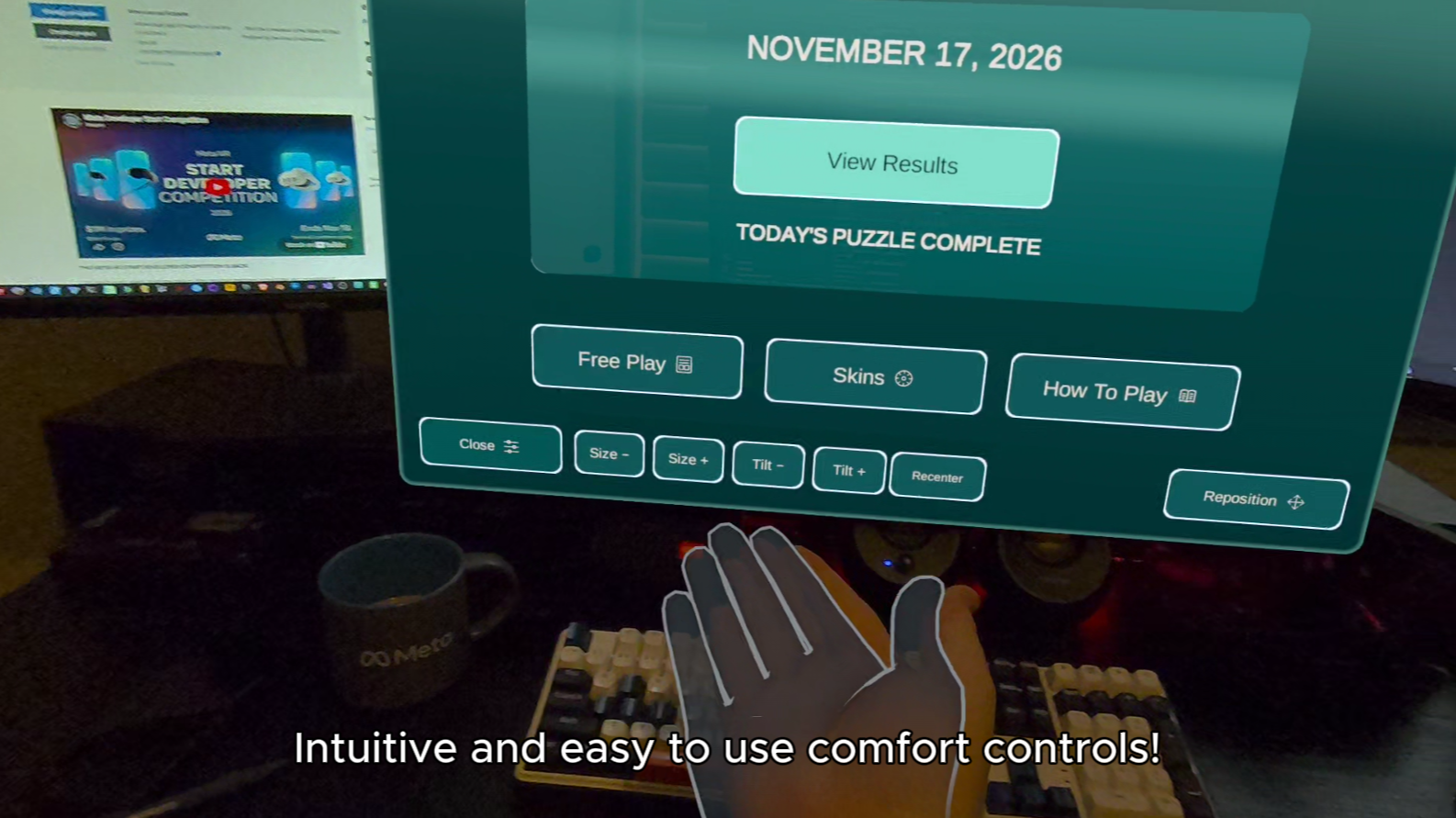
Crossed brings a word puzzle into your room. Trace letters on a floating wheel with your finger to form words, then watch them fill a crossword beside it. The entire game works with hand tracking: direct touch for close play and a pinch-and-ray option when you want to sit back. There is a local-time daily puzzle, a Free Play library, a first-launch tutorial, hints, results, and wheel skins earned with Tokens. Players can move, tilt, and resize the play area to fit where they are sitting.
How I built it
I built Crossed in Unity for Meta Quest 3 using passthrough, Meta XR hand interactions, and a world-space UI. Puzzles are authored as validated JSON, while local saves track progress, completion times, streaks, Free Play records, and cosmetics. I developed the core interaction on-device: selecting letters, tracing a word, submitting it, and revealing the matching crossword cells.
Challenges I ran into
The hardest problem was making a floating puzzle feel comfortable and dependable in a real room. Early versions placed the wheel too far away or too low. I repeatedly adjusted its size and position, then added controls that let players move the whole play area without disrupting a word trace. I also worked through hand-tracking edge cases, screen transitions, and keeping the crossword and wheel readable together over passthrough.
Accomplishments that I'm proud of
Crossed now has a complete hands-only loop, from a first-time tutorial through a solved board, celebration, and results. Both fingertip tracing and pinch-and-ray tracing work on Quest 3. I am especially proud that the play area can be brought into a comfortable seated position and that a short puzzle can be completed without a controller or room setup.
What I learned
Mixed reality makes small comfort decisions central to the game. A button can be technically reachable yet awkward to pinch; a wheel can be readable yet too large for relaxed play. Testing in the headset changed our layout, spacing, placement, and navigation far more than a flat preview could. I also learned to treat authored puzzle data, save recovery, and content provenance as part of the player experience, not just release chores.
What’s next for Crossed
I'm gathering feedback from additional Quest 3 testers, expanding the daily and Free Play puzzle libraries, and adding varied difficulty across the calendar. I also plan to refine the visual and audio identity, replace temporary sounds with original assets, and continue polishing the first few minutes of play.


