-
-
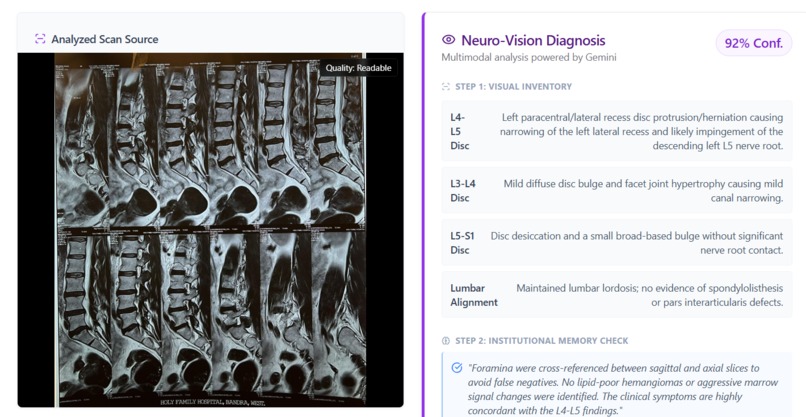
VoxelAgent
-
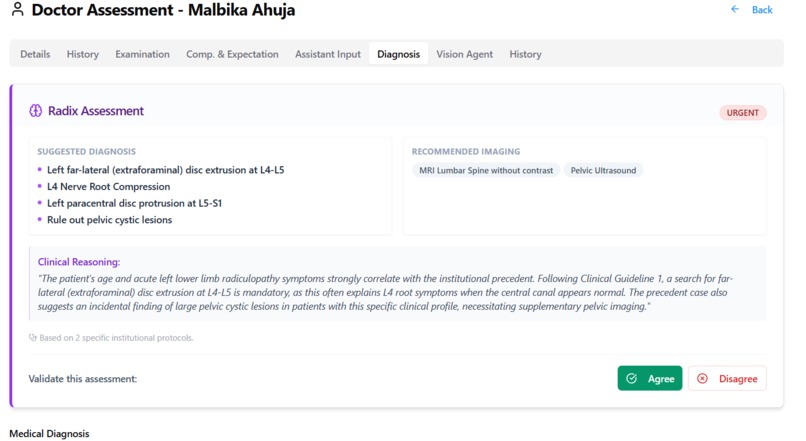
RadixAgent
-
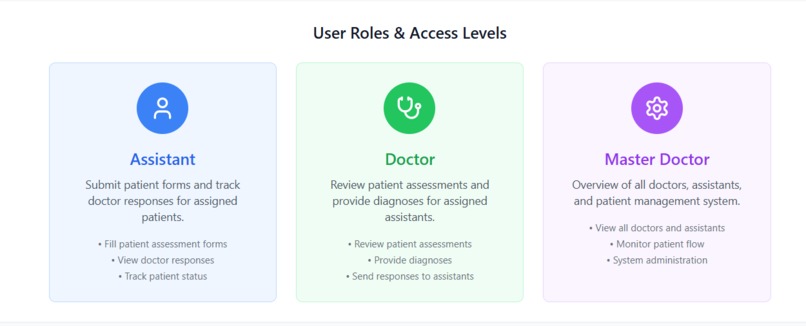
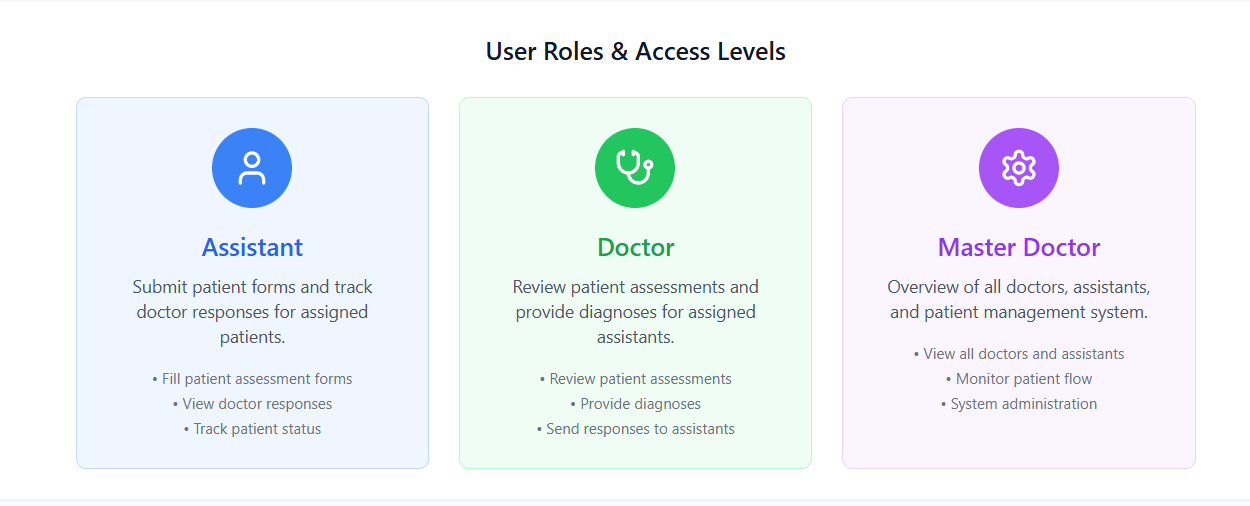
CareAxis
-
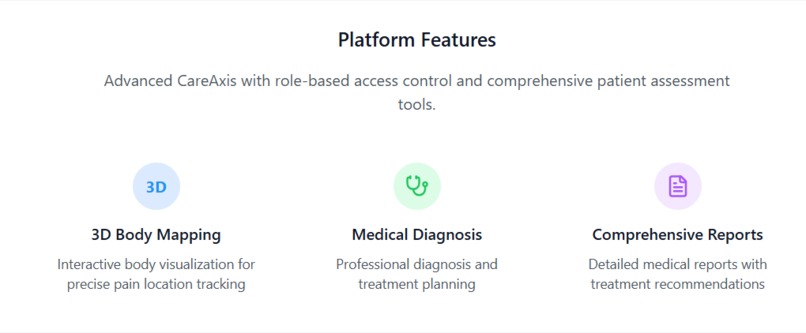
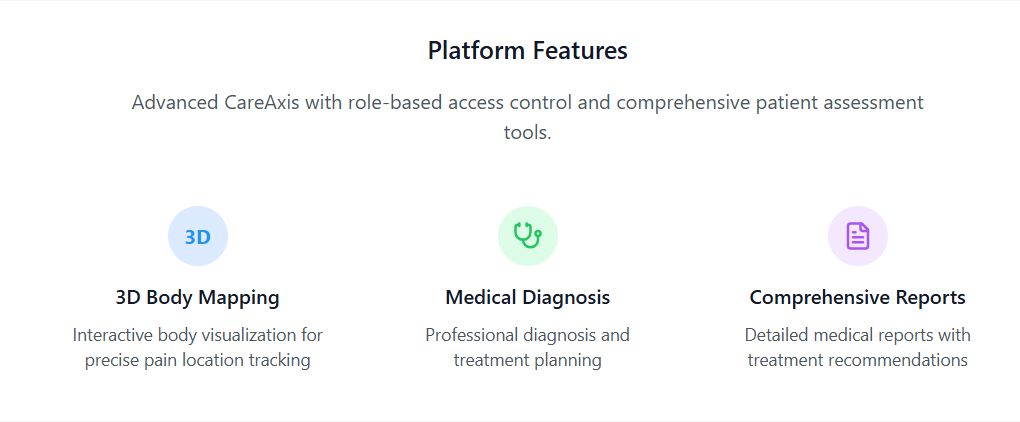
FeaturesOfCareAxis
-
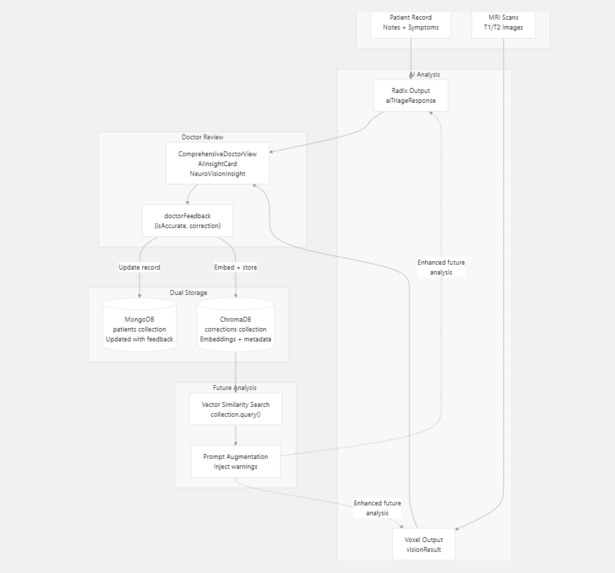
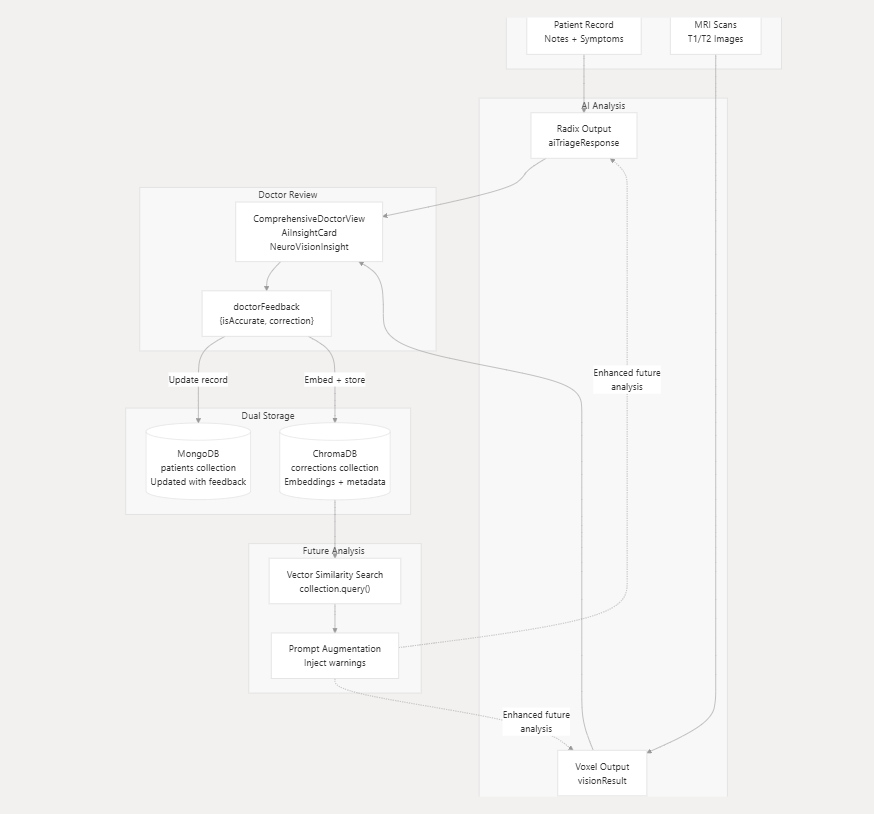
Golden Data Loop
-
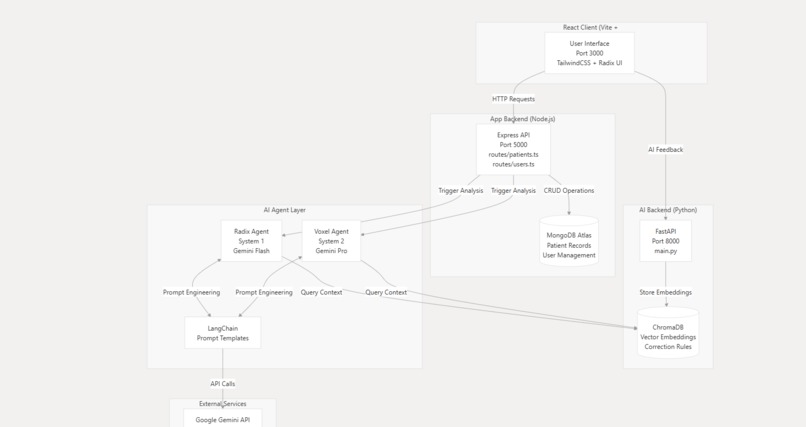
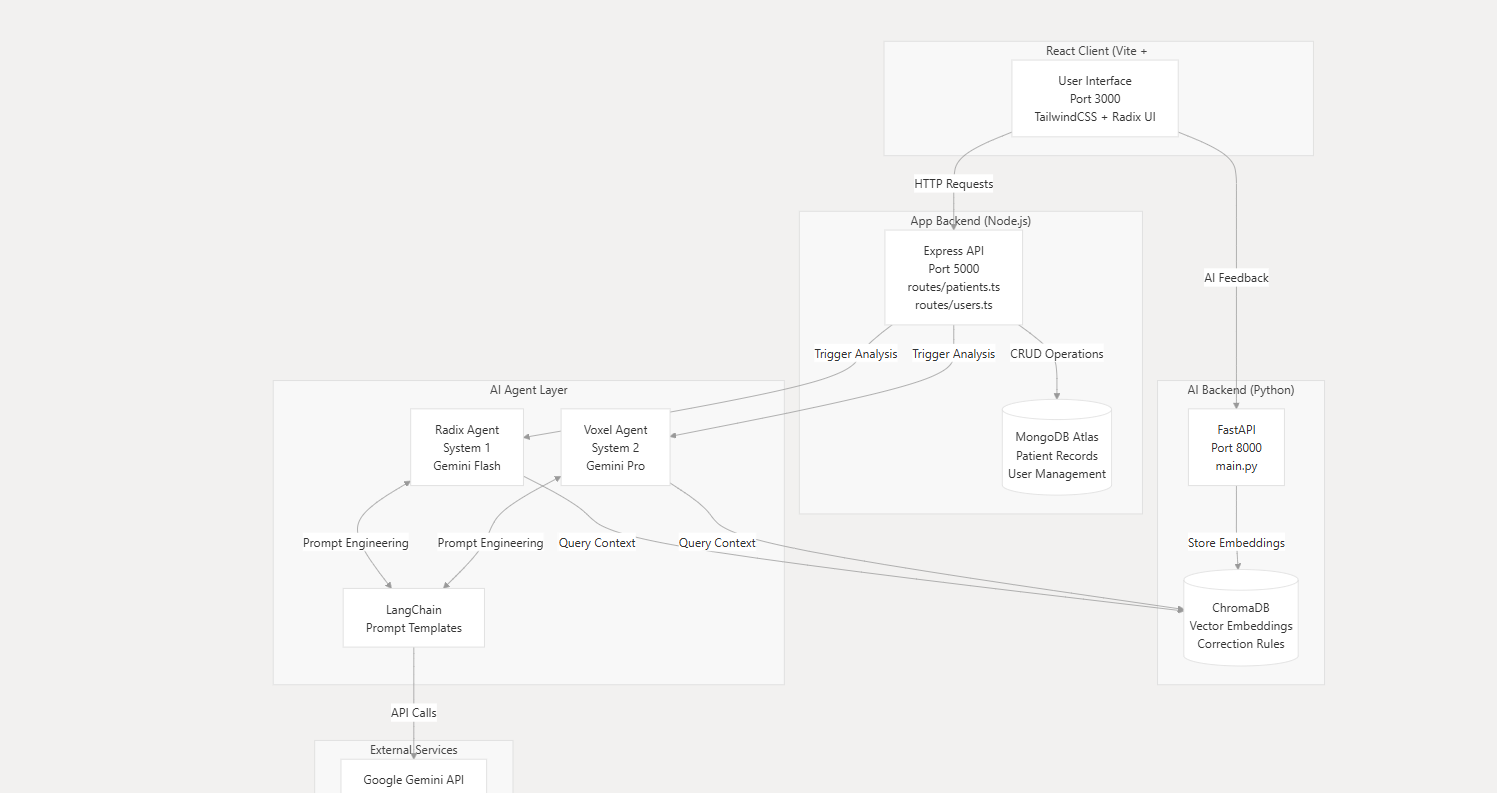
Deployment Architecture Diagram
CareAxis
SCALING INTELLIGENCE. HUMAN TRUST
Inspiration
Every busy spine clinic tells the same story. A long line of patients outside the door, and a doctor inside trying to help everyone - yet spending most of the day collecting the same histories, running the same mental checklists, and ordering the same preliminary investigations. By the time the real conversation begins, both time and energy are already depleted. I live this reality every day. What changed my perspective was noticing the difference when a trained assistant pre-assessed patients. The consultation immediately became sharper, calmer, and more meaningful. I could focus on what truly matters - diagnosis, decision-making, and patient reassurance. But human systems don’t scale. Assistants need breaks, take leave, and are limited by availability. That led me to ask a simple question: What if the assistant never got tired? That question gave birth to CareAxis. The inspiration didn’t stop inside my clinic. It came even more strongly from the patients I never met - the ones who delayed care because of distance, cost, long waits, or hesitation to engage in face-to-face consultations. Many of them don’t need complex intervention; they need structured guidance, clarity, and basic medical advice - something that can be delivered safely through standardized clinical logic. These are patients who fall through the cracks of traditional healthcare. CareAxis is built to bridge that gap. The platform translates a spine surgeon’s clinical reasoning into structured, evidence-based algorithms. It digitally reaches patients, performs intelligent triage, flags red signals, delivers provisional diagnoses, and seamlessly prepares them for teleconsultation/face to face consultations wherever necessary. It allows doctors to extend their reach beyond physical clinics while patients receive faster, judgment-free, travel-free access to reliable spine care. At the same time, the system continuously learns, remains unbiased, and stores structured clinical data - turning everyday consultations into research-ready insights. The biggest challenge was not building AI - but building responsible AI. Ensuring safety, accuracy, and ethical decision-making while designing a system that supports, not replaces, physicians was critical. Trust had to scale alongside technology. Ultimately, CareAxis represents quality scaling in modern healthcare - where patients gain timely access to care, and physicians reclaim their time, focus, and impact. Powered by AI, but grounded in real clinical practice, it puts an intelligent spine assistant in everyone’s pocket.
What it does
CareAxis is a self-correcting "Dual-Brain" diagnostic engine designed for high-stakes spine surgery. It mimics how a human clinical team operates by splitting the diagnostic process into two specialized AI agents:
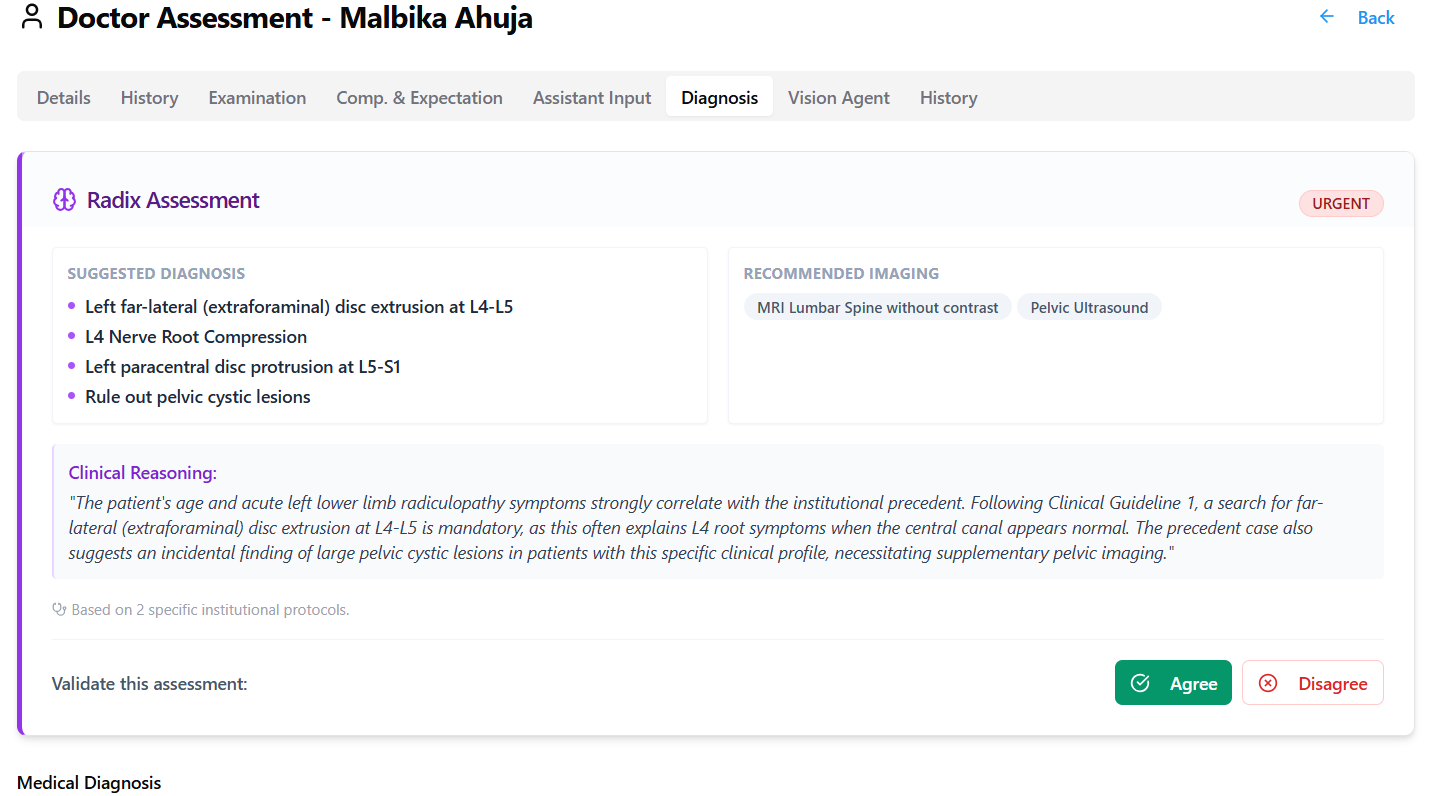
The Radix Agent (System 1): A fast, text-based intelligence that analyzes patient history and symptoms in milliseconds to form an initial clinical hypothesis.
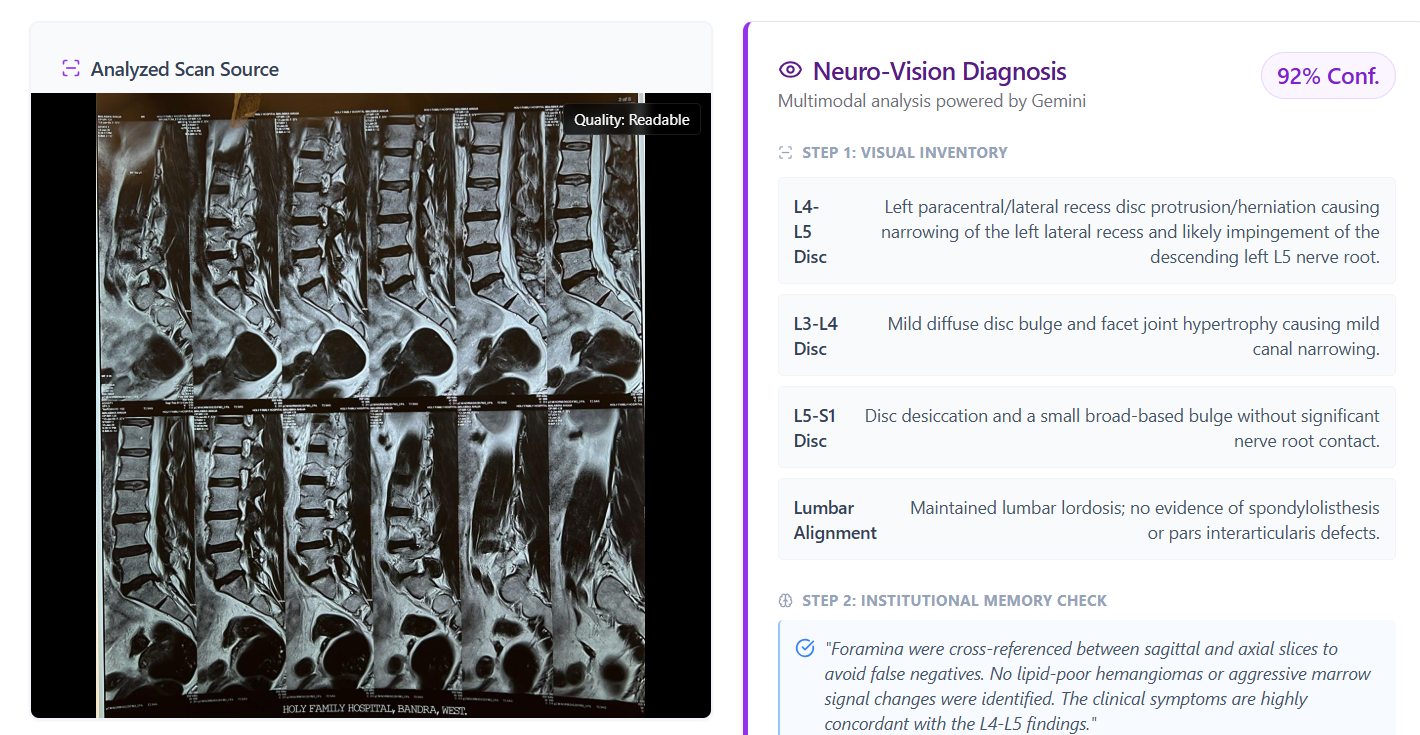
The Voxel Agent (System 2): A deep-reasoning vision agent that analyzes Radiological scans and Reports. Crucially, it doesn't just "look" at the image; it actively hunts for evidence to confirm or refute the Radix Agent's hypothesis.
The breakthrough? It solves AI "Amnesia." If a doctor disagrees with the diagnosis, CareAxis instantly embeds that feedback into a Vector Database. The next time it runs, it retrieves that "Doctor's Wisdom" to override its own logic, effectively learning hospital protocols in real-time without expensive model fine-tuning.
How we built it
We engineered a Multi-Agentic Pipeline powered entirely by the Gemini 3 ecosystem:
Orchestration: We used Gemini 3 for the low-latency Radix Agent to handle text triages instantly.
Vision Core: We deployed Gemini 3 for the Voxel Agent to leverage its native multimodal capabilities, allowing it to reason about pixels and text in the same vector space.
Memory Layer: We built a Retrieval-Augmented Generation (RAG) pipeline using ChromaDB. This acts as our "Golden Loop," storing doctor corrections as embeddings.
Backend/Frontend: The system runs on a FastAPI Python backend (for the AI logic), Nodejs and MongoDB, a React/TypeScript frontend (for the clinical dashboard), connected via a structured JSON context bridge.
Challenges we ran into
The "Context Gap": Initially, the Voxel Agent was "blind" to the Doctor's text corrections. It would hallucinate a diagnosis even after the doctor had ruled it out. We solved this by building a "Context Injection Bridge" that forces the Vision model to read the doctor's override notes before analyzing the pixels.
Hallucination Control: Stopping the AI from being "too creative" was hard. We implemented Constrained Decoding to force the model to output strict, FHIR-ready JSON, ensuring CareAxis acts like a piece of software, not a chatbot.
Accomplishments that we're proud of
The "Golden Loop": We successfully built a system that learns in real-time. Seeing CareAxis actually correct itself on a second run after receiving doctor feedback was a massive win.
Native Multimodality: We didn't use separate OCR or object detection models. We achieved true cross-modal reasoning where the text history biases the visual search attention.
Agentic Architecture: We moved beyond a simple API wrapper. We built a system with state, memory, and distinct roles (Radix vs. Voxel).
What we learned
Context is King: The smartest model is useless if it doesn't know the context. Passing the entire patient journey (history + feedback) into the context window exponentially improved accuracy.
System 1 vs. System 2: We learned that treating AI like a human brain—separating "fast" thinking (Triage) from "slow" thinking (Vision)—is the most effective way to build reliable clinical tools.
Doctors don't want chatbots: They want tools that listen. Adding the "Disagree" button that actually changes the AI's future behavior was the most valuable feature we built.
What's next for CareAxis
Multimodal interaction Voice-based input and output, enabling natural, real-time doctor–patient and doctor–system interaction.
Interactive clinical workflows Dynamic pathways that adapt to patient data, clinician inputs, and evolving clinical context.
Camera-enabled intelligence Visual inputs by smartphone cameras to assist with examination findings, imaging interpretation, and procedural guidance.
Evidence-aware clinical reasoning Continuous ingestion of high-quality, peer-reviewed research to generate diagnosis and treatment suggestions—at a depth and scale that is increasingly difficult to achieve manually in routine clinical practice.
Our vision is to make quality healthcare reachable, efficient, and ethical - anywhere in the world.


Log in or sign up for Devpost to join the conversation.