Inspiration
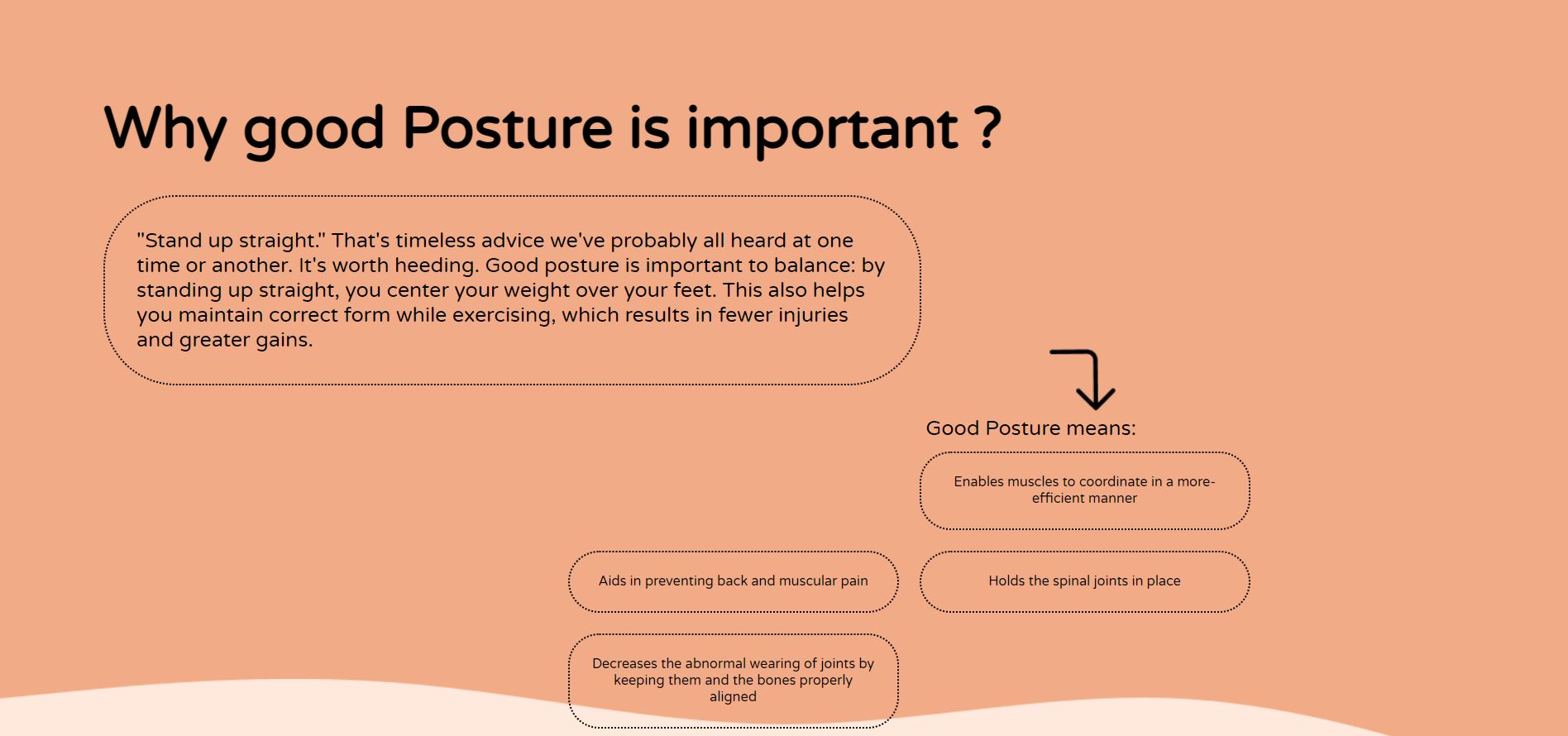
The average adult spends about 3½ hours a day using the Internet on their phones, according to a 2019 study from the analytics company Zenith. This can result in bad posture, which ultimately results in a number of greater problems in the future such as heartburn, spine curvature, back pain, neck pain and headaches, poor sleep and believe it or not, a lack of motivation.
Adolescents are at a greater risk of these issues due to their increasing screen times especially due to the COVID-19 pandemic.
Spine was built to aid people of all ages improve their posture over time while taking care of overall mental and physical well-being too.
What it does
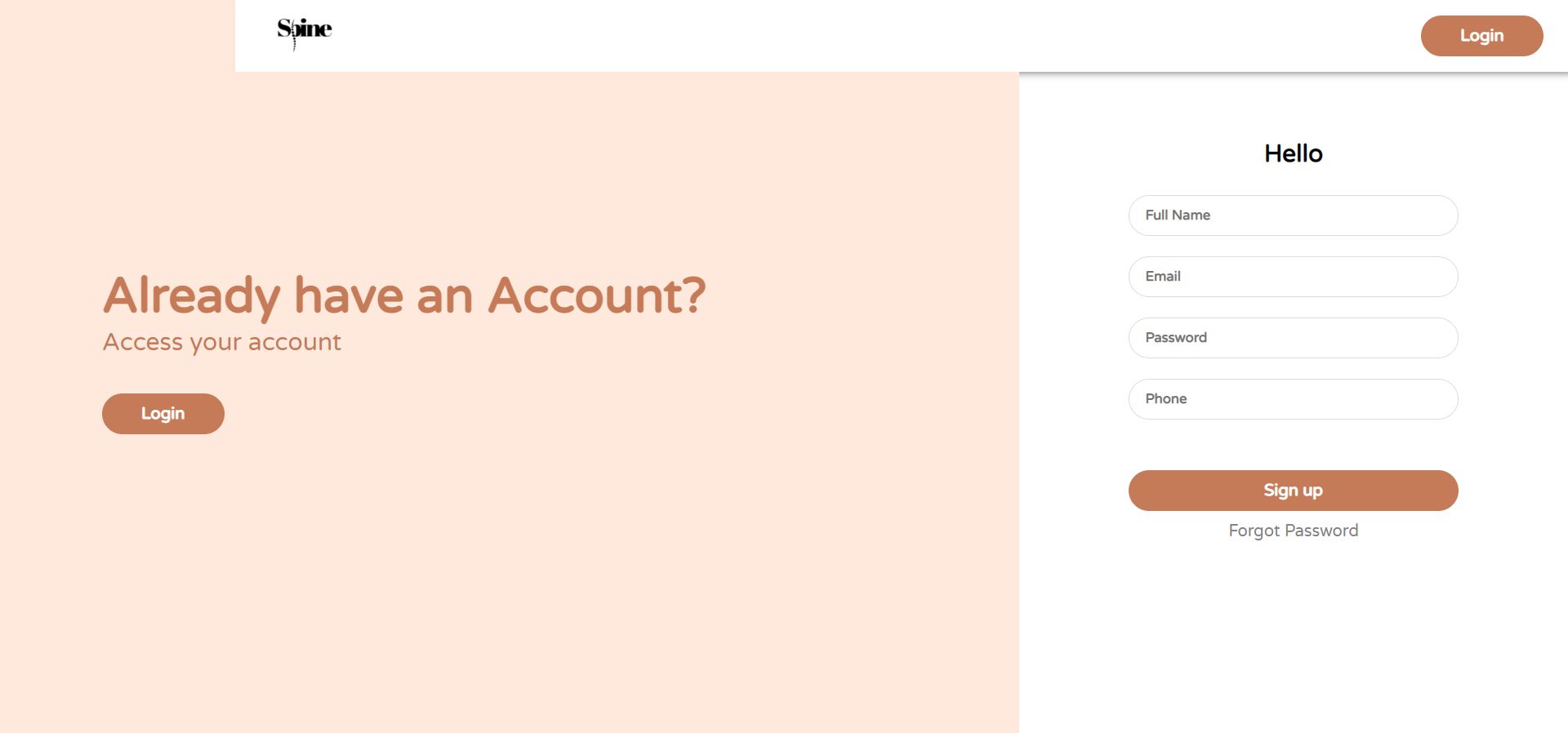
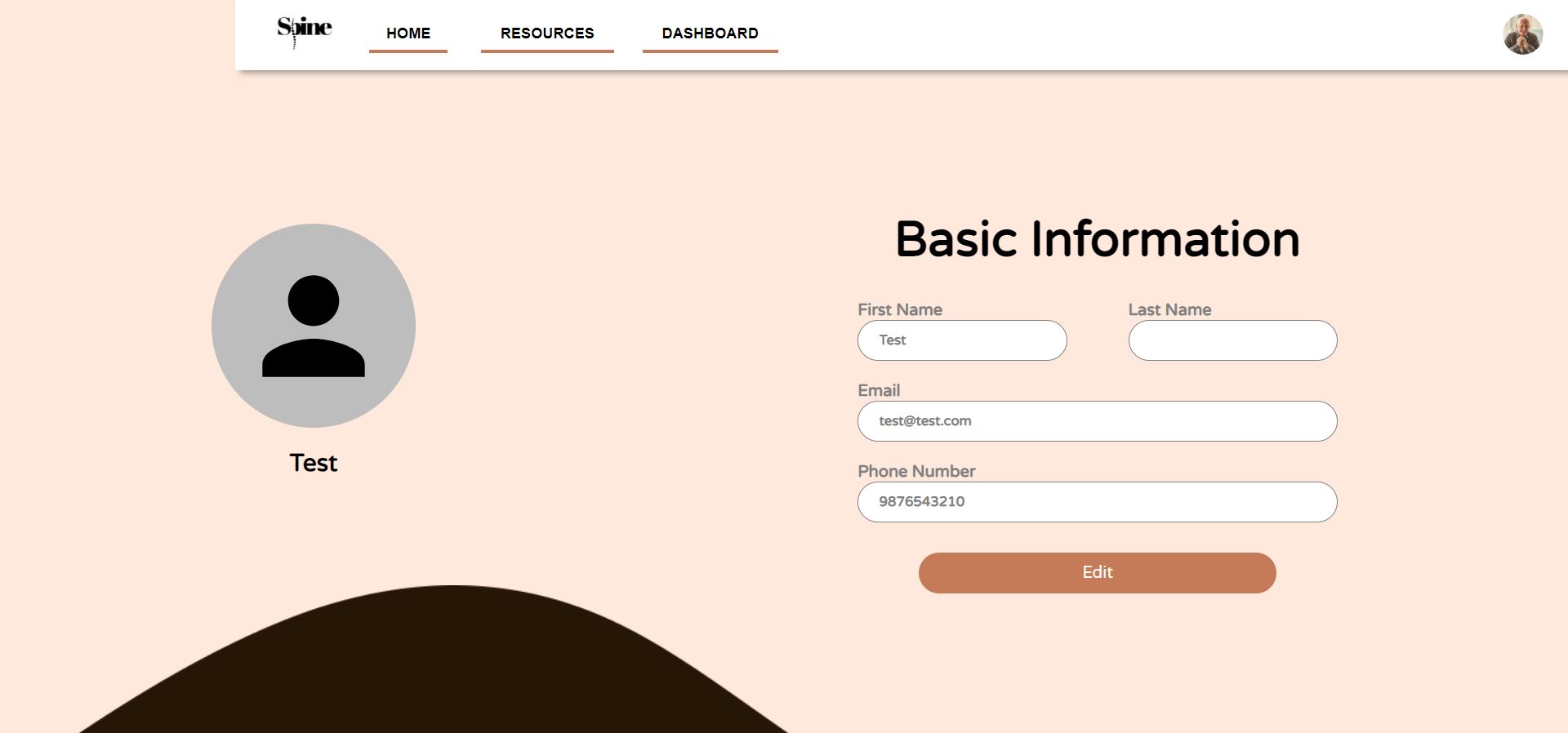
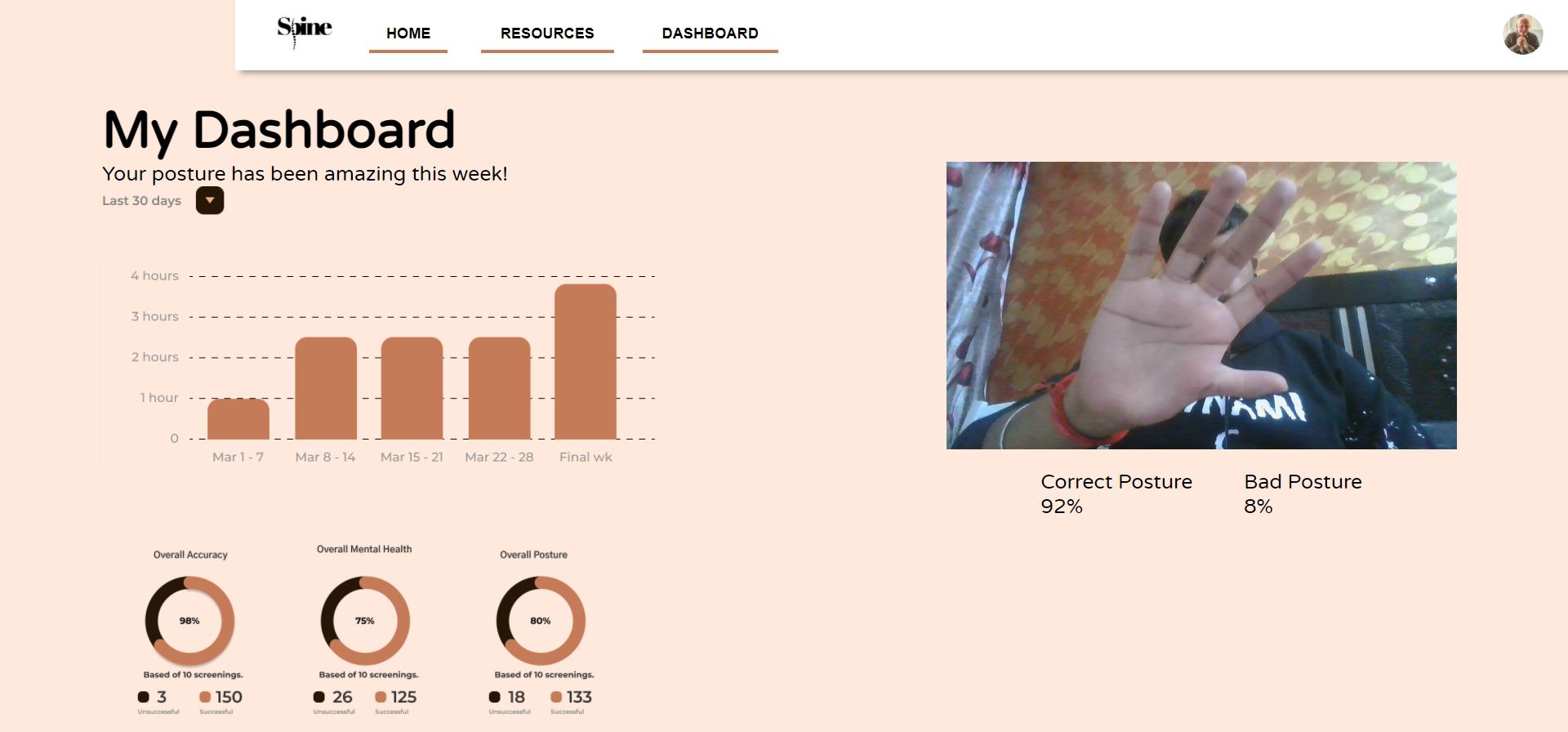
Spine takes care of your spine in several ways. Users simply need to sign up to get started. Once they’re all set up, they will have access to their own dashboard where they can track their progress and find ways to improve their posture. The application will take a video screening test using the user’s webcam- once they allow access- to detect their posture. Are their shoulders pushed back? Are they slouching? Are their arms placed correctly?
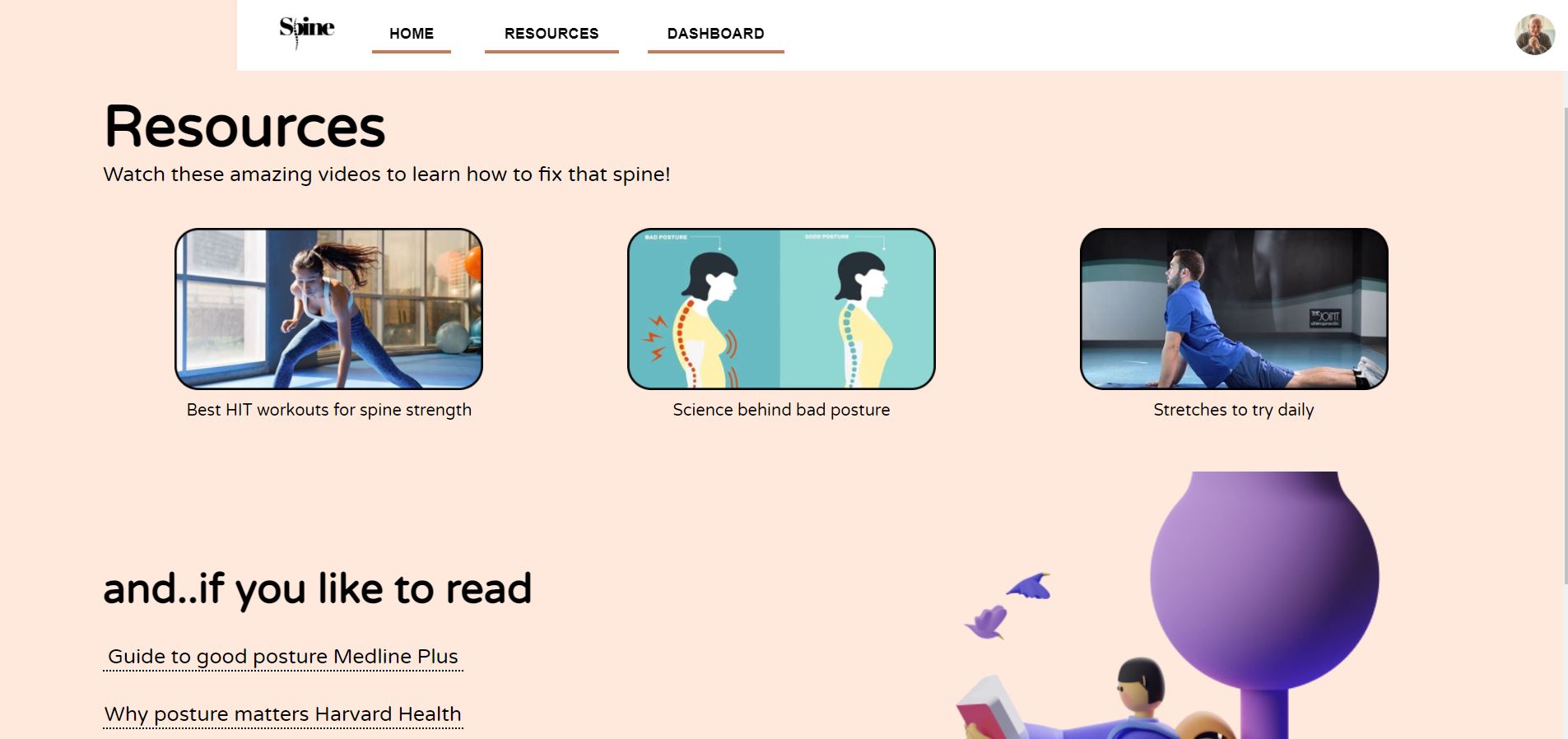
The application has the ability to detect all of these features and produce a prognosis on the dashboard, along with promoting resources for the users to check out such as videos created by health professionals and articles published by trustworthy resources to teach them how to fix their posture over time. It’s a two way street. Users need to adapt the recommendations made by Spine to get better results.
The web application will work automatically but at the same time, users can take a screening test manually as well.
Last but not the least, it will also give notifications every 20 minutes asking users to rest their eyes for exactly 20 seconds according to the scientifically proven 20-20 rule for eyes. In conclusion, Spine is one of the first tools available which focuses on spine/posture health of people.
How we built it
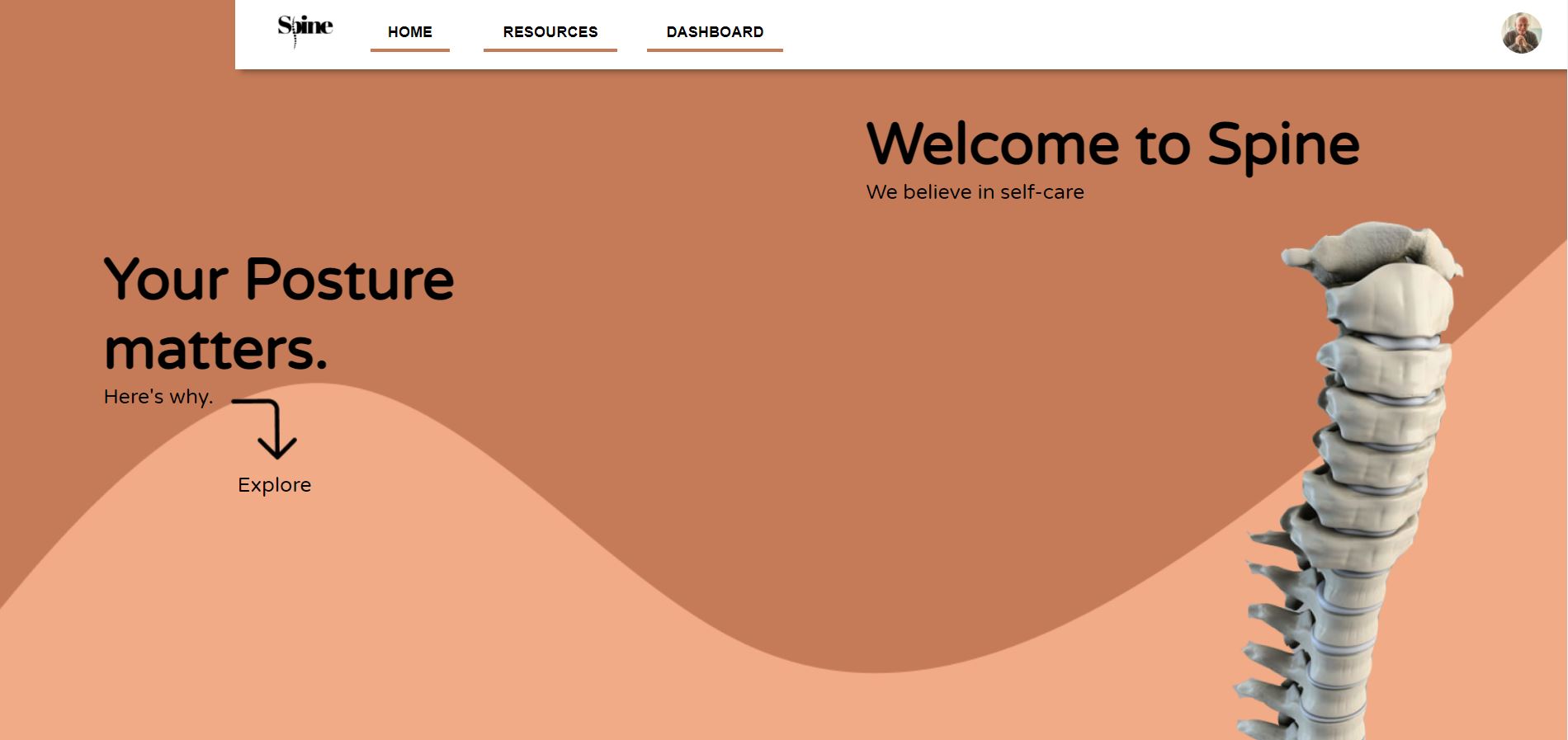
The development of Spine was split in two parts. The interface, and the backend. Starting with the interface, it was designed in Figma with the logo designed in Adobe Photoshop. The colors picked for the interface are soft neutrals and in the shades of skin as Spine is supposed to be used by people all ages and backgrounds while promoting self-care. The font used was Abril Fatface due to its good readability and aesthetically pleasing nature.
Now coming to the backend, express was used for the backend-development as it’s fast and reliable. MongoDB was used for the database as it enabled us to use data to build easily, adapt quickly, and scale reliably. Finally, the backend was deployed using Heroku. The front-end was done using the materialUI libraries and netlify.
Challenges we ran into
Research was difficult since every team member had a technical background and not a medical background, hence it was often at times hard to make sure that our application performs its functions medically accurately and precisely. Fortunately, thanks to the abundant of resources on the web, we were able to pull through! And of course, since this application had to be presented for a hackathon, we were all in a time crunch!
Accomplishments that we're proud of
For sure, we might have set up a working project and a good-looking prototype in several hours but the greatest accomplishment that we’re proud of is that we as a team were able to come up with an idea that will benefits people everywhere. It will specifically benefit adolescents who need to have a healthy back to support them for a lifetime. Spine can be revolutionary in a way that it becomes the go-to tool for people to take care of their backs. We are taking self-care to the next level!
What we learned
Besides learning new ways to improve code and to be efficient, the greatest learning factor about Spine was just becoming aware of the medical benefits and risks related to simply, the human posture. As tech geeks ourselves on the team, we became aware of our postures as well!
What's next for Spine
We will continue adding more features to Spine that not only focus on spine health but also eye health as eye strains are continuously becoming common. We will turn Spine into an app that can be installed on Android and iOS so users can take Spine on the go!
Built With
- express.js
- figma
- javascript
- node.js
- photoshop
- react
- tensorflow

Log in or sign up for Devpost to join the conversation.