-
-
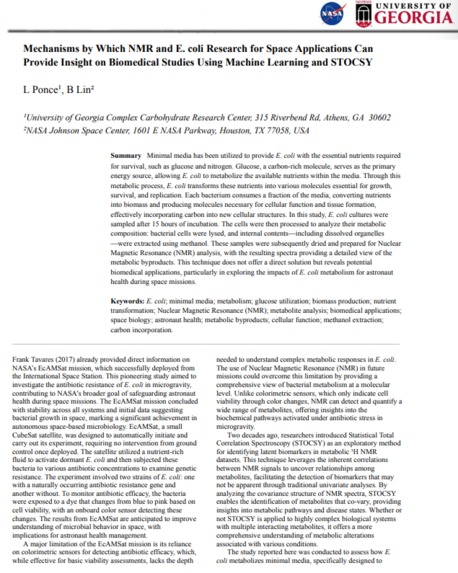
Pg. 1
-
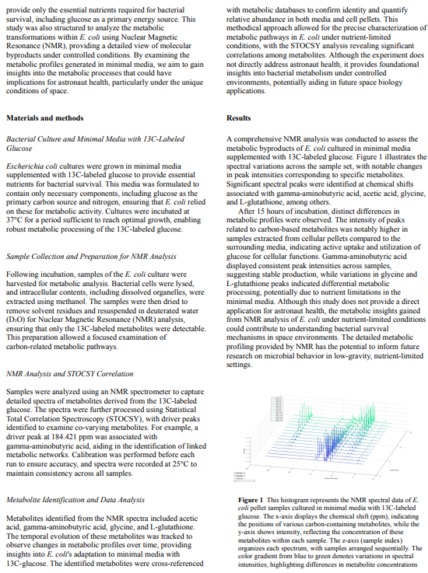
Pg. 2
-
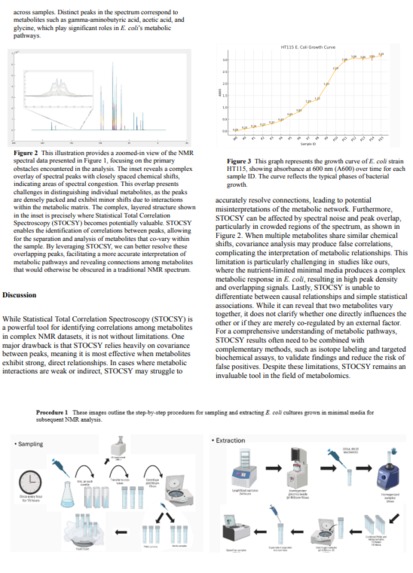
Pg. 3
-
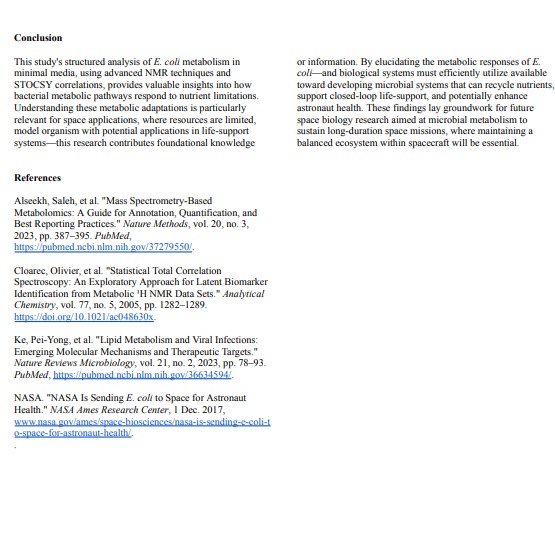
Pg. 4

Disclaimer:
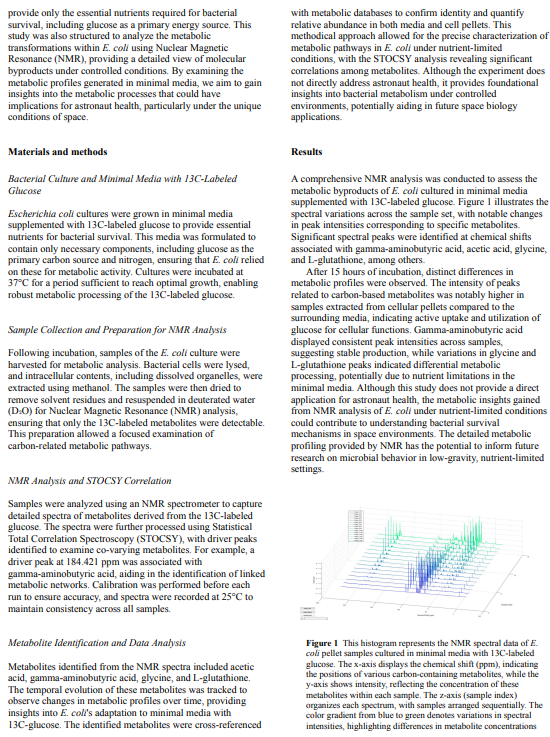
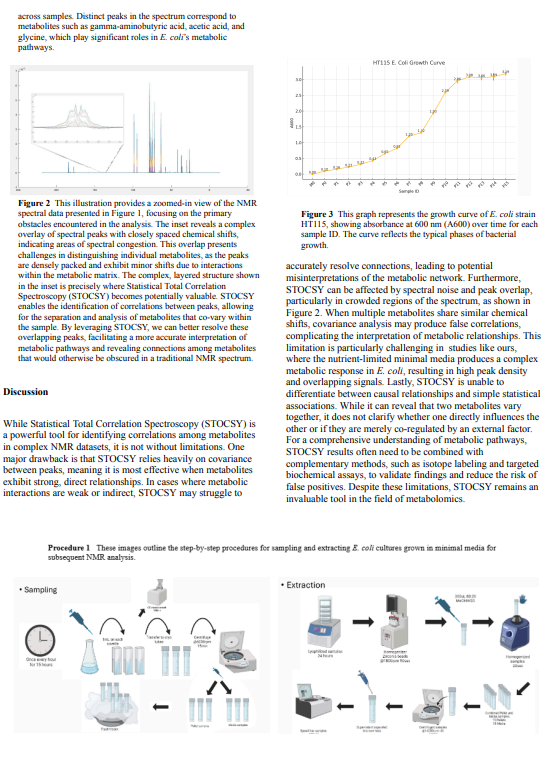
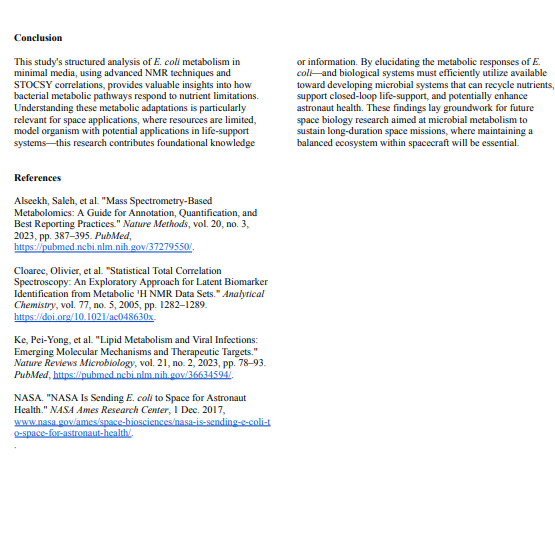
- The demo video of NMR visualization at 0:12 depicts NMR using hydrogen atoms. However, the Spinach file(s) focus on carbon atoms. The visualization is included solely to illustrate how the NMR process works with molecules.
- At 2:15 in the demo video, the inefficiency of the default Spinach file was demonstrated, showing it generates one figure at a time, slowing hypothesis testing. By 2:52, a solution was proposed: modifying the file to generate 100 figures at once, allowing quick comparison by X-ing out individual figures. This enables faster visualization of correlations between scalar coupling changes over time. If you want to see an example of an updated Spinach file I submitted on GitHub—C13_1D[3]—here is the link: https://youtu.be/I66aO5gHTHI.
- Although the demo video states "4 NMR Spinach MATLAB simulations" as of the hackathon submission, I plan to update GitHub with additional MATLAB files from time to time, as it is part of my duty as a UGA VIPR researcher anyways!
Access to the Mock Research Insight Paper:
https://docs.google.com/document/d/1GBrqM7WiThUMThLCH8ecarEKuUHV9g3SacI4BGudxRM/edit?usp=sharing
Inspiration
The idea for "Spinach Library X" was born out of a dillema/conflict where I had to choose between attending my UGA VIPR research meeting (https://instruction.uga.edu/initiatives/vipr-program/) and participating in the NASA Johnson Space Center Hackathon by flying to Houston (Both events were scheduled to be on Friday-Sunday). To make this a win-win situation and contribute to both initiatives, I decided to enhance the capabilities of the Spinach Library by developing multiple modified versions of the code. These modifications aimed to test NMR hypotheses, specifically focusing on ¹³C carbon atoms by systematically altering couplings and chemical shifts.
How does this relate to Challenge #4 (Use Space for AI)?
- Spinach Library X aligns with Challenge #4 (Use Space for AI) by drawing parallels to NASA's EcAMSat (E. coli AntiMicrobial Satellite) mission, which investigated the effects of microgravity on the antibiotic resistance of E. coli. NASA EcAMSat autonomously conducted experiments in space to understand bacterial behavior, providing valuable data for astronaut health and informing antibiotic treatments.
- Use of AI
What it does
The Spinach Library X is an advanced computational toolkit or MATLAB files designed for Nuclear Magnetic Resonance (NMR) research. It extends the functionality of the original Spinach Library by providing new simulation modules to:
- Investigate the effects of varying chemical shifts and scalar couplings on NMR spectra.
- Generate hypothesis-driven spectral predictions for ¹³C carbon atoms.
- Enable researchers to test and optimize parameters for experimental design efficiently. This tool is especially beneficial for academic and industrial researchers working on simulating molecular systems.
- Make interpreting figures faster
How we built it
- Framework: The project was built on the original Spinach Library, which is an open-source platform for NMR simulations.
- Programming: Using MATLAB, we introduced modifications to the existing codebase, creating specialized scripts that manipulate chemical shift values and coupling constants for targeted spectral simulations.
Challenges we ran into
One of the major hurdles was attempting to transform the original Spinach Library into a fully functional MATLAB app. The vision was to create an intuitive, interactive interface that would make NMR simulations more accessible. However, the complexity of the Spinach Library's codebase, combined with the limitations of MATLAB's app development framework, made this task far more challenging than anticipated. P.S. I'm a solo participant, as the group I originally planned to chaperone has left after 8 hours in.
Accomplishments that I'm proud of
- Successfully created a functional prototype of Spinach Library X within a limited timeframe.
- Expanded the scope of NMR research tools available for hypothesis testing.
- Demonstrated the ability to merge two distinct research priorities into a cohesive project.
What I learned
- Advanced NMR Concepts: Gained deeper insights into the role of coupling constants and chemical shifts in NMR spectroscopy.
- Time Management: Learned how to prioritize and integrate competing responsibilities effectively.
What's next for Spinach Library X (Nuclear Magnetic Resonance)?
- Integration with VIPR: Share the modified library with the UGA VIPR team for applications in bacterial metabolism research.
Built With
- artificial-intelligence
- davinci-resolve
- machine-learning
- matlab
- nmrbox

Log in or sign up for Devpost to join the conversation.