
Spike Detector AI
Inspiration
During my Bachelor's Degree in Clinical Neurophysiology at the University of Florence, I became interested in how artificial intelligence could support EEG interpretation.
Manual EEG review requires significant expertise and time. Rather than replacing neurophysiology professionals, I wanted to explore whether modern reasoning models could provide structured educational support for preliminary waveform assessment while keeping expert clinical judgment at the center.
This idea became the foundation of my undergraduate thesis.
What I built
Spike Detector AI is an educational research prototype composed of three connected parts:
- an undergraduate research thesis;
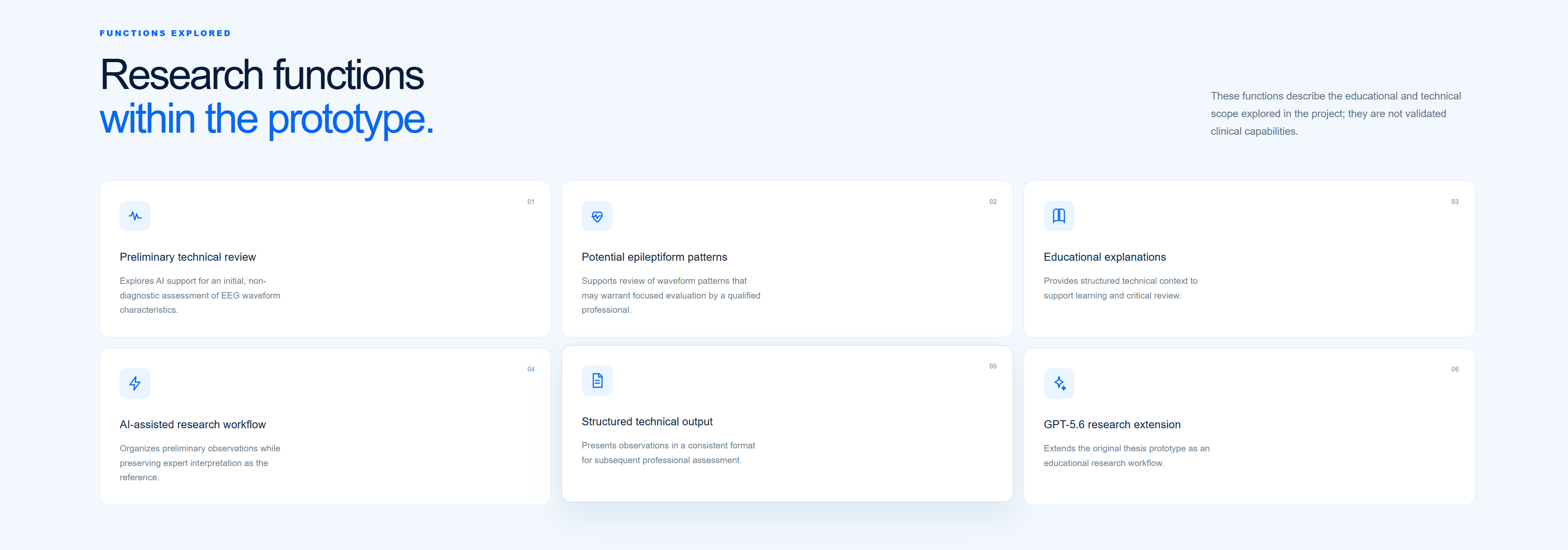
- a custom GPT for structured EEG review;
- a research website documenting the methodology, validation and future vision.
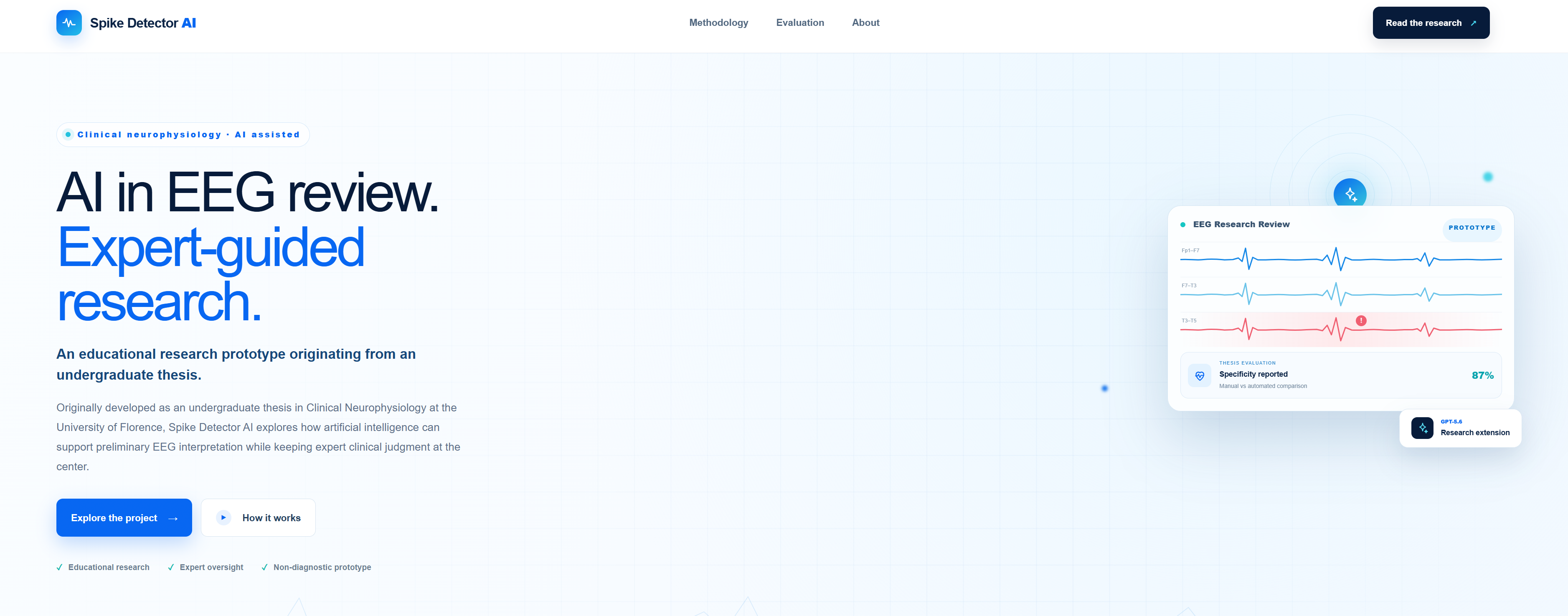
The system organizes technical observations regarding waveform morphology, possible epileptiform activity and artefacts into a readable report intended for expert review.
Research methodology
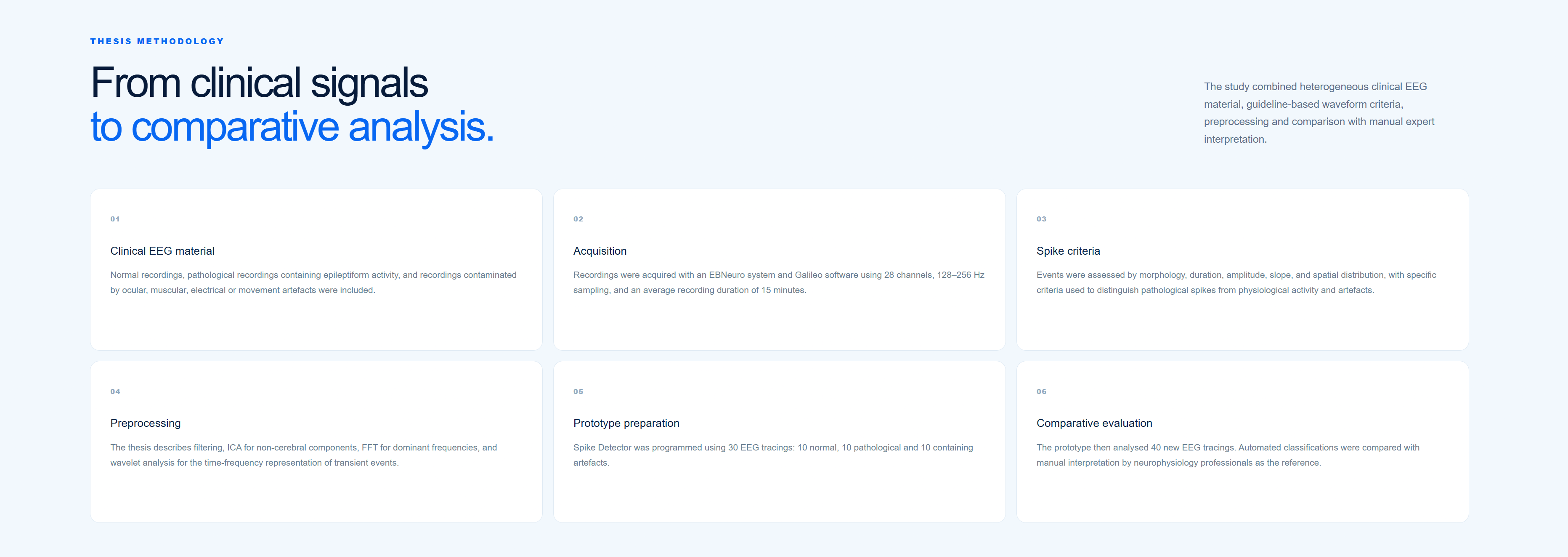
The project was developed using a heterogeneous EEG dataset containing:
- normal EEGs;
- epileptiform recordings;
- recordings containing artefacts.
The prototype was first developed using representative EEG traces and later evaluated on previously unseen recordings.
Performance was compared against manual interpretation performed by neurophysiology professionals.
Results
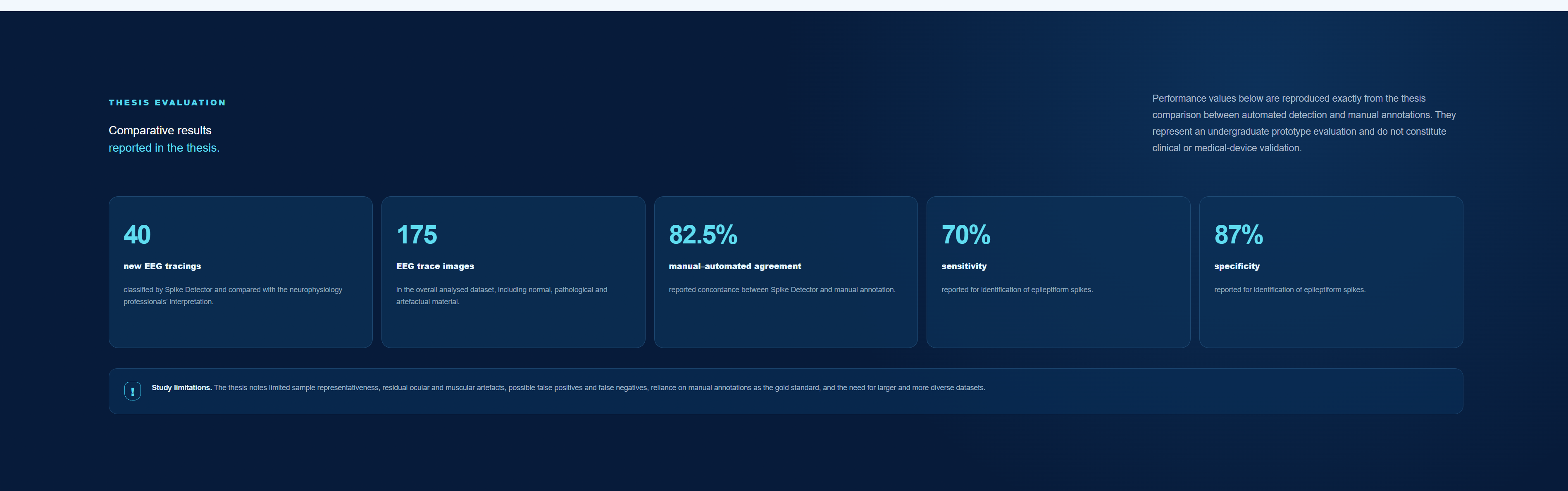
The thesis reported:
- 175 EEG trace images analysed
- 40 previously unseen EEG recordings used for comparative evaluation
- 82.5% overall agreement
- 70% sensitivity
- 87% specificity
These values describe an undergraduate research prototype and are not intended as clinical validation.
Build Week
During OpenAI Build Week I expanded the original prototype into a complete research platform.
Besides improving the GPT workflow, I designed a professional research website, reorganized the educational workflow, improved documentation and created a clearer presentation of the project's methodology and future research direction.
Challenges
The biggest challenge was not building an AI model.
It was translating clinical neurophysiology knowledge into prompts and workflows that remained technically consistent, transparent and educational while avoiding unsupported medical claims.
Another important challenge was presenting the project responsibly, emphasizing that human expertise remains essential.
What I learned
This project taught me that building AI for healthcare is not only about model performance.
It also requires scientific rigor, transparency, careful communication and close collaboration with domain experts.
The experience strengthened my interest in responsible AI applied to clinical neurophysiology and future decision-support systems.
What it does
How we built it
Challenges we ran into
Accomplishments that we're proud of
What we learned
What's next for Spike Detector AI
Built With
- ai
- artificial
- build
- chatgpt
- clinical
- custom
- educational
- eeg
- engineering
- gpt
- gpt-5.6
- human-in-the-loop
- intelligence
- markdown
- medical
- neurophysiology
- openai
- prompt
- prototype
- research
- scientific
- week


Log in or sign up for Devpost to join the conversation.