-
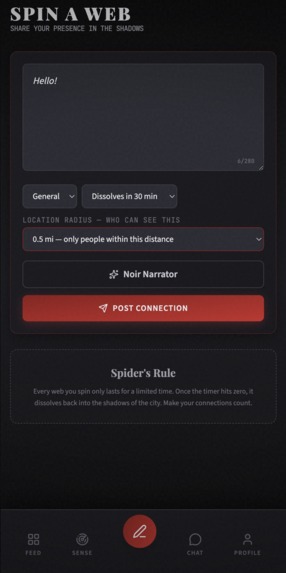
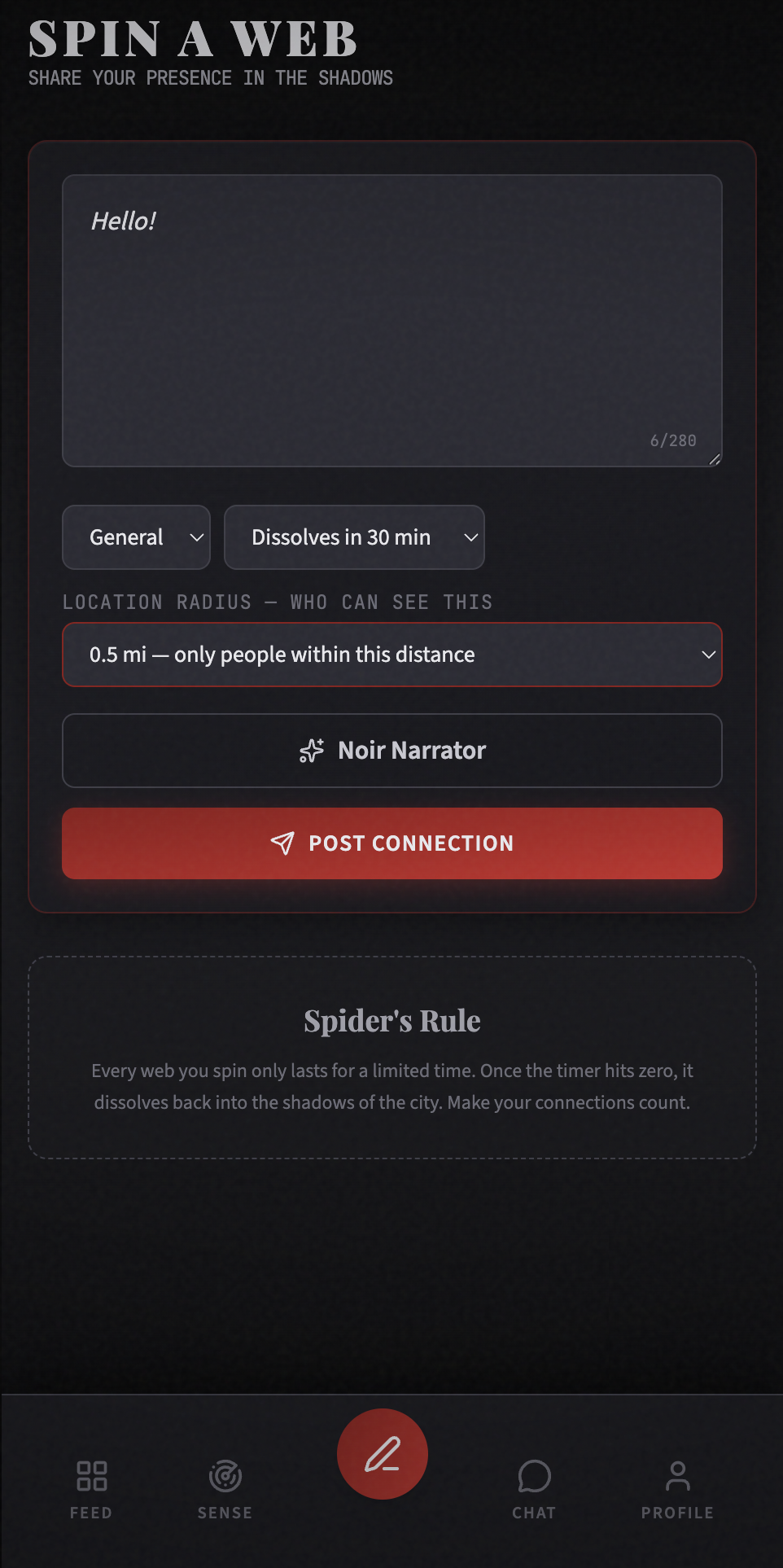
creating-posts
-
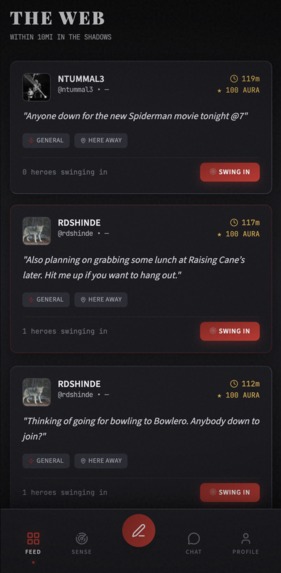
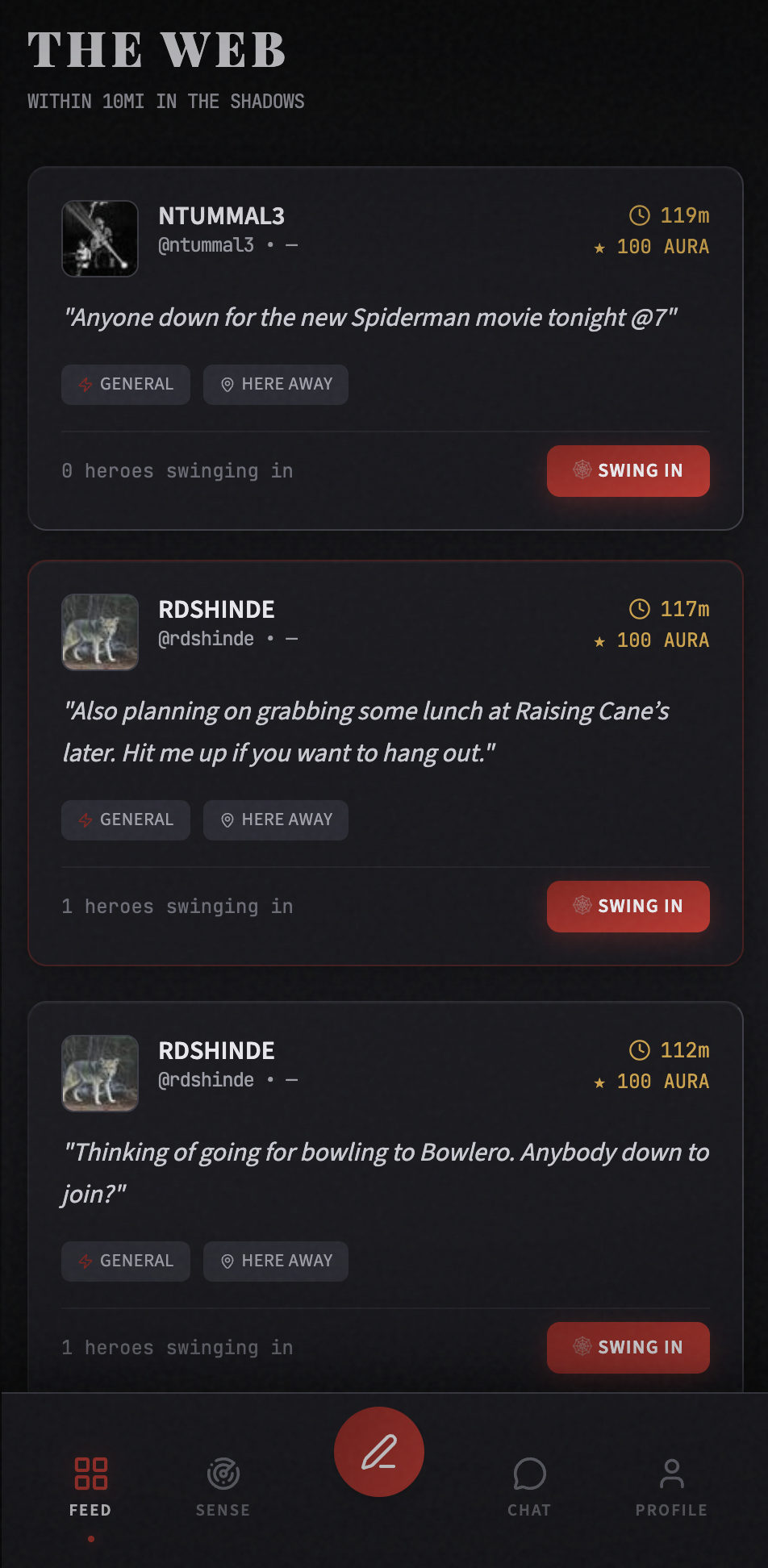
feed-page
-
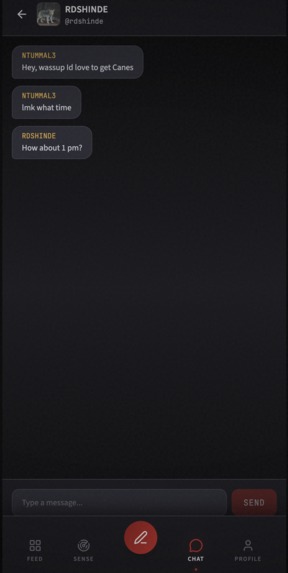
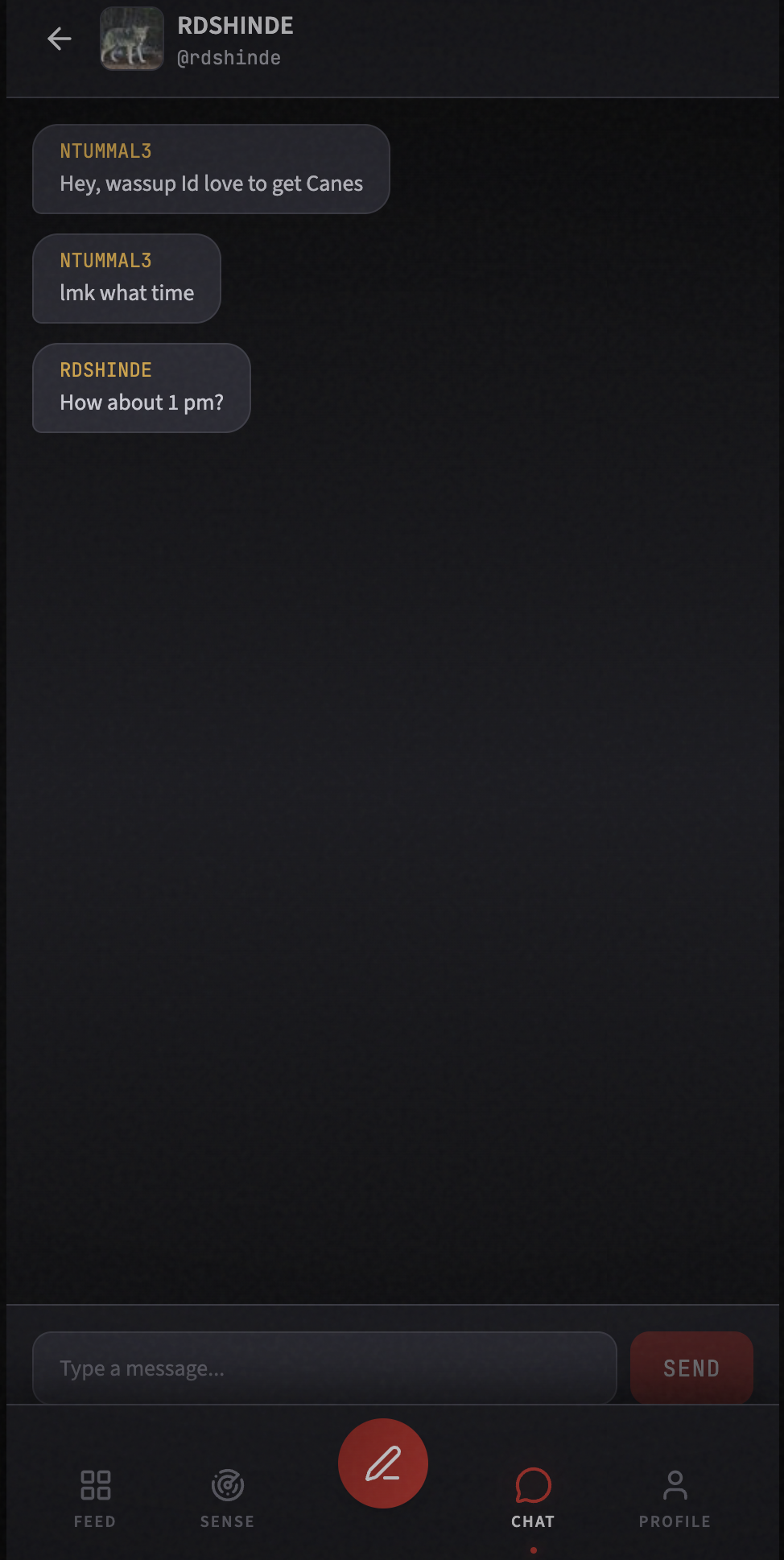
chat-feature
-
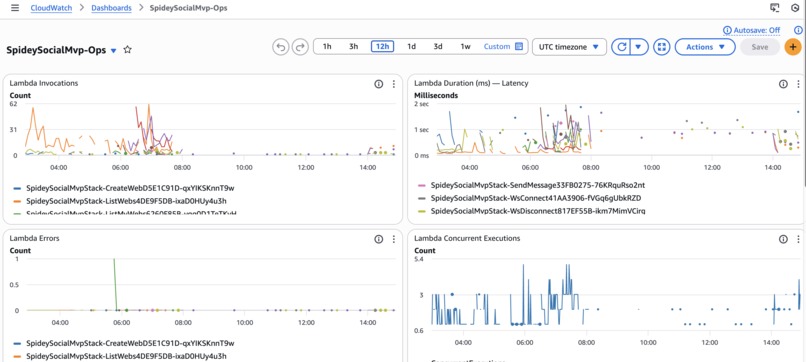
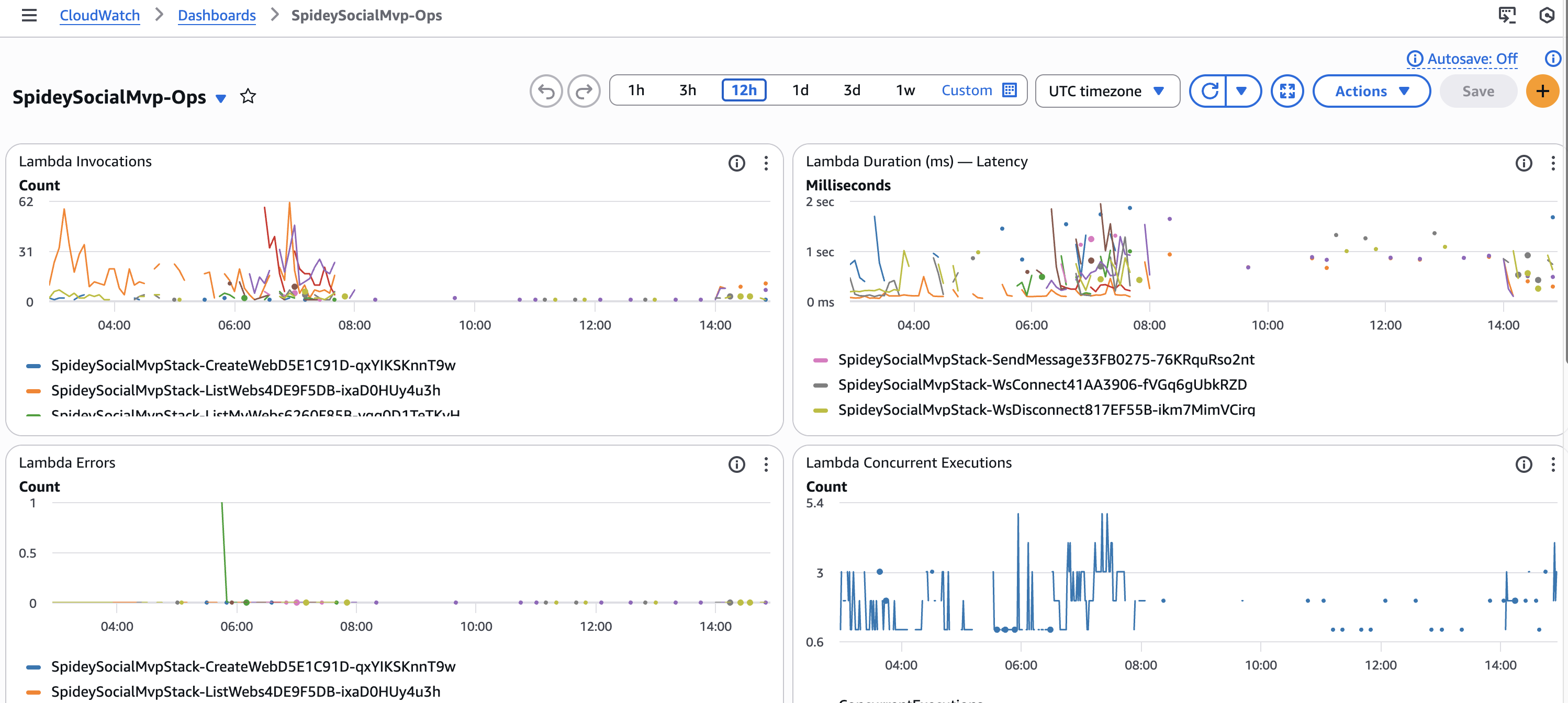
AWS-CloudWatch-dashboard
Inspiration
Most social apps feel either too public (everything lives forever) or too noisy (infinite scrolling, spam, and posts that are nowhere near you). We wanted something that feels like a real neighborhood: quick, local, lightweight updates you can act on right now, then they disappear.
So we built Spidey Social, a “Friendly Neighborhood Network” where posts are tied to your location, visible only within a radius, and expire automatically. It’s for the moments that matter in the next hour: “pickup soccer behind the gym,” “free pizza in the lobby,” “study group in 10 minutes,” or “anyone want to grab coffee?”
What it does
- Posts (webs) — Create short posts (max 280 chars) with location and visibility radius (r) (0.5–10 mi). They expire after a TTL (t) (30–120 min).
- Feed — Browse posts within a configurable radius; your own and already-swung posts are hidden.
- Sense (radar) — See post direction and distance on a circular radar.
- Swing-in — One swing per post; opens a chat with the post owner.
- Chat — Message post owners after swinging in.
- Real-time — WebSocket push for new posts and messages (no polling).
- Profile — My posts, sign-out.
How we built it
- Frontend: React + Vite + TypeScript + Tailwind; AWS Amplify for auth; browser Geolocation API for position. WebSocket context sends lat/lng on connect for targeted real-time; live updates for feed and chat.
- Backend: REST + WebSocket APIs on API Gateway, Lambda handlers (create-web, list-webs, swing-in, send-message, ws-connect/disconnect, etc.), single DynamoDB table with GSIs for feed, per-user, and geo (webs and connections by geohash cell). Geohash utility (precision 5) for encode + neighbors; list-webs queries 9 cells when lat/lng provided; create-web does targeted fan-out to connections in those cells only.
- Infra: AWS CDK (TypeScript) for S3, CloudFront, Cognito, API Gateway, Lambda, DynamoDB (incl. gsi_geo, gsi_conn_geo); CloudWatch dashboard for latency, invocations, and resource usage.
- Deploy: CDK deploy for infra; frontend deploy script reads stack outputs, builds with env vars, syncs to S3, invalidates CloudFront.
Challenges we ran into
- Geolocation: Browsers require HTTPS for
getCurrentPosition; we put CloudFront in front of S3 so the app always loads over HTTPS. - Real-time at scale: We moved from “broadcast new post to all connections” to targeted fan-out: connections store their location (geohash) on connect; create-web queries only the 9 geo cells around the post and pushes
web_addedonly to connections in range (Haversine within visibility). Feed list-webs uses the same geo index so we only read 9 partitions per request. - Single-table design: Modeling webs, swing-ins, chats, and WebSocket connections in one table with clear pk/sk and GSI patterns took a few iterations to keep queries simple and cost-effective.
Accomplishments that we're proud of
- Full serverless stack (no EC2): Lambda, DynamoDB, API Gateway REST + WebSocket, Cognito, S3, CloudFront, all defined in CDK.
- DynamoDB single-table design with GSIs for recency, user, and geo (gsi_geo for webs by geohash cell, gsi_conn_geo for connections by cell)—so feed and real-time scale by location, not global size.
- Geo-scalability: Geo-indexed feed (list-webs queries 9 geohash cells when lat/lng provided) and targeted WebSocket fan-out (new post only pushes to connections in those cells). Bounded work per request; 10-mile neighborhood model scales globally.
- Real-time feed and chat via WebSocket with no polling.
- Operational visibility out of the box: CloudWatch dashboard for latency, invocations, errors, and DynamoDB capacity.
- One-command deploy for both infra and frontend.
What we learned
- How to structure a DynamoDB single table (pk/sk, GSIs) for feeds, user-scoped lists, WebSocket connection lookups, and geo-partitioned access (geohash cells).
- Geohash (encode + neighbors) for partitioning by location; querying 9 cells instead of “all” so feed and fan-out scale with local activity.
- API Gateway WebSocket auth (JWT in query param at
$connect) and pushing from Lambda viaApiGatewayManagementApi.postToConnection; sending optional lat/lng on connect for targeted push. - CDK for not just compute and DB but also dashboards and gateway responses (e.g. CORS on 4xx/5xx).
What's next for Spidey Social
- Notifications (e.g. push when someone swings in or replies).
- Richer Sense: filters by category, time-left, or “trending” in radius.
- Optional persistence: “save this chat” before the web expires.
- Moderation and reporting flows.
Built with
| Category | Technologies |
|---|---|
| Frontend | React, Vite, TypeScript, Tailwind CSS, AWS Amplify (Cognito), browser Geolocation API |
| Hosting | Amazon S3, Amazon CloudFront |
| Auth | Amazon Cognito (User Pools) |
| API | Amazon API Gateway (REST + WebSocket) |
| Backend | AWS Lambda (Node.js 20) |
| Database | Amazon DynamoDB (single-table, GSIs) |
| IaC & Ops | AWS CDK (TypeScript), Amazon CloudWatch (dashboards) |
Built With
- amazon-web-services
- aws-amplify
- aws-api-gateway
- aws-cdk
- aws-cloudfront
- aws-cloudwatch
- aws-dynamodb
- aws-lambda
- react
- tailwind
- typescript
- vite


Log in or sign up for Devpost to join the conversation.