-
-
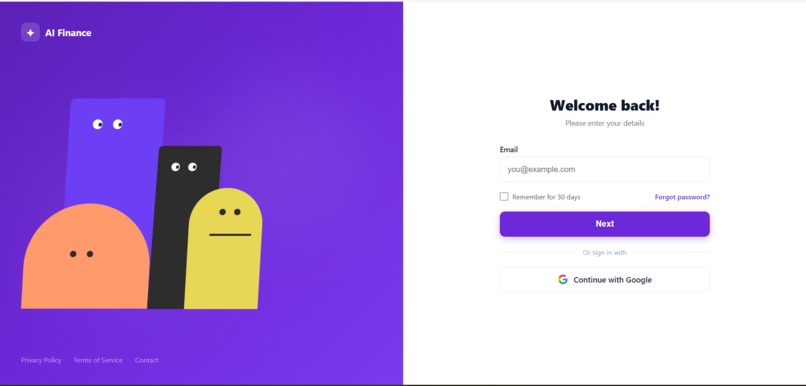
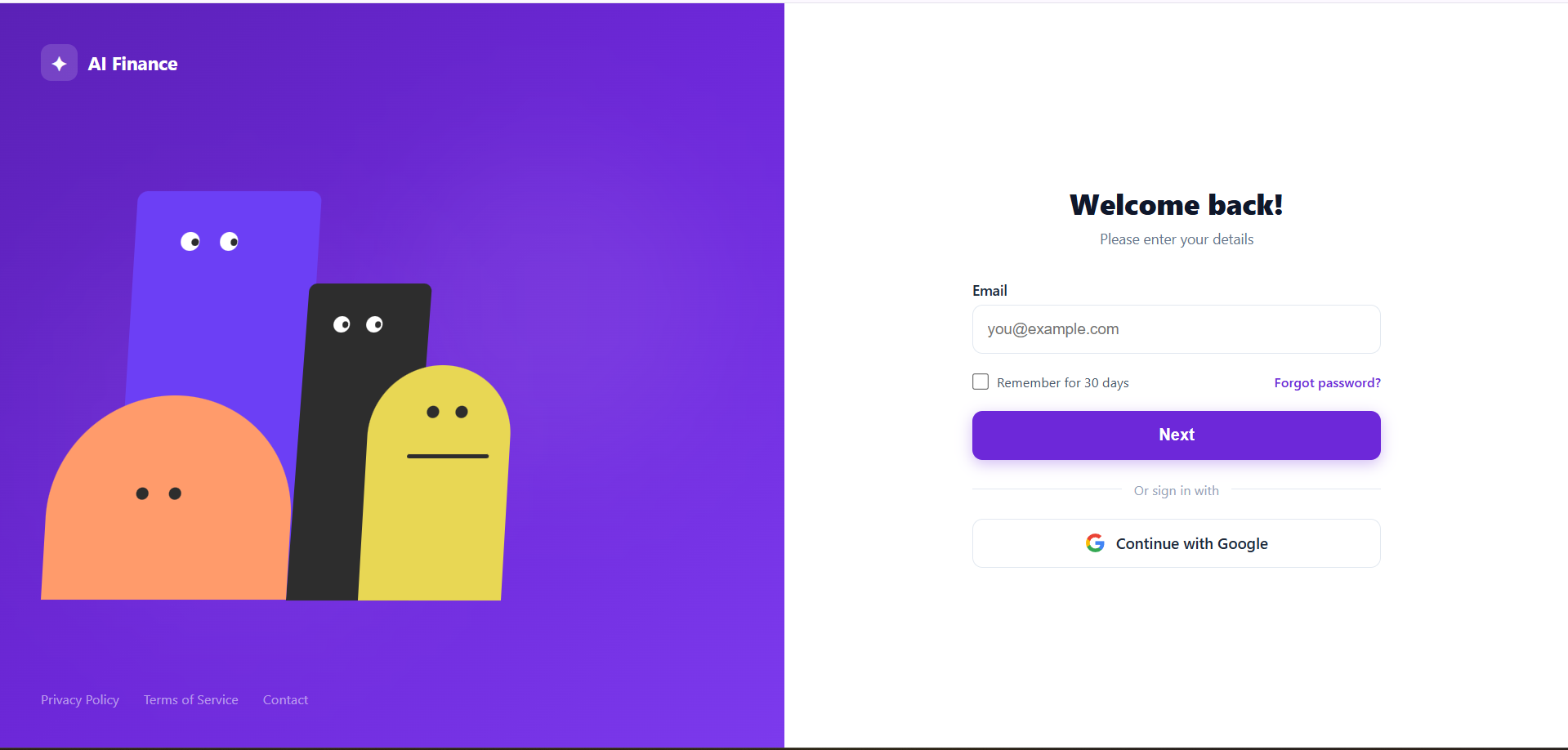
The login part
-
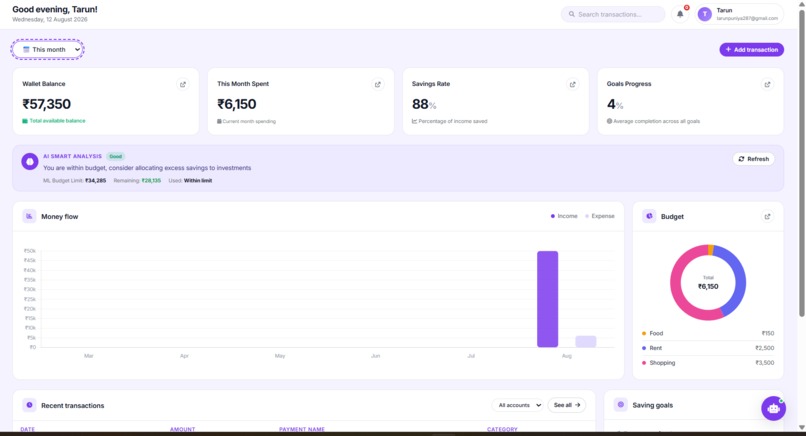
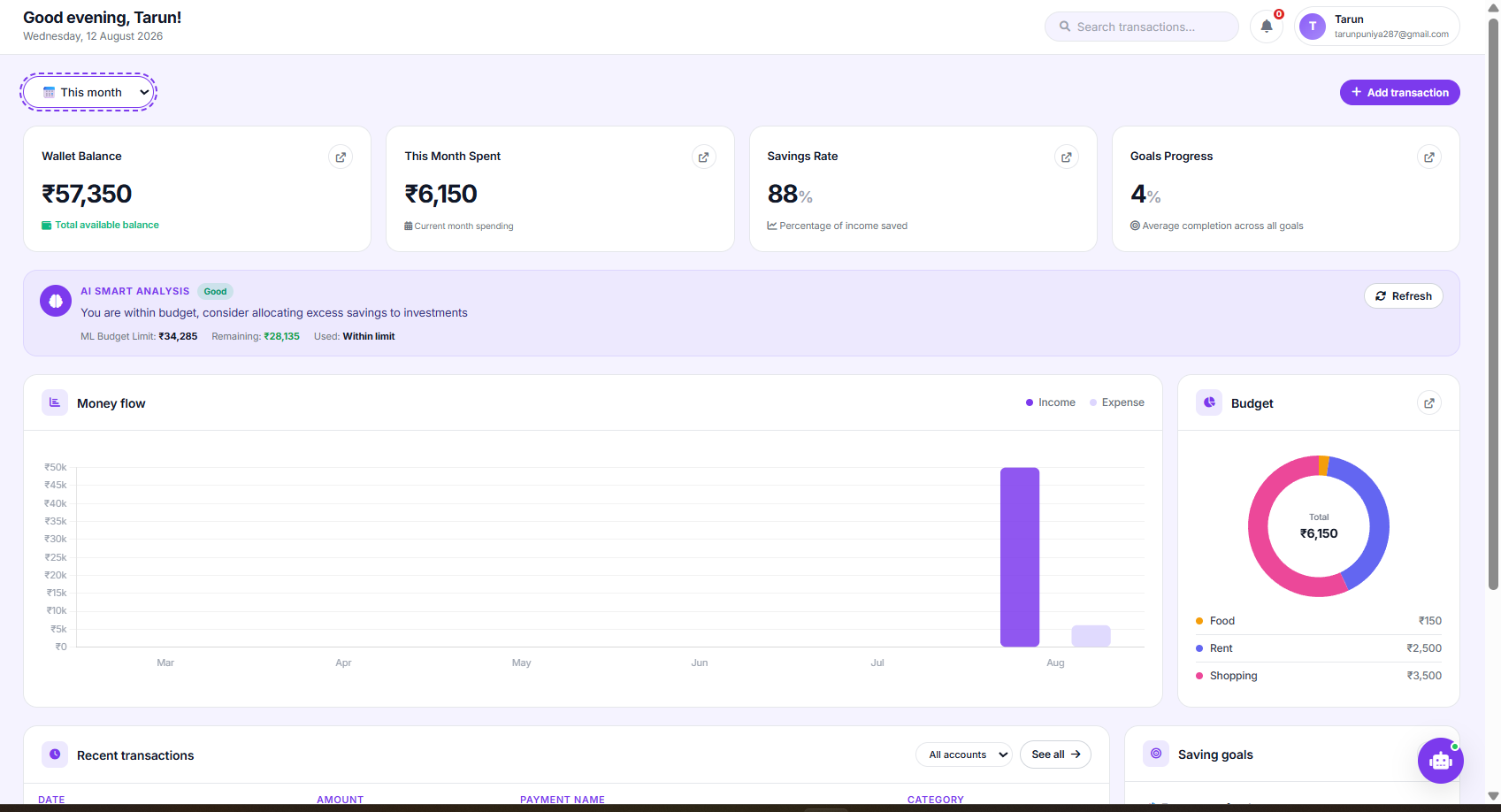
Central dashboard with real-time financial cards, cash flow charts, and ML budget limits.
-
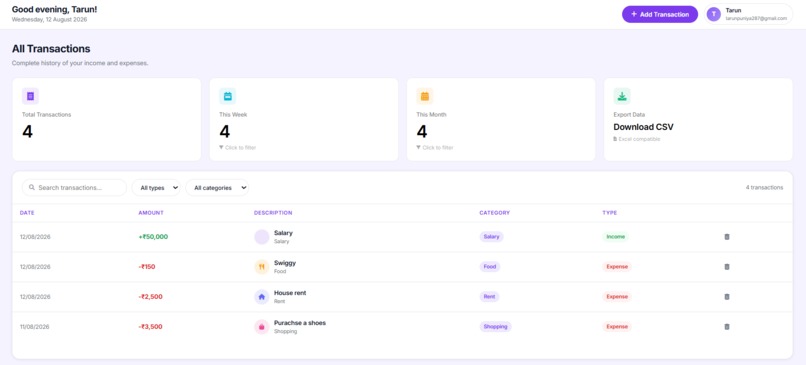
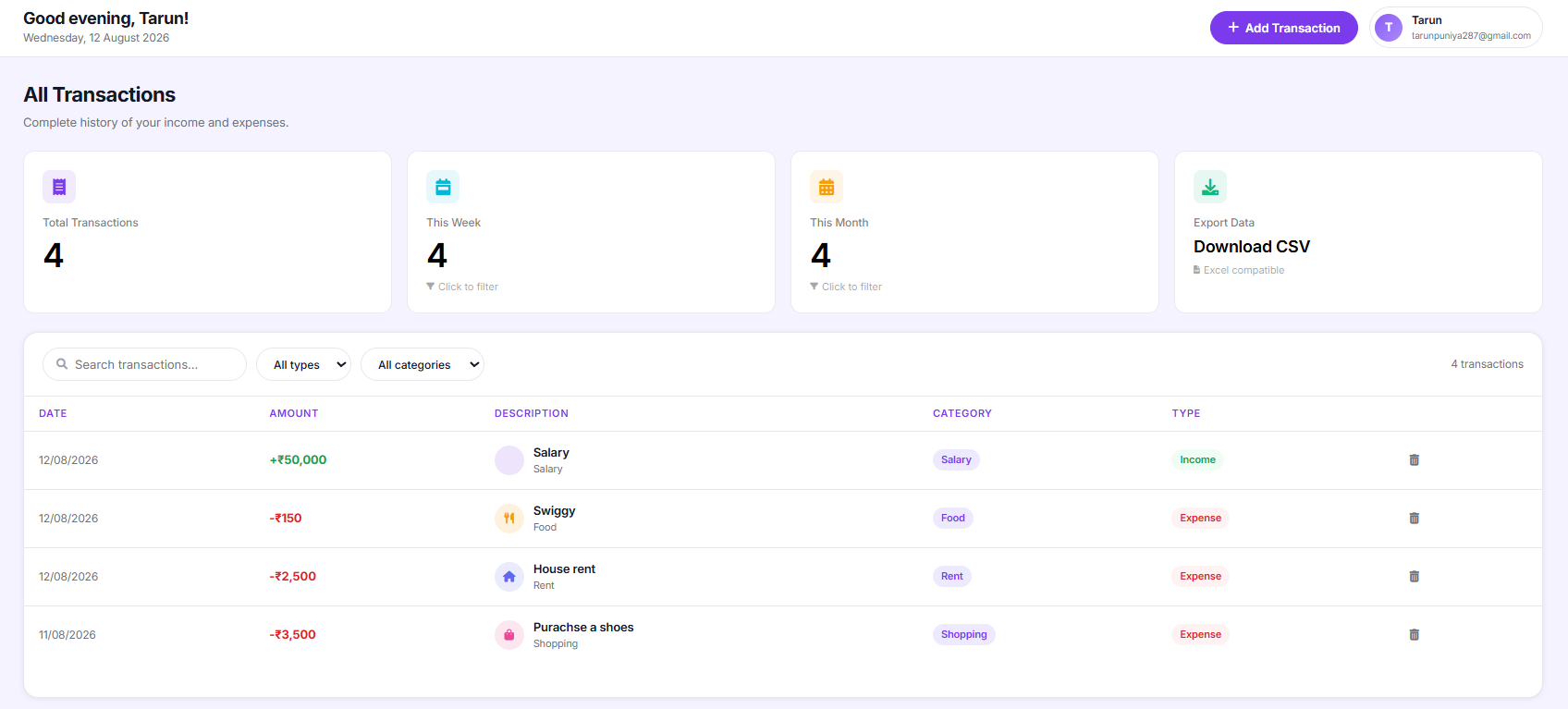
Comprehensive transaction history table allowing users to view, search, filter, and manage all income and expense entries.
-
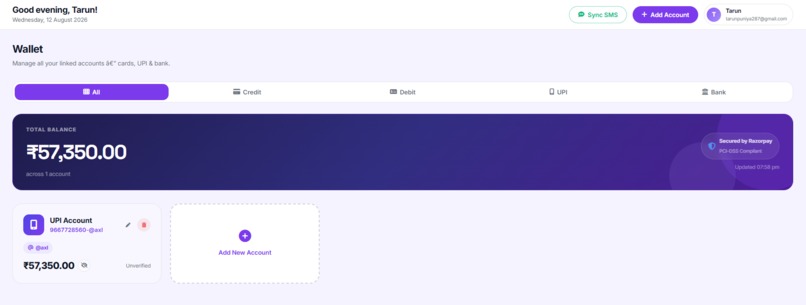
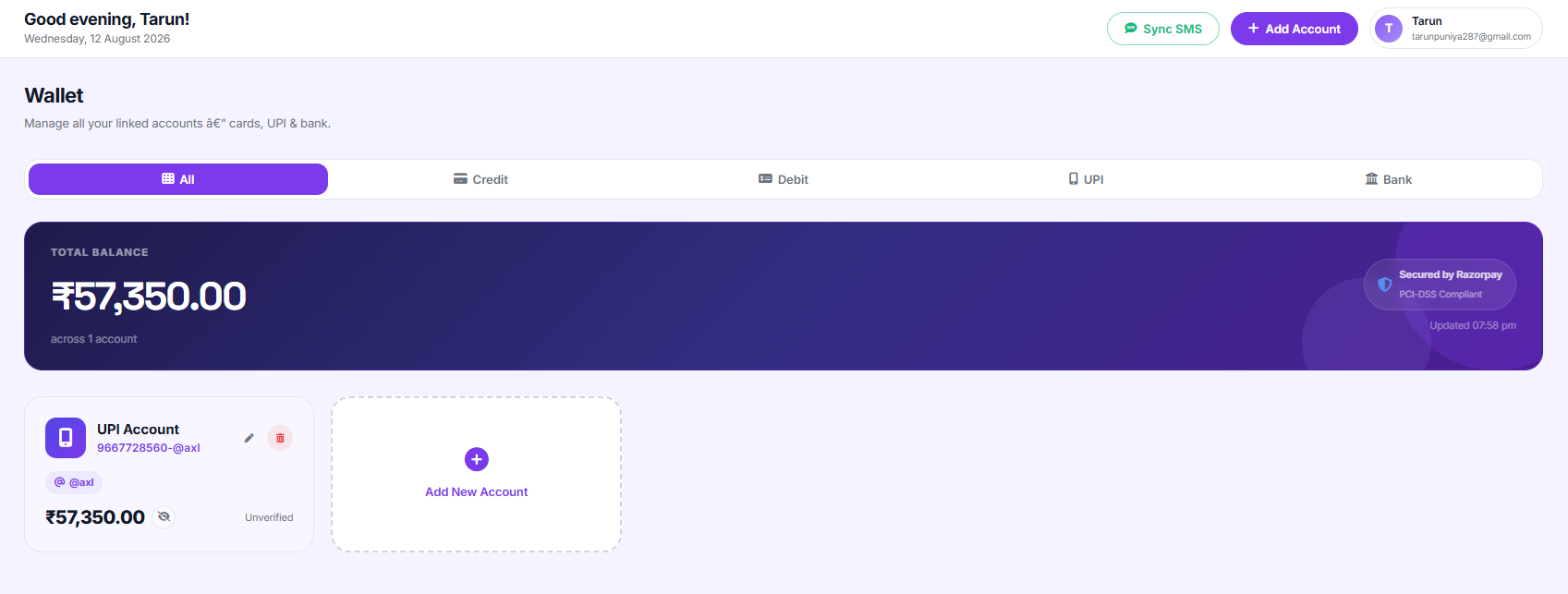
Wallet manager to link and monitor bank accounts, cards, and UPI handles securely.
-
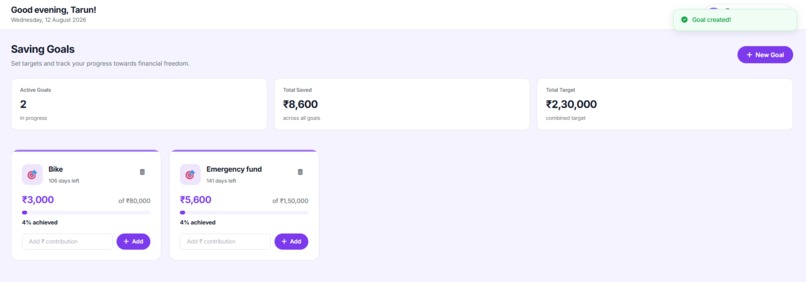
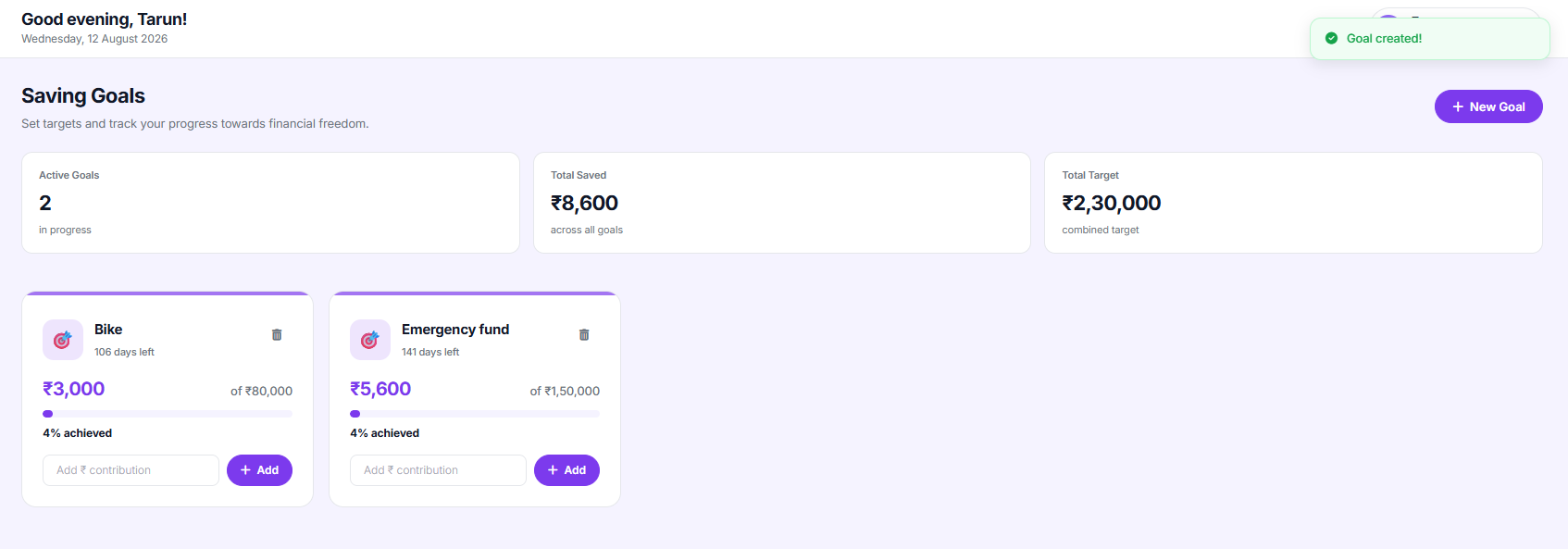
Milestone tracker to set targets, fund goals, and monitor savings progress.
-
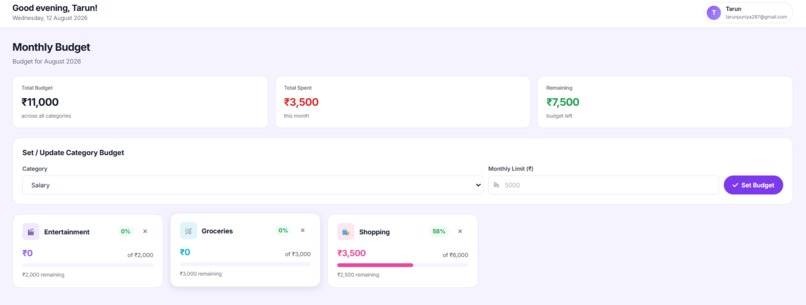
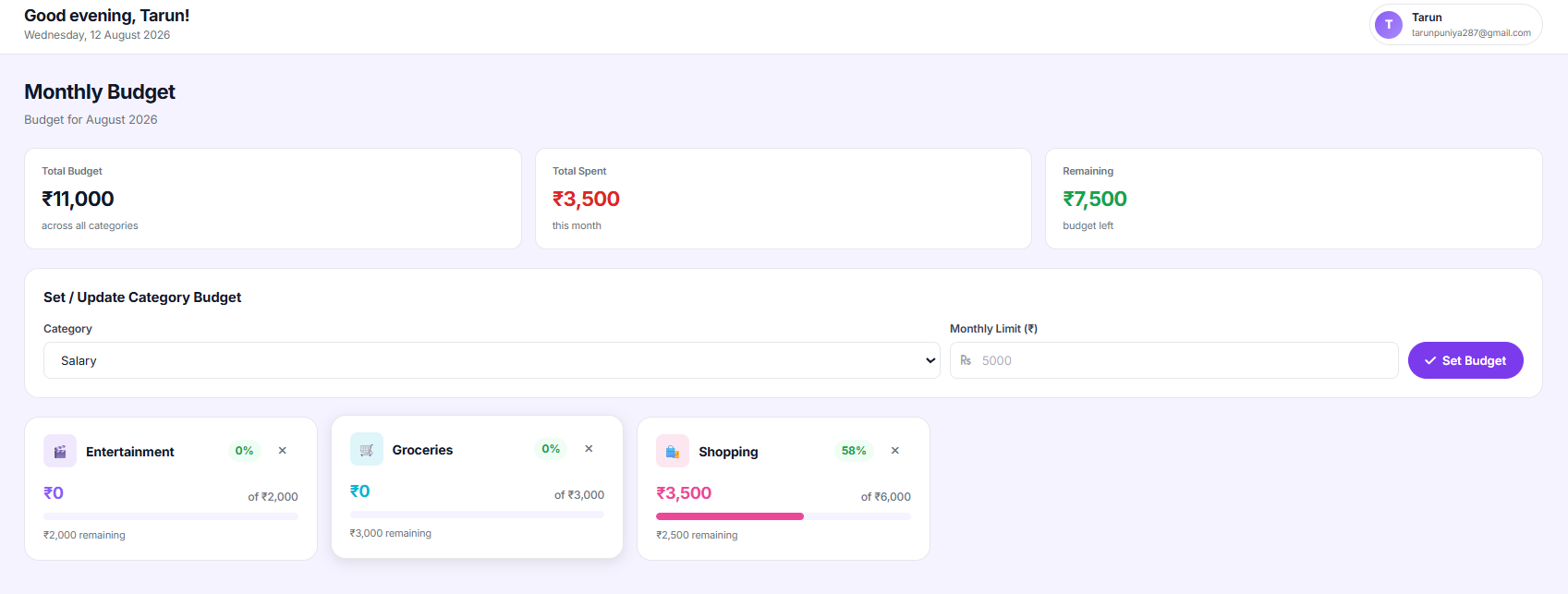
Budget module to allocate category limits and track monthly spending progress.
-
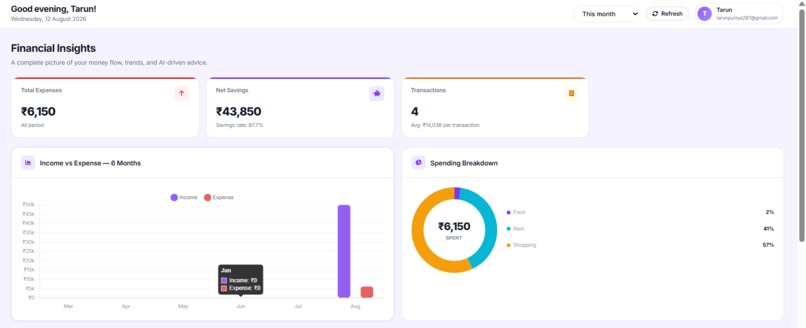
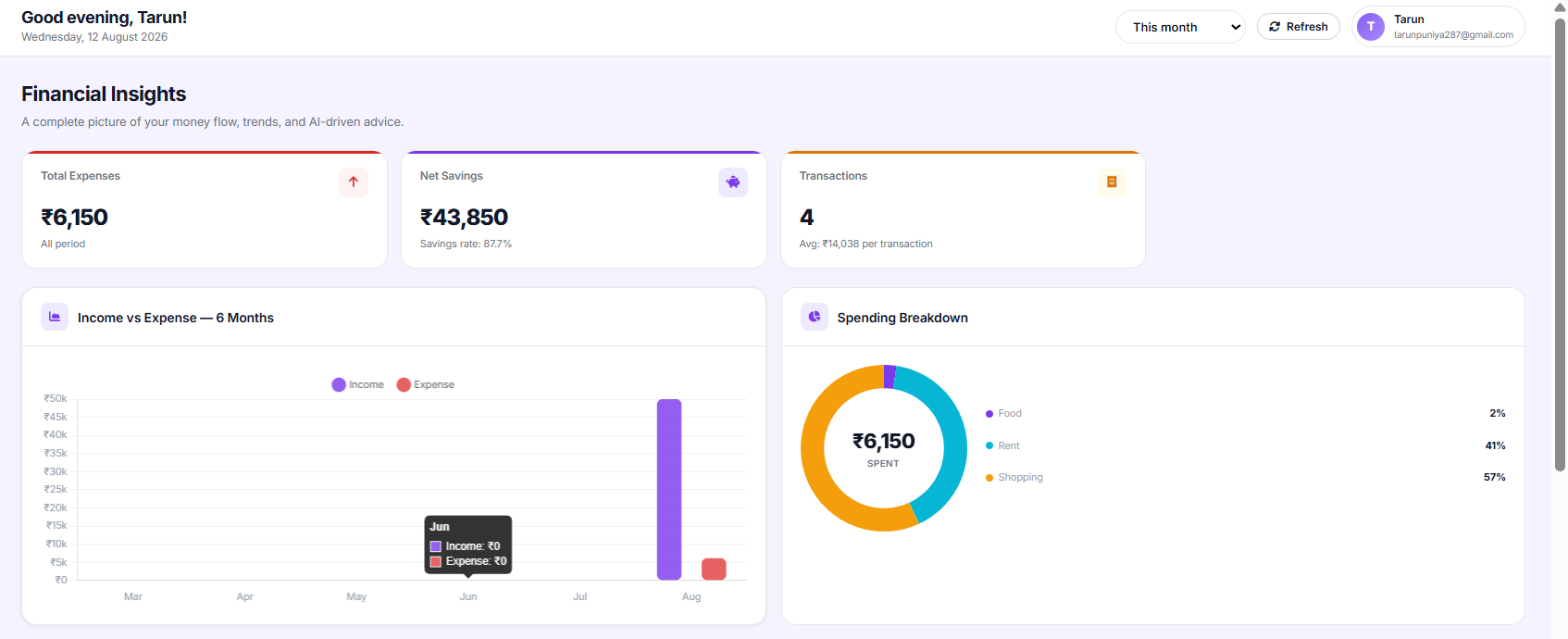
Analytics dashboard featuring 6-month cash flow trends and spending breakdowns.
-
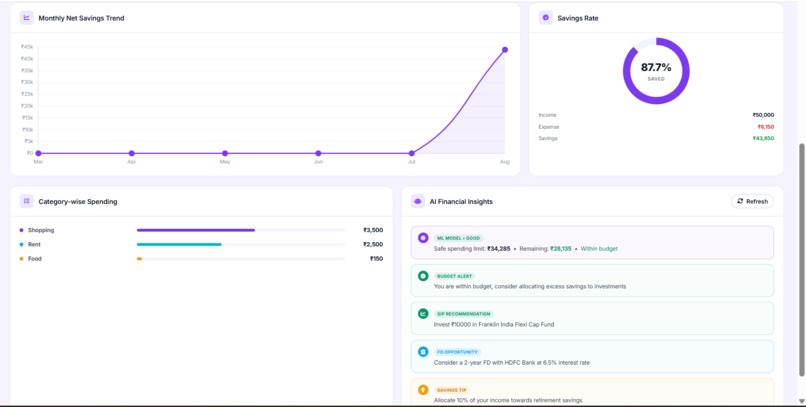
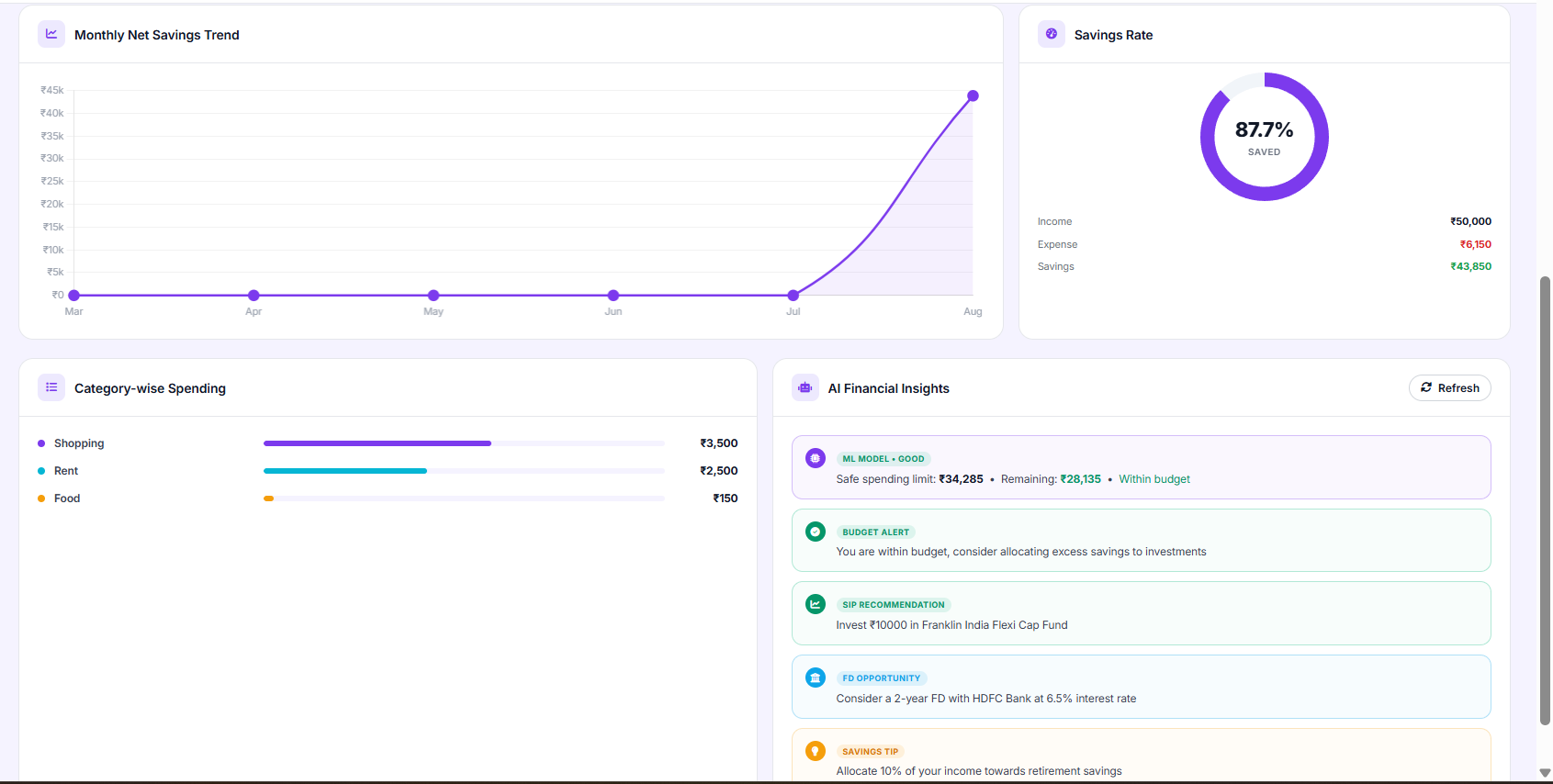
Savings trend charts, savings rate metrics, and ML-driven financial recommendations.
Inspiration
As a college student, managing pocket money and monthly allowances has always been a constant struggle. Like many students, I often found my budget running dry before the month even ended, with no clear visibility into where the money was going. Traditional budgeting apps were either overly complex or lacked real-time intelligence. Realizing that this is a widespread problem for students and young earners, I wanted to build a practical solution—a financial companion that doesn't just track expenses after the fact, but dynamically predicts safe spending limits using Machine Learning to prevent overspending before it happens.
What it does
- Smart Dashboard & Tracking: Real-time monitoring of wallet balances, monthly spending, and category-wise breakdowns through interactive charts.
- ML-Powered Budget Prediction: Utilizes a custom Gradient Boosting regression model to compute safe spending limits based on income brackets, savings rates, and seasonal expenses.
- Intelligent Financial Analytics: Provides comprehensive multi-month cash flow trends, net savings metrics, and actionable savings/investment recommendations.
- Goal & Budget Management: Allows users to set milestone saving targets (like emergency funds or asset purchases) and allocate strict category-wise monthly limits.
How we built it
- Frontend: Developed using HTML, CSS, JavaScript, and Chart.js to ensure a responsive, clean, and interactive user experience.
- Backend: Built with Node.js and Express.js, managing user authentication, transaction logic, and API routes.
- ML Engine: Implemented a separate microservice using Python, FastAPI, and Scikit-Learn to serve predictions from the trained Gradient Boosting model.
- Database: Powered by MongoDB (Mongoose) for secure data storage and retrieval.
Challenges we ran into
- Aligning asynchronous communication between the Node.js backend and the Python FastAPI microservice to ensure instant budget calculations without lag.
- Structuring and engineering features for synthetic financial data to prevent model overfitting while maintaining realistic spending behavior boundaries.
Accomplishments that we're proud of
- Successfully engineering a multi-service architecture (Node.js + Python FastAPI) instead of a standard single-server monolithic app.
- Designing a sleek, modern, production-grade fintech UI complete with dynamic financial widgets and progress bars.
What we learned
- Gained deep practical insights into microservice architecture and bridging distinct backend ecosystems.
- Learned how to effectively implement machine learning models into real-world web applications to solve everyday user problems.
What's next for Spendwise
- Integrating Open Banking APIs for automated bank transaction syncing.
- Adding push notifications and progressive web app (PWA) support for real-time budget threshold warnings.

Log in or sign up for Devpost to join the conversation.