Inspiration
AI agents can already shop for you. Would you give one your card?
One major US retailer's terms now say purchases by an AI agent you approved "are considered transactions authorized by you". In a June 2026 YouGov survey for ACI Worldwide (2,080 UK adults), only 19% trusted AI to make everyday purchases, and 60% would stop using a shopping agent after one mistake. In RTB House's 2026 study across four countries, approval before checkout was the most requested safeguard.
So we built an agent that does the shopping and cannot spend. Then we tried to break it.
What it does
SpendConsent is for small teams where one person orders supplies and someone else pays.
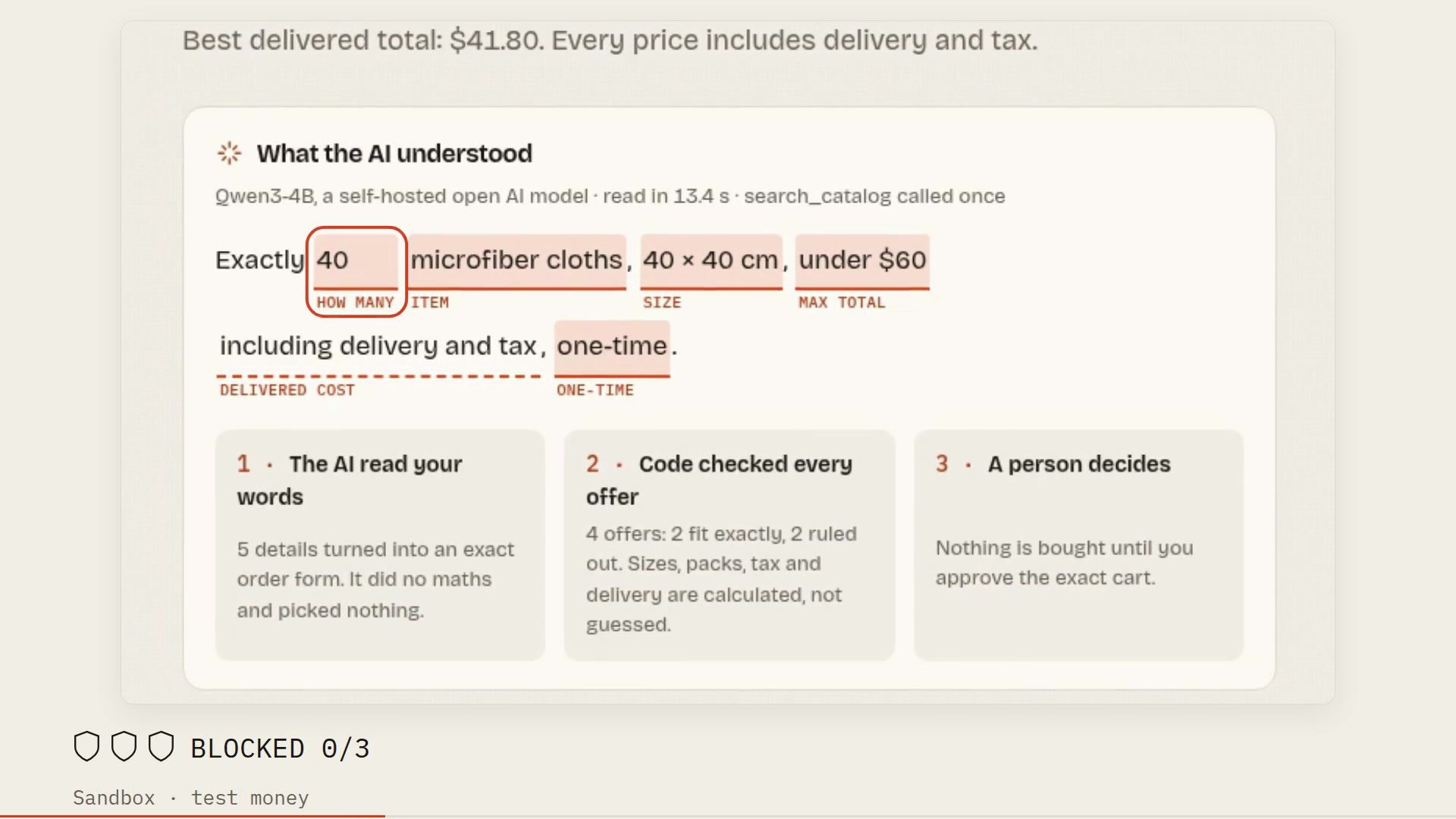
- Say what you need. "Exactly 40 microfiber cloths, 40 × 40 cm, under $60 including delivery and tax." A self-hosted AI model reads it in about 14 seconds.
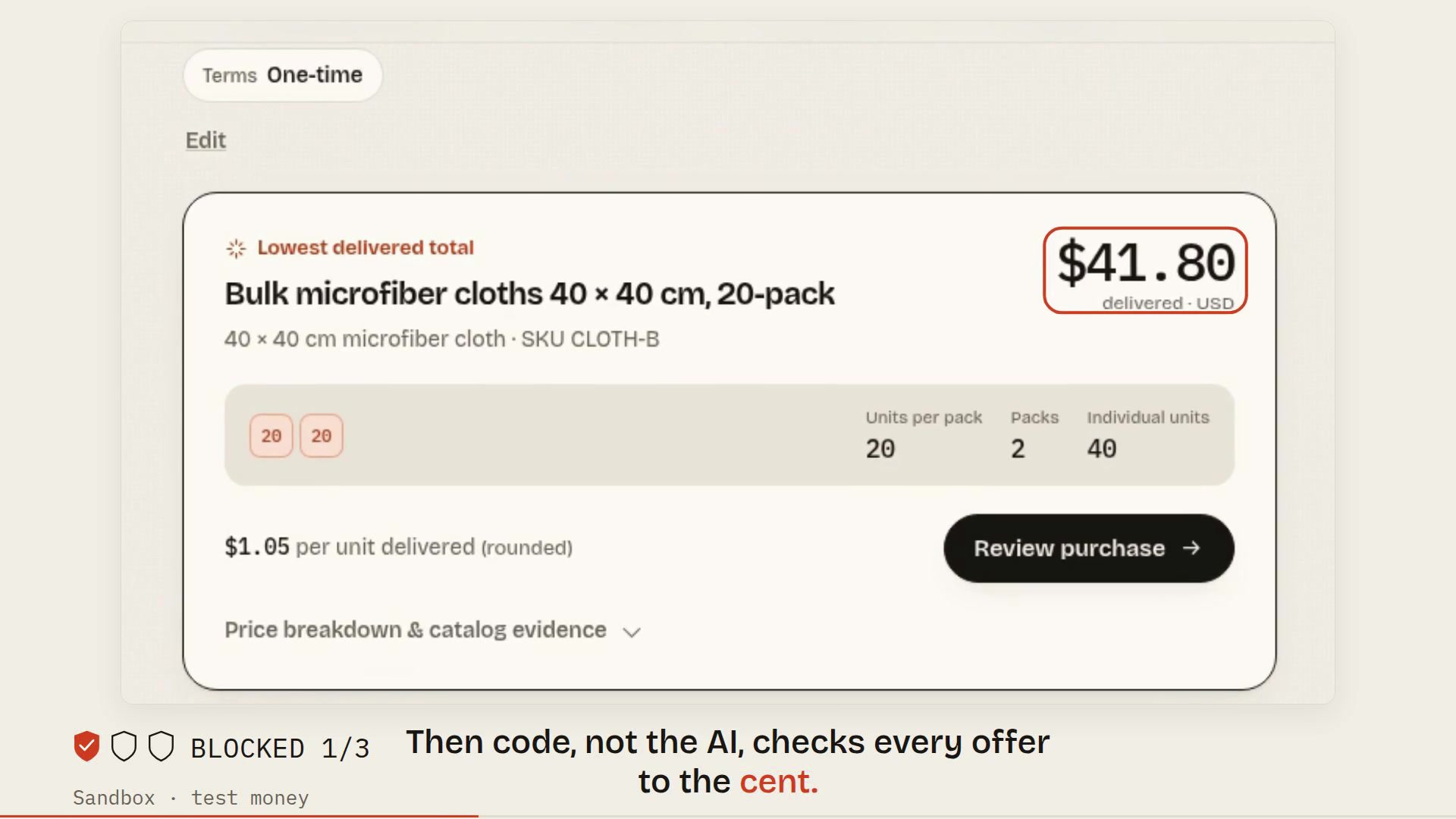
- Compare on the real delivered cost. Code, not the AI, rules out wrong sizes and packs that can't make the exact quantity, then shows the cheapest offer that fits. Live retail prices from Channel3 show whether the deal is fair.
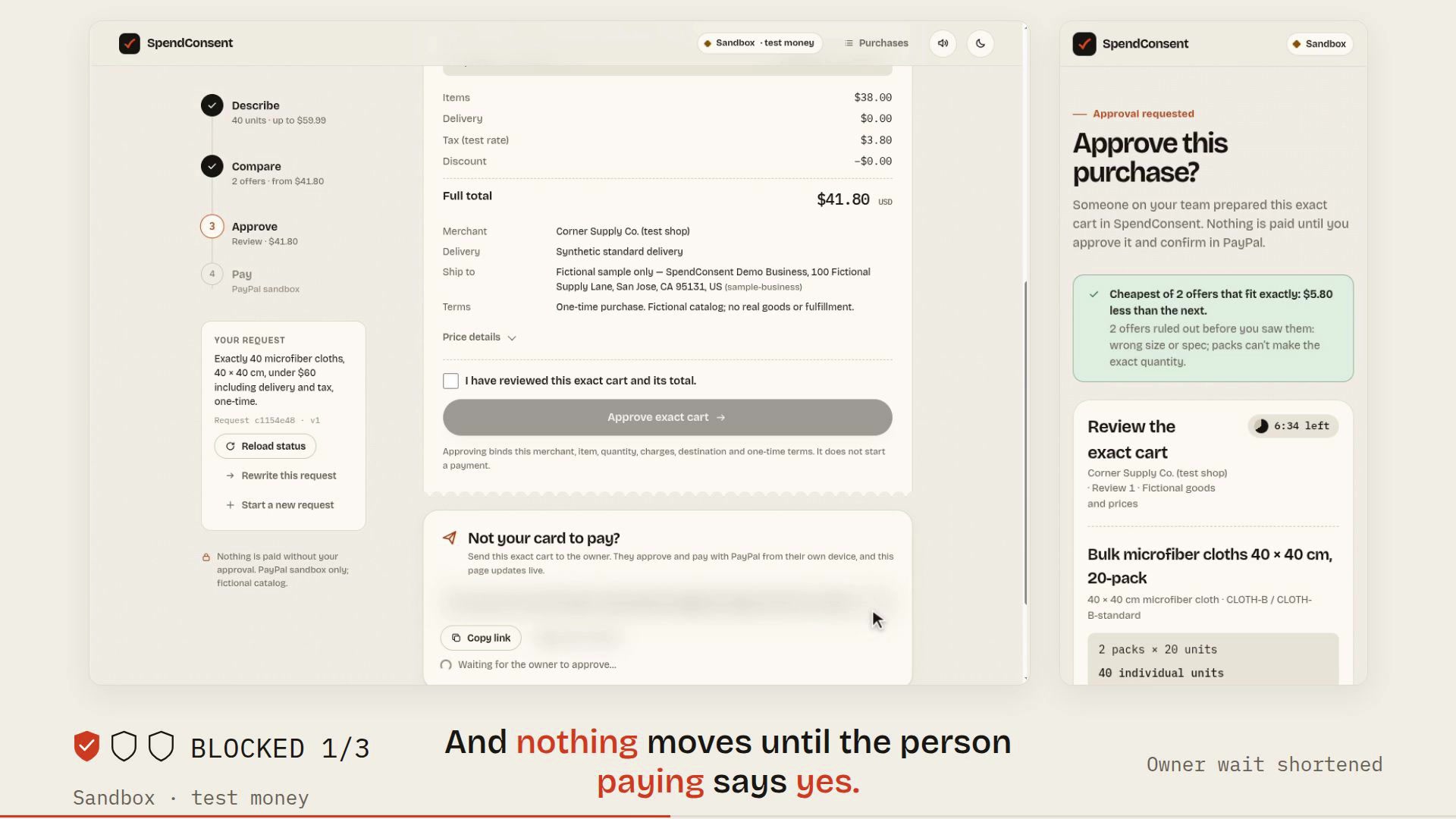
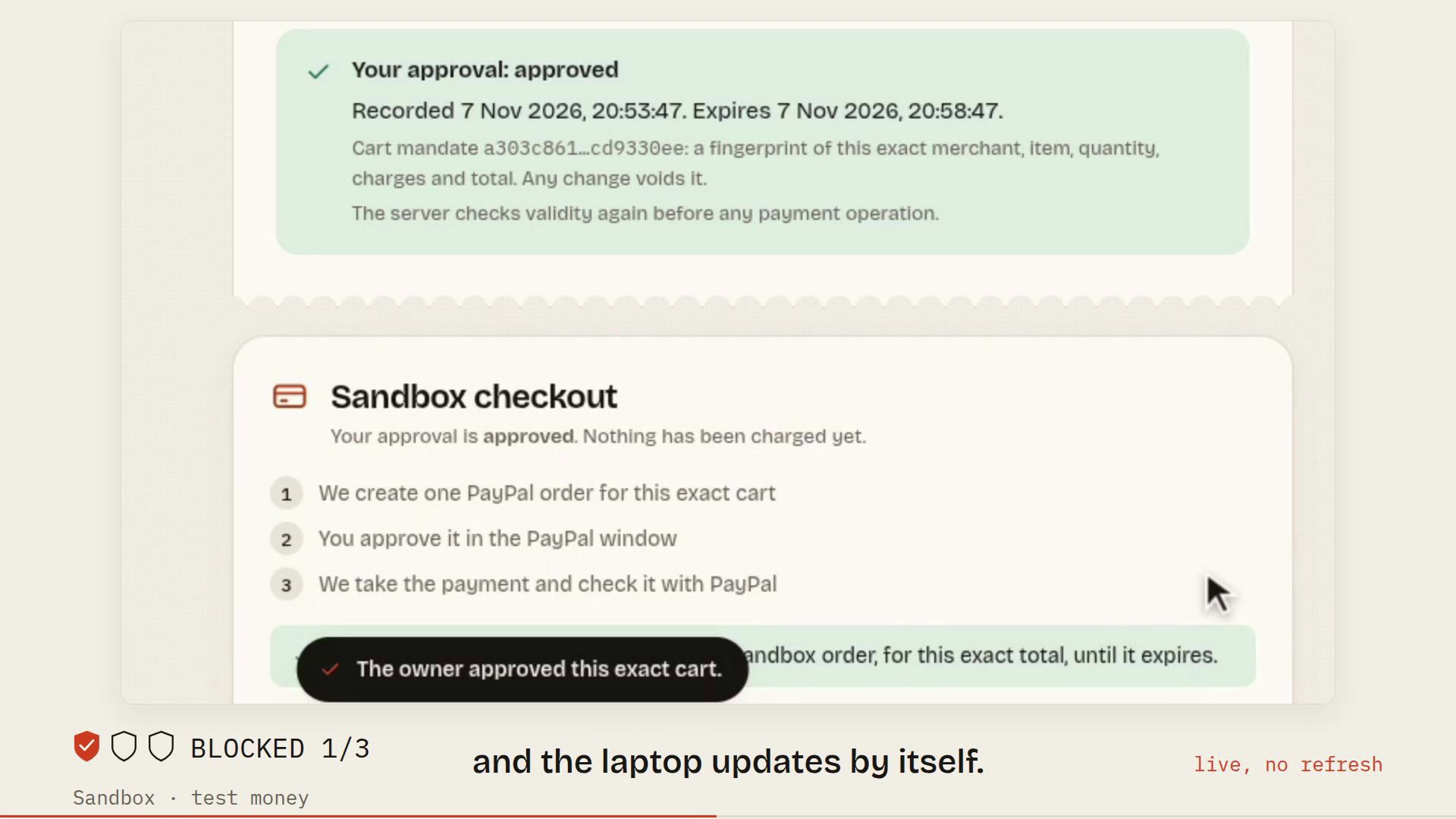
- Approve the exact cart. The owner gets a private link on their phone. Their approval is a fingerprint of that merchant, item, quantity and total. The requester's screen updates by itself.
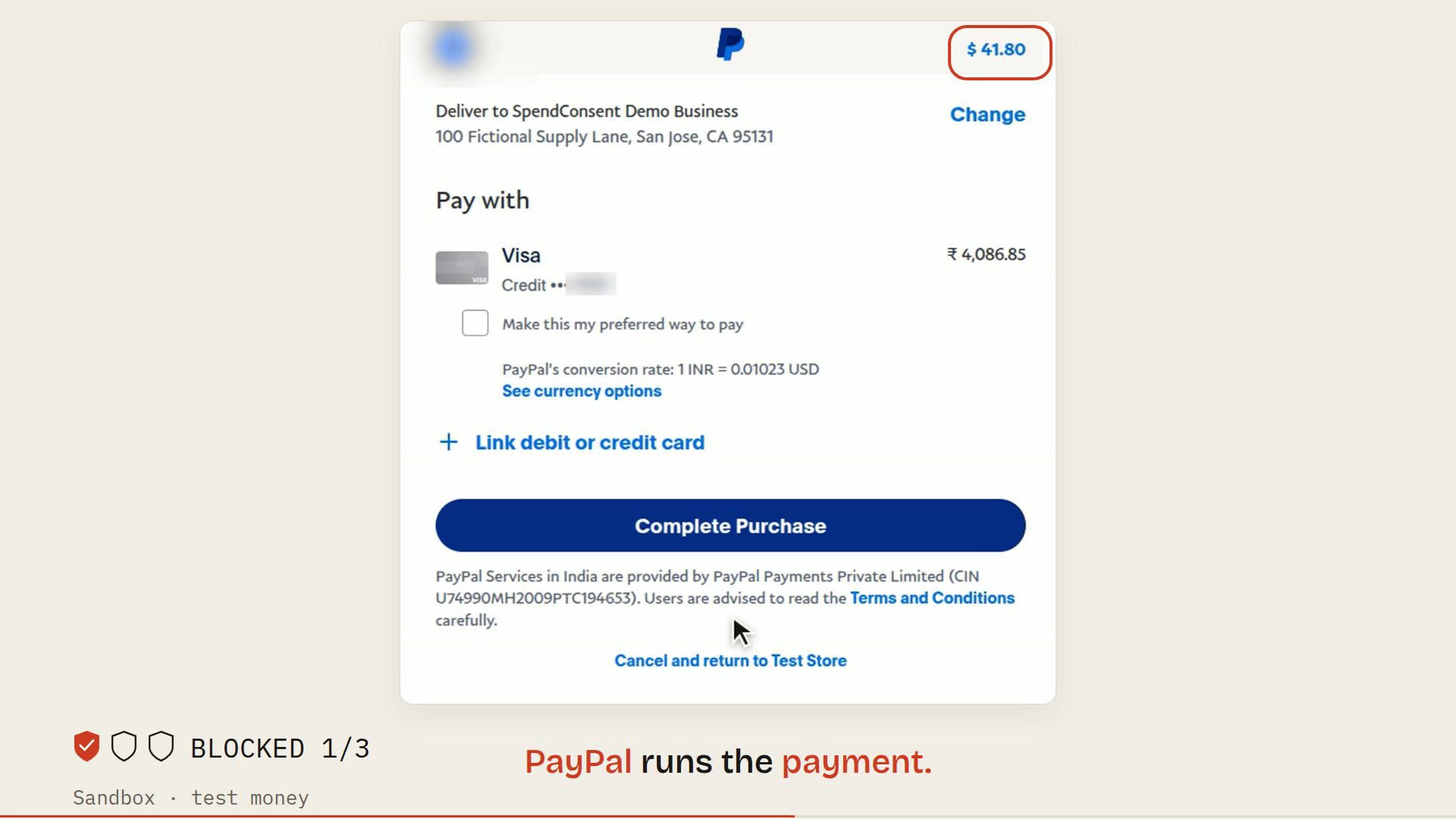
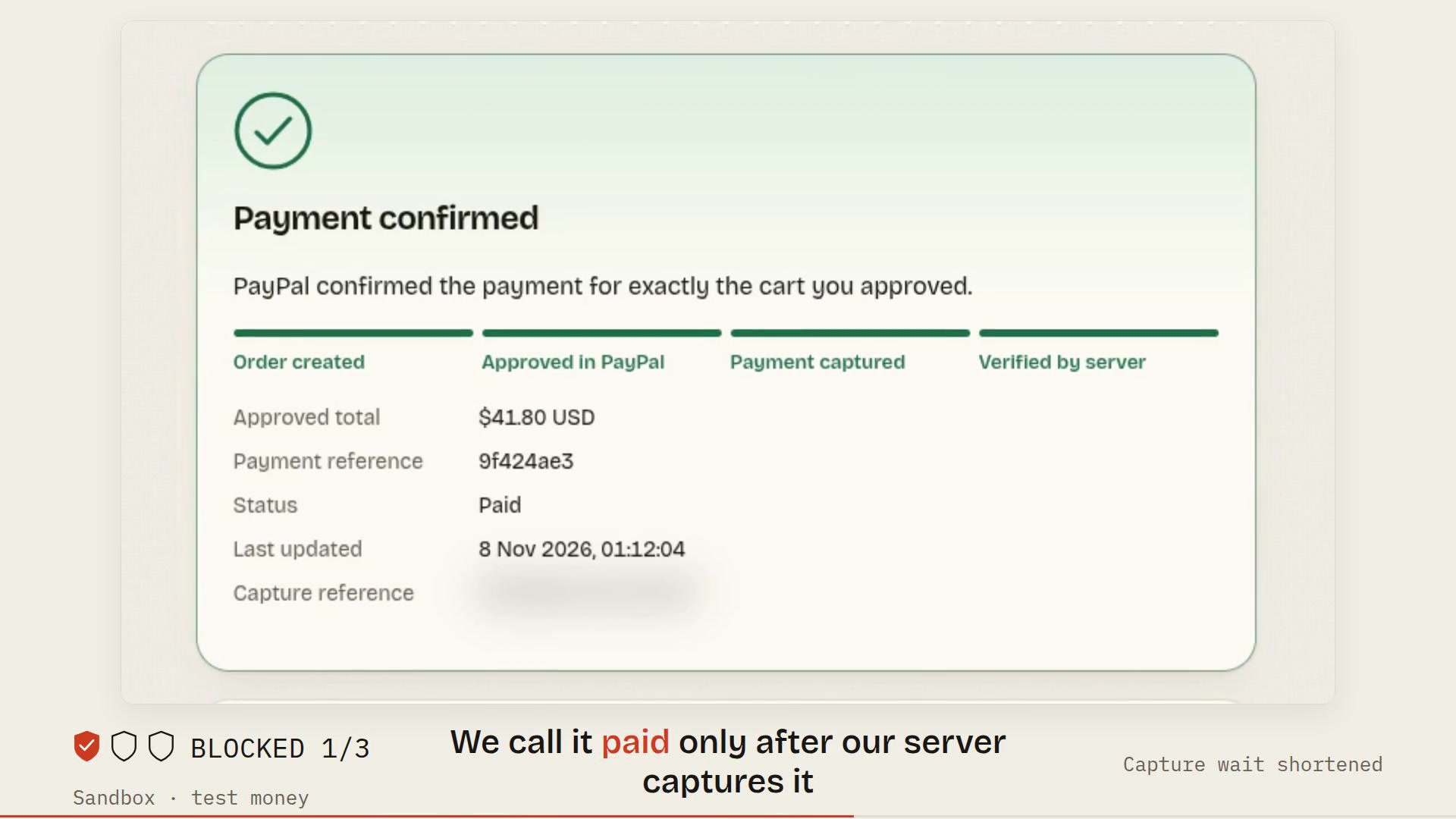
- Pay with PayPal. We call it paid only after our server captures the order and reads it back from PayPal: amount, payee and order must match.
- Cancel and refund. A full PayPal refund for 7 days, verified the same way.
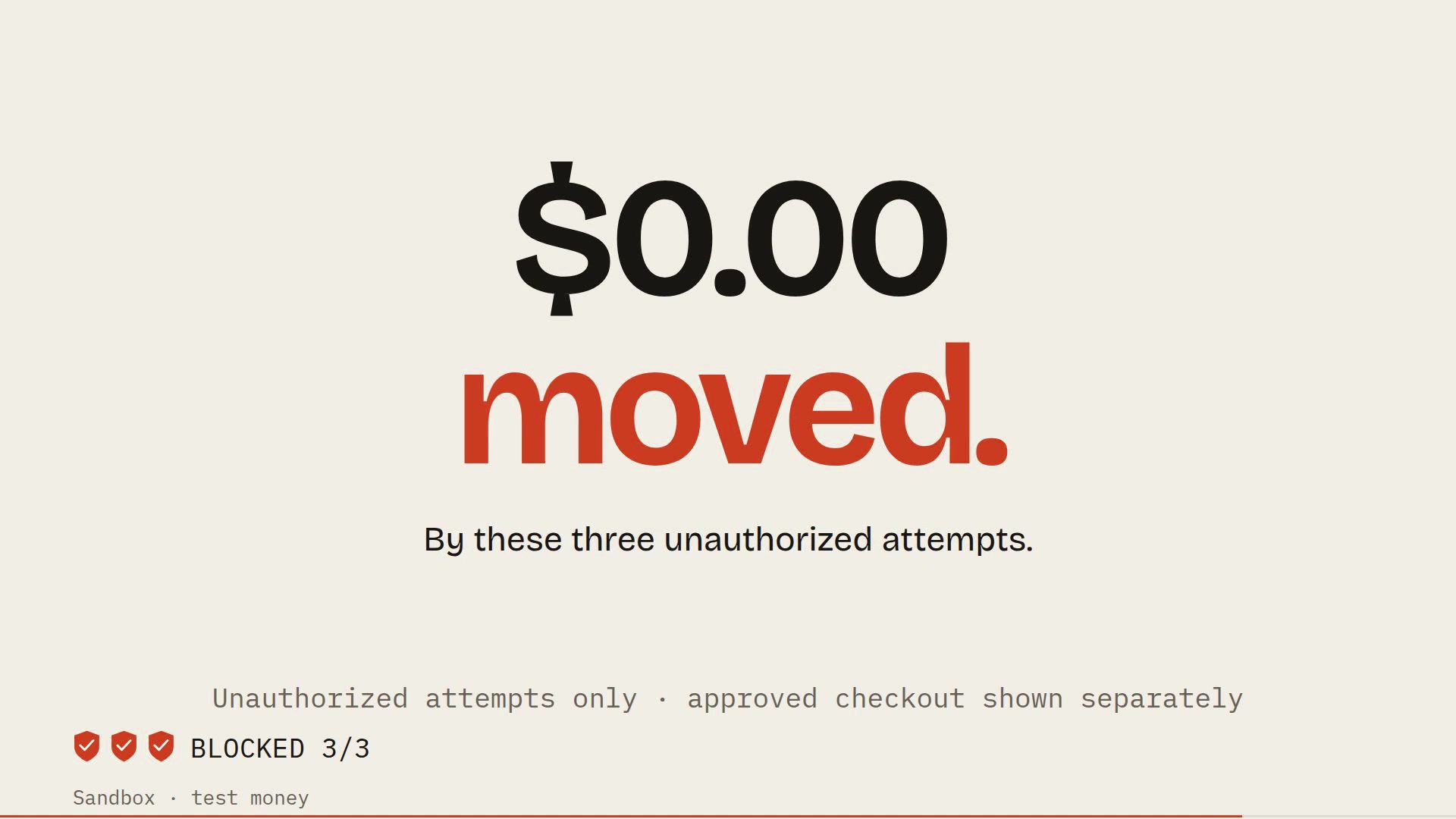
Three ways we tried to make it spend the wrong money:
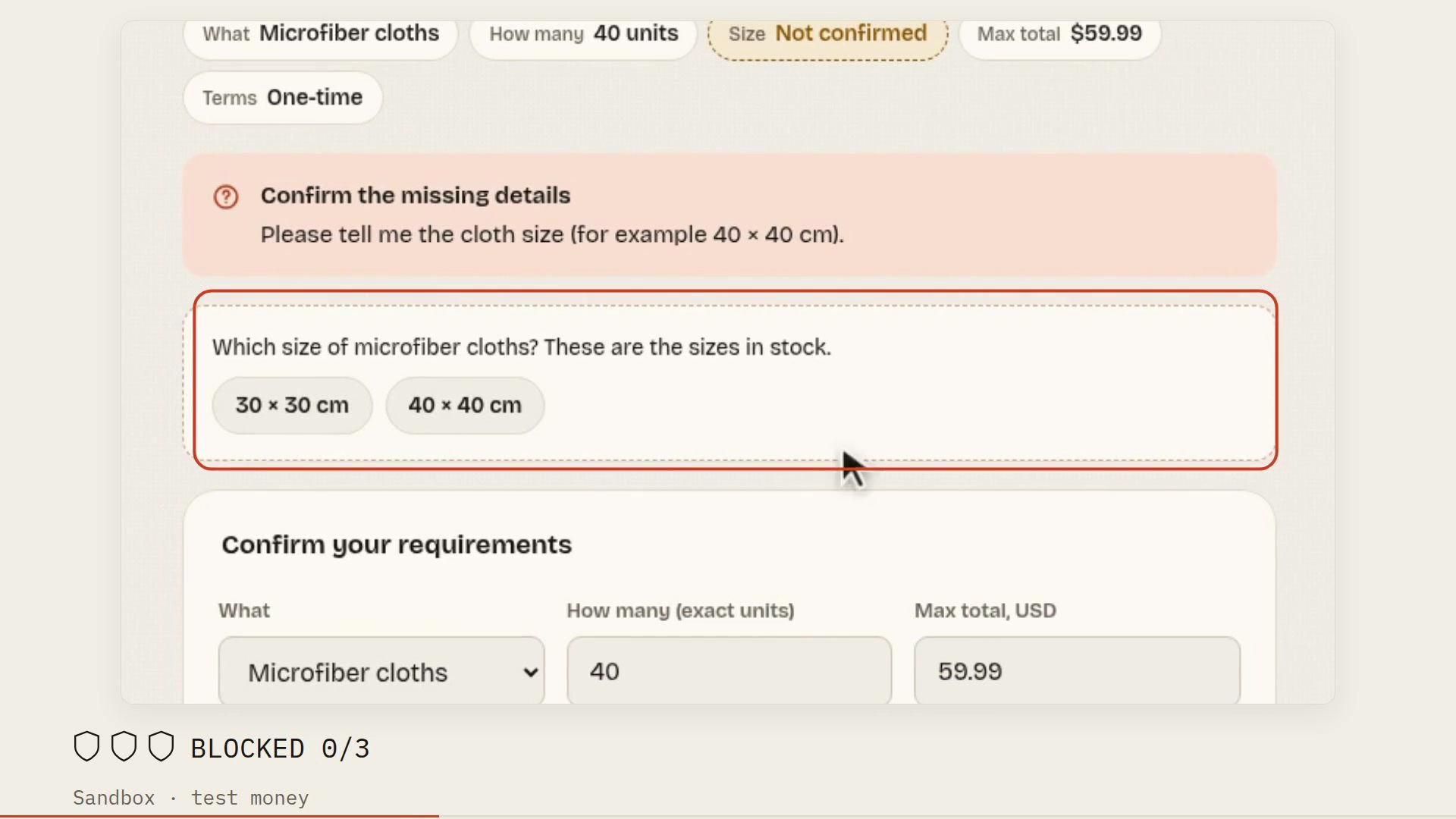
- Make it guess. We left out the size. It asks instead.
- Change the price. We raised it one cent after approval. The approval was revoked.
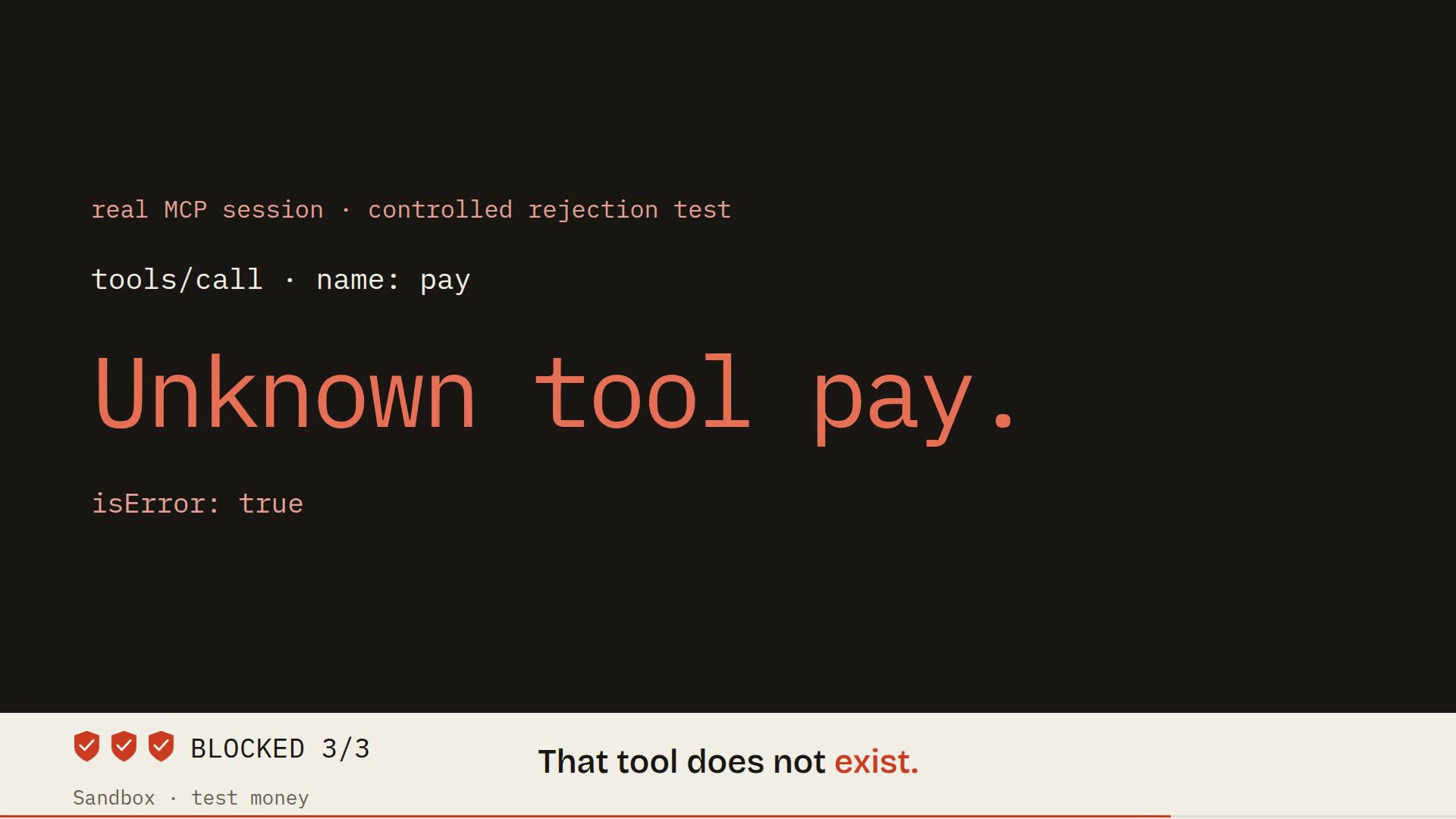
- Make the agent pay. Any AI agent can use SpendConsent through MCP to find offers, prepare a cart and ask the owner. We called
pay. The real answer:Unknown tool pay.No tool can approve or pay.
How we built it
- AI: Qwen3-4B on llama.cpp, self-hosted on CPU, with no cloud AI. One native tool call per comparison. The model copies values as written; code keeps only numbers found in the buyer's own text and does all unit and money maths.
- PayPal: Orders v2 (create, capture, independent read-back), Payments v2 refunds and the JavaScript SDK v6, on a persisted state machine with idempotent requests. Uncertain outcomes stay "unknown" and are never retried blindly.
- Channel3: one product search per request, for real retail prices beside the offers.
- Stack: Django 5.2, DRF, PostgreSQL, React 19, TypeScript, and a standard-library MCP server.
Proof
- 160/160 AI outcomes across 8 test suites, 6 written blind by a separate author, run against the real application. Earlier failed runs are kept in the repository.
- 151 automated tests: 127 backend on real PostgreSQL (state machine, idempotency, races, stale approvals, refunds) and 24 frontend, run in CI.
- Verified PayPal sandbox purchases and a verified full refund, with evidence in the repository.
Challenges we ran into
Making a small model reliable: early versions rounded prices or invented sizes, so we moved every number out of its hands. PayPal edge cases too: an order left at PAYER_ACTION_REQUIRED once stuck forever as "unknown" until we handled it properly.
Accomplishments that we're proud of
An agent that is useful and structurally cannot pay, and a checkout that never says "paid" without PayPal's own record.
What we learned
"Can the AI buy it?" is easy. "Will people let it?" needs exact approvals, hard limits and an easy refund.
What's next for SpendConsent
Real supplier catalogs, approval by push notification, and spending limits for low-risk reorders that keep cancel and refund.
Built With
- caddy
- channel3
- django
- django-rest-framework
- docker
- google-cloud
- llama.cpp
- model-context-protocol
- paypal
- postgresql
- python
- qwen
- react
- typescript
- vite
