-
-
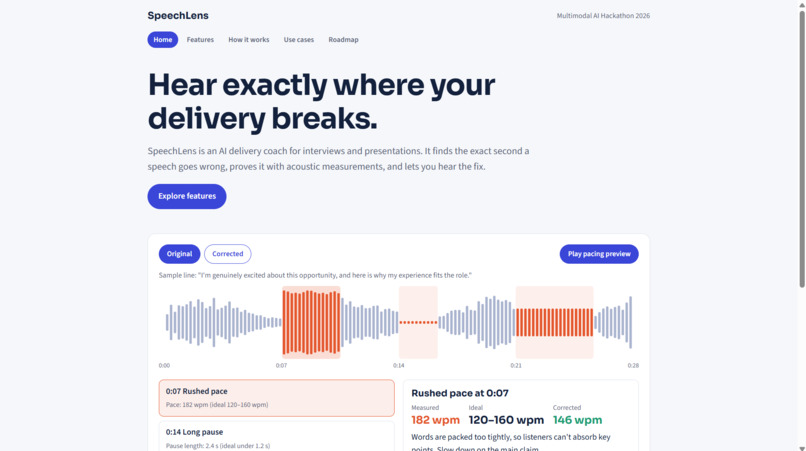
SpeechLens home: an AI delivery coach that finds where a speech goes wrong
-
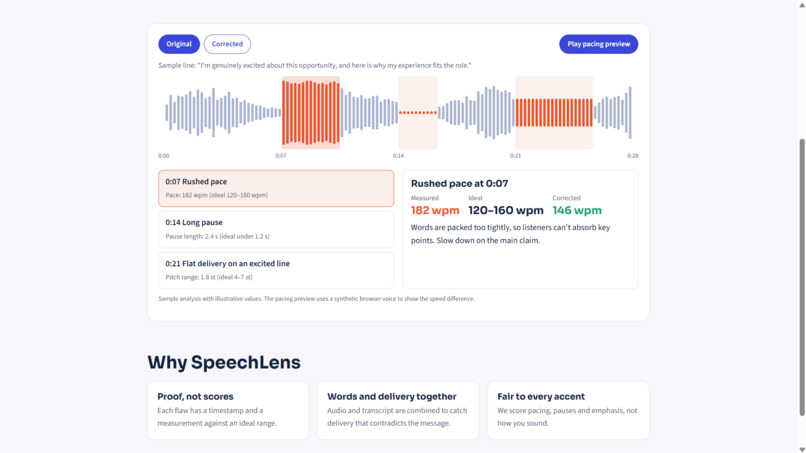
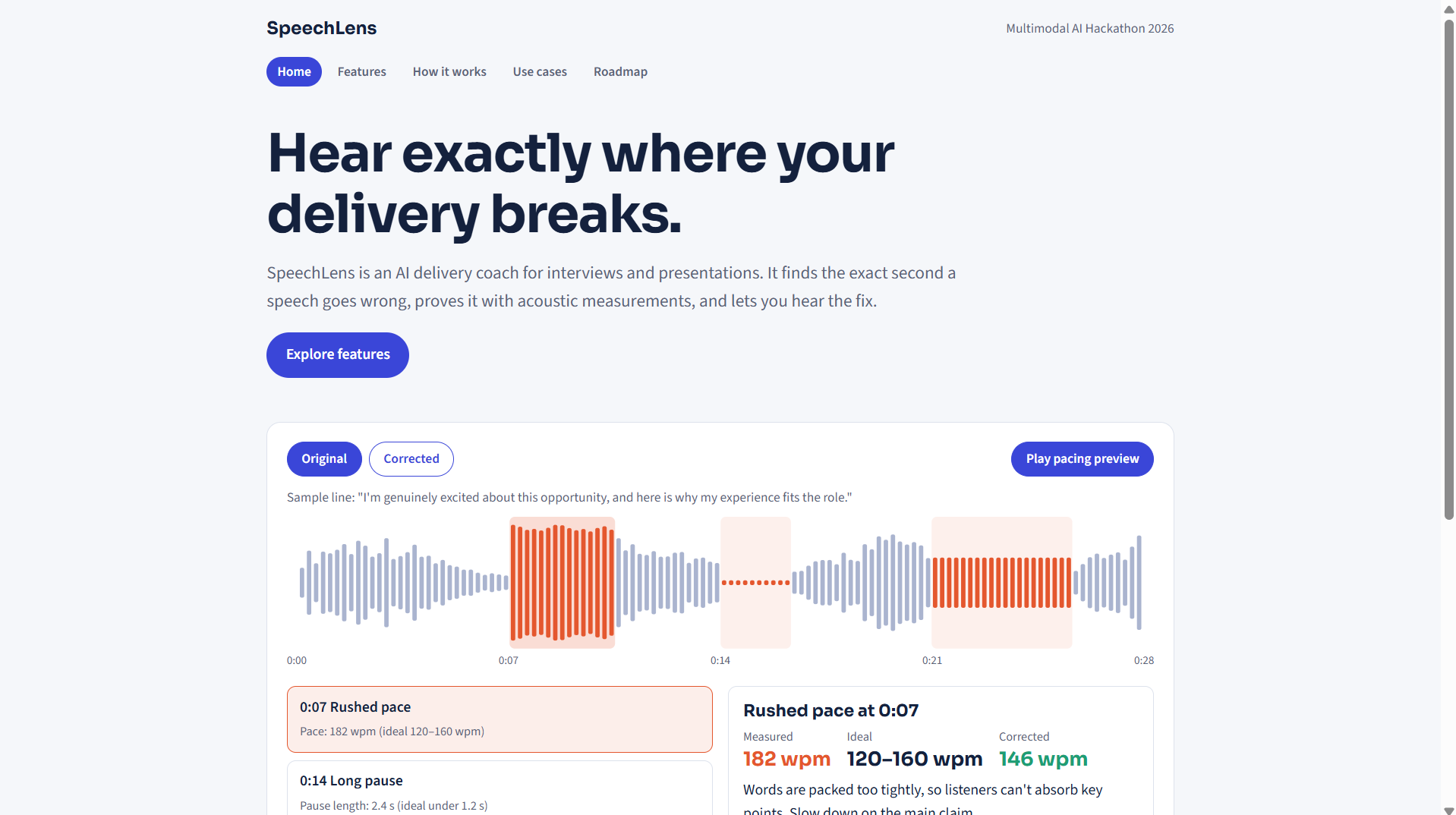
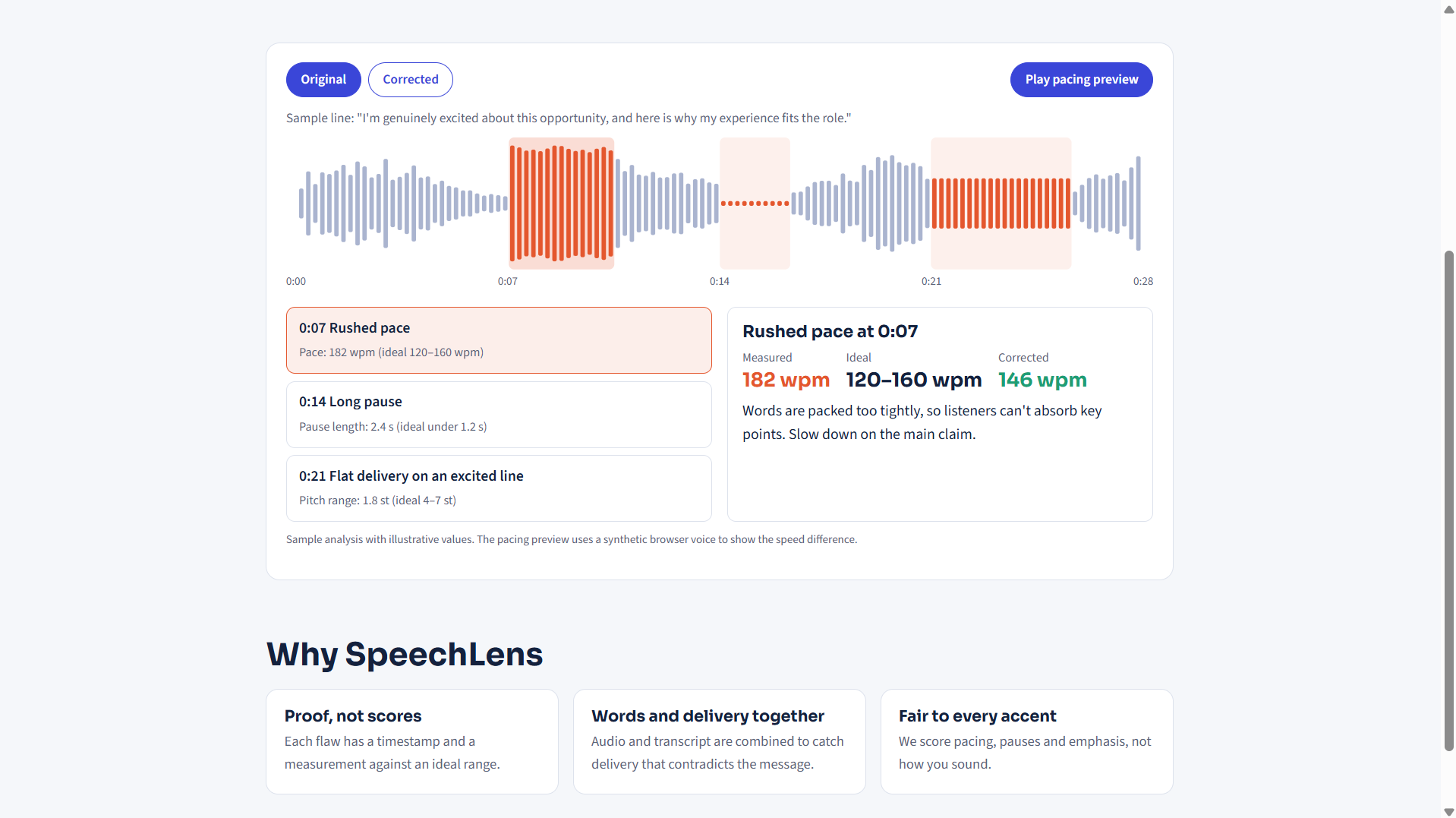
Waveform with flagged moments: rushed pace, long pause and flat delivery, each with measurements
-
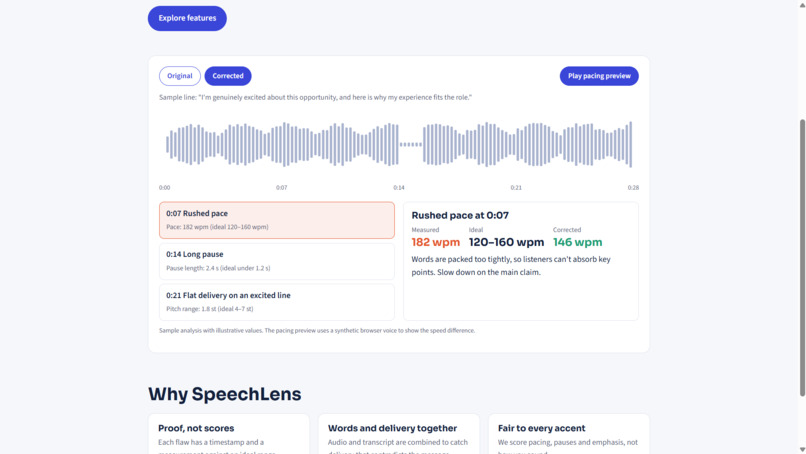
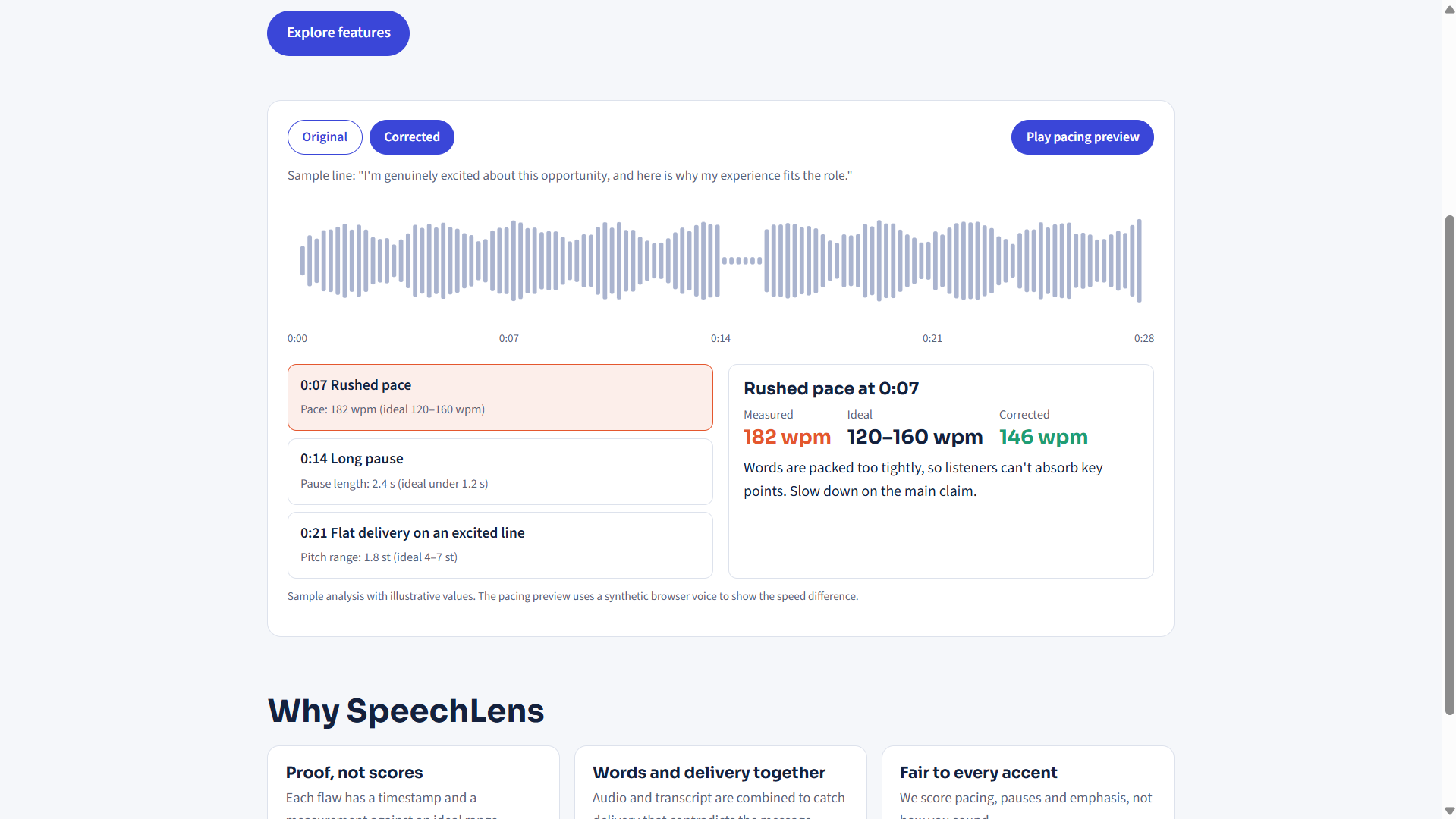
Corrected delivery view: smoother pace and shorter pause, to hear and compare with the original
-
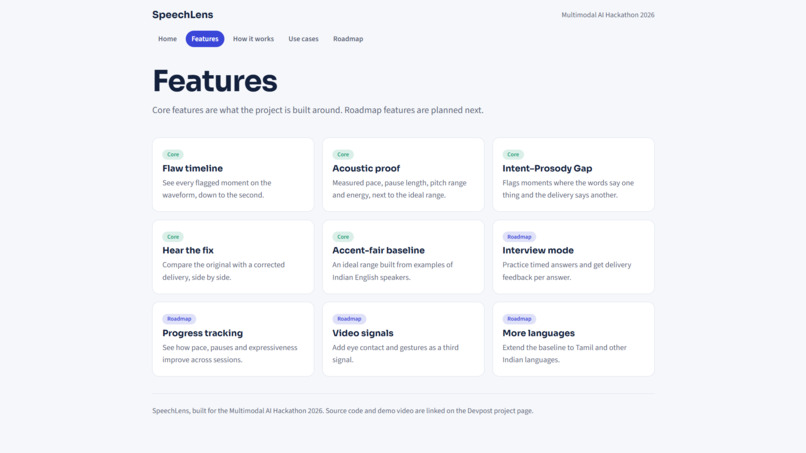
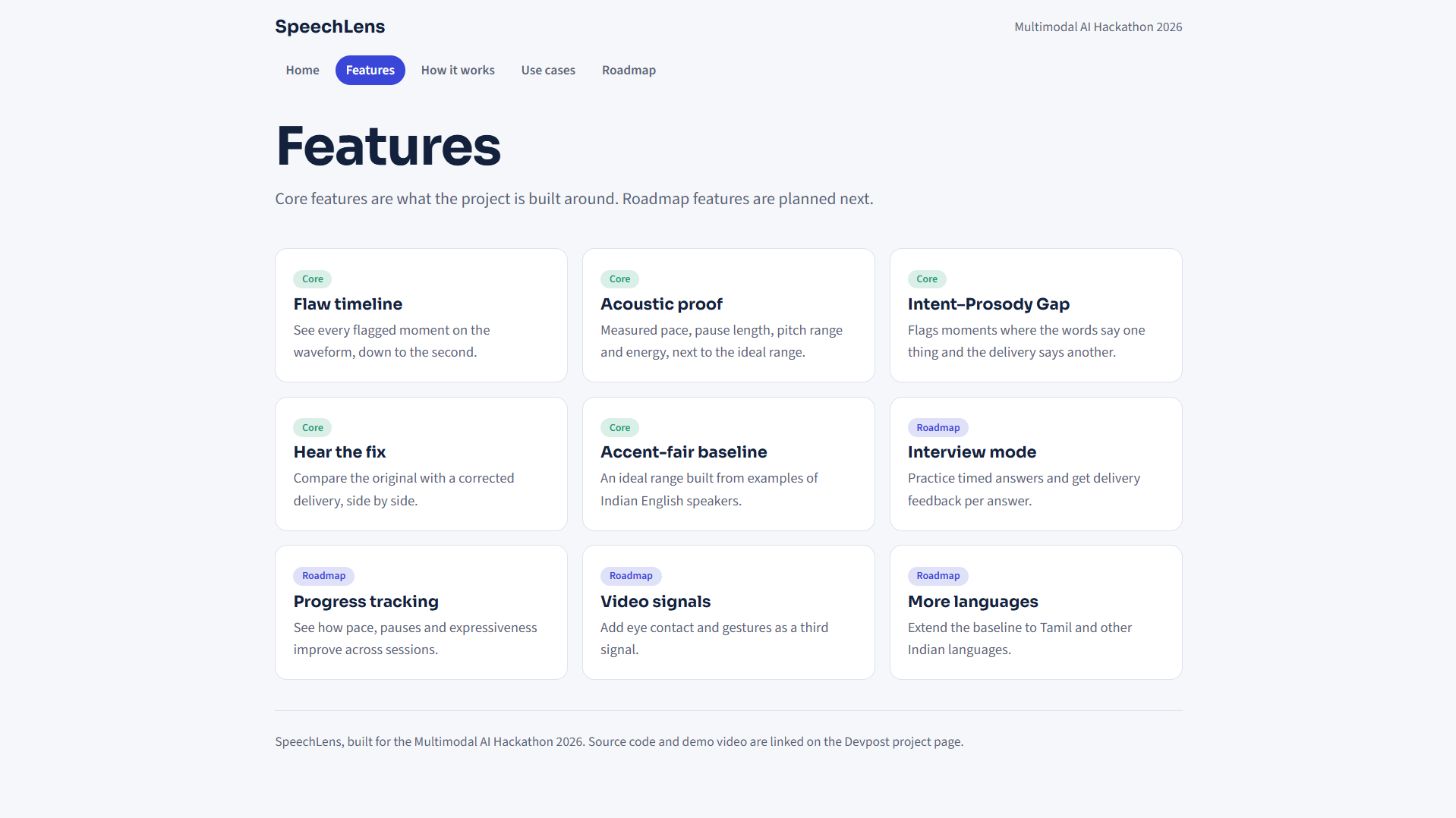
Core features and planned roadmap: flaw timeline, acoustic proof, Intent–Prosody Gap, hear the fix
-
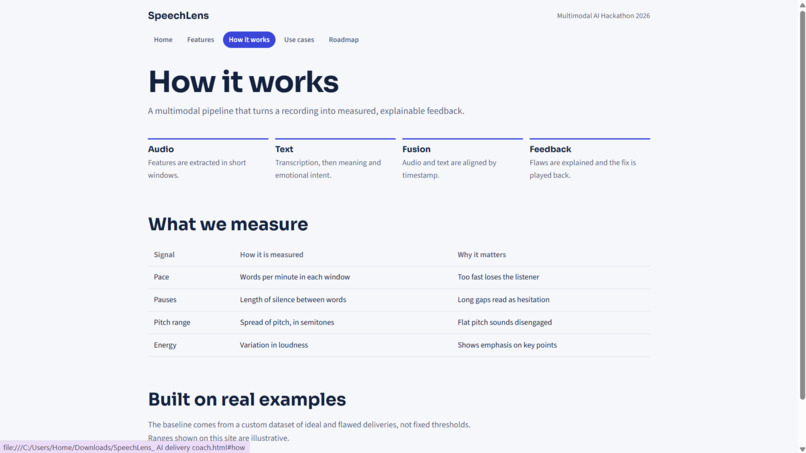
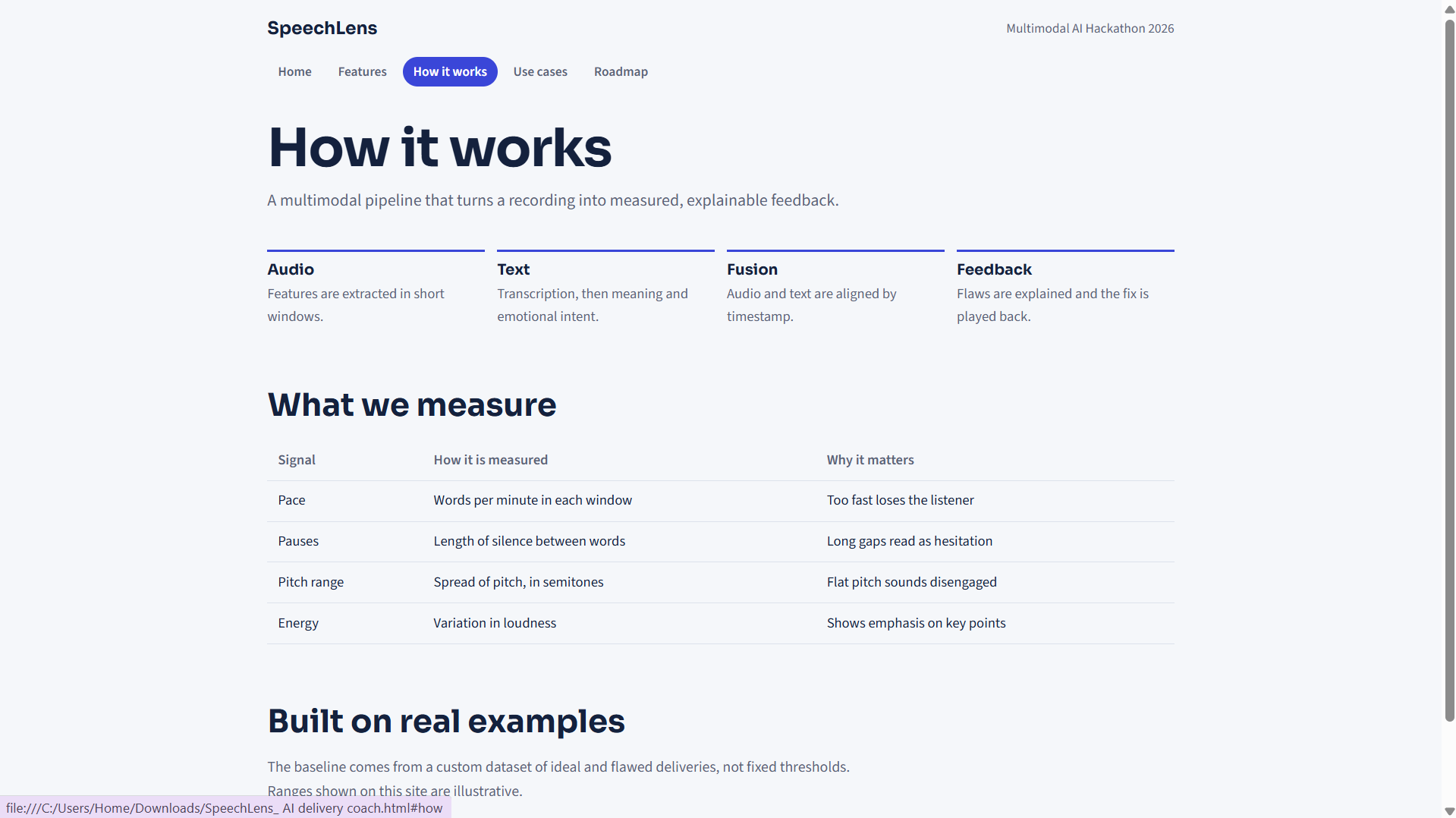
Multimodal pipeline (audio, text, fusion, feedback) and the signals measured
-
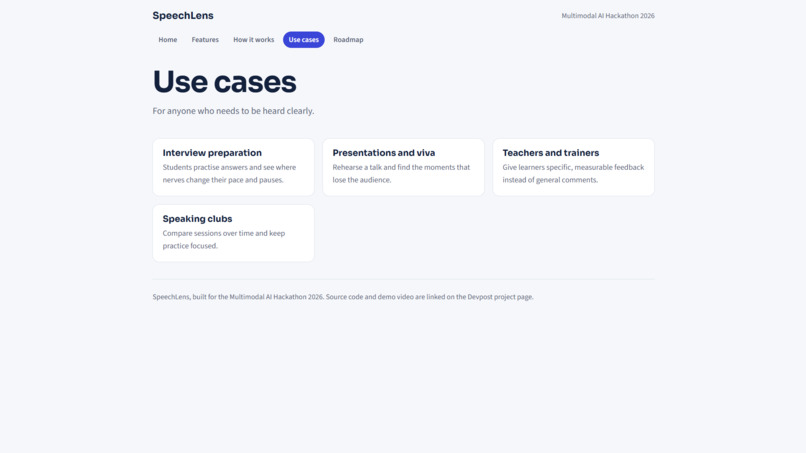
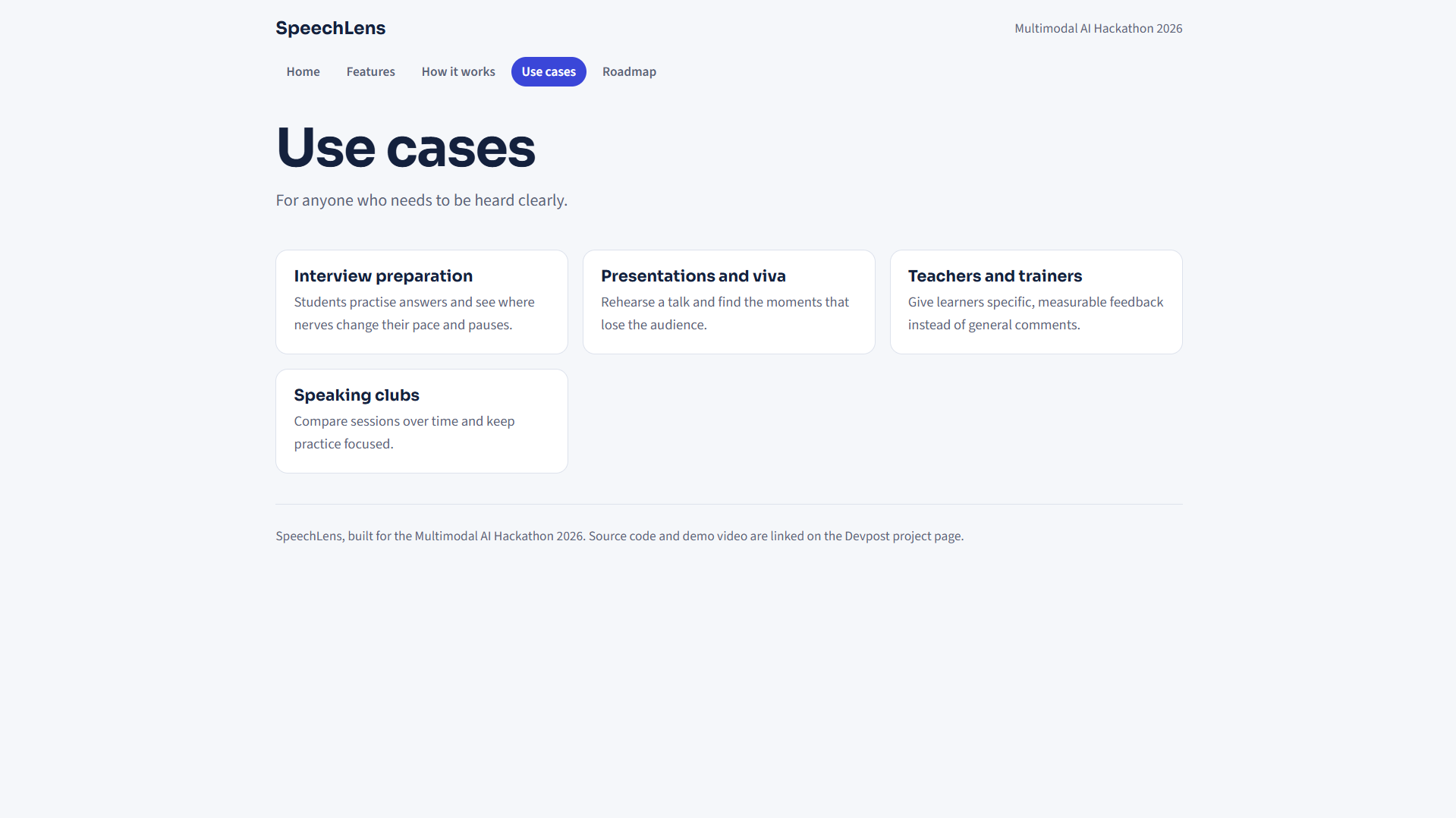
Use cases: interview prep, presentations and viva, teachers and trainers, speaking clubs
-
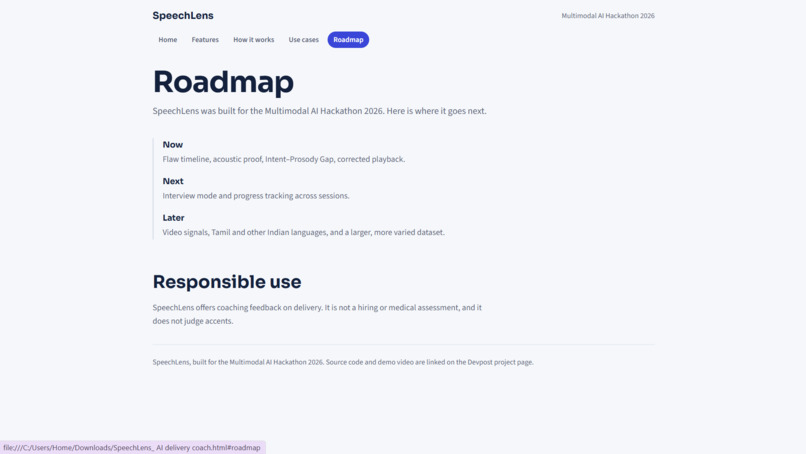
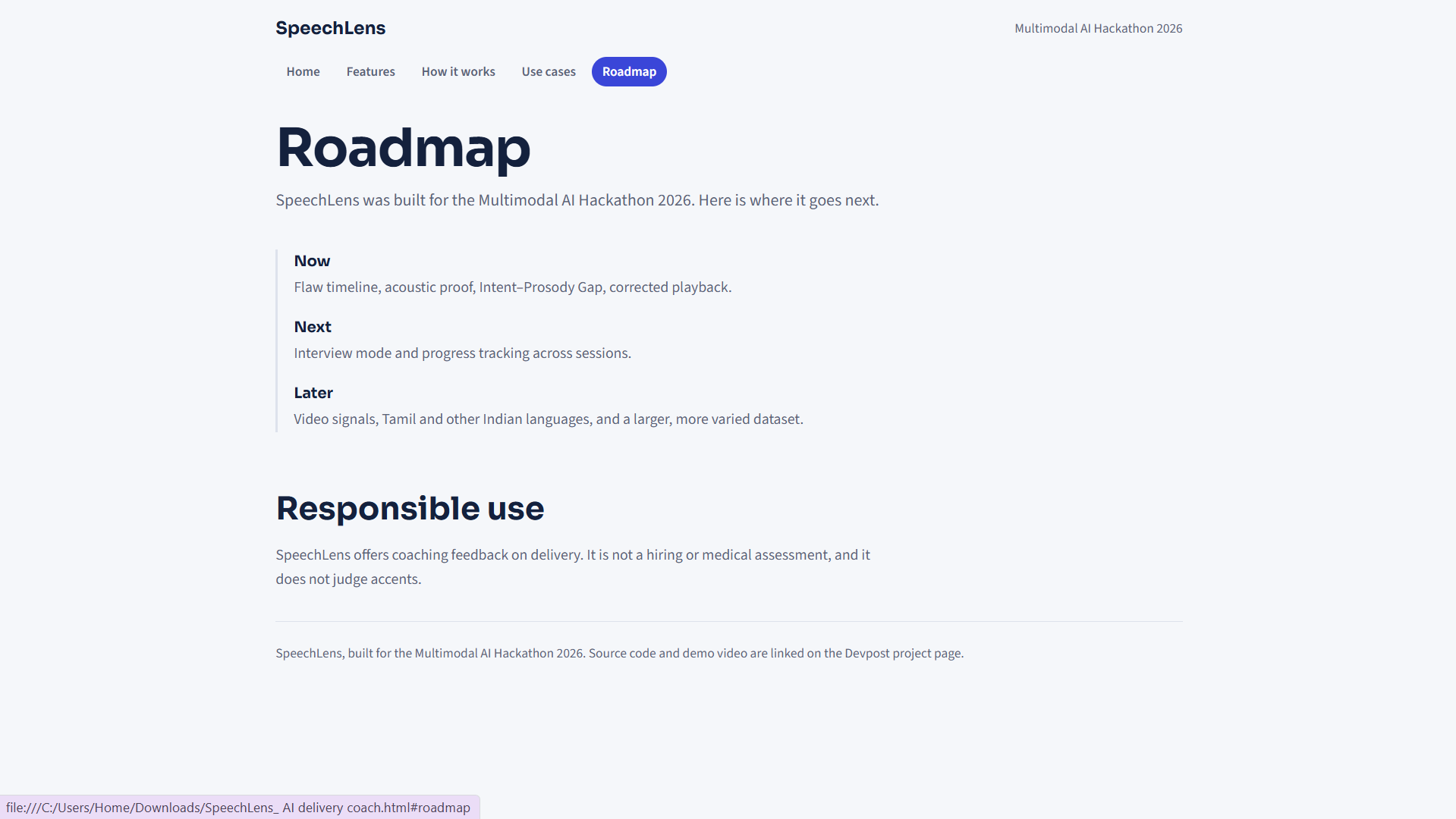
Roadmap and responsible use: coaching feedback on delivery, not a hiring or medical assessment
Inspiration
Most speech coaching tools give you a score and a filler-word count. They rarely tell you where you went wrong, why it was wrong, or what it should have sounded like. Students preparing for interviews and presentations are left guessing. We built SpeechLens to answer all three.
What it does
SpeechLens listens to a speech recording and:
- Finds the exact second a delivery flaw happens (rushed pace, long pause, flat pitch, low energy).
- Proves it with acoustic math. Each flaw is tied to measured values (words per minute, pause length, pitch variance, energy) compared with an ideal baseline.
- Plays back the fix so the speaker can hear the corrected delivery next to the original.
What makes it different
- Proof, not scores: every flaw has a timestamp and a measurement, not just a rating.
- Intent–Prosody Gap: it compares what the words mean (from the transcript) with how they were delivered (from the audio), and flags moments where the delivery contradicts the message.
- Accent-fair by design: it scores delivery, not accent, using a baseline built from Indian English speakers.
How it works (multimodal pipeline)
- Audio: acoustic features are extracted per time window (speech rate, pause duration, pitch range, energy).
- Text: the speech is transcribed, then analyzed for meaning and emotional intent.
- Fusion: audio and text signals are aligned by timestamp. A flaw is reported when the measured delivery falls outside the ideal range from our dataset, or when it conflicts with the meaning of the words.
- Feedback: an AI model turns the measurements into plain-language explanations and a corrected-delivery playback.
Our dataset
We created a custom dataset of ideal vs flawed deliveries, so the baseline comes from real examples and not fixed thresholds.
Challenges we ran into
- Separating accent from delivery, so the tool doesn't penalize how someone sounds.
- Keeping the explanations tied to measurable evidence and not vague advice.
- Aligning audio features with the transcript at the exact second.
What we learned
Coaching is only useful when it is specific. A number at a timestamp, plus an example of the better version, is far more actionable than a score.
What's next for SpeechLens
- Add video (eye contact, gestures) as a third signal.
- Grow the dataset with more speakers, accents and languages, including Tamil.
- Track a speaker's progress across sessions.
- Offer interview and presentation modes.

Log in or sign up for Devpost to join the conversation.