Inspiration
We wanted to make speech evaluation more transparent. Instead of providing only an overall score, we aimed to identify when speech quality deviations occur and explain the acoustic changes behind them.
What It Does
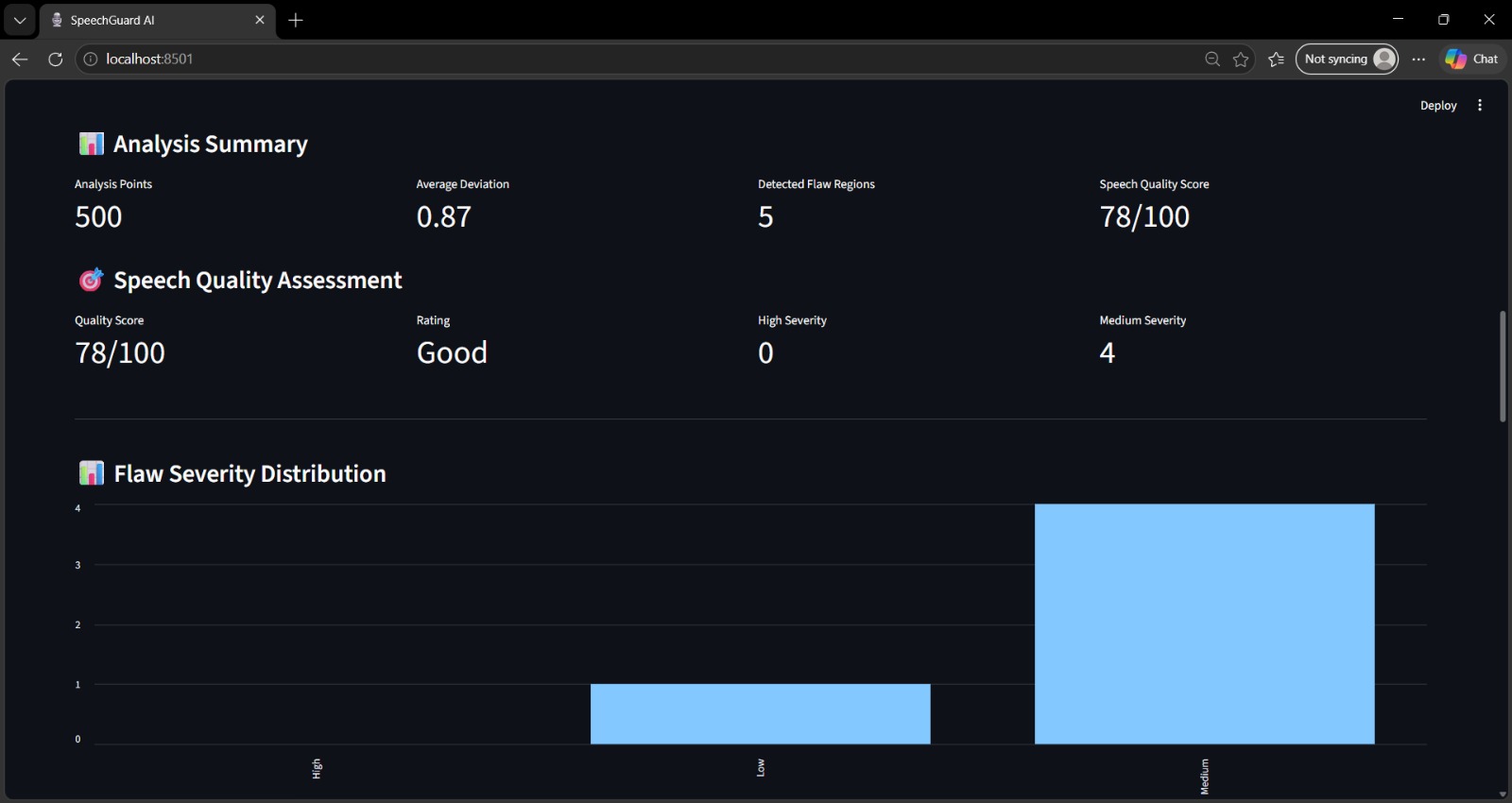
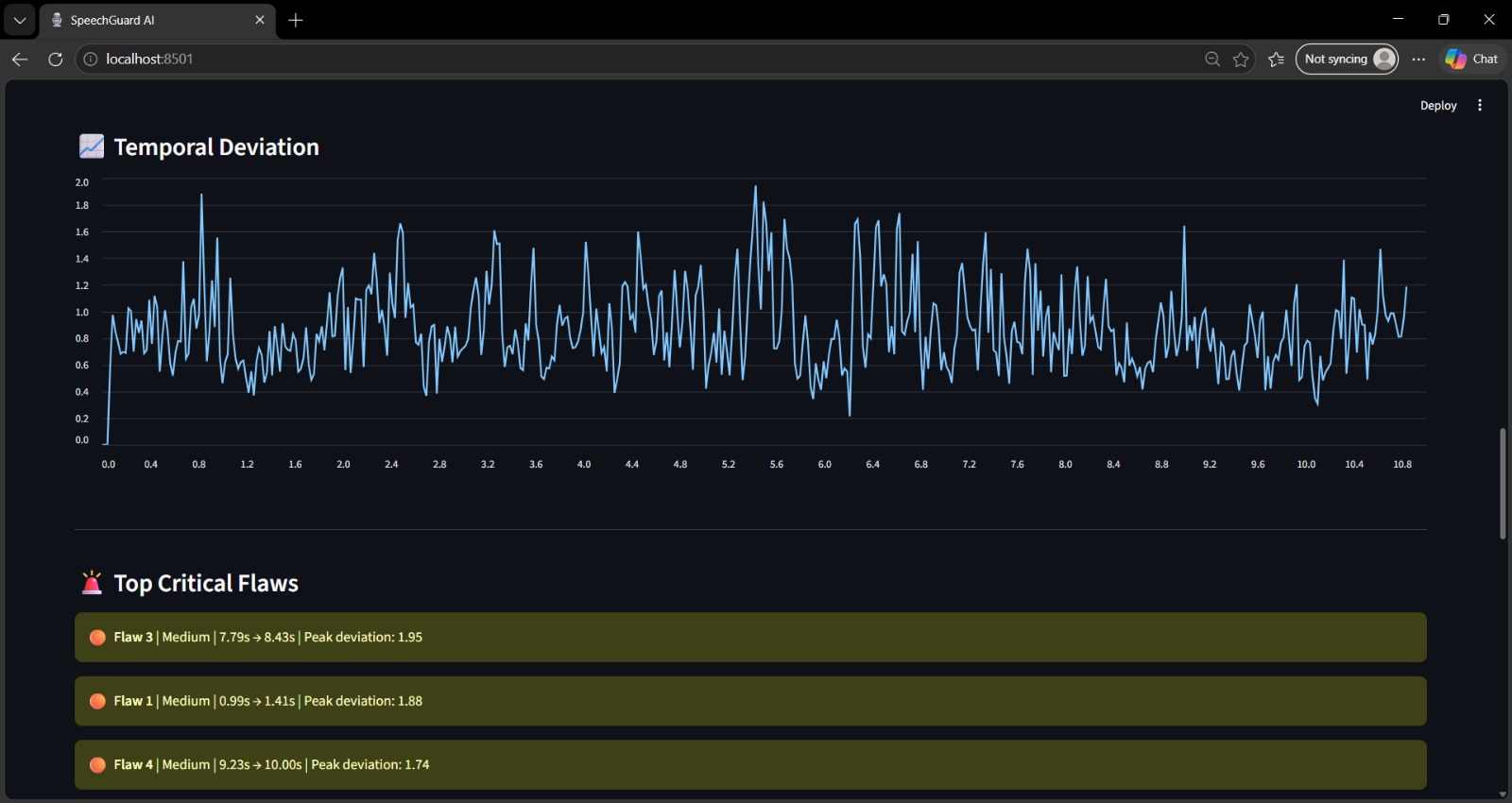
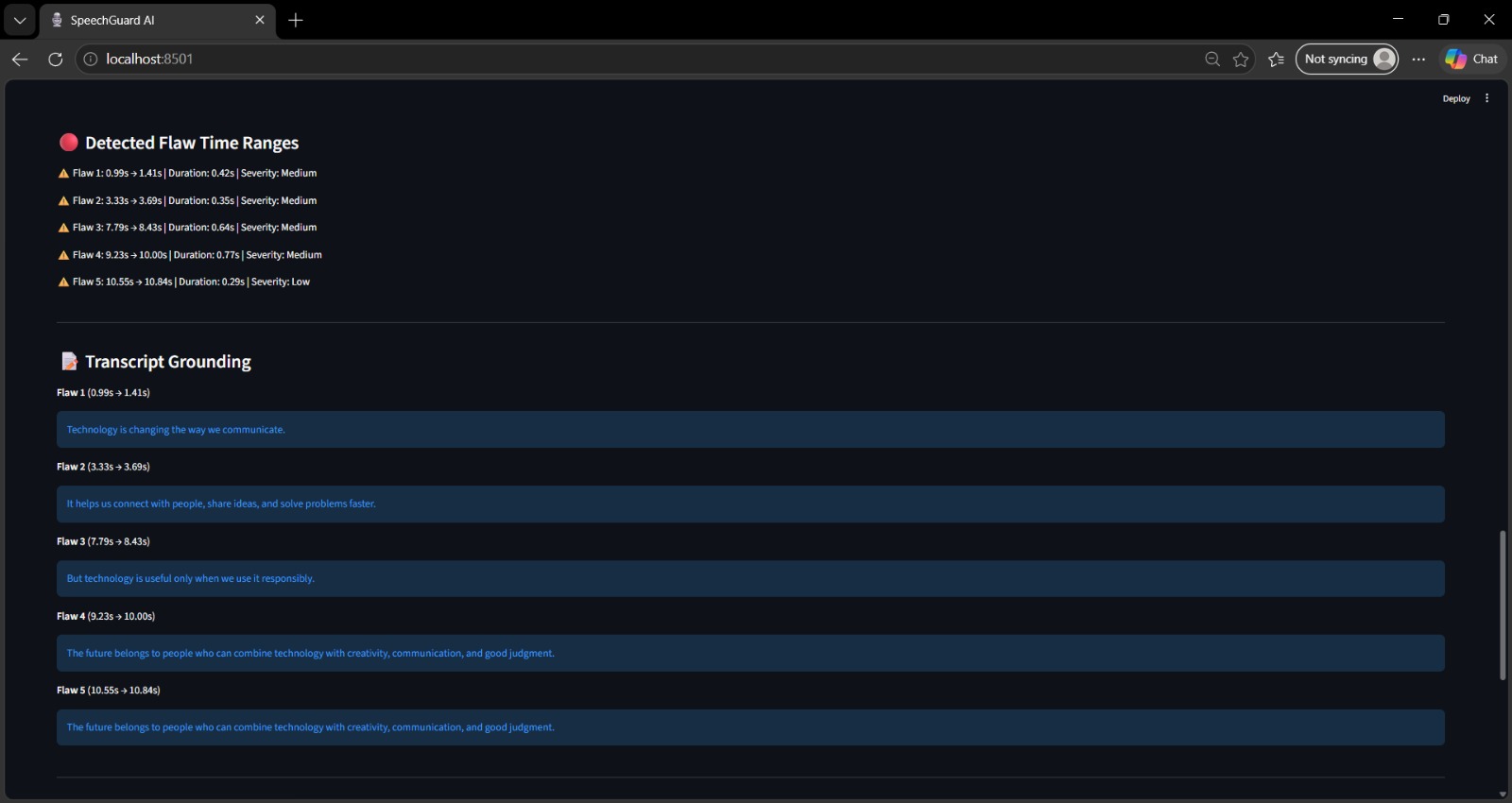
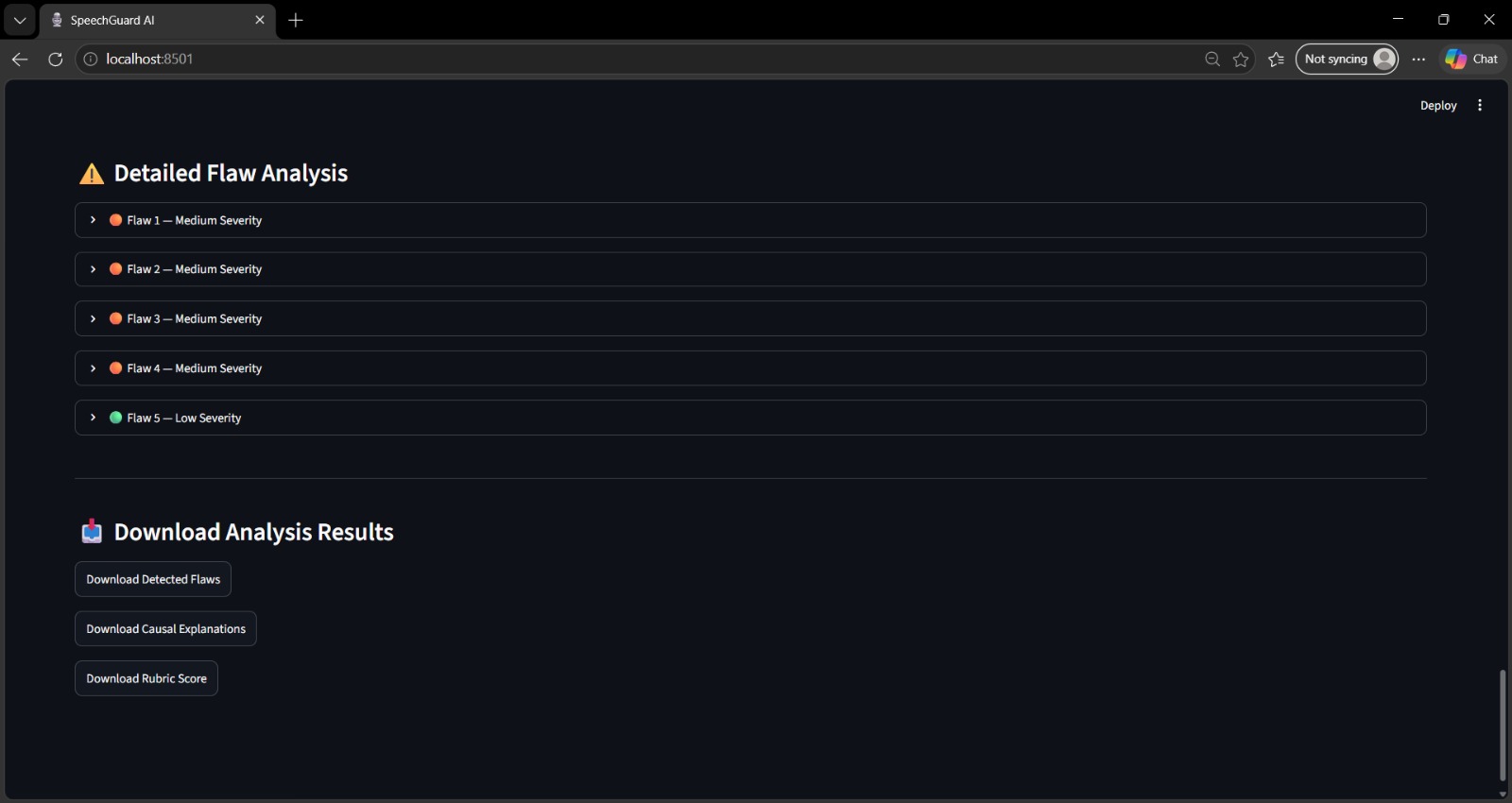
SpeechGuard AI compares ideal and test speech recordings, detects acoustic deviations over time, classifies their severity, and generates a speech quality score. Its Streamlit dashboard displays flaw timestamps, a temporal deviation graph, severity distribution, explanations, transcript context, and downloadable results.
How We Built It
We used Python and Streamlit to build the application. The system extracts acoustic features such as energy, zero-crossing rate, spectral centroid, fundamental frequency, dominant frequency, and MFCCs. It normalizes and compares these features, identifies deviation regions, assigns severity levels, and visualizes the results.
Challenges We Faced
Comparing recordings with different durations and acoustic characteristics was challenging. We worked on feature normalization and temporal segmentation to make the results more meaningful. We also considered the limitations of transcript grounding when word-level timestamps are unavailable.
What We Learned
We gained practical experience in audio processing, feature extraction, temporal analysis, Python, and Streamlit. We learned that explainable results are more useful than an overall score alone.
What's Next
We plan to improve flaw detection, support more precise transcript alignment, and test the system with different speakers, accents, and recording conditions.

Log in or sign up for Devpost to join the conversation.