-
-
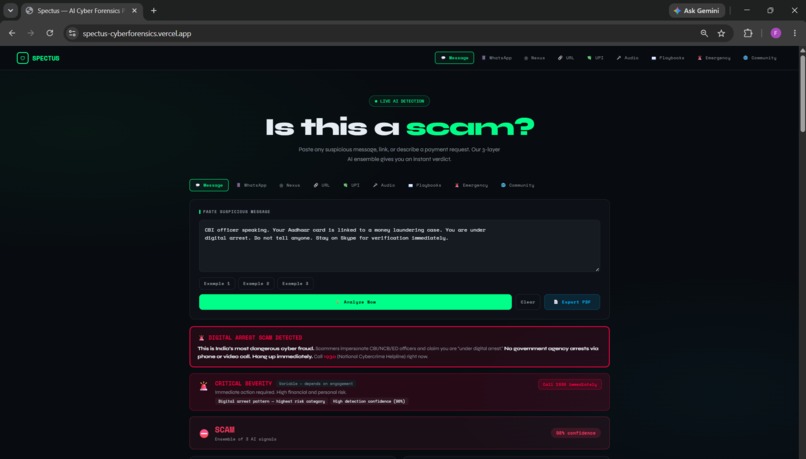
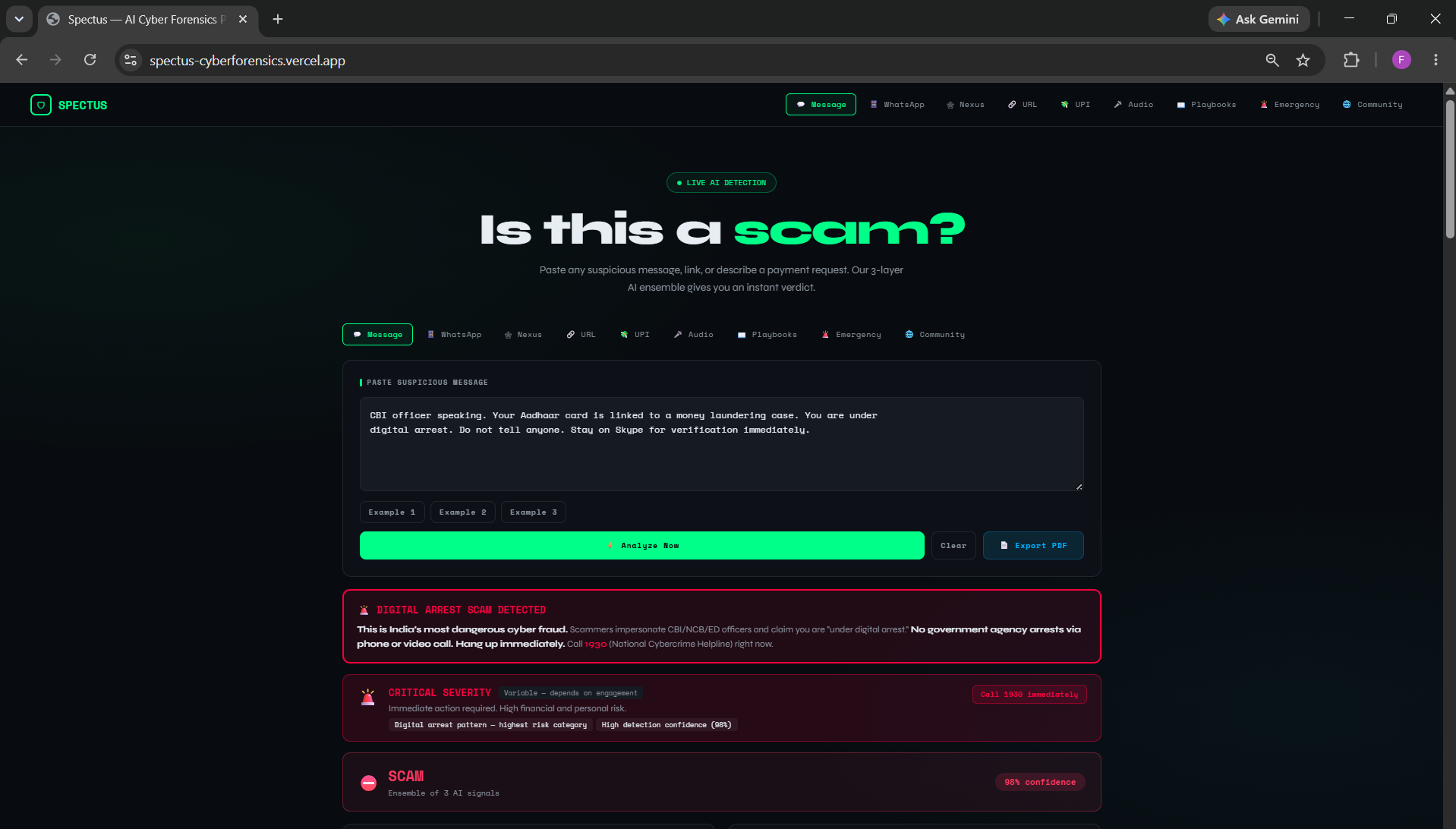
Real-time analysis interface flagging a high-severity "Digital Arrest" coercion tactic with a 98% ensemble confidence score.
-
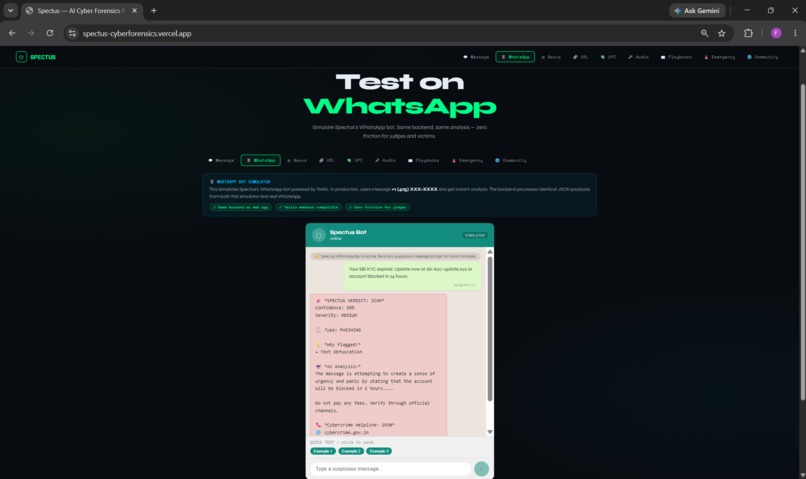
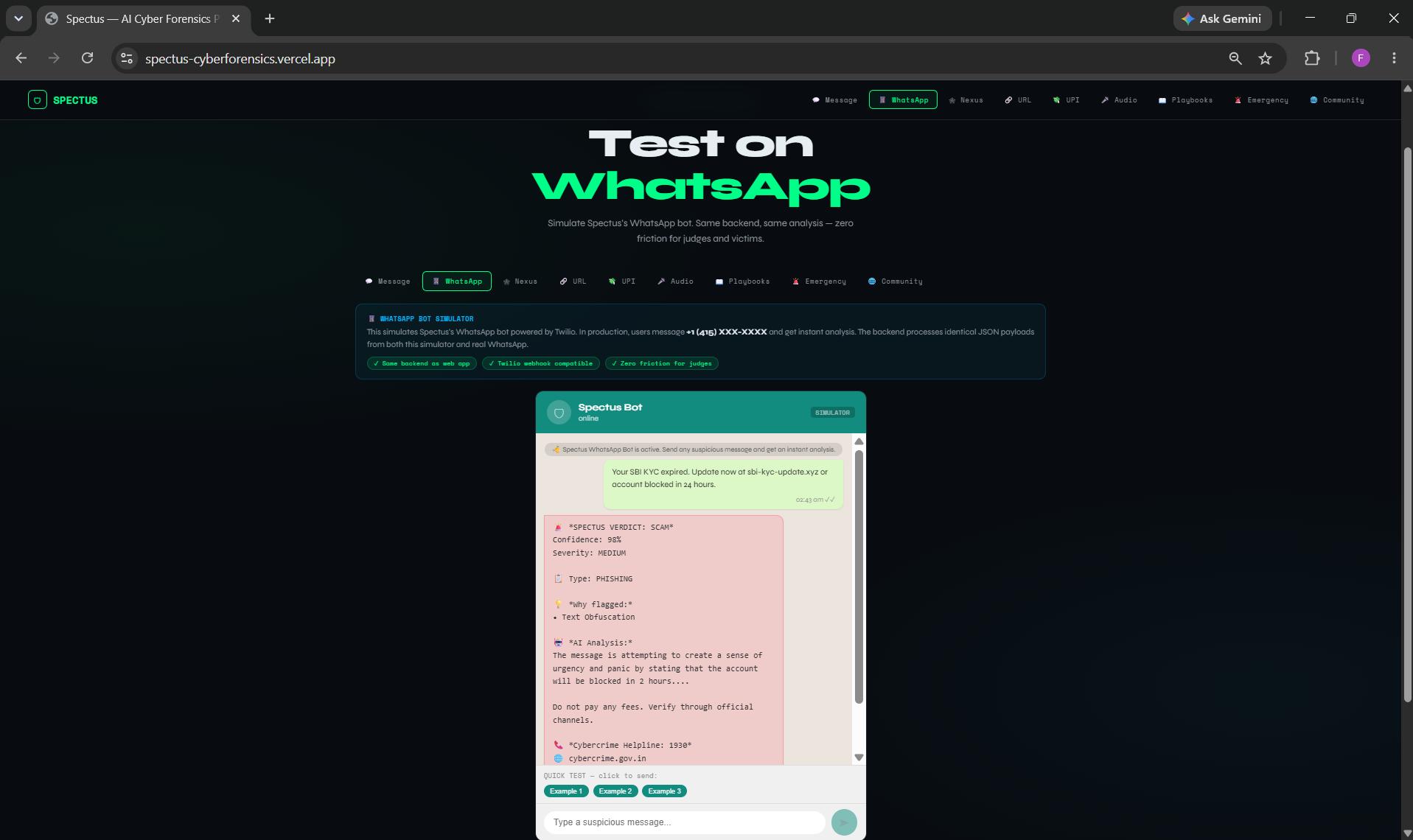
Interactive WhatsApp bot simulator demonstrating zero-friction endpoint delivery, flagging a fake SBI KYC phishing link with 98% confidence.
-
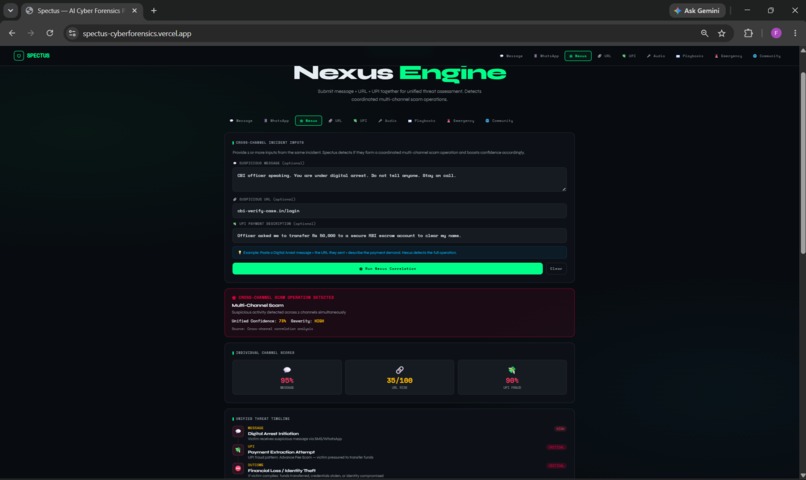
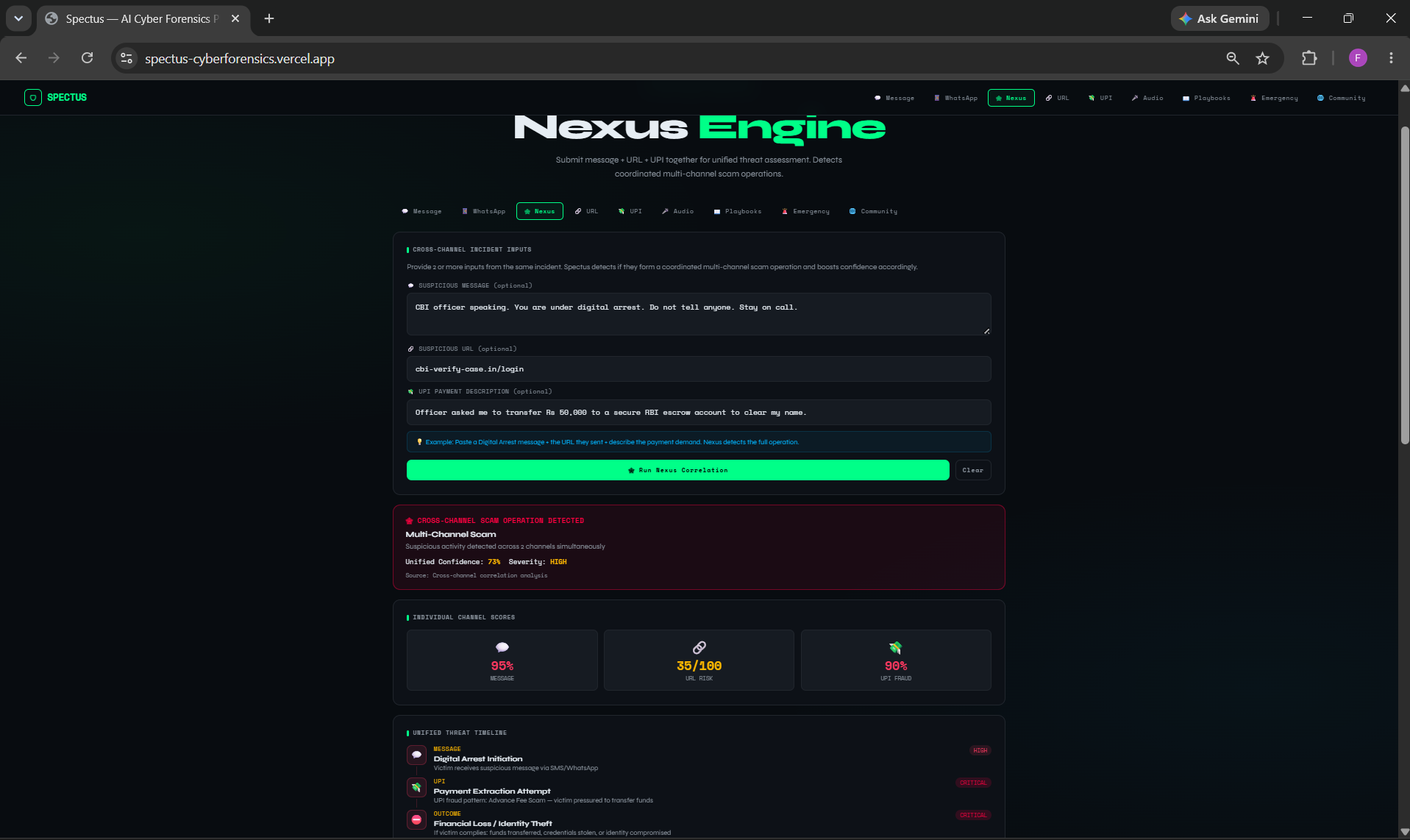
The Nexus Engine connecting the dots between a fake CBI message, a phishing URL, a fraudulent UPI demand to expose the full scam operation.
-
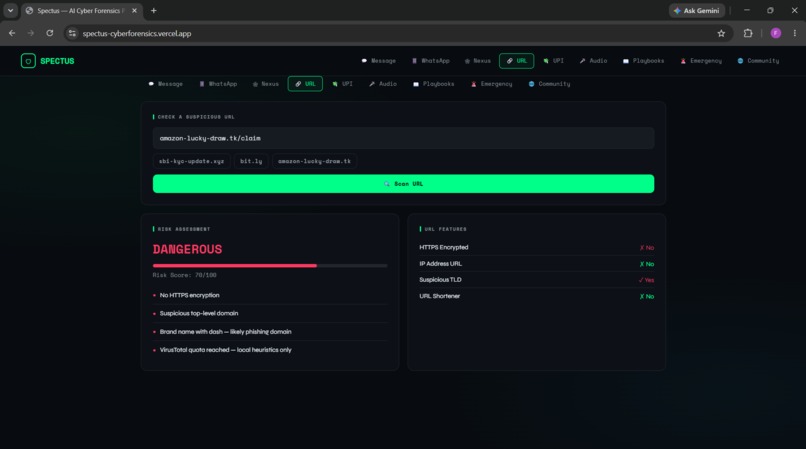
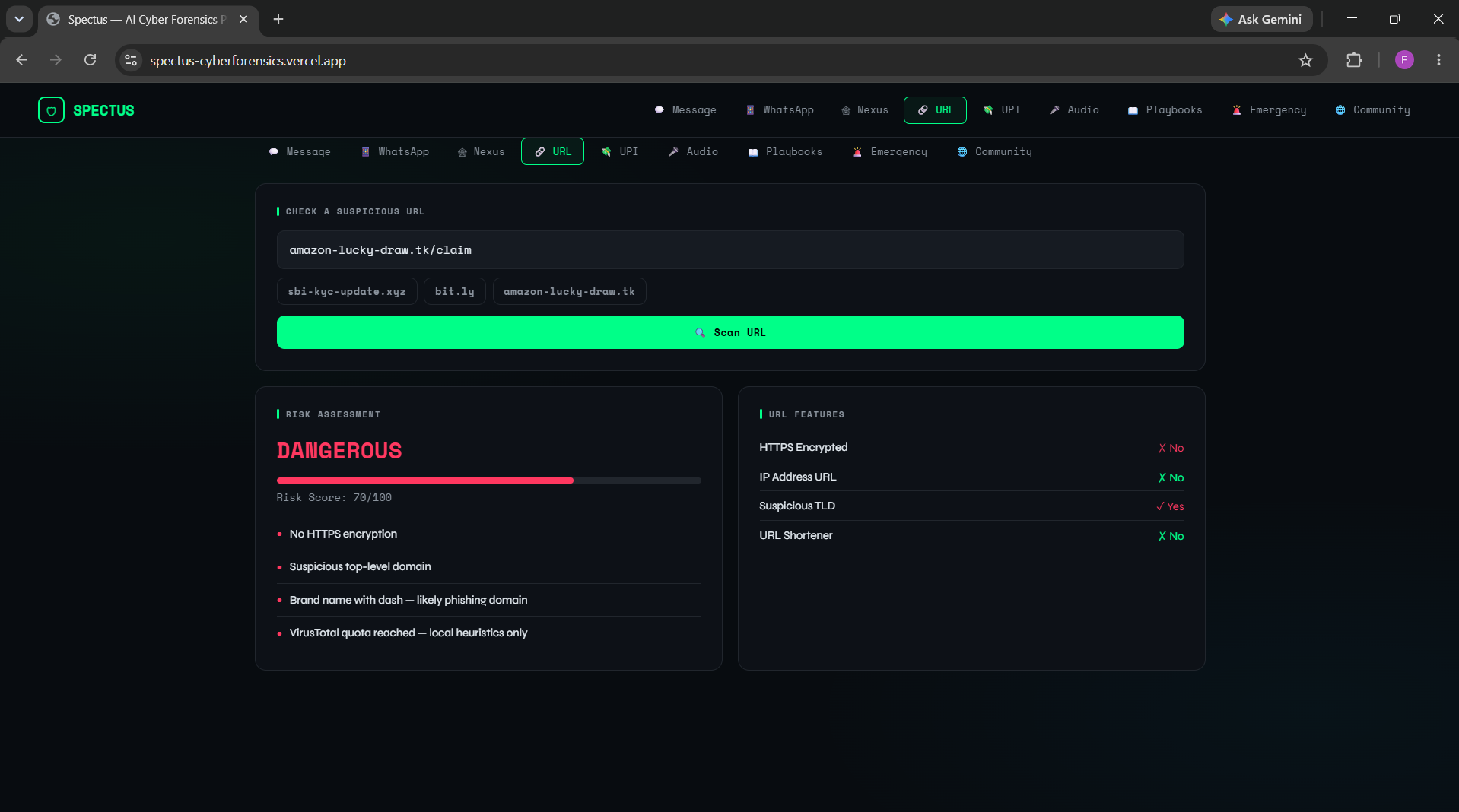
Malicious URL evaluation flagging a dangerous "lucky draw" phishing link based on structural domain anomalies.
-
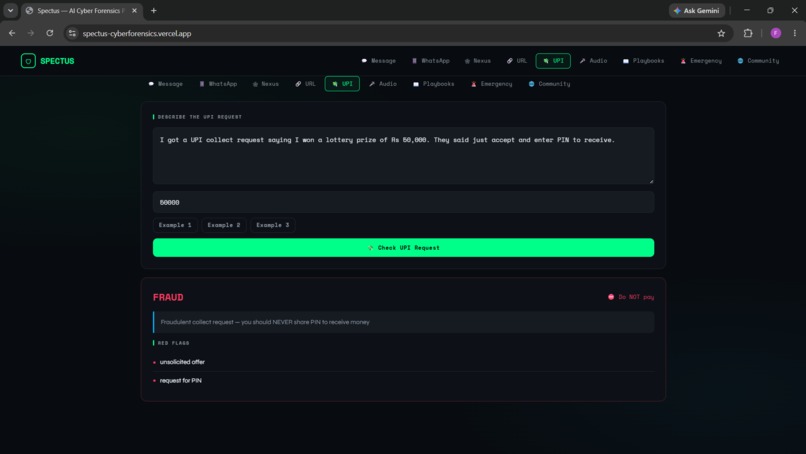
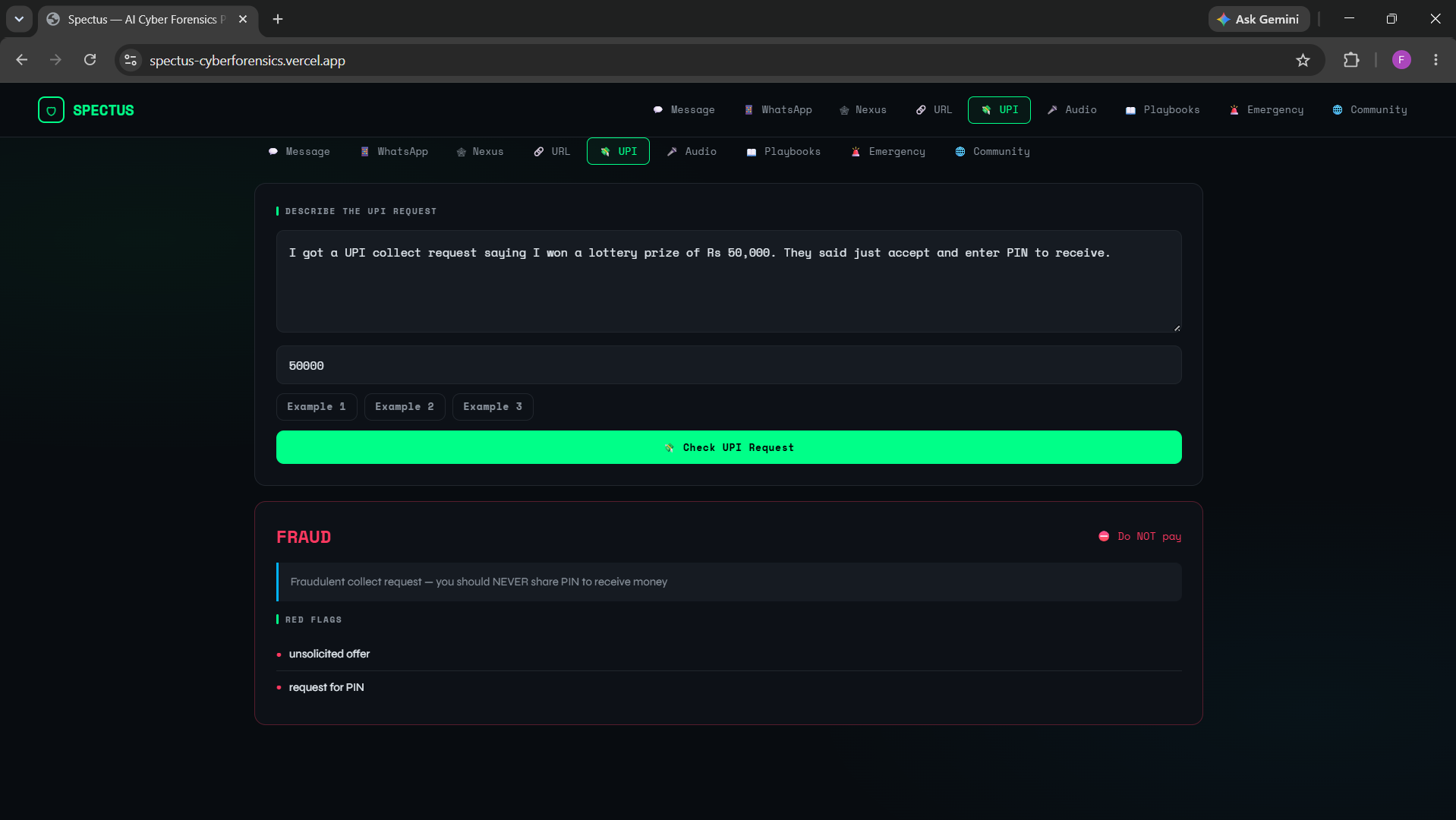
Dedicated UPI Fraud Scanner instantly blocking a deceptive reverse-collect payment request.
-
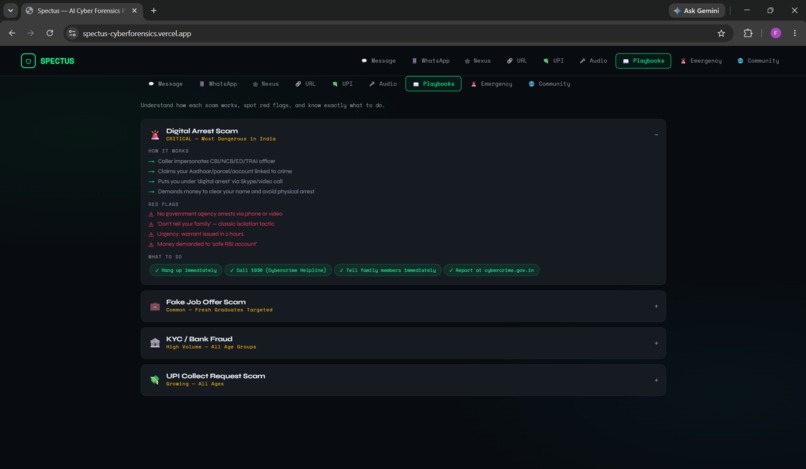
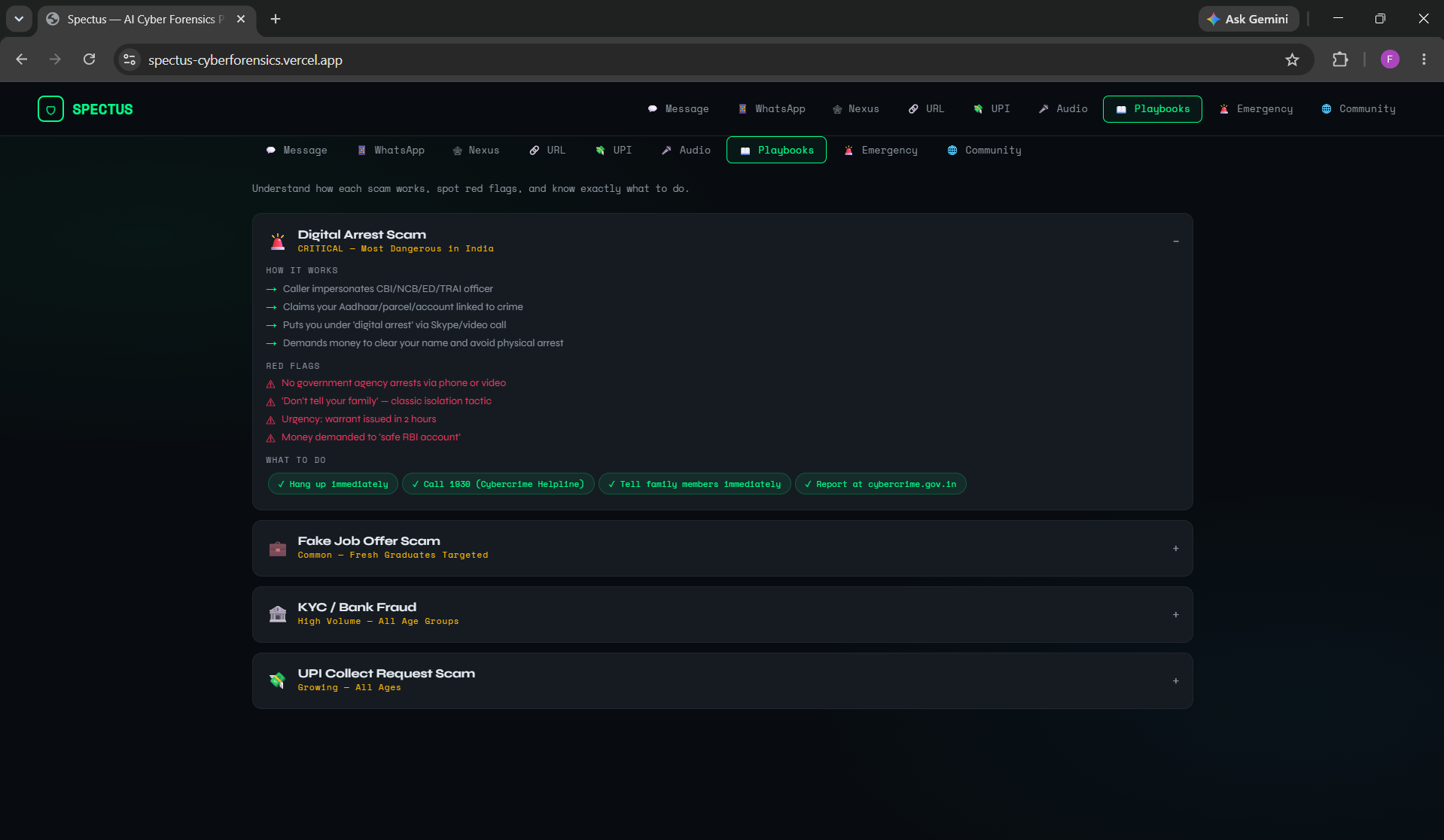
Built-in threat intelligence playbooks breaking down common scam tactics and immediate action steps.
-
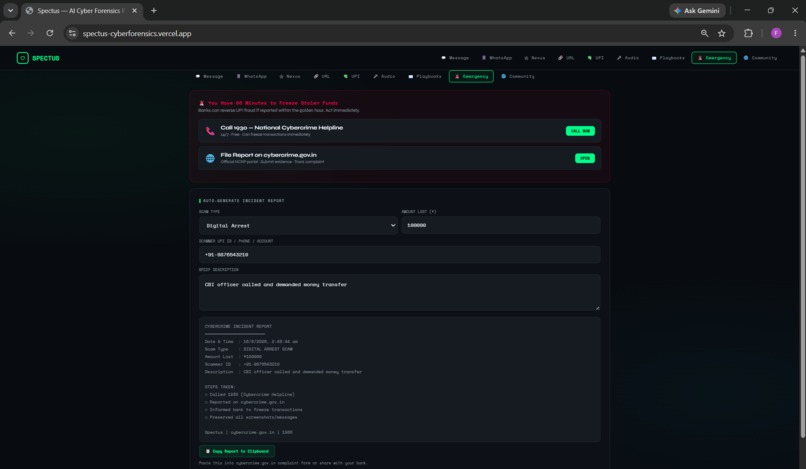
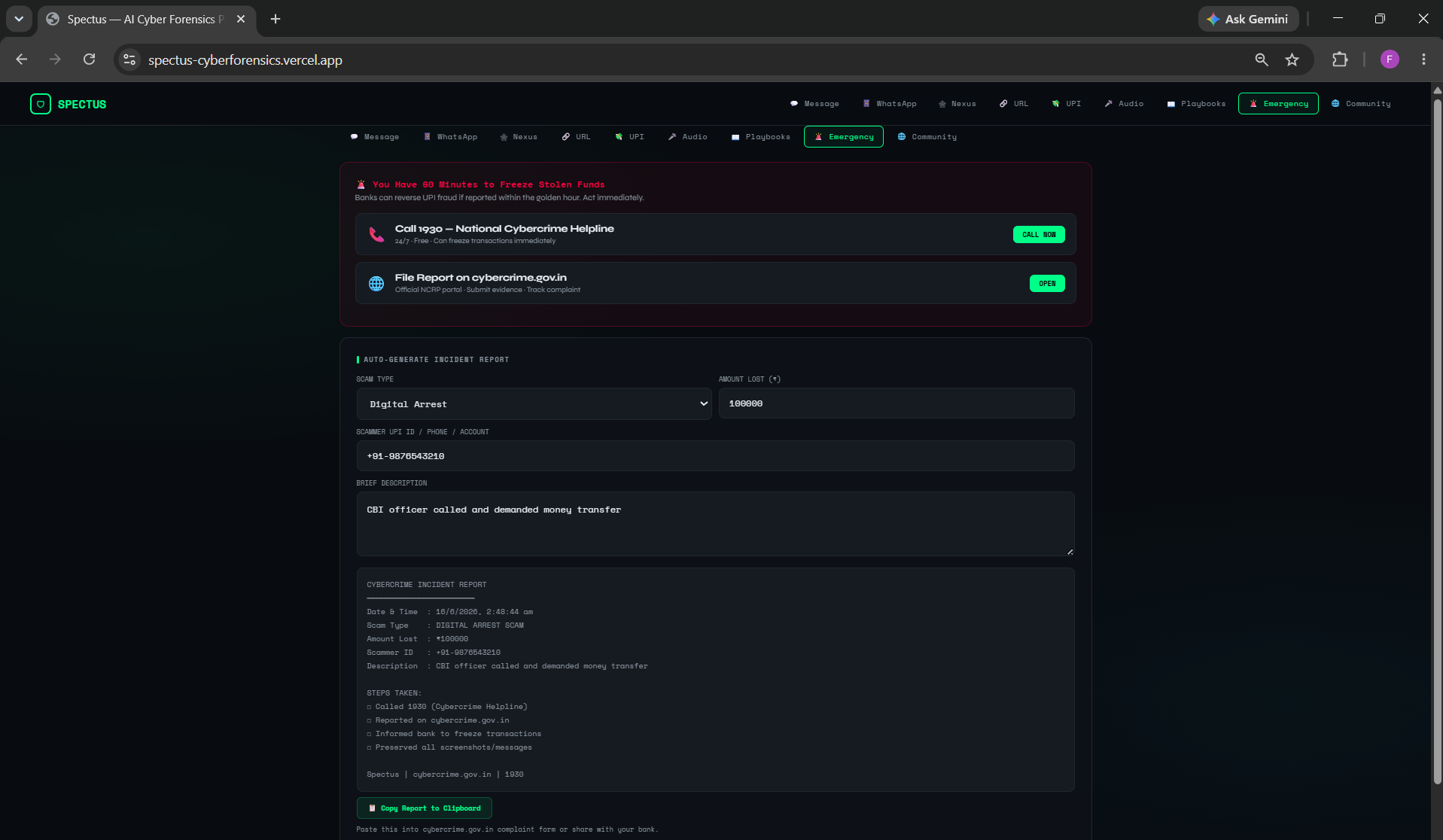
The Emergency Toolkit: Immediate helpline access and auto-generated incident reports for rapid crisis mitigation.
Inspiration
India loses billions every year to digital scams - UPI fraud, digital arrest threats, KYC phishing, fake job offers. Most detection tools are simple keyword filters that scammers bypass with a single word change. We wanted to build something that thinks like a forensic investigator, not a spam filter.
What it does
Spectus is a real-time AI cyber-forensics platform that analyzes SMS messages, emails, URLs, UPI handles, and call transcripts for scam signals. Every input runs through a 4-engine ensemble that functions like a digital jury:
- ML Classifier: TF-IDF + Logistic Regression for fast, deterministic pattern detection
- Semantic Vector Search: ChromaDB + Sentence Transformers matched against MHA, RBI & SEBI advisories
- LLM Reasoning: Llama 3.1 via Groq for deep psychological and contextual analysis
- Behavioral Fingerprinting: Detects brand impersonation, leet-speak obfuscation, and credential harvesting
Beyond detection, Spectus also includes a Cross-Channel Nexus Correlator (links SMS → URL → UPI into one threat graph), a Mutation Diff Engine (tracks how scams evolve over time), a Psychological Profiler (identifies which cognitive biases a scam exploits), and a Golden Hour Emergency Toolkit for immediate incident response.
How I built it
- Backend: FastAPI on Render, with lazy-loaded SentenceTransformer to stay within free-tier RAM limits
- Vector DB: ChromaDB seeded with scam patterns from MHA, RBI, and SEBI advisories
- LLM: Llama 3.1 via Groq API for structured JSON reasoning
- Frontend: Single-file vanilla JS + custom CSS dashboard deployed on Vercel
- Graph analysis: NetworkX for cross-channel threat correlation
Challenges faced
Getting all four engines to initialize without crashing Render's free-tier container was the hardest part. SentenceTransformer was loading at startup and eating RAM before the server could pass its health check. We solved this with lazy initialization — the embedding model only loads on the first actual request, not at boot.
Balancing the ensemble weights was also non-trivial. When Groq is unavailable, the system gracefully degrades to ML + semantic signals without breaking the verdict pipeline.
Accomplishments
- A fully working 4-signal ensemble that degrades gracefully when any engine is unavailable
- Real scam pattern corpus sourced from actual Indian government advisories
- The Mutation Diff Engine - most scam detectors don't track how scams evolve; ours does
- Shipped a complete forensics platform as a single
index.htmlwith zero frontend dependencies
What I learned
Lazy initialization matters enormously on constrained infrastructure. Ensemble design is as much about failure modes as it is about accuracy. And India-specific scam patterns (digital arrest, Aadhaar fraud, UPI manipulation) need a dedicated corpus - generic English scam datasets miss them entirely.
What's next
- WhatsApp and Telegram scam monitoring
- OCR-based screenshot analysis
- Browser extension for real-time phishing detection
- Multi-language support (Hindi, Tamil, Telugu)
- SIEM integration for enterprise SOC dashboards
Built With
- chromadb
- fastapi
- groq
- javascript
- jspdf
- llama-3.1
- networkx
- python
- render
- scikit-learn
- sentence-transformers
- sqlite
- vercel

Log in or sign up for Devpost to join the conversation.