-
-
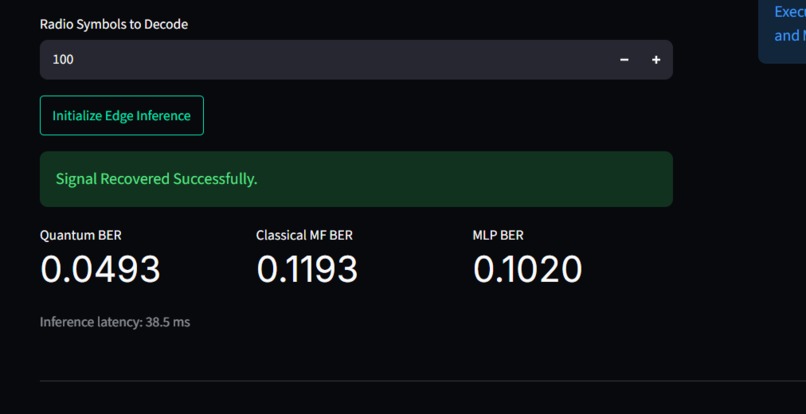
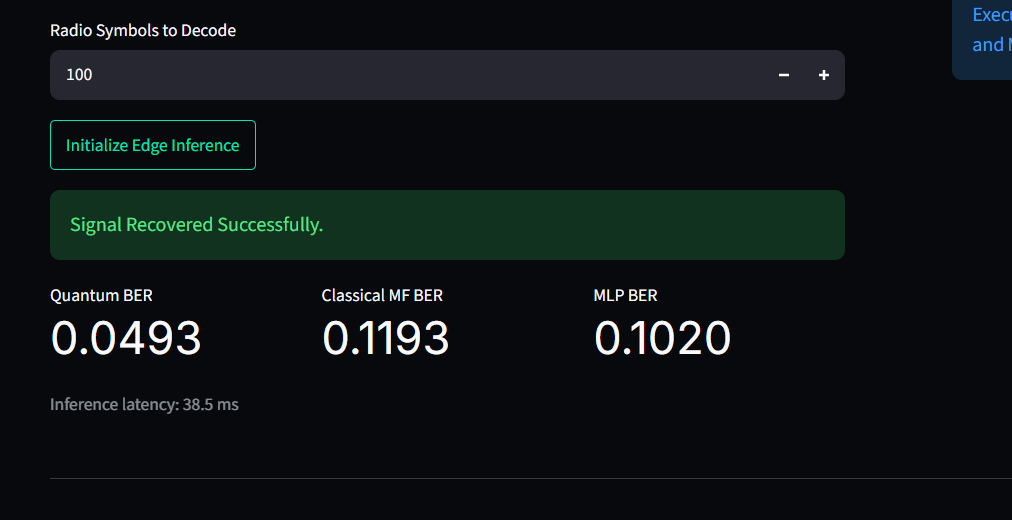
Quantum Receiver Data
-
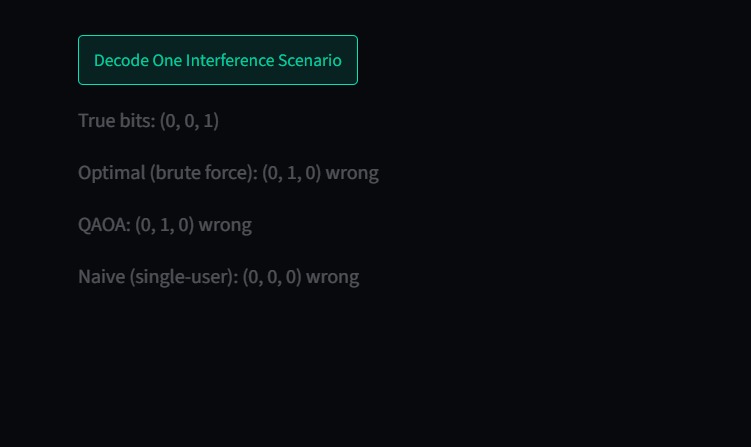
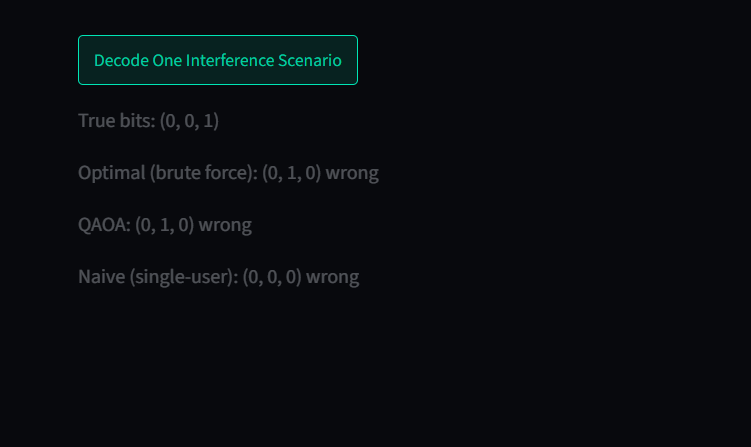
QAOA Results
-
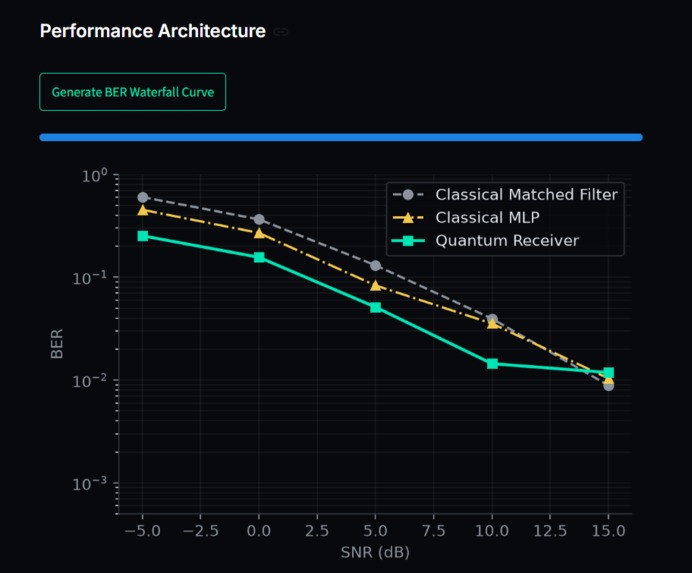
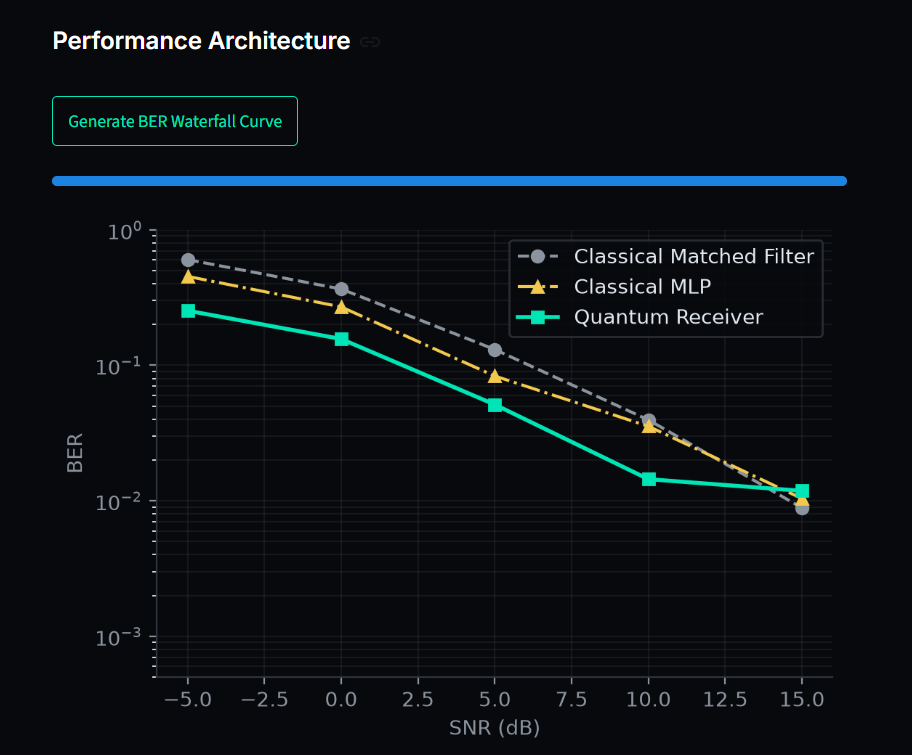
BER Waterfall Curve #1
-
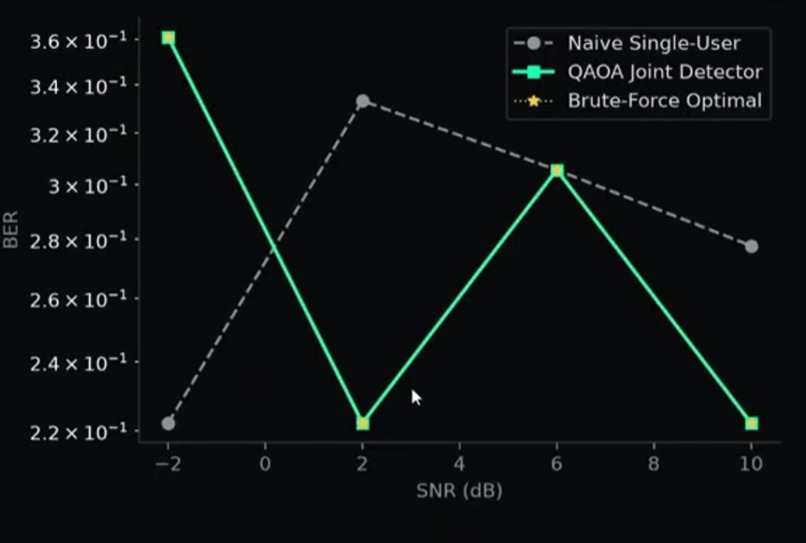
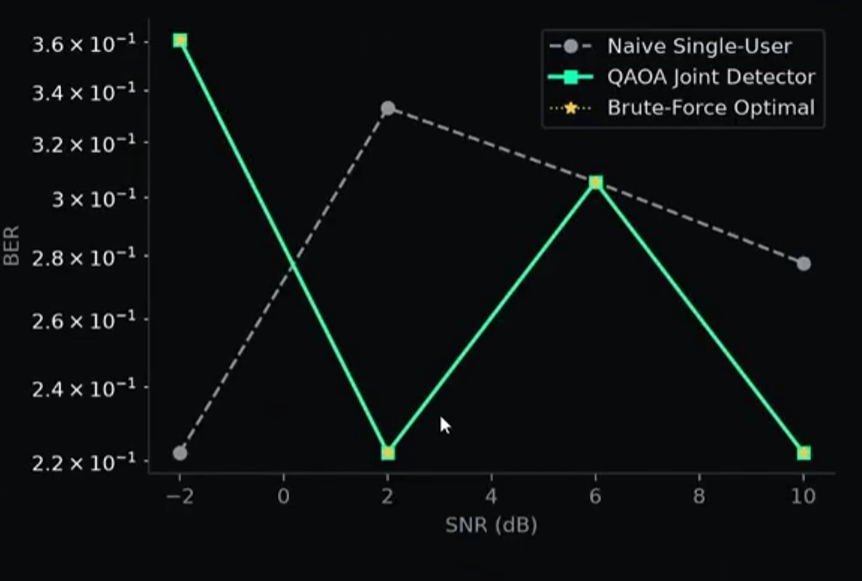
BER Waterfall Curve #2
Inspiration
We are living through the tech revolution of Quantum Computing and a massive expansion in wireless density which is driven by 5G networks, IoT and satellite communications. Yet, classical wireless receivers still rely on decades-old, interference-blind algorithms that break down when multiple users collide on the same frequency channel. I built QuantumG because I wanted to take quantum optimization algorithms and technologies, such as QML (Quantum Machine Learning) and QAOA (Quantum Approximate Optimization Algorithm), out of theoretical papers and apply them to solve what would become a huge problem in modern telecommunications, especially in the upcoming age of 6G networks: resolving heavy channel interference and signal noise. I wanted to see how quantum techniques could revolutionize digital signal processing where classical processors and methods may not be the best option.
What it does
QuantumG is a quantum-enhanced wireless communication receiver designed to decode distorted In-phase/Quadrature (IQ) signals under real-world noise and multi-user interference.
Here is how the pipeline works:
1) Quantum QPSK Decoding: Uses parameterized quantum circuits with angle embedding and variational layers (built with PennyLane and PyTorch) to classify and decode noisy digital symbols within a quantum neural network.
2) Multi-User QAOA Detection: Maps channel interference problems into an optimization format where the QAOA algorithm solves joint maximum-likelihood detection which is a signal processing technique to untangle overlapping signals. This helps the quantum algorithm to match the exact accuracy of the brute force, classical option. However, the quantum algorithm can completely bypass the exponential slowdown that cripples classical computers as more users join making the quantum approach the more viable approach as users scale.
3) Full-Stack Architecture: Features a FastAPI backend serving pre-trained weight checkpoints (trained_weights.pt_ and a live Streamlit dashboard that streams IQ packets, run edge inference and generates real-time Bit Error Rate (BER) waterfall curves to visualize performance.
How we built it
Quantum & ML Core: Built using Python, Pennylane for quantum circuit modeling and PyTorch for creating our quantum neural network which allowed end-to-end gradient based optimization of variational weights across multiple layers. This architecture directly bridges quantum circuits with deep learning.
Multi-User QAOA Solver: Implements the Quantum Approximate Optimization Algorithm to solve complex joint maximum-likelihood detection problems for multi-user interference, avoiding exponential complexity scaling compared to classical methods.
Interactive Frontend: Created a UI with Streamlit to let users adjust Signal-to-Noise Rations (SNR), test real time inference streams and visualize performance curves.
Challenges we ran into
The trickiest part I ran into was figuring out how to translate radio wave data into a format that a quantum circuit can actually understand without losing important details. I also had to fine-tune the parameters for the QAOA algorithm so that the quantum models could run more smoothly and efficiently, ensuring they could handle interference without slowing donw.
Accomplishments that we're proud of
I'm proud of proving that a quantum optimization approach can successfully solve crowded multi-user signal jams where normal receivers completely fail. With the coming of 6G technology in the next decade, these quantum approaches to signal processing will become more and more relevant. Although we are far from the technology of these quantum signal processors due to some gaps in modern quantum hardware, this project serves as a proof of concept that maybe, quantum receivers will become the next big revolution in wireless technology.
What we learned
I learned a lot about signal processing and I learned about the variational quantum algorithm, QAOA. I also was able to heavily improve my NumPy, PyTorch and PennyLane skills. I've left this project with a solid understanding of QPSK modulation, channel noise, QAOA, quantum neural networks, etc.
What's next for QuantumG
This project can be expanded beyond basic QPSK since it can scale to higher-order modulation schemes such as 16-QAM and 64-QAM for next-generation networks. I truly believe this proof-of-concept is a legitimate addition to the growing field of quantum computing and telecommunications. Especially ahead of the 6G era, many big tech companies, such as NVIDIA, have noted the importance for effective spectrum usage and being able to handle large amounts of AI traffic. These quantum receivers may just be what makes handling AI traffic and the 6G era possible. I want to refine the findings from this hackathon to submit a real research paper and make a real impact in STEM.

Log in or sign up for Devpost to join the conversation.